REVIEW · MARRAKESH
Marrakech: Moroccan Cooking Class with Amazing Local Chef!
Book on GetYourGuide →Operated by EXCURSIONS 4 YOU · Bookable on GetYourGuide
Good Moroccan cooking lessons start with tea. In Marrakech, this 4-hour class has you making a full meal in a traditional riad or a farmhouse setting, with warm welcome and serious hands-on guidance. I especially like the welcome mint tea ceremony and pastries—it sets a friendly, unhurried tone from minute one.
I also love how the chef coaching is practical and clear, with Berber-style cooking techniques and step-by-step instructions that make spices and timing feel manageable. One possible drawback: the meeting location can be a little tricky to spot because the building outside may not have an obvious sign, so plan to arrive early and ring the bell at door 312.
In This Review
- Key Things That Make This Class Worth Your Time
- The First 15 Minutes: Mint Tea, Pastries, and Getting Oriented
- Where You’ll Cook: Traditional Riad or Farmhouse Setting
- Meet the Chef Team: Warm Guidance in English, French, and Arabic
- Course by Course: What You’ll Actually Make (and Why It Matters)
- Course 1 and 2: Moroccan Salads (Two Different Bites)
- Course 3: Tagine of Your Choice (The Clay-Pot Flavor Lesson)
- Course 4: M’semmen Flatbread (Flaky, Hand-Made, and Satisfying)
- Timing: How a 4-Hour Meal Class Stays on Track
- The Sweet Finish: Dessert That Closes the Loop
- Eating Together: Shared Table Energy (Not Just Food, But Connection)
- Value for $45: Why This Price Can Make Sense
- Practical Tips So Your Day Runs Smoothly
- Who Should Book This Class in Marrakech
- Should You Book This Marrakech Moroccan Cooking Class?
- FAQ
- How long is the cooking class?
- What time does the session start?
- What dishes are included?
- Where is the meeting point in Marrakech?
- What languages are available for the guide?
- Are vegetarian options available?
- Is this experience wheelchair accessible?
- What should I bring?
- Can I cancel and get a refund?
- Is alcohol included or allowed?
Key Things That Make This Class Worth Your Time
- Mint tea welcome with pastries so you start in Moroccan mode, not in tourist mode
- Four real courses: two salads, a tagine of your choice, m’semmen flatbread, plus a sweet finish
- Hands-on work (not just watching) with prep, shaping, and cooking skills you can repeat later
- Clay-pot tagine focus, including how to build flavor with spices and the right balance
- Recipes to take home, so the day doesn’t vanish the moment you leave the riad
- A warm, family-feeling vibe, with chefs and helpers like Mehdi, Chafik, Fatima, Chaima, and Laila Fatima showing up in different sessions
The First 15 Minutes: Mint Tea, Pastries, and Getting Oriented
If you’ve only had Moroccan food in restaurants, this is the moment that changes the way you see it. Before any chopping starts, you’re greeted with a Moroccan mint tea ceremony and pastries—simple, classic, and designed to put you at ease.
You’ll usually meet your guide and chef team right away, and the tone stays welcoming. This matters more than it sounds. When you’re about to handle spices, bread dough, and clay-pot cooking, you want clear direction and a relaxed atmosphere.
You’ll be asked to arrive about 15 minutes early, and I’m glad they build in that buffer. It gives you time to find the place, settle in, and get the first round of instructions without feeling rushed. One practical note: the outside of the building may not have a visible sign. If you don’t see a label on the street, don’t panic—ring the bell for door 312.
You can also read our reviews of more cooking classes in Marrakesh
Where You’ll Cook: Traditional Riad or Farmhouse Setting
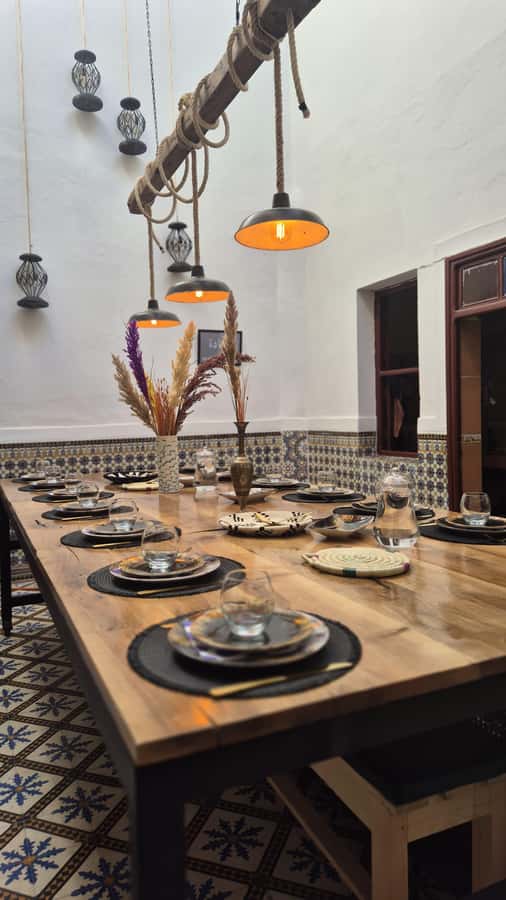
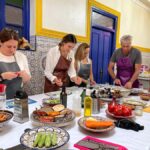
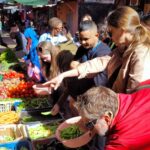
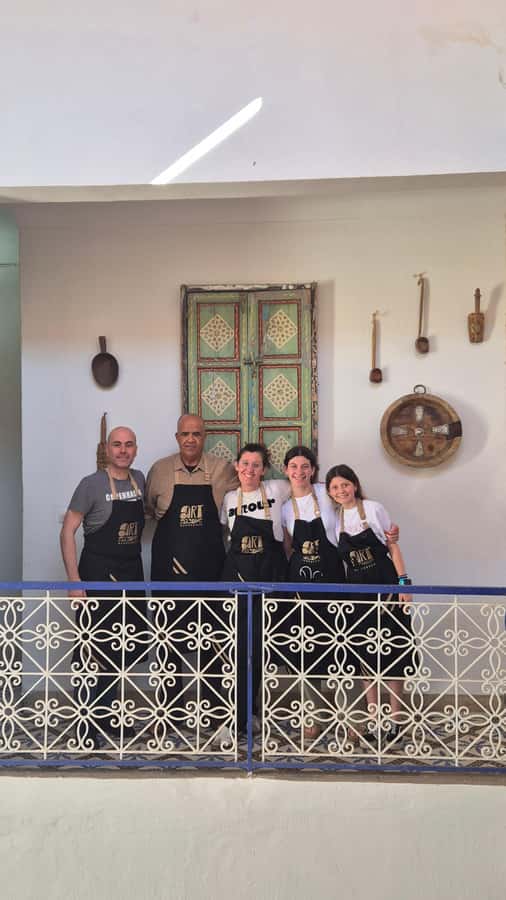
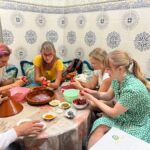
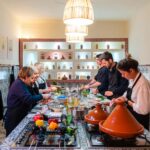
The cooking happens in a beautifully traditional environment—either a riad or a farmhouse—depending on the session. The setting isn’t just decoration. It affects your experience in three ways:
1) You get a more “home kitchen” feel, not a classroom vibe.
2) The space tends to encourage group participation (everyone gathers around stations and shares the work).
3) The meal afterward feels like it belongs to the same place where you cooked it.
From what people say, the facilities are also kept clean, which is a big deal when you’re actively working with food. Even better: the setup is friendly for mixed groups and ages. If you’re coming as a family, it tends to feel more like cooking with new friends than sitting through a performance.
Meet the Chef Team: Warm Guidance in English, French, and Arabic

This is a guided experience with a local chef and a guide who speaks English, French, and Arabic. What you want in a cooking class isn’t just “fun.” It’s someone who can translate techniques into actions you can actually repeat.
That’s where this one earns high marks. Chefs and helpers—names that show up across sessions include Mehdi, Chafik/Chafiq, Fatima, Chaima, and Laila Fatima—are described as friendly, patient, and clear. The best part is that instructions aren’t delivered in a way that makes beginners feel dumb. You get help that keeps you confident while you work.
Also, many sessions have a story thread running through the cooking: where spices come in, why certain combinations make sense, and how North African and Mediterranean influences show up on Moroccan tables. This is how Moroccan food stays memorable after the meal.
Course by Course: What You’ll Actually Make (and Why It Matters)
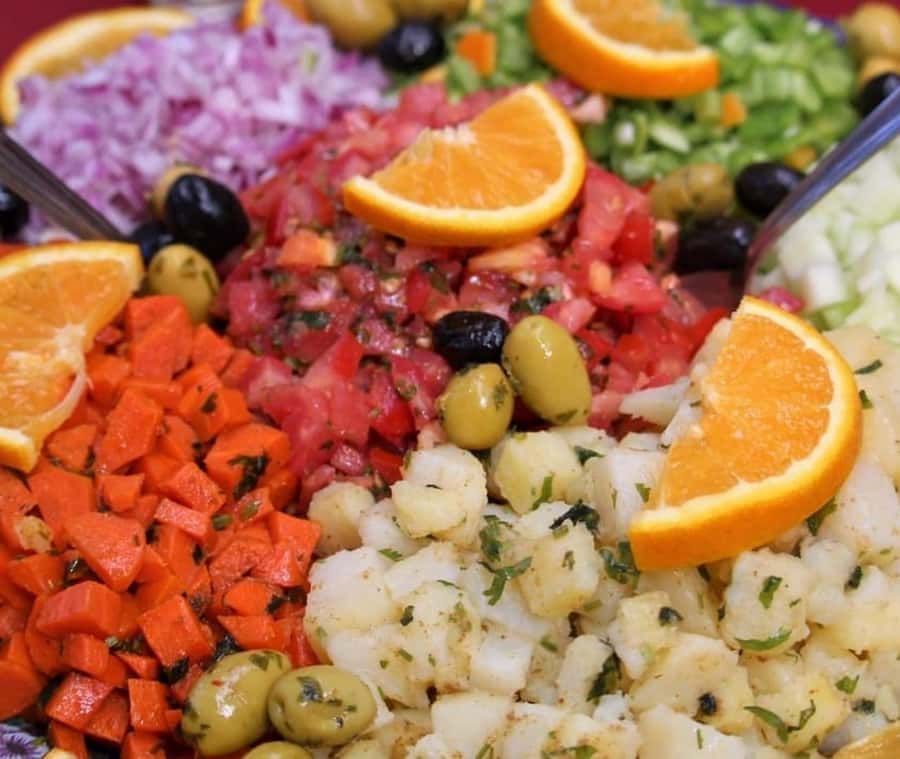
Course 1 and 2: Moroccan Salads (Two Different Bites)
You’ll make two Moroccan salads as part of the four-course meal. The goal here isn’t only to eat something fresh—it’s to understand how Moroccan meals balance hot, spiced flavors with cooler, crunchy, tangy sides.
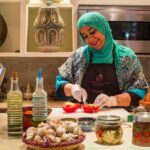
In many classes, you’ll do real prep work: chopping, mixing, and seasoning. That matters because Moroccan salads often rely on small decisions—how something is cut, how much acidity you add, and how spices are used to lift flavor rather than mask it.
If you’re the type who likes to recreate meals at home, salads are one of your best take-home wins. They’re usually easier to redo than tagines, and they teach you how Moroccan seasoning behaves when it’s not hidden under a sauce.
A few more Marrakesh tours and experiences worth a look
Course 3: Tagine of Your Choice (The Clay-Pot Flavor Lesson)
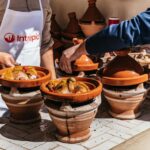
The star course is the tagine. You’ll choose your tagine, and depending on the session you might make versions like chicken and vegetable, or a vegetable-forward option.
What makes this more than “add ingredients and wait” is that you learn the why behind the method:
- how to handle spices and layer flavor,
- how the tagine cooks slowly so the sauce develops depth,
- and how to arrange ingredients so they cook evenly.
People consistently mention the care taken with tagine preparation, including arranging ingredients for cooking in clay pots. That’s your chance to see how Moroccan cooking is built around technique and timing—not shortcuts.
And you’re not stuck waiting around. While the tagine does its slow-cooking work, you’ll typically keep busy with the bread course and other prep so the time stays productive.
Course 4: M’semmen Flatbread (Flaky, Hand-Made, and Satisfying)
The m’semmen course is a highlight because it’s hands-on and very Moroccan. You’ll learn to make Moroccan m’semmen, a flaky flatbread associated with traditional methods passed through generations.
This part teaches you something you can’t easily copy from a restaurant: how dough feels, how layers work, and how technique creates that tender-yet-structured texture. If you’ve ever tried making flatbread at home and wondered why yours came out different, this is the course that gives you the missing pieces.
After you make your m’semmen, you’ll also get to eat it with dips and accompaniments. Some sessions include options like honey or nut butter-style dips, and sunflower oil appears in the accompaniments described. It’s a fun combo because you taste how sweet and savory sit comfortably together in Moroccan breakfasts and snacks too.
Timing: How a 4-Hour Meal Class Stays on Track
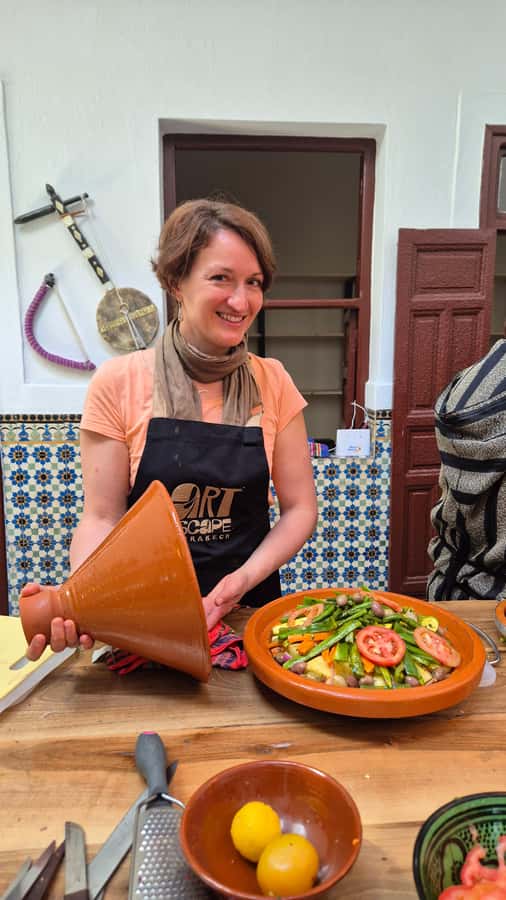
Four hours can sound tight, but this class is built to keep you moving. The flow most commonly feels like:
- welcome tea and pastries to settle in,
- apron-up time and ingredient prep,
- bread-making (m’semmen),
- tagine assembly and slow-cook time,
- then the group meal where you eat what you made.
That smooth pacing is a big reason people rate it so highly. No one wants to spend a cooking class standing around. Here, you’re usually doing something meaningful throughout—chopping, mixing, shaping, assembling, and learning.
The Sweet Finish: Dessert That Closes the Loop
Your dessert is included as the fourth course. In many descriptions, it’s a blended drink-style dessert made with beetroot, oranges, a touch of lemon, and mint. That combo is bright and cooling, which balances all the warming spices from the tagine.
Some sessions also mention pancakes with honey as a sweet standout. Since the course is listed as dessert and reported with variation, think of this as a flexible sweet finish that still stays Moroccan and seasonal.
Either way, the lesson is the same: Moroccan meals often end with something that refreshes your palate, not just something sweet for sweetness’ sake.
Eating Together: Shared Table Energy (Not Just Food, But Connection)
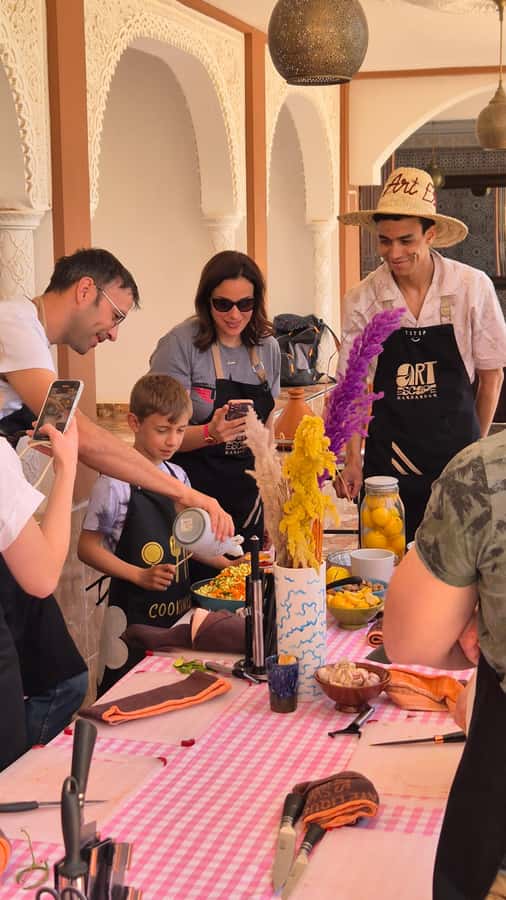
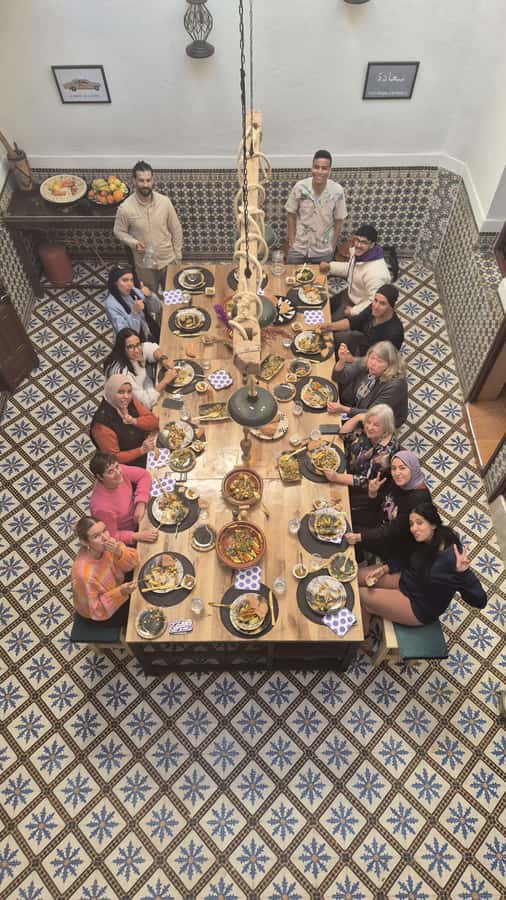
The best part of cooking classes isn’t always cooking. It’s eating together once the work is done. Here, you sit down to enjoy the dishes you prepared, typically with Moroccan mint tea in the mix.
From the vibe described, it feels like a relaxed group meal—people talk while they eat, and the hosts keep helping without turning it into a rigid schedule. If you come solo, you’ll still have something built in: the shared task of cooking and the shared pleasure of eating.
If you come with kids or teens, the interactive part tends to work well. You’re not just watching someone else cook; you’re shaping dough, preparing ingredients, and tasting as you go.
Value for $45: Why This Price Can Make Sense
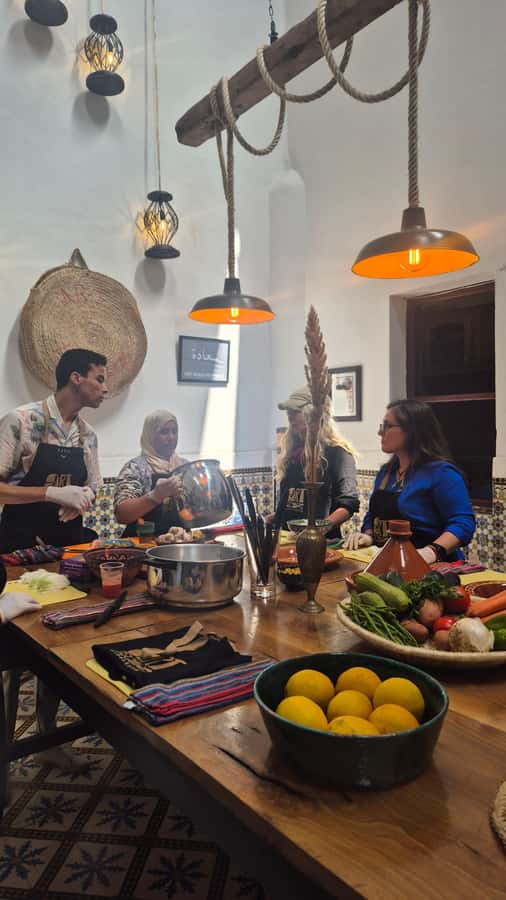
At about $45 per person for a 4-hour class with four courses, you’re paying for more than food. You’re paying for:
- a local chef and multilingual guidance (English, French, Arabic, plus French support),
- fresh seasonal ingredients and utensils,
- the space (riad or farmhouse),
- cooking instruction for techniques you can recreate,
- and recipe cards you take home.
For many people, this becomes one of the most satisfying “one-day experiences” in Marrakech because you end up eating a proper meal plus leaving with tools you can use later. If you’re comparing it to the cost of one pricey dinner plus taxis plus a paid activity, it often starts to feel like better value—especially since you get both the skills and the meal.
Practical Tips So Your Day Runs Smoothly
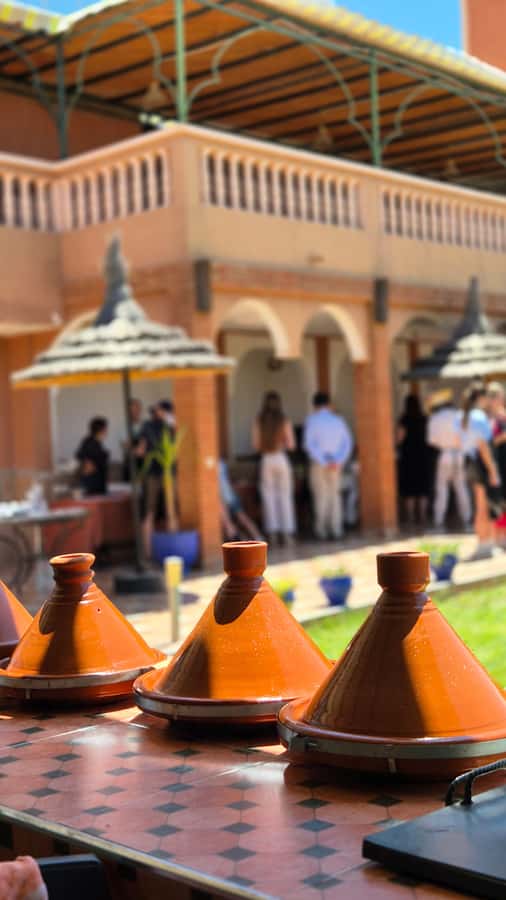
Here’s how to set yourself up for an easy win:
- Wear comfortable shoes. You’ll be moving around prep and cooking areas.
- Bring a camera, because the setting and food are photo-worthy.
- Arrive 15 minutes early, especially if the building isn’t clearly signed.
- If you have allergies or dietary restrictions, tell them during booking so they can plan vegetarian options (vegetarian is available).
Also, remember this is a cooking environment: pets aren’t allowed, and alcohol and drugs aren’t allowed. That keeps things consistent for everyone cooking and eating.
Who Should Book This Class in Marrakech
This cooking class is a great fit if you want:
- hands-on Moroccan skills like tagine building and m’semmen technique,
- a family-friendly day activity,
- a culture-forward experience that uses food as the language,
- and a realistic way to recreate Moroccan flavors after you return home.
It also works well if you’re new to cooking. The instruction style is described as clear and not intimidating, and participation is encouraged.
One more perk: group size can vary. In some cases, people report being with just their own group (even all by yourselves), which can mean more attention and more time for questions.
Should You Book This Marrakech Moroccan Cooking Class?
I’d book it if you want a full, structured taste of Moroccan cooking that includes skills you can repeat—especially tagine technique and m’semmen bread-making. The biggest selling points are the hands-on coaching, the clear meal flow, and the fact that you leave with recipe cards, not just photos.
I’d think twice only if you dislike interactive food prep or you get flustered by finding an unmarked door. If you arrive early and follow the door 312 pin info, that’s usually a non-issue.
FAQ
How long is the cooking class?
The class runs for 4 hours.
What time does the session start?
The morning session starts at 10:30am and ends at 2:30pm.
What dishes are included?
You’ll make four courses: two Moroccan salads, a tagine of your choice, Moroccan m’semmen bread, and dessert.
Where is the meeting point in Marrakech?
Use Google Maps and search for ArtEscape Marrakech for the exact pin location, then go to door 312.
What languages are available for the guide?
The activity is conducted with a guide who speaks English, French, and Arabic.
Are vegetarian options available?
Yes, vegetarian options are available. If you have dietary needs, you should inform them during booking.
Is this experience wheelchair accessible?
Yes, it is wheelchair accessible.
What should I bring?
Bring comfortable shoes and a camera.
Can I cancel and get a refund?
You can cancel up to 24 hours in advance for a full refund.
Is alcohol included or allowed?
Alcohol is not allowed during the activity, and it is not included.
If you want, tell me your travel dates and whether you’re cooking as a family or as a couple—I can help you plan the best time window in your Marrakech day.