REVIEW · MARRAKESH
Marrakech: Moroccan Cooking Class with a Local Family
Book on GetYourGuide →Operated by Cooking class with chef Fatima · Bookable on GetYourGuide
A Marrakech cooking class with a real family is a rare thing. In a chef’s home in the Medina, you’ll learn the spices, cook several dishes hands-on, then sit down to eat what you made. It’s Morocco through your hands, not just photos.
I especially love the hands-on pace and how everyone gets involved. I also like the way the class explains ingredients and techniques clearly, with Chef Fatima and the team (including guides like Yasser) keeping it fun and moving.
One thing to consider: this experience focuses on cooking and family time. If you’re hoping for a long market tour, you may be disappointed depending on the schedule.
In This Review
- Key things to know before you go
- Meeting Chef Fatima in the Medina, with mint tea on arrival
- Spice first: how Moroccan flavors get built
- Your hands-on cooking flow: starter, main, dessert
- Starter: salads or briwat
- Main course: tajines, couscous, or tanjya
- Dessert: Moroccan sweets to finish the meal
- Eating together like family: what the meal teaches you
- For vegetarians, vegans, and allergies: it’s not an awkward add-on
- Getting recipes and videos, so you can actually cook at home
- Price and value: is $33 fair for 4 hours?
- What you’ll likely love most (based on the vibe)
- Best fit: who should book this class
- Should you book this Marrakech Moroccan cooking class?
- FAQ
- How long is the cooking class?
- Where is the meeting point?
- What dishes will I cook?
- Is the class suitable for vegetarians, vegans, or allergies?
- Will I get recipes to take home?
- What’s included in the price?
- Is transport included?
- What languages are used during the class?
- Is it wheelchair accessible?
Key things to know before you go
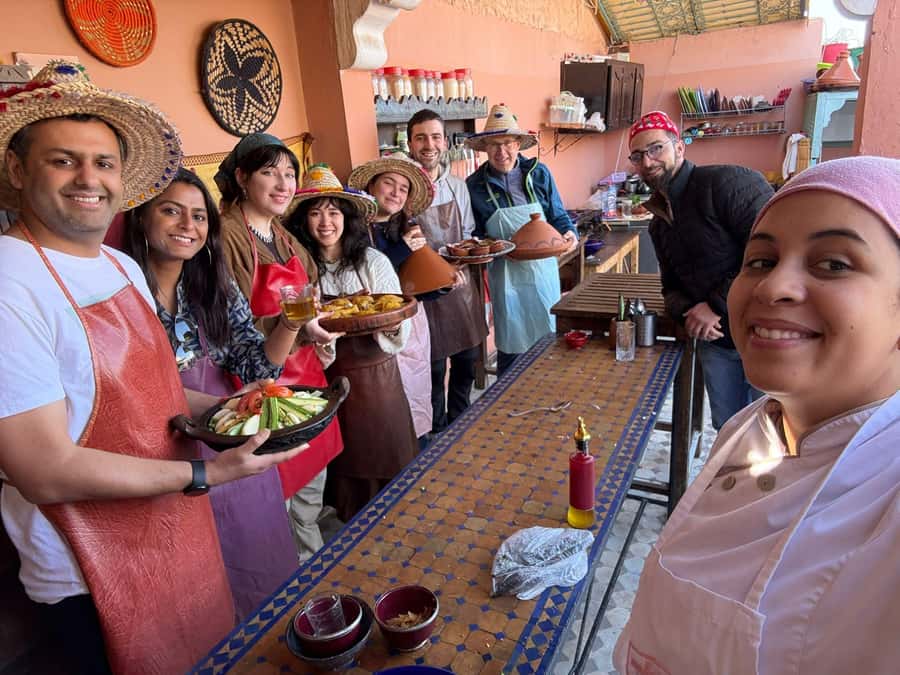
- Family-run cooking inside an authentic home in the Medina, not a big classroom
- Chef-led instruction with interactive cooking so you’re not just watching
- Spice education first, so you learn what to look for in the souks
- Multiple dishes: starter (like Moroccan salads or briwat), main (tajines/couscous/tanjya), and dessert
- Dietary needs supported for vegetarian, vegan, and allergies
- Take-home recipes so you can recreate it later
Meeting Chef Fatima in the Medina, with mint tea on arrival
You’ll meet the chef at the front of the Andalusia restaurant, next to Mohamed 5 Highschool. It’s an easy landmark once you have it in mind, because the Medina streets can feel like a maze until you get your bearings.
When you arrive, the welcome is simple and warm: Moroccan tea, coffee, or juice, plus cookies. Then you start talking—about food first, then about life in Morocco. This matters. You’re not walking into a show. You’re being hosted, and that tone continues the whole 4 hours.
The class is run in English, French, or Arabic, so you won’t feel stuck if your French is rusty. And if you’re traveling with kids, the hands-on format tends to work well because people are actually doing the steps, not just standing around.
You can also read our reviews of more cooking classes in Marrakesh
Spice first: how Moroccan flavors get built
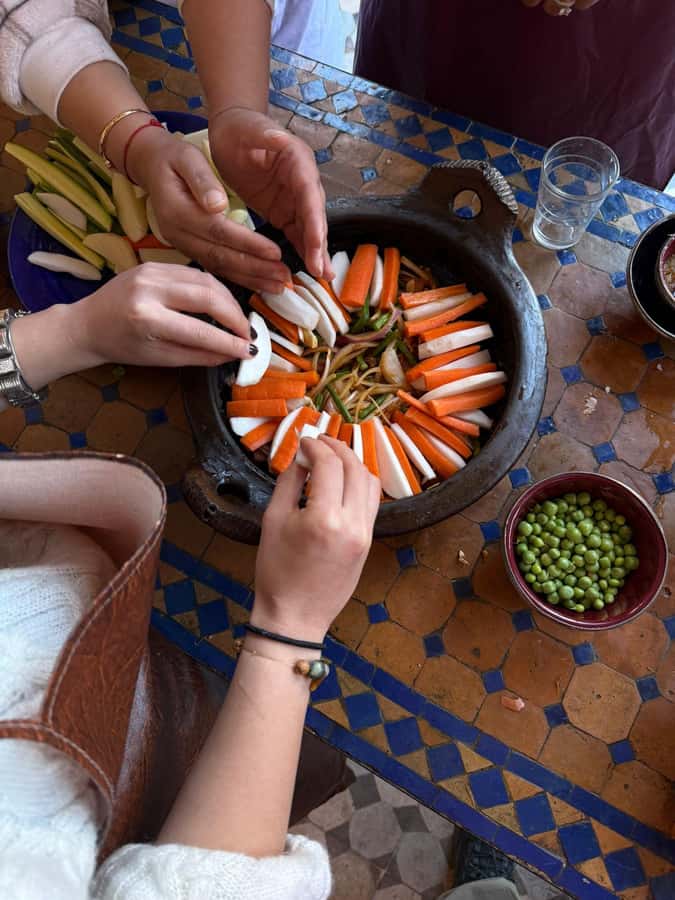
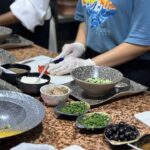
The cooking lesson doesn’t start with chopping. It starts with spices—and this is one of the biggest reasons the class gets such strong praise.
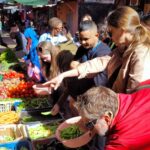
You’ll be guided through the ingredients you’ll taste in Moroccan food. That includes spices used in common dishes, plus how to recognize what’s good quality when you’re shopping later in the souks. More than once, guests point out that the class makes it easier to buy spices without getting overcharged or ending up with flavors that don’t match what you cooked.
This part also teaches you a practical habit: Moroccan cooking is built in layers. Spices don’t just get sprinkled at the end. They’re part of the aroma base, the seasoning rhythm, and the balance. When you understand that, your own home-cooking improves fast—even if your kitchen isn’t a Moroccan house.
Your hands-on cooking flow: starter, main, dessert
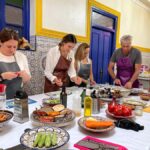
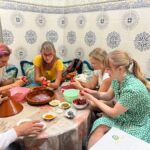
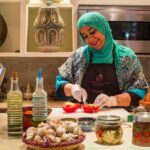
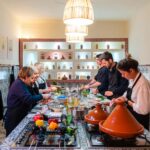
After the spice explanations, you move into the kitchen work. Expect a hands-on experience where you help prepare and cook. Even if you’re not confident with knives, the pace is guided, and the group format encourages everyone to take turns.
Starter: salads or briwat
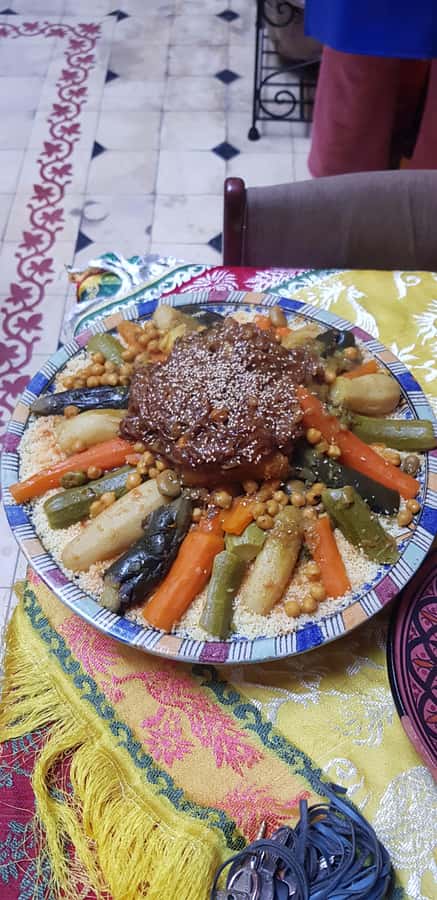
You’ll cook a starter such as Moroccan salads or briwat. Salads in Morocco often lean on punchy seasoning—citrus, herbs, spices, and sometimes preserved flavor. Briwat, on the other hand, are a classic bite-size option that connects you to Moroccan street-style comfort food, but in a more relaxed home setting.
The practical takeaway: you’ll learn how seasoning and texture work together. It’s not just taste. It’s how things feel in your mouth.
Main course: tajines, couscous, or tanjya
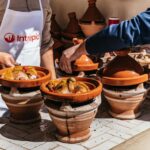
Next comes the main dish—options include tajines, couscous, or tanjya (tanjya). This is where you’ll feel Morocco’s cooking style: slow-building flavor, aromatic spice mixes, and the way vegetables and proteins are treated as a team.
Guests frequently describe these dishes as some of the best meals they’ve had in Marrakech, which makes sense. You’re eating the result of careful seasoning and real technique, not the rushed version that can happen in busy restaurants.
You also tend to learn the structure of a tajine mindset: how heat is managed, how ingredients are layered, and why timing affects tenderness and sauce quality. Even if your home cooking setup is different, you can carry the method home.
A few more Marrakesh tours and experiences worth a look
Dessert: Moroccan sweets to finish the meal
You’ll round it out with a Moroccan dessert. The exact dessert can vary, but the lesson is consistent: Moroccan desserts often use warming spices and subtle sweetness rather than heavy sugar-only flavor. It’s a good reminder that Moroccan cooking balances savory and sweet with the same attention to aroma.
Eating together like family: what the meal teaches you
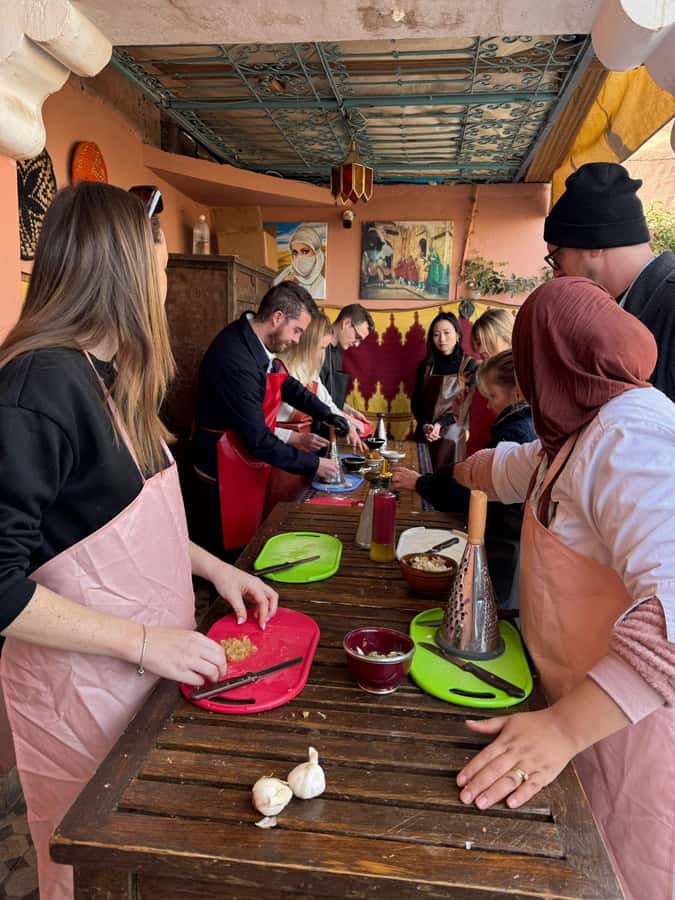
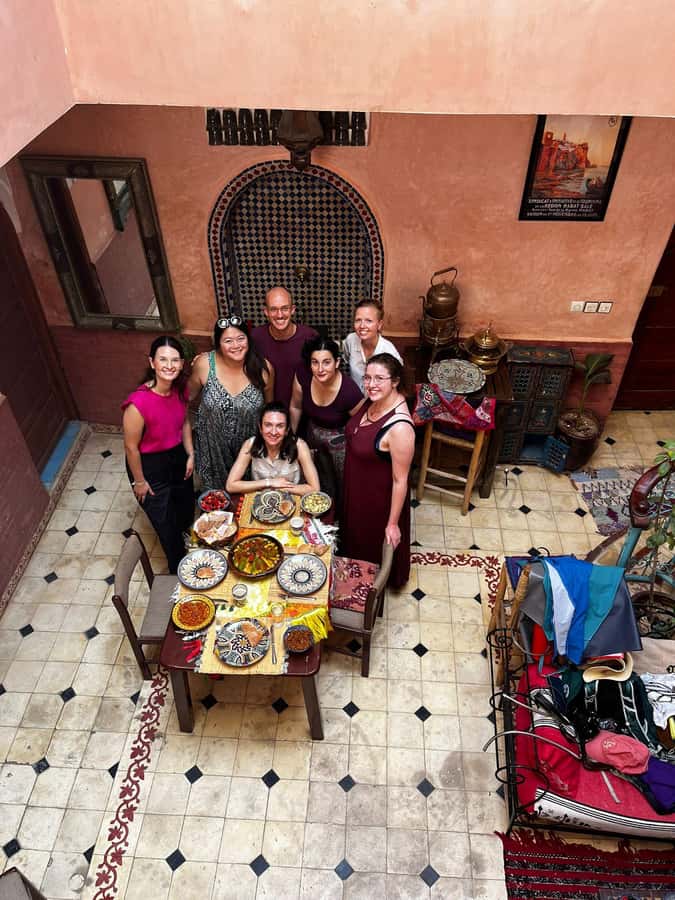
Once the cooking is done, you eat what you made—together. This part sounds simple, but it’s a big deal. Sharing the meal in the same space where you cooked helps you understand the timing and seasoning you used.
It also gives the lesson a finished feeling. You’re not waiting for a transfer to a restaurant dining room where you might forget half of what you learned. Here, you taste immediately, then ask questions while the flavors are still fresh in your mind.
A lot of guests talk about the ambience too—an authentic house setting in the Medina, sometimes with outdoor space depending on the day. Either way, it’s not staged. It’s the real rhythm of a family meal.
For vegetarians, vegans, and allergies: it’s not an awkward add-on
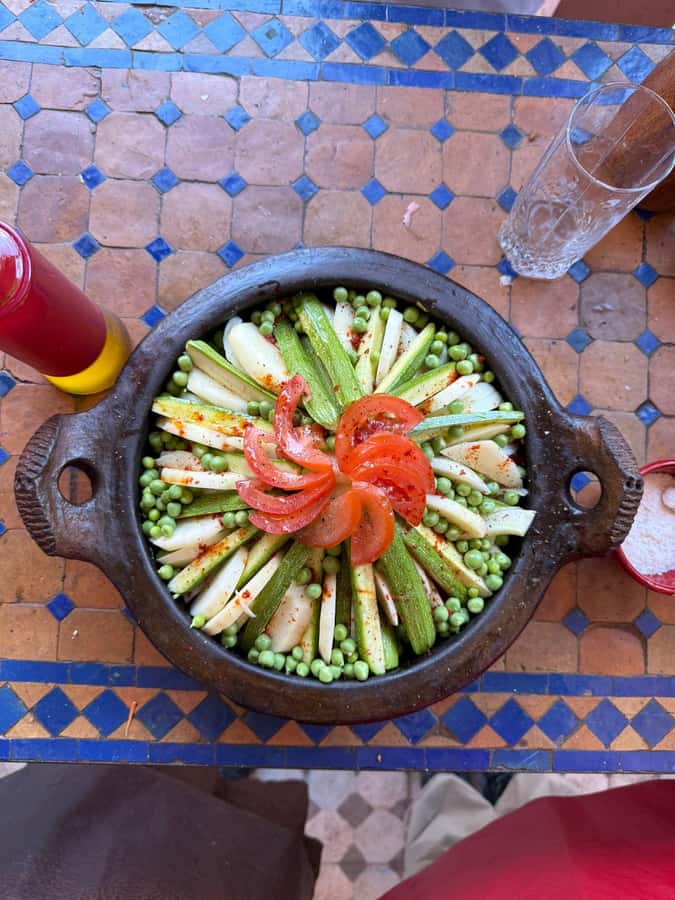
The class is set up so dietary needs won’t derail the experience. Vegetarian, vegan, and allergies are handled without making you feel like a problem.
That matters because Moroccan cuisine has plenty of vegetable-forward options—plus side dishes and spice blends that can be adjusted. In practice, you’ll usually find the teacher and team adapting dishes so you still get the full lesson: how flavors are built, what textures matter, and how to assemble a plate.
If allergies are a major concern, be sure to tell the host clearly when you book. You’ll get the best result if they know what to avoid from the start.
Getting recipes and videos, so you can actually cook at home
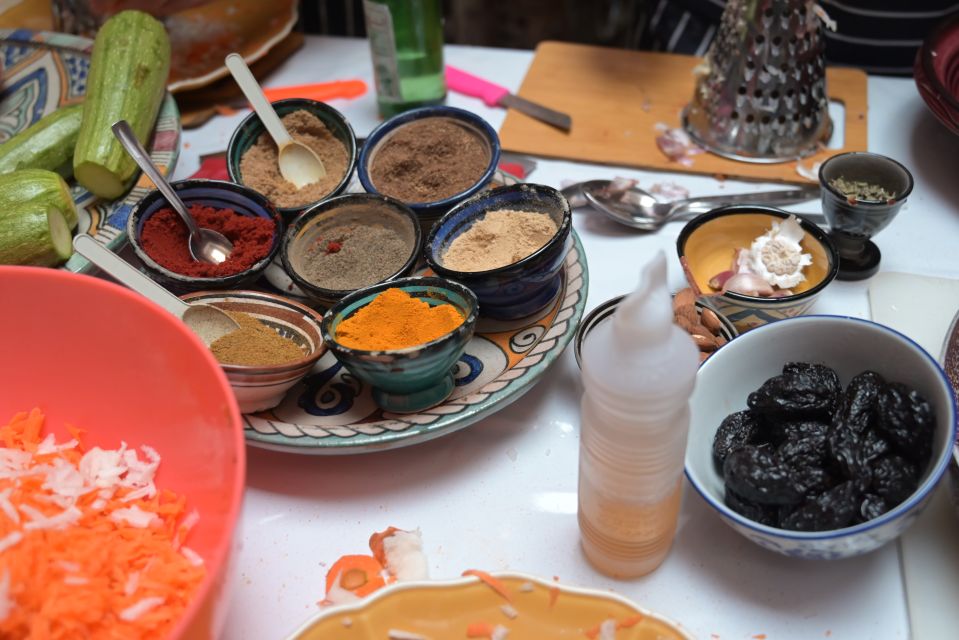
One of the standout promises here is take-home instructions. At the end, you’ll receive recipes, and many guests mention getting PDF recipes plus videos.
That’s the difference between a fun meal and useful learning. When you get the recipe in a format you can follow later, you can repeat the dishes and recreate the spice balance without guessing.
It also helps with shopping. Since the class teaches what spices you’ll taste and how to choose them in souks, your next shopping trip turns from random buying into informed buying.
Practical note: when you get your recipes, skim them right away and note which spices you’ll need. That way you can restock early, before your memory fades.
Price and value: is $33 fair for 4 hours?
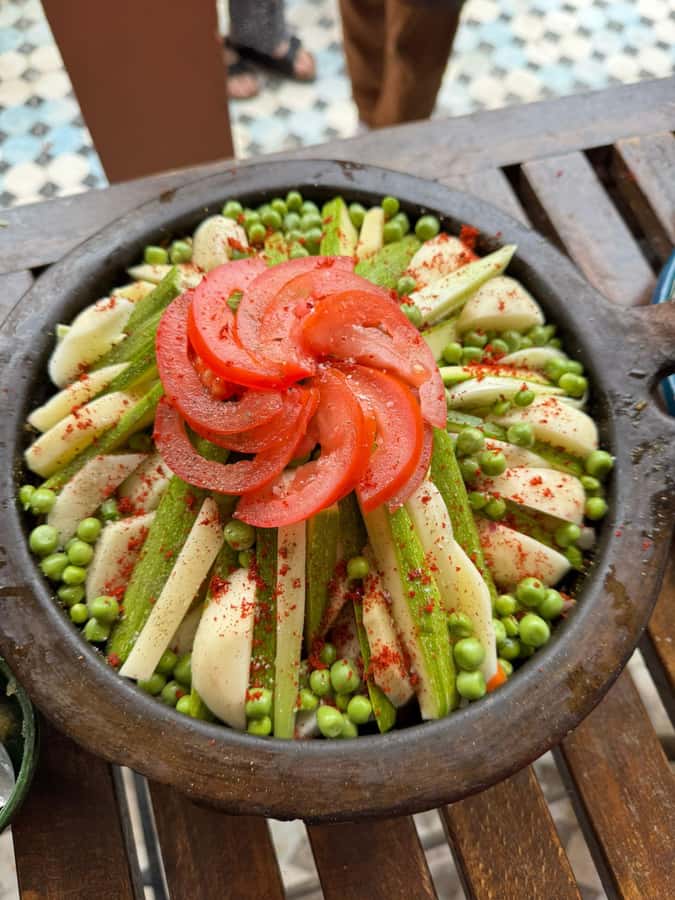
At about $33 per person for a 4-hour class, this is strong value for Marrakech—especially because so much is included. You get drinks and cookies, the cooking lesson, equipment, and a full meal. Transport is not included.
Here’s why that price works for most people:
- You’re paying for instruction plus ingredients preparation time, not just dinner
- You eat a meal made by your own team, with fresh seasoning and technique
- You take home recipes (often with PDF and video support), which extends the value beyond the day
The main thing to factor in is location and your transport plan. Since transport isn’t included, decide whether you want to walk in (if you’re staying close) or budget for a short ride to the Medina area.
What you’ll likely love most (based on the vibe)
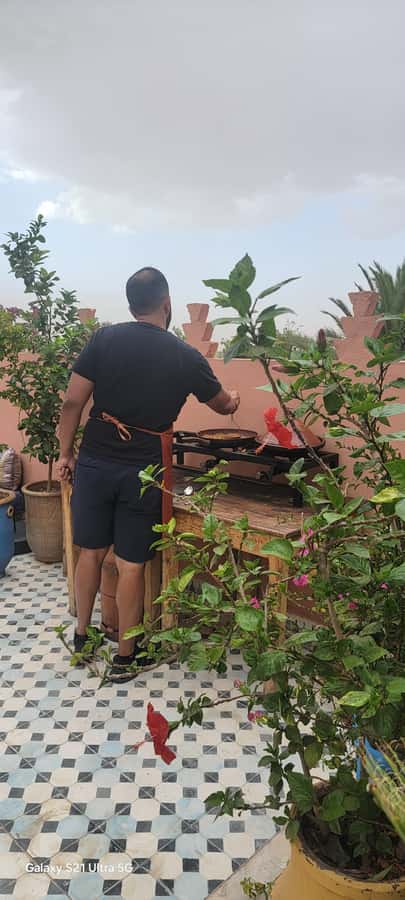
Chef Fatima is the name tied to this class, but the real strength is the team’s energy. Guests frequently mention the experience feeling fun, patient, and interactive—people of different ages and skill levels all getting involved. Names you may hear include Fatima and Yasser, plus the family hosting style that makes it feel like you’re part of the kitchen for the afternoon.
If you enjoy:
- learning how spices work in real dishes
- practicing knife and prep skills
- eating something you cooked well, not just something you ordered
this is likely to hit the mark.
If you want a hands-off foodie show, you may find it too active.
Best fit: who should book this class
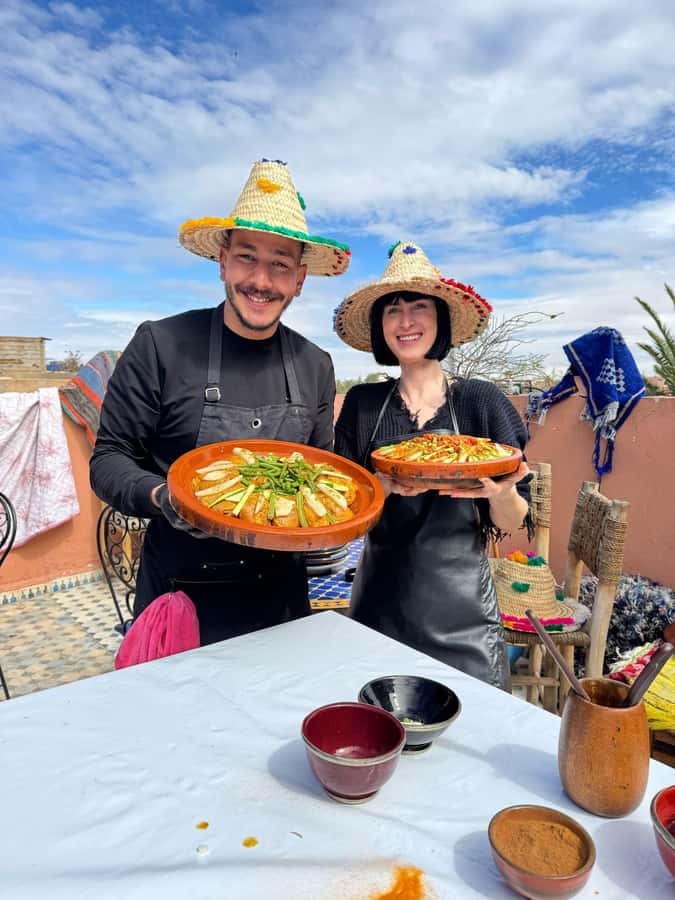
This cooking class is a great match if you want an authentic, family-style experience in Marrakech’s Medina. It’s also ideal for:
- couples who want a shared activity that becomes a story later
- families with kids, because the structure encourages participation
- travelers who care about technique (tajine/couscous/tanjya methods)
- vegetarians, vegans, or allergy-sensitive diners who want a guided solution
It’s less ideal if your main goal is wandering markets for hours. This experience centers on cooking time, and depending on the schedule, the market may not be the focus.
Should you book this Marrakech Moroccan cooking class?
I think you should book it if you want Marrakech food you can reproduce, not just taste once. The price-to-instruction ratio is strong, the format is genuinely hands-on, and the spice lesson makes shopping and home cooking easier.
If you’re the type who hates getting involved and prefers to watch, then look elsewhere. But if you like learning by doing, this is the kind of activity that turns into a go-to recipe set for years.
If you can, plan to arrive a little early so you can find the meeting spot without rushing through the Medina streets.
FAQ
How long is the cooking class?
The class runs for 4 hours.
Where is the meeting point?
Meet at the front of the Andalusia restaurant, next to Mohamed 5 Highschool.
What dishes will I cook?
You’ll cook a starter (such as Moroccan salads or briwat), a main dish (like tajines, couscous, or tanjya), and a Moroccan dessert.
Is the class suitable for vegetarians, vegans, or allergies?
Yes. Vegetarian, vegan, and allergies won’t be a problem.
Will I get recipes to take home?
Yes. You’ll get the recipes at the end of the class, and some guests also mention receiving PDF recipes and videos.
What’s included in the price?
The price includes drinks and cookies, the cooking lesson, equipment, drinks, and the meal.
Is transport included?
No. Transport is not included.
What languages are used during the class?
The host or greeter works in English, French, and Arabic.
Is it wheelchair accessible?
Yes, the activity is wheelchair accessible.