REVIEW · MARRAKESH
Marrakech: Bahia Palace, Madrassa & Souks Guided Tour
Book on GetYourGuide →Operated by Local guide to Morocco · Bookable on GetYourGuide
Marrakech moves fast, and this tour keeps up. You’ll see three of the city’s biggest hits—Bahia Palace, the Medrassa Ben Youssef, and the souks—linked by a guide who explains what you’re actually looking at. It starts outside Café de France in Jamaa el-Fna, so you jump straight into the action.
Two things I really like here are the focus on built form and meaning, not just photos, and the way the guide helps you make sense of the route. The live English guide also stands out, with names like Mohammad, Salem, and Younis coming up again and again for patient pacing and clear answers.
One possible drawback: you’re spending a chunk of the day walking through alleys and the souks, so the route is best if you’re comfortable moving for hours. (Even so, the guidance style described for reduced mobility is reassuring.)
In This Review
- Key highlights worth planning around
- Starting at Café de France: a smart way to get oriented in Jamaa el-Fna
- Bahia Palace: Andalusian-Moorish art you can actually read
- Medrassa Ben Youssef: seeing a Quranic school beyond the basics
- Souks and alley zigzags: how to get lost with a safety net
- Berber pharmacy stop: what to learn, what to buy, and what to skip
- Price and value: is $18 a good deal for a 4-hour guided loop?
- Pacing, walking, and accessibility: what to expect from the movement
- Who should book this Marrakech guided tour
- Practical tips to make the most of the 4 hours
- Should you book this tour?
- FAQ
- FAQ
- How long is the Marrakech: Bahia Palace, Madrassa & Souks Guided Tour?
- Where does the tour meet?
- What’s included in the price?
- Are entry tickets included for Bahia Palace and the Medrassa?
- Is the tour in English and is it private?
- Does the tour include skipping the ticket line?
- Can I get a refund if plans change?
Key highlights worth planning around

- Bahia Palace with guided context for the Andalusian-Moorish design and riad-style beauty
- Medrassa Ben Youssef to connect a Quranic school to what you see in the courtyards and classrooms
- Souk wandering with a plan so you get lost on purpose without losing the thread
- English guidance that keeps the stops understandable and the pace realistic
- Berber pharmacy stop for herbs, spices, oils, and practical shopping guidance
- Private group feel, often making it easier to keep up and ask questions
Starting at Café de France: a smart way to get oriented in Jamaa el-Fna
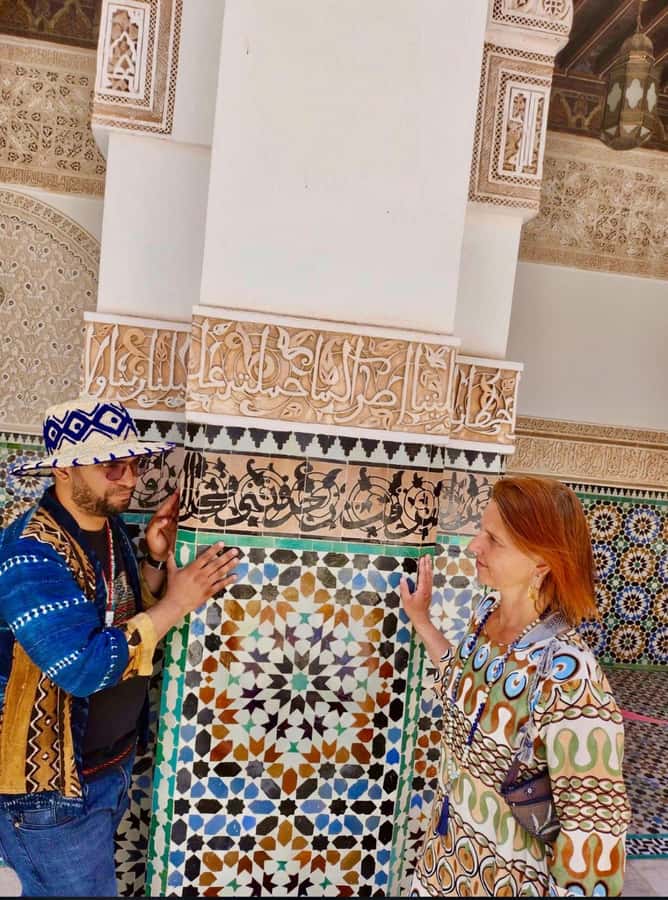
Most Marrakech days begin in Jamaa el-Fna, and this tour makes that choice for you. You meet outside Café de France on the main square, which is a useful anchor in a place that can feel like you’ve landed inside a map error. From the start, you’re not just wandering randomly—you’re pointed toward a route that hits major landmarks and then flows into the souks.
What I like about this approach is that it respects how Marrakech works. The square is loud, crowded, and constantly changing. Starting there means you don’t waste time trying to figure out where to go next. Also, because you begin with the palace stop, you get one of the calmer, more architectural experiences early—before the souks fully absorb you.
If you’re prone to getting overwhelmed in big public squares, the guided meeting point matters more than people think. You’ll know who you’re with, you’ll know where you’re headed, and your brain can stop scanning for direction.
You can also read our reviews of more guided tours in Marrakesh


Bahia Palace: Andalusian-Moorish art you can actually read
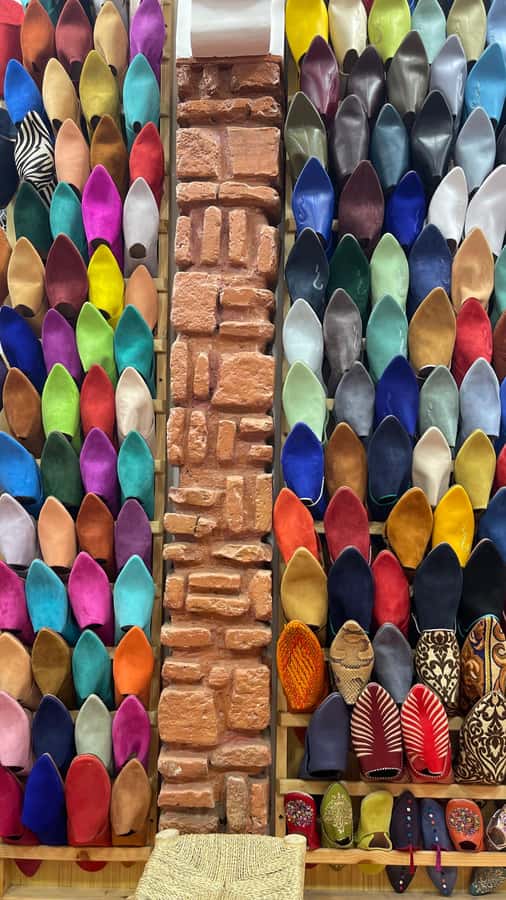
The tour first heads to Bahia Palace, described as Andalusian-Moorish art with beautiful riads. The key word for this stop isn’t just pretty tiles or photo-friendly courtyards. It’s comprehension. A good guide turns the palace from a set of rooms into a story about style, taste, and how spaces were meant to feel.
In a palace like Bahia, you’ll likely notice details you might otherwise miss: the way spaces open up around a courtyard, the decorative language of carved and painted forms, and the way the layout supports privacy and movement. With a guide, you’re not guessing. You learn what those choices mean in cultural and historical terms, and your eyes start collecting the right things.
There’s also a practical win: the tour indicates skip the ticket line, which helps a lot in popular sights. Since your entry tickets are not included, you’ll still need to pay for admission separately, but you won’t lose half your visit to waiting around at the door.
One more small advantage: because this is guided, you’re more likely to keep your momentum. Palace visits can turn into “stand and drift” if you’re on your own. Here, your guide helps you keep moving while staying focused.
Medrassa Ben Youssef: seeing a Quranic school beyond the basics
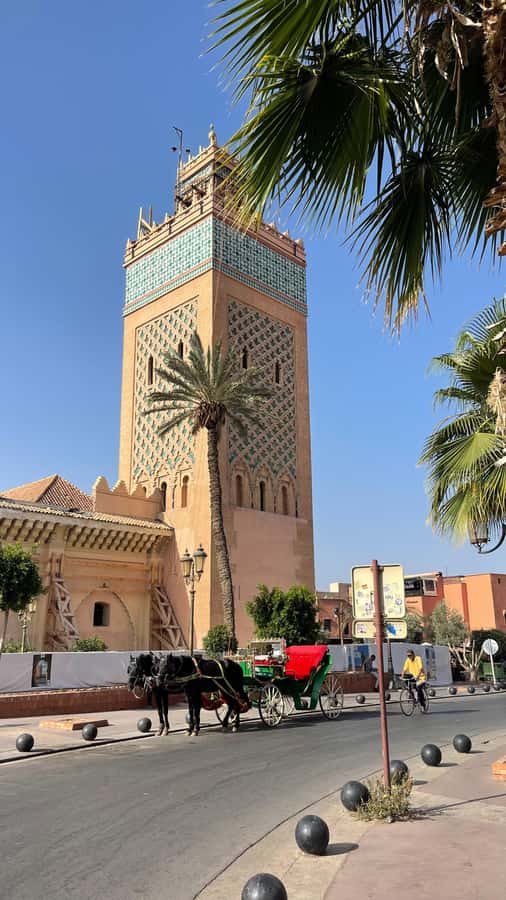
Next comes Medrassa Ben Youssef, a Quranic school that’s easy to admire but hard to understand without context. The tour doesn’t treat this stop as a quick photo break. You walk to it, and your guide helps connect the place to why it exists and how students would have used its spaces.
This matters because religious and educational sites in Morocco aren’t just landmarks. They’re living symbols of learning, community life, and how knowledge was organized. When you’re shown what to look for—how the architecture supports study, how courtyards function, how spaces are arranged—you start reading the building like a document.
The tour flow also keeps things realistic. Rather than bouncing between distant spots, you continue on foot through areas that build atmosphere. That means the day feels like one connected Marrakech experience, not three unrelated stops.
If you’re the kind of visitor who likes architecture but also wants meaning, this is a strong pairing after Bahia Palace. Both stops rely on structure and design, but they tell different stories—one more about palace aesthetics, the other about learning and religious life.
Souks and alley zigzags: how to get lost with a safety net
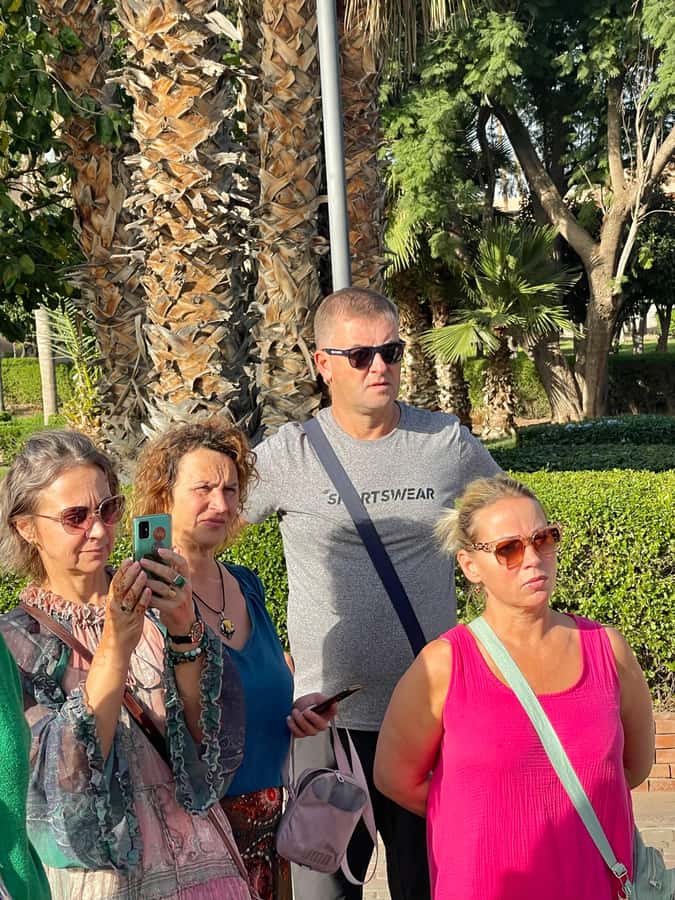
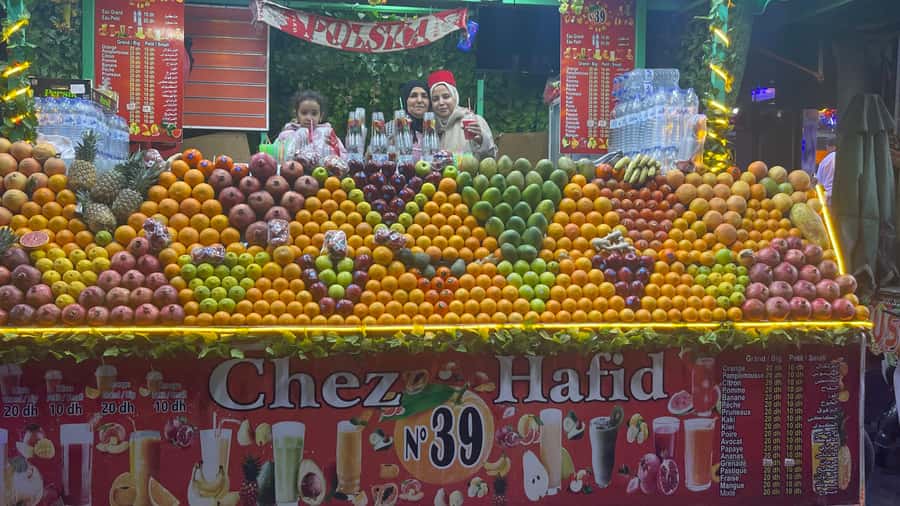
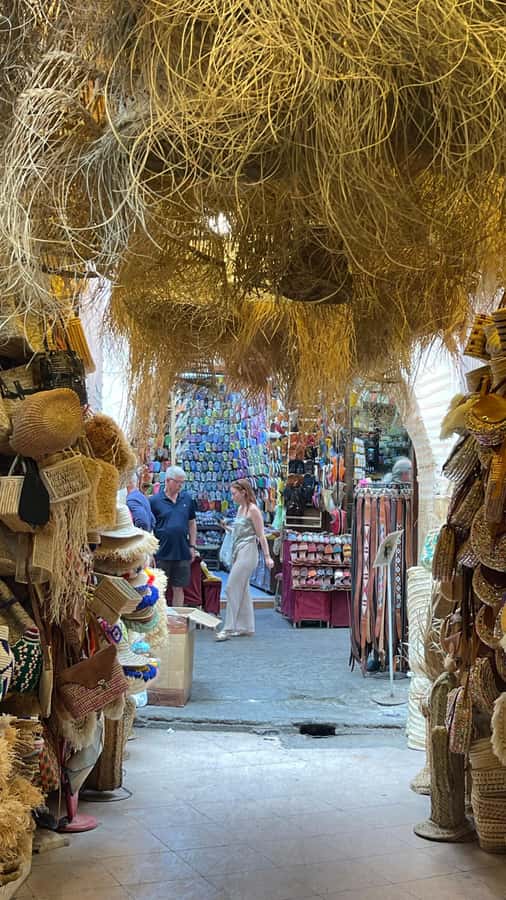
After the palace and the school, the tour leans into the part of Marrakech that people either love or find exhausting: the souks. Here, the strategy is simple. You don’t just stroll. You zigzag through the heart of the souks, guided so you can look at artisans and handmade products without turning the day into a navigation problem.
I like this because it respects what souks are: a maze of trade, craftsmanship, and sensory overload. Without help, it’s easy to miss the human side of the shopping streets—how goods are made, how different trades cluster, and why certain streets feel devoted to specific crafts.
With a guide, you also get a smoother experience for questions. Guides can point out details you’d never think to ask about, and the best part is that they can tailor the pace. In feedback tied to guides like Salem and Younis, what stands out is the patience—answering questions, adjusting timing, and keeping the group together even if someone walks slower.
If you want to “get lost and have fun” (without getting truly lost), this is the balance I’d recommend: you wander, but you don’t wander blindly. You’ll see more than the fast-photo crowd, and you won’t end the tour feeling like you spent four hours stepping around confusion.
Berber pharmacy stop: what to learn, what to buy, and what to skip
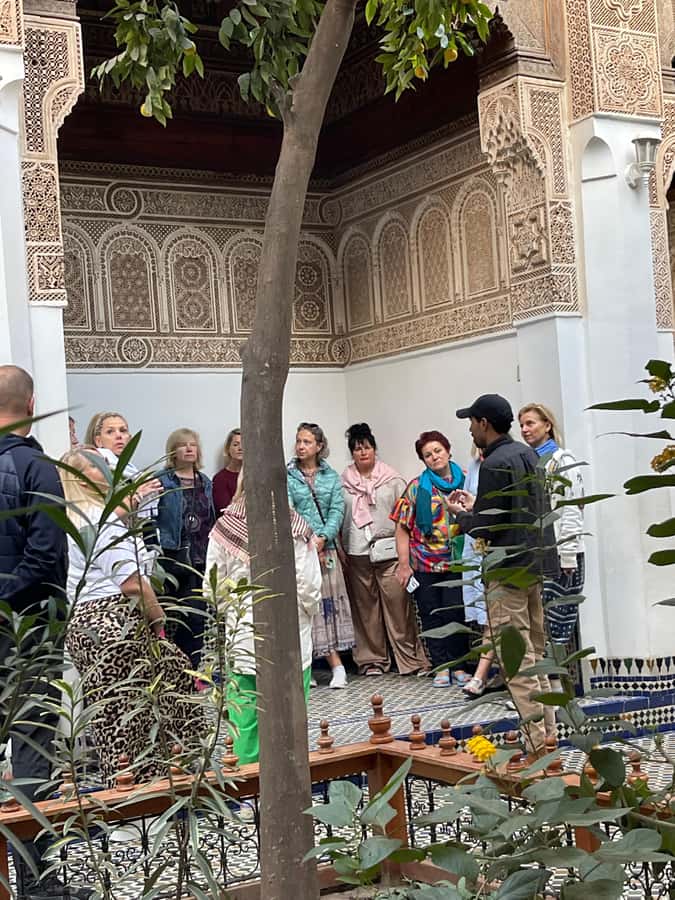
Before the tour ends, you visit a Berber pharmacy. This is where the experience gets practical. You’ll learn about herbs, spices, and oils, and you get an opportunity to buy products said to be of good quality.
I like this stop for two reasons. First, it connects Marrakech flavors and scents to something concrete. You can walk through the city seeing spice colors and oil displays, but learning what’s what helps you shop with more confidence. Second, it gives you a chance to bring something home that’s linked to what you actually experienced, not just souvenirs picked for convenience.
A word of caution: any shop visit can blur into a sales pitch if you’re not clear on what you want. Here, you’ll do better if you treat it like a learning session first. Ask what each product is for and how it’s used. Then decide if the price matches the quality you’re being shown.
Also, because the tour duration is only 4 hours, this stop functions as a structured wrap-up. You’re not stuck inside for ages. You learn, you browse, and then you move on toward the final area back at the square.




Price and value: is $18 a good deal for a 4-hour guided loop?
At $18 per person for a 4-hour tour, this is priced like an efficient, budget-friendly way to hit major sights with guidance. The big value components are the live guide and the structure: Bahia Palace, Medrassa Ben Youssef, then souks, then a Berber pharmacy stop.
Here’s the reality check: entry tickets to Bahia Palace and Medrassa are not included. So the all-in cost depends on the ticket prices at the time you go. The good news is the tour mentions skip the ticket line, which can be a real time-saver at popular attractions.
If you’re comparing options, think about what you’re buying. You’re not only paying for access to buildings. You’re paying for someone to explain what you’re seeing, keep you on a sensible route, and help you avoid the trial-and-error part of navigating the old city. That’s why guide quality matters so much here—and why feedback often emphasizes patience and adapting to mobility needs.
For a short visit to Marrakech, this tour can feel like a smart starter course. You’ll leave with enough context to explore on your own afterward, and enough “wow” moments to justify the time.
Pacing, walking, and accessibility: what to expect from the movement
This is a walking-heavy tour: Bahia Palace, then continued walking toward and around the Quranic school, then the souk “zigzag,” then a final stop at a Berber pharmacy before ending back near the square. That doesn’t mean it’s a hardcore hike, but it does mean you’ll be on your feet for much of the 4 hours.
What’s reassuring is the guidance style described around reduced mobility. Several accounts highlight that the guides were kind and patient, with attention to slow pace and understanding. In other words, the experience isn’t framed as a sprint. It’s framed as a guided stroll with timed stops.
If you have any mobility concerns, I’d treat this as a good option because it’s run by a guide who can adjust. Still, pack reality: you’ll be walking through uneven old-city areas and busy market streets.
Who should book this Marrakech guided tour
This tour is a great fit if you want:
- A quick, high-impact Marrakech outline in just 4 hours
- A guide to explain Bahia Palace and Medrassa Ben Youssef, not just point at them
- A souk experience that feels fun, not chaotic
- A smaller-group feel where the guide can answer questions and adjust pace
It might be less ideal if you strongly prefer self-guided exploring with no structured route, or if long periods of walking aren’t comfortable for you.
Also, it’s especially appealing if you’re visiting for the first time and want to understand the city through its major cultural touchpoints: palace art, educational architecture, market craft, and the spice-and-oil world Morocco is famous for.
Practical tips to make the most of the 4 hours
You’ll get more out of the day if you go in with a simple plan: decide what you want from each stop. For Bahia Palace, focus on architecture details and how spaces relate to each other. For Medrassa Ben Youssef, focus on the educational setting and how the layout supports study life. For the souks, focus on trades and handmade products rather than trying to see everything.
Bring comfortable shoes and be ready for crowded lanes. Souks can be tight, and you’ll be moving through alleys that don’t feel designed for tourists in a hurry. And keep your expectations realistic for the Berber pharmacy: treat it as a chance to learn about herbs, spices, and oils, then shop only if it truly fits what you want to bring home.
If you want a smooth experience, arriving a few minutes early at Café de France is smart. It reduces pre-tour stress and helps the guide start on time.
Should you book this tour?
Yes, if your goal is a guided Marrakech highlight loop in 4 hours—with explanation, not just sightseeing—and you’re comfortable walking through the souks. The strongest reason to book is the combination of major sites plus guided wandering, anchored by an English-speaking guide who’s described as patient and adaptive.
I’d book it especially if this is your first time in Marrakech or if you want a short, well-structured day that doesn’t require you to do old-city navigation math. Just remember: you’ll pay for palace and medrassa entry tickets separately, and the souks part is active, not lazy.
FAQ
FAQ
How long is the Marrakech: Bahia Palace, Madrassa & Souks Guided Tour?
It’s listed as a 4-hour experience.
Where does the tour meet?
You meet outside Café de France on the main square of Jamaa el-Fna.
What’s included in the price?
The tour includes a live guide.
Are entry tickets included for Bahia Palace and the Medrassa?
No. Entry tickets for Bahia Palace and the Medrassa are not included.
Is the tour in English and is it private?
Yes. It’s an English live tour and it’s described as a private group.
Does the tour include skipping the ticket line?
Yes, the tour notes skip the ticket line.
Can I get a refund if plans change?
There’s free cancellation up to 24 hours in advance for a full refund.