REVIEW · MARRAKESH
Marrakech: Moroccan Cooking Class for vegetarians and vegan
Book on GetYourGuide →Operated by Cooking class with chef Fatima · Bookable on GetYourGuide
Your best Marrakech meal starts in a kitchen. This 4-hour, hands-on cooking class at Chef Fatima’s home turns Moroccan food into something you can actually make, not just admire. I especially like the spice-by-spice lessons and the way the day ends with a family-home meal you helped build. One thing to consider: finding the place can be tricky inside the Medina, so meet at the stated spot and be ready to walk a bit.
You’ll be greeted by Moroccan tea, coffee, or juice, then pulled into real cooking steps: starter, main, and dessert. In most sessions, the class is designed for vegetarians and vegans, but it may be mixed with people cooking meat—so if you’re strict, you’ll want your instructor to confirm how everything will be handled.
In This Review
- Key highlights at a glance
- Moroccan cooking class value: real home food, not a rushed show
- Where to meet next to Andalusia (and how not to get lost)
- Tea, family conversation, and the spice lesson that changes how you shop
- Cooking starter: Moroccan salads or briwat (and why it sets the pace)
- The main event: tagines, couscous, and tanjya-style flavors
- Dessert and the meal at the table: the part you remember
- Price, timing, and how to plan your day in Marrakech
- Tips to get the most from this vegetarian and vegan-friendly class
- Should you book this Marrakech vegetarian cooking class?
- FAQ
- What is the price and duration of the Moroccan cooking class?
- Where is the meeting point?
- What dishes will you cook during the class?
- Is the class suitable for vegetarians and vegans?
- What’s included in the price?
- What about transportation?
- What languages are available?
- Is there a cancellation option?
- Is the activity wheelchair accessible?
Key highlights at a glance
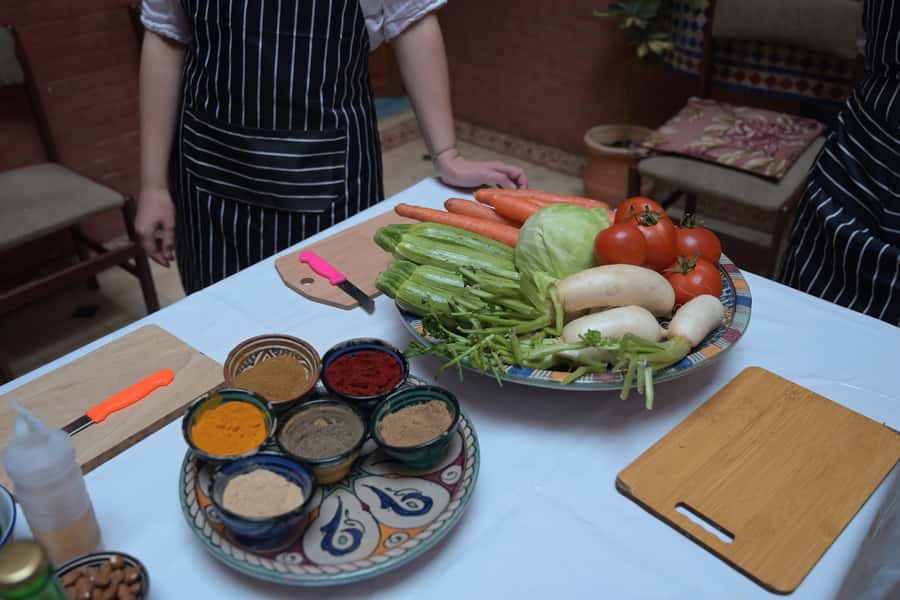
- Chef-led, not demo-only: you cook the whole way through, including cutting, mixing, and plating
- Spice lessons you can use later: learn which spices to look for in the souks and how to choose them
- Vegetarian and vegan friendly: starters, sides, tagines, and desserts can be made without meat or animal products
- Medina house setting: you cook in an authentic home in the heart of the old city
- Recipes and extras: you’ll get what you need to make the dishes, take photos, and receive a gift at the end
Moroccan cooking class value: real home food, not a rushed show
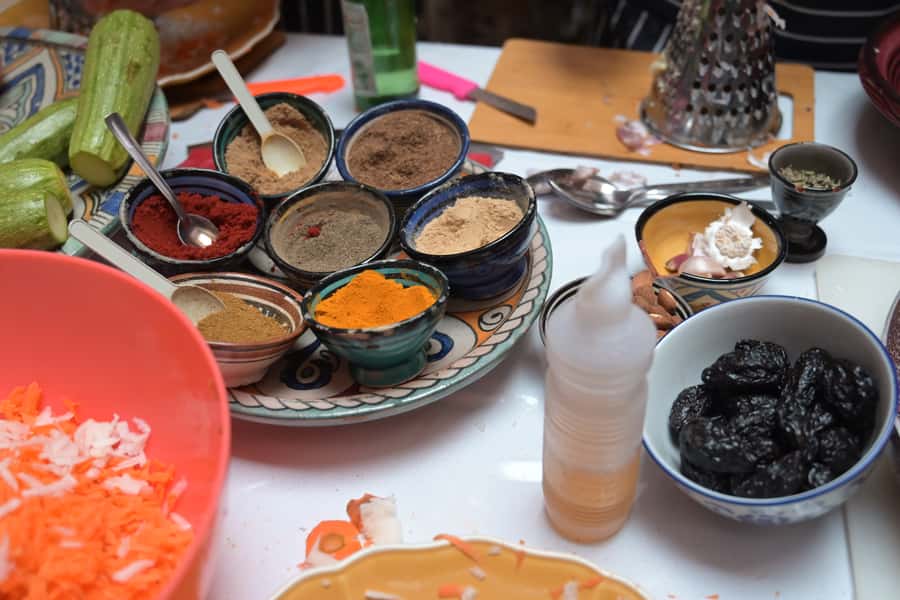
For $30 per person and 4 hours, this is the kind of Marrakech activity that makes sense. You’re paying for two things at once: time with a chef and an actual meal you cooked with your own hands. Most short classes leave you with a vague memory and a handful of photos. This one aims for something more practical—understanding how Moroccan flavors are built, then tasting them at the table.
The structure also helps. You start with spices and ingredients before the stove heats up. Then you cook in a natural order: starter first, then the main dish (tagine, couscous, or tanjya-style options), and finally dessert. The payoff is that when you sit down, you’re not just eating. You’re eating the result of the decisions you just learned—what to toast, what to grind, what to layer, and what to balance.
Chef Fatima leads the experience, with French and English support (and audio guidance in English and French). The tone is friendly and family-focused, not formal. You’re in a private home in the Medina, where the best part is that you get to ask questions like a human, not a customer.
A few more Marrakesh tours and experiences worth a look
Where to meet next to Andalusia (and how not to get lost)
This class has a specific meeting point: next to Andalusia restaurant. The chef waits there about 30 minutes before the class timing, which matters because the Medina is a maze at street level. If you show up late, you may be the person hunting for a landmark while everyone else is already walking.
Tip: use your phone map to find Andalusia first, then slow down and look for the person in charge. The surrounding alleys can feel confusing even for good navigators, so plan to arrive early, not heroically on time.
Once you’re with the chef’s group, you’ll be guided to the cooking home. Several people note that the route can include back passages before you reach the riad-style space. That’s normal here. The upside is that the detour is part of the experience—the atmosphere changes the moment you step into a home setting.
Tea, family conversation, and the spice lesson that changes how you shop
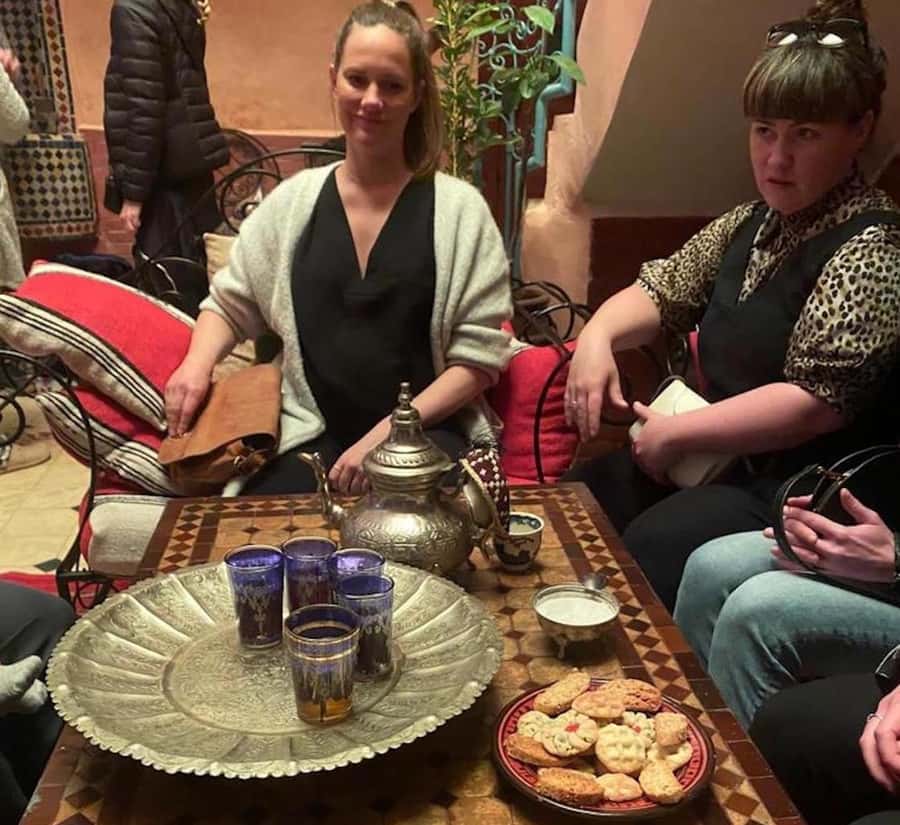
Before cooking, you get the Moroccan welcome: Moroccan tea, coffee, or juice, plus drinks and cookies. Then conversation starts—about food, habits, and daily life. This is where the class stops being only about recipes and becomes cultural, in a way that feels natural rather than forced.
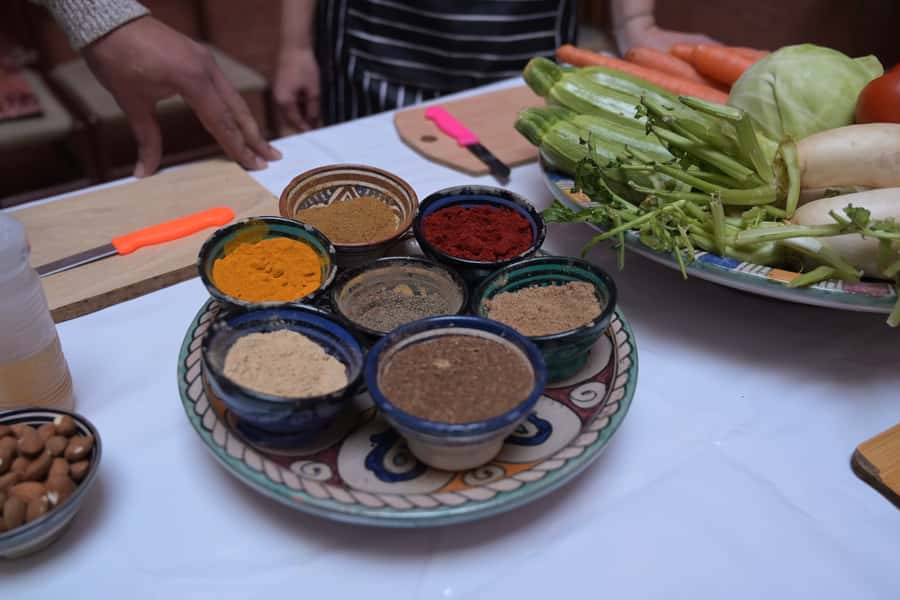
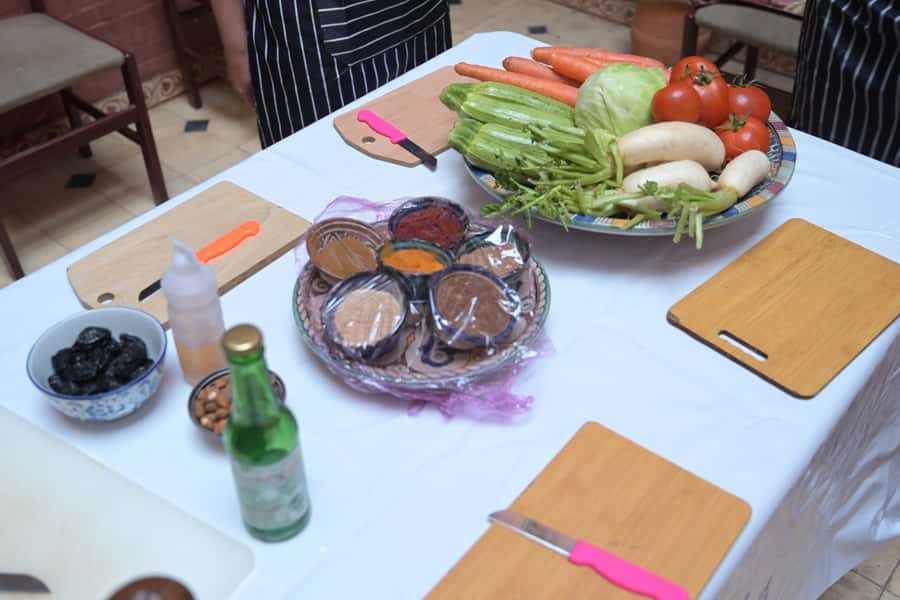
Then comes the core skill: the chef explains the spices you’ll taste in Moroccan dishes. This matters because Moroccan cooking isn’t just about using spices; it’s about using the right ones in the right balance. You’ll learn how to recognize flavors, and you’ll get practical advice if you plan to shop in the souks later—how to choose spices so you don’t end up with something dusty, old, or oddly sharp.
If you like souvenirs, this is your moment. Some instructors even sell spices that their family makes, so you can buy with confidence after understanding what you’re looking for. You’ll also be able to talk your way through the souk without sounding like you’re copying a grocery list.
Cooking starter: Moroccan salads or briwat (and why it sets the pace)
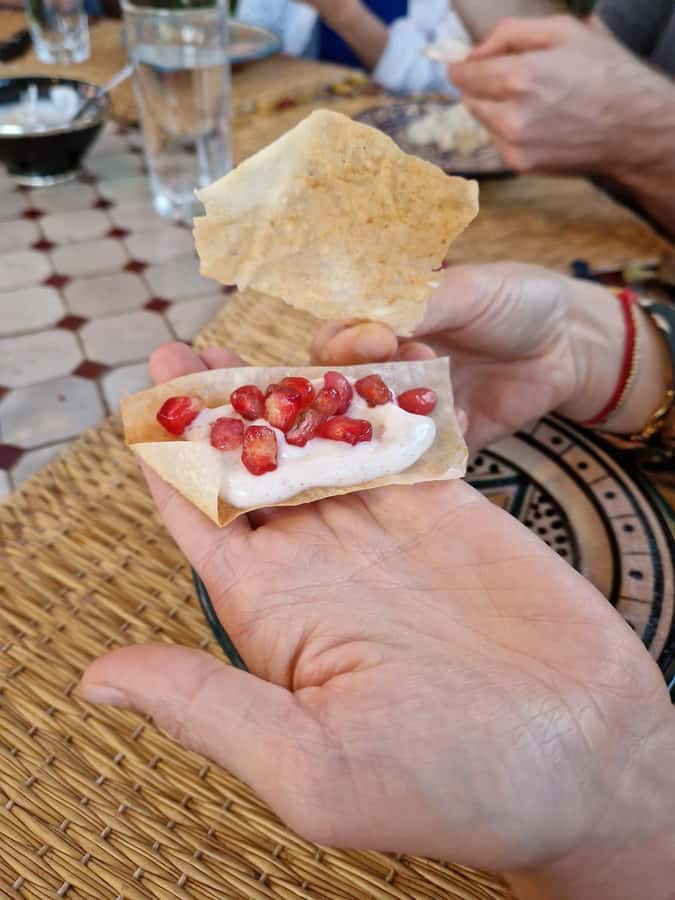
After the spice talk, you jump into the first dish. The starter options are typically Moroccan salads or briwat. Even if you’ve eaten briwat before, making them is a different experience. You see how the fillings are combined and how the wrapping creates texture. It’s the kind of small technique that suddenly explains why restaurant versions taste so crisp and layered.
For salads, the learning is more about taste and assembly. Moroccan salads often balance freshness with seasoning—salt, acid, herbs, and spice working together. You’ll get a feel for how the chef builds flavor quickly, without turning it into an all-day project.
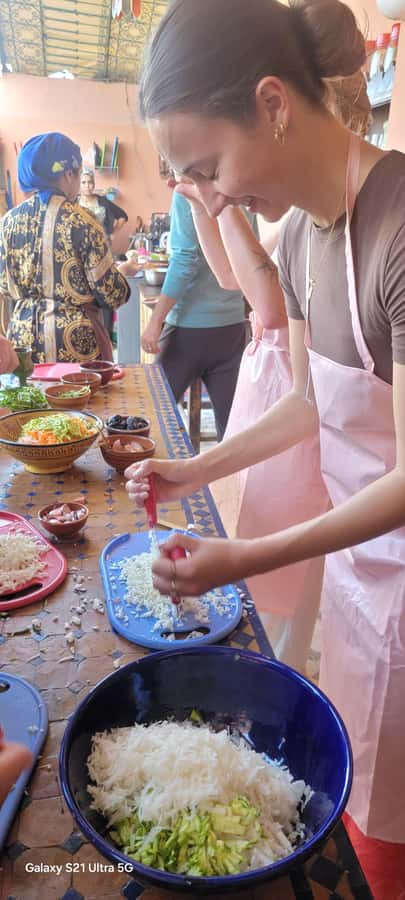
This starter stage also trains your hands. In a 4-hour class, there’s no time to be hesitant. Everyone takes part, and the chef’s job is to make sure you’re doing the real work—mixing, chopping, and shaping—while still moving smoothly.
If you’re traveling with kids or want a group-friendly activity, this is a good step. It’s clear, hands-on, and not overly complex. Even if your first attempt looks imperfect, it usually ends up delicious.
The main event: tagines, couscous, and tanjya-style flavors
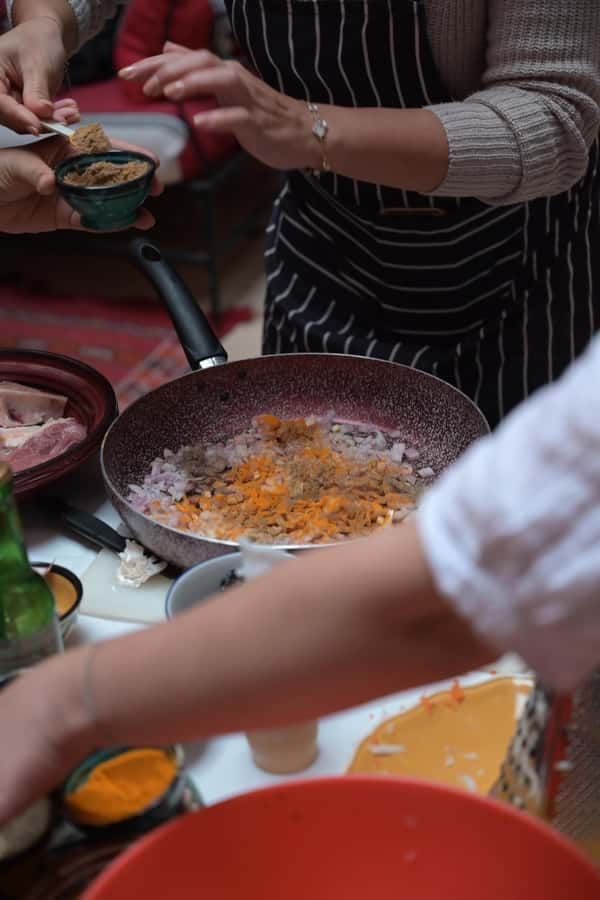
The main dish choices include tajines, couscous, and tanjya. This is where Moroccan cooking feels most rewarding, because the flavors layer over time. You’re learning not only what goes into the pot, but why the chef chooses each step.
A tajine-style dish (even when vegetarian) teaches you about aroma. You’ll likely work with ingredients that smell unmistakably Moroccan: warm spice blends, preserved lemon or citrus notes (depending on the menu), herbs, and slow-simmer logic. If you’re vegan, you’ll want to pay attention to how the chef substitutes and balances—because Moroccan flavor doesn’t require animal products to work.
Couscous is different. It’s about texture and seasoning distribution. You learn how to treat the grains as a base for flavor, not as plain filler. And tanjya-style cooking (as offered in the class menu) helps you understand how Moroccan kitchens think in terms of comfort food built from spice, vegetables, and careful heat.
Important diet note: the class is designed for vegetarian and vegan, and allergies won’t be a problem. Still, one practical consideration from real past group experiences is that the group can be mixed, with some people preparing meat dishes. What matters for you is that vegetarians and vegans can focus on their own vegetable tagine and vegan sides, and the chef can keep the cooking targets separate where needed. If you’re vegan or allergy-sensitive, tell the chef clearly what you need before cooking begins and watch how the instructor organizes ingredients.
You can also read our reviews of more cooking classes in Marrakesh
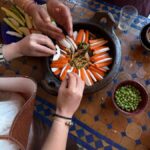
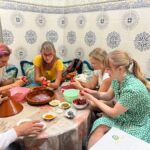
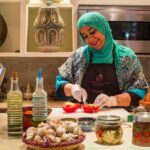
Dessert and the meal at the table: the part you remember
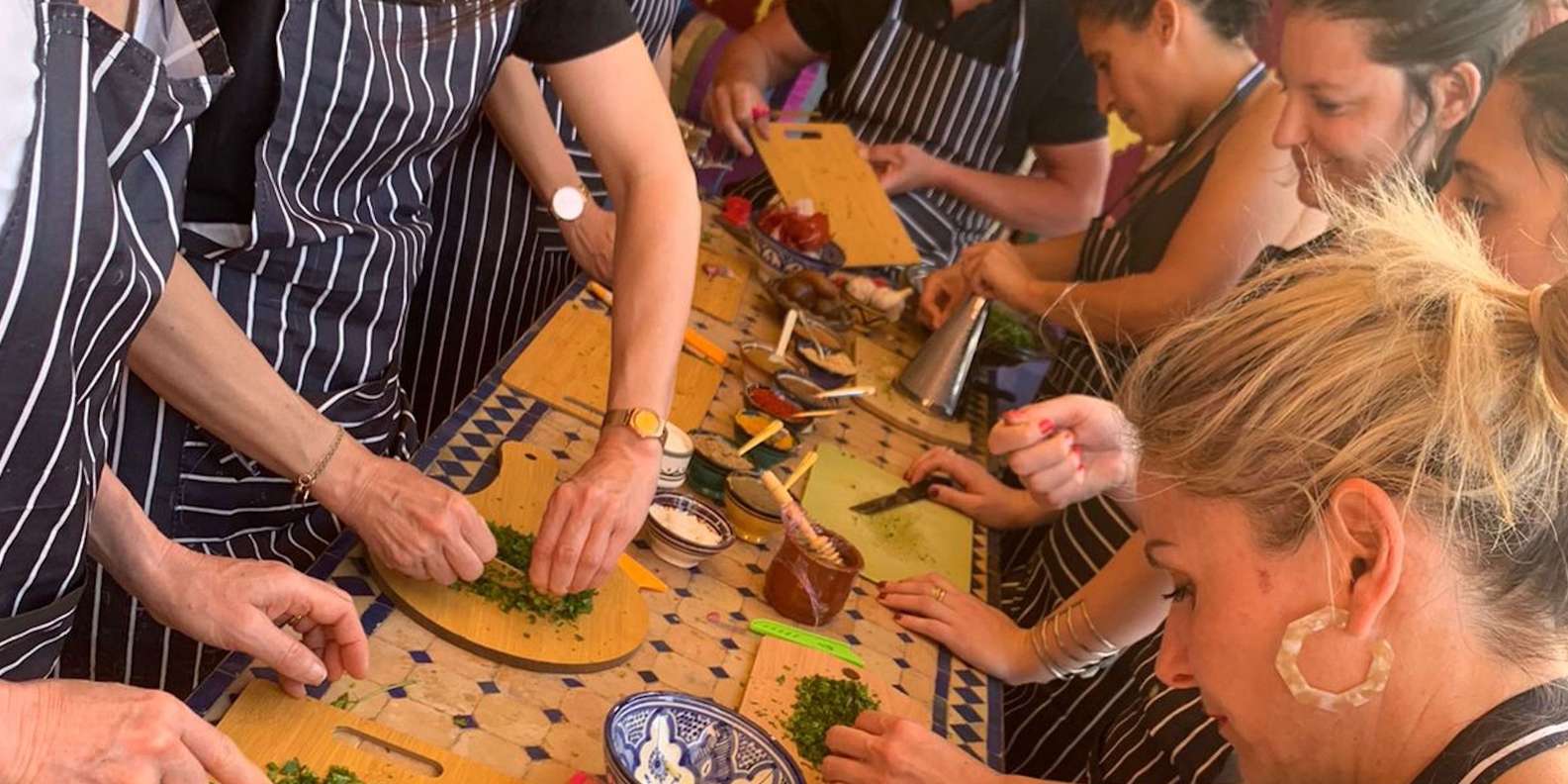
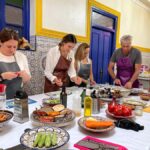
Dessert comes after the main, and it’s not treated like an afterthought. You’ll cook it as part of the sequence, then sit down together to eat what you made. The class is built so you don’t just taste a “sample bite.” You eat a real meal, all together.
This is one of the highest-value aspects of the experience. Moroccan cooking is strongly tied to hospitality—food is a social event. When you eat in the family setting, the meal lands differently than it would in a restaurant. You’re sharing the work and the conversation.
And yes, the meal is a highlight for most people. The reason is simple: you’ve just learned the mechanics. When you taste the finished tagine or couscous, it clicks. You can identify the spice structure. You understand what should taste sweet, what should taste savory, and what should be bright.
Also, you get a gift at the end of the lesson. It’s a small touch, but it signals the experience is meant to leave you with something beyond the memory.
Price, timing, and how to plan your day in Marrakech
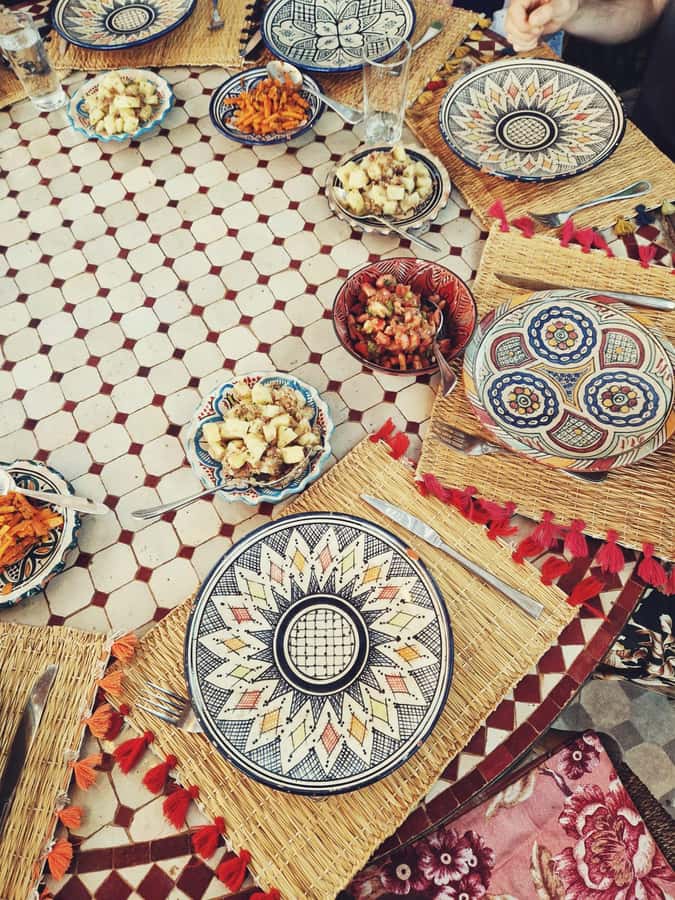
At $30 per person for 4 hours, the value is hard to ignore—especially because the class includes the cooking lesson, meal, and drinks (plus cookies). Transport isn’t included, so plan to get yourself to the meeting point by taxi, ride-hail, or on foot if you’re already nearby.
The 4-hour format is ideal for real learning. You have time to cook starter, main, and dessert without feeling like the chef is herding you from station to station. It also leaves room for conversation and questions, which is part of what makes this feel like a genuine home experience rather than a ticketed production line.
Timing-wise, the chef meets you about 30 minutes before start time at the meeting point. So if you’re planning other activities that day—like a souk wander or a garden visit—keep some breathing room. Marrakech rewards flexible scheduling, and you’ll feel calmer if you don’t rush your arrival.
Tips to get the most from this vegetarian and vegan-friendly class
Here’s how I’d make this class pay off in lasting ways:
- Arrive early at the meeting point. The Medina streets can slow you down, even with good maps.
- Ask your chef about your exact menu. The menu is suggested by the chef, and you can confirm what’s vegan or vegetarian for each dish.
- Watch the spice lesson closely. When you go back to the souks, you’ll know what to smell for and what good spice should taste like.
- Take photos as you cook. You can take pictures if you want, and it helps you replicate steps later.
- Bring a curious appetite. You’ll be tasting as you go, and you’ll likely want to ask why certain combinations work.
Also, one good practical idea: if you want recipes, ask directly. Some past participants report receiving recipes afterward by message. Even if it’s not guaranteed, it’s a reasonable question, and the chef team clearly knows people want to recreate the food at home.
Should you book this Marrakech vegetarian cooking class?
Book it if you want hands-on cooking, not just a meal out. The mix of a spice education plus a full starter-main-dessert session is exactly what makes it useful. At $30 for 4 hours with a meal and drinks, it’s strong value, and it’s especially appealing if you’re vegetarian or vegan and want food that feels genuinely Moroccan, not “adapted” in a boring way.
Skip it only if you hate getting a little lost in the Medina (because finding the meeting spot early is key) or if you need a class that guarantees everyone cooks the exact same diet with zero meat in the room. For most people, that’s handled well, but if you’re very strict, communicate your needs at the start.
If you want a Marrakech memory you can reproduce—tagine flavors, couscous technique, spice recognition—this is one of the best bets.
FAQ
What is the price and duration of the Moroccan cooking class?
It costs $30 per person and runs for 4 hours.
Where is the meeting point?
The meeting point is next to Andalusia restaurant.
What dishes will you cook during the class?
You’ll cook a starter (Moroccan salads or briwat), a main dish (tajines, couscous, tanjya), and a Moroccan dessert.
Is the class suitable for vegetarians and vegans?
Yes. Vegetarian, vegan, and allergies won’t be a problem.
What’s included in the price?
Included are drinks and cookies, the cooking lesson, and the meal you cook and eat together.
What about transportation?
Transport is not included.
What languages are available?
The instructor speaks French and English, and an audio guide is included in English and French.
Is there a cancellation option?
Yes. You can cancel up to 24 hours in advance for a full refund.
Is the activity wheelchair accessible?
Yes, it is wheelchair accessible.