REVIEW · MARRAKESH
From Marrakech: Zagora 2-Day Desert Safari with Food & Camp
Book on GetYourGuide →Operated by Ando Travel Ltd · Bookable on GetYourGuide
A desert safari from Marrakech is a rare combo of big scenery and simple routines. Sunset camel rides across the Zagora dunes and a visit to Ait Ben Haddou make the experience feel like two different Morocco worlds in one short trip. The main thing to be ready for is the long time in the minivan—most of your Day 1 is spent driving, even with regular breaks.
I also like that the camp side of the trip is practical, not just performative. You get a private tent for the night (standard or luxury), real campfire entertainment with tamtam drumming, and meals that are designed to keep you moving without fuss. For this kind of trip, that mix is good value.
In This Review
- Key Highlights You’ll Care About
- Zagora Desert Safari for $113: Where the Value Comes From
- Day 1 Morning: Leaving Marrakech and Crossing Toward the High Atlas
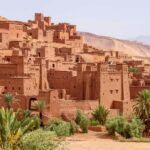
- Ait Ben Haddou: The UNESCO Kasbah That Lives in Movie Frames
- Draa Valley and Agdez: Palm Oases and Fortified Kasbah Views on the Move
- Into Zagora: Camel Caravan at Sunset (and What the Ride Feels Like)
- Desert Camp Check-In: Private Tent, Showers, and the Star Show
- Dinner Under the Stars: Food, Music, and a Night That Actually Lets You Rest
- Sunrise and the Return Camel Ride: The Part People Don’t Skip
- Price and Logistics: Standard vs Luxury Tents Without Confusing Your Budget
- Who Should Book This Zagora Trip (and Who Should Skip It)
- My Booking Advice: Should You Pick This Tour?
- FAQ
- What time does the tour start and end?
- Is lunch included?
- What’s the difference between standard and luxury desert camp tents?
- Are showers and toilets available at the camp?
- Are camel rides included at both sunset and sunrise?
- Can I avoid the camel ride if I want?
- Is this tour suitable for pregnant women?
Key Highlights You’ll Care About
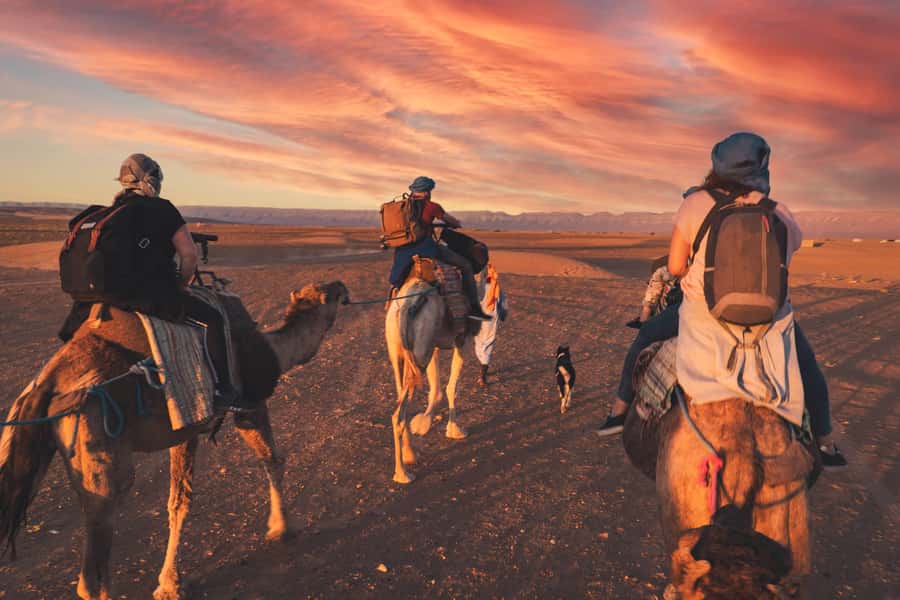
- Sunset + sunrise camel rides in Zagora, not just one quick photo stop
- A private tent for the night, with luxury tents offering private in-tent bathrooms
- Ait Ben Haddou kasbah time for photos and a slow wander in a UNESCO-listed village
- Draa Valley stops for palm oasis views and ancient fortified kasbahs along the way
- High Atlas crossing over the Tizi n’Tichka pass for serious mountain scenery on the road
- Campfire night with Berber drumming and a clear sleep-under-the-stars vibe
Zagora Desert Safari for $113: Where the Value Comes From
At about $113 per person for a full 2-day circuit, the value isn’t coming from one “wow” moment. It’s the sequence: Atlas Mountains drive + UNESCO kasbah + desert dunes + an overnight camp. You’re paying for transport, timed activities (sunset and sunrise), and an actual overnight setup—things that add up fast if you try to piece them together yourself.
Another value point: you’re not just dropped in the desert and left to figure it out. You have a multilingual driver-guide (English/French/Spanish depending on the setup), camp staff on site, and included Moroccan dinners and breakfasts with vegetarian options. If you’ve only got a couple days in Morocco, this format makes planning simpler.
The downside? You’ll spend a lot of time in a vehicle. That’s normal here. The good news is that stops are built in for water, toilets, and quick breaks, and the route is designed to keep changing as you go.
You can also read our reviews of more food & drink experiences in Marrakesh
Day 1 Morning: Leaving Marrakech and Crossing Toward the High Atlas
Most departures start early—around 7 AM, with pickups arranged from your hotel or riad in Marrakech. Depending on where you’re staying, your pickup timing can land closer to 8 AM, and the vehicle is an air-conditioned minibus or minivan, which matters because you’ll be driving for hours.
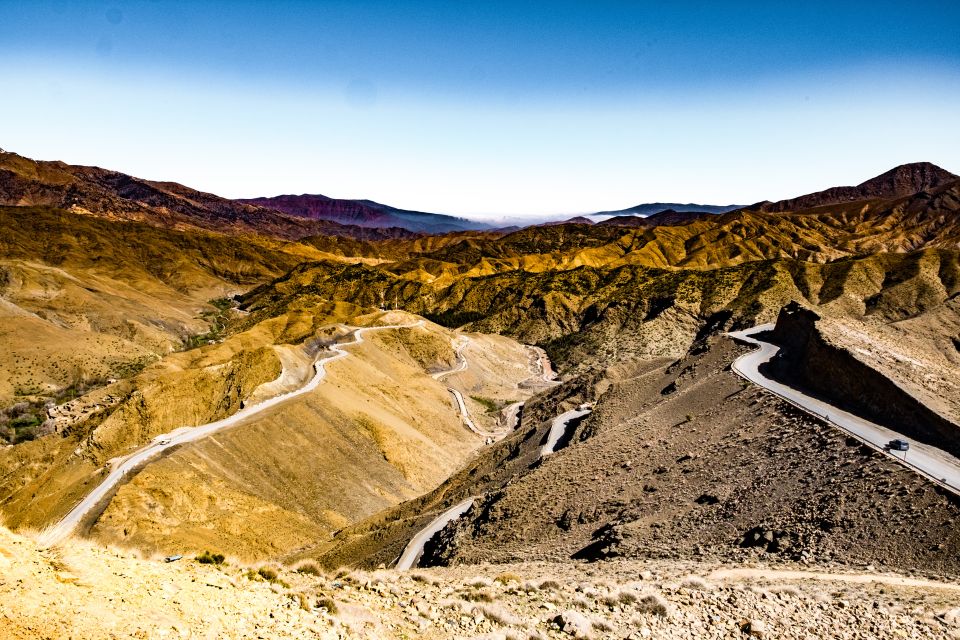
From the start, your day is about getting from city Morocco into mountain Morocco. You’ll cross the High Atlas via the Tizi n’Tichka pass, the part of the journey that makes the long drive feel worth it. You also get regular stops—so it never turns into a nonstop, straight-shot grind.
Practical tip: wear comfortable clothes you can layer. Even if Marrakech feels warm, mountain air can shift fast, and you’ll want sunscreen and sunglasses ready during the bright stretches.
Ait Ben Haddou: The UNESCO Kasbah That Lives in Movie Frames
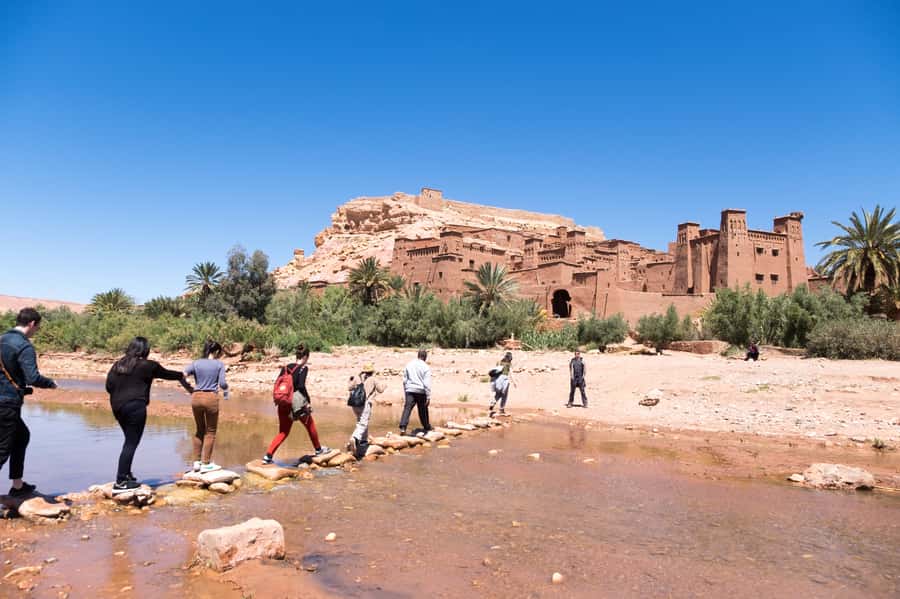
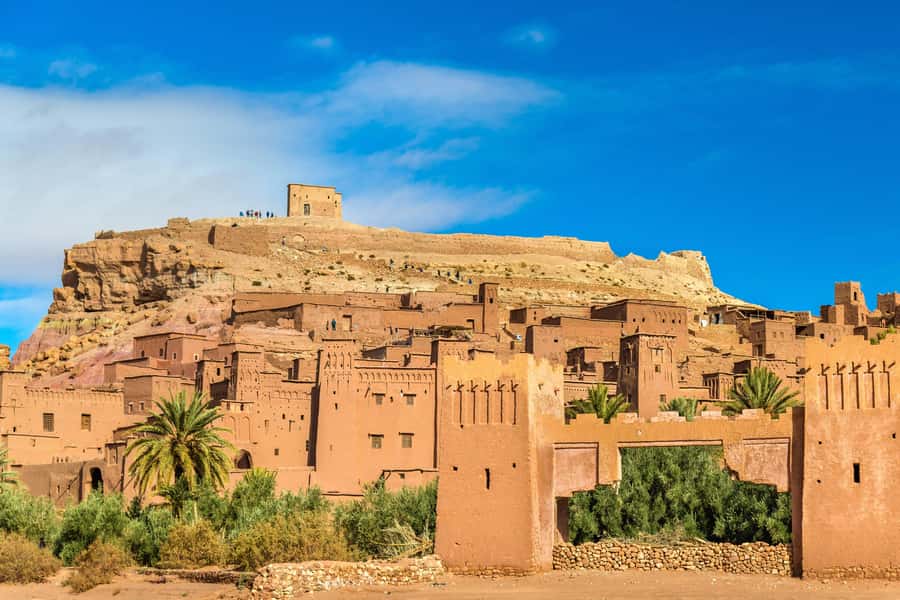
Ait Ben Haddou is the kind of place that looks like set dressing until you notice how much life is built into the stone. You’ll arrive and have time to explore the kasbah at leisure, including a break for lunch (lunch isn’t included, but you’ll have opportunities to buy it on the way).
What makes this stop especially good on a tight schedule is that it’s not just a drive-by. You can walk around, take photos, and get your bearings in the village lanes. It’s also famous from major films (including Gladiator and Game of Thrones), which helps explain why it draws crowds—but the real reason it works is the sheer survival of the place. These mud-brick structures feel ancient because they are.
If you want a guided angle, you can hire an optional local guide in the Ait Ben Haddou area for a small extra fee (typically €2–3 per person). A number of guides in the field can explain the kasbah layout and the living culture around it, and it’s a relatively low-cost add-on if you like context.
Names you may hear from the ground staff include Abdul in Ait Ben Haddou, with some groups also mentioning Ali as the person who explained the site. If you get someone who’s talkative, ask questions. It’s one of the stops where curiosity pays off.
Draa Valley and Agdez: Palm Oases and Fortified Kasbah Views on the Move
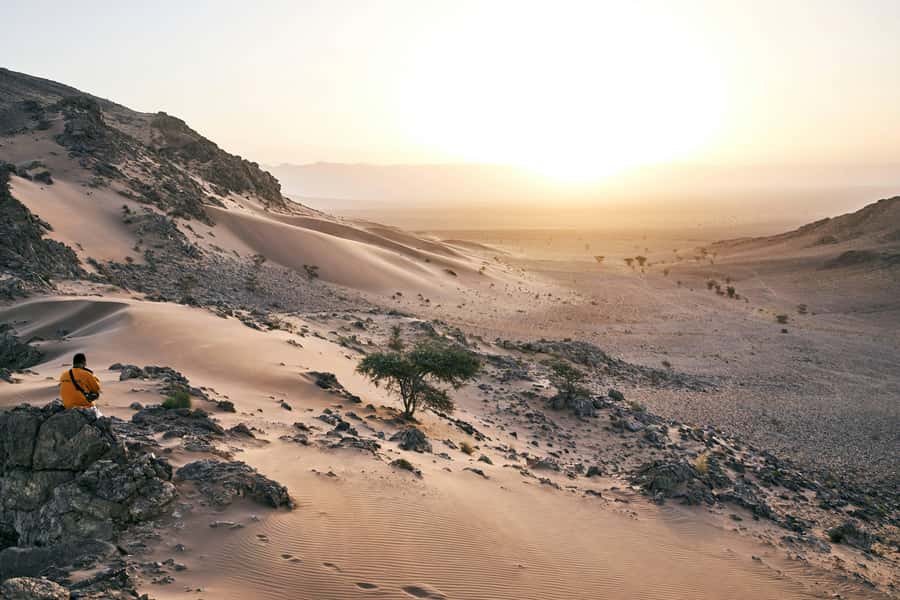
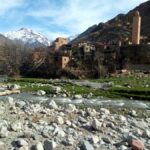
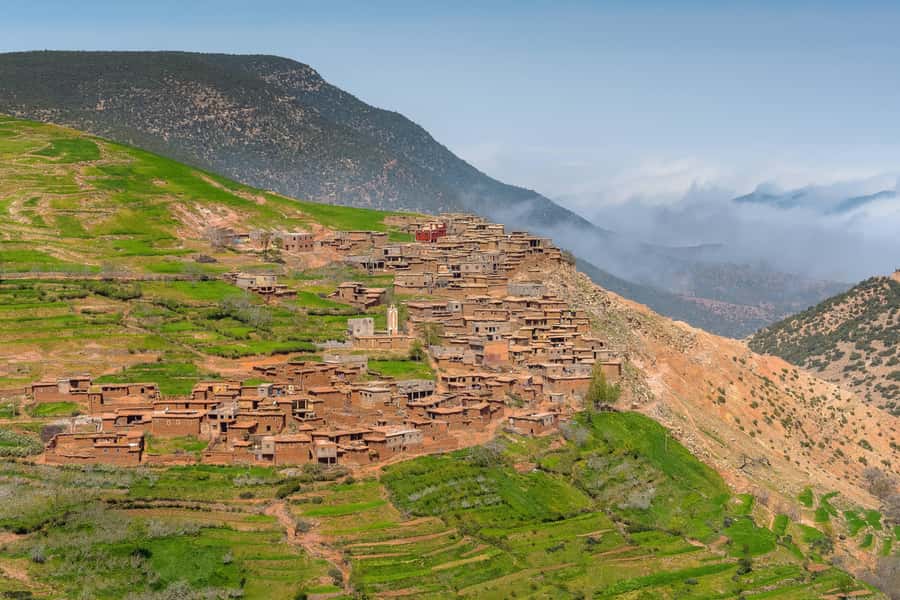
After Ait Ben Haddou, the road trends toward the south and you’ll continue to Agdez through the Draa Valley. This stretch is where the scenery shifts again: date and palm trees, plus fortified kasbahs that pop up in the distance like handwritten history.
You’ll also notice that this part of the day is structured around “keep moving, but don’t rush.” Stops aren’t just toilet breaks. They’re chances to look, stretch, and capture photos without sprinting between viewpoints. Many drivers are praised for exactly that—stopping at panoramic points, helping with water, and keeping the group on schedule.
When groups share how the drive feels, they often say it’s manageable because the driver builds in little pauses. Names that came up in the field include Nourredine, Housayn imlil, and Mohamed (drivers who kept people comfortable and safe while still making time for views).
So if you’re nervous about the travel time, focus on the rhythm: sit, stop, look, repeat.
Into Zagora: Camel Caravan at Sunset (and What the Ride Feels Like)
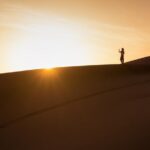
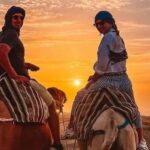
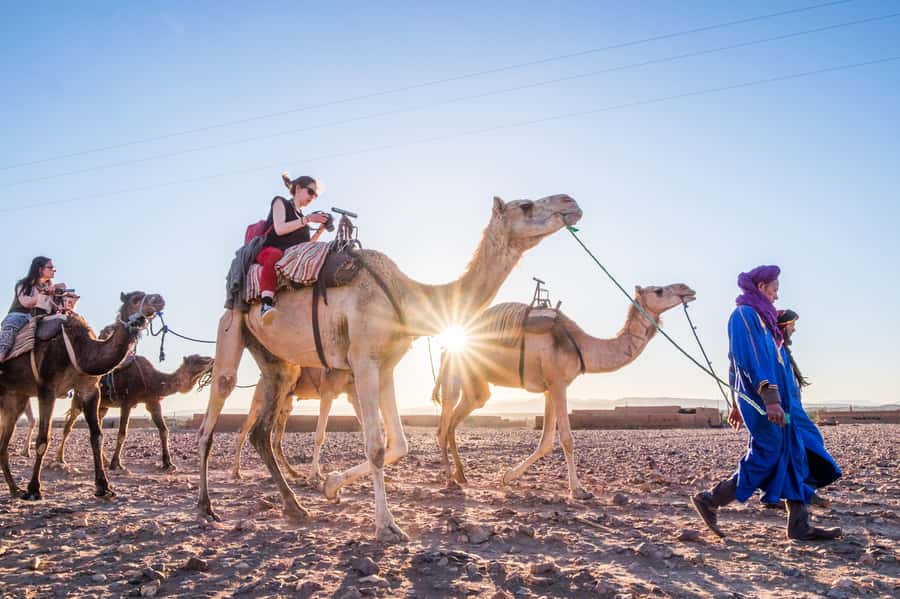
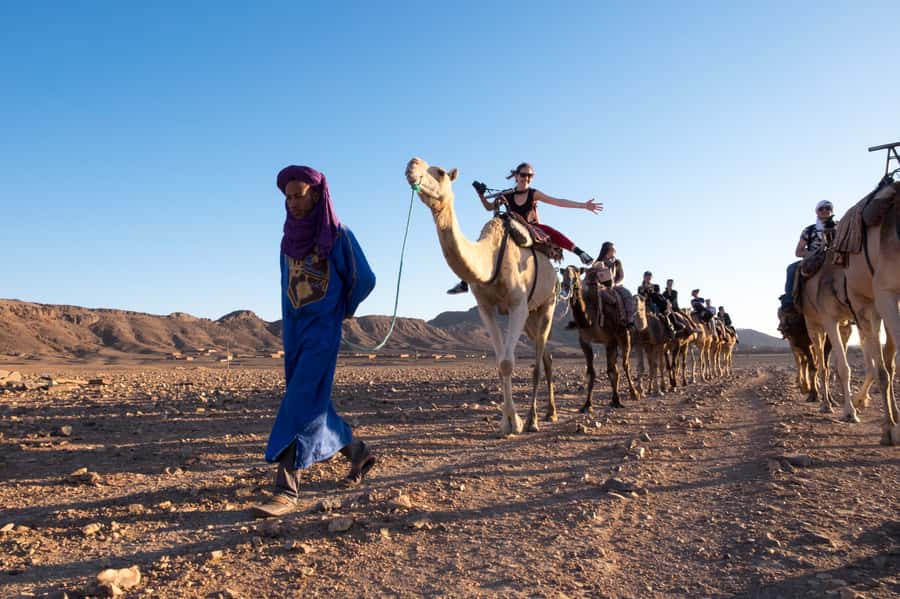
When you reach Zagora, you meet the camel caravan and ride at sunset. This is the moment most people came for—and it usually lands exactly when the light turns honey-gold over the dunes.
The camel ride is included at sunset, and it’s typically around an hour (some groups describe it that way). Camels are gentle, and guides are usually the ones handling the pace and comfort, but it still feels like a real ride. That’s why long pants are recommended, and why it helps to wear shoes that won’t slip.
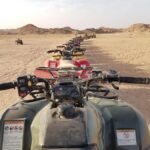
If you’d rather not sit the whole time, you can walk alongside the camels (some people did this in the more comfortable “partner-by-your-side” style). There’s also a 4×4 transfer alternative if you request it (listed as €50 per way per vehicle).
Practical tip: bring the energy to enjoy it slowly. The magic is the light and the open sky—not speed.
A few more Marrakesh tours and experiences worth a look

Desert Camp Check-In: Private Tent, Showers, and the Star Show
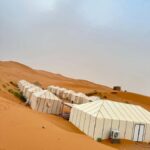
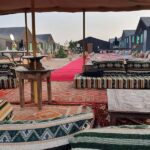
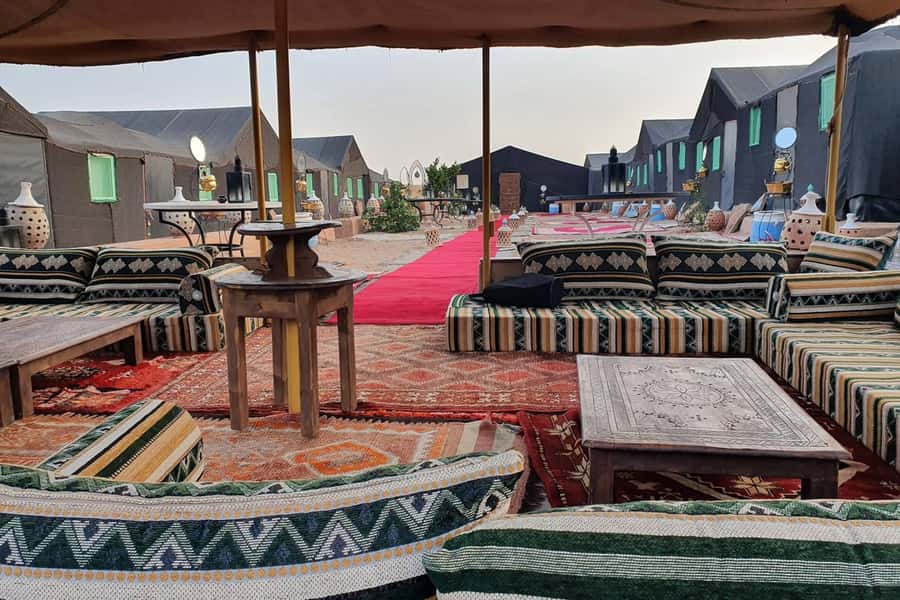
Before dark, you transfer to the Sahara desert camp in Zagora and check in. You’ll be shown your private tent, and you’ll get some free time to look around the camp area before dinner.
Camp comfort depends on which version you book:
- Luxury camp tents: private in-tent bathrooms
- Standard camp tents: shared facilities nearby
Either way, you should have access to toilets and showers. Some guests advise bringing a small microfibre towel because towels aren’t always provided. I’d treat that as smart insurance—cheap to pack, annoying if you forget.
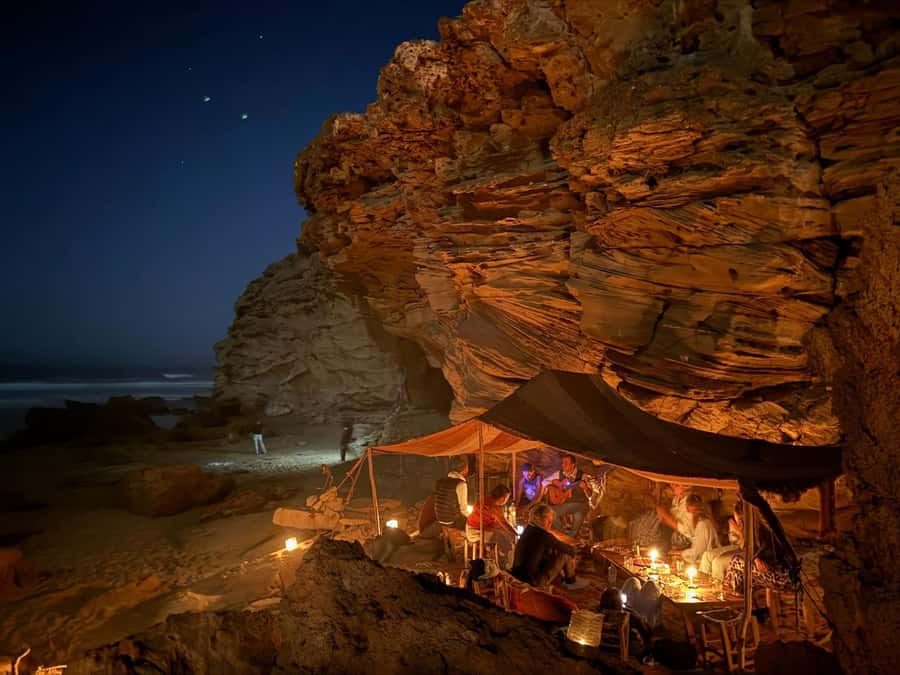
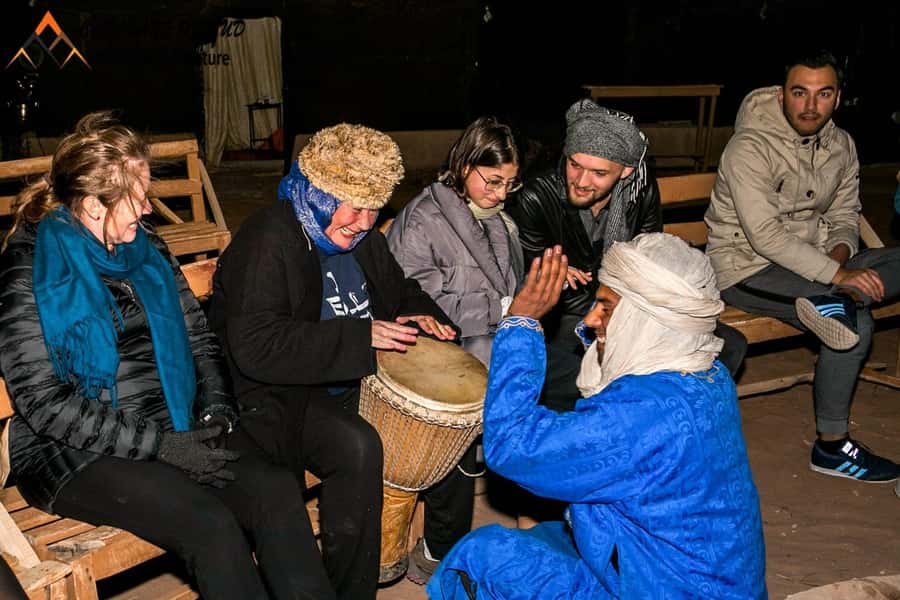
This is also where the difference between “a desert night” and “a desert memory” shows up. You’ll have dinner served in a Moroccan style under the stars, then campfire entertainment. Many groups mention tamtam drums and drumming by the fire, plus tea and music that keep the mood relaxed.
Names that came up from the desert side include Youssef and Yussif as camp camel guides, plus Mohammed (camp guide) and Abraham (camel/camp guide). You’ll likely meet the person who walks with you during the camel ride, and they can make the night feel personal by explaining what the camp is like and how nomad life works.
Dinner Under the Stars: Food, Music, and a Night That Actually Lets You Rest
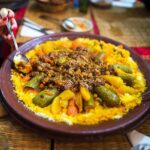
The dinner is Moroccan and included, with vegetarian options available. Don’t expect fine dining plates with sauces named after mountains. Expect filling food you’ll remember because you ate it in the desert, not just because it was delicious.
After dinner, the camp tends to lean into music and interaction around the fire. In the feedback, people often mention drumming, dancing, and the general warmth of the Berber hosts. That social time matters because it turns the night into something communal instead of a quick checklist.
Then comes the sleep. Temperatures vary by season, and nights can be cold from about Nov–Feb. Even in warmer months, desert air can cool down fast after sunset. Layer up for bed and keep a warm layer within reach.
Sunrise and the Return Camel Ride: The Part People Don’t Skip
Waking early is optional, but it’s usually included as an experience: sunrise in the dunes. If you’re the sort of person who can drag yourself out of bed for a good view, do it. Sunrise over the desert is the kind of memory that sticks longer than the sunset.
Then you eat breakfast at camp and ride camels back toward the main road. This second camel ride is part of the included plan, and it’s usually shorter than the sunset experience—some groups describe around a half hour on the return portion.
After that, you head back in the minibus and arrive in Marrakech around 6 PM on Day 2.
If you’re heading onward the same day, plan a little buffer. The road is still the road, and the day ends with a drive back to the city.
Price and Logistics: Standard vs Luxury Tents Without Confusing Your Budget
Here’s how I’d think about the money.
You’re paying for:
- Marrakech pickup and return (hotel/riad to vehicle, then back again)
- Air-conditioned transport across the Atlas
- A full night in a desert camp with your own private tent
- Camel rides at sunset and sunrise
- Dinner and breakfast (vegetarian options available)
- Camp entertainment with Berber drumming
- Toilets/showers access
- Onboard Wi-Fi and secure luggage storage
Lunch and drinks are not included. Also, if you choose a local guide at Ait Ben Haddou, there’s an extra fee in the area (often quoted around €2–3 per person). The tour will help with the day stops, but lunch remains your own cost.
So if you compare this to doing parts on your own, what you’re really buying is time and coordination. Two days of transport and timing can be hard to organize without taking on the planning work yourself.
Camp tent upgrade: if you’re the type who cares about bathroom comfort after a long day, the luxury option can be worth it because it includes private in-tent bathrooms. Standard is still comfortable, but plan around shared facilities nearby.
Who Should Book This Zagora Trip (and Who Should Skip It)
This safari is a strong fit if you want:
- A 2-day desert experience without spending another week arranging drivers and camps
- Camel riding at the right times (sunset and sunrise)
- A UNESCO stop that’s more than a quick stop for selfies
- A cultural evening with Berber drumming and campfire energy
It can also be ideal for first-time Morocco visitors who feel overwhelmed by distances. The route gives you a clear “big picture” arc: Marrakech → High Atlas → kasbah → palm oasis valley → dunes.
Skip it if you’re pregnant, since the information states it’s not suitable for pregnant women. If you’re sensitive to long drives, this trip can still work, but you’ll want to accept that time in the minivan is a big chunk of the experience.
If you’re traveling with kids or anyone with mobility concerns, consider asking about the camel alternatives (walking alongside the camels or the 4×4 transfer option). Options are listed, but they’ll be easiest if you communicate preferences upfront.
My Booking Advice: Should You Pick This Tour?
If you want a desert night that includes the classic ingredients—camel rides, a Berber camp, Ait Ben Haddou, and a full Day 2 return—this is a solid choice for a short time window. The strongest selling points are the combination: you get both the cultural landmark day and the dune day, without turning it into a travel puzzle.
I’d book it if you’re ready for driving, and if you’ll enjoy the simple rhythm of stop, ride, eat, and sleep. If you’re expecting a fully relaxed, zero-commute weekend, look for something with fewer road hours.
One more smart move: pack layers for the cold nights, and bring a small towel just in case. Those two details make the difference between “great trip” and “great trip, and I was comfortable too.”
FAQ
What time does the tour start and end?
The tour starts at 7 AM on Day 1 and ends around 6 PM on Day 2.
Is lunch included?
No. Lunch and drinks are not included, and you’ll have stops arranged where you can buy food.
What’s the difference between standard and luxury desert camp tents?
Both versions include private tents. Luxury tents feature private in-tent bathrooms, while standard tents have shared facilities nearby.
Are showers and toilets available at the camp?
Yes. The camp includes access to toilets and showers.
Are camel rides included at both sunset and sunrise?
Yes. Sunset and sunrise camel rides are included.
Can I avoid the camel ride if I want?
Yes. You can walk to the camp or request a 4×4 transfer (€50 per way per vehicle) as an alternative.
Is this tour suitable for pregnant women?
No. The tour information says it is not suitable for pregnant women.