REVIEW · FEZ
Exclusive Fez Medina Walking Tour with Private Guide
Book on Viator →Operated by Medina Mystique Tours · Bookable on Viator
Fez can feel like a maze. This private walking tour helps you move through the medina with a local guide, plus hotel pickup/drop-off, tea or coffee, and enough stops to cover the big landmarks without racing. I like how the route mixes standout sights with everyday Fez street life, so it feels like learning the city instead of ticking off photos. You also get time to shop—ceramics, spices, perfumes, and dyed fabrics included in the flow.
Two things I really like: first, the private guide factor makes it easier to understand what you’re seeing as you turn corners in the UNESCO medina of Fez. Names from recent tours pop up again and again—Mohamed Bouanane, Adil, Hicham, Yasin, Yahya, Rashid, and Yassim—each praised for patience and for slowing down when needed. Second, the pace includes little resets: tea and coffee are built in, and some guides also weave in practical breaks like snacks and local stops.
One drawback to plan around: a couple of major stops have entrance fees (listed as 20 DH per person for places like the Nejjarine Museum and Al-Attarine Madrasa), and the Zaouia of Moulay Idriss II has restricted access for non-Muslims.
In This Review
- Key things to know before you go
- Why this private medina walk feels easier than doing it alone
- Price and value: what $35.95 buys you in real terms
- Pickup, meeting up, and how not to lose your day
- Bab Boujloud to the palaces: ceramics, Mellah, and panoramic views
- Rainbow Street Art: a quick burst of modern creativity
- Nejjarine Museum: wooden arts and a fee you should expect
- Medina of Fez walking: doors, mosaics, and souks that make sense
- Quaraouiyyin area and al-Qarawiyyin Mosque: religious landmarks without the confusion
- Chouara Tannery and Al-Attarine Madrasa: crafts and quiet beauty
- Souk Attarine and Sebaghine: spices, perfumes, and dyed fabric color
- Zaouia of Moulay Idriss II and Place R’cif: finishing with meaning
- Guides, pace, and the human side of why this tour scores so high
- Should you book this Fez Medina Walking Tour?
- FAQ
- How long is the Fez Medina Walking Tour?
- Is this tour private?
- Does the tour include pickup and drop-off?
- Are coffee and tea included?
- What admission fees should I expect to pay?
- Is lunch included?
- Are round-trip transfers covered?
- Is the tour suitable for most travelers?
- Can non-Muslims enter the Zaouia of Moulay Idriss II?
- Are service animals allowed?
- Final call
Key things to know before you go
- Private, not group-rushed: it’s just your party, so your guide can adapt when alleys get tight or you want more time shopping.
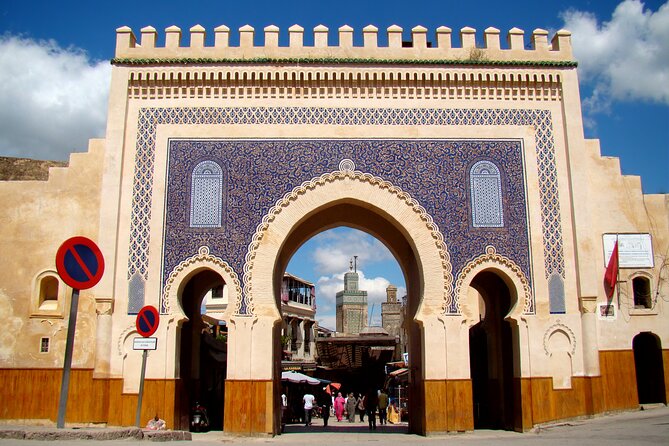
- Ceramics start the day: Bab Boujloud and its green-and-blue tilework set the tone fast.
- Tea and coffee included: helpful when your legs get tired and the medina heat or crowding rises.
- You’ll cover the classic Fez arc: viewpoints, souks, the tannery area, and madrasa landmarks in one half-day style route.
- Expect a few paid entrances: Nejjarine Museum and Al-Attarine Madrasa list 20 DH per person.
- Transfers are handled: pickup and drop-off (round-trip transfers are included), so you don’t have to argue with taxi drivers.
Why this private medina walk feels easier than doing it alone
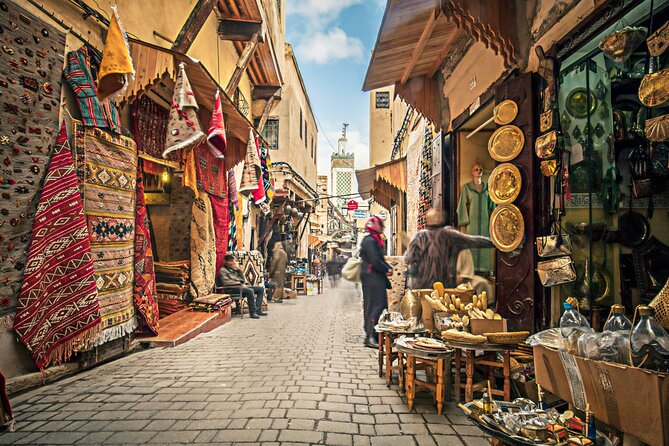
The medina of Fez is historic, but it’s also functional. People live there, work there, and shop there. That’s great for authenticity, and it’s also why getting turned around happens quickly if you go solo.
I like that this tour is built around navigation. Your guide does the hard part: choosing turns, timing your route, and pointing out what’s worth your time—before you’re staring at another carved door wondering what it is. And because it’s private, you can ask questions without feeling like you’re holding up a busload.
The other thing that really matters is context. Fez isn’t one building. It’s layers: neighborhoods, crafts, religious schools, and trading streets stitched together over centuries. You get a guided storyline as you walk, which changes how the medina feels. Instead of just moving through alleys, you start recognizing patterns—where certain trades cluster, what a madrasa signifies, and how landmarks connect to each other.
You can also read our reviews of more walking tours in Fez

Price and value: what $35.95 buys you in real terms
At $35.95 per person for a 3 to 4 hour private tour, the value is mostly in three places the medina can be hard to DIY:
- Guide time
You’re not just buying directions. You’re buying someone who can translate the scene while you’re walking—so you don’t need to stop every ten minutes to guess what you’re looking at.
- Pickup and drop-off
Round-trip transfers are included, and the tour starts with pickup at your hotel or riad. In practice, that often means a short taxi ride to the medina edge, then walking inside. It saves stress and time.
- Small included comfort
Tea and coffee are included. It’s not a huge spend, but it makes a difference mid-walk. You’ll be grateful once the streets get crowded and you’ve been climbing and turning for a while.
Also, you’re booking a tour that gets scheduled well in advance on average. That’s a hint: the guide slots can fill, especially in busy seasons. If your dates are fixed, I’d book sooner rather than later.
Pickup, meeting up, and how not to lose your day
This is set up to reduce friction. Confirmation is provided at booking, and the remaining time before departure is allotted for pickup. That matters in Fez because your start can shift depending on where you’re staying and how busy the access routes are.
A practical note from guide coordination that shows up in real-life feedback: people often get clear communication before the walk, sometimes via WhatsApp. The best case is that you receive a heads-up on where to meet and how the handoff works from your riad to the medina.
When you arrive at the medina, your job is simple: walk, ask, and keep an eye on what your guide points out. Your guide’s job is to steer you around confusion. That’s the core reason many people rate this tour so highly—Fez is tough to navigate unless someone knows the streets.
Bab Boujloud to the palaces: ceramics, Mellah, and panoramic views
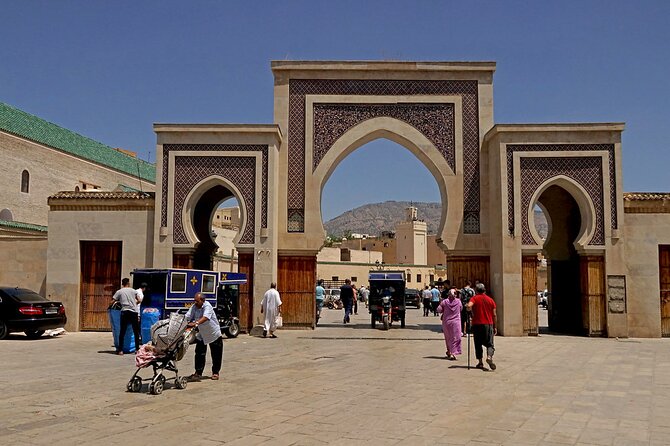
The tour starts in the right place: Bab Boujloud, the famous gateway with green and blue ceramic work. This first stop gives you an immediate visual anchor. You see a key symbol of Fez quickly, then your guide carries that energy forward into the older parts of the city.
From there, you’ll move through areas including the Mellah (the historic Jewish quarter area) and see the 17th-century Ibn Danan synagogue (as part of the guided walk). You’ll also admire splendor tied to royal architecture, including views toward the Kings Palace area.
One of the smarter parts of this early section is the switch from street level to higher ground. The itinerary includes time at the Merindes Tops & Borj North & South for panoramic views. You get a break from the tight alley feeling and a chance to understand the medina’s layout from above.
Then the day turns toward craft. There’s a stop at a ceramic factory, where you can watch how pieces are made. If you plan to buy something, I like seeing the process before shopping, because it helps you judge quality and detail more confidently.
Potential drawback: this segment involves walking and some stair-climbing. If you don’t move well over uneven stone, plan to wear comfortable shoes and pace yourself with breaks.
Rainbow Street Art: a quick burst of modern creativity
After the weight of historic landmarks, you’ll hit Rainbow Street Art. It’s short on time but big on contrast. You’ll find murals and modern creativity that show how Fez isn’t only about old-world architecture.
I like this stop because it breaks the day’s rhythm. It gives your eyes something different: color, movement, and contemporary street expression. It’s also a good reminder that you’re still in a living city, not a museum set.
You can also read our reviews of more guided tours in Fez

Nejjarine Museum: wooden arts and a fee you should expect
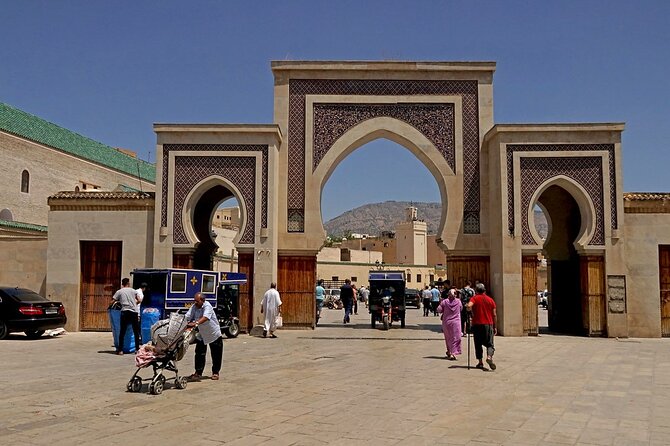
Next up is Nejjarine Museum of Wooden Arts & Crafts, held in the Funduq al-Najjarin. This stop focuses on woodwork and the kind of architecture that makes people say Fez has doors worth studying.
Here’s the practical part: the museum admission is 20 DH per person and isn’t included. If you want maximum value for your time, I suggest keeping a little cash or card-ready for this.
The upside is that this museum stop tends to feel like a natural pause. You’re walking a lot already. Having a structured indoor break often makes the rest of the medina feel more enjoyable afterward.
Medina of Fez walking: doors, mosaics, and souks that make sense
This is the heart of the day: Medina of Fez as a guided walk through the labyrinthine streets. You’re not just passing buildings—you’re noticing features your eye might miss without a guide.
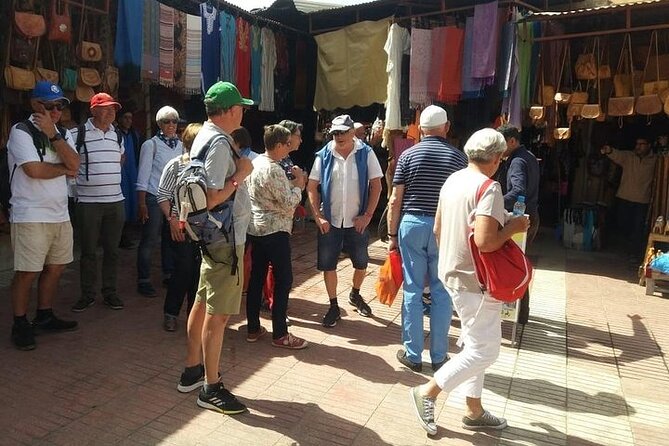
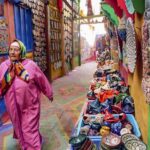
Expect to see intricate mosaic work and carved wooden doors, plus time for the souks where you can browse textiles, ceramics, and other Moroccan treasures. This is where your walking tour becomes a shopping strategy. Your guide can steer you toward stalls where the product matches what you want, instead of sending you in circles.
One caution: souks can be intense—crowds, smells, bargaining, and quick turns. The private nature of the tour helps here because your guide can move at your pace and answer questions in the moment.
Quaraouiyyin area and al-Qarawiyyin Mosque: religious landmarks without the confusion
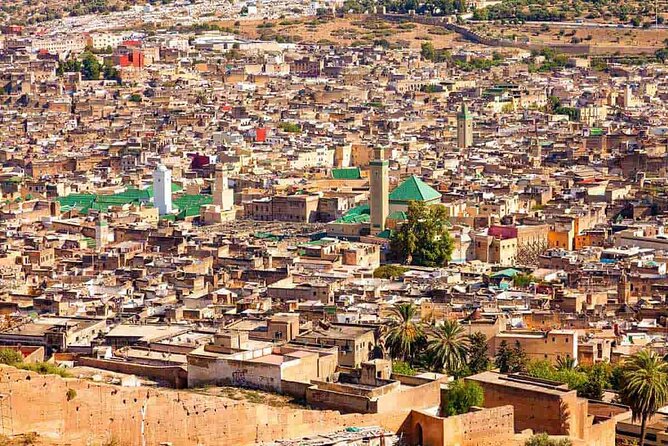
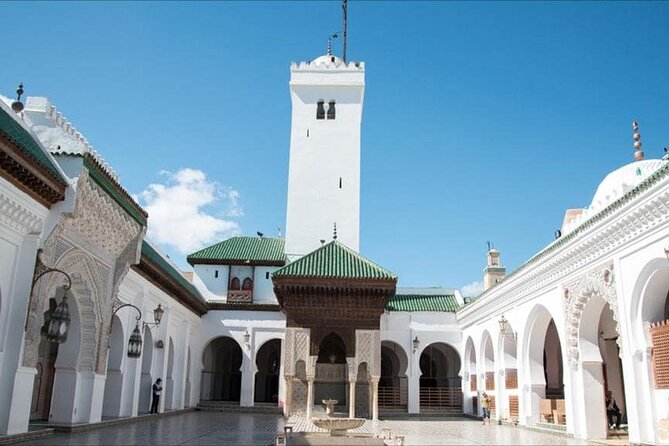
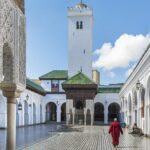
You’ll also explore the mosque and university of al-Qarawiyyin area, including the Quaraouiyine Mosque and the Andalusian Mosque. This stop is short but meaningful, because it ties Fez’s everyday street network to its religious and educational center.
What I like about this kind of stop inside a walking tour is that you don’t treat it like a standalone monument. You see how it sits within the medina pattern—how streets funnel toward it and how it fits the overall geography.
If you’re sensitive to noise or crowding, go in with the expectation that you’ll be around other people’s routines. Fez is active, even at landmark sites.
Chouara Tannery and Al-Attarine Madrasa: crafts and quiet beauty
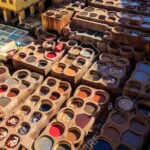
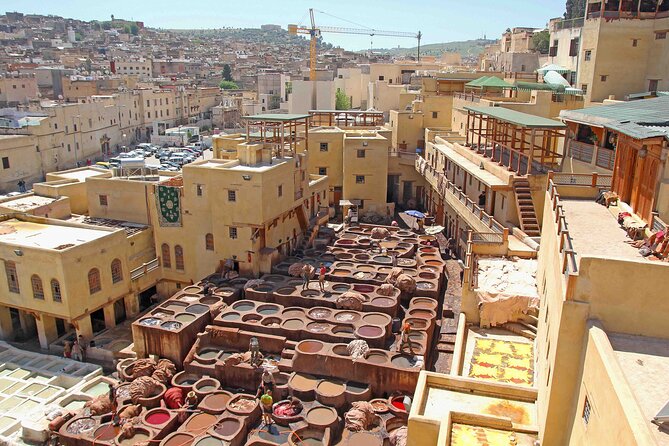
The tour includes a visit to Chouara Tannery, described as one of the oldest and largest in the city. This is one of those places you’ll remember instantly because of its working-industry feel.
The practical consideration is that the tannery area can be intense in sensory terms. Even if you’re not overwhelmed, it’s not a stop where you linger for long hours. Give it a focused visit, take photos if your guide suggests the best angles, and then move on.
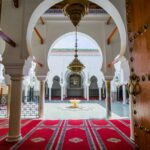
After that, you’ll visit Al-Attarine Madrasa, a religious high school dating back to 1325. It’s described as tranquil, and the stop lasts long enough that you can shift from street bustle to a quieter moment. Like the Nejjarine Museum, admission is 20 DH per person and isn’t included.
If you’re budgeting, this is where the math matters: two separate stops list 20 DH fees, and you should expect to pay for both if you want the full set.
Souk Attarine and Sebaghine: spices, perfumes, and dyed fabric color
Then the tour turns your attention to smell and color.
- Souk Attarine is known for spices and perfumes. The air can be aromatic as you walk past stalls offering traditional goods.
- Souk Sebaghine (سوق الصباغين) is the dyers’ market, with artisans using traditional techniques to dye fabrics.
I like these stops because they’re not just shopping. They show you the supply chain of Fez crafts—where the inputs come from and how trades connect. Also, the dyers market gives you visual drama. Even if you don’t buy anything, you’ll see how color is built.
A small tip: if you’re sensitive to strong scents, tell your guide early. They can help you position yourself while you take in the atmosphere without suffering through it.
Zaouia of Moulay Idriss II and Place R’cif: finishing with meaning
The route includes Zaouia of Moulay Idriss II, a sacred shrine inside Fes el-Bali. There’s an important access note: entrance is restricted to non-Muslims. So if you’re visiting with anyone in your group who falls into the non-Muslim category, be prepared that you might only be able to view it from outside or in limited ways. Your guide can tell you what’s possible on the day.
Finally, you’ll end near Place R’cif, described as a central square that connects old Medina life with the modern city. This is one of the best ways to finish a walking tour because it lets you shift from narrow alleys back to wider streets and clearer orientation. Many people use this kind of area to regroup, grab a drink, or start an evening plan.
Guides, pace, and the human side of why this tour scores so high
When a walking tour gets this kind of rating—5 stars across hundreds of bookings—it’s usually not just about sights. It’s about how the guide handles the chaos.
This tour’s feedback repeatedly points to guides who:
- slow down when needed
- answer questions clearly
- show care rather than rushing
- help with small, real-world needs
Names that come up often include Mohamed Bouanane, Adil, Hicham, Yahya, Rashid, Yasin, and Yassim. The tour director Imad also shows up in coordination stories, including advance contact via WhatsApp and follow-ups after the walk. In one case, support went beyond the tour by helping someone find their riad when arrival ran late.
One more detail I appreciate: some guides arrange stops for things like local craft experiences or special requests (like henna for a child). Those moments aren’t guaranteed in every itinerary, but the pattern is clear: when you hire a real local guide, flexibility often appears.
Should you book this Fez Medina Walking Tour?
Book it if you want a guided way to see Fez without the stress of getting lost, and you like your sightseeing with craft and shopping stops built in. It’s a strong choice for first-time visitors to Fes el-Bali, especially if your schedule only allows a half day.
Consider skipping or adjusting expectations if:
- you don’t want to pay extra at museum and madrasa stops (20 DH per person where listed)
- you need a very low-sensory itinerary (tannery areas can be intense)
- you’re hoping for a fully monument-free walk, because the route includes religious and craft landmarks
If you do book, pack two things that make the day smoother: comfortable shoes and a bit of flexibility. Fez rewards patience, and your guide is the tool that turns that patience into a story you can actually follow.
FAQ
How long is the Fez Medina Walking Tour?
The tour runs about 3 to 4 hours.
Is this tour private?
Yes. It’s a private tour/activity, and only your group participates.
Does the tour include pickup and drop-off?
Yes. Pickup & drop-off from your hotel or riad is included.
Are coffee and tea included?
Yes. Coffee and/or tea are included.
What admission fees should I expect to pay?
Some stops have fees that aren’t included, including the Nejjarine Museum of Wooden Arts & Crafts (20 DH per person) and Al-Attarine Madrasa (20 DH per person).
Is lunch included?
No, lunch is not included.
Are round-trip transfers covered?
Yes. Round-trip transfers are included, so you don’t need to budget for taxi fares for the transfers.
Is the tour suitable for most travelers?
Yes. Most travelers can participate.
Can non-Muslims enter the Zaouia of Moulay Idriss II?
Entrance is restricted for non-Muslims at the Zaouia of Moulay Idriss II.
Are service animals allowed?
Yes. Service animals are allowed.
Final call
If you want Fez with less guesswork and more understanding, this private walking tour is a smart use of time. The included pickup, tea/coffee, and the way the route connects crafts to landmarks make it feel like a guided day in the medina rather than a long shuffle with a map.