REVIEW · MARRAKECH
Small-Group Cooking Class Experience in a Marrakech Riad
Book on Viator →Operated by Riad Dar Zaman · Bookable on Viator
Marrakech smells better after the market run. This small-group cooking class in the courtyard of Riad Dar Zaman turns the medina into something you can actually taste: you visit the communal bread oven (furan), shop the souq for fresh ingredients, then cook a full lunch of tagine + dessert with chef Karima and manager Hassan. I especially like the tight group size, and the fact you get recipe sheets to copy the results later. The only catch to plan for is timing: if participants arrive late, the staff may shift the schedule so cooking starts right away.
What makes this outing feel more personal than a big “tour bus + cooking demo” is how much happens in one compact window. You’re not just watching. You’re involved in salads, the tagine, and the dessert process, then you sit down to eat what you made. It’s also priced at about $102 per person, which sounds steep until you add up the included lunch, bottled water, and the guided market and oven visits.
In This Review
- Why the riad setting matters in Marrakech cooking classes
- The guides: Karima and Hassan (plus Humza)
- The big promise: small group, hands-on lunch
- Morning start at 10:00 in Riad Dar Zaman
- Stop 1: the communal bread oven (furan)
- Stop 2: souq shopping for tagine-ready ingredients
- Back in the riad: cooking salads and a tagine
- Tagine results you can replicate at home
- Dessert lesson: sliced orange with cinnamon
- Moroccan mint tea: learn the demo moment
- Lunch: eating the meal you cooked
- What you actually get for the price: $102.21
- Timing reality: what happens if the group is late
- Who this Marrakech riad class is best for
- When it’s not the right pick
- Should you book this Marrakech cooking class in a riad?
- FAQ
- How many people are in the cooking class?
- How long is the cooking class in Marrakech?
- What time does the class start?
- Where does the experience meet?
- What dishes do you learn to make?
- Is lunch included?
- What beverages are included?
- Do you get recipe sheets?
- Is mint tea part of the class?
- Is there free cancellation?
Why the riad setting matters in Marrakech cooking classes
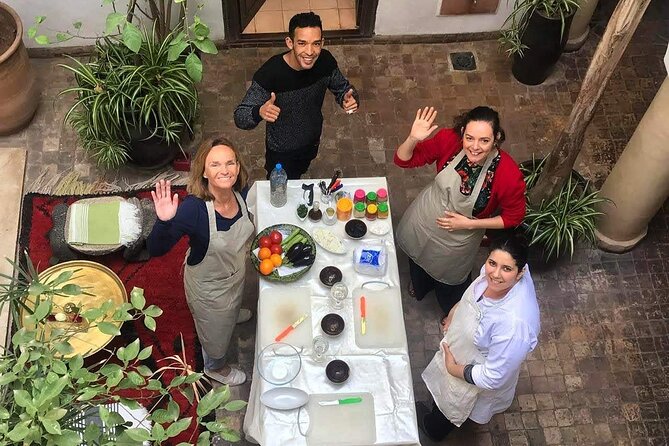
This class starts at Riad Dar Zaman, in the medina, with the action unfolding in the riad’s courtyard. That location choice is more than pretty architecture. Courtyards are how riads work: you get a calm center for food prep and conversation, even when the streets outside are busy and full of motion.
The riad courtyard also helps you learn in a smarter way. When the group stays together in one base, you move as a team—out to the oven, then to the souq, then back to cook. Less time herding people means more time getting your hands messy with Moroccan cooking.
The guides: Karima and Hassan (plus Humza)
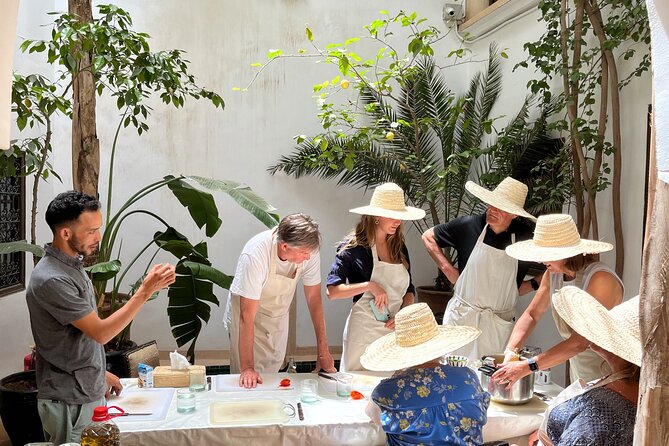
Chef Karima leads the cooking side, and manager Hassan helps translate (French to English) so the techniques make sense, not just the instructions. In a good class, language matters because Moroccan cooking is full of little decisions—texture, timing, and seasoning balance—that you can’t fully guess from a recipe card.
And from what I’ve seen people highlight after the fact, the experience also benefits from on-site support—one review specifically called out Humza for making everyone feel looked after along with Karima. That combination tends to do two things well: keep the class running smoothly and make questions easy to ask.
You can also read our reviews of more cooking classes in Marrakech
The big promise: small group, hands-on lunch
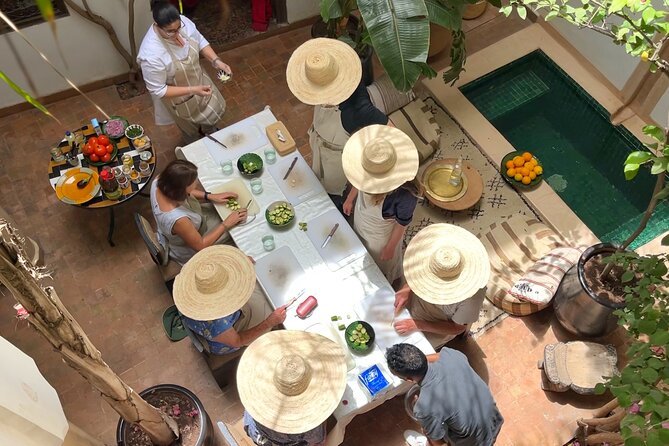
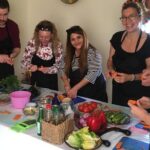
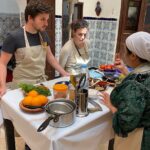
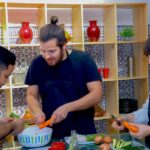
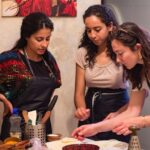
This is a maximum 6-person class, which is exactly the right size for real cooking practice. In bigger classes, you often get one station and a bunch of waiting. Here, you should expect to participate across the meal: salads, tagine, and dessert components.
You’ll also get a social payoff. Marrakech cooking classes work best when you’re paired with strangers who are happy to talk while you cook. With a tight group, it’s easier to compare techniques and swap notes about where you should eat the rest of your trip.
Morning start at 10:00 in Riad Dar Zaman
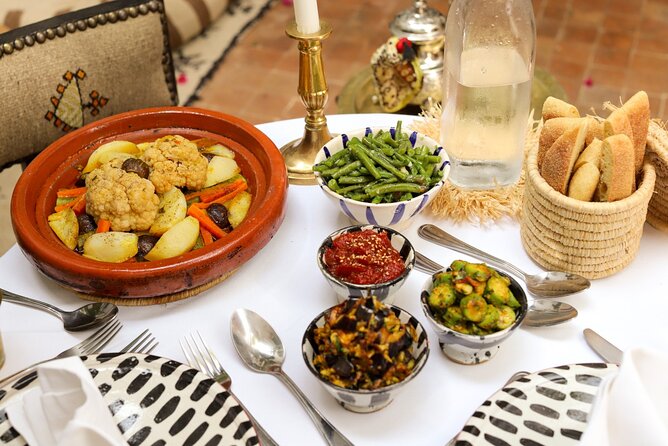
The day begins at 10:00 am at Riad Dar Zaman, at 29 Derb Bouelilou in Marrakech. You’ll want to arrive a little early so you can settle in and start with the relaxed pace Morocco is famous for.
You’ll also get a mobile ticket, which is convenient because you won’t be scrambling for printed paper right in the medina. Once the group is gathered, the plan is to move through the day in three “modes”: meet at the riad, gather ingredients (oven and souq), then return to cook and eat.
Stop 1: the communal bread oven (furan)
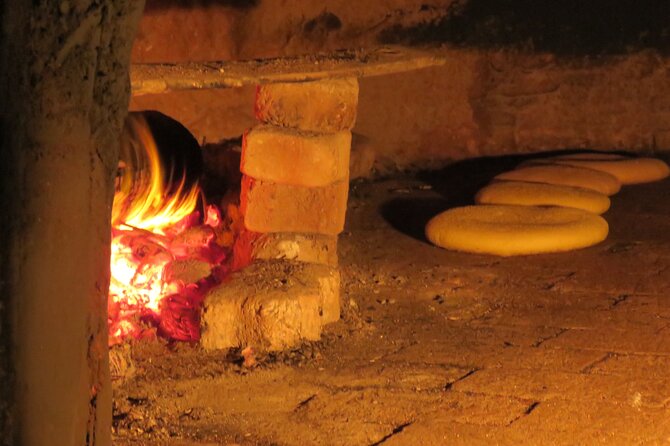
One of the most memorable parts of this class is the visit to the local communal oven, known as the furan. This isn’t a quick photo stop. The point is to see how locals bake their homemade bread and biscuits—daily food-making that most visitors never get to witness.
Why this matters for you: bread baking teaches you something about Moroccan cooking that recipes don’t always explain. In many homes, food isn’t just something you make. It’s something you plan around heat, timing, and how dough behaves when it’s cooked in a real setting. Even if you don’t bake here yourself, you’ll better understand why tagines and sides often taste the way they do—they’re built to work with the bread you’re eating alongside.
A practical note: bring your curiosity. The furan visit is the kind of stop where asking a few simple questions (how people use it, what they bake, what changes by season) turns the experience from sightseeing into real insight.
Stop 2: souq shopping for tagine-ready ingredients
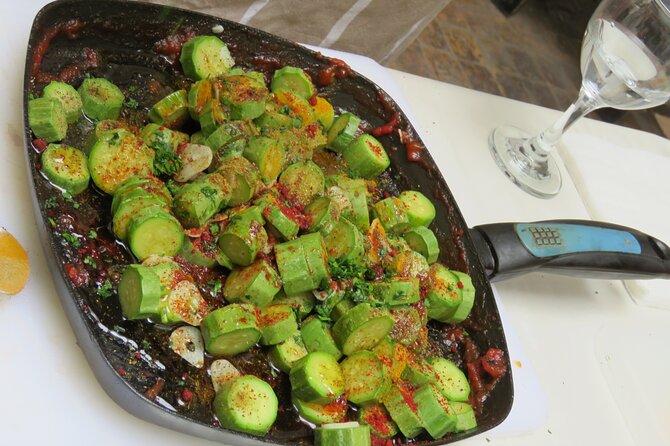
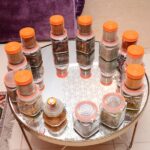
After the oven, you’ll shop the local market, or souq, to buy ingredients for the class. This is one of the smartest parts of the itinerary because it removes the “mystery ingredient” problem. When you see what’s available and how it looks fresh, cooking becomes simpler when you’re back in the riad kitchen.
Here’s what you’re gaining:
- You learn what ingredients matter for the flavor base
- You’ll recognize produce and spices later in your own cooking
- You’ll understand how salads and tagine can share the same ingredient themes
Also, shopping in the souq helps your meal taste more like Marrakech. Restaurant dishes are great, but the ingredient visuals—the color, the smell, the freshness—carry a lot of the magic.
A few more Marrakech tours and experiences worth a look

Back in the riad: cooking salads and a tagine
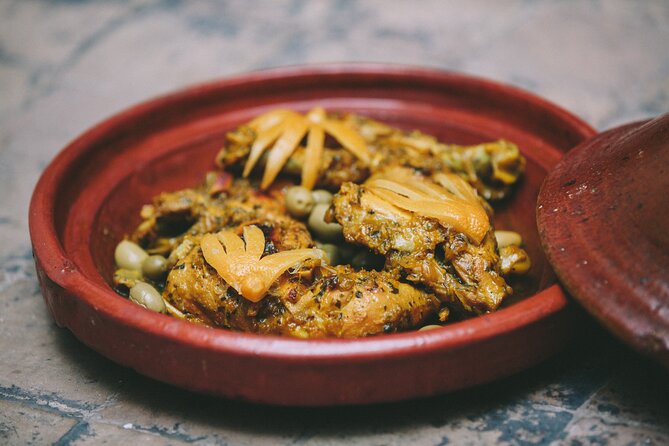
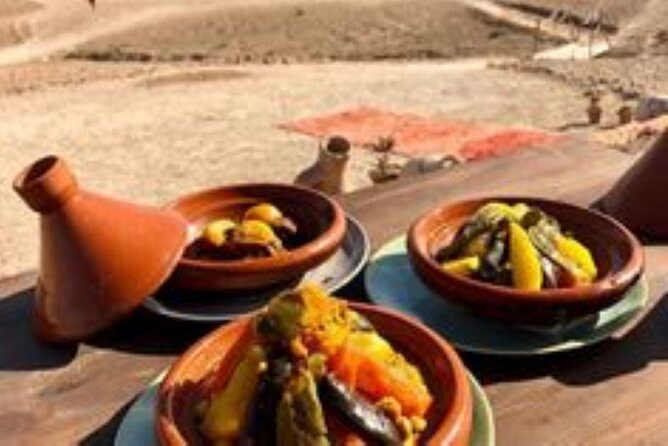
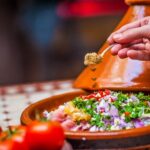
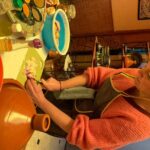
Once you return, the class shifts into full hands-on mode. You’ll prepare an assortment of traditional dishes, including salads and a tagine. Tagine cooking is slow by nature, which is good for a class because it gives you time to learn technique while the dish does its work.
In a properly run cooking class, tagine learning isn’t only about mixing ingredients. It’s about understanding:
- how the tagine should be built
- how heat affects the simmer
- when to adjust seasoning so the sauce tastes balanced
You’ll also get help from Karima, who explains the process clearly, with Hassan translating. That setup matters because Moroccan cooking uses method and feel as much as written instructions.
One more thing I like: the class keeps you moving. While one dish cooks, you’re still active with sides. That makes the 4-hour timeline feel full, not rushed or stalled.
Tagine results you can replicate at home
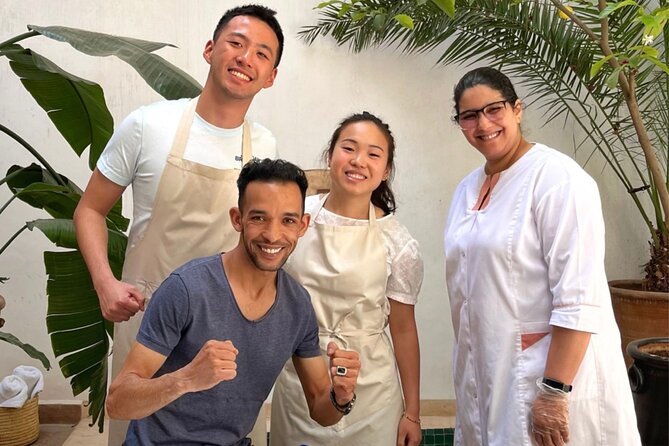
You’ll get recipe sheets so you can recreate the dishes after you return. That’s a big deal for value. Moroccan cooking can feel intimidating if you only rely on memory, but a practical recipe sheet turns your experience into a skill, not a one-day story.
I suggest you treat the recipes as a guide you refine. If your market ingredients differ back home, adapt by smell and taste instead of chasing exact substitutes. The chef-led guidance and recipe sheets together make that possible.
Dessert lesson: sliced orange with cinnamon
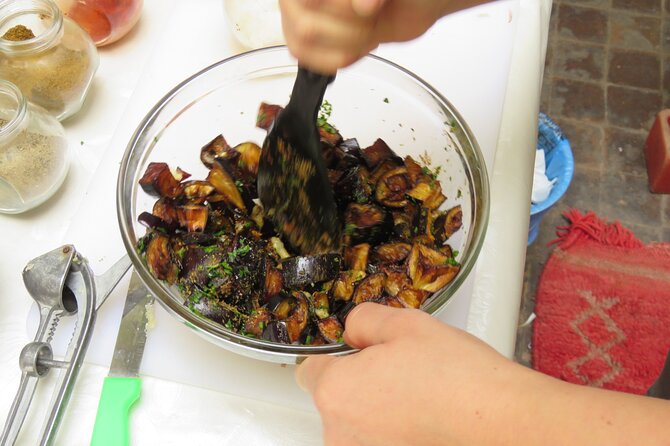
While the salads and tagine are being served and cooking along, the class also teaches a simple but impressive Moroccan dessert: sliced orange with cinnamon. This is the kind of sweet that travels well—easy to understand, quick to execute, and very Morocco in flavor.
You also get to watch how the dessert fits into the overall meal rhythm. Many Moroccan desserts are built to feel refreshing after warm savory food. Orange and cinnamon do that job well: aromatic, not heavy, and not overly sweet.
If you’re the type who wants at least one recipe you can show off to family right away, this dessert is the one.
Moroccan mint tea: learn the demo moment
To finish the cooking portion, Hassan demonstrates how to make delicious Moroccan mint tea. Mint tea is an identity dish in Morocco, and in cooking classes it’s a useful learning tool because it teaches how a drink can be treated like a ritual rather than a shortcut.
Even if you’re not brewing the tea in the moment, you’ll learn the steps and the idea behind it—what makes it taste right and how it’s served. When you later make it at home, it’ll feel less like copying and more like recreating a cultural habit.
Lunch: eating the meal you cooked
After all the prep, you sit down and eat what you made. This matters more than people expect. A shared meal turns technique into memory. When you taste the tagine and salads you assembled, you immediately understand what each step contributed.
It also gives you a relaxed moment to talk with your group. In a class with a small circle, it’s easy to trade travel tips: where to eat tagine beyond tourist spots, what markets are worth a second trip, and how to navigate the medina streets without losing your sense of direction.
What you actually get for the price: $102.21
Let’s talk value honestly. At $102.21 per person, this isn’t a “cheap activity,” but it also isn’t overpriced once you count what’s included:
- Lunch
- Bottled water
- Guided visits to the communal bread oven (furan) and the souq
- Hands-on cooking with chef Karima
- Dessert instruction
- Recipe sheets
- Mint tea demonstration
Also, you’re paying for more than ingredients. You’re paying for translation support (French to English), local guidance, and time spent teaching in a small group. Those are hard to replicate on your own without already knowing Moroccan cooking basics and market routines.
What’s not included is alcohol. If you’re hoping for wine or beer with lunch, you’ll need to plan for that separately.
Timing reality: what happens if the group is late
One practical consideration: the schedule can shift. I’ve seen notes that a class started late because they were waiting for four other participants, and once the delay became necessary, the cooking part started right away.
So if you’re the kind of traveler who hates loose timing, keep your expectations flexible. Still, the staff’s approach seems geared toward getting the most important parts of the experience done—cook, eat, and learn—without falling apart.
Who this Marrakech riad class is best for
This class suits you if you want:
- a hands-on Marrakech cooking class with real participation
- an experience centered in a riad courtyard rather than an industrial kitchen
- market and oven context, not just plating tips
- a small group where it’s easy to talk and ask questions
It’s also a good fit for couples and small friend groups because you can mingle with the group while still staying in the “not too many people” zone. If you’re traveling solo, the small size helps you avoid that awkward feeling of being stuck on the sidelines.
When it’s not the right pick
This may not be your best match if you want a long, unhurried wandering tour of Marrakech streets. The class is tightly organized around cooking. You’ll see plenty, but the time is designed for food learning first.
Also, if you have very limited mobility or trouble moving between the riad area, market streets, and the oven visit, you’ll want to think carefully. The info provided doesn’t specify accessibility details, so you’d be relying on general medina conditions.
Should you book this Marrakech cooking class in a riad?
Yes, if your goal is to leave Marrakech with a usable skill and a meal you truly understand. I’d book it when you want the full arc: furan oven, souq shopping, tagine cooking, orange-cinnamon dessert, mint tea, then lunch at the end.
Before you commit, check your timing expectations. Start time is 10:00 am, the class runs about 4 hours, and minor schedule adjustments can happen based on group arrivals. If you can roll with that, you’ll get a warm, guided, small-group food experience that feels anchored in the neighborhood instead of stuck in a generic tourist format.
If you want a hands-on souvenir you can cook again at home, this is one of the better bets in Marrakech.
FAQ
How many people are in the cooking class?
The class has a maximum of 6 travelers.
How long is the cooking class in Marrakech?
It lasts about 4 hours.
What time does the class start?
The start time is 10:00 am.
Where does the experience meet?
It starts at Riad Dar Zaman, 29 Derb Bouelilou, Marrakesh 40000, Morocco.
What dishes do you learn to make?
You’ll prepare salads and a tagine, and you’ll also learn to make sliced orange with cinnamon.
Is lunch included?
Yes. Lunch is included.
What beverages are included?
Bottled water is included. Alcoholic beverages are not included.
Do you get recipe sheets?
Yes, recipe sheets are provided.
Is mint tea part of the class?
Yes, Hassan demonstrates how to make Moroccan mint tea.
Is there free cancellation?
Yes. You can cancel up to 24 hours in advance for a full refund. If you cancel less than 24 hours before the start time, you won’t receive a refund.