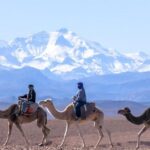
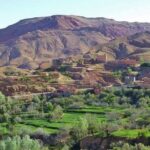
Toubkal at sunrise is serious altitude drama. This 2-day trek from Imlil to the summit of North Africa’s highest peak is built around sunrise views and a private guide who keeps your day organized and your pace realistic. You’ll climb past a Muslim shrine at Sidi Chamharouch, overnight high at the Toubkal Refuge (or camping when conditions allow), then push up to 4165m for wide-open sightlines.
What I like most is the practical rhythm: long enough to feel like a real mountain mission, but structured with meals (dinner, breakfast, and lunches) and a scheduled return to Imlil. One thing to consider: it’s still a full-on hike with roughly 5 hours on day 1 and about 9 hours on day 2, and the experience requires moderate physical fitness.
In This Review
- Quick hits before you climb Mount Toubkal
- Why a Mount Toubkal sunrise trek feels worth it
- From Imlil toward Sidi Chamharouch: a culturally grounded warm-up climb
- The long walk to Toubkal Refuge: acclimatization at 3206m
- Sleeping high, waking early: what the overnight really means
- Summit day to 4165m: the sunrise push and the descent you earn
- Marrakech drop-off at 5pm: finishing the trip without chaos
- Price and value: what $151.92 really covers
- Who this Mount Toubkal trek suits best
- Packing tips that keep you comfortable at high altitude
- Weather reality and cancellations: how to handle mountain uncertainty
- Should you book the Mount Toubkal summit trek?
- FAQ
- How long is the Mount Toubkal summit trek?
- How much walking should I expect?
- What altitude do you reach on the trek?
- Are meals included in the price?
- Is pickup or transportation included?
- Do I need a certain fitness level?
- What happens if the trek is canceled due to weather?
Quick hits before you climb Mount Toubkal
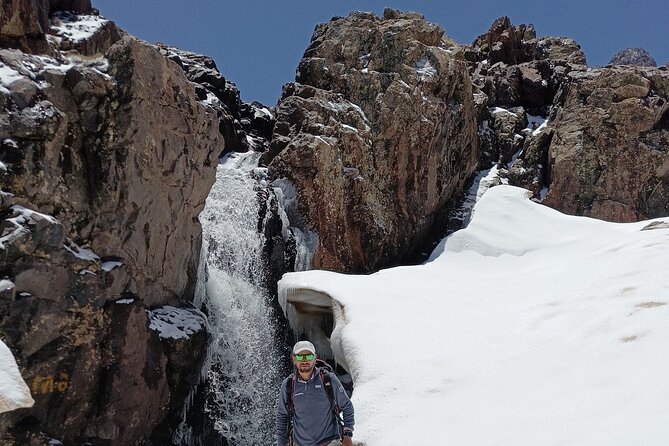
- Sunrise summit plan aimed at that early-morning light on the High Atlas
- Two-meal days with dinner + breakfast + two lunches so you’re not budgeting snacks on the go
- Overnight at 3206m at Toubkal Refuge or camping if conditions require it
- Private guide and private group so you’re not stuck in a slow-moving pack
- Private transportation + Marrakech drop-off at 5pm for a clean end to the trek
- Water and drinks aren’t included, so plan to buy them on route
Why a Mount Toubkal sunrise trek feels worth it
Mount Toubkal (Jebel Toubkal) is the highest peak in the Atlas Mountains—and also the highest point in all of North Africa. In real terms, that means you’re climbing to a summit that’s famous for a reason: the views are huge, and the effort is tangible.
This itinerary is designed for one big payoff. You reach the summit early, then look out in every direction, with mentions of visibility stretching from Marrakech toward the Sahara. Even if weather changes the exact view, you’ll still get that moment where the mountain stops feeling like a workout and starts feeling like a viewpoint.
The second reason this works is pacing by design. Day 1 is a steady climb that gets you acclimated at elevation. Then day 2 starts early, hits the summit, and brings you back down with lunch en route—long, but not aimless.
You can also read our reviews of more tours and experiences in Marrakech.
From Imlil toward Sidi Chamharouch: a culturally grounded warm-up climb
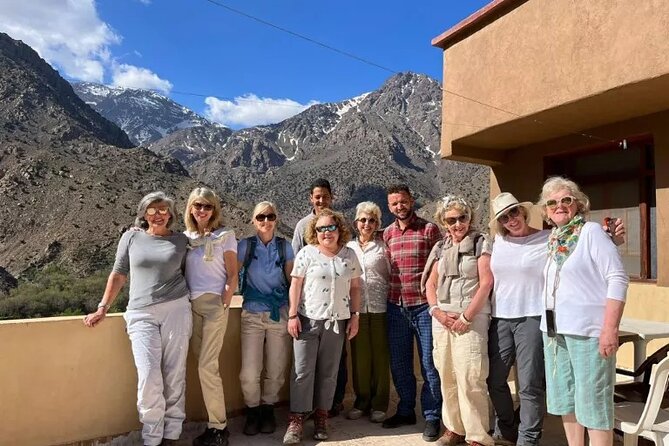
Your day 1 starts with a hike from Imlil up toward Sidi Chamharouch, at about 2350m. This village includes a Muslim shrine that draws both tourists and pilgrims, so you’re not just hiking scenery—you’re walking through a place with real religious and community meaning.
The stop matters because it breaks up the climb. You’ll be walking uphill for about 5 hours total on day 1, and there’s a lunch break at Sidi Chamharouch before you continue. That gives your body time to settle into rhythm and gives you a mental checkpoint: you’re not just pushing upward, you’re absorbing the route.
One practical note: this is a religious site in an active cultural setting. Keep your tone respectful, dress modestly when you’re near the shrine, and follow your guide’s cues for what’s appropriate there. Your guide is also the best source for how close you should get and where it’s comfortable to pause.
The long walk to Toubkal Refuge: acclimatization at 3206m
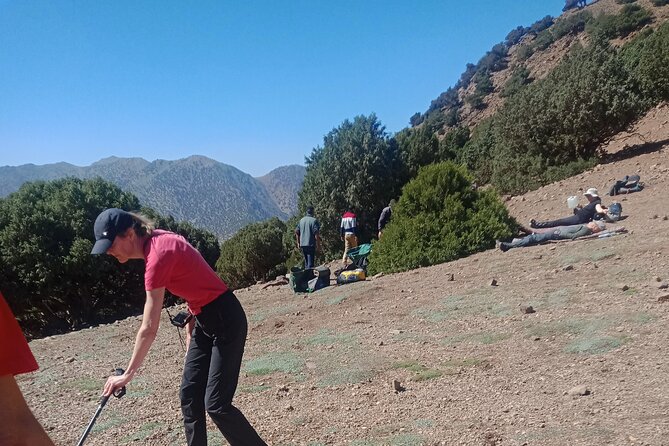
After lunch near Sidi Chamharouch, the route continues to Toubkal Refuge at 3206m. This is the part where the trek turns from “pleasant uphill” into “this is actually high.” You’ll feel it in your breathing first, then in your legs.
The itinerary includes a free admission ticket for a short stop (listed as free), but the more important “admission” is what the overnight is doing for you. Spending the night around 3206m is a classic mountain strategy: your body gets to adjust before the summit day.
Overnight is either at the Toubkal Refuge or camping, depending on conditions. That means the comfort level can vary. If you’re the type who likes predictability, remember that mountains don’t care. Bring a flexible mindset. Your guide and team are the ones who manage what’s possible on that specific day.
Food is also part of this stage. Dinner is included on the tour, and it’s a big deal at altitude. You need calories for the cold, the next morning, and the long descent.
Sleeping high, waking early: what the overnight really means
At 3206m, the night can feel very different than lower elevations. You might deal with cold air, wind, and the reality that your body is working slightly harder than normal just to function.
That’s exactly why I like how the trek is set up: you’re not sprinting to the summit on day 1. The overnight makes summit day safer and more doable, even if it still isn’t easy.
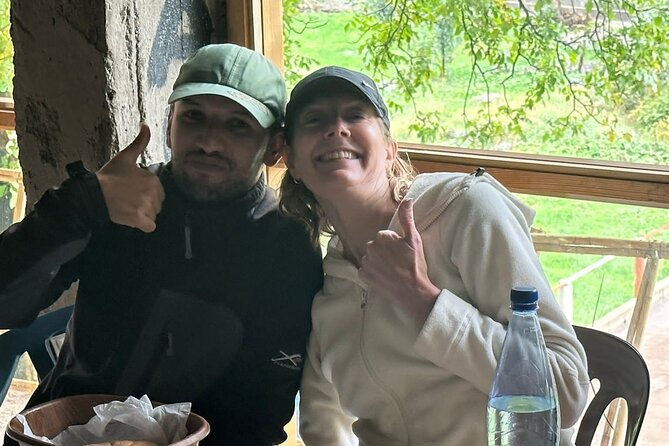
If your team includes Omar, you may notice a guiding style that mixes mountain logistics with talk about the mountains and the people around them. That kind of pacing and communication helps when you’re tired and altitude makes everything feel a little sharper. And if you get Chef Abdul, people highlight that the team takes care of you with courteous, attentive service—another quiet help when you’re trying to focus on sleep and recovery.
I also appreciate that the schedule doesn’t leave you hanging. You know where you’re headed and when you’ll wake up. Even with variable overnight conditions, the plan is still structured.
Summit day to 4165m: the sunrise push and the descent you earn
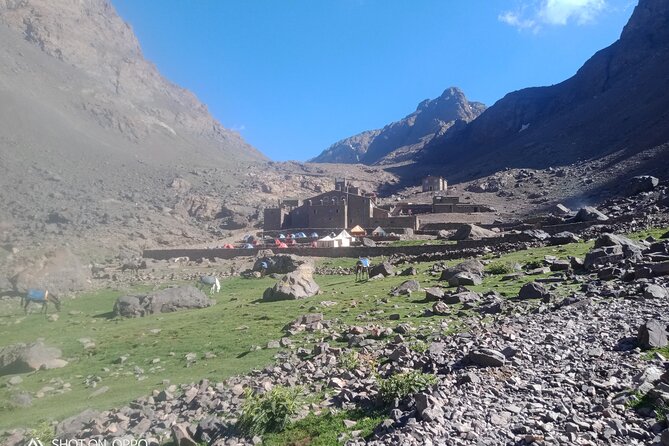
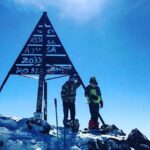
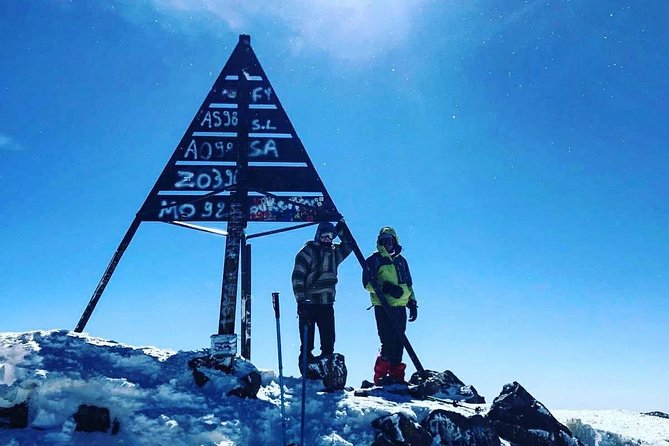
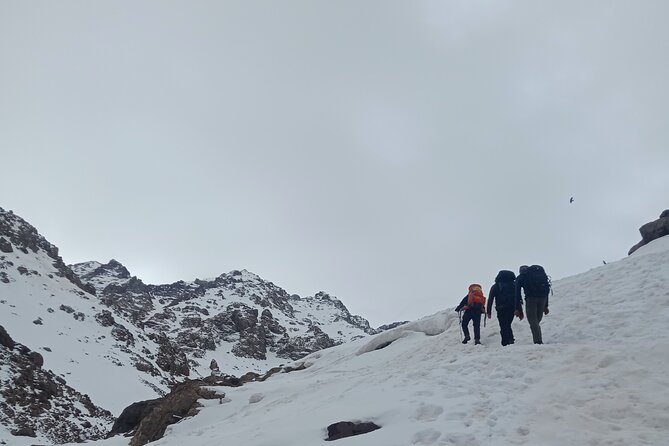
Day 2 starts with breakfast, then the climb from Toubkal Refuge to the summit of Jebel Toubkal at 4165m. The plan targets early morning for sunrise, which is exactly when this mountain is most dramatic. The sky tends to look sharper, shadows stretch longer, and the air often feels crisp in a way that makes every step feel like it matters.
The summit section is the hardest part of the whole itinerary, and the proof is in the time: day 2 is listed at about 9 hours of walking total. That includes the climb up and then the return down to Imlil, with lunch on the way.
When you reach the summit, you’ll see unrestricted views in every direction—again, with mentions of sightlines from Marrakech toward the Sahara. Even if cloud cover limits the far distance, the point is that you’re getting a top-of-the-world perspective.
Now, a balanced truth: the summit day isn’t “just walk until you reach the top.” Altitude changes how far each step goes. The ascent can feel slower than you expect, and the descent can feel tougher on your knees and calves than you planned for. Your guide’s job is to manage pace and keep you moving safely.
Then comes the payoff. From the summit you retrace your steps down the mountain to head back toward Imlil, stopping for lunch en route. That descent is long, but it’s also where you get your senses back: you’re moving through familiar terrain, and the mountain starts to feel less intimidating.
Marrakech drop-off at 5pm: finishing the trip without chaos
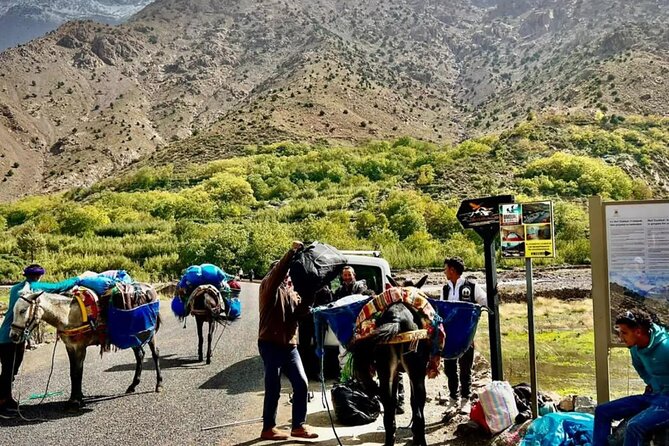
Once you return to Imlil, the tour includes transfer back to Marrakech with a drop-off listed for 5pm. That’s a solid finish time for a 2-day trek. It means you’re not stuck searching for transport late in the day, and you can plan dinner and rest immediately.
Private transportation is included, and the tour is structured as a private experience for your group only. I like this because the whole operation runs smoother when it’s not shared with multiple different walking speeds. You also get more control over how your day runs, especially on summit morning when timing matters.
If you like practical travel days—where you know when you’ll eat, when you’ll move, and when you’ll be done—this kind of end-to-end schedule is a big part of the value.
Price and value: what $151.92 really covers
At $151.92 per person, this trek is priced like a straightforward mountain package: guide, transport, and key meals. The included items are dinner, breakfast, private transportation, private guide, and lunch (listed as 2 lunches).
What makes that feel like value is that those are the parts that usually cost time and hassle if you arrange them yourself. A reliable local guide matters on Toubkal. Private transport matters when you’re starting from Marrakech and ending the same way. And at altitude, you really want meals handled for you.
Water and drinks aren’t included. That’s normal on mountain routes, but you should plan for it so you’re not making last-minute purchases. You can buy drinks on route, but bring enough cash and don’t assume water is sitting around everywhere.
Also, the booking rhythm is fairly tight—on average it’s booked about 5 days in advance. If you want a specific date, don’t wait for the last minute. Sunrise summit treks are weather-dependent, and mountains can change the plan quickly.
Who this Mount Toubkal trek suits best
This experience is described for travelers with moderate physical fitness. If you’re comfortable with uphill hiking, can handle altitude fatigue, and you don’t need constant breaks, you’ll likely do well.
It suits you if you:
- Want a classic High Atlas summit goal in only 2 days
- Like having a guide who handles the route and timing
- Prefer a private group setup over sharing logistics with strangers
- Want a meaningful achievement without a week-long commitment
It may not suit you if:
- You’re looking for a short, gentle hike
- You struggle with long walking blocks (remember the rough totals: 5 hours day 1, 9 hours day 2)
- You get anxious with altitude and cold morning starts
The trekking is as much mental as physical. Summit success depends on steady effort, not speed.
Packing tips that keep you comfortable at high altitude
The data doesn’t list a gear checklist, but you can still pack smart based on the demands of a sunrise summit. You’re climbing to 4165m, overnight at about 3206m, and hiking in the early morning hours.
Here’s what I’d focus on:
- Warm layers for the summit push and cold night
- Wind protection for sunrise morning
- Comfortable hiking shoes with good grip for rocky sections
- A way to carry water and small snacks between included meals (water isn’t included)
- A lightweight flashlight or headlamp if you’re starting before full daylight
Also, keep your expectations realistic. On summit day, you’ll likely be moving for hours. Comfort is about reducing friction: fewer problems, more steady steps.
Weather reality and cancellations: how to handle mountain uncertainty
This is a weather-dependent trek. The tour notes that it requires good weather, and if it’s canceled due to poor conditions, you’ll be offered a different date or a full refund.
That matters because Toubkal isn’t a museum visit. Cloud, wind, and trail conditions can change quickly. If you’re flexible with your dates, you’ll feel more at ease.
Also note that it’s dependent on a minimum number of travelers. If the group doesn’t meet that requirement, you may be offered another date/experience or a refund.
Think of this trek as planning for a mountain, not a schedule pinned to a wall.
Should you book the Mount Toubkal summit trek?
I’d book this if you want one of the most classic Morocco hiking goals, delivered in a tight 2-day format with real support. The biggest strengths are the sunrise summit focus, the private guide setup, and the included meals that remove everyday stress when you’re operating at high altitude. The scheduled 5pm drop-off also helps you end clean, not exhausted and scrambling.
Skip it or reconsider if you’re not confident with long walking days or you don’t handle cold, high-altitude mornings well. With about 9 hours of walking on the summit day, this is still a serious hike, even with guidance and structure.
If you match the physical level and you’re okay with mountain variability, this is a strong value way to chase the top of North Africa and come away with a very real sense of achievement.
FAQ
How long is the Mount Toubkal summit trek?
The experience runs for about 2 days.
How much walking should I expect?
Day 1 is about 5 hours of walking from Imlil to Toubkal Refuge. Day 2 is about 9 hours of walking from Toubkal Refuge to the summit and back down toward Imlil.
What altitude do you reach on the trek?
You’ll overnight at around 3206m at Toubkal Refuge (or camping when conditions allow) and climb to the summit of Jebel Toubkal at 4165m.
Are meals included in the price?
Yes. Dinner, breakfast, and lunch (listed as 2 lunches) are included.
Is pickup or transportation included?
Yes. The tour includes private transportation, and you’re dropped off in Marrakech at 5pm.
Do I need a certain fitness level?
Yes. The experience is designed for travelers with a moderate physical fitness level.
What happens if the trek is canceled due to weather?
The trek requires good weather. If it’s canceled due to poor weather, you’ll be offered a different date or a full refund. You can also cancel for a full refund up to 24 hours before the experience’s start time.