REVIEW · MARRAKECH
Marrakesh cooking class with chef Hassan – Local dishes
Book on Viator →Operated by Cook in Marrakesh with Ahmed and Hassan · Bookable on Viator
Cook tagines, sip real mint tea.
This small-group Marrakesh cooking class with Chef Hassan pairs a local market walk with a hands-on workshop at a nearby house kitchen, so you’re not just watching food happen. You’ll make classic Moroccan dishes like tagines and couscous (and salads/side dishes), plus you’ll hear plain-language stories about Moroccan food culture while everything cooks.
I like two things a lot: the market shopping near the kitchen, where you pick ingredients with Hassan and Ahmed and get practical tips on what to buy, and the way the class stays interactive. Everyone in the group chips in—chopping, mixing, and assembling—so you actually learn technique, not just recipes.
One thing to consider: couscous may not automatically be the main focus unless you tell the hosts you want it. If you’re counting on couscous for your own menu plan, say so ahead of time.
In This Review
- Key Takeaways You’ll Care About
- Entering the Marrakesh Kitchen: What This Class Really Teaches
- Meeting at the Pharmacy and Finding the Local Market
- Market to Mint Tea: A Skill You Can Actually Use Back Home
- Tagine First, Then Everything Else: The 4-Hour Cooking Flow
- What you’ll cook
- How the group works as a team
- How Small-Group Size Makes the Difference
- Diets, Ramadan, and What You Should Tell Them Up Front
- Eating What You Cook: The Best Part, Done the Right Way
- What You Take Home: Recipes and Smart Spice Shopping
- Price, Value, and Lunch vs Dinner Timing
- Should You Book This Cooking Class?
- FAQ
- How long is the cooking class?
- Do I have the option of lunch or dinner?
- What dishes will I learn to make?
- How large is the group?
- Can they accommodate dietary restrictions like vegan, vegetarian, or gluten-free?
- What’s included in the price?
- What’s not included?
- Where do we meet, and how do we find the group?
- Are kids allowed?
- What do I get at the end of the class?
Key Takeaways You’ll Care About
- Small group (max 9) means you get real instruction and plenty of time at the stove.
- Market walk near the kitchen keeps shopping practical and fast, not far-flung.
- Mint tea lesson first gives you a key Moroccan skill before cooking starts.
- Tagine production line approach cooks the longest dish first, while you work on other components.
- Diet-friendly format with vegan/vegetarian and gluten-free options available by request.
- You get recipes at the end so you can recreate the dishes after you go home.
Entering the Marrakesh Kitchen: What This Class Really Teaches
If you want a Marrakech souvenir that lasts longer than a fridge magnet, cooking is one of the best options. This class is built around how Moroccan home cooks work: shop for fresh ingredients, build flavor step by step, and share the meal right after.
Chef Hassan and Ahmed run the experience like a team. You start with ingredients and methods, then you move into cooking several dishes together. That matters because Moroccan food isn’t one-pan magic. It’s timing, seasoning, and knowing what to do first so everything finishes together.
You’ll also get a culture layer without getting lectured. Expect talk about Moroccan history and culture as you cook and taste. That’s not just trivia—it helps you understand why spices and cooking styles show up the way they do.
You can also read our reviews of more cooking classes in Marrakech
Meeting at the Pharmacy and Finding the Local Market
Your day begins at a meeting point by a pharmacy. The hosts say they’ll text you once your booking comes through, so you shouldn’t lose time hunting around in medina streets. The end point is back at the same meeting place.
What I like here is the logic of the route. You do a short walk to a local market near the house kitchen. It’s not a huge tourist market circuit. It’s close enough that the lesson stays focused on ingredients—vegetables, herbs, and the things you’ll actually cook.
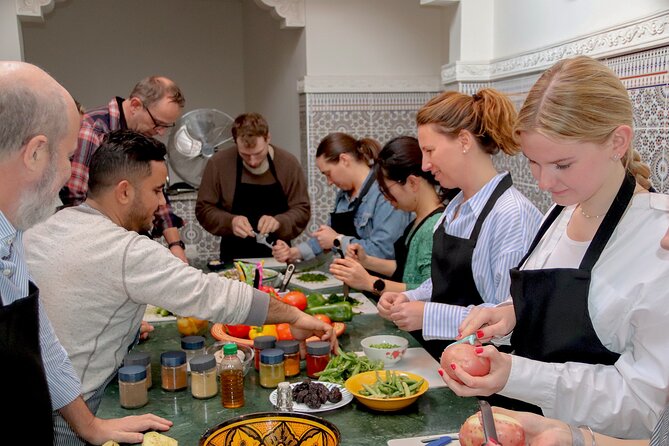
You’ll also notice how the class builds participation from the start. In a small group, you’re not stuck watching someone else do the work. You can pick items, weigh ingredients, and ask questions about what’s fresh and why.
Practical note: this is in a neighborhood setting with near public transportation, but private transport isn’t included. Plan to arrive under your own steam (and keep your phone charged for the text check-in).
Market to Mint Tea: A Skill You Can Actually Use Back Home
Before the cutting board ever comes out, you’ll make Moroccan mint tea. Ahmed teaches the process, and you’ll learn how it’s prepared the Moroccan way—right down to how it should be made and served.
This tea lesson is more than a nice warm-up. It’s a taste-memory builder. The tea is simple, but the balance and technique are part of the ritual, and it’s one of the most memorable things you can bring home. Many classes sell mint tea as a side detail; here, it’s a core skill.
You’ll have time to share the tea and get to know the group. That early pause helps because the cooking portion moves quickly and you’ll want to feel comfortable before the stove time starts.
If you have long hair, the hosts recommend a hairband. It’s a small thing, but it makes the kitchen work easier and keeps you comfortable as you cook.
Tagine First, Then Everything Else: The 4-Hour Cooking Flow
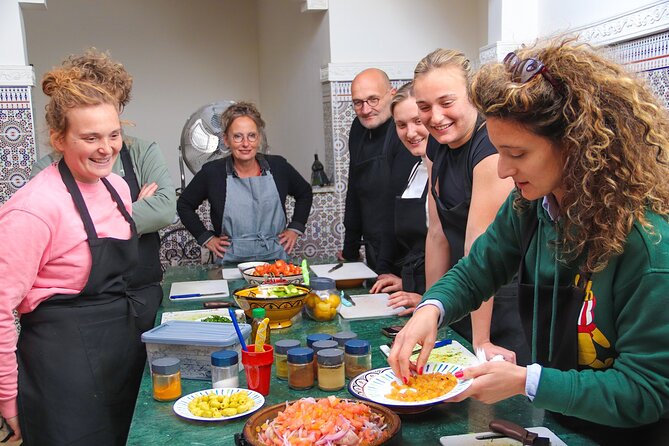
The workshop is about four hours, so the timing has to be tight. The big trick is that you start with the dish that takes the longest to cook, then you work on other items while that first pot stays on the fire.
This is smart teaching. It prevents the usual problem where everything finishes at different times and nobody gets a real meal together. It also shows you how Moroccan cooking is managed in a real kitchen—start the slow element, then build the rest around it.
What you’ll cook
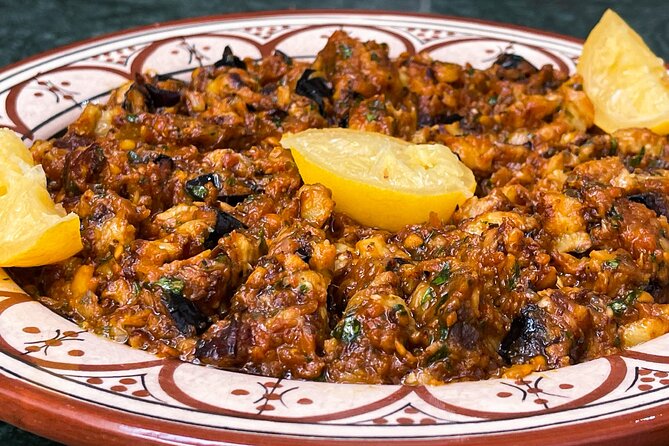
The class commonly focuses on multiple tagines, which can be vegetable-forward, chicken-based, beef-based, or meatballs, depending on what’s planned that day. You’ll learn techniques that apply across versions: handling spices, getting the right base flavor, and understanding how the dish develops while simmering.
You’ll also cook couscous during the session in the workshop format. One key detail: you’ll have the best chance at getting exactly what you want if you specify in advance—especially if couscous is a must for you.
In addition, you’ll usually have side dishes/salads as part of the meal. The goal isn’t a single-course demo; it’s a full Moroccan table you can eat.
A few more Marrakech tours and experiences worth a look

How the group works as a team
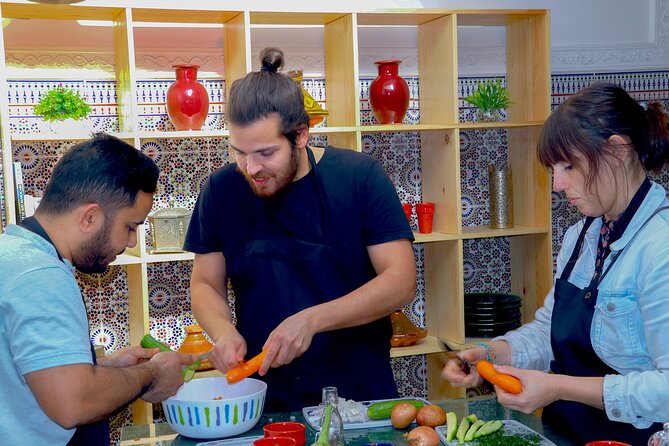
You’ll cook as one team, and you’ll rotate tasks through the meal. That’s a big part of why people consistently rate this so highly: everyone gets involved. Some people end up chopping most of the vegetables; others assemble or season. The host guidance keeps it safe, clean, and moving.
One practical advantage: you’ll be cooking in an air-conditioned kitchen area. Marrakesh can be warm, so that comfort matters for a 4-hour hands-on session.
How Small-Group Size Makes the Difference
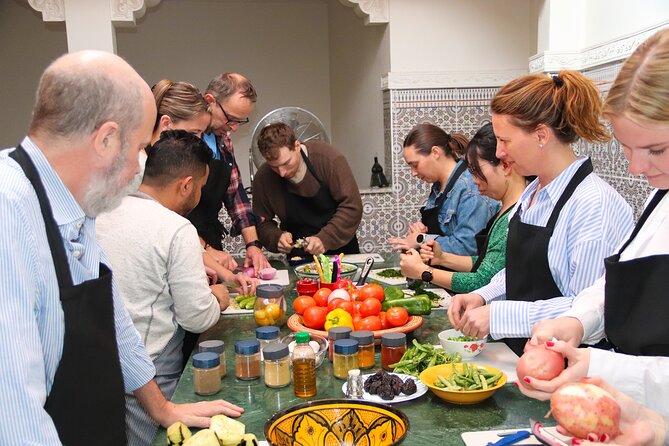
With a maximum of 9 travelers (and they note it may be 10 only in special overbooking/private situations), the class stays intimate. That size affects everything.
- Instruction quality: You’re close enough to get corrections while your hands are on the work.
- Participation: You won’t be stuck as an observer.
- Questions: Chef Hassan can answer questions during the process, not just at the end.
- Group bonding: People eat together because the meal is made together. That social side is real, not forced.
This is also where the class shines for mixed groups. The hosts are comfortable working with different ages and backgrounds, and the structure makes it easy for teens and adults to participate side by side.
Kids are allowed, with one important limit: children under 7 (including babies) shouldn’t attend. If you’re traveling with little ones, plan around that. It keeps the kitchen calm and safe for everyone.
Diets, Ramadan, and What You Should Tell Them Up Front
If you eat vegan, vegetarian, or gluten-free, this class is designed to work with you. They say they accommodate restrictions, and the class also teaches plant-forward cooking.
The best move is to message your dietary needs before booking so you get the right dish plan. If couscous is part of your needs, say it clearly. The hosts emphasize flexibility, but you’ll get the smoothest outcome when they know what you want from the start.
They’re also open during Ramadan, which is helpful if you’re planning your trip around that calendar. You’ll still get the same structured class experience.
For anyone with an ingredient sensitivity, don’t just say I avoid gluten or I avoid dairy—tell them your specific restriction so they can align the cooking choices with what you need.
Eating What You Cook: The Best Part, Done the Right Way
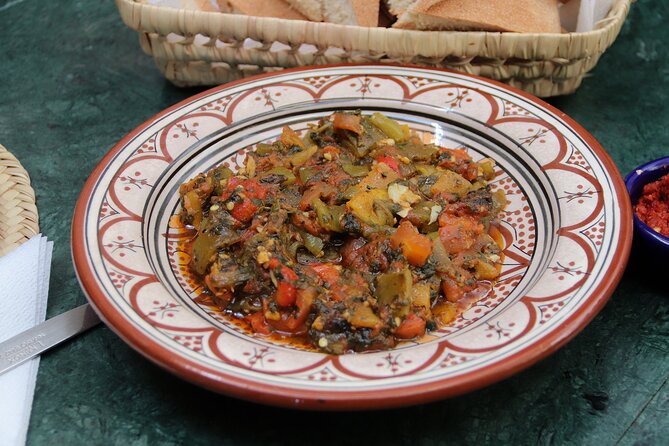
You’ll eat after everything finishes. That’s not an afterthought. The meal is the reason you’re there.
I like the team-tasting setup because you can’t easily fake it. If the spices are off, you’ll taste it. If the simmering time is wrong, you’ll feel it. The hosts steer your cooking so the final dishes land where they should.
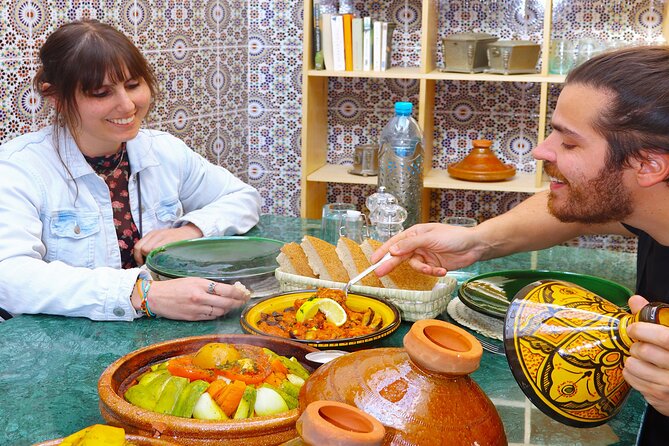
In the class format, you’ll usually end up with multiple tagines plus side dishes, so you can sample different flavor profiles rather than committing to one heavy dish. The food is meant to be shared, and the group structure makes that natural.
What You Take Home: Recipes and Smart Spice Shopping
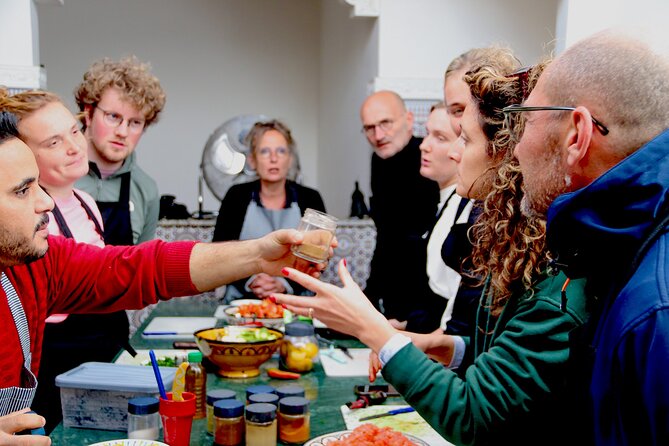
After you’ve eaten, you’ll get recipes for the dishes you make and more. Some hosts share them at the end of class, and others send a link—either way, the intent is the same: you leave with a way to recreate the flavors.
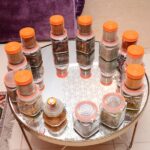
You’ll also have a chance to buy spices and tagines at the end of the class. The hosts say they sell spices and tagines cheaper than tourist shops, so if you want to bring home real cooking tools (not just souvenirs), this is a practical moment to shop.
If you’re thinking about seasoning for your own kitchen, ask the hosts what they recommend for the specific tagines you cooked. It’s easier to match a spice blend to the dish you already made than to buy blindly.
Price, Value, and Lunch vs Dinner Timing
At $34.76 per person for about four hours, you’re paying for more than food. You’re paying for:
- guided market selection,
- technique instruction,
- the mint tea skill,
- cooking multiple dishes,
- and a meal you helped create,
plus bottled water and bread are included.
When value is good, it’s because the experience changes what you can do afterward. Recipes and a tea method do that. Also, the small-group limit helps protect the quality—your time with the chef matters.
Lunch or dinner are both available, and that affects your trip logistics. Dinner can be a relaxed option if you want to shop and then end your day with a proper meal. Lunch may fit better if you’re exploring later in the evening.
One more budget-friendly note: free cancellation up to 24 hours before the experience start time means you can lock it in without panic. That’s handy if your itinerary is still shifting.
Should You Book This Cooking Class?
Book it if you want a genuinely hands-on Marrakech activity where the cooking time is the main event. This fits best for couples, small groups, and families who want to do something practical and memorable—not just take photos of food.
You should think twice if you’re expecting a super long history lecture or a big sightseeing day. This is a kitchen-first experience. Also, if couscous is a must, message your preference early so the plan matches what you want.
If you care about clean, organized instruction and a meal you’ll actually enjoy, this class is one of the smartest ways to spend a half day in Marrakech.
FAQ
How long is the cooking class?
The class runs about 4 hours.
Do I have the option of lunch or dinner?
Yes, lunch and dinner options are available, so you can work around your schedule.
What dishes will I learn to make?
You’ll learn to cook classic Moroccan dishes such as tagines, plus couscous during the workshop. The class may also include Moroccan salads/side dishes as part of the meal. If you want couscous specifically, they ask that you specify in advance.
How large is the group?
The group size is capped at 9 people, with an indication it may be 10 only in special overbooking or private-group situations.
Can they accommodate dietary restrictions like vegan, vegetarian, or gluten-free?
Yes. The class is adaptable, and they cook vegan and vegetarian food, with flexibility for gluten-free and other restrictions if you ask in advance.
What’s included in the price?
Included items are bottled water, lunch or dinner, bread, and welcome tea.
What’s not included?
Soda/pop and alcoholic beverages are not included, and private transportation isn’t included.
Where do we meet, and how do we find the group?
You start at J2P3+C26، زنقة بوطويل، Marrakech 40000, Morocco, near a pharmacy. They say you don’t have to worry about finding them because they text you after your booking.
Are kids allowed?
Kids are allowed, but children under 7, including babies, should not attend.
What do I get at the end of the class?
You’ll have time to eat what you cooked, and you’ll receive recipes after the class for the dishes you made and more.