REVIEW · MARRAKECH
High Atlas Mountains Day Trip
Book on Viator →Operated by Morocco Imperial Tours · Bookable on Viator
High Atlas Mountains on a tight schedule. I like private touring (just your group) and the local guide angle that helps the valleys feel personal, not staged. One caution: pickup timing can be a weak spot, with at least one report of a long wait and no real apology when the driver finally arrived.
You’ll spend about 5 hours moving through the High Atlas foothills, with a stop for lunch in the green Ourika Valley and a hike around Setti Fatma at the base of a mountain waterfall. The main drawback is that this is not a sit-and-look trip. You’ll be on your feet on uneven ground, so comfortable shoes matter.
In This Review
- Key highlights worth your attention
- Price and value: what $129.58 buys you in the High Atlas
- Marrakech pickup to the first valley scenes at Ourika
- Tahanaout Valley: ochre homes and daily life in steep walls
- Moulay Brahim Gorge: a quick dose of dramatic mountain scale
- Asni village terraces: ochre walls, farmland steps, and culture in motion
- Ourika Valley lunch: the green break that keeps the day enjoyable
- Setti Fatma waterfall walk: the active finale
- Who this private High Atlas day trip suits best
- Guide-led experience: what you should ask for on the day
- Booking this tour: quick practical tips (no drama)
- Should you book the High Atlas Mountains day trip from Marrakech?
- FAQ
- What time does the High Atlas Mountains day trip start?
- How long is the tour?
- Is hotel pickup and drop-off included?
- Is this tour private or shared?
- What’s included in the price?
- Are meals and drinks included?
- Is there a mobile ticket?
- Is admission free?
- Is a minimum number of people required?
- What language will the guide speak?
Key highlights worth your attention
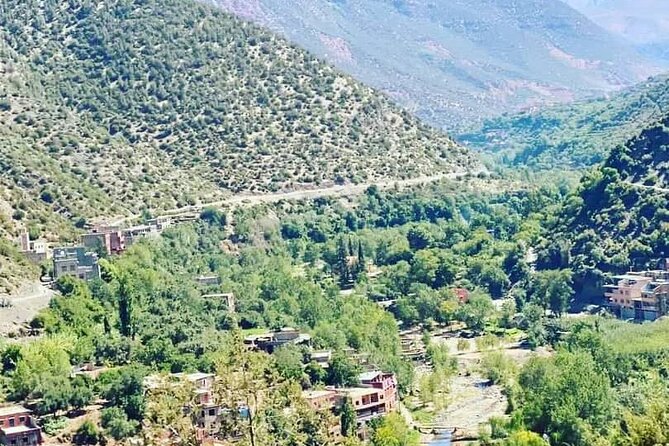
- Berber (Amazigh) village stops: you’ll pass communities and meet local families along the way
- Ourika Valley lunch break: a “green reset” outside Marrakech
- Valley viewpoints in the High Atlas: Tahanaout and Moulay Brahim Gorge scenery are built into the route
- Asni village terraces: ochre homes and terraced fields give you a real sense of how people live here
- Setti Fatma waterfall walk: time on foot at the base of the falls for a memorable ending
- Easy logistics on paper: hotel pickup/drop-off and a start time of 8:30 am
Price and value: what $129.58 buys you in the High Atlas
At $129.58 per person for a roughly 5-hour private outing, the math comes down to this: you’re paying for convenience plus access. You get hotel pickup and drop-off, a local guide, and a private format where your route and pacing are more flexible than the big-bus style tours.
Is it a bargain? It can feel like one if you want to visit multiple valley spots without spending half your day on public transport or hiring a driver for the whole loop. Is it a splurge? Also yes—because private tours cost more than shared group options, and meals aren’t included. Still, the experience is designed around a focused route through the High Atlas valleys instead of long, empty driving.
If you’re traveling as a couple, families, or a small group (and you’ll have at least two people per booking), this can be a good way to get variety in a short time: markets, valleys, village life, and a waterfall walk. If you’re on a strict budget and can handle independent travel, you might spend less on your own transport—but you’d lose that guided context that helps you understand what you’re seeing.
A few more Marrakech tours and experiences worth a look

Marrakech pickup to the first valley scenes at Ourika
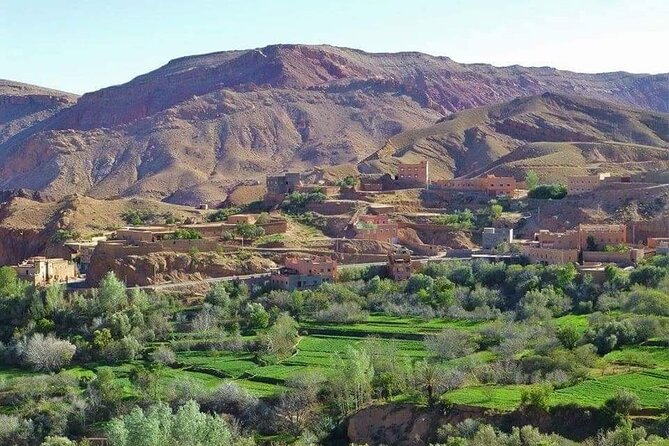
You start at 8:30 am in Marrakech with hotel pickup, then you’re out toward the mountains. Right away, the route is built around a slow switch in scenery: from city movement to wide views, changing colors, and valley life.
Our first major stop is Ourika Valley, where you’ll have lunch. This part matters because it’s not just pretty scenery—it’s the practical reason many people choose the trip. After driving up into the foothills, Ourika gives you greenery, flowers, and water in a way that feels like a different world from Marrakech. The day also tends to flow better once you’ve eaten here, because you’ll likely want energy for the later village and waterfall parts.
A possible consideration: you should expect a real schedule. Even though the listed duration is about 5 hours, the day is packed with movement between places. If you’re the type who needs lots of long breaks, you might find the pacing brisk. On the bright side, that also means you’re not stuck in one single location all day—you get a sequence of different mountain settings.
Tahanaout Valley: ochre homes and daily life in steep walls
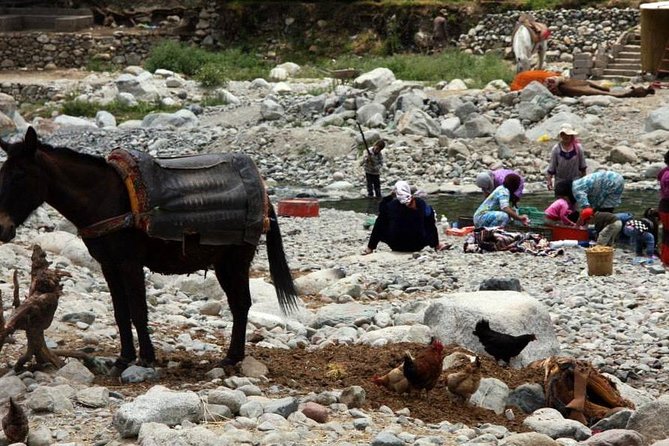
The trip is routed through the Tahanaout (Tahnaout) Valley, known for villages where homes climb steeply up the walls of the valley. This is one of those areas where you start noticing how geography shapes architecture. People didn’t build randomly here—they built where they could farm, collect water, and move between homes and fields.
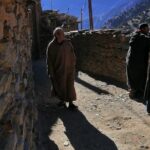
What I like about this stop conceptually is that it’s not only a viewpoint. You’re going through the valley and you may stop by Amazigh families, including time to meet local kids. That’s the difference between seeing the mountains from a roadside and seeing the mountains as a place people actually live in.
Logistically, it also helps that the day isn’t just about mountain photo angles. Village interaction gives the whole trip meaning. You’re better prepared to understand why you might see terraced plots, narrow paths, and tightly packed homes.
If you’re sensitive to crowds or you prefer very formal cultural experiences, know that this is everyday village space. Dress respectfully, keep your expectations simple, and let the moment be real. The value here is often in the small, informal conversations rather than in any fixed “museum moment.”
Moulay Brahim Gorge: a quick dose of dramatic mountain scale
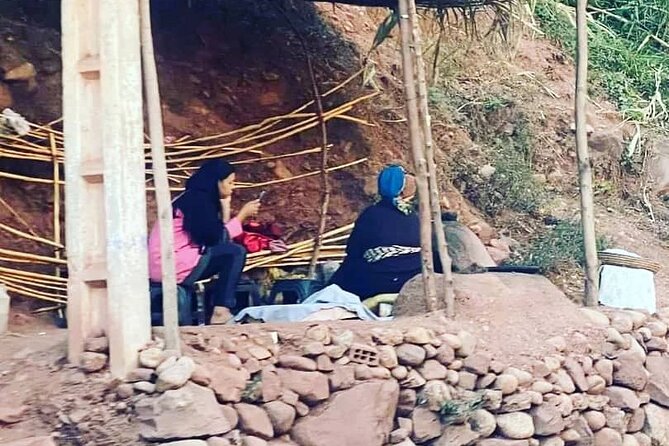
Between village stops, the route includes the Moulay Brahim Gorge, where you get dramatic mountain-scale views. A gorge is where you can really feel how water carved the area over time. Even if you don’t stop for long, you usually come away with a clear sense of the High Atlas power—steep sides, tight terrain, and a feeling of depth.
This portion of the day is also why the tour works for people with limited time. In a few hours, you still get variety: valley villages, a gorge viewpoint feeling, and then a green lunch stop plus a waterfall hike. It’s a compressed “greatest hits” route, but focused on places where people live and work, not just scenic pull-offs.
A practical note: gorges and valley viewpoints often mean short stops, which can translate into waiting for the group to move. If your party includes kids, this can be fine—just be ready for occasional stop-and-go rhythm.
Asni village terraces: ochre walls, farmland steps, and culture in motion
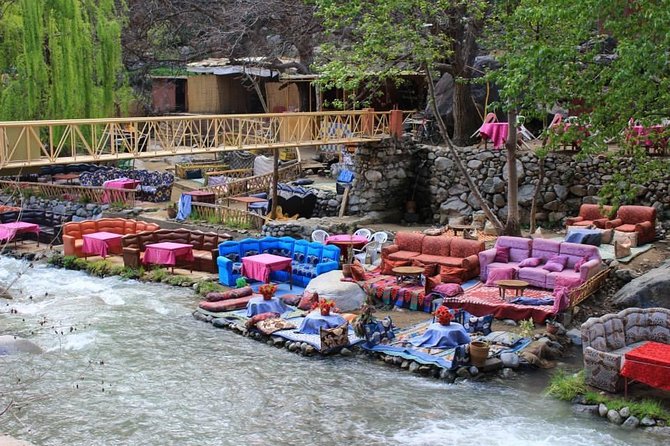
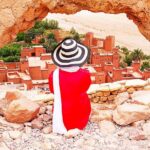
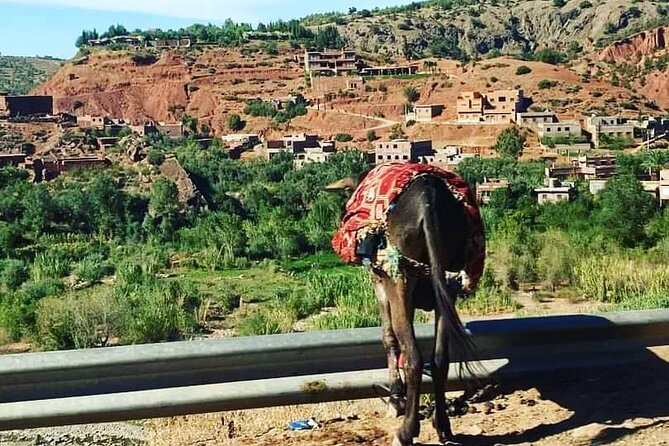
Later in the route, you reach the Berber village of Asni, known for terraced fields and ochre homes that climb the terrain. When a village is built with terraces, it’s because the land is usable only in stages. The result is an efficient patchwork of fields carved into slopes—an ongoing collaboration between people and mountain conditions.
This stop is special because it’s where the trip becomes more than scenery. You’re learning how people make a living here. The terrace pattern is visible, the home colors blend with the earth tones, and the whole setting reads as functional rather than decorative.
You may also encounter local families and the chance to experience daily village life through meeting locals, including time with local kids. Those small interactions often become the memory you carry home, because they connect the geography to real people.
If you’re visiting for photography, Asni is one of your best bets. Keep your expectations realistic: you’re not in a controlled setting. Move slowly, ask politely when needed, and don’t assume you can photograph every face or doorway.



Ourika Valley lunch: the green break that keeps the day enjoyable
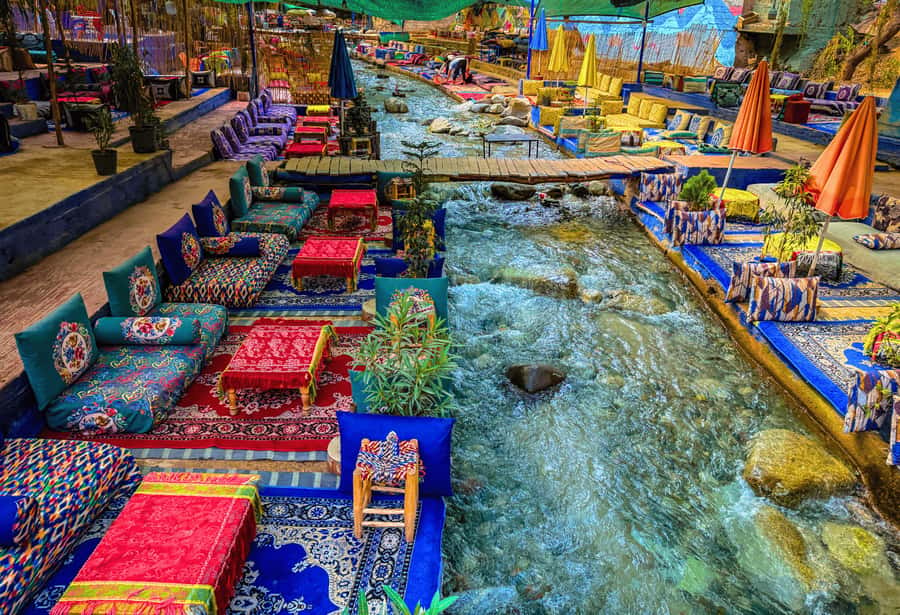
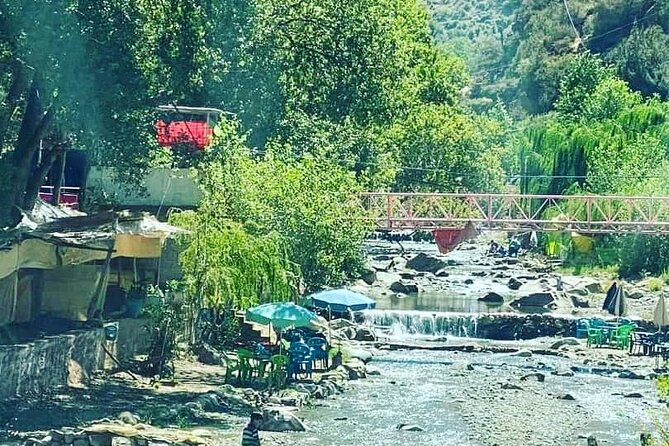
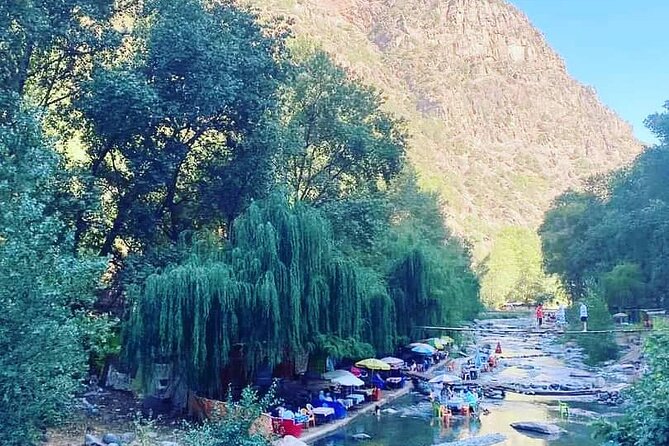
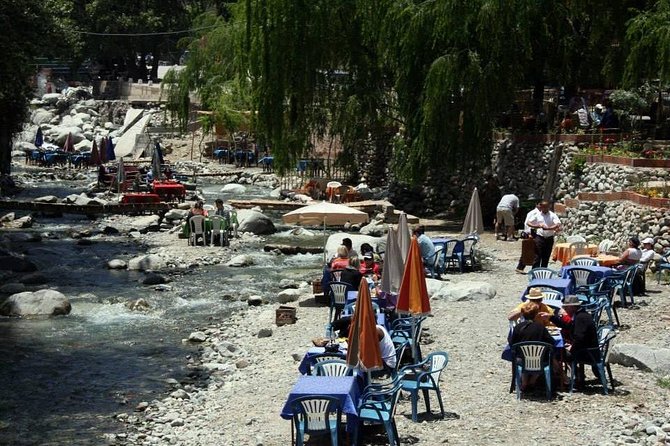
Lunch in the Ourika Valley is one of the most important anchors of the schedule. The Ourika area is described as lush and green, with trees, flowers, blooming bushes, and waterfalls. That sounds like a lot—and in practice, it’s the kind of setting that helps you reset your senses after the initial drive and valley stops.
Why this matters for you: it breaks up the day so it doesn’t feel like a blur of road time. It also gives families a safer, calmer block of time to eat, regroup, and manage kids’ energy.
Meals and drinks aren’t included, so you’ll be choosing where and what to eat locally during the lunch window. That can be a plus if you like flexibility, but it does mean you should budget extra for food and water. Bring small bills or have payment ready, and consider carrying a light snack too, especially if you’re traveling with children.
Setti Fatma waterfall walk: the active finale
The tour’s final highlight is a hike through the Berber community of Setti Fatma, where you’ll reach the base of a high mountain waterfall. This is the part that shifts the day from sightseeing to something more physical.
Even though the itinerary doesn’t list a specific length or difficulty, “hike through a community” usually means uneven paths, some steps, and time walking among buildings and trails. Plan for shoes you trust. If it has rained recently, paths can get slick.
This ending is a smart design choice. After hours of valleys and villages, the waterfall is a payoff your body understands instantly: cool mist, constant sound, and the feeling of standing at the source of all that mountain water. It’s often the best moment for families and kids because it feels like an event, not just another stop.
And because it’s near the end, you’ll likely have the energy you saved after lunch. Try to go slow, take photos as you can, and don’t rush the walking part—this is where you’ll feel the High Atlas up close.
Who this private High Atlas day trip suits best
This is a strong fit for:
- Families who want a kids-friendly day with multiple short experiences instead of one long hike
- Couples who want real village context without planning transport for each stop
- Small groups who prefer hotel pickup/drop-off and a guide to explain what you’re seeing
It’s less ideal if:
- You want a fully relaxed day with no walking
- You have limited patience for a tight schedule
- You need very detailed timing at each specific stop (the day is flexible by nature)
The private format helps most. Only your group participates, which often makes it easier for kids and easier for adults to ask questions without feeling like you’re in a crowd.
Guide-led experience: what you should ask for on the day
The tour includes a local guide, and that’s where you’ll get the real value. Instead of just taking in the scenery, ask practical questions that tie people, farming, and the terrain together. Things like:
- How the valley shape affects where homes and fields are built
- What terrace farming means day-to-day
- How seasonal water flow changes what you see
Also, ask your guide how long each walk segment typically takes in real life. The itinerary gives a structure, but on mountain routes, timing can shift due to road conditions or how long you spend in a community area.
Because the tour “may be operated by a multi-lingual guide,” you’ll likely have some language support even if your guide switches between languages. Still, if communication is important to you, confirm at booking which language(s) are available.
Booking this tour: quick practical tips (no drama)
Two small planning points can save headaches:
1) Confirm your pickup details carefully. The one issue shown from past experience was waiting longer than expected at the stated area. Since pickup is part of the deal, you want to be sure the driver knows your exact riad address and entrance spot.
2) Bring cash for lunch and drinks. Meals and drinks aren’t included, so your lunch stop is a chance to choose your own food, not a guaranteed included meal.
Should you book the High Atlas Mountains day trip from Marrakech?
Yes—if you want a guided, private day that mixes valleys, village life, and a waterfall walk without needing to plan transport between multiple sites. This is a smart pick for families and for anyone who likes their scenery with context. Ourika Valley lunch gives you a real break, and the Setti Fatma finale turns the day into something physical and memorable.
Hold off or plan extra carefully if your main priority is a perfectly predictable pickup and slow pacing. If you’re the type who hates waiting, be extra proactive about meeting-point timing and your exact pickup location.
Overall, for the price, you’re paying for convenience and guidance across several High Atlas highlights in about 5 hours. If that matches your style, this tour has a lot going for it.
FAQ
What time does the High Atlas Mountains day trip start?
It starts at 8:30 am.
How long is the tour?
The duration is about 5 hours.
Is hotel pickup and drop-off included?
Yes. Hotel pickup and hotel drop-off are included, with the tour starting in Marrakech and ending back at the meeting point.
Is this tour private or shared?
This is a private tour/activity. Only your group participates.
What’s included in the price?
Included are a local guide, hotel pickup, hotel drop-off, and the private tour.
Are meals and drinks included?
No. Meals and drinks are not included.
Is there a mobile ticket?
Yes. The tour includes a mobile ticket.
Is admission free?
The tour listing notes admission ticket free.
Is a minimum number of people required?
Yes. A minimum of 2 people per booking is required.
What language will the guide speak?
The tour may be operated by a multi-lingual guide, depending on availability.