REVIEW · MARRAKECH
cooking class with chef FATIMA
Book on Viator →Operated by Fatima Zahra ALAOUI · Bookable on Viator
Stepping into a family kitchen in Marrakech feels like borrowed time. This Marrakech cooking class with Chef Fatima starts with a souk ingredient hunt, then moves to a traditional riad house where you cook and eat what you make. It’s part food lesson, part Medina walk, and part warm family welcome.
I especially love the way you’re not just watching. You get to pick your own ingredients with Yassir near the souk, which makes every step feel personal. And Chef Fatima’s teaching style is patient and practical, so even if you’re a beginner, you’ll know what you’re doing and why.
One thing to keep in mind: like many Medina experiences, timing and meeting details can be sensitive. The cooking starts around the scheduled window, and plans may adjust (for example, Friday market timing or Ramadan-related adjustments), so it’s smart to read your confirmation closely and arrive a little early.
In This Review
- Key highlights to know before you go
- A Chef in the Medina: Why Fatima’s Class Feels Different
- Souk Shopping With Yassir: Your Ingredient Choices Set the Tone
- In a Traditional Riad House: How the Class Actually Works
- What You’ll Cook: Tagines, Salads, and a Dessert You Can Replicate
- Lunch and Dinner Included: Eating in the Same Rhythm You Cook
- Timing, Friday Changes, and Ramadan Adjustments
- Price and Value: Why $34.76 Can Make Sense in Marrakech
- Logistics in the Old Medina: Finding Derb El Maada Without Losing Your Day
- Who This Class Is Best For (And Who Should Be Careful)
- Should You Book This Marrakech Cooking Class With Chef Fatima?
- FAQ
- How long is the cooking class?
- What does the class cost?
- What’s included in the price?
- What is not included?
- Do we visit the souk to buy ingredients?
- Is there a Friday market schedule change?
- How big is the group?
- Is the class taught in English or other languages?
- Where do we meet, and where does it end?
- What happens if weather is bad or the minimum number of travelers isn’t met?
Key highlights to know before you go
- Souk ingredient shopping with Yassir, so you start cooking with real choices
- Chef Fatima’s traditional house setting in the center of the old Medina
- A meal plan that includes lunch and dinner, plus coffee and/or tea and bottled water
- Small group size (max 20), which keeps things hands-on instead of crowded
- Language support in French and English, with clear explanations during prep and cooking
- Common menu favorites like chicken tagine, Moroccan salads, and a filo-based dessert
A Chef in the Medina: Why Fatima’s Class Feels Different
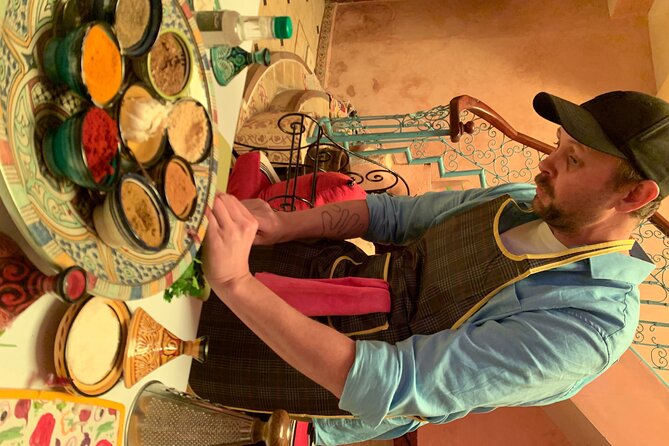
If you’re in Marrakech and you want more than a cooking demo, this is the kind of class that actually sticks. The setting matters. You’re cooking in a traditional house inside the old Medina, not in some generic studio kitchen. That alone changes the vibe: you feel like you’ve been let in, not booked into a show.
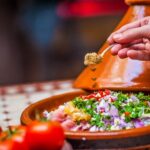
Chef Fatima leads the cooking, and the tone is relaxed but focused. From the way the class flows, you learn by doing: chopping, mixing spices, building the flavor in stages, and watching how the final dishes come together. You also get a lot of small “how-to” moments, like when to season, how to balance salt and herbs, and what textures to aim for when preparing salads and tagines.
The other thing I like is that the class doesn’t treat food like a museum piece. It’s practical Moroccan cooking: tagines with spice-forward foundations, sides that bring freshness and crunch, and a dessert that shows how simple ingredients can turn into something special.
You can also read our reviews of more cooking classes in Marrakech
Souk Shopping With Yassir: Your Ingredient Choices Set the Tone
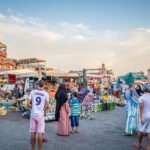
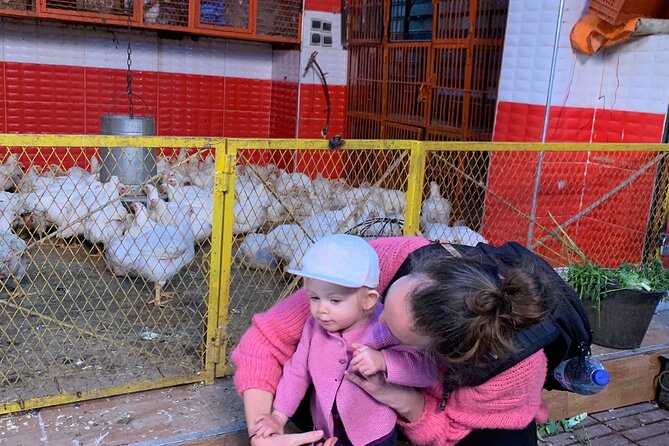
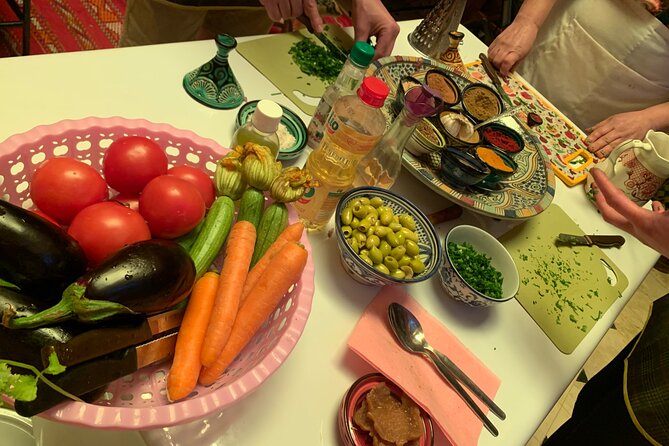
The day starts with a meet-up and then a walk toward the souk. Instead of being handed a basket of ingredients, you get to choose. Yassir guides you through what’s available and helps you pick what will go into your course.
This part is valuable for two reasons. First, it gives you context. You learn what you’re actually buying in Marrakech: the produce, herbs, and pantry items that matter for Moroccan dishes. Second, it makes the cooking session easier to follow later. When you’ve held an ingredient in your hand and chosen it, you remember what it’s for.
Plan for walking. You’ll go out to the souk, then later you’ll walk and explore together as you head to the family’s house. It’s not a long trekking route, but it is real Medina walking, the kind where you’ll want to stay alert and keep your group together.
One timing note: if you book on a Friday, the market schedule may change. The class indicates that on Friday the afternoon market is generally not done because it’s often closed on a public holiday for Muslims. If your dates fall on Friday, treat the shopping plan as flexible and focus on the overall flow.
In a Traditional Riad House: How the Class Actually Works
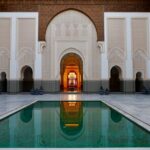
After the souk, you move to Chef Fatima’s family space. The class happens in a vintage, traditional setting, which helps you slow down. You’re not surrounded by distractions, and you can focus on the food work.
The group is capped at 20 travelers, which matters more than you might think. In a larger group, cooking classes often become: watch, wait, repeat. Here, the smaller size keeps it more hands-on. You’ll be able to follow along, ask questions, and participate in key steps like spice mixing and assembling components for tagines and salads.
Language is another practical detail. The class can be taught in French and English, and that makes a difference for comfort. Food instruction is easiest when you can understand the reasoning behind the technique, not just memorize the steps. You’ll get explanations as you go, and you’re not left guessing.
What You’ll Cook: Tagines, Salads, and a Dessert You Can Replicate
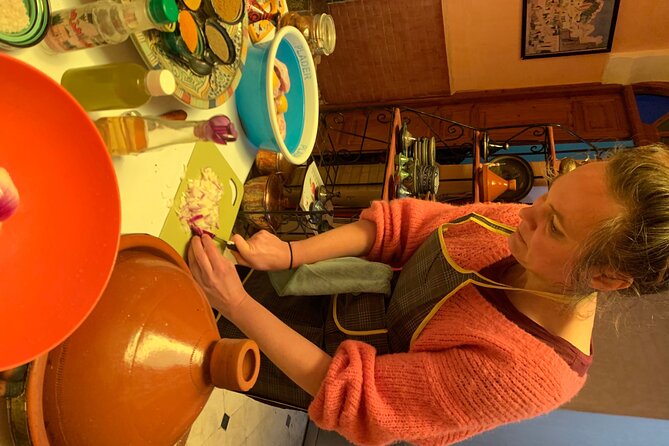
Menus can vary, but the class content is consistently built around core Moroccan flavors. Expect a mix of tagine cooking and multiple salads/sides so you learn how Moroccan meals balance hot, spiced mains with cool, fresh accompaniments.
From what’s described for this experience, common highlights include:
- Chicken tagine, often a lemon-forward version
- Vegetable tagine as a second savory dish
- Three salad-style sides, frequently including combinations like Moroccan salad plus other chopped vegetable preparations
- A dessert with filo pastry, often involving apple, vanilla yoghurt, and cinnamon
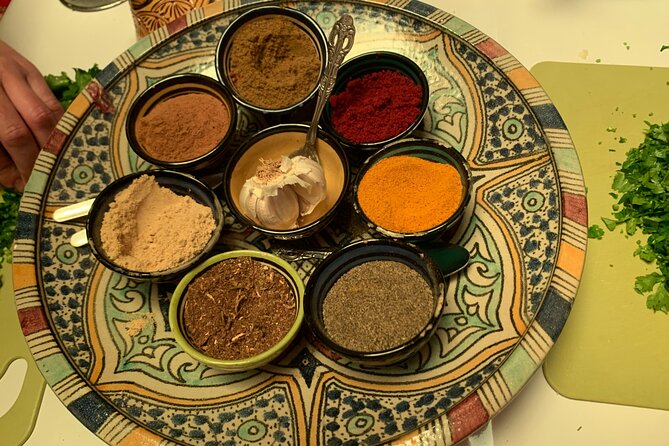
The teaching focus is on technique, not just taste. You’ll work with spices and learn how they behave in Moroccan cooking: how aroma develops, how you build flavor before adding ingredients, and how seasoning changes as the dish cooks.
If you like to cook at home, this is the part you’ll appreciate later. You’re not just eating an impressive meal. You’re learning the workflow you can repeat: prep, season, cook, assemble sides, and finish with a dessert that feels Moroccan without needing fancy ingredients.
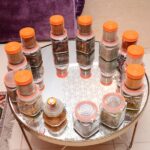
There’s also a nice add-on element that some participants highlight: you may be able to purchase spices they make themselves. That’s useful if you want to bring a piece of the class home. Consider it optional, not required.
Lunch and Dinner Included: Eating in the Same Rhythm You Cook
This class isn’t stingy with food. The experience includes lunch and dinner, plus coffee and/or tea and bottled water. So you’re not paying only for instruction. You’re also paying for a full, sit-down meal created from your work.
That matters because cooking classes can sometimes end with a small plate and a rushed departure. Here, the structure feels more like a real Moroccan meal: you cook, you eat, you talk, and you get coffee or tea afterward.
A practical tip: if you’re the kind of person who likes to learn by tasting, take your time. Pay attention to how the salads contrast with the tagine, and notice how the spicing carries through each dish. Even small differences in herbs and spice blends show up clearly when everything is on the table.
A few more Marrakech tours and experiences worth a look

Timing, Friday Changes, and Ramadan Adjustments
The best classes in the world still run on real schedules, and Marrakech schedules can shift for cultural reasons. The experience specifically notes that Friday market timing may differ. It also points to adjustments that can happen around fasting periods.
One review detail you should treat as a heads-up: during Ramadan, the plan around market visits and meals may be adjusted because the host is fasting. If your travel overlaps with Ramadan, don’t assume you’ll get the exact same shopping pattern you’d get at another time of year. The good news is that the class still focuses on cooking and eating together; the “route” may adapt.
Also, keep an eye on start time. Some participants reported that the class began earlier than expected, while others mentioned confusion about the time shown on the booking page versus the actual start. You can’t control that, but you can manage the risk: confirm your timing in your message thread and aim to arrive early at the meeting point.
Price and Value: Why $34.76 Can Make Sense in Marrakech
At $34.76 per person, this is not a high-cost “tour add-on.” It’s a fairly strong value when you compare it to what you’re actually getting: a guide for the Medina/souk portion, instruction from Chef Fatima, and multiple meals (lunch and dinner), plus drinks and bottled water.
Here’s the value logic I use when I’m deciding. Ask yourself:
- Would I pay for a good, Moroccan home-style meal in the Medina?
- Would I pay for a guided ingredient shopping walk?
- Would I pay for a hands-on cooking session where I learn how to recreate at least some dishes?
If you answer yes to even one of those, the price starts to look reasonable. The meals alone help justify it. The ingredient picking adds educational value that typical restaurant dinners don’t offer. And because it’s in a family setting, you’re not just buying food—you’re buying access.
What you won’t get: private transportation. That’s normal for Medina tours, but it’s worth planning for. The meeting point is in the old Medina area near public transport, yet it can still take a bit to find without help.
Logistics in the Old Medina: Finding Derb El Maada Without Losing Your Day
The meeting point is:
Riad Sultan Marrakech & Cooking Class, 28 Derb El Maada, Marrakech 40000, Morocco
The activity ends back at the meeting point.
In the Medina, addresses can be “real but hard.” Narrow lanes, small turns, and doorways that look identical are common. The class is designed to be walkable from the nearby area, but you should expect that the route may be tricky if you’re navigating alone.
This is where I recommend you be proactive:
- Screenshot your confirmation and map pin before you go
- Build a small buffer time
- If the message thread mentions a different meeting point or an updated reference, follow it exactly
A couple of negative experiences mentioned that participants weren’t met on arrival due to meeting point changes or missed pick-up details. That’s not the norm for every booking, but it’s enough that you should take it seriously. If you arrive early and keep your phone available, you’ll reduce your risk a lot.
Who This Class Is Best For (And Who Should Be Careful)
This cooking class works best for you if you want:
- Moroccan cooking you can repeat at home, not just a meal
- A small-group experience in the old Medina
- Ingredient shopping plus hands-on cooking and shared eating
- Instruction in English or French, with a patient teacher lead (Chef Fatima)
It may be less ideal if you’re:
- Very time-sensitive and dislike schedule changes
- Uncomfortable with finding a meeting point in the Medina
- Coming with high expectations for a perfectly rigid shopping route every day (because Friday timing and Ramadan-related adjustments can affect plans)
If you’re the type who likes to laugh, learn, and eat well in a family space, you’ll probably be in your happy zone.
Should You Book This Marrakech Cooking Class With Chef Fatima?
I think you should book if you want a real Marrakech food day: souk shopping, tagine cooking, salads you can name and recreate, and meals included. Chef Fatima’s teaching style is repeatedly described as warm and clear, and the structure keeps you involved from ingredient choice to the final table.
Before you go, do two simple things:
- Confirm your exact start time and meeting details in your message thread.
- Plan on Medina navigation and walking as part of the experience.
If you want a cooking class that feels like Moroccan daily life instead of a scripted show, this one earns a spot high on your list.
FAQ
How long is the cooking class?
The experience runs for about 3 hours 30 minutes.
What does the class cost?
The price is $34.76 per person.
What’s included in the price?
It includes lunch and dinner, coffee and/or tea, bottled water, the chef Fatima, and a private guide named Yassir.
What is not included?
Private transportation is not included.
Do we visit the souk to buy ingredients?
Yes. You meet to go to the souk so you can discover and choose the ingredients used in your course.
Is there a Friday market schedule change?
The class notes that on Friday the market in the afternoon is generally not done because it is often closed on a public holiday for Muslims.
How big is the group?
The experience has a maximum of 20 travelers.
Is the class taught in English or other languages?
It’s taught in French and English.
Where do we meet, and where does it end?
You meet at Riad Sultan Marrakech & Cooking Class, 28 Derb El Maada, and the activity ends back at the same meeting point.
What happens if weather is bad or the minimum number of travelers isn’t met?
The experience requires good weather. If it’s canceled due to poor weather, you’ll be offered a different date or a full refund. If a minimum number of travelers isn’t met, you’ll also be offered a different date/experience or a full refund.