REVIEW · MARRAKESH
Marrakech: Local Food Tasting Tour with a Guide
Book on GetYourGuide →Operated by Marrakechtips · Bookable on GetYourGuide
Your appetite will work overtime in the medina. This Marrakesh tour is interesting because it blends Mohammed’s local guide storytelling with 10 food and drink tastings that feel like real everyday Moroccan eating, not a museum-style food show.
One more thing I like: the stops are paced for tasting, not speed-walking, and there are vegetarian options so you’re not stuck watching other people eat. The main drawback is simple: this is lots of medina walking in sun and uneven lanes, and the info even notes it may not suit wheelchair users.
In This Review
- Key reasons this tour is worth your time
- From Jame el Fna to Argana Cafe: where your medina walk starts
- The first restaurant stop: photo breaks and an introduction to the flavors
- Mellah and the Medina: why the route is part of the food
- Msemen, Harira, and Chebakia: how the tour handles savory-sweet balance
- Lfranatchi and tanjia: clay-pot smoky cooking you can smell
- Shwa barbecue and the bold menu: beef, turkey, and liver
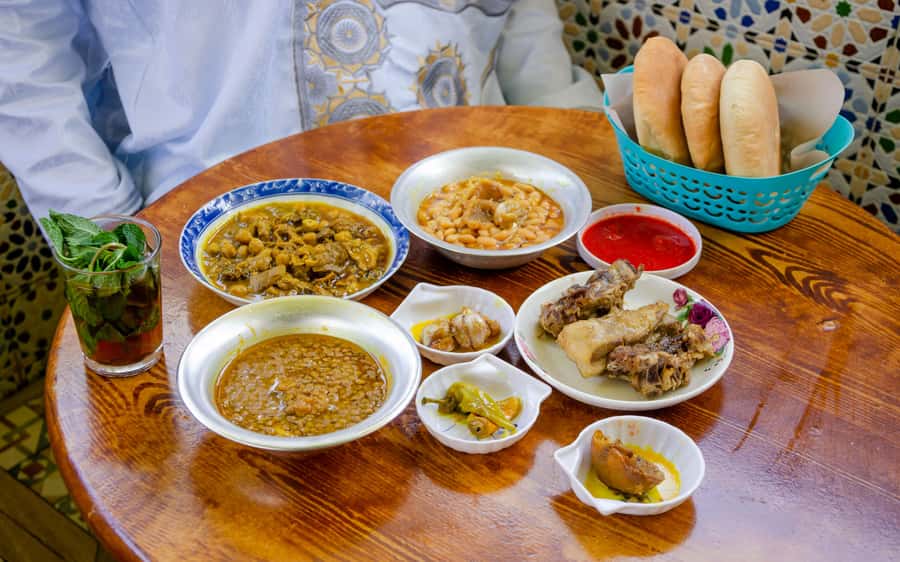
- Rass Lmbkher: steamed sheep’s head with cumin
- Panache smoothie and Khodnjal infusion: the palate resets you’ll be glad for
- Vegetarian options: what you should expect and how to get the most out of them
- Price and value: is $45 a good deal for Marrakech medina food?
- Who this tour fits best (and who should think twice)
- Quick practical tips so you enjoy every tasting
- Should you book this Marrakech food tasting tour?
- FAQ
- How long is the Marrakesh local food tasting tour?
- How much does the tour cost?
- Where do we meet for the tour?
- What languages is the guide available in?
- Is there a vegetarian option?
- How many people are in the group?
- What types of tastings are included?
- Is alcohol included?
- What should I bring?
- Is it wheelchair accessible?
Key reasons this tour is worth your time
- Small group (max 8): you get personal attention and enough time at each tasting stop.
- Mohammed’s route: you’ll spend time around local neighborhoods rather than only the most tourist-heavy spots.
- 10 tastings that follow a meal arc: savory starters, soups, sweets, then hot drinks to finish.
- Lfranatchi cooking moment: you see tanjia-style clay-pot cooking by wood fire heat.
- Not just meat and carbs: you’ll also have a fruit smoothie and a hot herbal infusion for balance.
- Bring-your-own bravery: you’ll get bold items like liver and steamed sheep’s head, so go in expecting strong flavors.
From Jame el Fna to Argana Cafe: where your medina walk starts
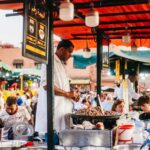
The meeting point is Jame el Fna Square, right in front of Argana Cafe. It’s a smart start because you get orientated at the edge of the medina where the energy is high and the streets start tightening up.
The tour runs about 210 minutes (about 3.5 hours), and the pace matters. This isn’t a quick snack crawl. It’s set up like a guided meal in public: you walk between tastings, stop often enough to actually try things, and still have time to look around.
You’ll travel with a personal local guide for the whole experience, and the tour is offered in English and French. In a place like Marrakech, that translation layer is the difference between tasting food and understanding what you’re tasting.
You can also read our reviews of more food & drink experiences in Marrakesh
The first restaurant stop: photo breaks and an introduction to the flavors
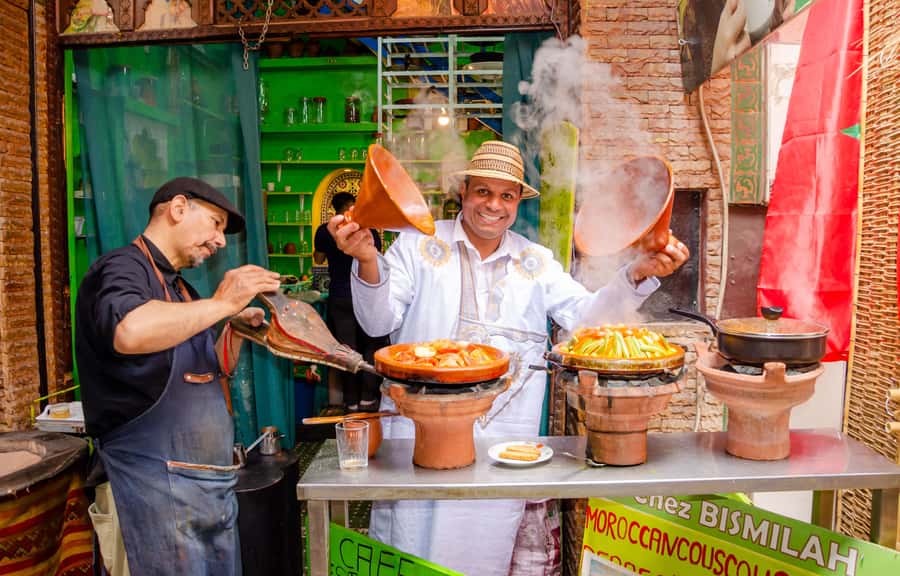
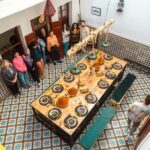
Early on, you shift into a local restaurant moment where there’s time for a bit of walking, a look around, and a photo stop before the food starts stacking up. This is useful because it sets the tone: you’re not just being fed; you’re getting placed in the setting.
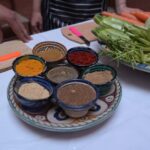
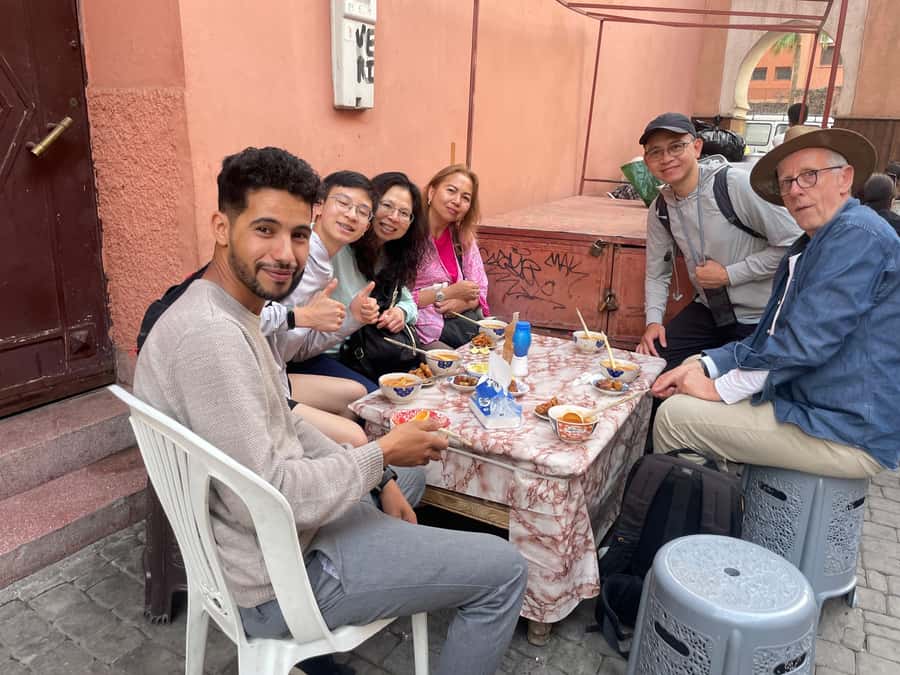
The first tastings are classic Moroccan comfort foods. You start with Msemen served with tomato sauce, onion, coriander, and spices. It’s the kind of dish that tastes like breakfast in one bite and like slow-cooked lunch in the next, because the sauce and herbs do a lot of work.
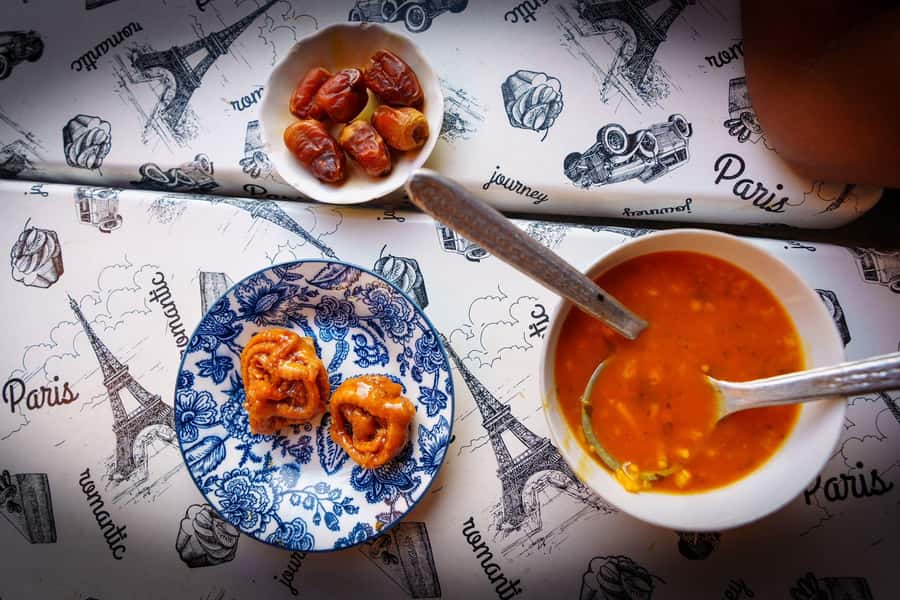
Then the tour turns toward a soup-and-sweet rhythm. You get the original Harira Moroccan soup, plus dates and Chebakia. That combination matters because it mixes savory depth with a sweet, crisp bite, so you don’t get bored by the same texture for the whole route.
Mellah and the Medina: why the route is part of the food
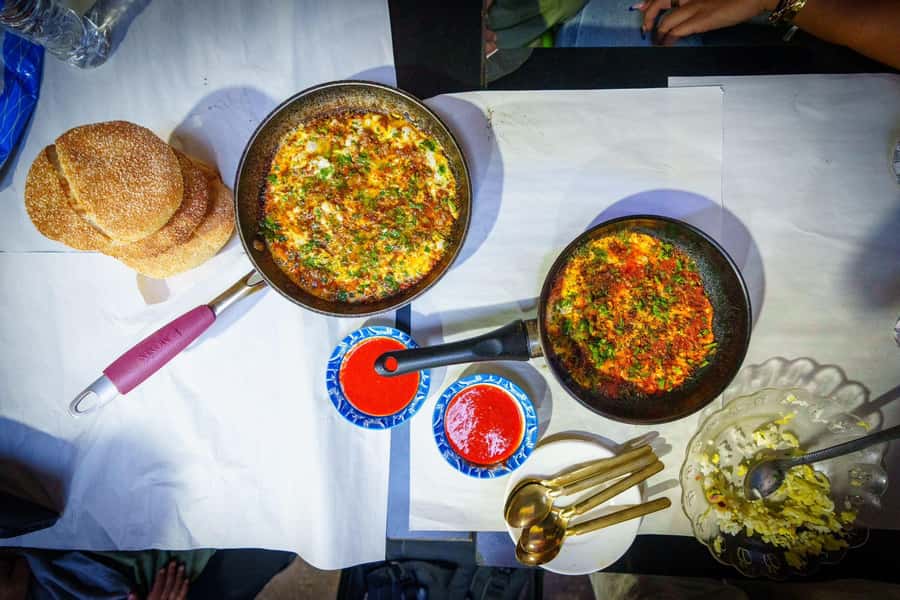
You’ll spend time in Mellah, Marrakech’s Jewish quarter, and also walk through parts of the Medina. These aren’t filler stops. They help explain why certain foods show up where they do, and why street life in Marrakech feels so tied to daily cooking.
Expect guided walking with short visits and time to look at the neighborhood details. The medina is compact and visually loud, so a guide who knows how to keep you oriented is a big deal. One of the best things about this tour is that it doesn’t treat the medina like a backdrop. It treats it like the kitchen.
In the Medina section, you’ll have a longer guided walk (about two hours). That’s where you’ll feel the true advantage of a small group: when you’re not jostling through crowds, you can focus on the food stops and the street explanations instead of constantly trying to catch up.
Msemen, Harira, and Chebakia: how the tour handles savory-sweet balance
If you’re worried this tour will be only one theme, it’s not. It builds contrast.
Msemen is warm and spiced, Harira is fragrant and hearty, and Chebakia and dates add sweetness and texture. That means you get a real sense of how Moroccan meals can shift without turning into chaos.
Also, the servings are generous enough that you should plan your energy. One helpful tip is to go hungry, because by around the third tasting you can already feel full. That’s not a bad sign. It means you’re not being charged for a couple of crumbs.
Lfranatchi and tanjia: clay-pot smoky cooking you can smell
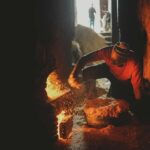
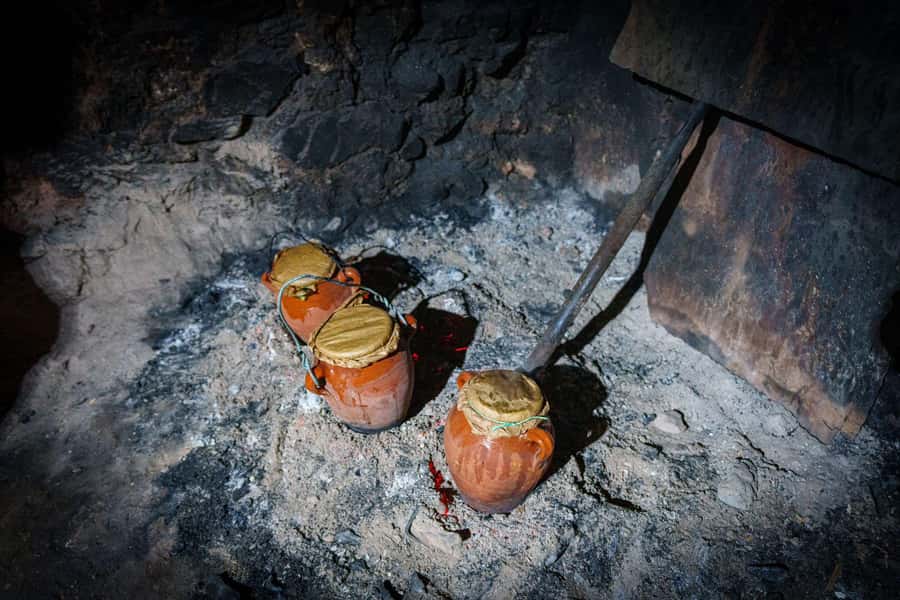
One of the most interesting stops is Lfranatchi, where wood fire heat plays a central role. This is where you see hammam-style heat cooking and you’ll be introduced to tanjia, a clay-pot Moroccan dish cooked in smoky heat.
Why this matters: Moroccan cooking isn’t always about fancy technique. A lot of it is about time, heat sources, and what’s possible with local kitchens and wood fire ovens. Even if you’ve heard of tanjia before, seeing the cooking environment helps your brain connect the dish to the atmosphere.
This is also a good moment for photos, because the cooking heat and the surroundings create a real sense of place. Just remember: Marrakech heat moves fast. Pause for photos, but keep moving so you don’t overheat.
A few more Marrakesh tours and experiences worth a look

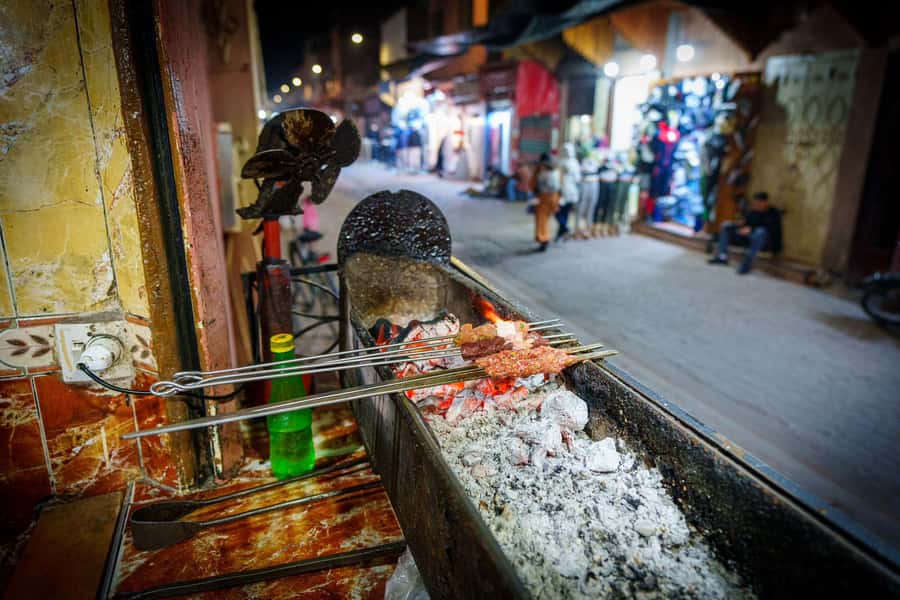
Shwa barbecue and the bold menu: beef, turkey, and liver
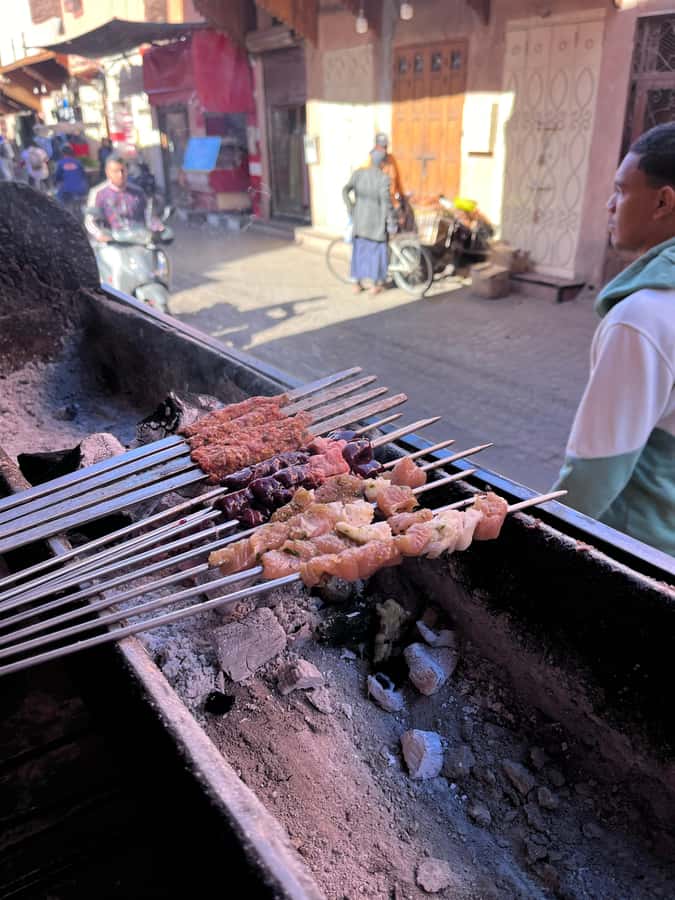
Next comes Moroccan shwa barbecue, with options you might see described as beef, turkey, and liver. This is where the tour shows its willingness to go beyond the safe tourist choices.
If you like strong flavors and don’t mind trying organs, this is one of the highlights. If you’re squeamish, you can still appreciate the idea of tasting street food as locals do, but be realistic about how the smell and texture may hit your senses.
The key is that the tour doesn’t throw everything at you at once. It staggers tastings through the route, with drinks and sweet breaks helping you keep your palate moving forward.
Rass Lmbkher: steamed sheep’s head with cumin
Yes, you read that correctly. You may try Rass Lmbkher, a dish of steamed sheep’s head with cumin. This is not mild. It’s a traditional item that can be unforgettable for the right kind of eater.
This is the tour’s biggest “go in prepared” point. If you love food history and you don’t mind learning firsthand how Moroccan cooks use every part, this kind of tasting can feel like a cultural handshake. If you only want familiar textures, you might find it too intense.
A smart approach is to treat the tasting as part of the story. Even if you can’t finish every bite, tasting it once gives you context for why it’s valued and how cumin shapes the overall flavor.
Panache smoothie and Khodnjal infusion: the palate resets you’ll be glad for
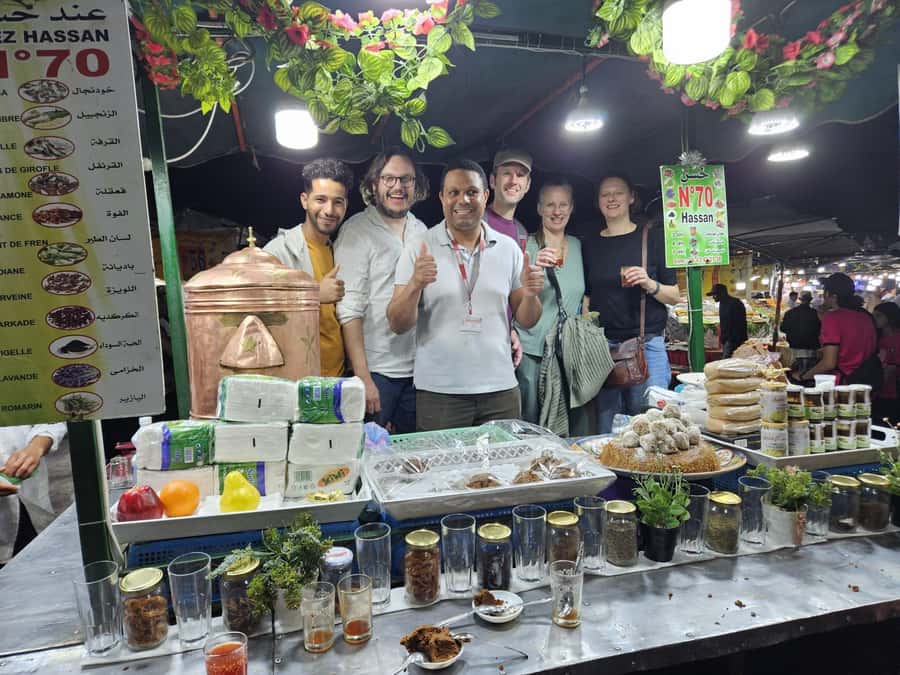
After heavier savory bites, you get a refresh with Panache, a smoothie made from seasonal fruits blended with milk or with an orange juice base. It’s not just a dessert. It’s a palate reset, and the seasonal fruit angle is practical because it matches what’s likely available locally.
To finish, you get Khodnjal, a hot herbal infusion with eucalyptus, used to clear your senses and support digestion. This is one of those Moroccan “after-meal” touches that makes the whole experience feel like a full dining sequence, not random sampling.
If you’re sensitive to spicy foods or strong aromas, these drink stops can be a lifesaver. They give your mouth and nose a break so you can keep enjoying what comes next.
Vegetarian options: what you should expect and how to get the most out of them
The tour includes vegetarian options available, which is a big plus in a medina food setting where meat often dominates. While the exact vegetarian substitutions aren’t listed in full detail, the fact that options exist means you can usually still get a meaningful set of tastings rather than being limited to tea and bread.
Here’s how to make it work for you: if you’re vegetarian, pick the option during booking and arrive ready to try new textures. Moroccan vegetarian-friendly eating often includes spiced pastries, soups, and vegetable-forward dishes, so you’ll likely still get that warm, spiced comfort feel even when meat isn’t part of your specific plate.
Price and value: is $45 a good deal for Marrakech medina food?
At $45 per person for about 3.5 hours, the value comes from the structure. You’re paying for a guide-led route, the tasting stops, and the fact that you’re not guessing where to eat or how to order in crowded streets.
You also get more than just food. The tour includes local sweets and tea, plus a small-group experience limited to 8 participants, and the guide brings you to hidden gems rather than only the obvious, high-demand storefronts.
Could you eat well on your own for less? Sure. But you’d be trading away the cultural context and the convenience of having multiple tastings lined up. In Marrakech, getting “the right food” faster usually beats trying to plan it alone.
And you get what the highest ratings consistently point to: careful attention, lots of tastings, and a route that feels local rather than staged.
Who this tour fits best (and who should think twice)
This experience is ideal if you:
- Want a guided way to try street food of Marrakech without stressing over what’s safe or where to go.
- Like variety and are okay with a meal that keeps coming in waves.
- Enjoy learning the cultural side of what you eat, especially with a guide named Mohammed who’s described as attentive and friendly from start to finish.
- Want a small group setting where you can actually talk and ask questions.
Think twice if you:
- Dislike trying unusual traditional dishes, especially items described like liver or steamed sheep’s head.
- Get easily worn out by longer walking in sun.
- Use a wheelchair. The info is contradictory (it’s marked wheelchair accessible, but it also says it’s not suitable for wheelchair users). In a medina setting, that usually means the real-world walking experience may be the limiting factor.
Quick practical tips so you enjoy every tasting
- Wear comfortable shoes. The medina can be uneven, and you’ll be on your feet for a while.
- Bring sun protection. You’ll spend time walking outdoors, including long guided stretches.
- If you’re photographing, still move with the group. The fun is in the flow of tasting and walking.
- Plan your appetite. This is a “go hungry” kind of tour, and portions add up fast.
Also, keep expectations realistic about drinks and rules. Alcoholic beverages are not included, and alcohol and drugs are not allowed, so you’ll be sticking to the tour’s tea, sweets, smoothies, and herbal infusion.
Should you book this Marrakech food tasting tour?
If you want the medina experience to include real eating, this is a strong choice. For most people, the best part is the mix: Mohammed-style guidance, a small group vibe, and a lineup of tastings that covers savory, sweet, smoky cooking, and palate resets.
Book it if you’re excited to try foods you’d probably skip on your own and you don’t mind a longer walking route. Skip it (or choose a different approach) if you’re only interested in mild flavors or you know you won’t handle the more intense traditional items.
FAQ
How long is the Marrakesh local food tasting tour?
The tour lasts 210 minutes (about 3.5 hours).
How much does the tour cost?
It’s $45 per person.
Where do we meet for the tour?
Meet at Jame el Fna Square, in front of Argana Cafe.
What languages is the guide available in?
The live tour guide is available in English and French.
Is there a vegetarian option?
Yes, vegetarian options are available.
How many people are in the group?
This is a small group experience limited to 8 participants.
What types of tastings are included?
You can expect 10 local food and drink tastings, including items such as msemen with tomato sauce, Harira soup with dates and Chebakia, sfenj (or Moroccan donates), tanjia cooking at Lfranatchi, Moroccan barbecue meats, steamed sheep’s head with cumin, a fruit smoothie (Panache), and a hot herbal infusion (Khodnjal).
Is alcohol included?
No. Alcoholic beverages are not included, and alcohol and drugs are not allowed.
What should I bring?
Bring comfortable shoes, a sun hat, camera, and sunscreen.
Is it wheelchair accessible?
The tour notes wheelchair accessible, but it also states it is not suitable for wheelchair users. Given medina walking, it’s safest to treat this as potentially difficult for wheelchair users.