REVIEW · MARRAKECH
Toubkal Ascent Trek – Atlas Mountains – 2 days (Private Trek)
Book on Viator →Operated by Atlas and Sahara Tours · Bookable on Viator
Two days to reach Toubkal is serious altitude. This private trek from Marrakech is built around Berber guides and a classic route that takes you from the valley at Imlil up to the refuge and on toward North Africa’s highest peak. I like that it’s personalized—your guide keeps the pace and breaks realistic—yet you still get the structure of a small, well-timed itinerary.
My other big draw is the overnight at the Toubkal refuge: you arrive, settle in, and get welcome mint tea plus access to a hot shower. One thing to consider up front is the effort level: you’re looking at a 5–6 hour walk on Day 1 and a long Day 2 (about 9 hours) that starts early to beat the sun.
In This Review
- Key things that make this 2-day Toubkal trek special
- Two days up Toubkal: what the timing really feels like
- Marrakech to Imlil: the pickup, the drive, and the altitude jump
- Sidi Chamharouch shrine stop: a cultural pause at 2500m
- The Day 1 climb to the refuge (3207m) and why it’s worth it
- Refuge night: what you’re getting (and what you should plan for)
- 5:30am summit day: the climb, the breaks, and the summit pause
- The descent back to Imlil: long hours, careful footing
- Guides and culture: the difference between a trek and a trek with people
- Price and value: what $229.35 buys you here
- What to pack for Toubkal in two days
- Who this trek fits best
- Should you book the Toubkal Ascent Trek (2 days)?
- FAQ
- How long is the Toubkal ascent trek?
- Where does the trek start in Marrakech?
- Do I need a certain fitness level?
- What does Day 1 include?
- What time do you start the summit on Day 2?
- How long is the summit break?
- Are sleeping bags included?
- Is there a shower at the refuge?
- What’s included, and what isn’t, for meals and drinks?
Key things that make this 2-day Toubkal trek special
- Qualified Berber guides who can keep you safe on steep, high-altitude ground
- Refuge experience with mint tea, a hot shower, and a sleeping bag provided
- Early summit start at 5:30am to improve your chances of better conditions
- A practical rhythm of stops with snacks like nuts, water, and oranges on the ascent
- Marrakech logistics included via private transportation and a clear meeting point
Two days up Toubkal: what the timing really feels like
This is a fast climb, but not a reckless one. The plan is designed around the altitude rhythm of the Atlas Mountains: you drive up to Imlil in the afternoon-equivalent of Day 1, then you sleep high at the refuge, and you start summiting in the predawn hours.
On Day 1, you’re walking roughly 5–6 hours after pickup around 9:00am and a drive of about 1 to 1.5 hours to Imlil (at 1775m). That’s enough time to get your legs working and acclimatize in a real way—without turning the first day into a grind.
Day 2 is where the “two days” promise gets serious. You wake early (breakfast around 5:00am) and start the ascent about 5:30am. The schedule gives you time at the summit for photos (about 30–45 minutes) and then commits you to the full return trek back down to Imlil (about 9 hours total on foot). If you’re the type who wants a slow, leisurely hike, this probably won’t match your vibe.
You can also read our reviews of more private tours in Marrakech


Marrakech to Imlil: the pickup, the drive, and the altitude jump
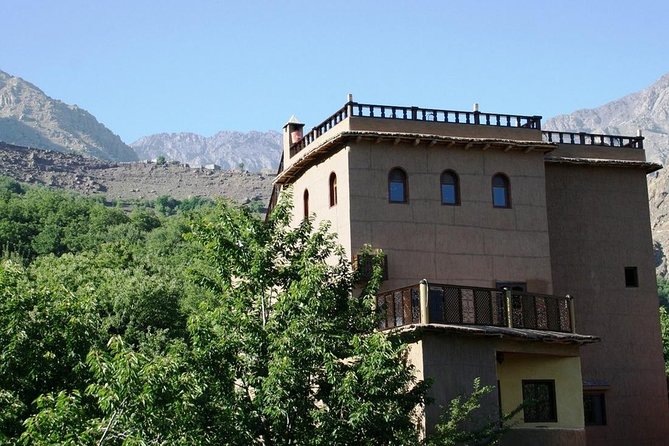
Your day starts in Marrakech at the Hôtel Restaurant Café de France at Rue des Banques (the meeting point is right by Jamaa el-Fna). Pickup is scheduled around 9:00am, and then you’ll drive to Imlil, which sits at about 1775m.
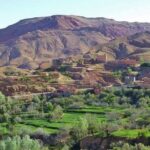
That drive matters more than you might think. You’ll go from the city’s lower altitude to a mountain valley where the air feels different, and the trail quickly takes over. The trek proper begins after you meet your local English-speaking guide at Imlil. From that moment, you’re moving into a route that local people have used for generations—valley walking, shrine stop, and steady height gain toward the refuge.
This is also where the private setup pays off. Because your group is just you (not a mixed crowd), the guide can tailor the pace and timing. If you need a slower start, you can build momentum without feeling rushed.
Sidi Chamharouch shrine stop: a cultural pause at 2500m
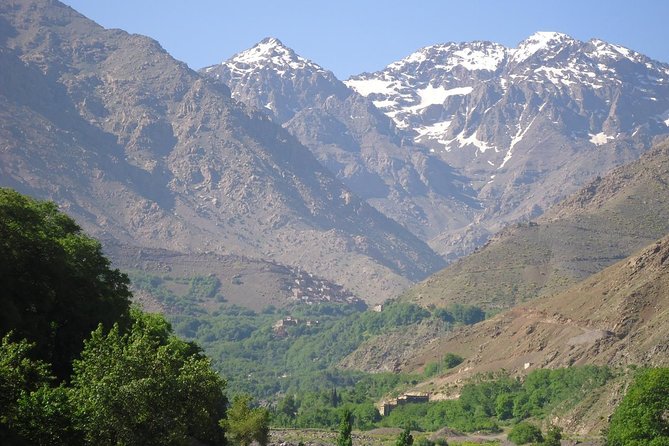
After starting from Imlil, you’ll trek up through the valley with a scheduled visit to the shrine of Sidi Chamharouch at about 2500m. It’s not a museum stop. It’s more like a meaningful rest point along the path—somewhere to regroup, look around, and get your breathing under control before continuing higher.
This kind of stop is practical. When you’re gaining altitude, your body benefits from brief pauses that aren’t just “sit and suffer.” You’ll have time to catch your rhythm, and you’re also breaking up the hike so it doesn’t feel like one long uninterrupted grind.
From there, the route continues upward until you reach the mountain hut/refuge area. The plan includes a picnic lunch at the higher point on Day 1, then a continuation toward the refuge at 3207m. That lunch break is the hinge of the day: eat enough to fuel the remaining climb, but don’t overdo it.
The Day 1 climb to the refuge (3207m) and why it’s worth it
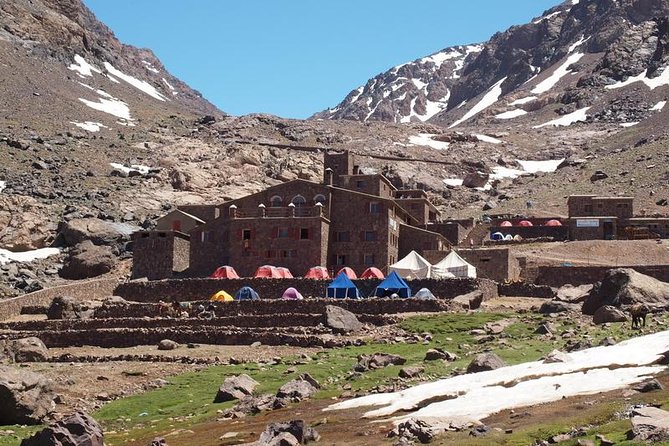
Day 1 ends at the refuge at roughly 3207m, where you’ll be hosted overnight. Expect the walking to total about 5–6 hours for the day, including the shrine stop and the lunch break.
The approach to the refuge is usually the part hikers remember most: the gradual tightening of the air, the way the ground changes underfoot, and the sense that you’re transitioning from valley life into a more high-mountain world. Even without “technical climbing,” you’re still climbing through real altitude, and your guide’s pacing becomes the difference between feeling strong and feeling wrecked.
When you arrive, the refuge experience includes welcome mint tea—and that’s not just a cute tradition. It’s a quick reset after a climb: warm drink, social moment, and a chance to slow down. You’re also told that a hot shower is available, which is a big deal after a day on the trail (and especially on a short trek where you don’t have time to enjoy a shower later).
Refuge night: what you’re getting (and what you should plan for)
Overnight on this trek is at the refuge with a shared dorm setup. The operator provides sleeping bags (free of charge), so you don’t have to pack your own. That’s a real value point for short trips—less gear hauling, less expense, and fewer decisions in your home packing list.
You’ll have the night and dinner situation to manage carefully. The inclusions list covers 1 breakfast and the hut night with sleeping bags, but meals like dinner and lunches are listed as not included. At the same time, the Day 1 plan mentions a picnic lunch and Day 2 mentions lunch ready. That tells me you should treat meals as a “scheduled break” rather than assume everything is covered. Before you go, confirm exactly what’s included at each meal stop and what you’ll pay for on-site.
Even with those unknowns, the refuge night is still the heart of the 2-day value. Sleeping at altitude means Day 2 feels like an ascent rather than an entire new climb from sea-level reality. You’re setting yourself up for that early summit push.
You can also read our reviews of more hiking tours in Marrakech

5:30am summit day: the climb, the breaks, and the summit pause
Day 2 is built around starting early to reduce exposure to the sun on the higher trail. You’ll wake up for breakfast around 5:00am and start walking around 5:30am.
The plan includes short breaks and small fueling stops with nuts, water, and oranges. That snack style is smart for a steep day: light, easy calories, and hydration you can keep moving with. Your guide’s pacing should keep you from burning out early. This isn’t a sprint; the summit is about steady output.
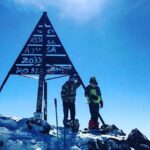
After about 3 to 4 hours of uphill walking, you’ll reach the area where you get truly breathtaking views over green valleys and Berber villages. Then comes the summit break—about 30 to 45 minutes for photos and to enjoy the top before heading back down. Think of this as your built-in reward window: time to see the horizon without rushing right away into the descent.
The summit itself is the point, but the real win is how the day is managed. Early start, frequent small breaks, and a set amount of summit time are what keep the experience from turning into chaos.
The descent back to Imlil: long hours, careful footing
After lunch at the higher point, you walk down back to Imlil village (at 1775m). The total Day 2 walking time is listed as about 9 hours. That means the descent isn’t a quick “done, let’s go” moment. Your legs still have a lot of work to do.
On a day like this, your biggest enemy is often not the climb—it’s fatigue and foot placement on the way down. If you start slipping into a shuffle late in the day, ask your guide to adjust your pace. With a private group, you can usually slow down and focus on stability without worrying about holding anyone else back.
You’ll finish with a transfer back to Marrakech at the end of the day, returning you to the same meeting point area where you started. So yes: it’s a full two-day rhythm, not an easy overnight “break from the city.”
Guides and culture: the difference between a trek and a trek with people
The itinerary is only half the story. The other half is your guide. This trek is explicitly described as using expert and qualified Mountains Berber guides, with an English-speaking guide on your side.
In the accounts I’ve seen tied to this kind of Toubkal program, specific names come up—Mohammed, Yousef, and Abdul—and the pattern is consistent: people describe guides as knowledgeable in the mountains and also genuinely kind and enthusiastic. That combination matters because the job isn’t only navigation. It’s also mood, pacing, and small decisions like when to pause and how to keep you moving safely in high-altitude conditions.
If you care about travel that feels local, this is the right kind of adventure. You’re not just walking past scenery; you’re walking through a lived-in mountain area with real people and a real route.
Price and value: what $229.35 buys you here
At $229.35 per person for an approx. 2-day private trek, the cost makes sense when you break it down into the big expenses.
You’re paying for:
- Private transportation between Marrakech and Imlil
- An English-speaking guide for both days
- Sleeping arrangements at the hut for one night (sharing dorm)
- Sleeping bag provided for free
- One breakfast
- The summit-day structure that starts early with planned stops and timing
Where the value gets a little trickier is meals. Dinner and lunches are listed as not included, even though your schedule includes picnic/lunch breaks. That’s normal in some operators’ pricing structures (food may be provided on some nights or at certain stops). But for you, the key is to confirm what you’ll be charged for and what’s covered.
If you want a short trek that gives you a proper summit objective without renting equipment or arranging transportation yourself, this price can be a good deal. If you’re on a strict budget and you don’t want any extra costs for food, budget a bit for meals beyond breakfast.
What to pack for Toubkal in two days
You’ll want to pack for fast changes in temperature. The trek climbs from valley to 3207m refuge and then goes higher still to the summit. Even when the sky looks calm, it can feel colder once you’re above the tree line.
Here’s what to consider based on the tour details:
- Warm clothes (the trek notes that warm clothes aren’t included)
- Ice axe and crampons are available for hire if needed, but you’ll need to ask ahead based on conditions
- Water and snacks: the plan includes nuts, water, and oranges during the climb, but bottled water is listed as not included, so plan accordingly
- If there’s snow, porters may be used (you’ll want to accept that possibility as part of safe mountain practice)
Also bring a practical attitude about your overnight. A dorm means you’ll share space, and the refuge provides a sleeping bag, but you’ll still want a simple, lightweight approach—warm layer, trail socks, and something you can tolerate after a long day.
Who this trek fits best
This trek is best for you if:
- You have strong physical fitness and you’re comfortable with steep, long walking hours
- You want a real summit experience without committing to a longer multi-day trek
- You like having a private guide who can adjust your pace and breaks
- You’re excited by the refuge rhythm: mint tea, shower if available, shared dorm, early summit day
You might want a different option if:
- You want minimal hiking time or a gentler pace
- You’re uncertain about your ability to start early and handle a long descent
- You hate any meal uncertainty—because dinner and lunches are listed as not included, so you’ll need to clarify what you’ll eat on the ground
Should you book the Toubkal Ascent Trek (2 days)?
I’d book it if your main goal is to stand on the summit of Toubkal with real mountain guidance, and you’re okay with a packed schedule. The structure is strong: a valley approach to Imlil, a daytime climb to the refuge at 3207m, an early 5:30am summit start, then a full-day descent back to Imlil.
The deciding factor for most people will be fitness and willingness to manage long hours. If you’re ready for that—and you can pack warm layers and handle the altitude—this two-day format offers a satisfying, authentic Atlas experience with clear, practical guidance.
FAQ
How long is the Toubkal ascent trek?
It’s scheduled for about 2 days. Day 1 includes roughly 5–6 hours of walking, and Day 2 includes about 9 hours of walking.
Where does the trek start in Marrakech?
The start point is the Hôtel Restaurant Café de France near Rue des Banques, around the Jamaa el-Fna area. Pickup starts at about 9:00am.
Do I need a certain fitness level?
Yes. The trek requires strong physical fitness.
What does Day 1 include?
You’ll travel from Marrakech to Imlil, meet your English-speaking guide, hike via the shrine of Sidi Chamharouch, stop for lunch, then continue to the refuge at around 3207m. You’ll overnight at the hut.
What time do you start the summit on Day 2?
Breakfast is around 5:00am, and you start the ascent at about 5:30am to help you avoid the sunny trail above the basecamp.
How long is the summit break?
There’s a planned break of about 30–45 minutes at the summit for pictures and to take in the views.
Are sleeping bags included?
Yes. Sleeping bags are provided free of charge.
Is there a shower at the refuge?
Yes. A hot shower is available upon arrival at the refuge.
What’s included, and what isn’t, for meals and drinks?
The tour includes 1 breakfast. Dinner and lunches, as well as bottled water, are listed as not included. The schedule does include lunch breaks during the hike, so it’s worth confirming what’s covered versus what you pay for on-site.