REVIEW · MARRAKECH
The Jewish Heritage in Marrakech
Book on Viator →Operated by Az-eddine Ben jouhra · Bookable on Viator
Marrakech has more layers than you think. This Jewish heritage walk connects Mellah streets, synagogue details, and a cemetery layout that’s unlike what you’ll see elsewhere in Morocco. I love the way the tour mixes architecture and everyday life, not just dates and names. I also like that you get real site time in the synagogue courtyard, where you can actually notice the tiles and symbols.
One thing to keep in mind: this experience depends heavily on guide performance and punctuality. The tour has gotten mixed feedback (an overall rating around 3.3/5), so if you’re the type who hates delays, come with a bit of patience and double-check your plan for meeting.
In This Review
- Key highlights worth planning for
- Why Jewish Marrakech still feels alive in the streets
- The 3-hour walking format: what to expect from the pace
- Stop 1 in the Mellah: walls, balconies, and the 1438 turning point
- Slat Al Azama Synagogue: the courtyard details you’ll want to spot
- Place des Ferblantiers and the souk edges: history meets shopping reality
- Marrakesh Jewish Cemetery: 16th-century minhaggim in layout form
- Price and value: what you get for $82
- Guide quality and punctuality: how to protect your day
- Who this tour is best for (and who might want something else)
- Should you book Jewish Heritage in Marrakech?
- FAQ
- FAQ
- How long is the Jewish Heritage in Marrakech tour?
- Where does the tour start and where does it end?
- Is the synagogue entry included?
- Do you visit the Jewish cemetery every day?
- What is included in the price?
- Is tips included in the price?
- What group size should I expect?
Key highlights worth planning for

- Mellah streets and walls: walk a Jewish quarter shaped by centuries of migration and separation.
- Slat Al Azama Synagogue: notice hand-laid tiles, Hebrew letter details, and a mezuzah at the entrance.
- Privacy curtains in the courtyard: you’ll see how practical daily life meets religious space.
- Place des Ferblantiers (Tinsmiths’ Square): a strategic viewpoint linking the Badi Palace area, souks, and the Bahia Palace alley.
- Marrakesh Jewish Cemetery: a 16th-century cemetery divided into men, women, and children sections (men/women/children layout is a standout).
Why Jewish Marrakech still feels alive in the streets
Marrakech sits at a historic crossroads, and that shows up in the city’s mix of styles, crafts, and communities. For around 2000 years, Jewish presence has been part of Moroccan life, and in Marrakech that story concentrates into one main neighborhood: the Mellah.
What makes this tour worth your time is that it’s not only about Jewish ritual. You learn how history shaped urban space. In Marrakech, the Mellah wasn’t just a place to live—it was a place with boundaries, walls, and a distinct street rhythm. Later migrations, especially after Spain’s 1492 upheavals, helped reinforce the community’s footprint and identity.
You can also read our reviews of more historical tours in Marrakech
The 3-hour walking format: what to expect from the pace
This is an approximately 3-hour guided experience in central Marrakech. It starts at 9:00 am at Café Koutoubia, and it ends back at the same meeting point. With a maximum group size of 18, you should be able to ask questions without feeling like you’re shouting over a parade.
You’ll also be outside for long stretches, because the tour is designed around moving between the Mellah, the synagogue, and market areas. Good shoes matter. Also, the tour requires good weather, so plan to keep your day flexible if the weather turns.
Stop 1 in the Mellah: walls, balconies, and the 1438 turning point
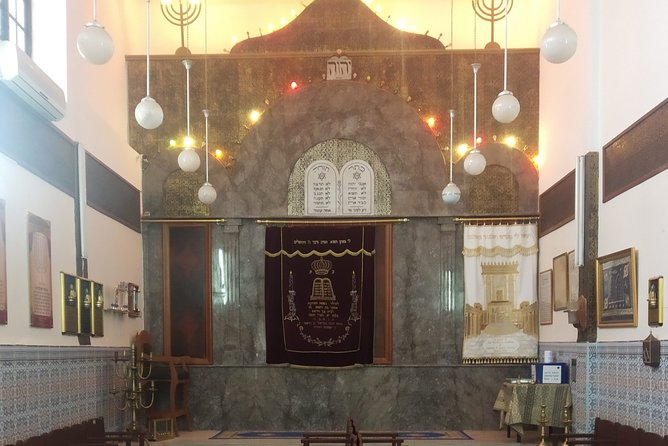
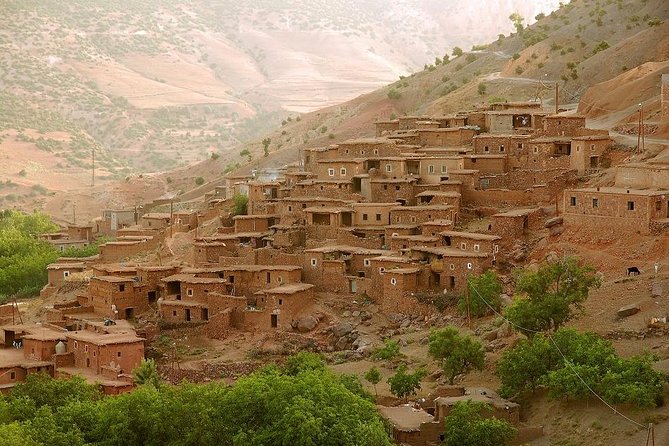
Your first focus is the Mellah, the name given to residential areas of Jewish origin in Morocco. These neighborhoods were often ringed by high walls, which helped separate residents from other religious communities. In Marrakech, the Mellah is considered one of the largest in the country.
Here’s the history thread you’ll hear: by 1438, waves of Jewish immigration from Spain—fleeing the persecutions tied to the Reconquista era—helped create or expand Mellah quarters across Morocco. You also get a sense of Marrakech’s special position, with trade routes connecting the city to wider Mediterranean and European networks.
As you walk, pay attention to what you’ll likely notice first: architecture. The tour highlights building styles and balconies that can feel Spanish or European in influence. It’s a useful reminder that “identity” in a city isn’t only religion—it’s also brickwork, courtyards, and how people adapted design to their new home.
A quick practical note: the Mellah has been renewed over time, including work associated with King Mohamed VI. So you’ll be walking through layers—some more restored than others—which can feel like reading the city in chapters.
Slat Al Azama Synagogue: the courtyard details you’ll want to spot
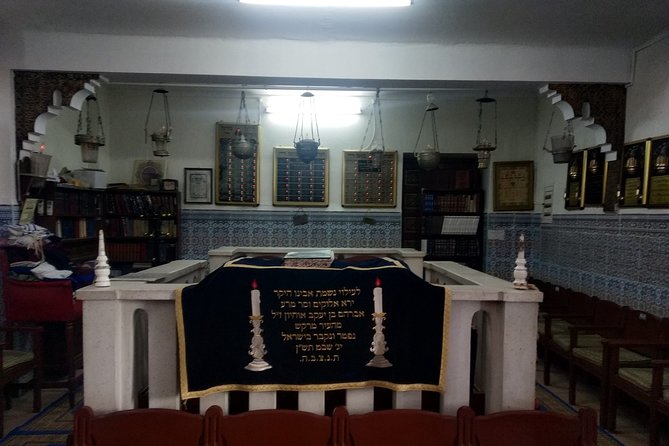
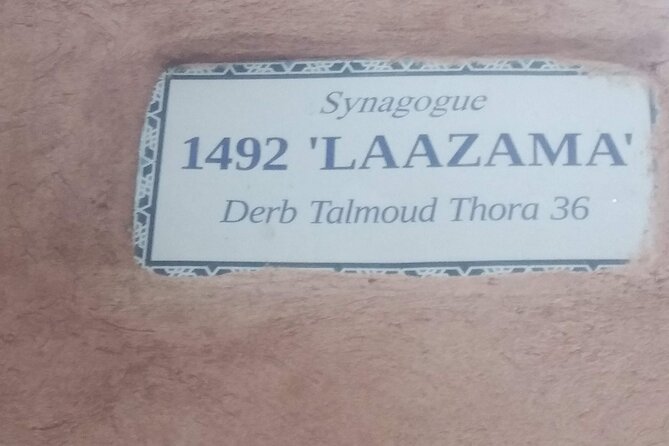
The tour’s synagogue stop is focused and specific: Slat Al Azama Synagogue. You’ll enter a well-kept courtyard where privacy is part of the space. Curtains along the edges create a buffer between visitors and the community members using the area, so it doesn’t feel like a museum stop where everything is exposed.
Look closely at the walls. Hand-laid tiles cover many surfaces, and you’ll often see blues and whites, plus Hebrew letters along upper sections of the courtyard walls. Those small visual cues do a lot of work. They connect what you’re seeing to what you’re learning.
You’ll also learn about the mezuzah, which hangs on the doorframe at the synagogue entrance. A mezuzah is parchment inscribed with specific Hebrew verses from the Torah, and it’s traditionally hung at Jewish doorways. The guide may also explain that some people wear a charm version around their neck for protection.
Timing matters here. You get about 30 minutes—enough to pause, take in details, and absorb what those objects mean, without rushing past them.
Place des Ferblantiers and the souk edges: history meets shopping reality
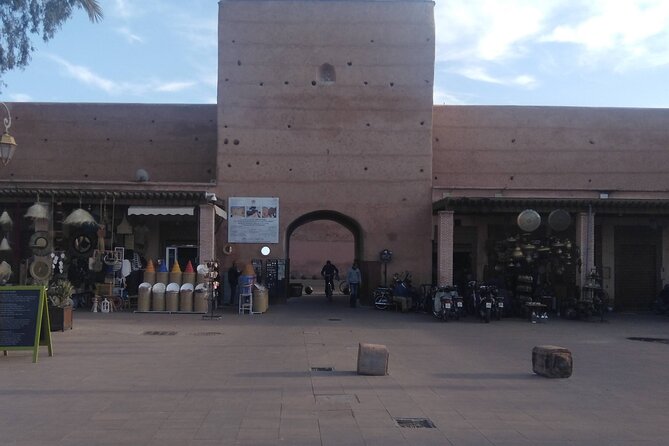
After the synagogue, the experience shifts gears into Marrakesh’s everyday heart. The tour stops at Tinsmiths’ Square (Place des Ferblantiers), a recently renovated area that sits above the surrounding souk maze. It’s a practical place to orient yourself: you get views over the Badi Palace area, with an archway linked to the entrance area, plus the Spice Souk and the Mellah Souk spilling into view.
This square is also a scene, not just a viewpoint. You’ll see shops and you can grab a snack, and there’s a corner where tinsmiths still show their craft. Even if you’re not shopping, it helps you understand how the old and the new sit side by side in Marrakech.
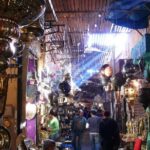
From here, you’ll step toward the Spice Souk area at the entrance to the Mellah souk. This is where the tour’s theme becomes sensory. You’ll find Moroccan spices and herbal tea sellers, along with fabric shops where local craftsmen can help with textiles or decorative objects. It’s a good moment to slow down and look, because the spices and herbs aren’t random souvenirs—they connect to the routes and trade Marrakech relied on.
There’s also a stop related to Jewish craftsmanship and commerce: the Kissaria of jewellers and goldsmiths. The tour explains that this creation began with Jewish involvement and later shifted over time. Even without a long lecture, it’s a meaningful link between heritage and the working economy of the city.





Marrakesh Jewish Cemetery: 16th-century minhaggim in layout form
The last major heritage site is the Marrakesh Jewish Cemetery, dating from the 16th century. It’s described as the largest Jewish cemetery in Morocco, and one of the reasons it’s singled out is its layout. The cemetery is divided into three distinct edges—for men, women, and children.
That division matters, because the tour explains it as a local custom tied to the community’s minhaggim (local practices). The cemetery is said to be unique in Morocco for having this specific arrangement. In other words, you’re not just visiting a cemetery—you’re seeing how belief and tradition can shape physical space.
Plan your timing carefully. You won’t visit the cemetery on Saturday. If your trip lands on a Saturday, ask what replaces that stop so you don’t feel like you paid for a placeholder.
This is only about 30 minutes, so keep your pace respectful and focused. Take a moment to look at the sections and let the idea of tradition-in-space sink in before you move on.
Price and value: what you get for $82
At $82 per person for roughly three hours, you’re paying for more than walking. The value is in site access and guided interpretation.
From the structure of the stops:
- Admission ticket is included for the synagogue visit.
- The Mellah stop and the cemetery stop are described as admission ticket free.
- Bottled water is included.
- The tour is designed around a clear route: Mellah → synagogue → cemetery, with market and square stops connecting the story to the city.
So the money mostly buys you time with a guide who can connect architecture, religious objects, and local history into one line you can actually follow while you’re in Marrakech. If you’ve ever tried to self-tour the Mellah and synagogue areas, you know how easy it is to miss why a doorway matters or why a courtyard feels the way it does.
Still, balance matters. Mixed feedback exists—especially around punctuality and whether the explanation matches the theme you paid for. That doesn’t automatically mean your day will go wrong. It does mean you should choose your mindset carefully: show up ready to learn, and if anything feels off right away, speak up early.
Guide quality and punctuality: how to protect your day
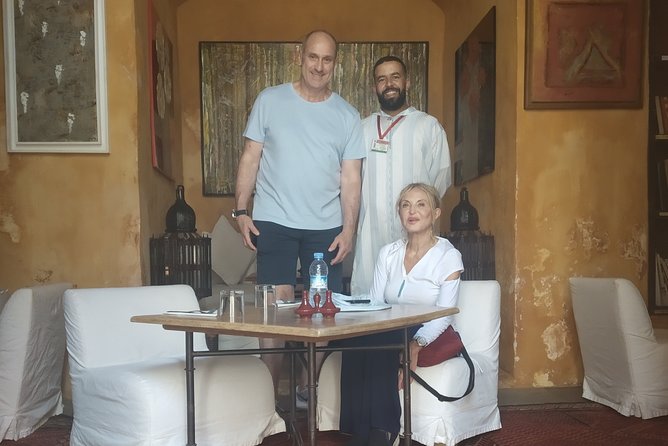
The tour is led by local guides, and the experience provider listed is Az-eddine Ben jouhra. That’s a good baseline. I also saw evidence that guide identity and punctuality can matter a lot: one named guide, Khalid, was reported as starting late, and there were complaints about the first part of the explanation not matching what people expected from a Jewish heritage focus.
Here’s how you protect your time without turning it into a drama:
- Arrive early at Café Koutoubia so you’re not waiting in a stressful mood.
- Take a screenshot of your booking and the meeting location text so you can confirm details quickly.
- If you feel the walking tour has started off-track, ask one direct question early: Can you explain the Mellah history and architecture in relation to Jewish life here? A good guide can pivot fast.
When the guide is strong, this kind of tour works extremely well because the sites are full of clues. But if the guide is late or under-prepared, the same clues can become scenery instead of story.
Who this tour is best for (and who might want something else)
This experience suits you if you like heritage that’s tied to real neighborhoods. It’s especially good if you want a guided walking plan through the Mellah and market areas, instead of only seeing big monuments.
You’ll also get more from it if you’re comfortable with religious sites as learning spaces. The synagogue stop includes symbolic details like mezuzah placement and courtyard design, so curiosity helps.
It may be less satisfying if you want a long, museum-style talk or deep academic lecturing. The time is spread across multiple stops, which is great for getting an overview, but it means you may not get every answer to every question.
And if your schedule is rigid around Saturdays, remember the cemetery visit doesn’t happen then. Make sure you’re okay with that swap risk.
Should you book Jewish Heritage in Marrakech?
I’d book this tour if you’re excited by architecture you can walk up to, synagogue details you can look at closely, and a cemetery layout you can actually understand in context. The route is designed to connect history to place, not just point at plaques.
I would think twice if you’re very schedule-sensitive or hate uncertainty. The mixed feedback around organization and punctuality is enough that you should show up early and be prepared to speak up quickly if something doesn’t feel right.
If you do book, here’s my practical checklist:
- Go with comfortable shoes and a short attention span for shopping interruptions.
- Bring a camera, because courtyard and street architecture are photo-worthy.
- Ask about the guide name when you confirm so you can feel confident going in.
FAQ
FAQ
How long is the Jewish Heritage in Marrakech tour?
The tour is approximately 3 hours.
Where does the tour start and where does it end?
It starts at Café Koutoubia (J2G4+2WQ, Marrakesh 40000, Morocco) at 9:00 am and ends back at the meeting point.
Is the synagogue entry included?
Yes. Admission for Slat Al Azama Synagogue is included.
Do you visit the Jewish cemetery every day?
No. The tour notes that there is no cemetery visit on Saturday.
What is included in the price?
Bottled water is included.
Is tips included in the price?
No. Tips are not included.
What group size should I expect?
The tour has a maximum of 18 travelers.