REVIEW · MARRAKESH
Moroccan cooking class in Marrakech with berber chef
Book on GetYourGuide →Operated by MonRiad · Bookable on GetYourGuide
Your cooking lesson begins with spice shopping. In a Moroccan cooking class in Marrakech, you start with a short walk through the souk, then move into a riad kitchen with Berber chef Aicha and learn dishes step by step. I especially love the market tour that tells you why each ingredient matters, and I love how hands-on the cooking is, not sit-and-watch. One heads-up: the riad sits in the old medina, so you may want to plan for a little navigating on foot.
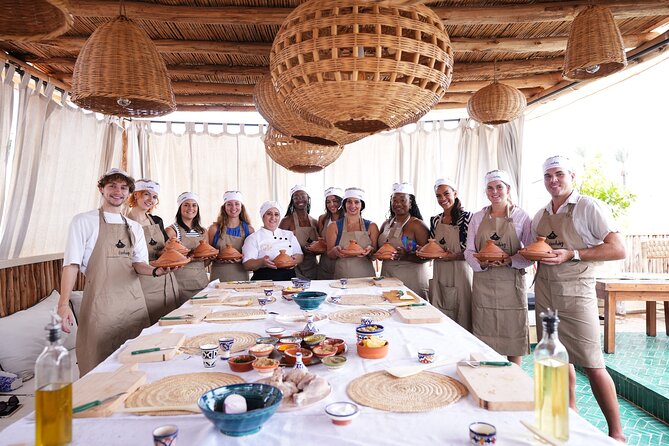
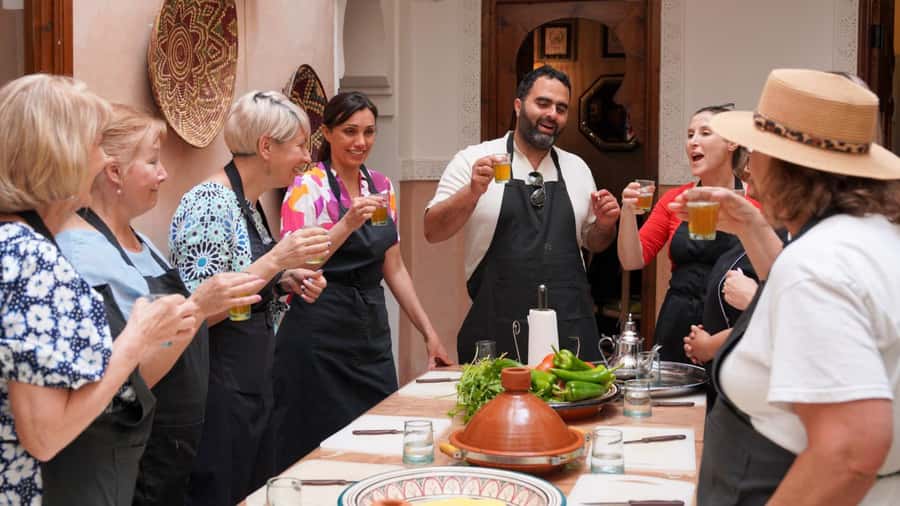
After a welcome pour of sweet Moroccan mint tea, you pick a menu together and get to cook like you are part of the family. The finished meal lands on a rooftop terrace or in the courtyard, which makes the whole thing feel like an evening with hosts rather than a class. Still, extras like coffee or soda are paid at the end.
In This Review
- Key things that make this class worth your time
- The Marrakech souk part: ingredient choices that change everything
- Inside the riad: mint tea, a home-kitchen feel, and a 4-hour rhythm
- Chef Aicha and the Berber kitchen approach: learning by doing
- What you’ll cook and eat: from salad to tagine, then dessert
- Rooftop terrace meal: your results, served where you cooked them
- Vegan, gluten-free, and lactose-intolerant menus: what to tell them
- Price and value: $54 for 4 hours, ingredients, and the recipes later
- Location and logistics in the old medina: how to get there without stress
- Language, group energy, and meeting the wider riad community
- Should you book this Moroccan cooking class in Marrakech?
- FAQ
- How long is the Moroccan cooking class?
- Where does the class meet in Marrakech?
- Is a market tour included?
- Does the class offer vegan or gluten-free options?
- What’s included in the price?
- Are transfers included?
- Where is the meal served?
- Will I get the recipes after the class?
Key things that make this class worth your time
- Souk shopping with a real shopping list: you choose ingredients for the dishes you will cook
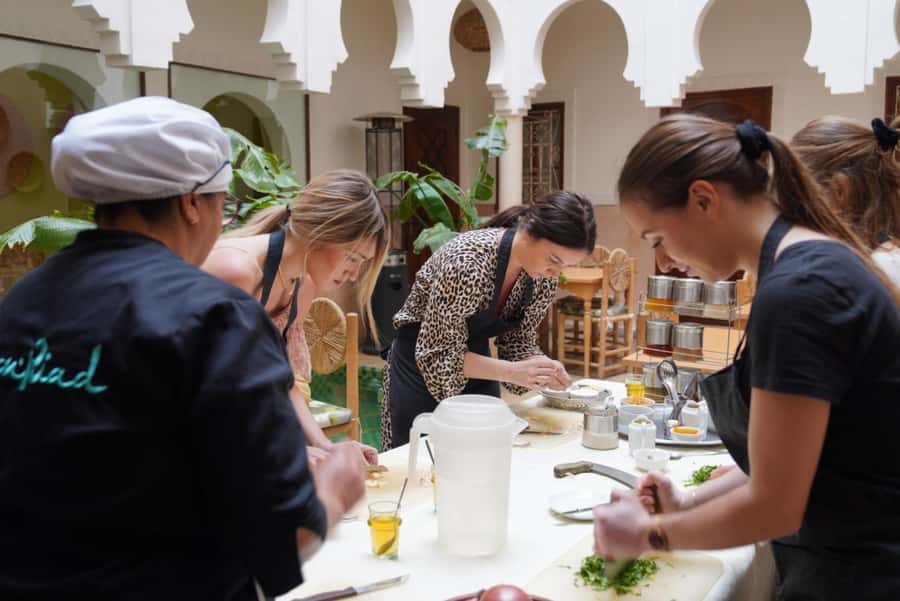
- Chef-led, everyone-in-the-action cooking: you learn techniques while you’re actually preparing the food
- Rooftop or courtyard meal on riad grounds: you eat what you helped make
- Diet options you can plan around: gluten-free, vegan, vegetarian, and lactose-intolerant menus are possible if you tell them
- Recipes arrive after the class: you get the recipes by mail within a week
The Marrakech souk part: ingredient choices that change everything
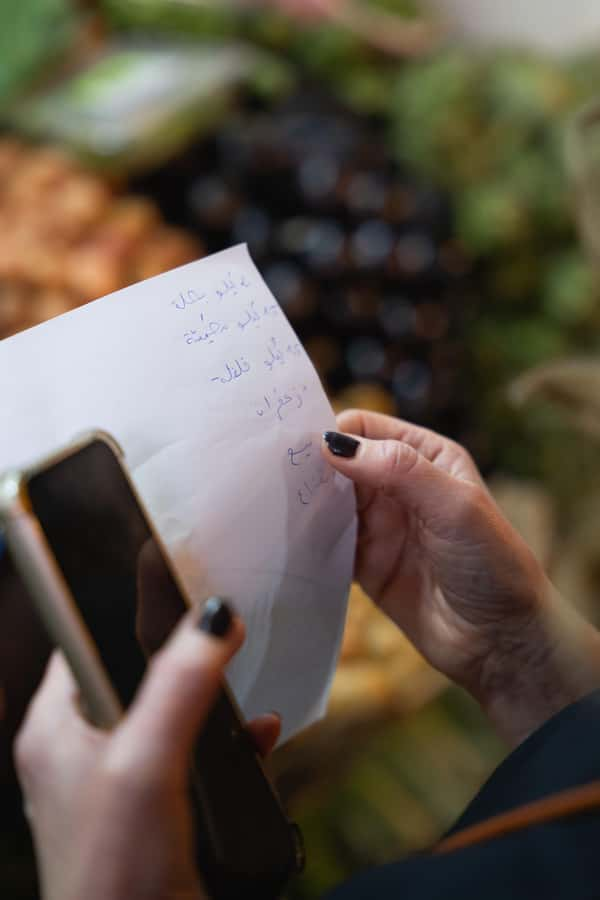
This experience doesn’t start with a recipe. It starts with deciding what to cook, then building your menu with fresh ingredients you pick in the market. You meet in the riad, then sit down with Aicha to discuss and choose the dishes. From there, you prepare a shopping list that matches your menu.
Then you head into the traditional souk. This is where Marrakech food becomes real. You see the spices in person, smell them up close, and watch how vendors group items that most cooking classes only list on paper. You also get the practical skill of matching what you buy to what you plan to cook later, instead of hoping your kitchen substitutions will work out.
If you’re visiting Morocco for the first time, this part is extra useful. Knowing the difference between similar spice blends, or how certain staples show up in everyday shopping, helps you understand why tagines and couscous taste the way they do.
You can also read our reviews of more cooking classes in Marrakesh
Inside the riad: mint tea, a home-kitchen feel, and a 4-hour rhythm
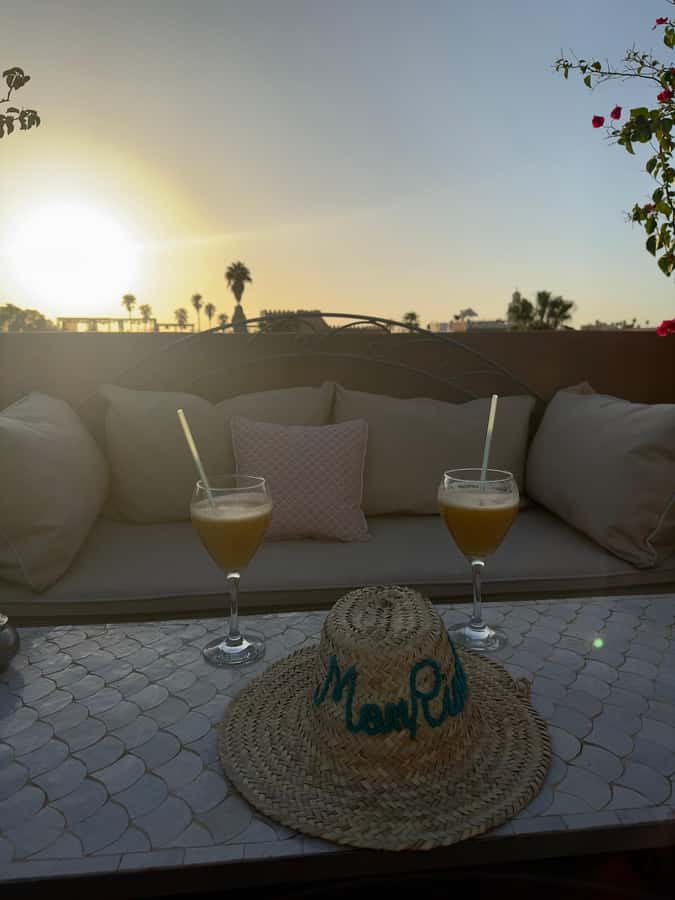
The class takes place in a riad in the heart of the old medina, near the main square. You’ll be greeted at arrival with aromatic Moroccan mint tea and a bottle of water is included. From that calm start, the pace becomes focused: menu planning, then shopping, then cooking, then eating.
One detail I like for planning: the total time is about 270 minutes, so roughly 4 hours. That’s long enough to do real cooking steps without rushing, but short enough to still feel like a single evening plan in Marrakech.
Also, this isn’t an all-inclusive hotel setup. It’s a traditional riad, and the staff speaks multiple languages (including Italian, Arabic, English, French, and Spanish, depending on who is on hand). That matters because the explanations feel more personal when the person teaching you can match your language comfortably.
Chef Aicha and the Berber kitchen approach: learning by doing

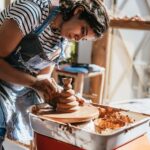
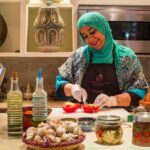
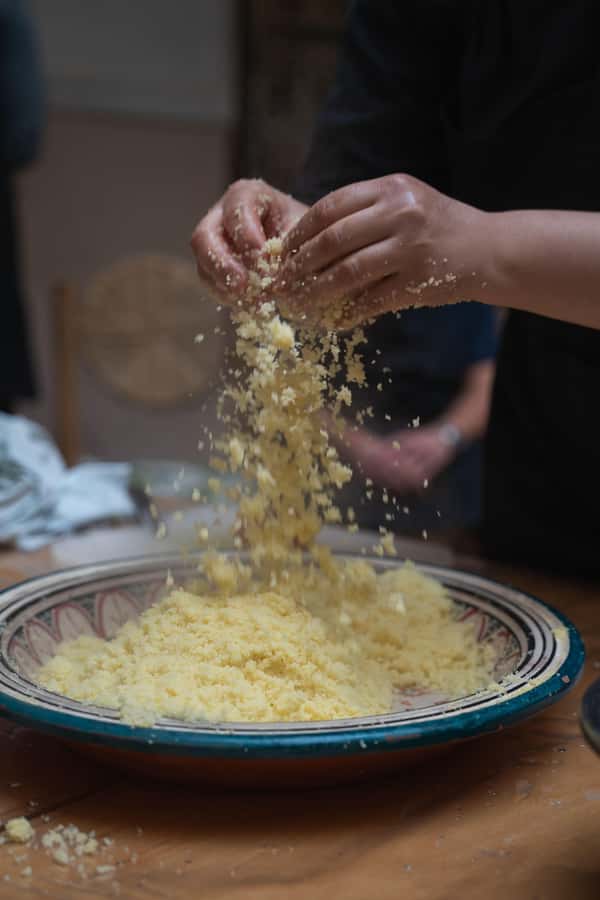
Aicha is the key guide here. The class is set up like a Moroccan household lesson, where everyone cooks together and you learn by participating. You’ll prepare the dishes selected with step-by-step support and explanation from the chef. In other words, you’re not just tasting and watching.
In practice, this kind of cooking lesson works best when you let yourself be a beginner. You follow Aicha’s pacing, ask questions while you’re working, and focus on technique: how you season, how you assemble, and how you time each element so it all lands at the same moment.
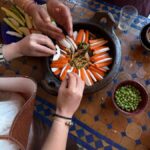
The menus can vary based on what you choose together. But one example menu described includes an intro to tea making, a Moroccan salad, tfaya couscous with honey (with onions, cinnamon, and grapes), chicken tagine with onions and preserved lemon, and a soft milk cream dessert (mahalabyyia). When a class includes both sweet and savory elements like this, it usually means you’ll learn more than one core skill set.
You may also notice different team members guiding different language needs. Names like Karima, Ahmed, and Ismail show up in the experience with the same overall tone: friendly, attentive, and focused on getting everyone involved.
What you’ll cook and eat: from salad to tagine, then dessert
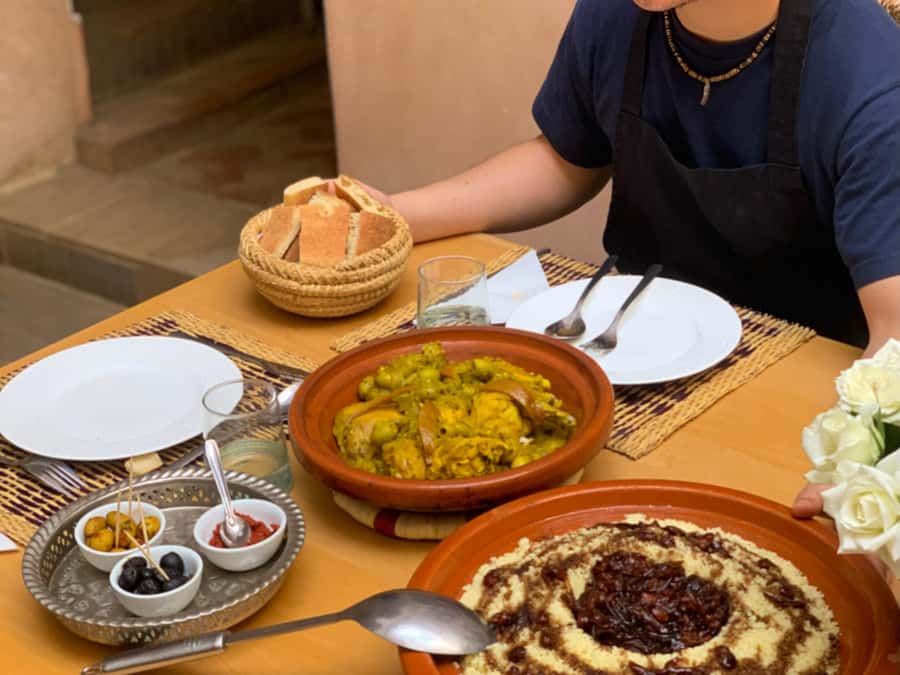
Because you choose the menu together, don’t expect one rigid script. Still, you can expect a very classic Moroccan structure: start with something fresh, build the main dish with either tagine or couscous-style components, and finish with a dessert that isn’t too heavy but feels ceremonial.
Here’s the kind of food this class is built around:
- Moroccan salad as a starter (often a light, flavorful opener)
- A couscous centerpiece such as tfaya with sweet-savory notes (honey plus spiced onions, sometimes with fruit)
- A tagine main such as chicken with onions and preserved lemon
- A dessert like mahalabyyia, a soft milk cream
The big value is that you learn how the pieces fit. For example, it’s not just that you make couscous or a tagine. It’s how the seasoning logic works across dishes, and how sweet and savory flavors show up in the same meal.
When you sit down to eat, it’s served as a private home-style lunch or dinner. And yes, you’ll be eating where the class ends: on the rooftop terrace or in the riad courtyard, depending on the setup that day.
Rooftop terrace meal: your results, served where you cooked them
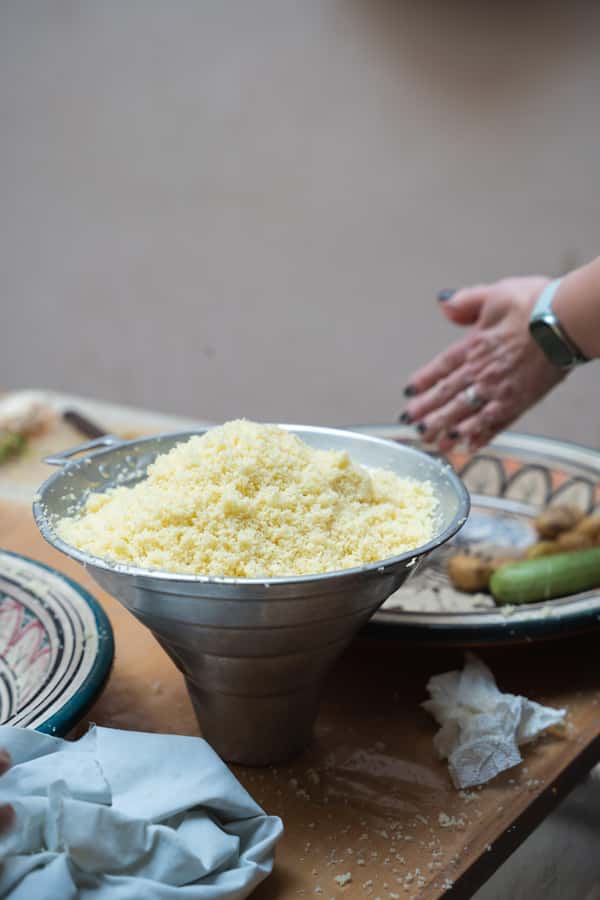
The meal isn’t a separate restaurant stop. It’s part of the same experience, served on the riad’s rooftop terrace or in the courtyard. That matters because it keeps the day coherent. You finish cooking, then you immediately enjoy the outcome while the process is still fresh in your head.
This format also makes the meal feel more relaxed. You’re not rushing to a reservation somewhere else, and you’re not switching contexts midstream. You can ask finishing questions over food, and you can see how the final dish should look and taste.
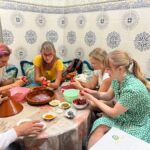
If you’re going with friends or want a social vibe, this is a strong part of the class. In one group setting, a group size of around 10 was handled smoothly, with everyone cooking. That suggests the kitchen is organized to keep multiple people active without turning it into a slow, crowded bottleneck.
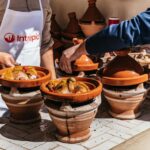
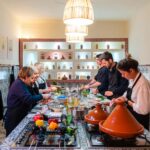
A few more Marrakesh tours and experiences worth a look
Vegan, gluten-free, and lactose-intolerant menus: what to tell them
Good news for anyone with dietary restrictions: the class can accommodate gluten-free, vegetarian, vegan, and lactose-intolerant menus. The key phrase here is possible, and the key action is timing.
Before the cooking lesson, you need to provide your diet requirements and any allergies. If you share that info ahead of time, you give the chef a chance to plan the menu and adjust ingredients accordingly.
This is exactly where value comes in. You’re not stuck with a sad “safe” plate that’s unrelated to the rest of the menu. The class is designed around meal planning with the chef, so dietary choices can actually influence what you cook.
One more practical point: the class includes cooking materials at no extra cost, and all ingredients for the lesson are included. That means you’re not hunting for specialty items while you’re in Marrakech trying to get to the next stop.
Price and value: $54 for 4 hours, ingredients, and the recipes later
At $54 per person for about 270 minutes, the pricing makes sense for what you get—especially in a city where food experiences can range from simple tastings to full-day activities.
What’s included:
- All ingredients for the lesson
- Cooking materials
- Welcome mint tea
- 1 bottle of water
- Free Wi-Fi connection
- Recipes sent by mail within a week
What’s not included:
- Extra drinks like coffee, soda, or juice (paid at the end)
To me, the strongest value points are the market tour + the hands-on cooking + the meal. You’re paying for real instruction, ingredient guidance, and a full food session with a final sit-down meal. The recipe mailing part is a quieter win too. It turns the class into something you can repeat at home, rather than just a fun evening you remember vaguely.
If you plan to do a market visit anyway, this class bundles the shopping into a purpose-built food lesson, which helps justify the cost versus paying separately for a tour and then trying to cook without guidance.
Location and logistics in the old medina: how to get there without stress
You meet at MonRiad, at Riad Zitoune, in the old medina near the main square. If you arrive by taxi or car, your riad is a short walk from a guarded public parking lot. If you’re using a driver or GPS, HAMMAM ZIANI is given as a reference point, and MonRiad is about a couple minutes’ walk from there.
That’s practical, because medina streets can be a maze. If you want things smooth, arrive a little early and expect a short walk once you’re near the riad area.
Also, car transfer to reach the riad is not included, though there is an extra-fee shuttle service available on request to reach the riad/the medina. If you’re traveling with heavy bags or you don’t want to navigate small streets, ask about the shuttle early.
One more note: this experience is wheelchair accessible, and pets aren’t allowed. So it’s designed with at least some practical considerations beyond a typical small kitchen setup.
Language, group energy, and meeting the wider riad community
The class team supports multiple languages. The instructor is listed with Arabic, English, and French, and the riad staff speaks Italian, Arabic, English, French, and Spanish. In plain terms: you should be able to communicate your needs and questions without playing charades.
Another nice touch is the possibility of sharing the experience with other chefs of different languages and countries. You might meet additional people during the class, and you can also meet guests staying at the riad if the schedule lines up.
That mix can be fun, especially if you don’t want a quiet solo activity. Just keep in mind that the class format is interactive, so group energy can slightly change the vibe. Still, the structure is clearly built to keep people cooking, not waiting.
Should you book this Moroccan cooking class in Marrakech?
Book it if you want a real Moroccan cooking lesson with a market component, not just a meal. It’s ideal for first-time visitors who want to understand ingredients and flavor logic, and it’s also a strong pick if you have dietary needs because gluten-free, vegan, vegetarian, and lactose-intolerant options are possible with advance notice.
Skip it or plan carefully if you dislike navigating the old medina and you don’t want to walk. The riad is in a great central area, but the streets can be part of the adventure or part of the annoyance, depending on your preferences. Also budget for extra drinks at the end if you want coffee, soda, or juice.
If you like hands-on learning, you’ll probably end up leaving with two things: the dishes you cooked, and the sense of how to build a Moroccan meal at home.
FAQ
How long is the Moroccan cooking class?
The cooking lesson lasts about 4 hours (270 minutes).
Where does the class meet in Marrakech?
It takes place in MonRiad / Riad Zitoune, in the heart of the old medina near the main square.
Is a market tour included?
Yes. Before cooking, you shop for fresh ingredients in the traditional old market (souk).
Does the class offer vegan or gluten-free options?
Yes. Gluten-free, vegetarian, and vegan menus are possible, and lactose-intolerant menus can also be prepared. Dietary needs and allergies should be shared before the lesson.
What’s included in the price?
All ingredients for the cooking lesson, cooking materials, welcome mint tea, 1 bottle of water, and free Wi-Fi are included.
Are transfers included?
No. Car transfer to reach the riad is not included, but a shuttle service is available on request for an extra fee.
Where is the meal served?
The lunch/dinner is served either on the rooftop terrace or in the courtyard of the riad.
Will I get the recipes after the class?
Yes. Within one week, the chef sends the recipes by mail.