REVIEW · MARRAKECH
Marrakech: Half-Day Historical and Cultural Tour.
Book on Viator →Operated by Marrakech Top Sights Tours · Bookable on Viator
A short walk can change how you see Marrakech. This half-day loop makes the city click by pairing the medina walls and alleyways with major landmarks like Koutoubia Mosque. I especially like how your guide stitches markets, architecture, and everyday life into one story you can remember, and I like the quick hit of Jemaa el-Fnaa to get your bearings fast. The only real consideration is that entrance fees aren’t included for places like Bahia Palace and the Saadian Tombs, so you’ll need a little extra budget.
You start near Hôtel Restaurant Café de France by Rue des Banques, right where the action gathers around Jemaa el-Fnaa, and you’re back at the meeting point after about 3 hours. I like that it’s a private tour for your group, so you don’t get rushed by strangers, and the route is structured enough to feel satisfying even if it’s your first day in Morocco.
Expect lots of movement through the ocher-toned medina: ramparts outside, lanes inside, and stops at big-name monuments that anchor the story. You’ll also pass by spots tied to old neighborhoods, like the Mellah and the Kasbah area, while the guide keeps the focus on what these places meant to Marrakchis over time.
In This Review
- Key highlights at a glance
- A 3-Hour Orientation Loop Around Marrakech’s Ocher Walls
- Meeting at Hôtel Restaurant Café de France and Heading Straight to Jemaa el-Fnaa
- Bahia Palace: When Marrakech’s Grandeur Feels Personal
- Mellah and the Kasbah Area: Pass-By Landmarks That Add Context
- Saadian Tombs: A Strong Second Act
- Bab Agnaou and Koutoubia Mosque: The Hispano-Moorish Moment
- Souks, Spices, and How the Guide Turns Lanes Into Stories
- Price and Value: Why $30.19 Can Be a Smart First-Day Move
- Who This Tour Fits Best (and Who Might Want Something Different)
- Should You Book This Marrakech Half-Day Tour?
- FAQ
- How long is the Marrakech historical and cultural tour?
- What is the price per person?
- Where does the tour start?
- Which stops are included during the tour?
- Are entrance fees to monuments included?
- What time commitment should I plan for each main stop?
- Does the tour include transportation?
- Is it a private tour or a group tour?
- Is a professional guide included?
- Can children join the tour?
- Is cancellation free?
Key highlights at a glance
- Jemaa el-Fnaa first, so you understand the city’s heartbeat
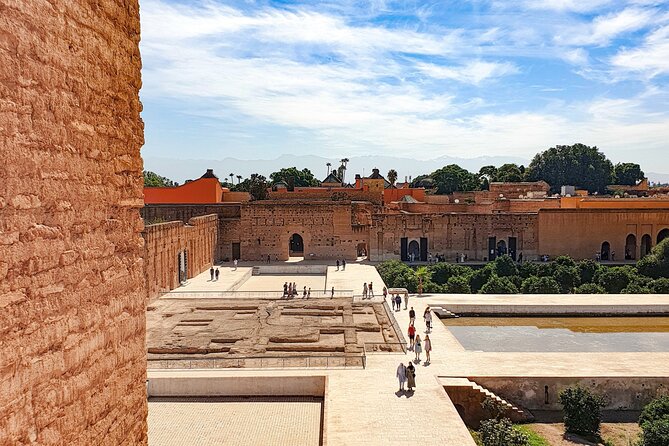
- Bahia Palace on the schedule for a real palace-and-garden feel
- Saadian Tombs as a strong follow-up chapter
- Koutoubia Mosque and Hispano-Moorish architecture details
- Pass-by moments like Mellah, Kasbah Mosque, and Bab Agnaou
- Private group pacing with a professional guide
A 3-Hour Orientation Loop Around Marrakech’s Ocher Walls
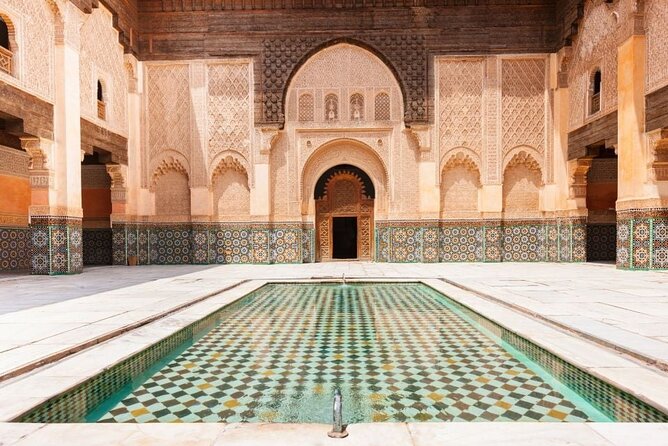
Marrakech is one of those cities where seeing a map first can help, but understanding it comes from walking. This tour is built for that. You move through the medina’s orange-brown walls and into the maze-like lanes where the souks spill color and sound around you.
The big win is that you’re not just taking photos. You’re getting the meaning behind the spaces. A good guide turns a place like Jemaa el-Fnaa from a spectacle into a living piece of city life, then carries that understanding into monuments you’d otherwise just treat as stops on a checklist.
I also like the pacing. Three hours sounds short, but it’s enough to hit key landmarks without turning the day into a grind. You come away with a mental map of where things sit in relation to each other: square, palace, tombs, mosque, and the main gates you hear about when people talk about the medina.
You can also read our reviews of more historical tours in Marrakech
Meeting at Hôtel Restaurant Café de France and Heading Straight to Jemaa el-Fnaa
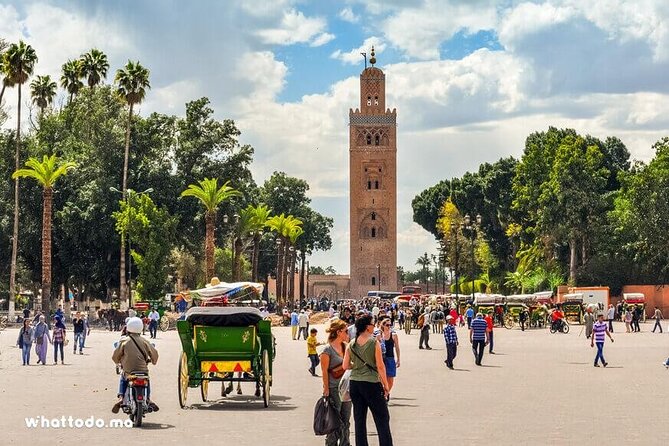
You meet at Hôtel Restaurant Café de France, near Rue des Banques by Jemaa el-Fnaa. From there, the tour immediately throws you into the center of Marrakech’s public life.
Jemaa el-Fnaa is more than a famous square. It’s a place where street music, storytellers, and food stalls mix into something that feels like theater at street level. Even with a short stop, it works because the guide uses that atmosphere as a starting point for the city’s layers—how people lived, gathered, prayed, traded, and celebrated.
Practical note: this area can feel loud and crowded, especially at peak hours. If you like calm museum pacing, you might find this first chapter intense. Still, that intensity is the point. You’ll leave understanding why everyone talks about Jemaa el-Fnaa as the city’s social center.
Bahia Palace: When Marrakech’s Grandeur Feels Personal
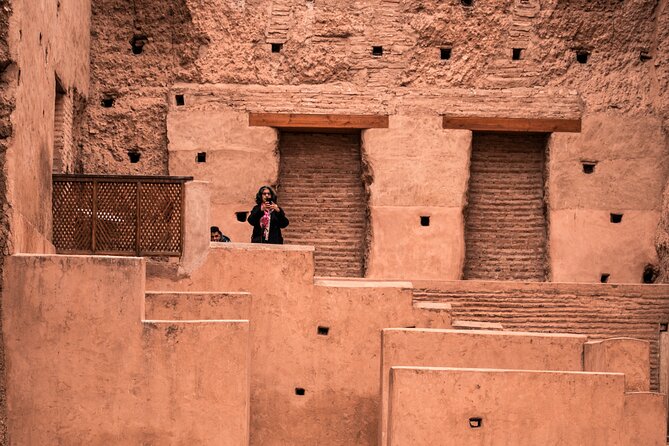
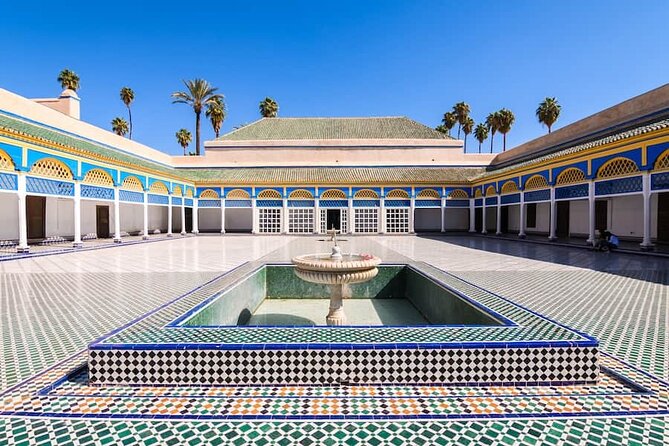
Next comes Bahia Palace, a major highlight on this tour. You’ll spend about 60 minutes here, and the visit time matters because palace spaces take a moment to “read.” It’s not only about big rooms or pretty details. It’s about how the architecture organizes movement and light, and how the palace layout supports day-to-day comfort.
This stop is also where the tour description shifts from public life to cultivated life. You’re moving from the intensity of the square and souks into a calmer world of palace corridors and garden space. Even if you’re not the type to linger in quiet rooms, the palace-and-garden mood change helps you reset your brain for the next sites.
One thing to plan for: entrance fees aren’t included. So if you want to keep the day smooth, budget for ticket costs ahead of time. Also, if you’re the kind of person who hates waiting, arriving with a little patience helps—palace visits can have small delays.
Mellah and the Kasbah Area: Pass-By Landmarks That Add Context
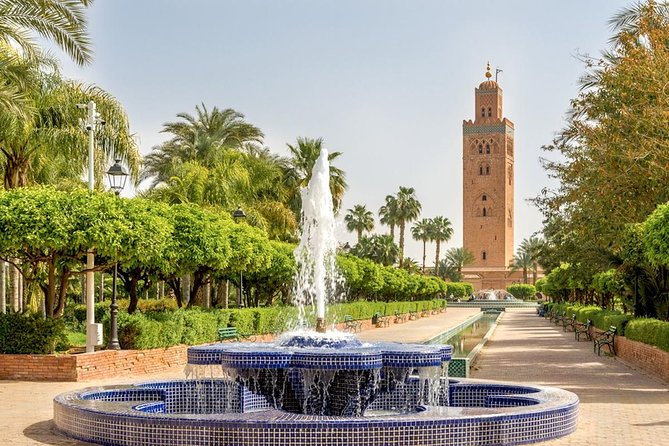
You don’t stop long at every neighborhood reference, but the guide includes pass-by points that give you a larger picture. Along the way, you’ll pass by the Mellah and the Kasbah Mosque.
Why does that matter? Because Marrakech’s story isn’t one single monument. It’s different districts shaped by history—by community, by power, by trade routes, and by shifting eras. Even without long dwell time, these references help you connect the dots when you later wander on your own.
A pro move here is to treat pass-by moments as mini history lessons. Ask your guide what the area is known for, and why it sits where it does. If you do that, the quick looks stop feeling random and start feeling like part of a guided map.
Saadian Tombs: A Strong Second Act
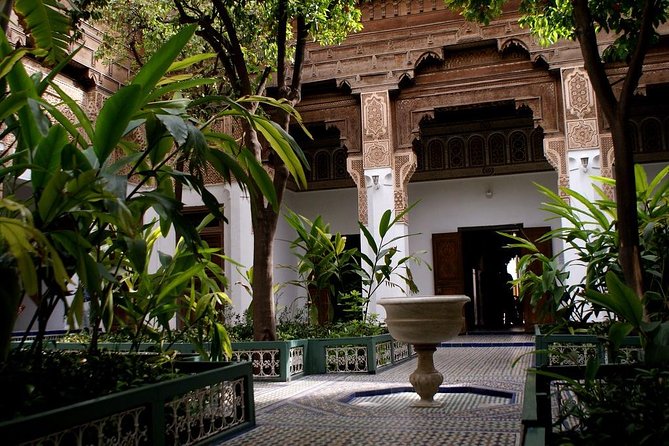
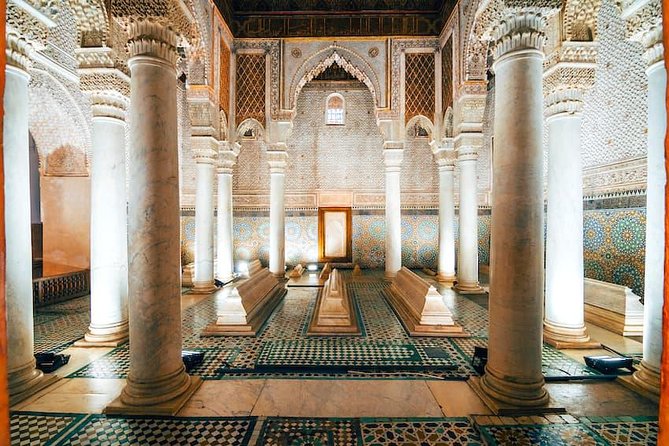
After Bahia Palace, the itinerary moves to the Saadian Tombs for about 60 minutes (again, entrance fees excluded). Tomb visits can be hit-or-miss on short tours—too short and you miss the point, too long and you start rushing. This time balance is about right for a cultural stop that needs attention.
What you’re really looking for here is the craftsmanship and the sense of power behind the site. Even if you’re not deeply into funerary architecture, tomb spaces tend to be designed to communicate status and legacy. Your guide will help you focus on what to notice, not just where to stand for pictures.
I like how this stop builds momentum. It’s a different type of monument than a palace: less about everyday elegance, more about commemorating authority. It also bridges the tour from “what people saw and enjoyed” into “what people wanted to remember.”
A few more Marrakech tours and experiences worth a look


Bab Agnaou and Koutoubia Mosque: The Hispano-Moorish Moment
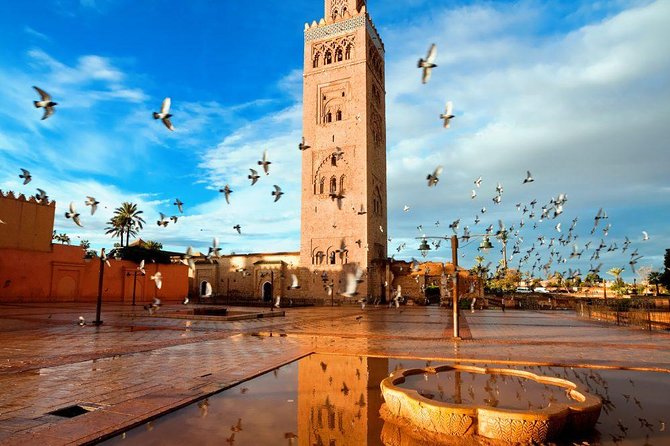
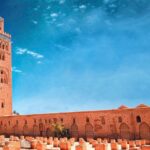
You’ll pass by Bab Agnaou, then finish with Koutoubia Mosque for around 30 minutes. That Koutoubia stop is a smart way to close the story because it’s one of the most recognizable symbols tied to Morocco’s Hispano-Moorish architectural identity.
Even in a short window, you can appreciate the scale and the visual language of the mosque complex. The guide’s role is key here. Without commentary, Koutoubia can feel like a beautiful landmark you admire from the outside. With context, it becomes part of the bigger architectural conversation—how styles traveled, mixed, and evolved.
Also, ending near a major monument gives you an easier memory hook for later. When you walk around Marrakech after the tour, Koutoubia is a landmark you can use as a reference point, which makes the rest of your exploring less stressful.
Souks, Spices, and How the Guide Turns Lanes Into Stories
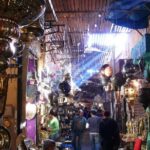
The tour concept leans heavily on the idea that Marrakech’s history lives in ordinary movement. So besides the big monuments, you’ll be guided through bustling alleyways and the sort of souk energy where you can find crafts, spices, and everyday goods.
Here’s what to expect in a helpful way: you’re not being dragged from one shop to another. Instead, you’re using the souks as context. The guide points out why certain crafts and trading traditions matter, and how the city’s layout supports commerce.
If you’ve ever felt lost in medina streets, this part helps. You start to recognize patterns—where landmarks tend to anchor navigation, where major routes funnel you, and how the city’s visual cues guide you even when signage is limited.
If you’re lucky, you’ll get a guide who’s both kind and clear. Names that have come up in past experiences include Abdul and Assia, and the common thread is a friendly, patient teaching style that works well when you want real explanations without feeling lectured.
Price and Value: Why $30.19 Can Be a Smart First-Day Move
At $30.19 per person, this tour is priced like an efficient orientation, not a museum-day splurge. In that sense, it’s good value—especially because the price covers a professional guide and the tour is structured as a private group experience for your party.
What you’re paying for is time, not just access. You’re getting a curated order of stops: square, palace, tombs, mosque. If you tried to self-plan all of that, you’d spend more time figuring out routing and understanding what you’re looking at.
What’s not included is the part that can surprise people: entrance fees for Bahia Palace and the Saadian Tombs. Plan for that cost so you don’t feel stalled mid-day. Also, private transportation isn’t included, so you’re depending on your own logistics and the walk-based nature of the medina route.
Bottom line: if you want a first-day foundation and you’re comfortable doing a chunk of walking, this is a practical way to pay for guidance and leave with a real sense of where things fit.
Who This Tour Fits Best (and Who Might Want Something Different)
This tour is ideal if:
- It’s your first time in Marrakech and you want a fast, meaningful overview.
- You like history that connects directly to places you’ll walk past later.
- You prefer a private group feel rather than mixing with strangers.
- You want a balanced mix of landmarks and street atmosphere without committing to a full day.
It may not be the best fit if:
- You hate crowds and noise, since Jemaa el-Fnaa is part of the experience.
- You want a long, slow pace with plenty of museum-style time at each site.
- You don’t want to deal with extra ticket costs, since key stops have separate entrance fees.
Should You Book This Marrakech Half-Day Tour?
Yes—if you want a smart first-day plan that turns Marrakech from confusing streets into a coherent story, this booking makes sense. It’s short enough to fit into a busy schedule, structured enough to feel worth it, and guided enough that you’re not just sightseeing—you’re learning what you’re seeing as you go.
I’d book it especially if you’re the type who likes to come back later and explore on your own. You’ll leave with names, landmarks, and neighborhood context you can use immediately while wandering the medina.
If you’re trying to stretch your budget, just remember to account for entrance fees for Bahia Palace and the Saadian Tombs. Do that, and you’ll get a lot of value out of the time you spend.
FAQ
How long is the Marrakech historical and cultural tour?
It runs for about 3 hours.
What is the price per person?
The price is $30.19 per person.
Where does the tour start?
It starts at Hôtel Restaurant Café de France on Rue des Banques, near Jemaa el-Fnaa.
Which stops are included during the tour?
You’ll visit Jemaa el-Fnaa, Bahia Palace, the Saadian Tombs, and Koutoubia Mosque.
Are entrance fees to monuments included?
No. Entrance fees are not included for the monuments.
What time commitment should I plan for each main stop?
Jemaa el-Fnaa is about 10 minutes, Bahia Palace is about 60 minutes, the Saadian Tombs are about 60 minutes, and Koutoubia Mosque is about 30 minutes.
Does the tour include transportation?
Private transportation is not included.
Is it a private tour or a group tour?
It’s private in the sense that only your group participates.
Is a professional guide included?
Yes, a professional guide is included.
Can children join the tour?
Children must be accompanied by an adult.
Is cancellation free?
Yes. You can cancel up to 24 hours in advance for a full refund.