REVIEW · MARRAKECH
Half Day Guided Tour in Marrakech History & Culture
Book on Viator →Operated by Mohcine · Bookable on Viator
Medina magic in three hours. You get a guided walk through Marrakech’s big hitters, with Koutoubia Mosque and Bahia Palace anchor stops, plus time in the souks for carpets, lanterns, leather, spices, and natural-dye color. The best part is how a local guide makes it make sense, including practical shopping context and clear answers for different group members. One thing to consider: Bahia Palace and Ben Youssef Madrasa have entrance fees that are not included, so you’ll need a little extra cash on the day.
This is a tight, well-paced history-and-culture route through the medina—built for first-time visitors who want highlights without getting lost for half a day. Expect walking through lively market streets, courtyards, and indoor sites with short time windows, especially around Jemaa el-Fnaa.
In This Review
- Key things you’ll notice on this tour
- Why this half-day Marrakech tour works for first-timers
- Meeting spot: start near Jemaa el-Fnaa and plan to walk
- Koutoubia Mosque: the minaret view and why it matters
- Bahia Palace: palace rooms, carved ceilings, and quiet courtyards
- Jemaa el-Fnaa: the UNESCO square that runs on sound and smells
- The souks: how each market specialty shapes what you see
- Souk of Dyers: natural color vats and hanging fabric color
- Marrakech Carpet Souk: patterns, symbols, and how to haggle without panic
- Ben Youssef Madrasa: Islamic architecture and a look at student life
- Guides: the difference between facts and understanding
- Timing: a realistic 3-hour plan inside a complicated medina
- What’s included, what’s not, and how to budget
- Who should book this tour
- Should you book this Marrakech History & Culture tour?
- FAQ
- How long is the Marrakech History & Culture guided tour?
- What does the tour cost?
- Is this tour guided?
- Are monument entrance fees included?
- About how much are the entrance fees?
- What places are included on the itinerary?
- Is there a limit on group size?
- Do I get a ticket, and will I need to print it?
- Where does the tour start and end?
- Can I cancel for free?
Key things you’ll notice on this tour
- Iconic architecture in a short route: Koutoubia’s minaret views, Bahia Palace interiors, and Ben Youssef’s Quranic-school design.
- Real market skills, not just sightseeing: how souks are organized by specialty and how haggling works.
- Natural dye spectacle at the Souk of Dyers, including the vats-and-fabric color process you can see firsthand.
- Carpets with story behind the patterns, including weaving techniques and symbol meanings.
- Small group feel with a maximum of 20 travelers.
- Guides who adjust to your questions, with named praise for clear, individualized answers (including Ibrahim and Mohcine).
Why this half-day Marrakech tour works for first-timers
Marrakech can overwhelm you fast. The medina is maze-like, the smells hit first, and every corner seems to sell something. This tour is built for the moment you want to say: I’d like to see the main landmarks, learn what I’m looking at, and still have time to feel the city.
At about 3 hours, you won’t get the slow, lounge-by-the-pool pace of a resort day. You get a concentrated route instead: mosque views, palace courtyards, a UNESCO-listed square, and multiple artisan souks. It’s the kind of plan that helps you connect dots while everything is still fresh in your head.
Also, the price is a big part of the value. At $23.23 per person, you’re paying for guided time and local interpretation. The trade-off is that monument entrances are separate for Bahia Palace and Ben Youssef Madrasa, though the listed fees are relatively small (less than 10 euros for Bahia Palace and less than 5 euros for Medersa). That means you can budget without guessing.
You can also read our reviews of more guided tours in Marrakech



Meeting spot: start near Jemaa el-Fnaa and plan to walk
Your start point is ArganaJ2H6+CPV, Jamâa el-fnna, Number 18, Znikat Rahba, Marrakech 40000. Your tour ends back at the meeting point, so you’re not left dealing with medina navigation on your own after you’re done.
Because you’re in the medina, the practical reality is simple: you’ll be on foot a fair amount. This tour includes outdoor streets, indoor courtyards, and market sections. If you have mobility concerns, wear shoes you trust. Also, if you’re hoping to take lots of long shopping detours, remember this is a guided highlights route; you’ll have some freedom, but not unlimited time in every stall.
Koutoubia Mosque: the minaret view and why it matters
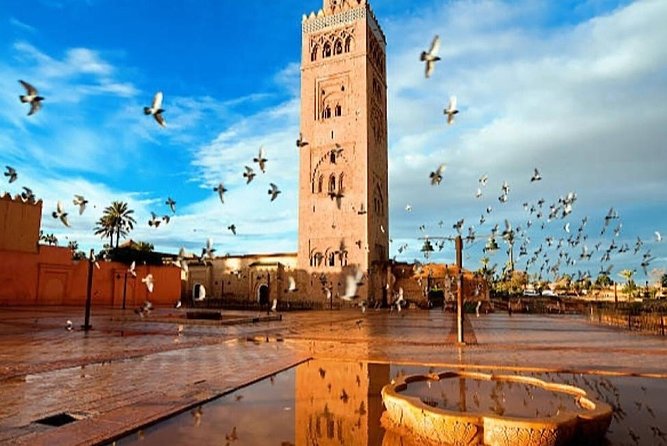
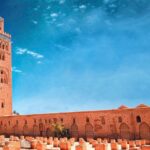
The tour begins at the Koutoubia Mosque, with a close look at its famous 12th-century minaret. Even from a distance, it’s a Marrakech skyline marker. Up close, you’ll hear the story behind that impact—its historical role and why it influenced architecture in the wider region.
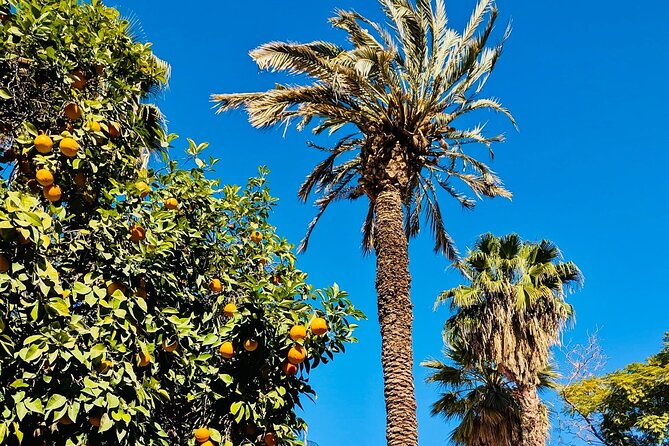
What I like about this stop is that it gives you orientation. You’re in a city where walls, gates, and roofs can blur together, and Koutoubia gives you a clear visual anchor. The gardens around the mosque add a calmer contrast, and they’re also where you get some of the best sightline moments of the minaret.
A small practical note: the tour includes time here and notes that admission is free for this stop. That’s helpful because it keeps your day’s extra costs predictable.
Bahia Palace: palace rooms, carved ceilings, and quiet courtyards
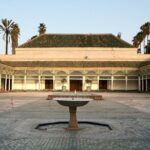
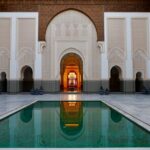
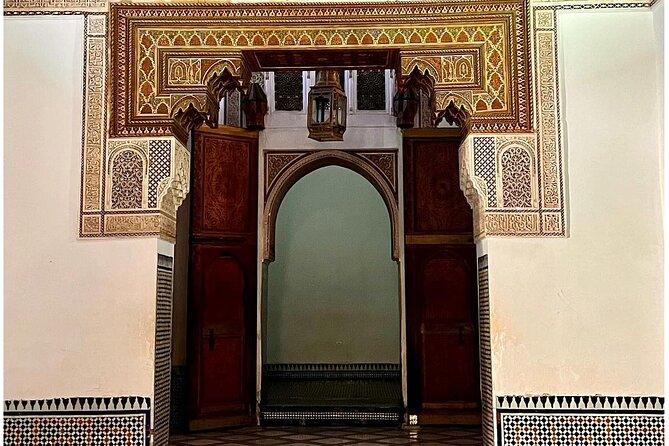
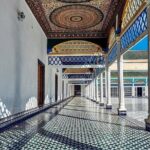
Next is Bahia Palace, one of Marrakech’s most impressive examples of royal-era domestic architecture. This is where the tour shifts from skyline views to human-scale detail: entrance areas, gardens, courtyard spaces, and richly decorated rooms.
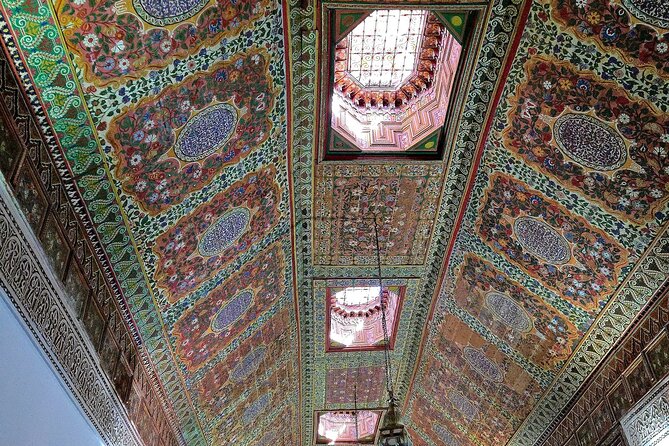
The standout things to look for during your walk-through are the craft elements you might otherwise miss on your own. The palace is described as having carved wooden ceilings, delicate mosaics, and ornamental sculptures in multiple areas. The tour guide’s role here is important: you’re not just looking at pretty surfaces. You’re learning what parts of the layout and decoration were meant to communicate in royal life.
Entrance for Bahia Palace is not included, and the listing suggests it’s less than 10 euros. That’s worth considering in your budget, but it’s also a fair exchange for the time you spend in a major monument. If you love architecture and want a high impact stop without spending all day in museums, this is a solid bet.
Jemaa el-Fnaa: the UNESCO square that runs on sound and smells
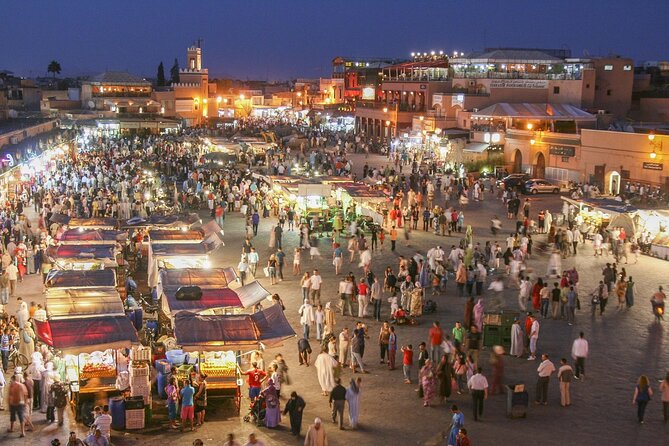
Then you hit Jemaa el-Fnaa, the heart of the medina. This square is highlighted as a UNESCO World Heritage Site, and you’ll spend about 30 minutes there with your guide explaining why it’s central to daily Marrakech life.
This stop isn’t quiet or museum-like. It’s about atmosphere—and the details are part of the lesson. You’ll get pointed toward the roles of spice merchants, street performers, musicians, and snake charmers, along with the everyday commercial texture: juice stands, restaurants, and colorful shops.
Here’s the key value of going with a guide at Jemaa el-Fnaa: you get context for what you’re seeing. Without that, it can feel like a blur of performers and offers. With it, you start recognizing the rhythms—how the square works as both cultural stage and marketplace.
Free time is built into this stop, and the tour notes it as admission free, which is convenient since you’re already paying entrance elsewhere.
You can also read our reviews of more historical tours in Marrakech
The souks: how each market specialty shapes what you see
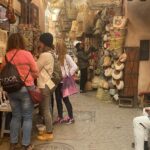
After Jemaa el-Fnaa, the tour moves into the souks. This is where the medina becomes practical. You won’t just wander randomly; your guide helps you understand how market areas are organized by specialty—like a city-within-a-city.
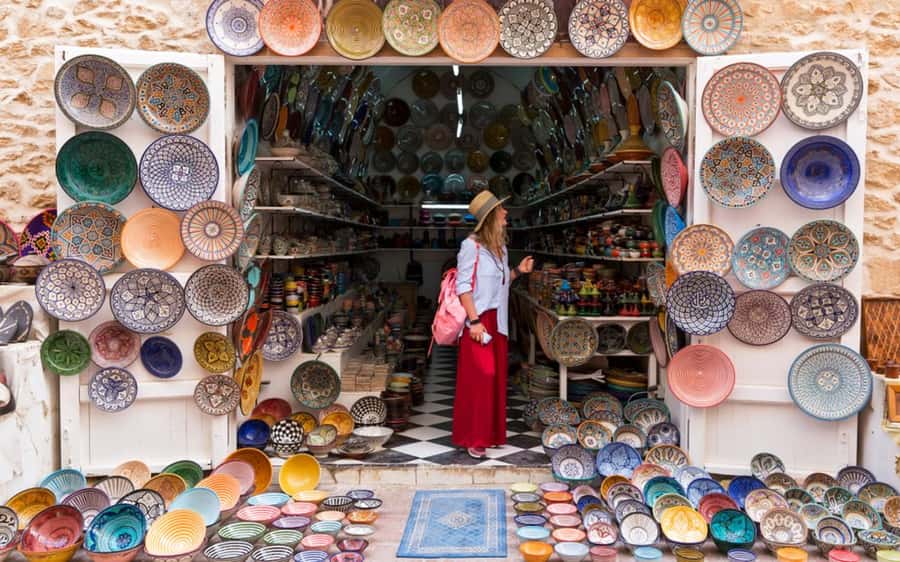
You’ll be led through a labyrinth of alleys with a sensory mix of colors, smells, and sounds. The tour highlights artisanal work across multiple categories: leather, metal, wood, ceramics, and the all-important spice trade. It also frames the bargaining culture in a way that feels usable, not just theoretical—this is where you learn what to expect when you ask about price and how trade traditions influence the way stalls operate.
A small “think ahead” point: souks can be tempting. If you’re not shopping, you’ll still enjoy the crafts. If you are shopping, set a clear plan before you arrive—like what you want (carpet vs. lantern vs. leather) and your price comfort zone—because the point of a guided visit is to help you make smart decisions quickly, not to keep you trapped in one stall for 40 minutes.
Souk of Dyers: natural color vats and hanging fabric color
One of the most visual stops is the Souk of Dyers. This is where you can actually watch the process instead of only hearing about it.
Expect the tour to point out how artisans dye fabrics using natural colors and to explain what you can see during the process: pigments applied in vats and drying methods afterward. The result is a very strong color moment because fabrics hang in a wide range of shades—so you’re essentially walking through a rainbow that has a production story behind it.
This stop is especially good if you like crafts and process. Marrakech souks often get described as shopping zones, but here you get a different angle: the work itself. If you’re the type who loves photography, this is also one of the easiest places to get images that actually explain something.
Marrakech Carpet Souk: patterns, symbols, and how to haggle without panic
Next comes the Marrakech Carpet Souk, where the tour focuses on rugs and weaving traditions. You’ll look at an assortment of Berber and Arabic rugs with different patterns and color palettes. Your guide explains weaving techniques and the idea that patterns can carry hidden symbols.
What I like about this stop is that it’s not just “here are carpets.” It’s a quick education on how to read them. You also get an idea of how merchants present their wares—like unrolling the best pieces so you can see quality and design details.
And yes, haggling is part of the experience. The tour frames it as a tradition in Moroccan souks, and you’ll learn the basics of how to approach the conversation. This is one of those moments where a guide can save you money, because they can explain the norms and reduce the chance you panic-buy the first price you’re offered.
Ben Youssef Madrasa: Islamic architecture and a look at student life
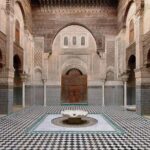
The final major monument stop is Medersa Ben Youssef. This is described as one of the oldest and most beautiful Quranic schools in Marrakech, and it’s built in the 14th century tradition, welcoming students from across North Africa.
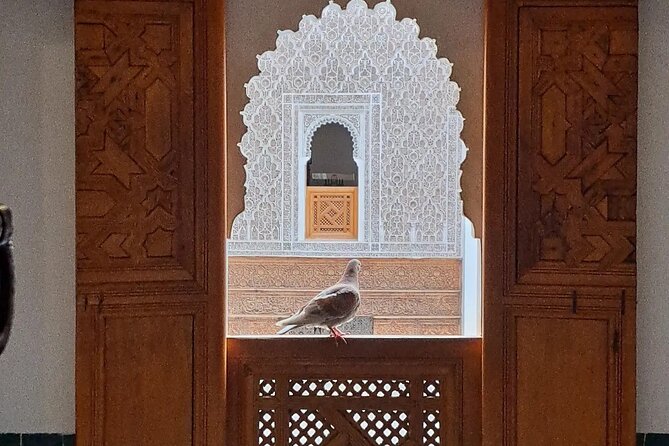
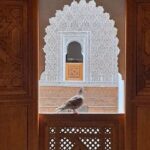
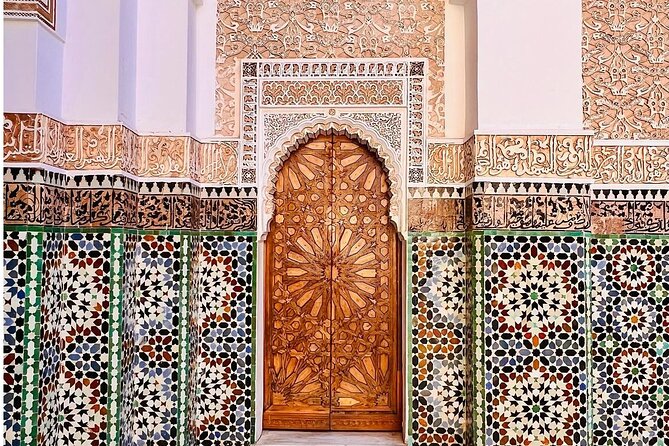
If you like architecture, this is a great closing chapter. You’ll notice elegant curves, mosaics, and detailed wood carvings. The tour’s walk-through covers multiple spaces: a peaceful inner courtyard, the larger courtyard, and small cells that once housed students.
This stop works well after the souks because it slows you down. The medina can be loud and sales-driven; Ben Youssef gives you a different tone—learning, daily routine, and design meant for contemplation. It’s also another entrance fee site, and the listing indicates it’s less than 5 euros, which makes it a relatively low-cost way to see a major monument.
Guides: the difference between facts and understanding
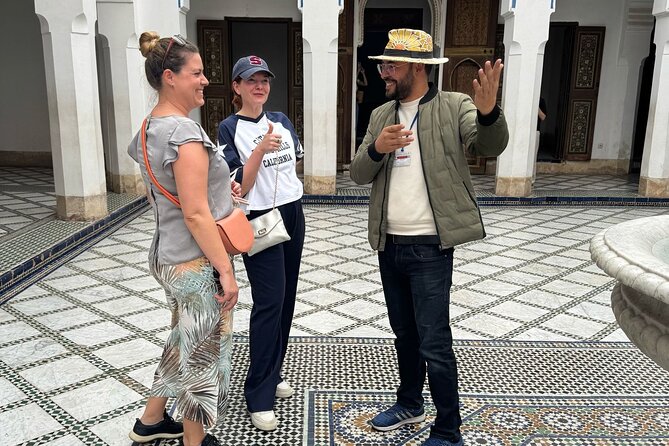
This tour is led by a certified local guide. The biggest reason this kind of tour feels worth it is not the checklist of landmarks—it’s the human layer.
In the feedback you’re given, guides like Mohcine show up with praise for the way they handle questions and tailor explanations. One review specifically praised Ibrahim for answering different group members individually and for sharing shopping tips in the souks and markets. Another note highlighted the guide adapting the tour to your interests while still covering the key sights.
That adaptability matters in real life. Marrakech isn’t one-size-fits-all. Some people want architecture. Others want market guidance or just a clearer sense of what’s going on around them. A good guide helps you steer your attention so you leave with understanding, not just photos.
Timing: a realistic 3-hour plan inside a complicated medina
This experience runs for about 3 hours. That length is ideal for many people because it fits into a morning schedule or an afternoon break, without forcing you to surrender your whole day.
Here’s the reality: with a compact itinerary, each stop is time-limited. Koutoubia gets around 30 minutes; Bahia Palace about 1 hour; Jemaa el-Fnaa about 30 minutes; Ben Youssef about 1 hour. Then you get souk time that’s spread across specialty areas like carpet shopping and dye crafts.
So if you have a strong interest in one area—like carpets—you might want to arrive ready to spend your shopping time intentionally once you’re there. The guide’s tips can help, but the physical schedule stays tight.
What’s included, what’s not, and how to budget
Included:
- Certified local tour guide
- Professional and good quality service
Not included:
- Entrance fees to monuments: less than 10 euros for Bahia Palace, less than 5 euros for Medersa Ben Youssef
Admission for the Koutoubia Mosque segment is listed as free, and the Jemaa el-Fnaa stop is also free.
For a total budget mindset: plan for the $23.23 tour price plus a small add-on for Bahia Palace and Ben Youssef. That tends to be far easier than trying to price out a medina day alone, because you know you’re paying for guidance and you have a clear ceiling on monument costs.
Who should book this tour
This tour fits best if you:
- Are visiting Marrakech for the first time and want big landmarks plus craft souks in one go.
- Prefer a guide to explain what you’re seeing and help you avoid confusion around market areas.
- Want a half-day schedule that won’t steal your entire day.
It’s also a good option if you’re short on time but still want to see more than one monument and not just shop. If you’re the kind of traveler who likes slow, unstructured wandering, you might still enjoy the tour—but you may want to treat it as orientation first, then go back on your own later.
Should you book this Marrakech History & Culture tour?
I’d book it if you want an efficient, high-value way to connect Marrakech’s main sights to real daily culture—mosque and palace architecture, a UNESCO square, and hands-on craft knowledge like dyes and carpets. The guided explanations and the focus on market specialty make it more than a walk from one photo spot to the next.
I’d think twice if you dislike walking or you’re hoping for long, unbroken time inside one monument or one shopping area. The route is designed to cover several major stops in about 3 hours, so it’s fast by nature. Also budget the extra entrance fees for Bahia Palace and Ben Youssef so the day stays smooth.
If you’re curious, this is a practical way to get your bearings fast and leave the medina with names, context, and a plan for what you want to explore next.
FAQ
How long is the Marrakech History & Culture guided tour?
It’s approximately 3 hours.
What does the tour cost?
The price is $23.23 per person.
Is this tour guided?
Yes. It includes a certified local tour guide and professional service.
Are monument entrance fees included?
No. Bahia Palace and Medersa Ben Youssef entrance fees are not included. Koutoubia Mosque is listed as free for admission.
About how much are the entrance fees?
The listing says Bahia Palace is less than 10 euros and Medersa is less than 5 euros.
What places are included on the itinerary?
You’ll visit Koutoubia Mosque, Bahia Palace, Jemaa el-Fnaa, the souks (including the Souk of Dyers and the Marrakech Carpet Souk), and Medersa Ben Youssef.
Is there a limit on group size?
Yes. The maximum group size is 20 travelers.
Do I get a ticket, and will I need to print it?
You receive a mobile ticket.
Where does the tour start and end?
It starts at ArganaJ2H6+CPV, Jamâa el-fnna, Number 18, Znikat Rahba, Marrakech 40000, Morocco, and ends back at the same meeting point.
Can I cancel for free?
Yes. You can cancel up to 24 hours in advance for a full refund.