REVIEW · MARRAKECH
Marrakech Historical and Cultural Tour – Half Day City Tour
Book on Viator →Operated by Marrakech Guided Experience · Bookable on Viator
Marrakech on foot, minus the guesswork. This half-day route gives you a tight plan in the medina, with a guide to help you move through the souks and spot what matters without losing time. You also get time at Jemaa el-Fnaa, where the square comes alive with storytellers, musicians, snake charmers, acrobats, and jugglers.
I like the small-group setup and the fact that the guide can steer you toward workshops and lanes many tourists skip. I also like how the route pairs major monuments (Bahia Palace, Saadian Tombs, Koutoubia Mosque) with street-level culture, so you leave with more than photos. One thing to plan around: entrance fees for some stops are not included, and crowd levels can affect how smooth the palace and tomb visit feels.
Key Tour Highlights at a Glance
- Small group focus (up to 15) means easier crowd management in tight medina streets
- Jemaa el-Fnaa time lets you see daily performers and local rhythm at street level
- Souk guidance helps you find traditional craft areas like tinsmithing, dyeing, and herbal stalls
- Historic sites in one half-day: Bahia Palace, Saadian Tombs, and Koutoubia Mosque
- A chance to meet the storytellers too, not just the monuments
In This Review
- Meeting Point and How This Tour Feels in Motion
- Jemaa el-Fnaa: Performers, Local Energy, and Why This Stop Works
- Bahia Palace: Brilliance, Gardens, and How to Time Your Attention
- The Historic Jewish Quarter and Kasbah District Pass-Through
- Saadian Tombs: What You Get in an Hour (and What Can Go Sideways)
- Bab Agnaou: A Medieval Gate With Royal Kasbah Energy
- Koutoubia Mosque: Free Views, Easy Ending, and Street-Level Calm
- Souks and Craft Stops: How the Guide Makes This More Than Shopping
- Price and Value: What $30.94 Buys (and What You Still Need to Pay)
- Private Tour Upgrade: When It Makes Sense
- Smart Tips for a Smoother Marrakech Walk
- Should You Book This Half-Day Marrakech Tour?
- FAQ
- How long is the Marrakech Historical and Cultural Tour
- What sights are included on the tour
- Are entrance fees included in the tour price
- Where does the tour start
- Is there pick-up and drop-off
- How large is the group
- Can I choose a morning or afternoon departure
- Are drinks included
- What is the cancellation policy
Meeting Point and How This Tour Feels in Motion
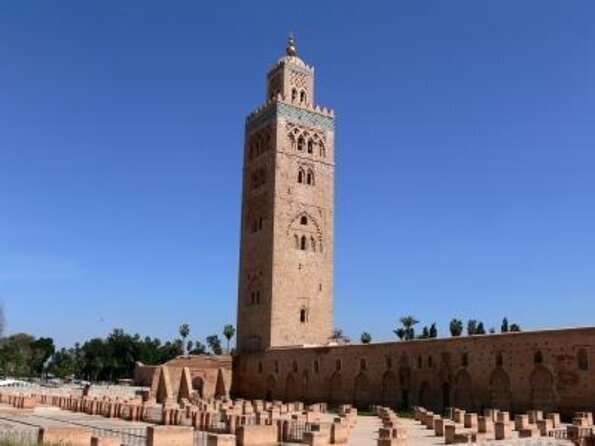
You start at Hôtel Restaurant Café de France near Jemaa el-Fnaa. There’s no pick-up or drop-off, so plan to arrive a few minutes early and be ready to walk right away. The tour runs about 3 hours, and you can pick several departure times, including morning or afternoon.
This is a walking tour through parts of the medina, which means you will feel the real pace of Marrakech: narrow lanes, lots of people, and constant motion. The upside is you get to experience the city the way locals move through it, not just from a bus window. The guide’s job is to keep the group together and help you navigate through the busiest stretches.
Group size matters here. With a maximum of 15 travelers, you typically get more “herd control” than on larger tours, especially when streets get crowded around the palace entrances and in and out of souks.
Jemaa el-Fnaa: Performers, Local Energy, and Why This Stop Works
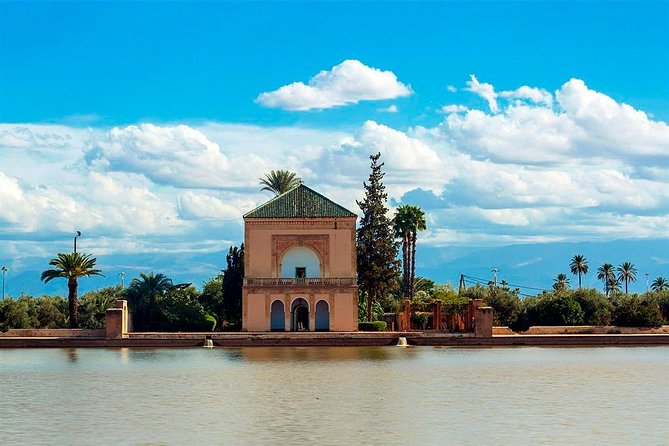
You’ll begin with a short visit at Djemaa El Fna (Jemaa el-Fnaa), where the square hosts daily performances. The big draw is variety: storytellers, musicians, snake charmers, acrobats, jugglers, and other performers cycle through so the scene never feels static.
Even if you have seen street performers in other countries, this square has a specific rhythm because it is not only for visitors. It is also a daily meeting spot for locals. That matters for your experience because it makes the whole atmosphere feel more grounded.
Practical tip: the square gets busy, so wear comfortable shoes and keep your phone secure. Also, if you want a calmer viewing moment, arrive with your group and let the guide point out the flow of performers rather than trying to sprint for the best spot.
You can also read our reviews of more city tours in Marrakech
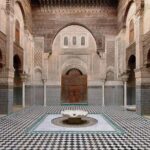
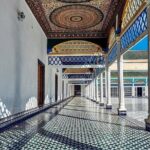

Bahia Palace: Brilliance, Gardens, and How to Time Your Attention
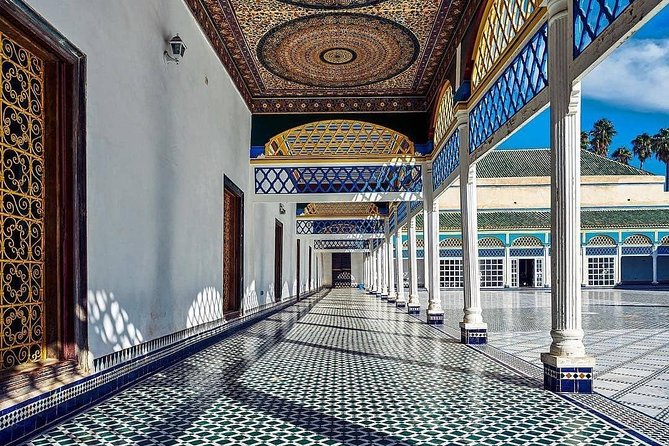
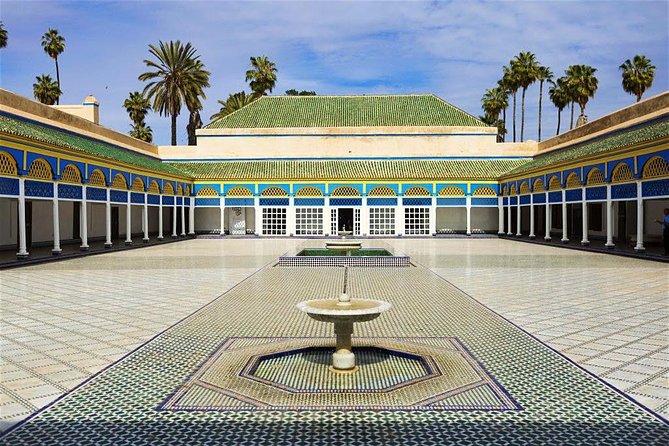
Next up is Bahia Palace, a grand palace-and-gardens complex built in the late 19th century with the name meaning “brilliance.” Your time here is about 1 hour, and entrance is not included in the tour price.
This is one of those places where having a guide helps a lot, even if you are not a hardcore history person. You can look at details on your own, but a good guide points out why the space feels the way it does and what you are looking at—arches, courtyard layout, decorative elements, and the overall palace design logic.
What to expect from a practical standpoint: the palace is inside and calmer than the street, but it still gets crowded. That means you will likely spend your best time moving between key areas rather than lingering forever in one room. If you want photos, aim to do them quickly as you move through each section.
A small consideration: drinks are not included, and there is not much time for a long break built into this tour. If you get heat-sore easily, plan to take a quick sip-water moment when you can, rather than waiting until you are already tired.
The Historic Jewish Quarter and Kasbah District Pass-Through
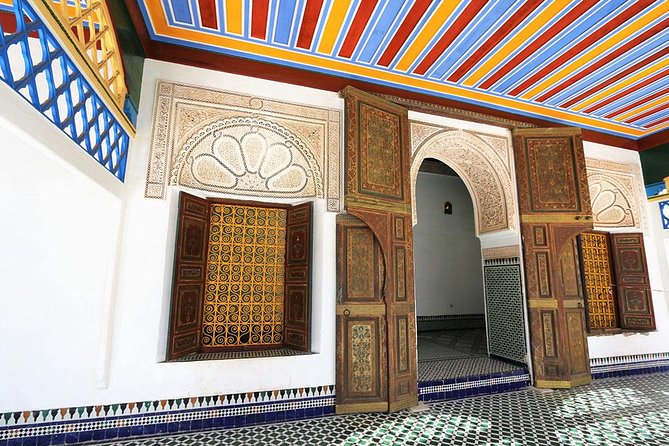
Between the headline monuments, the route includes time around the historic Jewish quarter, described as seeing revival, plus time in the Kasbah district area, which is tied to the royal palace zone.
This part of the tour is valuable because it gives you context for how the medina is layered. You are not only jumping from “one famous thing” to the next. You are walking through neighborhood texture—shopfronts, everyday streets, and areas where the city’s life continues beyond the tourist highlights.
In the Kasbah zone, there’s a specific note that it feels more peaceful once the Saadian Tombs close. That is a great reason to understand your timing during the tour: if your visit ends up right around closing or before crowds thin, the Kasbah side can feel more local and less like a slow-moving line.
Saadian Tombs: What You Get in an Hour (and What Can Go Sideways)
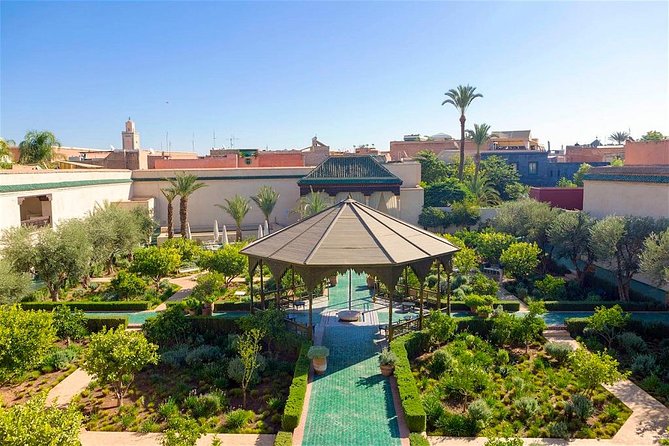
The Saadian Tombs are sepulchres connected to the Saadian dynasty, associated with Sultan Ahmad al-Mansur. They are on the south side of the Kasbah Mosque area, and your visit is about 1 hour. Entrance fees are not included.
This stop is a mix of beauty and logistics. The tombs themselves are the reason you came, but the practical reality is that you may run into lines or crowding. In some cases, guides have had to adjust the plan if the queue is long—sometimes by letting the group decide whether to wait or shift to nearby souk time. That can be a little frustrating if you came specifically for the tombs, but it also keeps the tour from grinding to a halt in the hottest part of the day.
Here’s what you can do to protect your experience: show up with patience, and if the guide offers options because of crowding, listen carefully. If you choose to wait, you get the full tomb experience. If you choose a souk detour, you still get value out of your walking time in the medina.
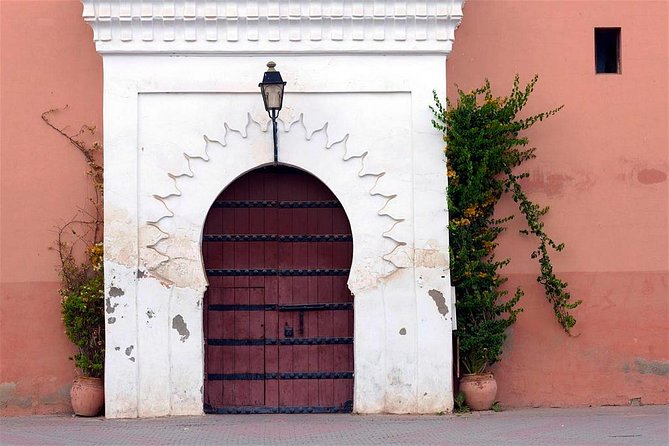
Also, keep an eye out for nearby architectural details the guide points out, like doors, walls, and gate areas that help you connect the tombs to the broader Kasbah layout.
Bab Agnaou: A Medieval Gate With Royal Kasbah Energy
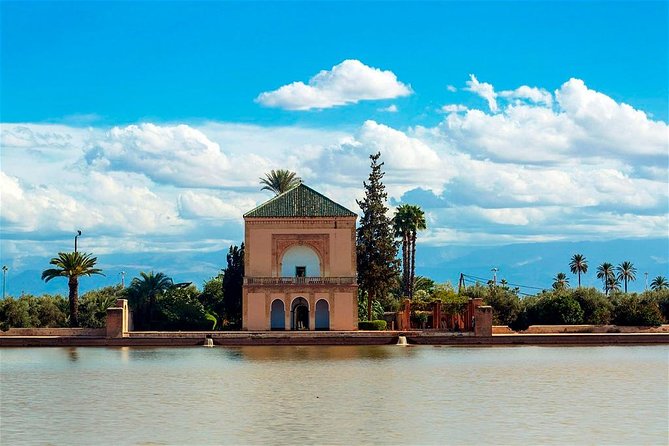
On the route, you pass Bab Agnaou, one of Marrakech’s city gates. It was built in the 12th century during the Almohad dynasty, and it serves as an important connection to the royal kasbah area in the southern part of the medina.
This is a “small stop with big meaning” moment. You might not spend long here, but it helps you see the medina as a connected city system, not just separate landmarks. The gate turns the walk into a story: how the city protected itself, who controlled access, and how royal space links to street life.
You can also read our reviews of more historical tours in Marrakech
Koutoubia Mosque: Free Views, Easy Ending, and Street-Level Calm
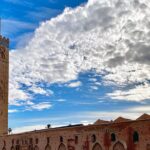
Your tour finishes with Koutoubia Mosque (also spelled Koutubiyya). It is the largest mosque in Marrakech, and admission is free. You’ll spend about 30 minutes, which is just enough time to appreciate why it’s such a defining landmark.
Koutoubia works well as a finale because it gives you a visual reset after palace and tomb crowds. Even in a short stop, you get a strong sense of scale, and it’s a good moment to look up and orient yourself in the city.
If you are sensitive to heat, this is also a practical check-in point. You will likely feel your energy dropping after walking and queuing, and a shorter, calmer stop can keep you from feeling like the tour ending is a sprint.
Souks and Craft Stops: How the Guide Makes This More Than Shopping

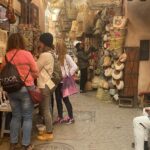
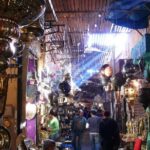
One of the best parts of this tour is the guided walk through souks and craft areas. The focus is on assistance navigating the maze of stalls and workshops less frequented by tourists, with attention on traditional crafts like tinsmiths, dyers, and herbalists.
That matters because souks can turn chaotic fast. If you wander without a plan, you end up either rushing past everything or getting stuck in the same tourist-friendly stalls. With a guide, you can slow down at the right moments and understand what you are seeing.
A helpful extra: some guides have even offered to take photos for individuals and couples, which can save you from awkward self-timer setups while you are navigating crowds.
One thing to watch: near the end of some tours, there can be a product sales pitch tied to a stop the guide includes. You are not forced to buy. But mentally, go in expecting you might be brought into a sales-focused shop, then steered back to the main route.
Price and Value: What $30.94 Buys (and What You Still Need to Pay)
At $30.94 per person for about 3 hours, this tour is priced like a solid “intro to the medina” option. The big catch is that entrance fees are not included. The tour notes that most monuments cost about $10 each, and that likely applies to Bahia Palace and the Saadian Tombs, while Jemaa el-Fnaa and Koutoubia are free.
So, the real value equation looks like this:
- You pay for a local guide and the time-saving planning
- You still budget for entry to the paid monuments
- You save the effort of figuring out route order, crowd timing, and where to go next
For many first-time visitors, the guide portion is worth it. Marrakech’s medina is not hard to explore, but it is easy to explore in the wrong direction at the wrong time. A guide helps you get your bearings fast and keeps you from spending your limited half-day stuck in confusion.
Also, the tour runs with a max of 15 travelers, which helps the experience feel more personal than a large-group day trip.
Private Tour Upgrade: When It Makes Sense
There is an option to upgrade to a private tour. A private guide can be a real help if you want a slower pace, more time for photos, or less pressure in crowd-heavy spots. It can also help if you have mobility needs (though walking is still central to this experience).
If you travel with kids, private can work well too because it lets the guide respond to your group’s energy level without waiting on a larger collective schedule.
Smart Tips for a Smoother Marrakech Walk
Here are a few practical ideas that will help you enjoy the tour more:
- Bring water. Drinks are not included.
- Wear closed-toe shoes with grip. Streets can be uneven and busy.
- Keep your phone secure in the densest areas. Tight lanes mean you do not want to be hands-free searching for anything.
- If you get offered different options due to lines at the tombs, decide fast. Long debates slow down the whole group.
- If you notice a sales stop near the end, treat it like a quick cultural add-on, not a requirement.
One more safety note: medina streets can include motor traffic and scooters near narrow sections. Stay alert and step aside when you can. Your guide will manage the group, but you still control your footing.
Should You Book This Half-Day Marrakech Tour?
Book it if you want a smart, guided route that connects iconic landmarks (Bahia Palace, Saadian Tombs, Koutoubia) with real street life at Jemaa el-Fnaa. The format works best as a first or second day in Marrakech, when you are still learning the medina rhythm and want the guide to save you time.
Skip it or upgrade if:
- You hate guided walking in crowded spaces and prefer a fully self-paced day
- You are very strict about timelines at a single paid site (because crowding can change how your hour plays out)
- You want lots of long breaks (this tour is short and drink breaks are on you)
If you go in with good shoes, some patience for crowds, and a small budget for paid entries, this is a worthwhile half-day way to get Marrakech’s history and street energy working together.
FAQ
How long is the Marrakech Historical and Cultural Tour
It lasts about 3 hours.
What sights are included on the tour
You visit Jemaa el-Fnaa, Bahia Palace, the Saadian Tombs, and Koutoubia Mosque, with additional walking through historic medina areas such as the Kasbah district and the historic Jewish quarter.
Are entrance fees included in the tour price
No. Entrance fees are not included. Some monuments have an admission cost, while Jemaa el-Fnaa and Koutoubia Mosque are listed as free.
Where does the tour start
The start is at Hôtel Restaurant Café de France on Rue des Banques near Jemaa el-Fnaa.
Is there pick-up and drop-off
No. Pick up and drop off are not included.
How large is the group
The tour has a maximum of 15 travelers.
Can I choose a morning or afternoon departure
Yes. The tour offers several departure times, including morning or afternoon.
Are drinks included
No. Drinks are not included.
What is the cancellation policy
You can cancel for a full refund up to 24 hours before the experience starts. If you cancel within 24 hours, the amount you paid is not refunded.