REVIEW · MARRAKECH
4 Days Sahara Desert tours from Marrakech to Fes
Book on Viator →Operated by Ligne d'Aventure - Day Tours · Bookable on Viator
A four-day Morocco route that feels like a whole country. This Marrakech to Fes desert trip strings together Atlas passes, kasbah towns, and a real Sahara stay with a private tent in the desert.
Two things I like a lot: you get time in the dunes with a proper 2-night Sahara portion (not just a quick stop), and the experience is built around private transportation so you’re not trapped in a rushed group shuffle.
One consideration: lunches and drinks aren’t included, so you’ll want to budget for food on the road and pack a little flexibility for driving days.
In This Review
- Key things to know before you go
- Marrakech to Fes: what this 4-day desert circuit is really for
- Day 1: Ait Ben Haddou and Ouarzazate, the kasbah gateway days
- Day 2: Todra Gorge’s canyon walls and the High Atlas feel
- Day 3: Erg Chebbi dunes, Merzouga village life, and your camel ride
- Night 3 and the desert camp experience: why the extra night matters
- Day 4: Ifrane’s alpine vibe before you reach Fes El Bali
- Price and value: what you’re paying for at $867.34 per person
- What kind of traveler fits this best?
- Guide quality matters: the names that show up often
- Tips to make the days smoother (and more enjoyable)
- Should you book this Marrakech to Fes Sahara tour?
- FAQ
- What route does this tour follow?
- How long is the experience?
- What’s included in the price?
- What is not included?
- Where are you picked up and where do you end?
- Is this a private tour?
- What time does the tour start in Marrakech?
- Can I choose between sunrise and sunset for the camel ride?
- What is the cancellation policy?
Key things to know before you go
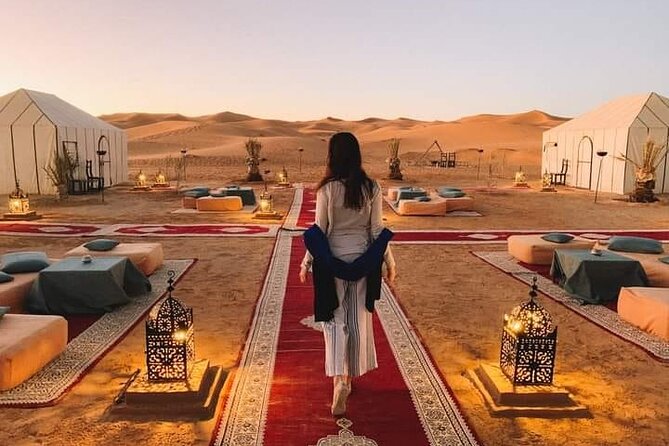
- Private tent in the Sahara: your overnight isn’t just a stopover; it’s a full night experience in the dunes.
- Camel ride at sunrise or sunset: you can time it to your mood and light.
- Todra Gorges visit: limestone canyon walls that make the High Atlas feel dramatic in person.
- Ait Ben Haddou and Ouarzazate stops: kasbah and gateway-city pacing that sets up the desert days well.
- Dinner and breakfast included: helps keep the desert evenings low-stress.
- Pickup in Marrakech and drop-off in Fes: you start at Jemaa el-Fnaa and end in Fes El Bali.
Marrakech to Fes: what this 4-day desert circuit is really for
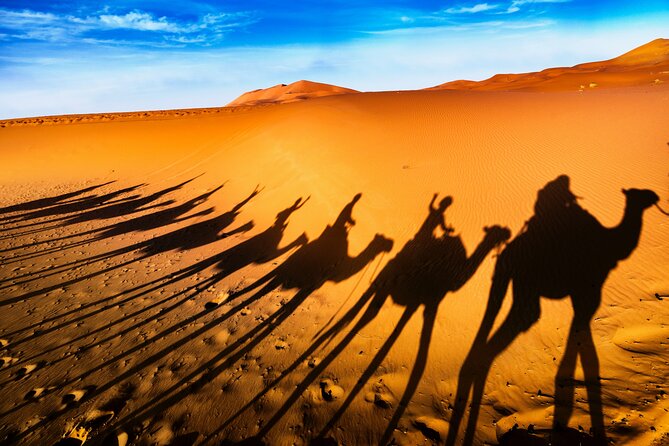
This is a route for people who want more than dunes on a clock. The best part is how it mixes big-name stops with the smaller, lived-in moments that explain why southern Morocco matters: trade routes, canyon geography, caravan towns, and desert villages.
You’ll spend most days traveling across southern Morocco in a private setup, which changes the feel of the trip. It’s not just sightseeing. You’re moving through regions fast enough to see variety, but organized enough that you don’t feel lost. And when you hit the desert night, it actually lands, because the rest of the days aren’t squeezed into a single whirlwind.
If your goal is a thoughtful introduction to Atlas Mountains, kasbah country, valleys, and the Sahara’s sand sea, this route makes sense. It’s also a good step up from the shorter “flying carpet” style trips because you get an extra desert night and more time to slow down.
A few more Marrakech tours and experiences worth a look
Day 1: Ait Ben Haddou and Ouarzazate, the kasbah gateway days
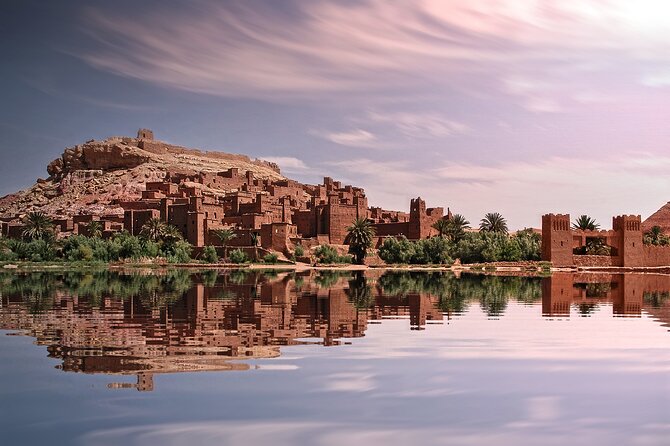
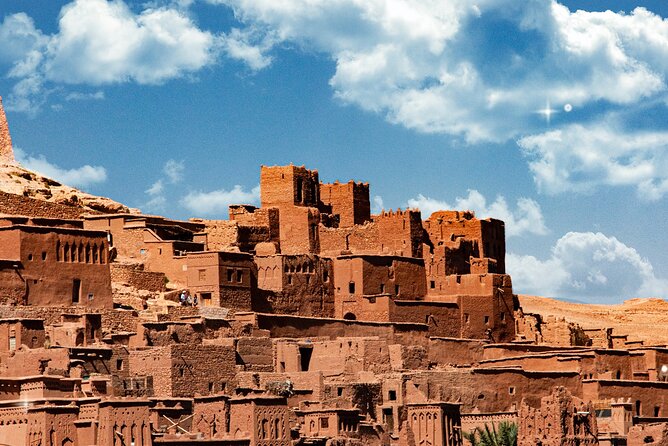
Your first day anchors the trip in kasbah-country, and it’s a smart choice. You’ll visit Ait Ben Haddou, a fortified ksar with roots reaching back to the Almoravid period. Even if the current buildings reflect later construction, the place is still tied to the same trade-route logic that helped shape southern Morocco—where people and goods moved across valleys and over the mountains.
In practical terms, this stop gives you context. Once you understand that Ait Ben Haddou was strategically placed along an important trans-Saharan corridor, the rest of the drive starts to feel connected rather than random.
From there you head to Ouarzazate, often described as a gateway city to the Sahara. You’ll see the Taourirt Kasbah, which has views over the surrounding terrain, plus a movie-lore vibe that comes from how often filmmakers use this area as a backdrop.
What you’ll love here is the contrast: kasbah architecture up close, then a wider horizon that hints at what comes next. What you should watch for is time pacing. These places reward walking and looking—so build in calm moments, not just photos-and-go.
Day 2: Todra Gorge’s canyon walls and the High Atlas feel
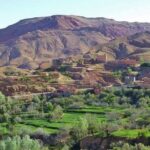
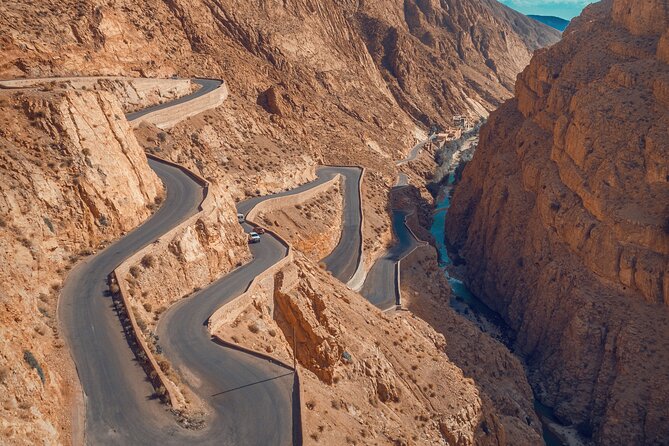
Day two takes you into the Todra Gorge (Todgha/Dades area), a series of limestone canyons carved by river action through the High Atlas Mountains. In some sections the canyon walls can rise dramatically—up to around 400 meters in places—so even if you’ve seen cliffs before, this one tends to land because the walls feel close and vertical.
The Todra stop is included as an attraction time block with admission included, which is useful for planning. You’ll have time on foot to appreciate the wadi-canyon setting and the way the route bends through mountain terrain rather than cutting straight across it.
This day also helps you “read” the geography of Morocco. You’ll notice how valleys guide travel, how rivers shape canyons over time, and how the south doesn’t start with sand—it starts with mountains and stone first.
A small practical tip: wear shoes you’re comfortable with on uneven ground. Canyon edges and paths can be rocky, and you’ll want stable footing more than style.
Day 3: Erg Chebbi dunes, Merzouga village life, and your camel ride
This is the day most people picture: Erg Chebbi dunes near Merzouga. The dunes here can rise to around 150 meters above the surrounding rocky desert, and the dune field stretches roughly 28 km north-to-south. It’s big enough to feel surreal, but close enough that you don’t feel like you’re traveling forever to reach “the Sahara.”
You’ll also visit Musica de Gnawa / Khamlia, where you’ll be around the dunes’ edge near the Algerian border. Khamlia is a small village often described as the southern gateway to the Sahara. Even if you’re not there for a “cultural show” in a formal sense, the setting matters: you’re in a living village at the sand’s edge, not in a staged desert-only bubble.
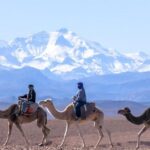
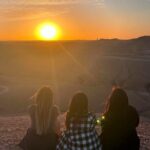
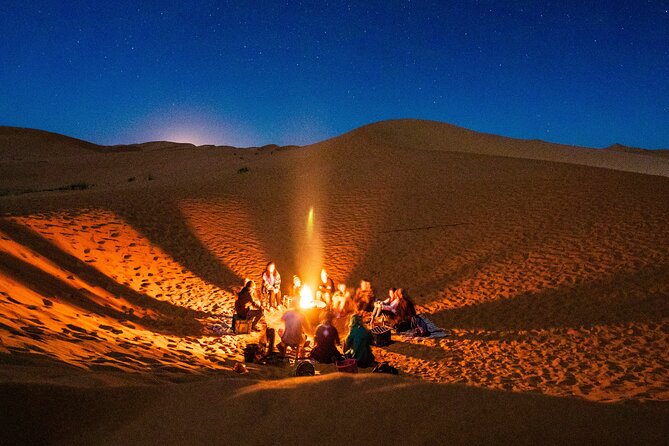
Then comes the part you’ll remember: the camel ride timed for sunset or sunrise in Merzouga. Choosing sunrise vs. sunset is personal. Sunset often feels like a climax—dunes turning warm and gold. Sunrise can feel quieter and cooler in mood, with a softer start to the day. Either way, it’s the classic Sahara pacing: slow travel across sand before the night sets in.
One more thing: the whole day is designed to make the dunes feel earned. You don’t just arrive and sleep. You build toward it through the gorge day first, then the desert day proper, then the camp.
Night 3 and the desert camp experience: why the extra night matters
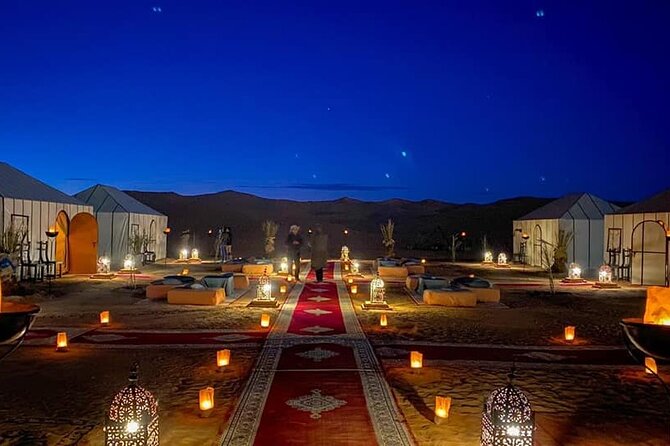
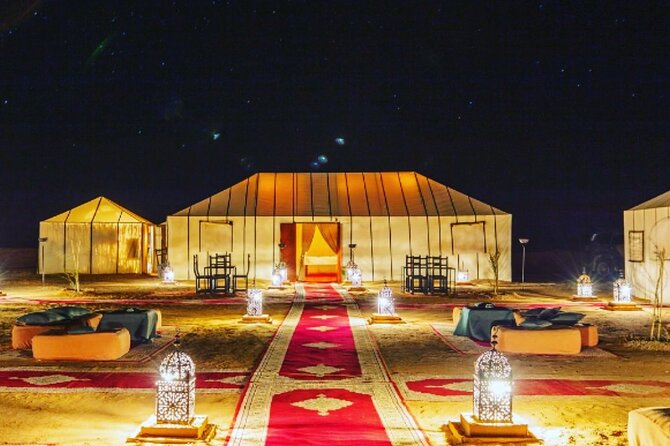
This tour is structured with 2 nights in a hotel/riad plus 1 night in a luxury camp with a private tent. That extra night is where many travelers feel the difference immediately. A one-night desert camp can feel like a highlight with a blur of travel around it. With two nights in the desert portion, you get more than one “side” of the dunes: arrival light, evening mood, and then the calmer morning or early-day feeling that most people miss on rushed routes.
You also get meals planned in: dinner (3) and breakfast (3) are included. That matters in the desert because it removes decision fatigue when the day has already been long. You can focus on being present—listening to the camp’s rhythm and watching the sky change.
I’ll keep it practical: desert nights can feel very different from daytime, so bring layers you can adjust. You don’t need to guess exact temperatures; just plan for variation because you’re switching environments fast.



Day 4: Ifrane’s alpine vibe before you reach Fes El Bali
On the last day, you’ll head through the Middle Atlas, stopping in Ifrane. This town is known for its alpine-style architecture, and it’s a noticeable gear shift after Sahara dunes and canyon days. The change is more than visual. It’s emotional too—you go from sand and stone to forests, parks, and a cooler, calmer mountain-town pace.
There’s also a spring stop near town called Ain Vittel, plus Parc la Prairie, where a stone lion statue is a landmark. And beyond that, the Ifrane National Park is known for Atlas cedar forests and rare Barbary macaques.
Then you’re on to your final destination: drop-off in Fes El Bali. Ending in the old medina feels right after a route that traveled from monumental kasbah walls to deep gorge cuts to desert dunes. You’ll likely feel like you’ve gone through Morocco’s biggest “worlds” in a single trip.
One consideration: after long road time, you may want to keep your final-day energy moderate. Fes can be intense. A gentle start the day you arrive is a good move.
Price and value: what you’re paying for at $867.34 per person
At $867.34 per person, this tour isn’t cheap—but it’s also not priced like a simple transfer. You’re paying for several things working together:
- Private transportation across multiple regions (Marrakech, Atlas areas, desert zone, and onward to Fes)
- Overnights: 2 nights in hotel/riad and 1 night in a luxury camp with a private tent
- Desert camel ride timed for sunrise or sunset
- Meals included: 3 dinners and 3 breakfasts
- Core guided/attraction stops along the way (with admissions handled for included activities)
The best value angle here is the desert portion. Many shorter routes touch the Sahara briefly. This one gives you a more full-bodied stay with the comfort upgrade of a private-tent camp and meal planning.
The main cost-offset you should expect is that lunches and drinks aren’t included. If you’re the type who likes to eat out casually every day, that can add up. If you’re okay grabbing lunch along the way with cash and moving on, you’ll likely feel the overall price matches the experience level.
What kind of traveler fits this best?
This tour suits you if you want:
- A structured route that still feels varied across regions
- Time in the Sahara long enough to feel it, not just photograph it
- Comfort elements like private tents and included dinners/breakfasts
- A private setup rather than sitting in the back of a large group bus all day
It’s also a strong choice if you’re traveling with friends or in a small group and want everyone to move at the same pace. Private tours can feel calmer, and the guide can adapt small timing issues that happen on the road.
If you’re the type who only likes one theme—only kasbahs, only cities, or only dunes—this might feel like a mix. But if you want a broad “southern Morocco in motion” summary, it’s built for you.
Guide quality matters: the names that show up often
The difference between a good desert trip and a great one often comes down to the guide. From past experiences tied to this route, strong feedback repeatedly points to guides such as Youssef, Hamid, and Rachid—people praised for being friendly, full of information, and genuinely helpful in making the drive feel meaningful.
You can’t control who you’ll get, but you can control what you ask. If your guide is available, ask questions about what you’re seeing: trade routes around kasbahs, why certain areas became caravan stops, and how local communities relate to desert life. You’ll get better stories—and more useful travel context—than you would from a “checklist-only” approach.
Tips to make the days smoother (and more enjoyable)
A few practical moves can make a big difference on a route like this:
- Plan for full days of driving. Bring a light activity for the ride (music, downloaded reading, photos to review). It keeps the energy steady.
- Budget for lunches and drinks since those aren’t included.
- Wear shoes that handle canyon edges and uneven paths on foot.
- Keep a small daypack for quick needs, especially on gorge and dune days.
- When you’re in Fes afterward, don’t over-schedule. Give yourself time to re-set after road travel.
These aren’t glamorous tips. They just help you enjoy the trip you booked.
Should you book this Marrakech to Fes Sahara tour?
Book it if you want a real Sahara experience with an overnight camp setup, plus enough time to see more than just the desert. The combo of Ait Ben Haddou, Ouarzazate, Todra Gorge, and Erg Chebbi hits multiple “why Morocco looks this way” stops, and the private transportation helps the trip feel cohesive.
Skip or switch if budget for lunches and drinks would stress you, or if you prefer city-only days. This route is built for movement through regions, not for long lingering in one place.
If you’re choosing between desert trip lengths, the big deciding factor is the extra desert night feel. This tour gives you that time, so you’re more likely to come away with the kind of memory that lasts past the photos.
FAQ
What route does this tour follow?
It runs a 4-day trip from Marrakech (starting near Jemaa el-Fnaa) to Fes (ending in Fes El Bali), with stops across southern Morocco including desert areas and Atlas regions.
How long is the experience?
It’s listed as 4 days (approx.), covering 3 nights.
What’s included in the price?
Included are private transportation, 2 nights in a hotel/riad, 1 night in a luxury camp with a private tent, a camel ride for sunset or sunrise in Merzouga, and 3 dinners plus 3 breakfasts.
What is not included?
Lunches and drinks are not included, and tips and travel insurance are not included. Your hotel in Marrakech and your hotel in Fes are also not included.
Where are you picked up and where do you end?
Pickup is offered in Marrakech near Jemaa el-Fnaa. Drop-off is in Fes El Bali, and the tour ends by dropping you at your hotel.
Is this a private tour?
Yes. It’s listed as a private tour/activity, and only your group participates.
What time does the tour start in Marrakech?
The meeting window is listed as Monday–Sunday, 9:00 AM to 11:00 AM (based on the experience dates shown).
Can I choose between sunrise and sunset for the camel ride?
Yes. The camel ride is for either sunset or sunrise in the Merzouga desert.
What is the cancellation policy?
Free cancellation is available. You can cancel up to 24 hours in advance for a full refund, and changes less than 24 hours before the start time aren’t accepted.