REVIEW · MARRAKECH
4 Day Desert Tour from Marrakech to Fes via Merzouga Sahara (Erg Chebbi)
Book on Viator →Operated by Morocco Tours Agency · Bookable on Viator
A long drive can turn into an unforgettable story in Morocco. This private 4-day route trades busy shortcuts for big sights: the Atlas Mountains, UNESCO Ait Ben Haddou, and the Erg Chebbi dunes in the Merzouga Sahara. I especially like how it builds in real time for desert color changes and not just a quick camel photo. I also like the smooth, end-to-end comfort of a private vehicle with pickup and drop-off. One thing to consider: it’s a lot of driving in four days, so you’ll want to be okay with long stretches in the car and add your own pace breaks when you can.
If you’re lucky, your guide will help you time stops right. Names that pop up in this kind of trip include Omar and Mohamed, and the theme is the same: they focus on the best moments, not the most crowded ones. You’ll get a mix of classic sights and small, grounded detours like a stop for marble work in Erfoud and music in Khamlia. The only possible drawback I’d flag is that lunches and drinks aren’t included, so plan a bit of cash/card for those meals and refreshment stops.
In This Review
- Key things I’d plan around before you go
- Why this Marrakech to Fes desert route is worth your time
- Marrakech start: getting on the road by 8:30 am
- Day 1: Ait Ben Haddou, Ouarzazate film sets, and the Dades Gorges
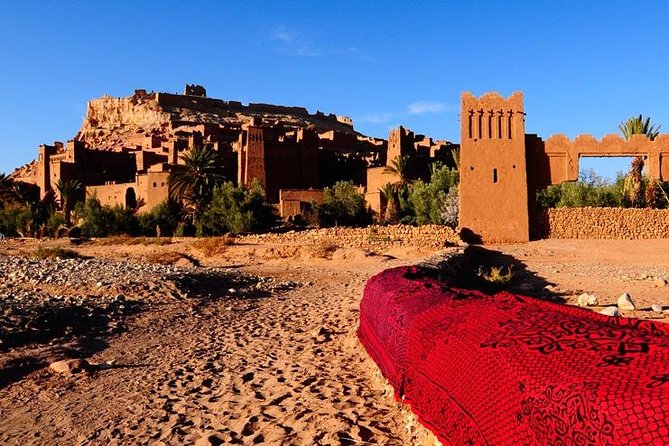
- UNESCO Kasbah Ait Ben Haddou: the postcard that actually looks real
- Ouarzazate stop: Atlas Film Studios for the behind-the-scenes vibe
- Dades Gorges: walking breaks in steep canyons
- Day 2: Todra and palm groves, then Erfoud marble and the Merzouga sunset
- Breakfast reset and then Todra Gorges
- Erfoud: Jorf palm grove and a marble workshop
- Merzouga: arrival by sunset and the start of camp life
- Day 3: Erg Chebbi sunrise, off-road dunes, and Khamlia culture
- Sunrise over Erg Chebbi: scarlet dunes and calm morning energy
- Off-road dune ride: highest Morocco-style dune time
- Khamlia village: Gnawa music and Mifis metal mines
- Back to riads and dinner
- Day 4: Rissani, Ziz Valley, Ifrane, and arrival in Fez
- Breakfast at the dunes’ edge, then Rissani
- Ziz Valley and the Middle Atlas to Ifrane
- Arrive Fez with an airport drop option
- Camels, 4WD transfers, and comfort trade-offs
- What’s included in the price (and why it matters)
- Who this tour fits best (and who might want something else)
- Practical tips to get more from every day
- Should you book this 4-day Marrakech to Fes desert tour?
- FAQ
- What is the duration of this tour?
- Where does pickup happen, and where do you get dropped off?
- What transportation is included?
- What meals are included?
- What are the main sights on the route?
- Is the tour private?
- Is it good for families or most fitness levels?
Key things I’d plan around before you go
- Private vehicle all the way (Marrakech to Fes): less hassle, more control over how the day flows.
- Tizi n’Tichka crossing at 2,260 meters: a high-altitude route that makes the Atlas feel serious.
- Erg Chebbi time to linger: sunrise dunes, an off-road dune ride, and time in camp under the stars.
- Camels + optional 4WD transfer: you can choose the style that fits your comfort level.
- Meals are partly covered: dinner and breakfast are included for the two hotel nights and the desert night.
- Khamlia stop adds local culture: Gnawa music and a chance to explore a smaller village rhythm.
Why this Marrakech to Fes desert route is worth your time
This is a one-way Marrakech to Fes trip, designed around a simple idea: you shouldn’t just visit the Sahara. You should feel it for a full night, then return for sunrise. That’s exactly how the schedule is built, with two nights in the Merzouga desert area and a dawn moment over the dunes on Day 3.
The value here is in what’s included, not only where you go. You’re getting a private, air-conditioned vehicle, an experienced English/Spanish-speaking driver, hotel and desert lodging, and multiple meals (dinners and breakfasts). At $756.04 per person, the price makes more sense when you compare it to the cost of piecing together transportation, a real desert overnight, and lodging separately.
This route also avoids the “checklist fatigue” that can happen on some fast desert tours. You’ll still see a lot, but the big transitions have breathing room: Marrakech to the Atlas world (Day 1), then gorges and palm groves into Merzouga (Day 2), then dunes and village culture (Day 3), and finally a scenic push to Fez (Day 4).
A few more Marrakech tours and experiences worth a look
Marrakech start: getting on the road by 8:30 am
The day begins at 8:30 am, with pickup from your hotel or riad in Marrakech. If you’re arriving by flight, pickup can also happen at the Marrakech airport. That flexibility matters because you avoid wasting time coordinating your own taxi or meeting point.
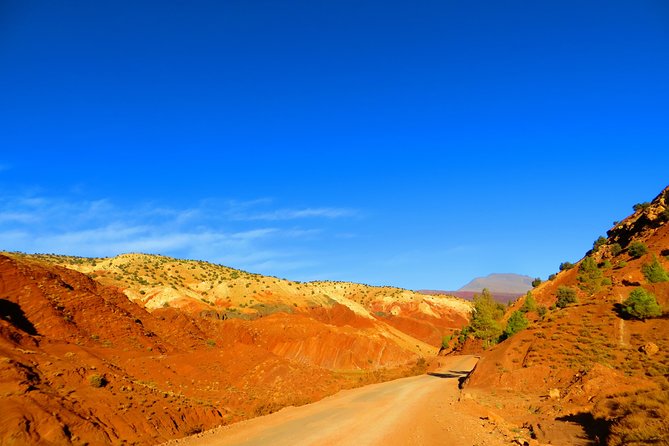
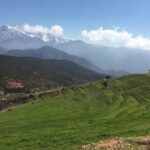
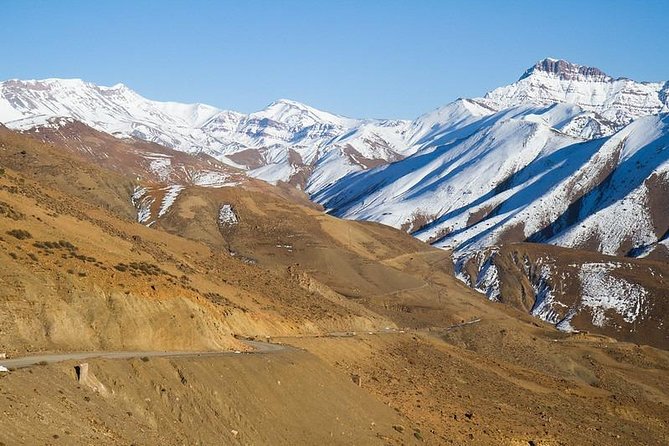
From the first hours, you’ll be in the Atlas Mountain drive. The route crosses Tizi n’Tichka (2,260 meters), one of those Moroccan road passes that makes everything feel higher and more dramatic. Even if you’re not the type to care about elevations, this stretch changes how the air feels and how the valleys open up.
Day 1: Ait Ben Haddou, Ouarzazate film sets, and the Dades Gorges
UNESCO Kasbah Ait Ben Haddou: the postcard that actually looks real
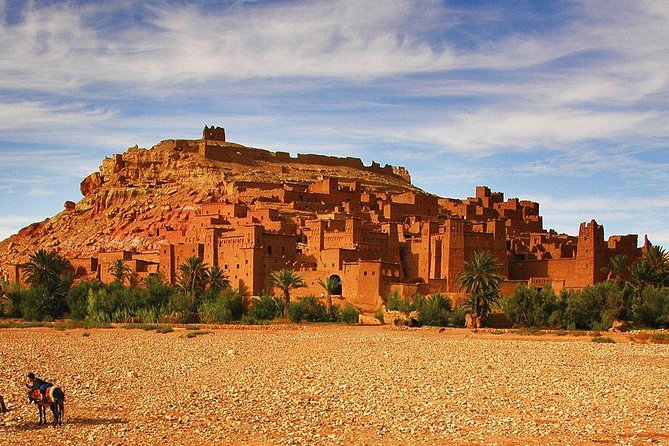
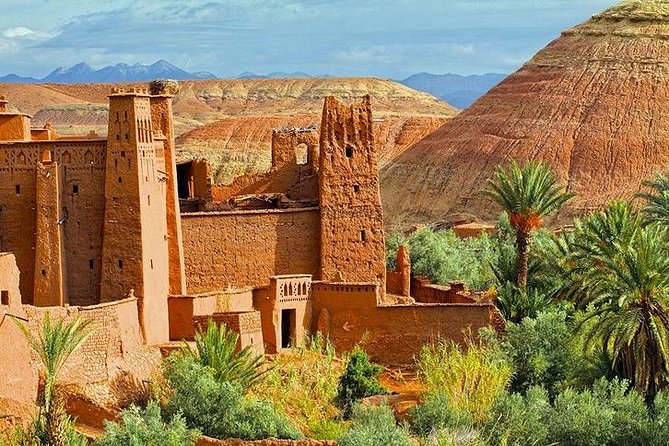
Day 1 starts with Kasbah Ait Ben Haddou, the UNESCO-listed fortress town. It’s famous because filmmakers come here for a reason: the citadel’s shape and earthen textures look like a story set even when you’re standing right in front of it. The timing on this kind of route tends to be practical rather than rushed, so you can slow down and notice details like how the walls blend into the hill.
A quick reality check: depending on whether you choose to add monument entrance fees, some parts may cost extra. Entrance to monuments is listed as optional, so treat it as your choice rather than a surprise.
Ouarzazate stop: Atlas Film Studios for the behind-the-scenes vibe
Next, you’ll head toward Ouarzazate and the Atlas Film Studios. This is not just another “look at the building” moment. You tour decaying sets scattered in a harsh environment, and it gives you an idea of how Morocco became a filming backdrop for big productions. Even if movies aren’t your thing, it’s a neat way to see how landscapes and film magic mix.
Dades Gorges: walking breaks in steep canyons
From there, the trip moves toward the Dades Gorges area, with a chance to stretch your legs near Todracha and Dades Gorges. The schedule notes free time for walking, and that’s a big deal: after hours in the car, a short canyon walk helps reset your body. You won’t get a long hike, but you’ll get the “wow, steep” effect that makes these gorges famous.
Consideration for Day 1: This is a long first day. You’re stacking a UNESCO site, a film-studio stop, and canyon time all in one run. If you like photography, bring a charged phone/camera and be ready for a few changing light moments.
Day 2: Todra and palm groves, then Erfoud marble and the Merzouga sunset
Breakfast reset and then Todra Gorges
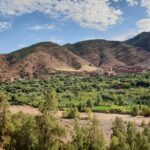
After breakfast at the Dades Valley hotel, you’ll travel toward Todra Gorges. This part of the route leans into natural drama: steep canyon terrain and Berber-settled areas in the region. The trip is set up so you can look, pause, and take in scale rather than only passing through.
Erfoud: Jorf palm grove and a marble workshop
The route continues to Erfoud, with time to visit a traditional marble workshop. You’ll also pass by the palm grove of Jorf, which is one of those quiet visual contrasts: before you hit the orange dunes of Merzouga, you see greenery and craft work that feels grounded in daily life.
This is also where the Sahara trip starts to feel less abstract. You stop seeing “desert” as a single destination and more as a whole region with human economy and local materials.
Merzouga: arrival by sunset and the start of camp life
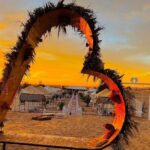
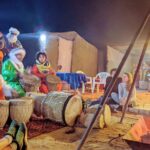
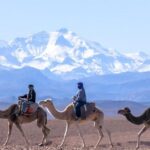
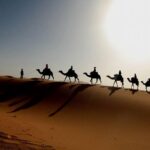
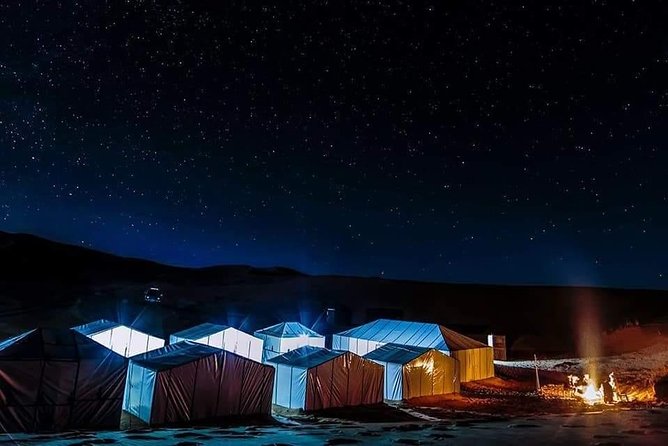
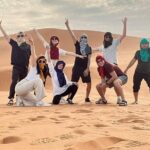
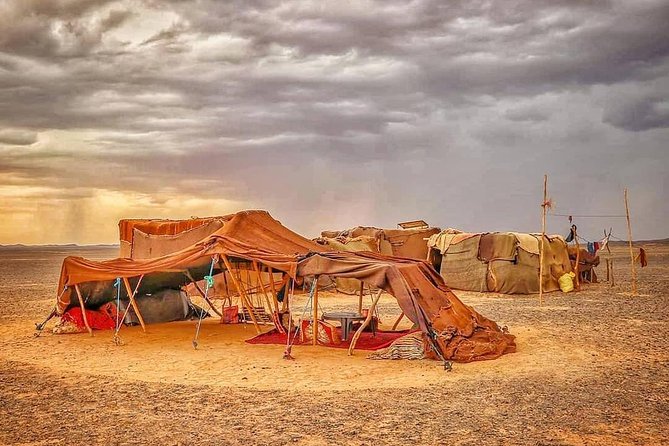
Then comes Merzouga Desert. You’ll reach the desert as sunset light begins, and you move to your Haimas camp for the evening. The big shift is that you’ll spend the next two nights there, with a camel ride through the dunes and dinner under the stars.
Here’s why this matters: a camp night changes your pace. You slow down. You eat when it’s time. You watch the sky because there’s not much else to do besides look up. Even with a basic camp setup, the experience is mostly about timing and atmosphere.
Day 3: Erg Chebbi sunrise, off-road dunes, and Khamlia culture
Sunrise over Erg Chebbi: scarlet dunes and calm morning energy
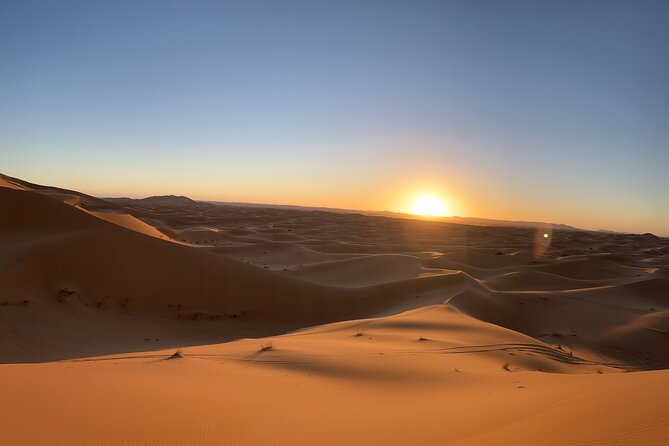
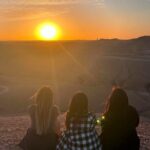
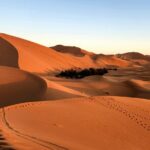
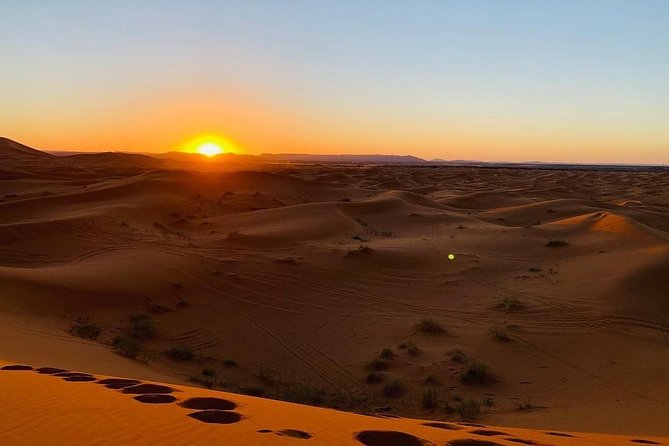
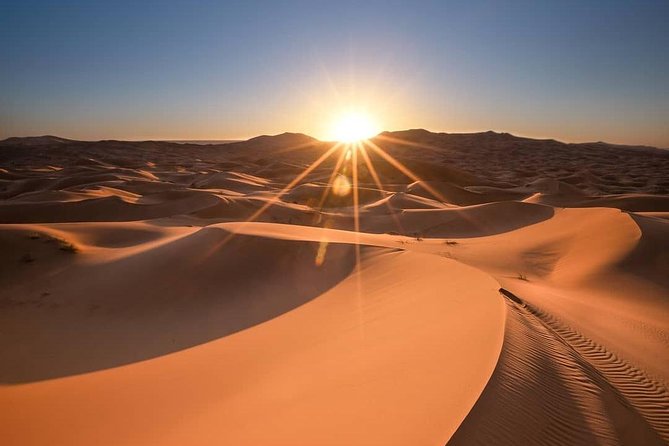
Day 3 is built around one of the most effective ways to experience the Sahara: sunrise. You wake up for a dawn moment over Erg Chebbi dunes, and breakfast is timed to the changing colors. Erg Chebbi is known for its tall dunes in Morocco, and the schedule even calls out that the off-road ride heads into a dune zone where these are the highest.
If you’ve ever watched sunrise from a crowded viewpoint, you’ll know the difference. Here, it’s about stillness first, scenery second.
Off-road dune ride: highest Morocco-style dune time
After breakfast, you’ll take an off-road tour through the dunes of Erg Chebbi. This is where the trip goes beyond a simple camel trek. An off-road ride gives you a different perspective on how dunes stack, how sand shifts under tire tracks, and how big the dune field feels once you’re moving through it.
Khamlia village: Gnawa music and Mifis metal mines
Later, you stop in Khamlia. The schedule highlights Gnawa music and a visit to Mifis (metal mines), with a note that you can visit on your own. This is your culture bridge between Sahara camp and the drive toward Fez.
This is one of those stops that adds meaning. The desert doesn’t just become a backdrop. It becomes a living region with music and work routines.
Back to riads and dinner
After Khamlia, you’re taken to your respective riad hotels to regain strength, with dinner included. This is a smart setup. The desert morning and dune movement are physical, and you’ll be grateful for a real place to shower and reset before the final travel push.
Day 4: Rissani, Ziz Valley, Ifrane, and arrival in Fez
Breakfast at the dunes’ edge, then Rissani
You start with breakfast near the foot of the dunes of Merzouga, then head north toward Rissani, described as a former capital of the Alawish sultans. This is a “today we’re traveling again” day, but it’s not just straight highway time. You get a sense of how the route threads through historically connected places.
Ziz Valley and the Middle Atlas to Ifrane
Next you cross the Ziz Valley and move into the Middle Atlas, reaching Ifrane, often described as the Moroccan Switzerland. The important part of this for you is the contrast: after sand and canyon, Ifrane tends to feel cooler and more mountain-town shaped.
Even if you don’t buy into the nickname, the route gives you a readable geography shift, which is exactly what makes these drives memorable.
Arrive Fez with an airport drop option
Finally, you head to Fez. The schedule notes that you’ll be taken to the airport three hours before departure, or you can be dropped at the hotel or riad you indicate. That’s a helpful detail if your flight timing is tight.
Camels, 4WD transfers, and comfort trade-offs
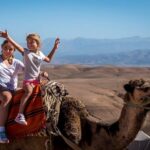
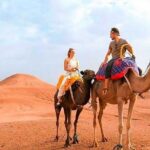
This tour includes camel transport to and from the camp (camel each), but it also lists transfer from and to the camp by 4WD as an alternative to camels. That means you’re not forced into one style.
If you’re considering comfort, here’s how I’d think about it:
- Camels add the classic desert feel, but you’ll want an open mind about bumps and sand.
- 4WD can reduce physical strain, but you lose some of the slow, ceremonial movement that people love about camel travel.
If you’re not sure what to choose, decide based on your comfort level first, not your “bucket list” pressure.
What’s included in the price (and why it matters)
Here’s what you’re getting for the main package:
- Pickup in Marrakech and drop-off in Fes
- Air-conditioned private vehicle and private transportation
- Experienced English (Spanish) speaking driver
- Lodging: two nights in a private room at a hotel (with dinner and breakfast included), plus one night in a private tent desert camp (with dinner and breakfast included)
- Camels to/from camp, plus an option for 4WD transfer
- Parking fees and fuel
- Meals: dinners (3) and breakfasts (3)
- Dinner is included at the overnight points (desert camp and hotel nights) and dinner is also included after the Khamlia day segment when you return to riads
What’s not included:
- Lunches and drinks
- Entrance to monuments (optional)
So when you’re evaluating the value at $756.04, it’s not just “transport.” It’s also lodging and several included meals. For many people, that’s the difference between a pleasant desert overnight and a chaotic trip where you’re constantly figuring out costs and logistics.
Who this tour fits best (and who might want something else)
This one-way desert route is a great fit if you want:
- A private group experience (your group only)
- A guided flow that reduces decision fatigue
- Real desert time: camel dunes, camp dinner, sunrise
- Comfortable ground travel in an A/C vehicle
You might consider a different style if you:
- Hate long drives and prefer slower multi-day local exploring
- Need every meal included (since lunch and drinks are not included)
- Have strict mobility comfort needs and aren’t sure about camel travel (though 4WD is listed as an option)
Practical tips to get more from every day
- Plan for heat changes. Desert mornings and evenings can feel different from daytime, and canyon days can vary with altitude.
- Bring water and a small snack strategy for lunch gaps (since lunch is not included).
- If monument entrances matter to you, budget some extra for optional sites.
- For photography, keep your charging habits tight. Day 1 and Day 3 light can shift fast, and you’ll want your battery ready.
Should you book this 4-day Marrakech to Fes desert tour?
I’d book this if your priority is a real Sahara overnight with Erg Chebbi sunrise and a thoughtful route through the Atlas. The private setup, lodging, and included dinners/breakfasts make it a strong value for a one-way itinerary that would otherwise be a headache to assemble on your own.
I’d hesitate if you’re very sensitive to long car days or you want a more “flexible stop anytime” kind of trip. In that case, compare alternatives where you control the timing more day by day. But if you want structure, comfort, and desert time that feels earned, this is the kind of route that works.
FAQ
What is the duration of this tour?
It runs for 4 days (approx.) from Marrakech to Fes via Merzouga and Erg Chebbi.
Where does pickup happen, and where do you get dropped off?
You can be picked up from your hotel or riad in Marrakech (or Marrakech airport) and dropped off at your accommodation in Fes.
What transportation is included?
You get a private, air-conditioned vehicle for the drive between cities, plus camel transport to and from the camp. There is also an option for 4WD transfers to and from the camp as an alternative.
What meals are included?
The package includes 3 breakfasts and 3 dinners: breakfast and dinner for the two hotel nights, plus breakfast and dinner for the desert camp night. Lunches and drinks are not included.
What are the main sights on the route?
Key stops include Kasbah Ait Ben Haddou, Atlas Film Studios in Ouarzazate, Dades Gorges/Todra area, Erfoud (marble workshop), Merzouga Sahara and desert camp, Erg Chebbi dunes, Khamlia village (Gnawa music and Mifis), and Rissani, Ziz Valley, and Ifrane before Fez.
Is the tour private?
Yes. It’s listed as a private tour/activity, meaning only your group participates.
Is it good for families or most fitness levels?
The info says most travelers can participate, but you should still consider that there is a desert component involving camel travel (or an alternative 4WD transfer is available), plus walking time in gorges and other stops.