REVIEW · MARRAKECH
Shared Marrakech Desert Tour with Luxury camp
Book on Viator →Operated by Guided Desert Morocco · Bookable on Viator
A long desert drive can sound tedious, but this itinerary stays interesting from the first mountain climb to the last dune sunset. I like the small-group feel (up to 16) and the fact that you get both big-photo sights and real offbeat moments like a 1-hour Kasbah walk at Ait Ben Haddou and a camel ride at Erg Chebbi. The one drawback to plan for: the route includes long stretches by road, and if you’re tall or broad-shouldered, sitting comfort can be a factor.
What makes it really work for a Marrakech stay is the pacing: you leave early, hit UNESCO territory the first day, switch to desert vibes on day two, then return the next morning with sunrise on the dunes. I also appreciate that the tour covers key meals like 2 breakfasts and 2 dinners, while lunches and drinks stay flexible for your budget and taste. If you hate early mornings, the pre-sunrise wake-up on day three is the moment you’ll want to mentally prepare for.
In This Review
- Key Points to Know Before You Go
- Marrakech to the Atlas: Day One’s Real Goal
- Ait Ben Haddou Kasbah Walk: UNESCO Stop That Actually Gets Time
- Dades Gorges and the 1000 Kasbah Area: A Night Before the Desert
- Todgha Gorge Then Erg Chebbi: The Day Morocco Turns Golden
- Camel Ride at Sunset and Luxury Camp Night Under the Stars
- Day Three Sunrise on Erg Chebbi Then Back to Marrakech
- Price and Value: Why $174.22 Can Be a Good Deal
- Comfort, Group Size, and the One Thing to Plan For
- Who This Tour Suits Best (And Who Might Want Alternatives)
- Quick Booking Check: What to Expect When Planning
- Should You Book This Marrakech Desert Tour?
- FAQ
- How long is the Marrakech to desert tour?
- What time does the tour start in Marrakech?
- Where does the tour meet and where do you get dropped off?
- What’s included in the price?
- Are lunch and drinks included?
- Are entrance fees included for sightseeing?
- How big is the group?
Key Points to Know Before You Go
- Up to 16 people keeps the trip from feeling like a cattle call
- Ait Ben Haddou includes a structured 1-hour walk, plus time to soak up the views
- Todgha Gorge is a strong mid-trip highlight before you roll into Merzouga dunes
- Erg Chebbi at sunset means classic gold sand and a camp night with fire, music, and stargazing
- Camel rides are timed right: 1 hour at the desert on day two, plus a sunrise-to-ride flow on day three
- Meals are partially covered (breakfast and dinners), so lunches are on you
Marrakech to the Atlas: Day One’s Real Goal
This is a long day with a clear purpose: trade Marrakech for mountain road views and end the evening in the Dades Valley area. You start at 7:30 am with pickup offered, meeting at Hôtel Restaurant Café de France near Jamaa el-Fna. After that, it’s a steady drive via Tizi n Tichka, the high pass that makes the scenery feel dramatic fast.
The payoff is that the day isn’t just “sit on a bus.” You get actual stops. First is the Kasr Ait Ben Haddou area. Then you continue to the Dades Valley region for dinner and your overnight hotel.
If you’re the kind of person who likes a trip to have structure—big sight, guided walking time, lunch, then road time—this day matches that style. Just be ready for road hours. Road time is part of the deal on Marrakech-to-Sahara routes.
A few more Marrakech tours and experiences worth a look
Ait Ben Haddou Kasbah Walk: UNESCO Stop That Actually Gets Time
Kasr Ait Ben Haddou is a major stop, and what I like here is the 1-hour walk tour. That length is enough to understand why it’s famous, not just enough for a quick photo and a sprint back to the vehicle.
You’ll reach Ait Ben Haddou via the mountain route, then do the walking tour and explore on foot. After that, the plan includes lunch in Ait Ben Haddou—but lunches and drinks aren’t listed as included, so you’ll want cash or card ready for your food pick.
What to expect from the experience: the kasbah area is built for slow looking. You can take your time with corners, doorways, and viewpoints over the valley. And since you’re walking with a guide, you’re not left guessing what you’re seeing.
Possible caution: UNESCO sites can feel crowded at peak times. You still get walking time, but if you’re sensitive to crowds, arrive with a calm mindset and focus on the smaller details during your walk.
Dades Gorges and the 1000 Kasbah Area: A Night Before the Desert
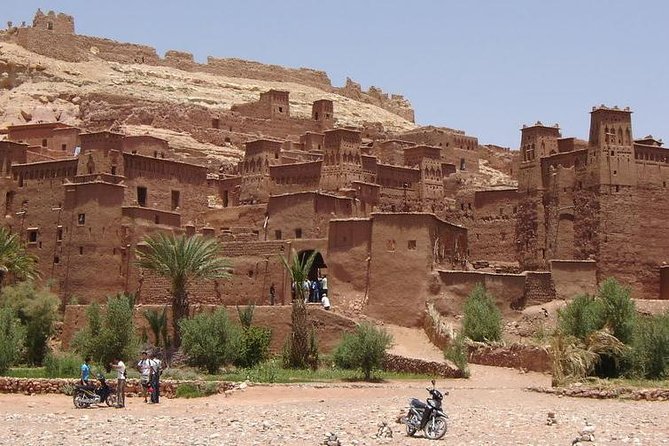
After lunch, the itinerary turns toward Dades Valley (often linked with the idea of the 1000 kasbahs region). This part of the trip matters because it sets your sleep base in the right direction for the next day’s desert push.
You’ll continue on to the Dades Gorges / Dades Valley area, then have dinner and an overnight at your hotel. That overnight matters more than it sounds. After two days of road + sun time, the ability to shower, eat dinner, and rest in a hotel night keeps the desert night from feeling like one big hardship.
This is also a good day to think about what you want for the next day’s dunes:
- A light layer for morning and evening temperature changes
- Something comfortable for walking at the kasbah
- A plan for dust protection (the dunes are sandy)
You won’t be stranded or left to figure it out alone; the tour includes private comfortable transport with A/C and a professional driver/guide.
Todgha Gorge Then Erg Chebbi: The Day Morocco Turns Golden
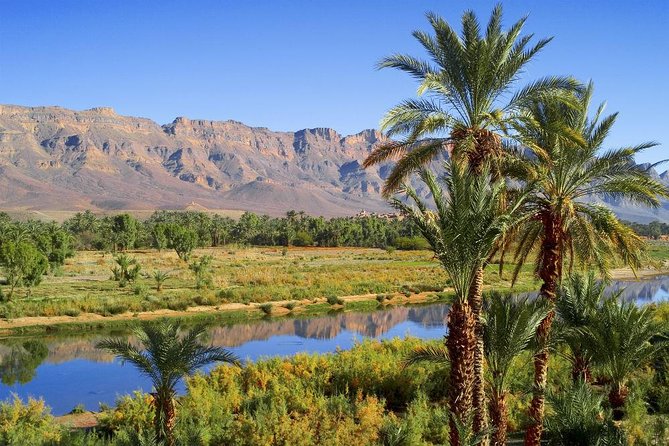
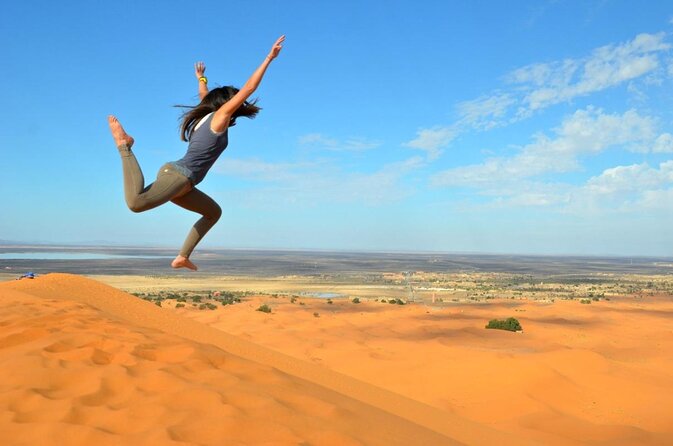
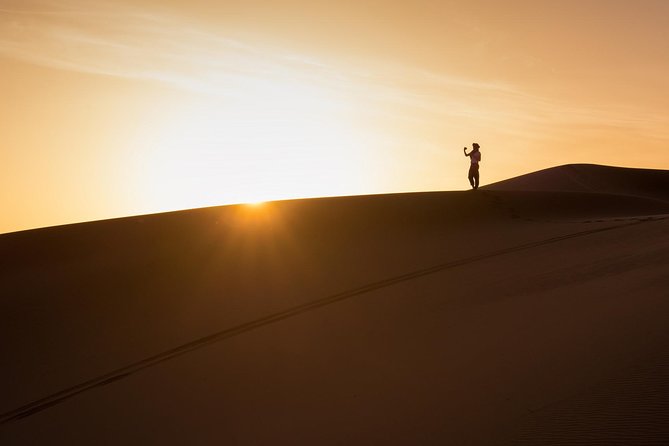
Day two is the shift from mountains to sand. You start in the morning with renewed energy, then head toward Erg Chebbi, the famous Sahara dune area near Merzouga. The dunes here are described as reaching around 250 meters, which helps explain why the ride and sunrise moments feel so steep and dramatic.
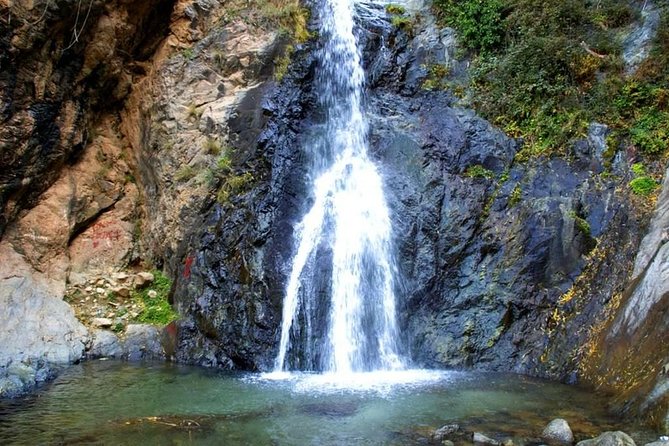
Before you reach the dunes, you go to Todgha Gorge and stop for lunch in Tinjadad. Todgha Gorge is a smart inclusion because it breaks up the trip. Instead of a straight line from city to desert, you get cliffs and canyon shapes that make the desert feel even more of a change of worlds.
Then it’s on to Merzouga Sahara Dunes. This is where the itinerary becomes the “main event” day.
The flow is simple:
- Arrive Merzouga
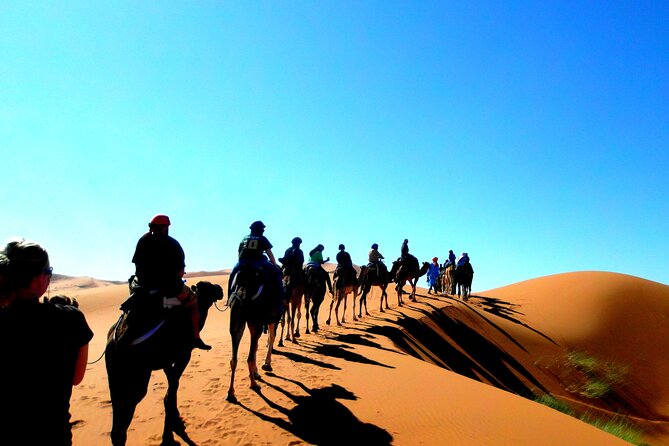
- Camel ride for about one hour
- Enjoy the sunset as you cross toward camp
- Finish with camp dinner and a night program
That is an efficient use of daylight. You’re not waiting around forever for the perfect desert moment. You get it built in.
Camel Ride at Sunset and Luxury Camp Night Under the Stars
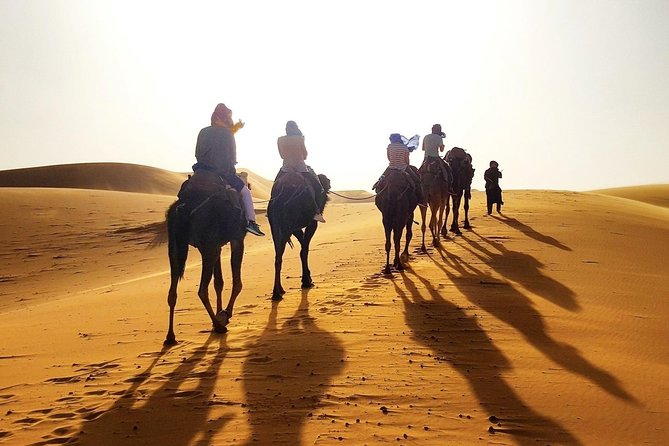
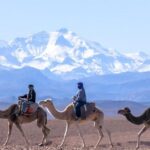
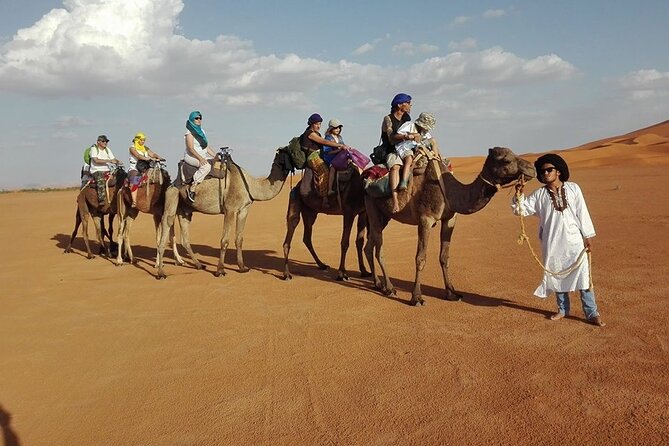
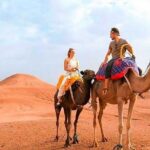
The camel ride is one of those experiences that’s short enough to stay fun, but long enough to feel real. The tour includes a camel ride (one camel each) and uses the ride to move you to the camp during sunset.
You arrive at the camp described as a Berber tent, and the night program includes a fire and starry sky setup with traditional music, plus dinner and overnight at the camp.
This is the part of the tour that earns the highest praise, because it’s where the Sahara stops being scenery and becomes the whole atmosphere. There’s something calming about sitting in the desert night after a big road day. Even when the night gets windy or sand happens, the “camp evening” format gives you a sense of occasion.
A practical note: the desert night can feel colder than you expect after sunset. Bring layers you can peel on and off. And keep a small bag handy for essentials so you’re not rummaging in the sand later.
Also, remember lunches and drinks aren’t included. Dinner is included, but if you arrive at lunch hungry or want a specific drink, plan to pay.


Day Three Sunrise on Erg Chebbi Then Back to Marrakech
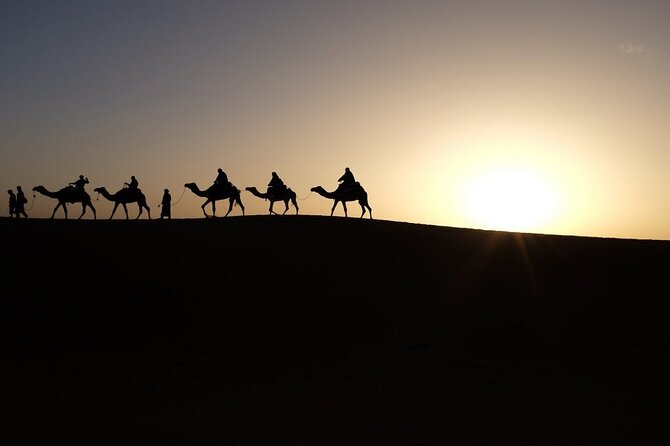
Day three starts early—before sunrise—because this is when Erg Chebbi gives you the best light. You’ll be woken up to climb the dunes for a sunrise moment, then ride your camel back.
After you return, you get shower and breakfast at the hotel before heading back toward Marrakech. Then the drive shifts into a different travel vibe: a long, scenic return passing villages listed in the route such as Tazzarine, Nkob, and Ouarzazate.
This return day is a good fit if you don’t want your trip to end with another “camp night.” It keeps things comfortable and gives you a clear finish: you return to Marrakech and get drop-off at your hotel or a nearby accessible point.
Since you’ll be leaving the desert at sunrise time, you’ll also feel the tour’s main advantage: the desert doesn’t just take your time, it gives it back to you quickly—with a shower, breakfast, and a full return day.
Price and Value: Why $174.22 Can Be a Good Deal
At $174.22 per person for a roughly 3-day shared desert adventure, the value depends on what you compare it to. Where this tour feels fair is what’s included:
- Private comfortable transport with A/C and fuel
- Professional driver/guide
- 1-hour walk tour in Ait Ben Haddou
- Camel ride on the dunes (1 hour, one camel each)
- Breakfast included (2)
- Dinner included (2)
What’s not included is also clearly laid out:
- Lunches and drinks
- Entrance fees (optional)
- Tips and gratuities
So the math is less about “everything is free” and more about: you’re paying for transportation, guiding, and the core desert experiences—then you customize lunches and any optional extras. That’s a reasonable approach if you like choosing your own meals.
Also, the tour is booked about 74 days in advance on average, which usually signals it’s a popular time window for people planning longer Morocco trips. If you’re flexible, you might catch better availability; if you’re traveling on peak days, booking early is smart.
Comfort, Group Size, and the One Thing to Plan For
This is a shared tour, but it’s not big-chaos shared. The cap is 16 travelers, which usually means you’re still moving as a group but not stuck waiting on endless people.
The included transport is A/C, which is a relief on road days. Still, road comfort can vary depending on vehicle type and seat layout. One review note that’s worth taking seriously: if you’re tall or broad-shouldered, you may find the seating uncomfortable on long transfers. That doesn’t mean you shouldn’t go—it means you should plan smart:
- Pick a seat where you can stretch your legs when possible
- Bring a light cushion or something small for support
- Bring a layer for temperature changes inside the vehicle
On the human side, the guide and driver experience is repeatedly praised in the reviews. Names you may see tied to this provider include Ahmed as the guide, plus drivers such as Mohamed and Mustafa. The recurring pattern: good communication before the trip, and a careful, friendly approach during the drive and stops.
That kind of guiding makes a big difference on a multi-day trip where you’re moving constantly.
Who This Tour Suits Best (And Who Might Want Alternatives)
This tour is a strong match if:
- You’re staying in Marrakech and want the Sahara as a 3-day add-on
- You want the structure of a planned route but still like time to explore at stops
- You value the desert night setup: camp dinner, fire, traditional music, and stargazing
- You like “highlights that actually happen,” not just long travel days with vague stops
It’s also a good first-desert option because the ride includes a camel segment and a clear “sunrise” payoff. If you’re traveling with kids, it can work well too; one review mentions a 13-year-old doing the trip.
You might consider a different format if:
- You strongly dislike early mornings (day three is pre-sunrise)
- You get cranky on long drives and need frequent breaks
- You want more time in one place and less switching scenery
Quick Booking Check: What to Expect When Planning
You’ll typically get confirmation at booking. The tour offers pickup, and your ticket is provided as a mobile ticket. The meeting point is clear, and the start time is 7:30 am, so build in buffer time the day you go.
Lunches and drinks are on you, so budget a bit beyond the base price. And if you care about entrance fees at specific sites, remember those are listed as optional.
Cancellation is free up to 24 hours in advance for a full refund. If your Morocco weather plans are flexible, that extra safety can help.
Should You Book This Marrakech Desert Tour?
Yes, if your goal is a classic Marrakech → Atlas → UNESCO kasbah → Todgha Gorge → Erg Chebbi route in a tight 3 days. The tour’s best strengths are practical: you get planned stops, you don’t lose the day to guesswork, and the desert camp night is built around the experience you came for—fire, music, and stars—followed by a sunrise that feels like a reward for getting up early.
I’d say book it if you want a well-paced highlights circuit with guiding and transport taken care of. I’d think twice if you’re very sensitive to road comfort or you hate pre-sunrise mornings. In that case, you might still go, but plan for layers, seating comfort, and a realistic expectation that you’ll spend part of each day in transit.
If that sounds like your kind of adventure, this is a solid way to make the Sahara part of your Marrakech trip—without turning it into a multi-week project.
FAQ
How long is the Marrakech to desert tour?
It runs for approximately 3 days.
What time does the tour start in Marrakech?
The start time is 7:30 am.
Where does the tour meet and where do you get dropped off?
The meeting point is Hôtel Restaurant Café de France near Jamaa el-Fna in Marrakech. You’ll be dropped off at your hotel or a nearby accessible point in Marrakech.
What’s included in the price?
Included are private air-conditioned transport, a professional driver/guide, a 1-hour walk tour in Ait Ben Haddou, camel rides (one camel each), and 2 breakfasts plus 2 dinners.
Are lunch and drinks included?
No. Lunches and drinks are not included.
Are entrance fees included for sightseeing?
Entrance fees are listed as optional and not included.
How big is the group?
The tour has a maximum of 16 travelers.