REVIEW · MARRAKECH
Sahara Adventure in 4 days
Book on Viator →Operated by Authentic Sahara Tours · Bookable on Viator
One long desert day starts with a morning pickup. This 4-day, 3-night small-group trip turns Marrakech into High Atlas road trips, kasbah stops, and a real overnight camel safari in the Merzouga dunes.
I like that the tour keeps things practical: breakfast and dinner are included, plus you get simple lodging and a desert camp setup built for real sleep after dune time. I also like the pacing of the day stops, from Todra Gorge to an actual local market in Rissani, without it feeling like a nonstop race.
The main drawback to think about is time: you will do a lot of driving. Also, the accommodation is described as simple, so if you expect a luxury hotel every night, this may not match your style.
In This Review
- Key takeaways before you go
- The Marrakech-to-Merzouga idea: why this route works
- Day 1: High Atlas pass, Ouarzazate film stops, and kasbah time in Skoura
- Day 2: Todra Gorge walk, Erfoud fossils, and the included sunset camel ride
- Day 3: Rissani market authenticity, Draa Valley date palms, and the Anti Atlas caravan road
- Day 4: Taourirt and film studios, Ait Benhaddou climb, Telouet kasbah, back to Marrakech
- Price and meals: does $691.07 feel fair?
- Comfort vs reality: simple hotels, and a better-than-expected desert night
- What this tour is like on the road (so you can plan your energy)
- Guides and service: where small-group trips quietly win
- Best fit: who should book this Sahara adventure, and who might not
- Should you book this tour from Marrakech?
- FAQ
- Where does the tour start and when?
- How many days and nights is this experience?
- What’s included in the price?
- Are lunches included?
- How big is the group?
- Is there a camel safari and desert overnight?
- What are the desert tents like?
- What if weather is poor?
Key takeaways before you go
- Max 8 travelers: small group size keeps the trip personal instead of chaotic.
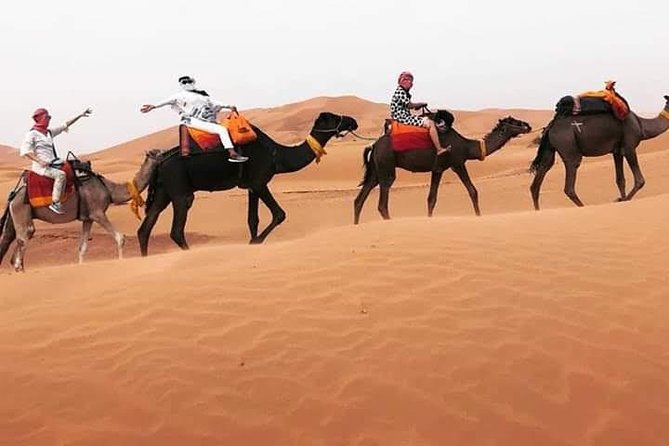
- Camel safari is included: you ride into the dunes for sunset and spend the night in the camp.
- Private tents with ensuite shower: the desert overnight is not just sitting under canvas.
- Guided kasbah moments: you get local context at places like Kasbah Amridil and Ait Benhaddou.
- Season matters for rose views: the Valley of Roses is best for Damascina blooms in late April and early May.
The Marrakech-to-Merzouga idea: why this route works
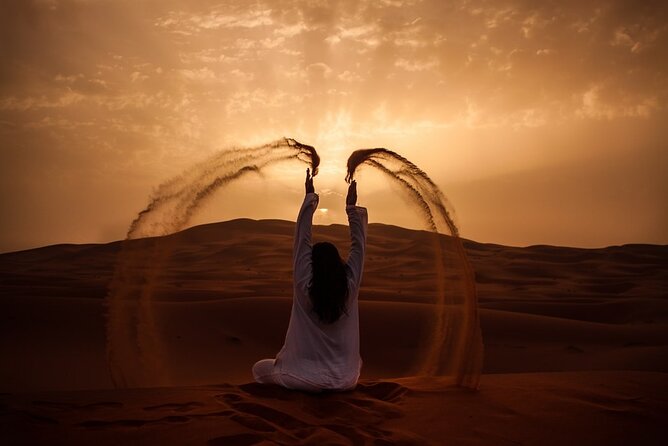
This is the kind of desert trip that makes sense because it builds up the scenery step by step. You leave Marrakech in the morning, climb into the High Atlas, and only then start trending toward the Sahara edge. By the time you reach Merzouga, you’re not just arriving at sand—you’ve already seen how Morocco changes by elevation and region.
A big part of the value is that you’re not paying extra for the essentials. Three breakfasts and three dinners are included, and the camel ride plus desert camp lodging are part of the price. In other words, you’re not constantly doing math on add-ons while you’re hungry or tired.
Also, you’re capped at 8 travelers, and that shows in how manageable the stops feel. You’ll still be on a schedule, but you won’t feel like you’re joining a moving bus of strangers.
A few more Marrakech tours and experiences worth a look
Day 1: High Atlas pass, Ouarzazate film stops, and kasbah time in Skoura
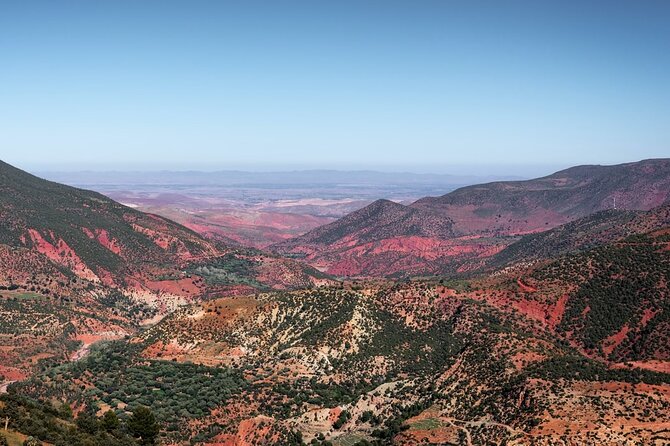
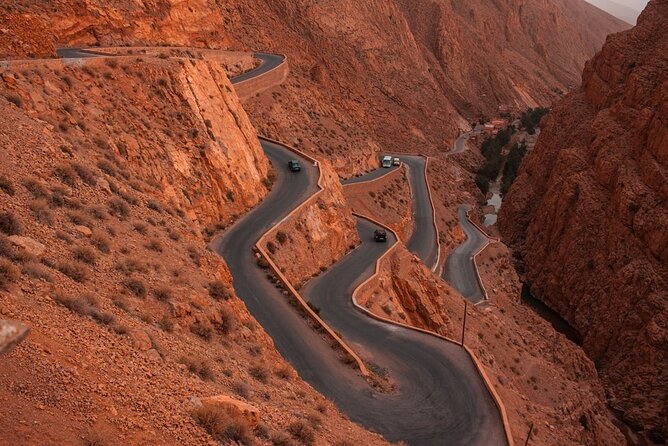
Day 1 is your “Morocco changes fast” day. You start with the drive across the highest pass in Morocco, over 2200m, using windy mountain roads. The point isn’t just height—it’s that you watch the scenery shift as you go, then get breaks to take photos without feeling rushed through everything.
Next you hit Ouarzazate, where the itinerary leaves room for lunch and a cinema stop (studio and/or museum). Even if you’re not a movie-spotting superfan, it helps explain why this region shows up on screen.
Then comes one of my favorite types of stops on trips like this: a preserved kasbah visit. At Kasbah Amridil (in the Skoura palm grove), you get a short visit with a local guide and a history-focused tour. It’s only about 30 minutes, but these are the stops that give you a real sense of how southern Morocco was built and lived in the past.
You also pass the Valley of Roses area near Kelaat Mgouna. One practical note: the Damascina roses are only visible in the fields in late April and early May, so if your dates fall outside that window, treat this as a scenic drive stop rather than a guaranteed bloom season.
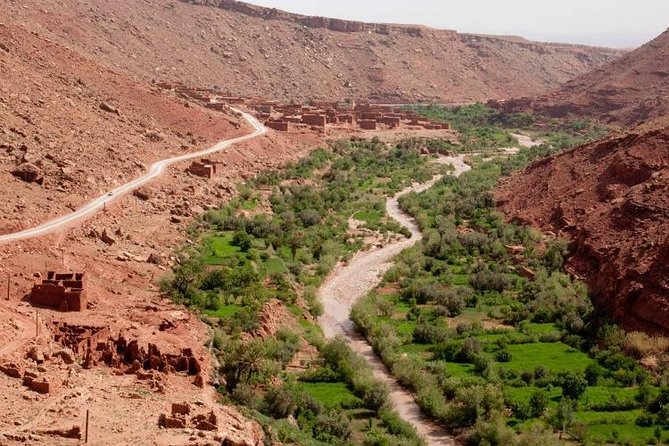
Finally, you end the day with a detour into the Dades Valley area and photo stops before reaching your hotel. This is where you start setting up the “desert contrast” feeling—green palm zones and mountain valleys before the dunes.
Day 2: Todra Gorge walk, Erfoud fossils, and the included sunset camel ride
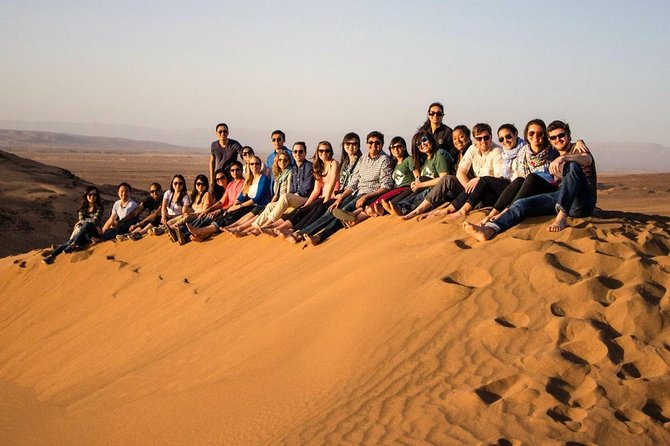
Day 2 gives you the kind of active stop that breaks up long driving. You start with Todra Gorge, where you park the vehicle and do a short walk inside the gorge for pictures and fresh mountain air. It’s a simple plan, but it matters: you’re stretching your legs in a place that looks dramatic even when you’re not trying.
After that, you’re near Erfoud for fossil-related time. The itinerary frames this honestly: many stops are shops, but you can still enter and learn. It’s not a hard sell either—you’re welcome to look around without buying anything. If you’re the type who likes small, specific rabbit holes, this part can be fun.
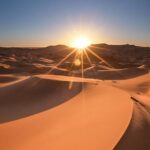
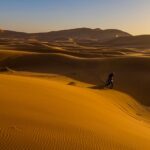
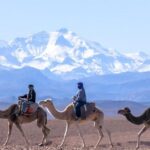
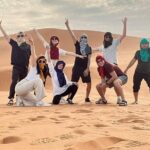
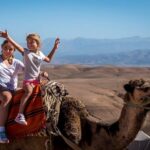
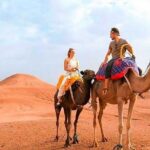
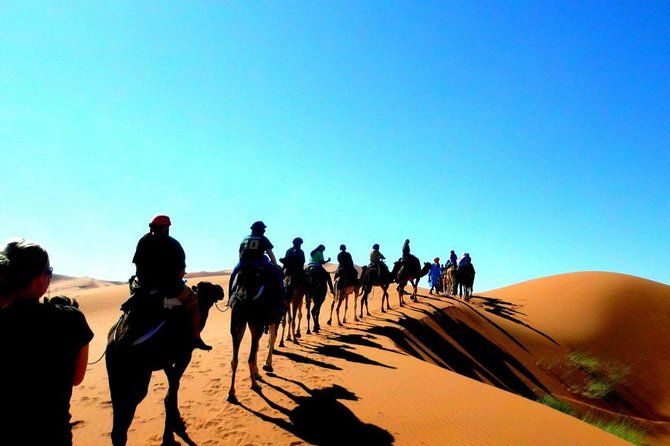
Then you reach Merzouga and shift gears to the dunes. You leave the car and driver at the camel park, and the camel ride goes out over the dunes for sunset on what’s described as the highest dunes. This is the emotional center of the whole trip.
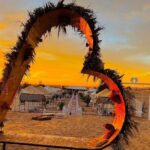
Once you arrive at camp, you get welcomed with tea, then you settle in. The camp includes a musical play around the fire by the staff, followed by dinner. One detail worth noting for comfort: the tents are private and equipped with an ensuite bathroom and shower. That’s a big deal for morale after a full travel day.
Day 3: Rissani market authenticity, Draa Valley date palms, and the Anti Atlas caravan road
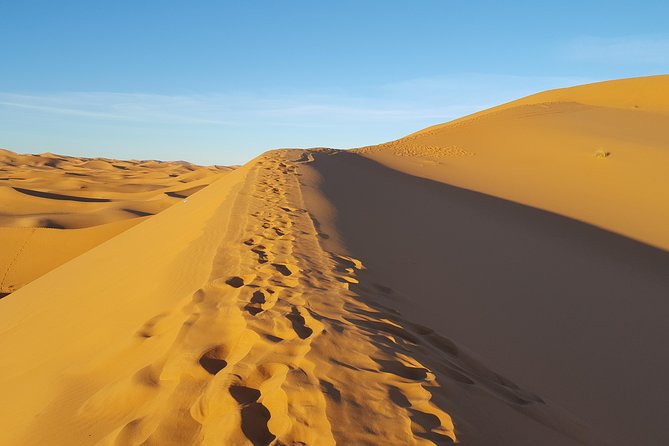
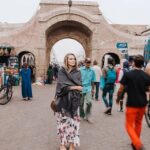
Day 3 starts with Rissani Market, and the itinerary makes a key distinction: this is not like the more touristy souks in Marrakech or Fes. The idea is that this is where locals buy and sell, so it feels more day-to-day than performance.
It’s a short stop (about an hour), but that’s the right length for a market visit. You get a walk-through feel without it swallowing your whole morning.
Next you roll into Draa Valley, passing villages such as Alnif, Tazzarine, and Nkob. There’s a fun pop-culture reference here: Tazzarine is featured in the film Babel. More importantly, you’re moving through oasis life—villages, palms, and traditional settings—before you reach the wide view of the Draa Valley oasis.
The itinerary also calls out something specific: the Oasis of the Draa Valley produces 44 varieties of dates. Even if you don’t go counting in the fields, it gives you context for why this valley matters.
After lunch in Agdez, the route crosses the Anti Atlas via the Tizi-n-Tinfifite pass at 1600m. Here the tour leans into history-as-road, describing the ancient caravan route that used to supply goods up from Mali and Niger after crossing the Sahara. You’re not just traveling through terrain; you’re traveling along an older trade corridor.
You end the day back in Ouarzazate with a hotel check-in and a free afternoon. That free time is genuinely useful. By Day 3, you’ve done a lot of “look, drive, look, drive.” A reset helps you actually enjoy the final day instead of just surviving it.
Day 4: Taourirt and film studios, Ait Benhaddou climb, Telouet kasbah, back to Marrakech
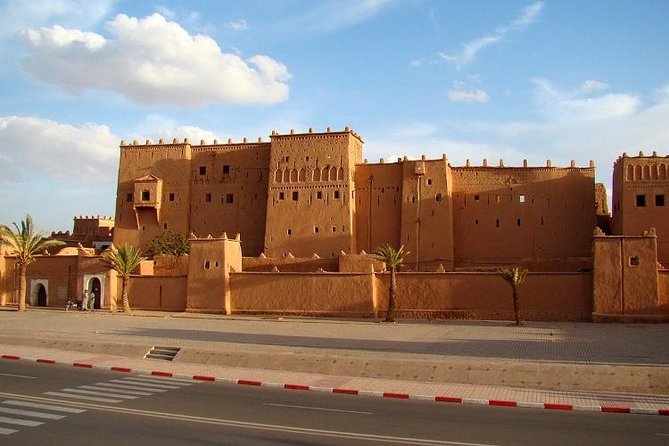
Day 4 is where you get your major kasbah payoff without turning the trip into a history lecture. You begin in Ouarzazate with Kasbah Taourirt, tied to the Glaoui family—the Pashas of Marrakech. Then there’s a film studio tour to see how movie productions connect with these desert regions.
From there, you head to Ait Benhaddou, a UNESCO world heritage site and a fortified ksar with kasbahs. You get about an hour guided visit, and the route includes time to climb toward the top of the hill through the alleys. If you’ve ever watched Moroccan scenery on screen and wondered what it actually feels like up close, this is one of the few stops that gives you both the view and the walk.
After Ait Benhaddou, you continue to Telouet Kasbah. The drive follows the Ounila Valley, with bends in the road, changing rock and soil colors, Berber villages, and smaller kasbahs along the way before reaching Telouet, described as the Glaoui family’s main seat.
Then it’s back through the High Atlas Mountains to Marrakech, with drop-off at your accommodation. It closes cleanly: you don’t finish at some faraway transit point.
Price and meals: does $691.07 feel fair?
At $691.07 per person for 4 days, the best way to judge value is by what’s bundled, not by the total number. This trip includes:
- Accommodation in the price (including the simple hotel nights)
- Camel safari into the dunes
- Breakfast and dinner at no extra cost
- Private-tent desert lodging with ensuite shower
For a route that covers big distances between mountain passes, gorge walks, market time, and major kasbah sites, those inclusions reduce the amount of money you spend on the road. Also, small-group size (up to 8) is part of the value. If it were a larger group, you’d expect more time waiting and less personal attention.
What is not included is just as important: lunch meals aren’t included, and extra drinks with included meals aren’t listed as included. Gratuities are optional with no standard percentage. So you’ll want to budget lunches and keep some cash for day-to-day snacks or drinks.
If your goal is a worry-free desert experience where you’re not planning every meal and transport step, this pricing structure matches that goal.
Comfort vs reality: simple hotels, and a better-than-expected desert night
The comfort level is a mix, and that’s normal on long desert itineraries.
The tour calls the lodging simple for the included accommodation. That usually means basic rooms and a functional setup—good enough to sleep, not designed for spa lounging. If that’s not your vibe, plan to treat hotel nights as a reset, not a highlight.
Then the desert overnight flips the script. The tents are private and equipped with an ensuite bathroom and shower. That’s the difference between a “good enough” desert night and one you can actually enjoy. After the camel ride and a big travel day, being able to shower and freshen up matters more than you’d think.
Also, the camp isn’t described as quiet and silent. You get tea on arrival, then musical play around the fire before dinner. It turns the night into something you remember, not just another stop.
What this tour is like on the road (so you can plan your energy)
This is a driving-heavy itinerary. That’s not a complaint; it’s the trade for seeing the High Atlas, kasbahs, and Merzouga in just 4 days.
So manage your expectations like this:
- Your best “free time” is mostly the short gaps for photos, meals, and walking at set stops.
- You’ll do short walks when it’s worth it (Todra Gorge, Rissani Market, and the Ait Benhaddou climb), but you won’t be trekking all day.
- The camel ride and desert camp are the one time the schedule stops being about checkpoints and becomes about experience.
One more practical note: the rose stop is seasonal. If you’re traveling outside late April and early May, don’t plan your whole Day 1 around expecting dramatic rose fields.
Guides and service: where small-group trips quietly win
The strongest pattern in how this trip is described is the human side: guides who explain what you’re seeing, and drivers who handle the roads confidently. Different people on this route are associated with different guide names—like Jamal, Lahcen, Hakim, Walid, Mohafafa, Aboubakr, and Yassin—and the common thread is that the trip feels safe, smooth, and responsive.
That matters on a route like this because you’ll hit changing terrain and long days. A good driver helps you relax enough to enjoy the view. A good guide helps you understand why a kasbah matters, or what you’re actually looking at when a gorge narrows.
If you care about English-speaking guidance, it’s smart to ask the operator (ahead of time if possible) about which guide will be assigned and whether your preferred language is supported.
Best fit: who should book this Sahara adventure, and who might not
You should book this tour if:
- You want one included overnight camel safari without spending extra to organize it.
- You like seeing multiple regions in a short time—mountains, valleys, markets, and dunes.
- You’re okay with simple hotel comfort in exchange for the desert experience.
You might consider another option if:
- You need a schedule with minimal driving.
- You expect all accommodations to be high-end.
- You want long stays in just one area instead of seeing a full circuit.
This is also a good choice for families, as long as everyone is comfortable with a long travel day and short walking stops. The itinerary is built around manageable durations at each stop, rather than long hikes.
Should you book this tour from Marrakech?
If your heart is set on Merzouga and you want a true overnight camel camp, this is a strong match. The included elements—camel ride, private desert tents with ensuite shower, and dinners plus breakfasts—make it feel like a complete package instead of a skeleton plan that charges you later.
My advice: book it when you want the full Morocco-to-desert arc in 4 days. Then bring patience for the drive days, and treat the hotel nights as just that: sleep so you can enjoy the next day’s stops.
If you’re flexible on timing, this is also a good style of trip to choose when you want organized guidance but still want the experience to feel personal.
FAQ
Where does the tour start and when?
The tour starts at Menara Airport in Marrakech, Morocco, with a start time of 8:00 am.
How many days and nights is this experience?
It runs for 4 days (about) and includes 3 nights.
What’s included in the price?
Included are breakfast (3) and dinner (3), simple accommodation, and the camel safari into the desert with an overnight desert camp.
Are lunches included?
No. Lunch meals are not included.
How big is the group?
This tour has a maximum of 8 travelers, and it’s described as a small-group experience.
Is there a camel safari and desert overnight?
Yes. You take a camel ride over the dunes to enjoy the sunset, then continue to the camp for tea, dinner, and an overnight stay.
What are the desert tents like?
The tents are private and come with an ensuite bathroom and shower.
What if weather is poor?
This experience requires good weather. If it’s canceled due to poor weather, you’ll be offered a different date or a full refund.