REVIEW · MARRAKECH
Marrakech Street Food with +10Tasting & Tanjia Dinner|Guided Walk
Book on Viator →Operated by Be in Maghreb · Bookable on Viator
Street food in Marrakech is a whole experience. This guided walk strings together classic bites from Jemaa el-Fnaa to the Medina souks, so you can try plenty of foods without wandering in circles. I like that you get 10+ street food tastings (not just a couple samples) and that the stops are paced for a 2 to 3 hour evening. One catch: you’ll likely end up eating a lot of fried and sweet items, so go in hungry.
What makes this especially useful is that it’s built for real street-food watching, not just eating. You’ll see the dough work for Sfenj and get a look at how olive products are made before you taste them, plus you finish with the legendary Tanjia in a traditional clay pot. The main downside for light eaters is that the flow is packed with bites, and there’s no hotel pickup—so you’ll want to arrive ready to walk.
In This Review
- Key highlights to look forward to
- Street food in Marrakech at 6pm: why the timing matters
- Getting to Jemaa el-Fnaa (and why you shouldn’t eat first)
- Stop 1: Harira soup at Jemaa el-Fnaa
- Stop 2: Olive and tapenade tastings in Souk Semmarine
- Stop 3: Fresh Sfenj donuts at Derb Dabachi
- Stop 4: Msamen pancakes at Riad Sidi Ayoub
- Stop 5: Donuts tasting at Rahba Kedima Square (Sfenj and Beignets)
- Stop 6: Tanjia Marakcheya dinner in a clay pot
- What $62.72 buys you (and when it’s a great deal)
- Walking the Medina with a small group: comfort and pacing
- Who this tour suits best (and who should think twice)
- Should you book this Marrakech street food walk?
- FAQ
- FAQ
- How long is the Marrakech street food walk?
- What time does the tour start?
- Where does the tour start and end?
- Are drinks included?
- What food tastings are included?
- Do I need hotel pickup?
- How big is the group?
- Is free cancellation available?
Key highlights to look forward to
- Harira at Jemaa el-Fnaa: a tomato-based soup with lentils, chickpeas, and spices (a Ramadan favorite)
- Souk Semmarine olive tasting: spiced, preserved, and oil-cured olives plus info on farming and artisan oils
- Fresh Sfenj at Derb Dabachi: watch dough shaped and fried; eat it plain or with honey
- Msamen pancakes at Riad Sidi Ayoub: thin, layered pancakes cooked on the spot, sweet or savory
- Donuts plus Beignets: another stop for Sfenj-style treats, with plain and honey choices
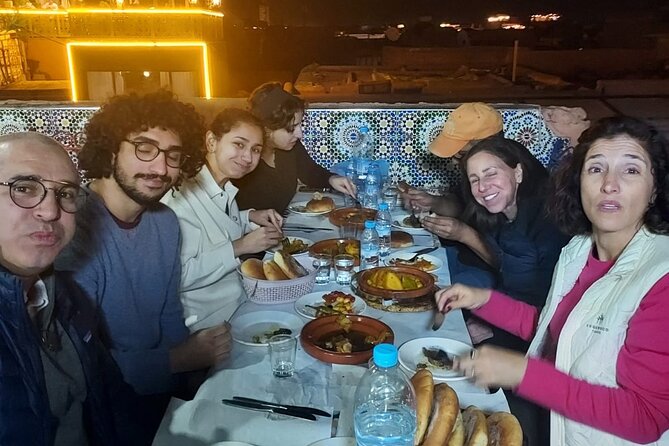
- Tanjia dinner: slow-cooked meat in a clay pot with saffron, garlic, cumin, and preserved lemon
Street food in Marrakech at 6pm: why the timing matters
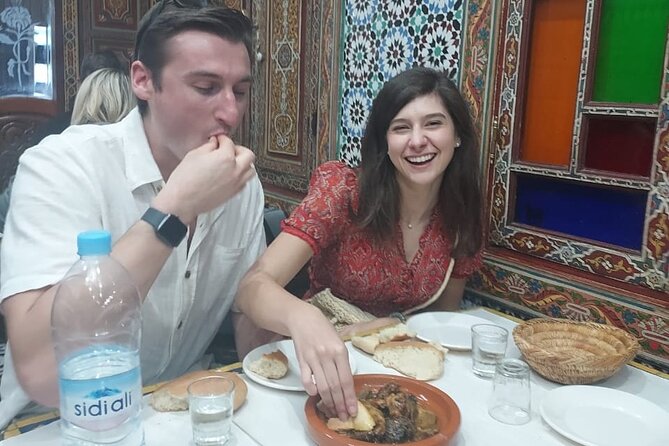
This tour starts at 6:00 pm and runs about 2 to 3 hours. That’s smart. In Marrakech, the evening is when food stands, stalls, and courtyards feel fully alive, and you’ll be walking through the Medina when people are actually out eating and trading.
You’re paying $62.72 per person for a guided, bite-by-bite plan. The value isn’t only the food. It’s also the route—so you can hit multiple neighborhoods and souks without feeling like you’re guessing your way through a maze.
One more detail that helps: the group is capped at 16 travelers. That’s small enough to keep things moving, but big enough that the guide can manage the tasting lineup without turning it into a one-on-one private tour.
You can also read our reviews of more walking tours in Marrakech
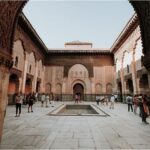
Getting to Jemaa el-Fnaa (and why you shouldn’t eat first)
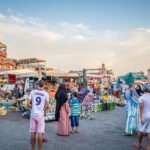
Your starting point is Jemaa el-Fnaa, and the tour ends back there. If you’ve never been to the square before, it can feel loud and confusing at first. That’s exactly why starting your evening here works: you get oriented fast, then the guide steers you into the souks for the real food action.
My best practical advice: don’t eat first. The tour is designed as a string of tastings—there’s no “sample one thing and move on” vibe. If you arrive full, you’ll miss half the fun.
Also, there’s no hotel pickup. You’ll want to get yourself to the meeting point using public transportation or on foot. Since the tour is near public transit, it’s usually straightforward, but plan to arrive a few minutes early so you can settle and meet your group.
Stop 1: Harira soup at Jemaa el-Fnaa
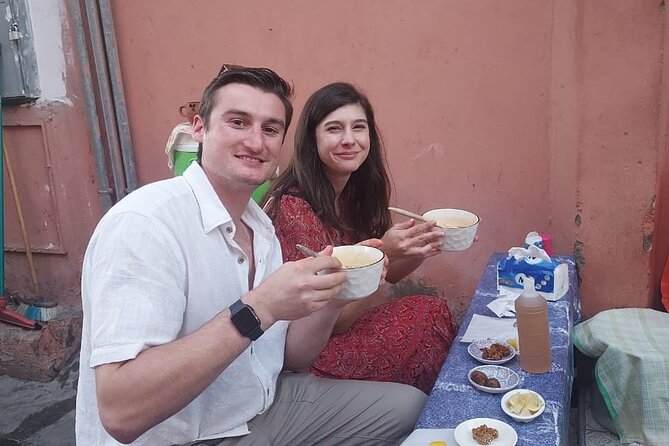
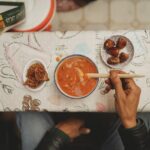
You kick off with Harira, Morocco’s beloved tomato-based soup made with lentils, chickpeas, and fragrant spices. It’s the kind of dish people look for because it feels warming, filling, and homey—especially during Ramadan, when Harira has special cultural importance.
What I like about this stop is the grounding effect. Harira is a recognizable base flavor for Moroccan street food: warm spices, tomato tang, and hearty legumes. After tasting it, everything else on the tour makes more sense, because you’ve already tasted a core flavor profile.
A small consideration: Harira is a soup, and the square can be crowded. If you’re sensitive to heat or busy conditions, take a moment before your first taste to find a comfortable spot and pace yourself.
Stop 2: Olive and tapenade tastings in Souk Semmarine
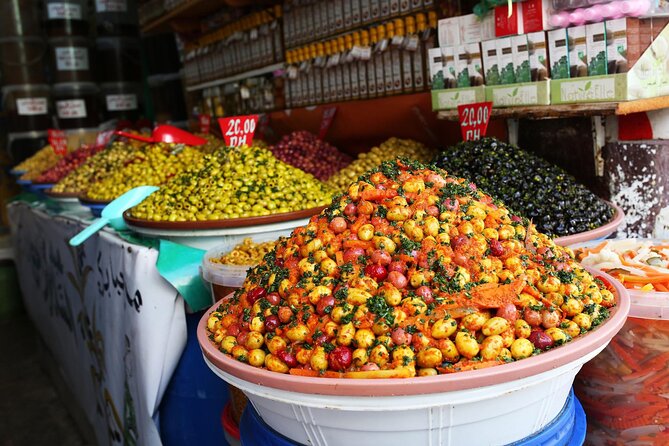
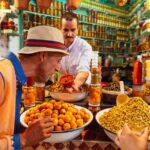
Next you head to Souk Semmarine, where you’ll taste a selection of olives—including spiced, preserved, and oil-cured varieties—plus you’ll learn how olives and artisan olive oils connect to local farming.
This stop is valuable because it’s not just “here’s a bite.” The guide explains what you’re tasting. Once you understand the difference between cured, preserved, and oil-cured olives, the flavors stop being random. You start recognizing how salting, curing methods, and added spices change the texture and bite.
If you love food details, this is the stop to pay extra attention. You’ll also get a quick education that helps when you’re shopping later—olive products are one of the easiest things to bring home, and knowing what’s what keeps you from buying a “mystery jar.”
Stop 3: Fresh Sfenj donuts at Derb Dabachi
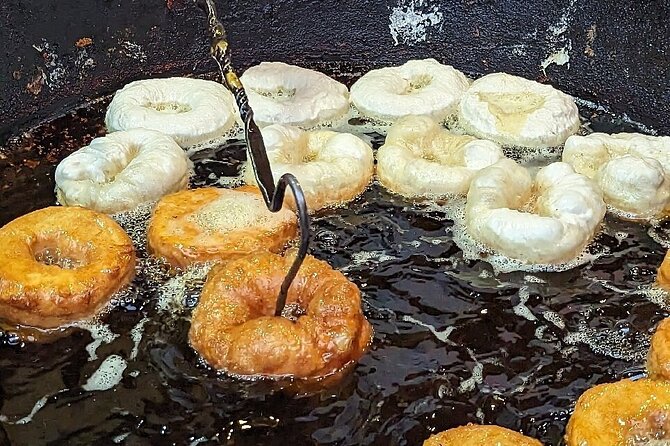
Now you hit one of the most fun parts to watch: Sfenj. At Derb Dabachi, you’ll see the dough prepared, shaped, and fried on the spot. Then you taste it plain or drenched in honey.
Sfenj is one of those foods that’s best when it’s fresh. The flavor is simple—wheat, fried dough, warm aroma—but the texture is the real story: crisp outside, soft inside. Watching it get made helps a lot because you’re not just eating; you’re seeing how street vendors work fast, consistently, and with practical technique.
One practical thought: Sfenj and honey are both sweet. If you’re trying to keep the evening balanced, alternate bites and take water sips between tastes.
You can also read our reviews of more food & drink experiences in Marrakech

Stop 4: Msamen pancakes at Riad Sidi Ayoub
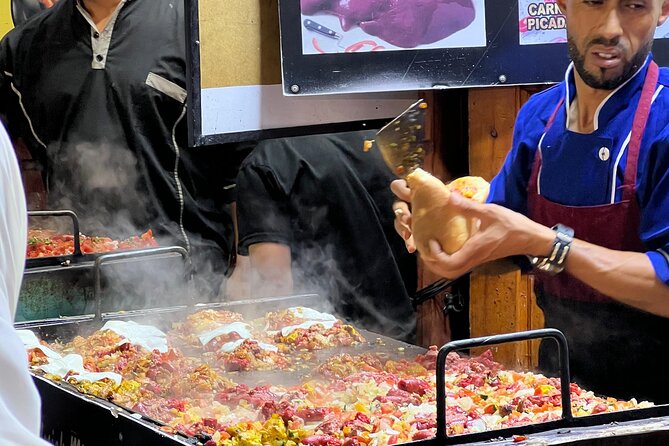
At Riad Sidi Ayoub, the tour turns to Msamen—layered Moroccan pancakes. These are typically flaky and buttery, and you’ll see them made in a traditional setting, then enjoy them hot off the cooking surface.
You’ll get choices here: Msamen can be served sweet or savory. Sweet often means honey, and savory might mean cheese (based on what the tour offers). Either way, it’s a nice contrast to the fried donut stop: Msamen has that layered, delicate texture instead of the heavy chew of thick fried dough.
This stop is also a good “pause” moment. A riad setting tends to feel more contained than the open square, so it’s a chance to reset while still eating something fresh.
Stop 5: Donuts tasting at Rahba Kedima Square (Sfenj and Beignets)
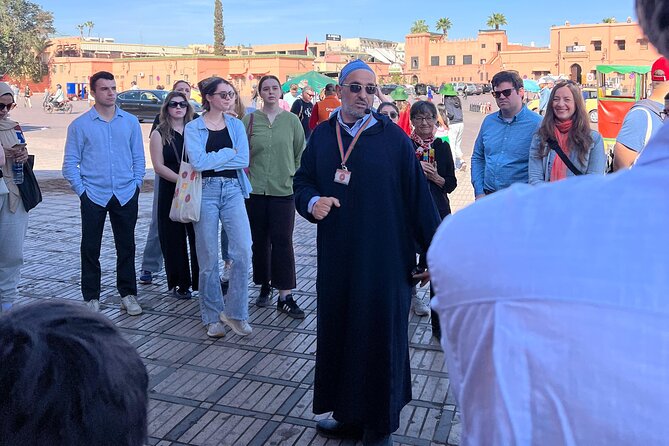
Then you make your way to Rahba Kedima Square for another round of sweet fried treats. This stop focuses on Sfenj or Beignets, with tastings ranging from plain to honey-drenched.
Why this works in the overall tour: it helps you compare. After Sfenj at Derb Dabachi, you can notice how another fried style feels different—lighter or heavier, less doughy, more airy, depending on what they’re serving that evening.
If you’ve got a strong preference (for example, you only want honey-sweet things or you only want plain), this is a good stop to decide what you truly like. Don’t force every bite—use the tasting portion as sampling and save your full judgment for what you’d actually want to eat again.
Stop 6: Tanjia Marakcheya dinner in a clay pot
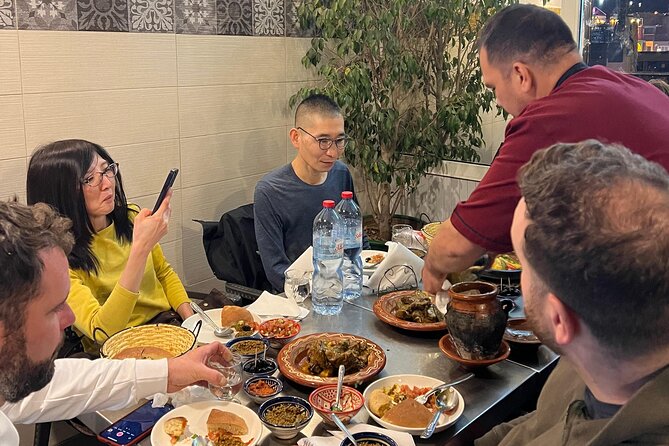
The tour ends with Tanjia Marakcheya, a slow-cooked meat dish traditionally prepared in a clay pot. You’ll taste it with flavors like saffron, garlic, cumin, and preserved lemon, cooked in a way that gives the meat time to soften and absorb the spice blend.
This is the payoff stop. Up to this point, the evening has been about street-food snacks and sweets. Tanjia shifts you into a more “meal” feeling—aromatic, savory, and built for the Marrakchi taste of slow cooking and bold seasoning.
A key detail: Tanjia is cooked underground in the traditional method described for this dish, which helps explain why the flavor feels deep and mellow at the same time. Preserved lemon also brings a sharp brightness that keeps the dish from feeling flat or one-note.
If you’ve been thinking the tour is only snacks, this is how you learn it’s also about Moroccan cooking traditions—not just fried street bites.
What $62.72 buys you (and when it’s a great deal)
Let’s talk value plainly. At $62.72 per person, you’re paying for:
- A licensed local food guide
- 10+ street food tastings (Harira, Sfenj, olives, donuts/Beignets, Msamen pancakes, pastries, juice, salad, and more)
- Moroccan mint tea in a traditional setting
- A walking tour through the Medina and local souks
If you were to do this on your own, you’d need multiple stops, a game plan for what to eat, and the confidence to navigate the souks without losing time. This tour gives you that structure, plus it makes the tasting portion efficient.
So when is it a great deal? It’s best if you:
- Want variety without researching for days
- Enjoy watching vendors cook
- Prefer a guide to translate the food logic for you
When it’s not the best deal? If you already know exactly what you want to eat and you’re comfortable picking your way through the Medina on your own, you might spend less by building your own route. But for most first-timers, the guide-led tastings are the smart shortcut.
Walking the Medina with a small group: comfort and pacing
This is a walking tour through the Medina and souks. The route is designed around food stops, with short stays at each location (each tasting stop is roughly 20 to 30 minutes depending on the place). That pacing matters because it keeps your evening from turning into long sitting and waiting.
The group size—again, max 16—also helps with pacing. You’re less likely to get separated, and the guide can manage who’s where without constant regrouping.
You should still wear comfy shoes. The Medina is not built for soft footwear. And since it’s an evening tour, bring a light layer if you tend to get cold after dark.
Who this tour suits best (and who should think twice)
This experience fits you if you’re:
- A food-first traveler who wants real street staples
- Curious about how foods are made (especially Sfenj and olives)
- Happy to eat multiple small portions rather than one big restaurant meal
- Looking for a route that helps you avoid getting lost while still seeing the souks
It might be less ideal if you:
- Don’t eat fried foods or honey-sweet items
- Have strict dietary needs you want fully accommodated (the tour data doesn’t list custom options, so you’d want to be cautious)
- Prefer slow, restaurant-style dining over walking and sampling
Should you book this Marrakech street food walk?
I’d book it if you want a guided way to taste a lot of Marrakech in just a few hours. The standout strength here is how the tour mixes street snacks with a serious end-stop dinner. Harira gives you the grounding flavor. Sfenj and Msamen show the cooking craft. The olive tasting adds education you can use later.
Also, the “make sure you’re hungry” advice is real. Come with an empty stomach, plan to drink water, and treat each stop like a mini lesson.
If you’re on the fence, one simple test works: if you’d rather have a plan than a gamble, this is the plan.
FAQ
FAQ
How long is the Marrakech street food walk?
It runs for about 2 to 3 hours.
What time does the tour start?
The start time is 6:00 pm.
Where does the tour start and end?
It starts at Jemaa el-Fnaa and ends back at the same meeting point.
Are drinks included?
Yes. Moroccan mint tea is included, and the tastings list also mentions juice.
What food tastings are included?
You get 10+ street food tastings, including items like Harira, Sfenj, olives, Moroccan donuts/Beignets, Msamen pancakes, pastries, and more.
Do I need hotel pickup?
No. Hotel pickup and drop-off are not included.
How big is the group?
The tour has a maximum of 16 travelers.
Is free cancellation available?
Yes. You can cancel up to 24 hours in advance for a full refund.
If you want, tell me your dietary preferences (and what you already know you like), and I’ll help you decide whether this is the right mix for your kind of trip.