REVIEW · MARRAKECH
The 10 Tastings of Marrakech With Locals: Private Food Tour
Book on Viator →Operated by Withlocals · Bookable on Viator
Marrakech tastes like a map you can eat. This private food tour strings together local markets and medina landmarks with 10 included tastings, so you get both flavor and orientation in about four hours. You’ll also have a real person in your corner, sharing what to order, what to skip, and how locals think about food and timing.
What I like most is the way the tour mixes food with technique. You start with a no-tasting stop to see how warka (thin pastry) is made, then you move into tastings like almond-filled pastries, fruit-and-nut dates mixes, and the slow-cooked icon that locals care about. I also appreciate the “choice” moments—picking your date mix and tasting olives/oils by flavor—so it doesn’t feel like you’re just being marched from plate to plate.
One thing to consider: the experience depends heavily on your guide’s pace and storytelling. Some hosts are very chatty and food-focused, while others may move faster, answer fewer questions, or pause for prayer on Fridays (usually during a seating stop, but it can affect timing). If you want slow, detailed explanations, you’ll do best by setting expectations at the start.
In This Review
- Key takeaways before you go
- Why this private Marrakech medina food tour works
- Getting oriented fast: starting at Place des Ferblantiers
- Mellah and warka: learning before you taste
- Almond pastries, date mixes, and Kaftan-color salads
- Museum stop, then almond or avocado juice by the dry-fruit street
- Olives and olive oil: where you actually get to choose
- Jemaa el-Fnaa for kofta: meat done in a local way
- Tanjia at the Heritage Museum: the slow-cooked payoff
- Mint tea in a riad, then El Badi and Koutoubia
- Price and value: what $93.05 buys you (and what it doesn’t)
- The guide matters most: pacing, questions, and Friday prayer
- Who this tour is best for (and who should compare alternatives)
- Practical tips to enjoy the tastings more
- Should you book the 10 Tastings of Marrakech With Locals?
- FAQ
- How long is the Marrakech private food tour?
- What does the tour cost?
- Is the tour private or shared?
- Are there tastings included, and how many?
- Is a vegetarian option available?
- Where does the tour start, and where does it end?
- Is pickup included?
- Can I get a refund if I cancel?
Key takeaways before you go
- Warka first, then food: you learn the pastry baseline even though the first stop has no tasting.
- Real choice at the market: you can build your own date mix and sample olive and oil flavors.
- Your guide sets the tone: great hosts like Houssain, Elhousain, Ismael, Aimad, Omar, Adil, and Hassan can make the difference.
- Small portions, lots of stops: the tastings are bite-sized, but they’re frequent enough to satisfy most appetites.
- Cultural stops are light but useful: you’ll see key sights along the way, not just eat your way through alleys.
Why this private Marrakech medina food tour works
This tour is built for one main problem in Marrakech: the medina is maze-like, and food decisions can feel random when you don’t know where locals go. With a private guide, you don’t have to guess. You get quick context, then you eat.
The value comes from 10 included food and drink tastings spread across multiple food types—savory, sweet, and straight-up drinks. You’re also not stuck doing only street snacks. You’ll hit bakeries, market counters, small eateries, and then finish with tea and pastries in a riad setting, plus some classic landmarks near the end.
And because it’s private, you can adjust the focus. If you’re vegetarian, the tour notes alternatives are available. If you have questions—ingredients, how dishes are made, why something is paired with something else—your guide can usually steer the conversation to what you care about most.
You can also read our reviews of more food & drink experiences in Marrakech

Getting oriented fast: starting at Place des Ferblantiers
You meet near Tinsmiths Square (Place des Ferblantiers), and the experience ends back at the same point. That matters because it keeps the day from feeling like a long commute. You’ll spend your time in walking distance of the medina action and the historic center.
Expect a steady rhythm: walk a bit, stop, eat, listen, then move again. It’s not a slow museum crawl. You’re meant to feel the city while you taste it—medina streets, market energy, and those landmark moments that help the neighborhood make sense later when you explore on your own.
Mellah and warka: learning before you taste
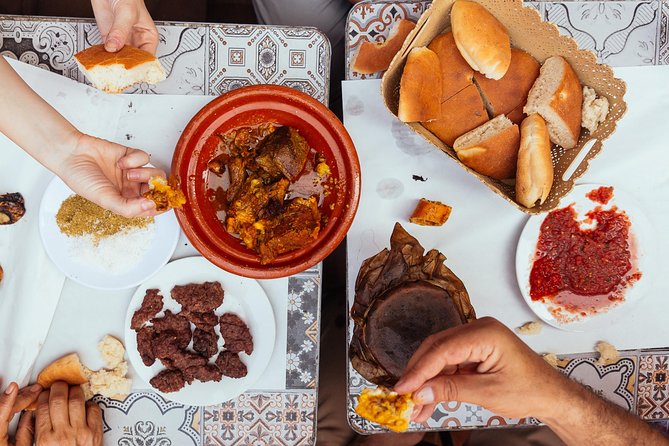
The first stop goes to Mellah, where you get to see how warka is made. The key detail: this is a technique stop, and it includes no tasting. That’s not a disappointment; it sets up why the later pastries taste the way they do. Thin layers, crisp texture, and that flaky pull you notice when you bite into the finished goods.
This is also a good mental warm-up. Even if you’re not a pastry person, watching the process gives you something to look for as you move into shops. You start noticing what’s hand-made versus what’s packaged, and you understand the “why” behind the texture.
Almond pastries, date mixes, and Kaftan-color salads
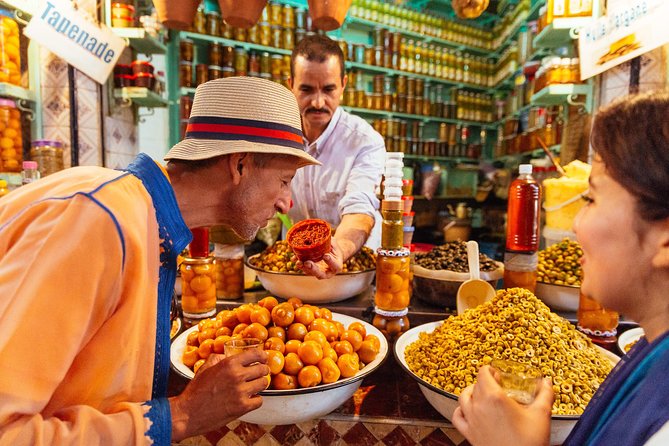
From the warka stop, you head into sweeter territory.
First comes a local bakery stop (Mennconcept), where you start with almond-filled pastries. It’s a straightforward introduction, but it’s also practical: you learn what a good almond pastry tastes like before you broaden into other sweets later.
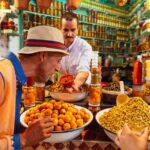
Then you arrive at Rahba Kedima Square, where dates are the star. You can wander among mountains of dates and choose your favorite mix. That’s one of the nicest “hands-on” parts of this tour. Instead of being handed a preset snack, you’re building a mix that fits your taste—chewy, honeyed, nutty, or fruit-forward depending on what you pick.
Next up is a stop tied to the History of Kaftan, near a museum. Here you try three styles of Moroccan salads in a cafe setting with a rooftop view over the souks streets. This is a helpful contrast to the sweets: you taste something bracing and savory, and you get a breather view where you can spot the street grid patterns through the chaos.
Museum stop, then almond or avocado juice by the dry-fruit street
At the Museum of La Koutoubia, you drink a fresh almond juice or avocado juice. Either choice is a smart pick in Marrakech because it cools you down and resets your palate between bites.
What makes this moment more than just a drink is the “look around” element. While you’re sitting, you can observe the trading on the dry fruit street. You start seeing the medina like a working place, not just a photo spot—people buying, selling, comparing, and building bundles that make sense for the week ahead.
A few more Marrakech tours and experiences worth a look

Olives and olive oil: where you actually get to choose
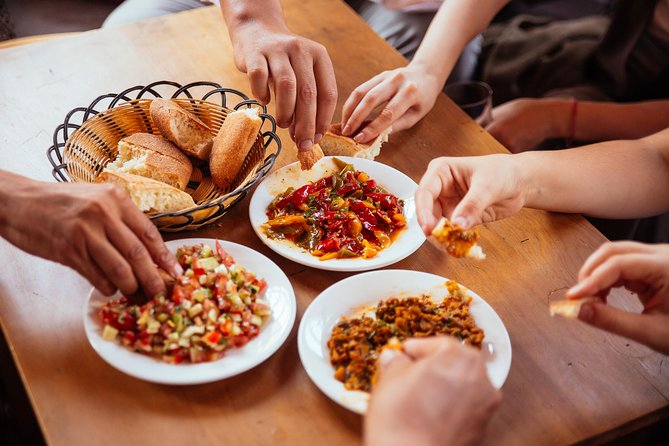
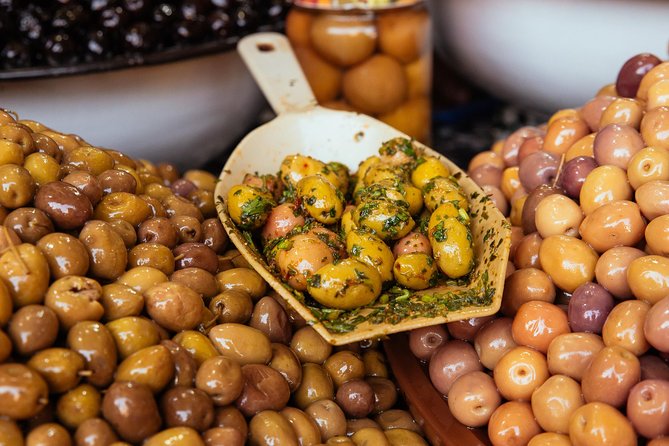
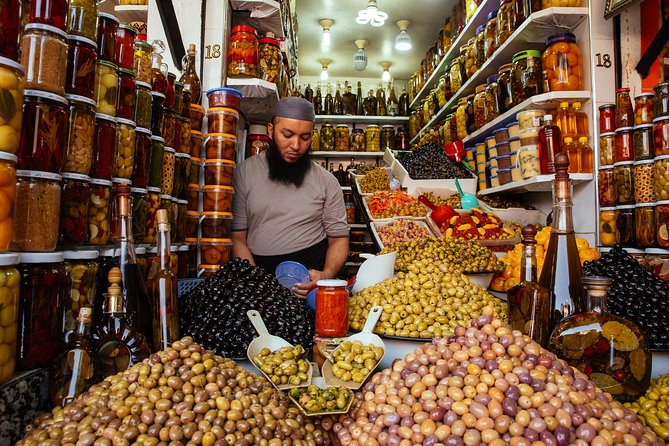
The Food Markets of Marrakech stop leans hard into olives and oil. You’ll follow the smell of olive oil into an “olives paradise” style market moment, and you can choose flavors as you taste.
This stop is one of the best examples of why this tour is valuable for first-time visitors. Marrakech has endless food options, and most tourists default to the most obvious thing on a menu. Here, your guide helps you focus on flavor categories—salty brine versus herbal, mild versus sharp, olive types that taste different even if they look similar at a distance.
This is also a good spot to ask questions about what’s common locally versus what’s aimed more at tourists. Your guide can usually translate that without making it feel like a lecture.
Jemaa el-Fnaa for kofta: meat done in a local way
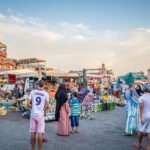
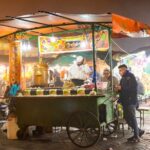
Then you step into Jemaa el-Fnaa, the famous square that’s loud, busy, and impossible to fully understand without context. The tasting here is Moroccan meatball called kofte, served with homemade tomato sauce.
This is where you learn how Moroccan savory dishes balance richness. The tomato sauce is a big clue: it’s not just for flavor—it helps tie everything together with acidity and sweetness. It’s also a sign of how a lot of Moroccan cooking leans on sauces and slow-building flavor, not just spices thrown on at the last minute.
The best part is that this tasting isn’t presented as a “tourist plate.” You’re guided into what locals actually eat for that moment in the day, and the pacing keeps you from getting overwhelmed by the square.
Tanjia at the Heritage Museum: the slow-cooked payoff
One stop later, you reach the Heritage Museum Marrakech (Musée du Patrimoine) for the dish that many people associate with Marrakech: tanjia. It’s traditionally slow-cooked meat, ready to delight your senses, and it’s treated here as the queen of the menu.
This tasting tends to land well because it gives you a deeper sense of Marrakech cooking—how time changes meat texture and how a dish becomes its own identity. If you like food that feels “grown” over hours instead of assembled right before serving, you’ll likely leave thinking about tanjia later.
Also note that the stop is described as a secret place close by. Even if it’s not a true secret, the idea is the same: you’re not only eating in the biggest, loudest venues. You’re getting shown a side of Marrakech that most people miss.
Mint tea in a riad, then El Badi and Koutoubia
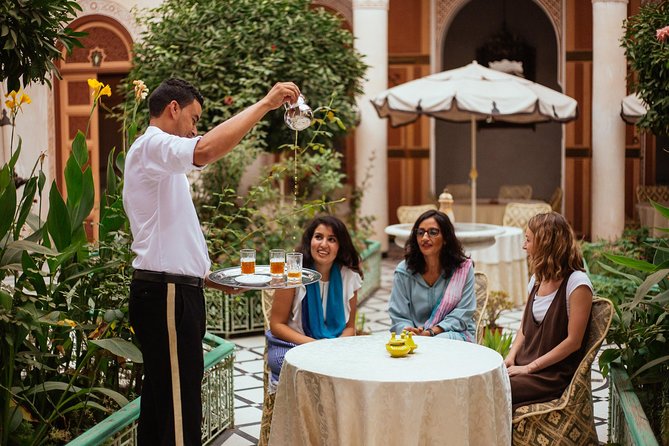
The final tasting moment happens at Musée Boucharouite, where you end with mint tea and cookies in a beautiful riad. This is one of those stops that feels like a “reset button.” The riad setting is quieter, and the tea-and-sweet finish ties the whole experience together.
After that, you switch from tasting to sight. You visit El Badi Palace, a ruined palace, then you move to Koutoubia Mosque (Kutubiyya Mosque), described as the largest mosque in Marrakech. These aren’t long visits, but they’re useful anchors. They help you map the medina back to major landmarks instead of just remembering it as smell and motion.
Price and value: what $93.05 buys you (and what it doesn’t)
At about $93.05 per person for roughly four hours, you’re paying for three things: a private guide, entry/tasting setup at multiple stops, and the “don’t waste time” advantage of knowing where to go.
You do not pay for hotel pickup and drop-off, and extra food/drinks aren’t included. That’s normal for Marrakech food tours, but it means you should plan to eat fully during the tour and then decide afterward if you want more.
Here’s how I judge the value. If you’d otherwise wander markets alone, you’d probably spend time figuring out where to eat and what’s worth your money. This tour compresses that search into a guided route with tastings lined up—so you spend your energy on tasting instead of hunting.
The guide matters most: pacing, questions, and Friday prayer
This tour is private, so the host’s style becomes the product. The good news: many guides are praised for friendliness and for steering kids toward foods they’ll actually eat—Houssain is mentioned as especially strong in that way, as are guides like Elhousain, Ismael, Aimad, Omar, Hassan, Mohammed, and Adil.
The caution: not every experience is perfect. Some people reported feeling rushed, seeing the guide walk ahead, or getting less storytelling than expected. Others said the guide’s conversation drifted away from food topics.
On Fridays, there’s also a note that the guide may step away for prayer, usually when you’re seated and eating. That can still affect timing, so if you have a tight plan after the tour, schedule a buffer.
If you care about story and explanations, start with a simple request: more food talk, less off-topic conversation, and keep the tastings spread across the whole route. A good guide will adjust.
Who this tour is best for (and who should compare alternatives)
This tour fits you if:
- You want a first-trip overview of Marrakech food without doing research on every stand.
- You like variety: sweet pastries, dates, salads, fruit juices, olives/oils, kofta, and tanjia.
- You’d rather have a person direct you to small places than try to decode menus and pricing alone.
- You’re comfortable with walking and snack-sized tastings (not one big sit-down meal the whole time).
You might consider a different option if:
- You mainly want museums or long guided storytelling, not food-led stops.
- You’re extremely sensitive to pacing, because the experience can feel quick when a guide keeps things moving.
- You’re hoping every stop is heavily educational. Some parts are more about tasting and atmosphere than explanation.
Practical tips to enjoy the tastings more
Wear comfortable shoes. The medina can be uneven, and you’ll be moving often through market streets. Bring water when you need it, and pace yourself—mint tea comes later, and you’ll want to be able to enjoy it.
If you have dietary needs, mention them at booking so vegetarian alternatives are planned. The tour does note vegetarian alternatives are available, and alternatives are offered for dietary restrictions.
Finally, think of the 10 tastings as learning bites, not a single meal replacement. You’ll likely leave full, but you should still plan a normal dinner after—especially if you tend to eat hearty.
Should you book the 10 Tastings of Marrakech With Locals?
I’d book it if you want a high-value Marrakech “starter pack”: medina orientation plus a real sequence of foods that make sense together. The combination of technique (warka), multiple market moments (dates, olives/oil), and the Marrakech signature dish (tanjia) hits the right notes for most people.
I’d pause if you’re the type who hates variable pacing or wants long, museum-level storytelling at every stop. In that case, ask directly how the guide handles pacing and whether they’ll focus explanations on food and cooking techniques.
If you do book, choose your expectations well: think small plates, frequent tastings, and a guide who guides you through the city’s food logic. It’s one of the most efficient ways to start your Marrakech stay without guessing.
FAQ
How long is the Marrakech private food tour?
It’s about 4 hours.
What does the tour cost?
The price listed is $93.05 per person.
Is the tour private or shared?
It’s a private tour. Only you and your local guide participate.
Are there tastings included, and how many?
Yes. The tour includes 10 food and drink tastings. Note that the warka stop in Mellah is listed as no tasting.
Is a vegetarian option available?
Vegetarian alternatives are available. You should advise at booking if you need a vegetarian option.
Where does the tour start, and where does it end?
It starts at Tinsmiths Square (Place des Ferblantiers) in Marrakech and ends back at the meeting point.
Is pickup included?
No. Hotel pickup and drop-off are not included. The meeting point is near public transportation.
Can I get a refund if I cancel?
You can cancel up to 24 hours in advance for a full refund. If you cancel less than 24 hours before the start time, the amount paid is not refunded.