REVIEW · MARRAKECH
Marrakech Guided Historical and Cultural Visit
Book on Viator →Operated by Marrakech Sweet Travel · Bookable on Viator
Marrakech clicks when you have an art historian on hand. This guided historical and cultural visit pairs a private vehicle with walking time, so you can cover big-ticket landmarks like Koutoubia Mosque, Bahia Palace, the Saadian Tombs, and Jemaa el-Fnaa without the usual head-bobbing and rumor-chasing. You’ll also get context you won’t get from a standard quick loop.
What I like most is the way the stops get explained in human terms, especially at the Bahia Palace and the Saadian Tombs, where details matter. One thing to keep in mind: access isn’t equal across sites. The Koutoubia Mosque interior is mostly off-limits to non-Muslims (you may only peek into the prayer hall from an often-open door), and some places on the route may have limited access or require tickets you might pay on-site.
In This Review
- Key highlights worth planning for
- A morning start at Koutoubia, with the right expectations
- How the private format changes Marrakech medina navigation
- Menara Gardens, palace ramps, and the souk web around town
- Bahia Palace: where design and power feel personal
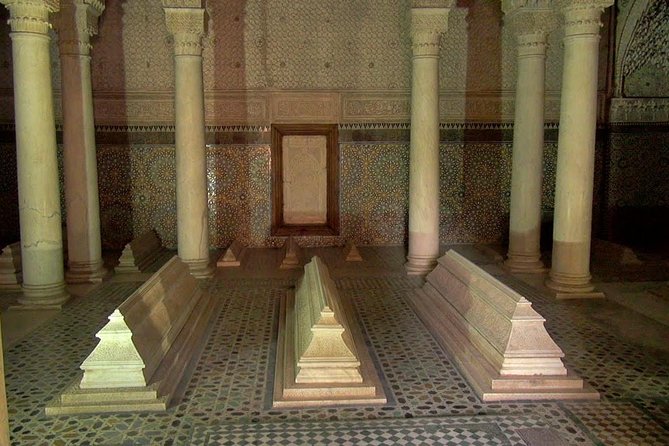
- Saadian Tombs: royal burials, hidden politics, and real atmosphere
- Jemaa el-Fnaa at day-to-night: the show, the history, the choices
- Tickets, price, and what this costs you in real life
- Who should book this Marrakech historical visit
- Quick practical tips so your day feels smooth
- Should you book this guided Marrakech circuit?
- FAQ
- What time does the tour start and where do I meet?
- How long is the Marrakech guided historical and cultural visit?
- Is hotel pickup included and do they use a private vehicle?
- How many people are in the group?
- Are tickets included for every stop?
- Can I cancel for free?
Key highlights worth planning for
An art historian-led route across Marrakech’s major landmarks, with commentary tuned to what you’re actually seeing
Hotel pickup plus private transport, helpful for getting across the city efficiently
Koutoubia Mosque exterior and limited-prayer-hall access, with realistic expectations set up front
Bahia Palace and Saadian Tombs focus, two sites where the story behind the architecture is half the payoff
Jemaa el-Fnaa timing that lets you experience the square shifting as the day turns toward night
A morning start at Koutoubia, with the right expectations
Your day begins with a simple plan: be in the lobby at 9:30am, meet your driver, and get rolling with your guide for a half-day style circuit. The big win here is pacing. Marrakech can feel chaotic when you’re moving on your own, especially if you’re trying to connect landmarks across the medina. With a private car handling the longer hops, you spend more time looking up and less time stuck in logistics.
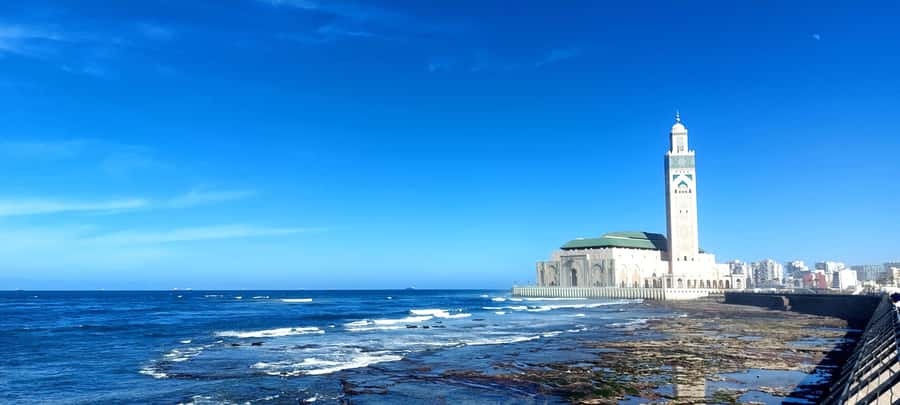
Koutoubia Mosque is where the guide’s context really helps. You’ll get the exterior views, and you may get a peek inside the prayer hall if one of the east wall doors is open. That’s a small detail, but it’s the kind of detail that changes your experience from I saw a building to I understand what I’m allowed to see. Also, for non-Muslims, the inside is generally not accessible beyond that limited opening, so don’t plan your photos like it’s a regular open-hall museum.
The route also aims at other nearby royal and historic sights, with at least some stops being outside-only. For example, Dar el-Makhzen is mentioned as something you can see from the outside because the interior is closed to the public. That’s normal in Morocco and it’s exactly why having someone explain what you’re missing is useful. Instead of feeling like you got short-changed, you understand what’s off-limits and why.
Practical note: they recommend lunch around 1:00pm, and you’re aiming to be back at your hotel around 3:00pm (depending on how the day flows). Bring water, and try not to stack a huge meal right before a walking-and-sight stop. You’ll enjoy the courtyards and corridors more if you’re not rushing your digestion.
You can also read our reviews of more guided tours in Marrakech


How the private format changes Marrakech medina navigation
This is a small-group setup with a maximum of 6 travelers, and it shows. You’re not fighting for position at every doorway, and you can ask follow-up questions without yelling over the crowd. That’s a real quality-of-life upgrade in Marrakech. The medina isn’t designed for slow, guided traffic jams, and when you go as a tight unit, your guide can shift pace when streets get crowded.
Because you’re traveling with hotel pickup and a private vehicle, you also get more flexibility about the parts of the route that are physically annoying on your own. The medina’s lanes can be tight, and walking is part of the deal, but the car still removes some of the long transfers that sap energy. That matters because later on you’ll hit markets and squares that are easy to overdo if you start the day tired.
A second benefit is commentary tailored to what’s in front of you. Marrakech is full of symbols and styles that look similar at first glance. With an art historian guiding you, you’re more likely to notice:
- how architectural shapes signal function and status
- how dynasties left marks on buildings and burial sites
- why certain areas feel more “royal” than “market” even when they sit close together
There’s also a logistics win: you get a mobile ticket, so you’re not scrambling with printouts while everyone else is looking for chargers and a place to plug in their phone.
One small consideration: the guide may be multi-lingual, so the depth of explanation can vary slightly depending on the language that day. If you have a preference, it can be worth checking when you book.
Menara Gardens, palace ramps, and the souk web around town
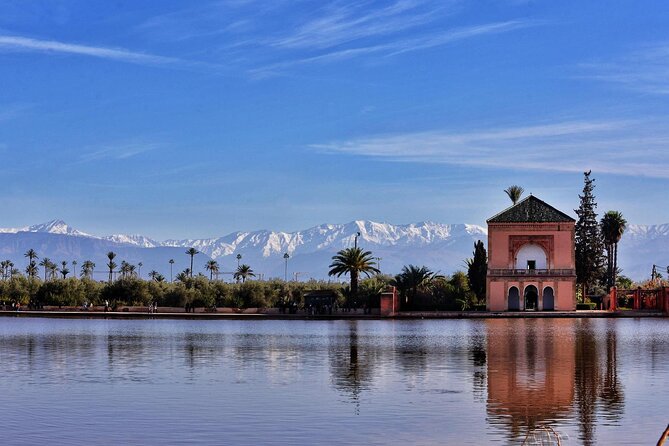
After Koutoubia, your route heads through the Marrakech highlights zone—gardens, royal vantage points, and market areas that help you understand how the city lives. Menara Gardens and the pavilion area are the kind of stop that give your eyes a reset. Gardens in Morocco aren’t just pretty; they often point to water management, social space, and how rulers presented power through controlled nature.
From there, you move toward the souk system. You’ll pass or explore areas like Bab Mellah Spice Souk and the Mellah market zone. This is where Marrakech feels like Marrakech: stacked goods, strong smells, and people trading with full confidence. The guide’s job here isn’t to push you into buying. It’s to help you separate tourist trap energy from real market rhythms. If you’re the type who likes to browse, this section rewards you. If you hate shopping crowds, you can still enjoy the textures and the history of how these markets formed.
You may also encounter viewpoints related to El Badi Palace, with great looks from the ramparts. Even if you don’t go inside every structure (and you often won’t in this kind of itinerary), vantage points can be the easiest way to understand where one landmark sits in relation to the next.
As you move through the day, you’ll likely see places such as:
- Souk Semarine, known for clothing and trinkets
- Souk des Teinturiers, dyers’ workshops
- Souk el-Attarine, which includes lamp, teapot, and mirror shops
Even if you only spend short moments in each, they help you connect the dots. Marrakech isn’t a single museum building—it’s a city where craft, trade, and religious architecture overlap.
Two notes to keep expectations realistic:
- Ben Youssef Madrasa may be closed for renovation, so don’t build your day around it being fully accessible.
- The tour includes some parts where admission is marked as free and other parts where tickets aren’t included, so plan to pay on-site only when the tour indicates it.
If you want the best experience here, don’t try to capture everything on camera. Watch for details: the way merchants label goods, how dyers set up work areas, and the way market lanes funnel people toward bigger open spaces.
Bahia Palace: where design and power feel personal
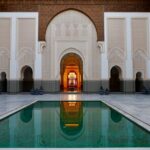
Bahia Palace is the kind of stop that makes you slow down. It’s described as a palace meant to be the greatest of its time, built in the late 19th century, and its name translates to Brilliance Palace. When you’re in the palace, those words stop being abstract. You start noticing patterns—doorways placed for drama, corridors built for procession, and spaces designed to feel controlled.
The palace covers a large area, about eight hectares, which helps explain why a guided visit works better than wandering solo. If you go without context, it’s easy to see a lot of rooms and remember almost none of them. With a guide, you understand what you’re looking at: the blend of Moroccan and Islamic styles, and why so many palaces of this period used architecture as a public statement.
Also, note the practical side: Bahia Palace admission is not included. That doesn’t make it less worth it, but it does mean you should budget for your ticket. I prefer tours that warn me ahead of time instead of pretending everything is rolled in. This one is more honest than many.
Even if you’re not a hardcore architecture person, Bahia Palace has a payoff. The place is built for human scale—courtyards, passages, and garden-adjacent spaces that make you feel like you’re moving through a story. The guide’s job is to connect that story to the people who lived with it and the power structures behind it.
Saadian Tombs: royal burials, hidden politics, and real atmosphere
The Saadian Tombs are next to the mosque of the Kasbah, and they carry the weight of dynastic change. These are burial sites tied to the Saadian dynasty’s Golden Age in Marrakech, with reign dates given between 1524 and 1659. What makes the visit more than scenic is the backstory: there was an effort to erase traces of that dynasty, yet the burials themselves were protected.
Here’s the part that matters on a guided tour: you don’t just stand near a tomb and take photos. You learn why the tomb complex exists in the form it does. In the early 18th century, Sultan Moulay Ismail is described as ordering the destruction of many vestiges while avoiding destroying the burials. The entrance to the necropolis was completed instead. That tells you something about how authority works: remove visible signs, keep the sacred anchor.
The tour mentions the necropolis as dating earlier in a broader sense (it notes the royal necropolis being used from the beginning of the 14th century, with later splendor). Even if you don’t remember dates perfectly, the guide helps you feel the layering of time.
Admission is not included for the Saadian Tombs, so again, budget for the ticket.
This is also one of the stops where a small group helps. You don’t want to be compressed into a single photo line while trying to listen. The tomb areas benefit from slower pacing, and the private format gives you that breathing room.
You can also read our reviews of more historical tours in Marrakech
Jemaa el-Fnaa at day-to-night: the show, the history, the choices
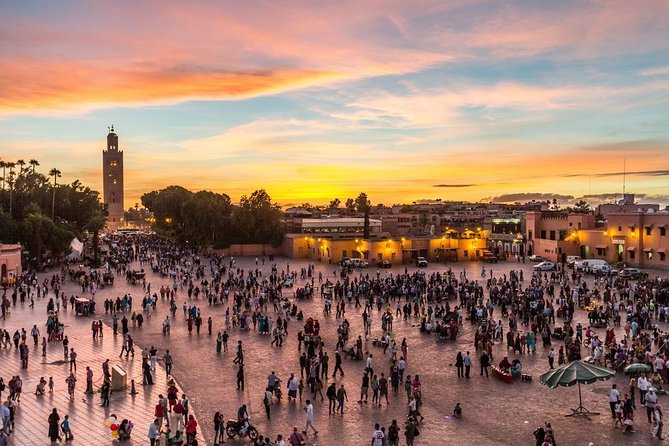
Jemaa el-Fnaa is Marrakech’s main square, and it’s the kind of place you can either enjoy or stress over. The key is understanding that it changes as the day moves on. By day, the square is described as an open space with snake charmers, traditional pharmacists, and even dentists showing hands-on spectacle. By dusk, the mood shifts as performers, storytellers, musicians, and artists fill the square.
You also get practical guidance on what you’ll likely encounter as you wander rows of activity. That matters because Jemaa el-Fnaa can overwhelm you quickly if you go in blind. A guide helps you read the square: where to stand for atmosphere, when to step back, and how to avoid getting trapped in the most aggressive bits of the crowd.
The tour includes time here—about 1 hour 15 minutes—and admission is marked as included for this stop. That means the experience is set up to let you linger without worrying about extra entry fees in the moment.
Two tips for getting the most out of the square:
- Give yourself time to notice the switch from daytime oddities to evening energy.
- Use your guide’s pointers, then choose your own pace. If a spectacle isn’t for you, you can step away and still soak up the square’s human pulse.
Jemaa el-Fnaa is also a good place to reset after palace and tomb walking. You’ll still move, but it’s a looser rhythm where you can pause for tea, people-watch, and watch the performers shift around you.
Tickets, price, and what this costs you in real life
At $76.45 per person for about 6 hours, this tour can represent strong value if you care about context and efficient pacing. The private vehicle and the small group size do real work here. You’re not paying just for transport; you’re paying for an art historian’s explanations that help you understand why each site matters.
But the money conversation shouldn’t be fuzzy, so here’s the honest breakdown based on the way admissions are labeled:
- Koutoubia Mosque segment: admission ticket included
- The area that includes the souks and surrounding highlights: admission ticket free
- Bahia Palace: admission ticket not included
- Saadian Tombs: admission ticket not included
- Jemaa el-Fnaa: admission ticket included
That mix means you may still pay on-site at one or two major stops. If you hate surprise expenses, budget for palace and tomb tickets when you plan your Marrakech spending.
Also note: the tour runs free cancellation (you can cancel up to 24 hours before start time for a full refund). That’s helpful if your schedule in Marrakech is still forming.
If you’re deciding based purely on price, compare what you get: private transport, a professional guide with art history commentary, and a tight list of heavyweight landmarks. At this price point, the only real way you’d get something similar is either with a higher-cost private service or by sacrificing context.
Who should book this Marrakech historical visit
This tour is ideal for you if:
- you want a guided historical and cultural route that covers big landmarks in one day
- you like asking questions and hearing explanations while you walk
- you’d rather avoid walking too much without a plan, thanks to the pickup and private car
It’s also a good fit for pairs and small groups because the maximum group size is 6. You’ll keep the social benefits of company without the chaos of a big tour bus.
You might choose a different option if:
- you need full interior access at every stop (some spaces have limited access for non-Muslims, and some sites may be closed for renovation)
- you hate markets or don’t want to be near street activity (Jemaa el-Fnaa and the souks are part of the deal)
Quick practical tips so your day feels smooth
- Wear shoes that handle uneven ground. You’ll walk in the medina and around courtyards.
- Plan lunch around 1:00pm, and don’t schedule a late dinner immediately after.
- Bring water and keep your phone charged. You’ll likely want pictures and directions between sights.
- If you’re sensitive to crowds, treat the market areas and Jemaa el-Fnaa like optional wander zones. Follow your guide’s suggestions, then choose your own distance from the densest spots.
- Expect that some interiors are restricted. The tour sets you up with realistic expectations, especially at places like Koutoubia.
Should you book this guided Marrakech circuit?
I’d book it if you want your Marrakech landmarks to make sense as you’re seeing them. The strongest reason is the art historian-led commentary, especially for Bahia Palace and the Saadian Tombs, where details turn into understanding. Add in the small group size and private transport, and the day feels organized without being stiff.
I would think twice if you’re chasing maximum interior access at every stop or you strongly dislike market energy. The tour includes streets, squares, and lively sections, and that’s not a weakness. It’s what makes the day feel like Marrakech instead of just a list of buildings.
If you’re ready for a structured, thoughtful day that still gives you freedom to look around, this is a smart way to spend your time in Marrakech.
FAQ
What time does the tour start and where do I meet?
You should be in the lobby at 9:30am. Your driver and guide should be ready there for pickup and the start of the visit.
How long is the Marrakech guided historical and cultural visit?
It runs for about 6 hours.
Is hotel pickup included and do they use a private vehicle?
Yes. Pickup is offered, and you’ll travel using a private vehicle.
How many people are in the group?
The tour has a maximum of 6 travelers.
Are tickets included for every stop?
Not every site. Koutoubia and Jemaa el-Fnaa are listed with admission tickets included, while Bahia Palace and the Saadian Tombs are listed with admission not included. Other sections are marked free for admission where specified.
Can I cancel for free?
Yes. You can cancel up to 24 hours in advance for a full refund. If you cancel less than 24 hours before the start time, the amount paid is not refunded.