REVIEW · MARRAKESH
Marrakech 3-Hour Walking Tour
Book on GetYourGuide →Operated by Ando Travel Ltd · Bookable on GetYourGuide
Marrakech turns confusion into direction. This 3-hour walk pairs big landmarks like the Koutoubia Mosque with time on the old medina streets, so you get both the meaning and the momentum. I like the mix of architecture stops and street-level life you see afterward, and I especially like ending at Jemaa el Fna when the square is at its most theatrical. One drawback to plan around: if your schedule is tight or you expect every stop to feel perfectly paced, you should double-check the two ticketed sites since they’re not always handled the same way day to day.
Logistics are simple but not automatic. You’ll ride in an air-conditioned vehicle for the short hops, then walk in footwear-friendly shoes territory, finishing where you can keep exploring on your own.
In This Review
- Key highlights you’ll feel right away
- Koutoubia Mosque: the best first lesson in Marrakech
- What I like about starting here
- Watch-outs for this first stop
- Bahia Palace: where the royal household is still visible
- The practical reality: entrances cost extra
- How this stop fits the “3-hour” format
- Saadian Tombs and the old Jewish quarter streets
- Why the tombs matter in your overall walk
- Another thing to plan for: extra entrance fees
- A smart caution from real-world experience
- Walking the medina maze: souks, spices, workshops, and art
- What you’ll see (and why it feels real)
- How to make this part enjoyable
- Jemaa el Fna Square: the dramatic finale you can ride into
- The small cash trick that helps
- A note on timing and energy
- Price and value: what $82 gets you (and what costs extra)
- Language options are a real benefit
- Logistics that can make or break a short medina walk
- Start with what to bring
- Meet-up realities inside Morocco’s layout
- Plan around walking speed
- A key reliability tip
- Who this tour suits best—and who should choose differently
- Should you book this Marrakech 3-hour walking tour?
- FAQ
- How long is the Marrakech 3-hour walking tour?
- What does the $82 per person price include?
- Are entrance fees included for Bahia Palace and the Saadian Tombs?
- Where do we meet for pickup?
- Will we visit the medina souks and back streets?
- What happens at the end of the tour?
- Should I bring cash for photos at Jemaa el Fna?
- What should I bring with me?
- Is the tour wheelchair accessible, and are pets allowed?
- Can I cancel, and what if my plans change?
Key highlights you’ll feel right away
- Koutoubia Mosque orientation: a clear intro to Islam’s 5 pillars and local worship habits, outside the mosque
- Bahia Palace focus on design: a 19th-century palace with 160 rooms and a 15-year build
- Saadian Tombs details: discovered in 1917, known for ornate rooms and ceilings
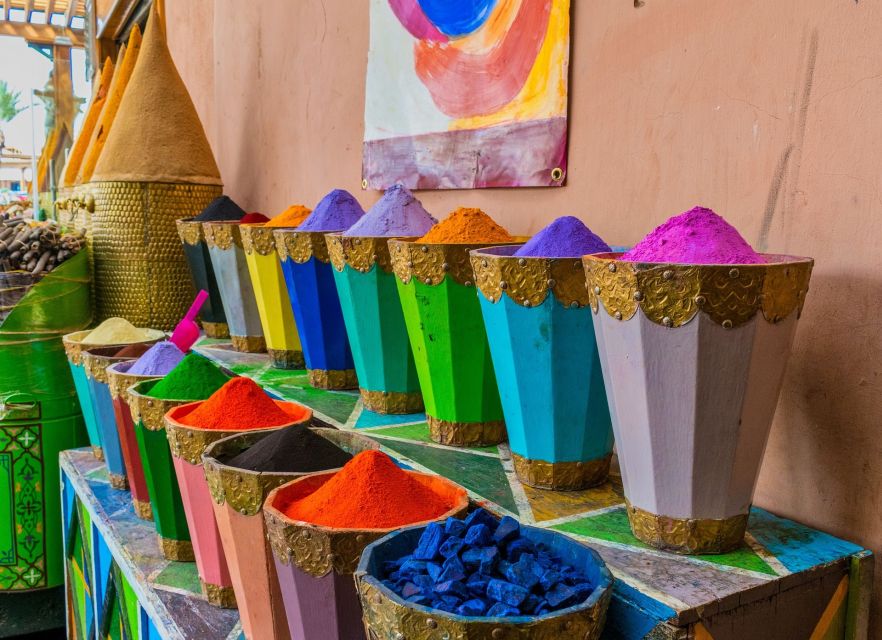
- Old medina navigation: spice shops, artisan workshops, and art galleries along the maze-like streets
- Jemaa el Fna finale: storytellers, snake charmers, musicians, orange juice sellers, and henna tattoo artists
Koutoubia Mosque: the best first lesson in Marrakech
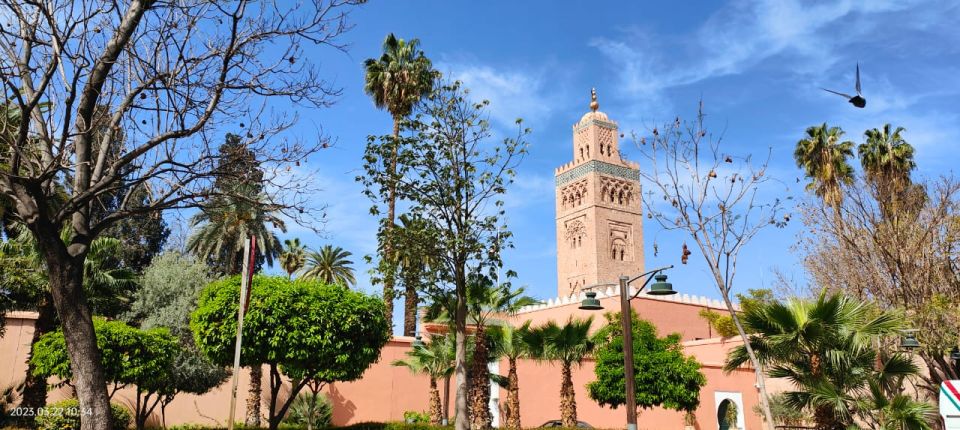
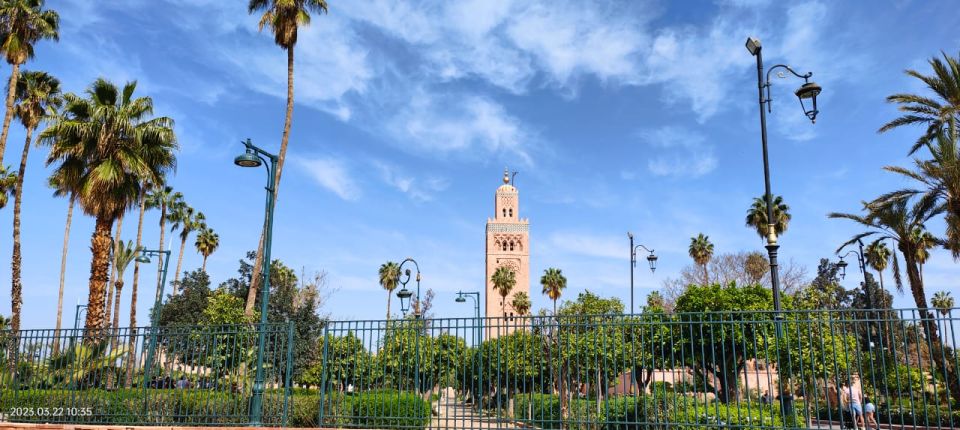
Your tour starts with a drive to La Koutobia Mosque, the largest mosque in Marrakech. It was built in the 12th century, and its 69-meter minaret is the landmark people use to orient themselves across the city. Even if you don’t go inside, the setting helps you understand why the medina grows around religious and social life.
Right outside, your licensed guide explains Islam and the five pillars, plus everyday worship habits you’ll notice in Morocco. That context matters in Marrakech because the city isn’t just architecture on display. It’s a living system of habits, schedules, and shared public space.
You can also read our reviews of more walking tours in Marrakesh

What I like about starting here
Starting at Koutoubia gives you a compass for everything that follows. When you later walk the souks and alleys, you’ll see the city through a clearer lens: movement isn’t random; it flows through purpose.
Watch-outs for this first stop
This part works best if you’re comfortable with sun and walking on uneven ground. Wear a hat and sunglasses, because Koutoubia’s area can be bright and open.
Bahia Palace: where the royal household is still visible
From Koutoubia, you continue on to Bahia Palace, a 19th-century monument tied to the wealth of Moroccan royalty at the time. The palace took 15 years to build and includes 160 rooms, which gives you a real sense of scale—this wasn’t a casual residence.
What makes Bahia Palace worth your attention is the chance to read Moroccan architecture in person. Your guide shows you features you might otherwise miss when you’re simply moving from room to room. You’re looking for patterns: how light enters, how spaces connect, and how decoration signals status.
The practical reality: entrances cost extra
Entrance fees to Bahia Palace are not included. That means you’ll want to expect a separate ticket cost on the day. If you’re traveling with limited cash, plan for it early.
A few more Marrakesh tours and experiences worth a look





How this stop fits the “3-hour” format
In a short tour, Bahia Palace can feel like a highlight—but only if your guide keeps it focused. You want enough time to connect the architecture to the story, not just rush through rooms.
Saadian Tombs and the old Jewish quarter streets
After Bahia Palace, you move along a short route through the old Jewish quarter. Then you reach the Saadian dynasty tombs, a site dating back to the 17th century. The tombs were discovered in 1917, and they’re famous for ornate decoration, including carefully detailed rooms and ceilings.
This stop is the kind of place where your guide’s narration matters. The tombs aren’t only impressive because they look “pretty.” They’re impressive because they reflect how power, artistry, and remembrance were expressed in Morocco over time.
Why the tombs matter in your overall walk
Many first-time Marrakech tours focus on markets only. Here, the tombs give your walk a vertical view—depth in time. After this, the street scenes in the medina don’t feel like background. They feel like part of the same city that built and preserved meaning.
Another thing to plan for: extra entrance fees
Like Bahia Palace, entrance fees to the Saadian Tombs are not included. Build a small buffer into your budget for tickets.
A smart caution from real-world experience
Even with a set route, I’d keep one practical idea in mind: in some cases, guides can take extra time in shops or detours, which can cut into time for the two ticketed sites. So when you meet your guide, it’s completely fair to ask how the time will be split between Bahia Palace and the Saadian Tombs, and to confirm you’ll have enough time for both.
Walking the medina maze: souks, spices, workshops, and art
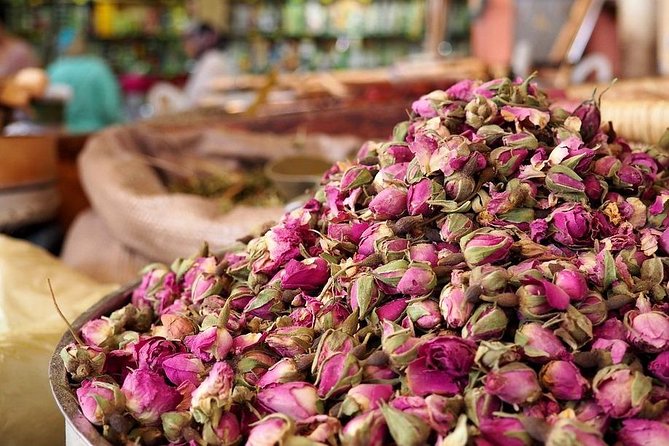
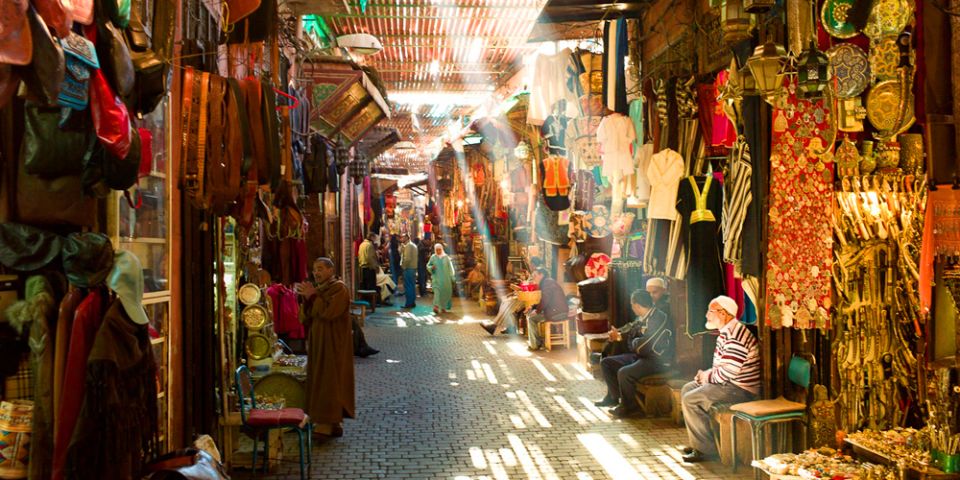
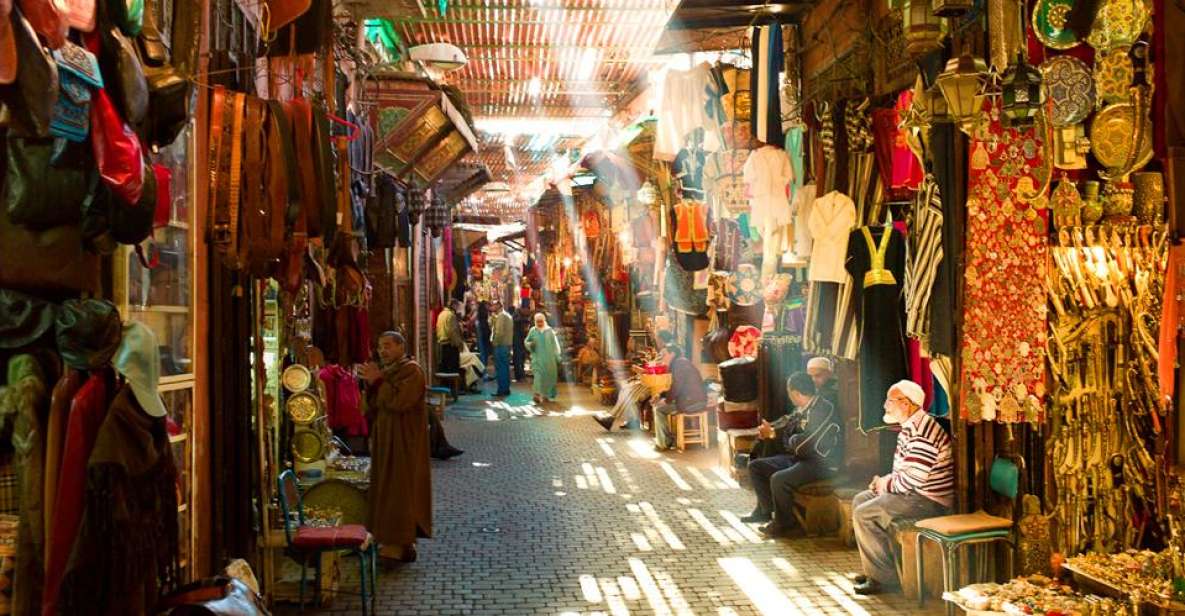
Now comes the part that people remember: walking deeper into the labyrinth of streets. Your guide brings you through the medina past spice shops, artisan workshops, and art galleries. These aren’t random stops. They’re windows into everyday craftsmanship and trade.
This is where a good guide earns their fee. The medina can feel like a puzzle box—beautiful, but easy to get turned around in. When you’re with a licensed guide, you can spend your energy noticing details instead of constantly checking directions.
What you’ll see (and why it feels real)
You’ll pass shopfronts with goods that connect directly to local life: spices used in cooking, artisan work you can often trace to specific crafts, and small galleries where artwork is displayed close to the street. It’s the kind of experience where you learn faster by seeing how the neighborhood is organized around production and selling.
How to make this part enjoyable
- Comfortable shoes are non-negotiable. Plan for stone, cobbles, and short uneven stretches.
- If you’re shopping, go slowly. You’re on foot with a fixed time, so deciding later can backfire.
- Don’t treat this like a museum walk. This is a neighborhood. Keep your pace respectful, especially around busy shop entrances.
Jemaa el Fna Square: the dramatic finale you can ride into
Your tour ends at Jemaa el Fna Square, described as the most famous square in all of Africa. It’s not quiet, and it’s not subtle. Your guide finishes you here so you can catch the atmosphere at street level.
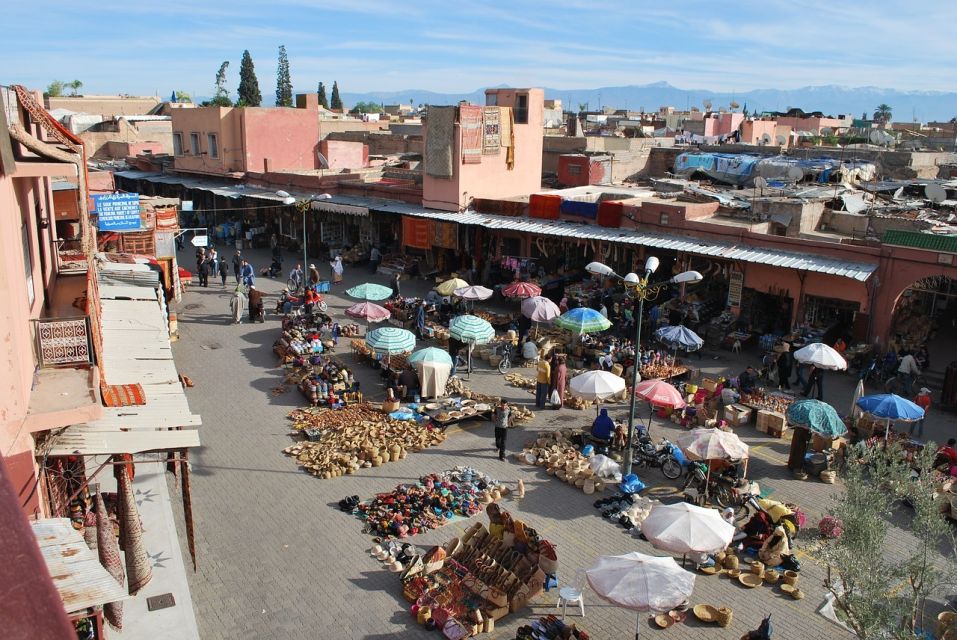
Expect a performance crowd: storytellers, snake charmers, musicians, orange juice sellers, and henna tattoo artists all compete for your attention. The square works like a live stage. Even if you don’t participate, watching is part of the experience.
The small cash trick that helps
Bring 10 or 20 dirham notes if you want to take photos of the entertainers. Having small bills ready makes the moment smoother and avoids the awkward scramble of searching your bag while people are calling out.
A note on timing and energy
Since the tour is only 3 hours, Jemaa el Fna can feel like a landing that’s slightly abrupt. If you want more than a quick look, treat the ending as your start—stay after, take photos, and keep exploring at your own pace.
Price and value: what $82 gets you (and what costs extra)
This tour costs $82 per person. For that price, you’re buying three main things: a licensed guide, air-conditioned vehicle rides for the transfers, and guided time for key public stops like Koutoubia and Jemaa el Fna.
Here’s what’s included:
- Licensed tour guide
- Air-conditioned modern vehicle
- Pickup and drop-off limited to hotels located outside Medina
- Visit to Koutoubia Mosque
- Visit to Djamaa El Fna Square
And here’s what isn’t included:
- Entrance fees to Bahia Palace
- Entrance fees to Saadian Tombs
So the real value depends on how you handle the ticketed sites. If you’re the type who enjoys architectural and cultural context, those two entrances can make the price feel justified. If you’re only after the souks and square, the paid structure may feel heavy since part of the route depends on additional ticket costs.
Language options are a real benefit
Your guide can operate in Spanish, English, French, German, or Italian. That matters in Morocco because the best parts of the tour come from explanations—like the five pillars and how worship habits show up in daily life.
Logistics that can make or break a short medina walk
A 3-hour schedule sounds easy until you’re doing it in a city with crowds and uneven ground. These details are worth your attention.
Start with what to bring
You’ll want:
- Passport or ID card
- Comfortable shoes
- Sunglasses
- Sun hat
If you can, add sunscreen. The tour data doesn’t mention it directly as a requirement, but it does recommend a hat, and sun can be intense.
Meet-up realities inside Morocco’s layout
Pickup and drop-off are limited to hotels outside Medina. When you book, make sure you provide your pickup address clearly. Also, if you’re staying inside the Medina, you may need to coordinate a workable meeting location outside it, since the transfer is restricted to hotels outside the area.
Plan around walking speed
This experience is not suitable for wheelchair users. Even if you’re fine on your feet, you should still expect steady walking on uneven streets.
A key reliability tip
Short tours can be sensitive to day-of timing. There has been at least one case where a flight delay meant the tour didn’t happen and the provider didn’t reschedule. If your trip is flight-heavy, build buffer time into your Marrakech day so you’re not gambling on meeting a tight schedule.
Who this tour suits best—and who should choose differently
This works best if you:
- Want an organized introduction to Marrakech’s major stops without spending all day in transit
- Prefer a guide who explains what you’re seeing (religious context, architecture, and historical sites)
- Like a mix of landmark visits and street-level wandering through souks, workshops, and galleries
It may be a poor fit if you:
- Want a slow, long, shopping-heavy experience (the walk is designed for a 3-hour arc)
- Need perfect reliability due to tight flight times
- Are expecting a museum-like route with no trade-offs in pace
And if you don’t want to deal with extra ticket costs, note that Bahia Palace and the Saadian Tombs have entrance fees not included.
Should you book this Marrakech 3-hour walking tour?
If you want a solid first pass through Marrakech—Koutoubia, Bahia, Saadian Tombs, souks, and a dramatic finish at Jemaa el Fna—this tour can be good value for a half-day plan. The licensed guide format is especially helpful in a medina where getting turned around is easy.
I’d still book with your eyes open. Since entrance fees are separate and the tour time is short, make sure you’re clear at the start that Bahia Palace and the Saadian Tombs are part of your day and that you’ll have enough time for them. If your schedule is flight-dependent, add buffer so you’re not relying on the tour to save a tight connection.
FAQ
How long is the Marrakech 3-hour walking tour?
The tour is 3 hours long.
What does the $82 per person price include?
It includes a licensed tour guide, an air-conditioned vehicle, pickup and drop-off limited to hotels outside Medina, a visit to Koutoubia Mosque, and a visit to Djamaa El Fna Square.
Are entrance fees included for Bahia Palace and the Saadian Tombs?
No. Entrance fees for Bahia Palace and the Saadian Tombs are not included.
Where do we meet for pickup?
You meet your guide and driver at your hotel/riad for the short drive, but pickup and drop-off are limited to hotels located outside Medina. You’ll need to provide your pickup address when booking.
Will we visit the medina souks and back streets?
Yes. You’ll walk through the maze-like streets in the medina, past spice shops, artisan workshops, and art galleries.
What happens at the end of the tour?
You end at Jemaa el Fna Square, where you can see storytellers, snake charmers, musicians, orange juice sellers, and henna tattoo artists.
Should I bring cash for photos at Jemaa el Fna?
It’s recommended to have 10 or 20 dirham notes handy if you want to take photos of the entertainers.
What should I bring with me?
Bring your passport or ID card, comfortable shoes, sunglasses, and a sun hat.
Is the tour wheelchair accessible, and are pets allowed?
It is not suitable for wheelchair users, and pets are not allowed.
Can I cancel, and what if my plans change?
The tour allows cancellation up to 24 hours in advance for a full refund.