REVIEW · MARRAKESH
From Marrakech: 3-Day Desert with luxury camp, camel & meals
Book on GetYourGuide →Operated by RED CITY TRANS · Bookable on GetYourGuide
Golden dunes start after a mountain climb. This 3-day run from Marrakech to Merzouga strings together the Tizi n’Tichka pass (2,260 m) and the UNESCO Kasbah Aït Ben Haddou before you ever taste desert air. It’s a road trip with purpose: dramatic views, classic stops, and the kind of pacing that makes the long drive feel worth it.
What I really like is how the tour balances culture and scenery without feeling like you’re sprinting. You’ll also pass through Ouarzazate’s film studios, then wind down into the Dades and Todra Gorge world of red rock and twisting roads—perfect if you want variety, not just one big photo stop.
One thing to know up front: you’re signing up for long days in the minibus. Expect hours on the road (often around 6–8), and while there is air conditioning, comfort can depend on the day and the conditions.
In This Review
- Key things you’ll care about most
- From Marrakech to the Atlas: where the trip starts strong
- Kasbah Aït Ben Haddou and Ouarzazate’s film studios
- Dades Valley: red cliffs, short walks, and payoff views
- Todra Gorge and the Valley of Roses: nature with structure
- Merzouga and Erg Chebbi: camel trek at sunset and sunrise
- Luxury Berber camp under the stars: the real highlight
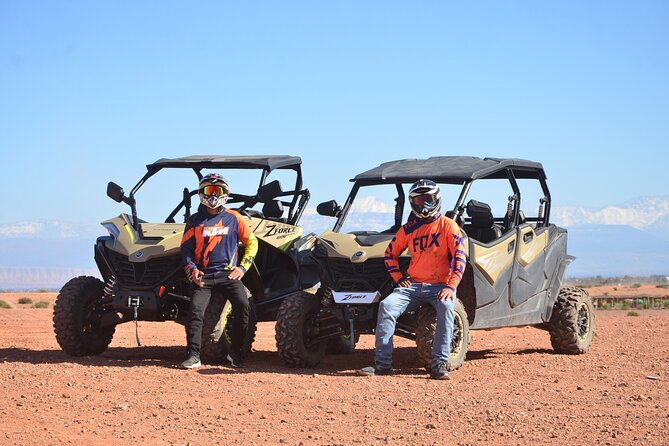
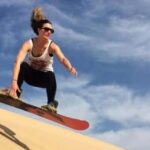
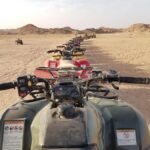
- Optional extras: 4×4 dune tour and sandboarding
- Comfort and logistics: what to plan for in real life
- Who this tour is for (and who should skip it)
- Should you book this Marrakech to Merzouga desert tour?
- FAQ
- FAQ
- How long is the desert tour from Marrakech?
- Where does the tour take you, and what’s the final drop-off option?
- What’s included in the price?
- Are lunch and drinks included?
- What activities do you do in the desert?
- Is this tour suitable for wheelchair users?
Key things you’ll care about most
- Tizi n’Tichka pass at 2,260 m: big-window mountain views early in the trip
- Aït Ben Haddou + Ouarzazate film studios: UNESCO history plus cinematic Morocco
- Dades and Todra gorges: red rock canyons that feel real, not staged
- Erg Chebbi camel trek: sunset and sunrise on towering dunes
- Luxury Berber camp under the stars: traditional dinner, live entertainment, and starry skies
- Optional add-ons: 4×4 dune tour and sandboarding if you want extra action
From Marrakech to the Atlas: where the trip starts strong
Your desert adventure begins with pickup from your hotel (or the nearest accessible point), then a comfortable, air-conditioned minibus ride. The driver is the key here: most of the best moments on this kind of route come from knowing when to stop, when to turn for the best views, and how to keep the day smooth even when the road is long. You’ll be working from a fixed 3-day flow, but there are plenty of breaks along the way.
Day one is about altitude and atmosphere. You’ll cross the High Atlas Mountains via the scenic Tizi n’Tichka pass at 2,260 m. Even if you’ve seen mountain roads before, this pass feels like a change of world—steeper slopes, sharper curves, and wider panoramas. If you’re the type who likes stepping out for a few minutes just to let the view sink in, you’ll enjoy the rhythm of the day.
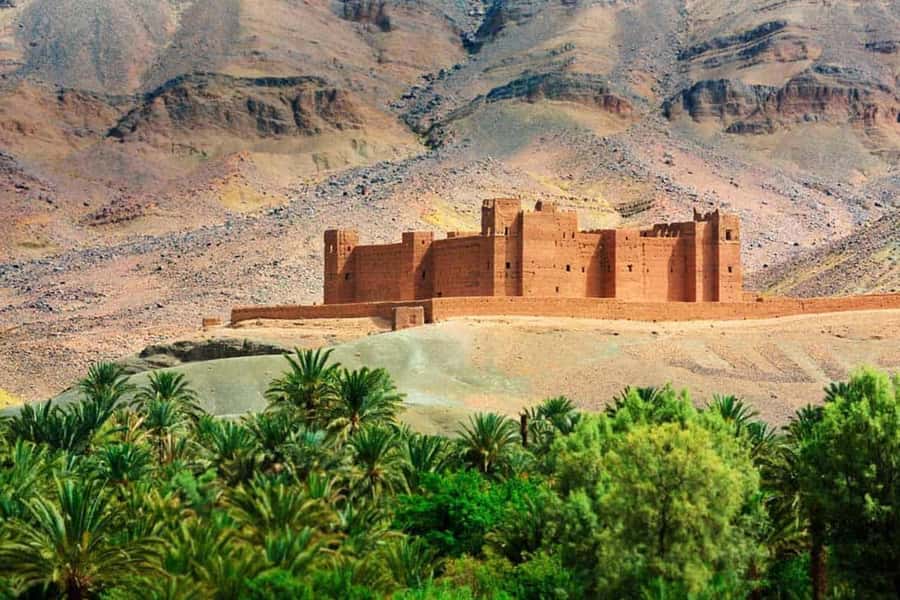
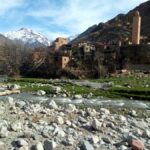
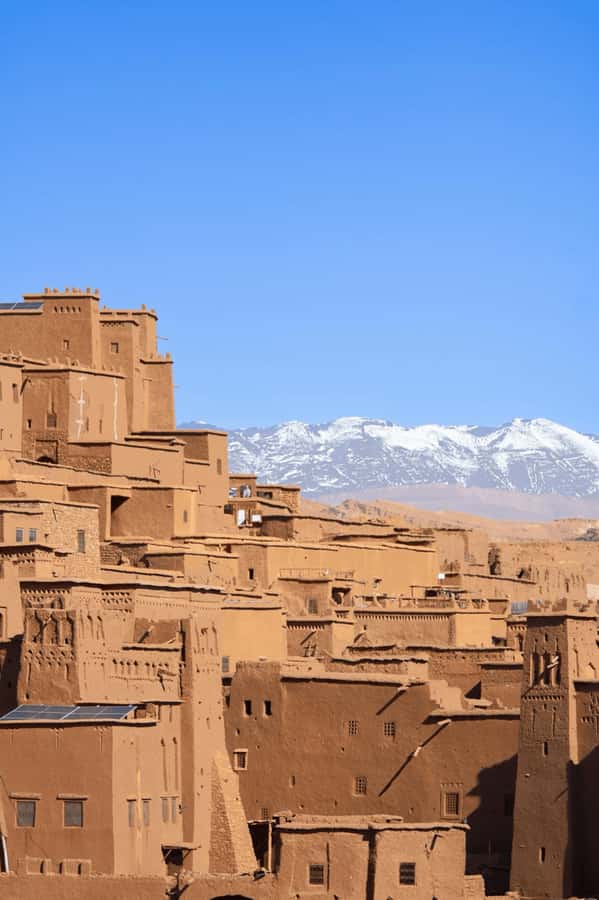
After the pass, you’ll hit Morocco’s “classic Morocco” circuit: Aït Ben Haddou, a UNESCO-listed kasbah that’s still shaped by how caravans and trade moved through the region. The place looks like it belongs to a film set, but it’s a real, functioning landscape—mud-brick buildings, sun and shadow, and that slightly unreal feeling you only get in old walls that have survived.
A few more Marrakesh tours and experiences worth a look
Kasbah Aït Ben Haddou and Ouarzazate’s film studios
This is one of the trip’s smartest choices: it gives you both heritage and modern storytelling in the same stretch.
At Aït Ben Haddou, you’re walking through a site where the geometry matters. Kasbahs aren’t just pretty—they were built for defense, weather, and daily life. You don’t need a lecture to feel that. You can enjoy it best by moving slowly: check the corners, look up at the walls, and notice how everything is designed for thick walls and shade. It’s the kind of stop that turns your photos from random shots into something with context.
Then comes Ouarzazate’s film studios. This part is for you if you like how places become characters. Morocco has been used as a backdrop for years because the scenery and architecture are so dramatic. The studios add a different lens: you’ll start thinking about how the same region can look cinematic or historical, depending on angle, light, and camera choices.
If you’re hoping for a stop that feels effortless and low-stress, this section delivers. You won’t feel like you’re rushing; you’re collecting moments.
Dades Valley: red cliffs, short walks, and payoff views
Once you leave the big “headline” stops behind, the tour settles into the gorge country. You’ll spend one night in the Dades Valley, which is known for the red-rock feel—cliff faces, winding roads, and rock formations that keep changing as the light shifts.
Why I think the Dades Valley stop matters: it’s not just scenery. It’s a transition zone between the Atlas and the desert. You’ll feel the land changing under your feet, and you’ll have the chance to reset before the desert takes over. Dades also gives you time to stretch and recharge, which matters because the driving days don’t stop being long.
You’ll have breakfast and dinner included on the days noted in the package, with lunches and drinks not included. That means your food planning is simple: eat when meals are provided, but expect you’ll pay for lunch on your own during stops.
If you’re sensitive to motion or long sitting, this is also where you’ll appreciate the break structure. The driving is typically broken into chunks rather than nonstop hours.
Todra Gorge and the Valley of Roses: nature with structure
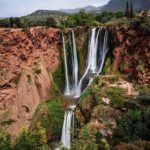
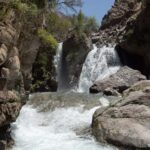
Next up: Todra Gorge. This is one of those places where “narrow and tall” explains everything. The canyon walls rise dramatically, and even a short walk can make you feel like you stepped into a carved corridor. It’s an easy place to enjoy quietly—find a viewing spot, take a few photos, and just watch how the shadows crawl down the rock.
Then you’ll also see the Valley of Roses. This part may feel seasonal if you’re visiting outside peak bloom, but the route still works because the valley setting helps you understand why the area has a reputation. It’s not just a stop name; it’s about geography—valley walls, agricultural rhythms, and how Morocco’s landscapes support different kinds of life.
The practical benefit here is variety. After kasbahs and film-studio stops, Todra Gorge gives you “real rock” energy, and the Valley of Roses adds a softer, human-scale contrast. Together, they make the trip feel like a journey instead of a checklist.
Merzouga and Erg Chebbi: camel trek at sunset and sunrise
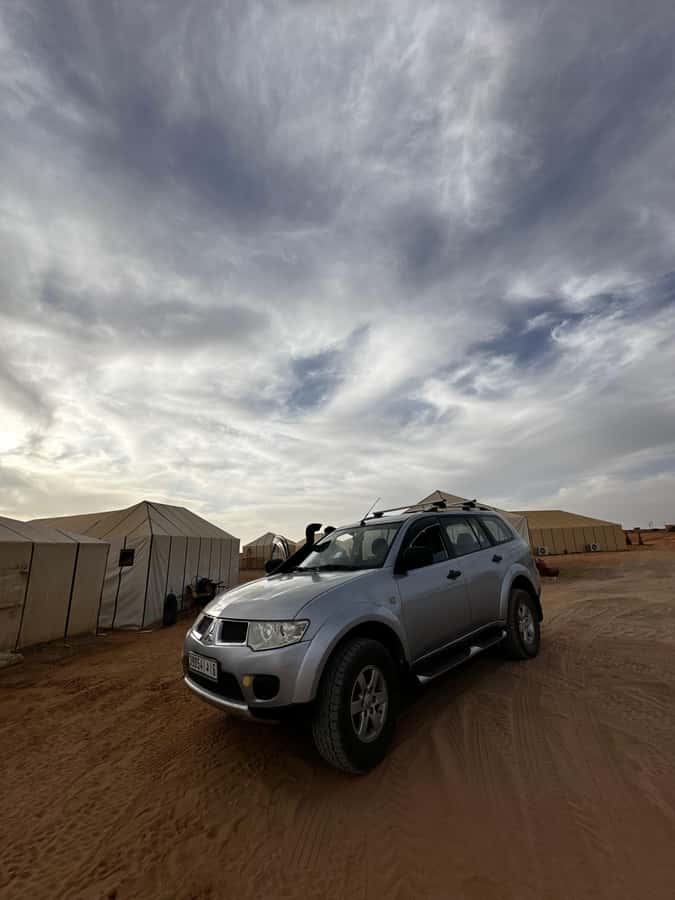
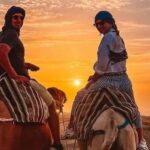
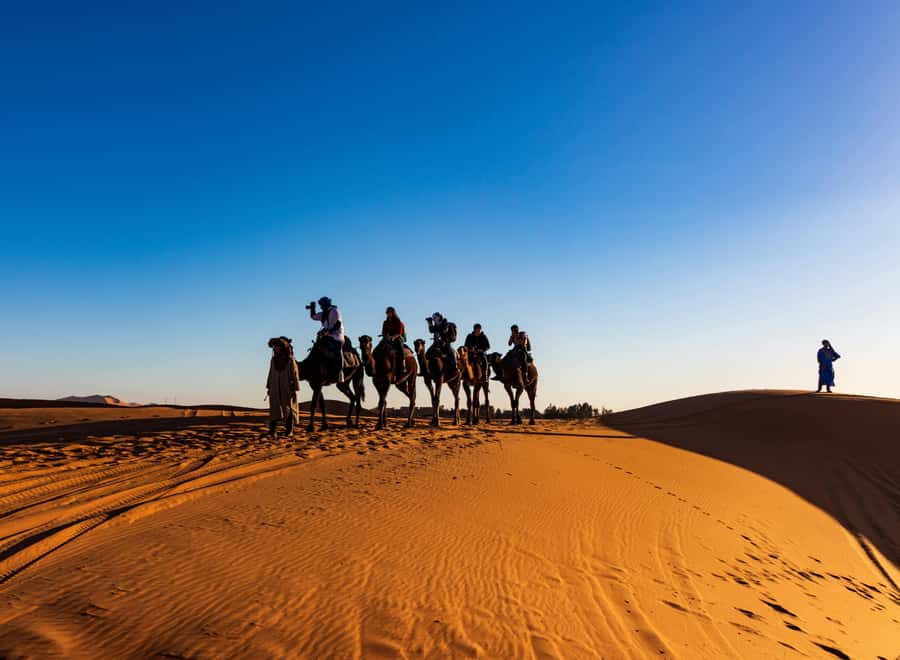
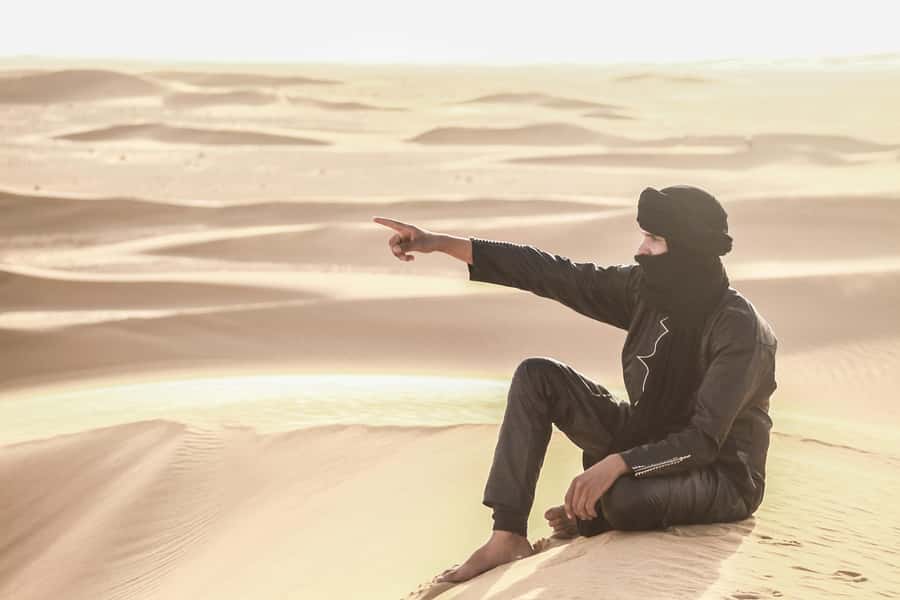
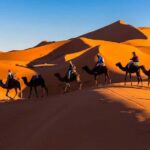
Now the trip turns into the reason most people book. You’ll ride camel trek into Erg Chebbi dunes, usually timed for sunset and sunrise moments. That timing is key because it changes everything: dunes look different at different hours, and the light turns a “pretty sand pile” into something sculptural and alive.
Camel trekking is both simple and humbling. You don’t need special skills, but you do want comfortable shoes because you’ll walk on uneven ground around staging areas. Bring sunglasses and sunscreen—desert glare can be surprisingly intense even when it doesn’t feel scorching yet.
The sunset-to-camp experience is the emotional hit. You’ll be watching the dunes darken as night approaches, then waking up to the softer glow of dawn. In a place like this, small timing changes matter a lot, so I love that the package is built around those two moments.
A few more Marrakesh tours and experiences worth a look
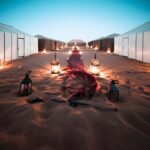
Luxury Berber camp under the stars: the real highlight
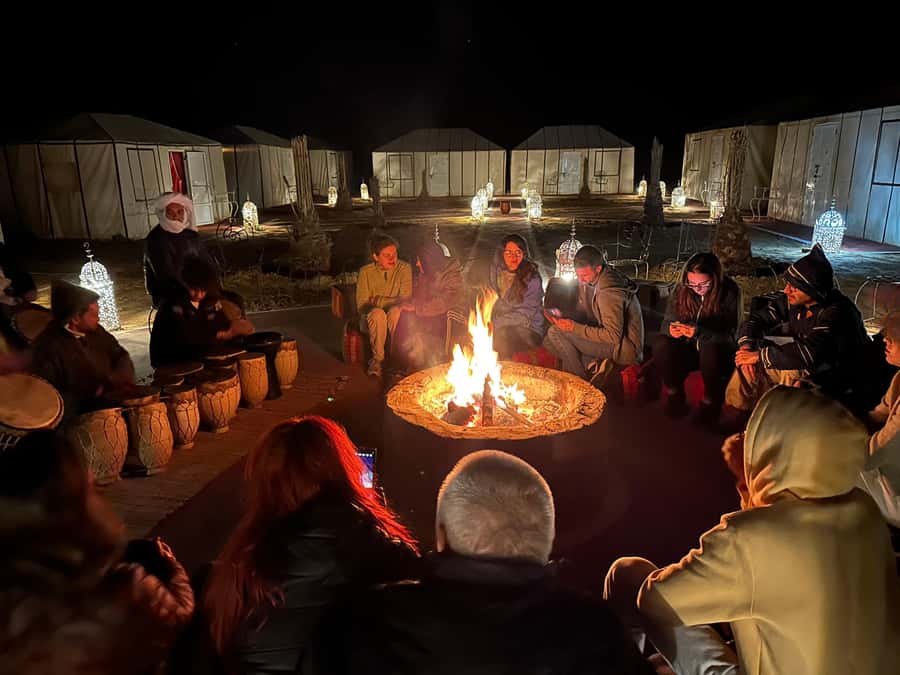
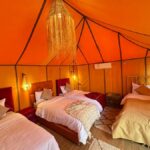
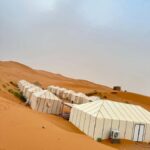
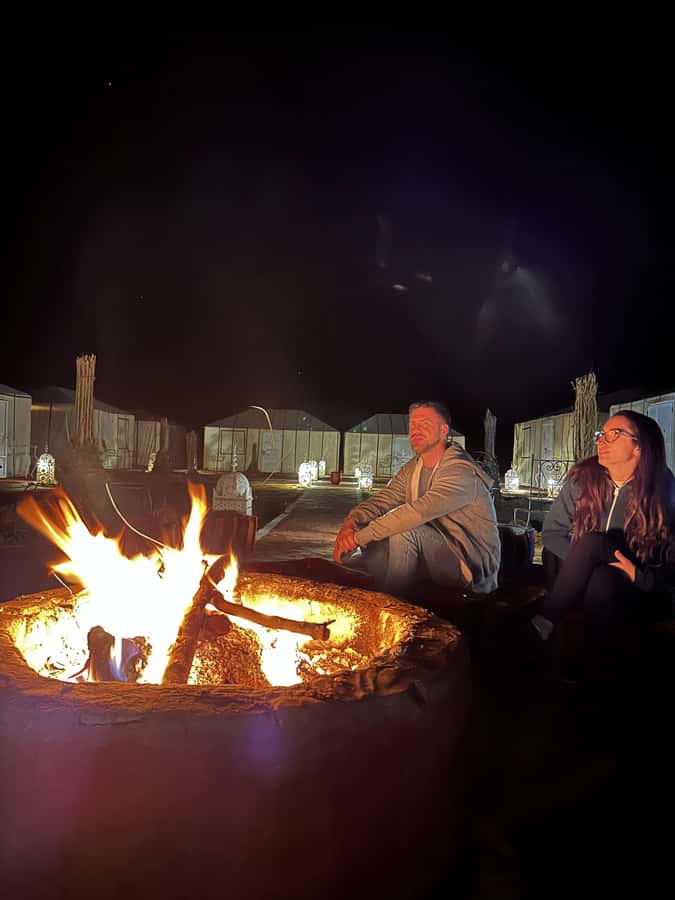
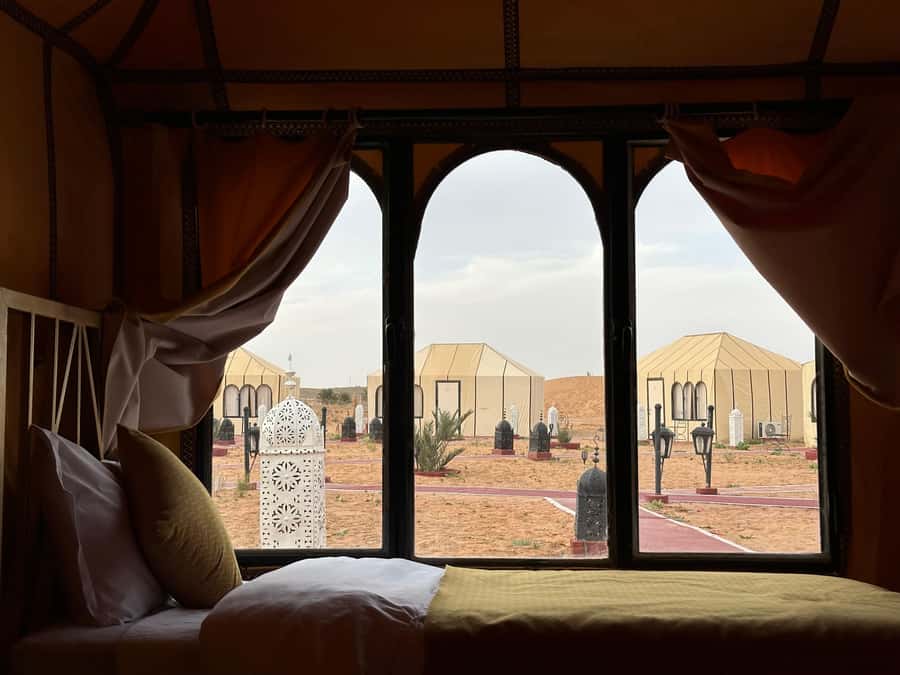
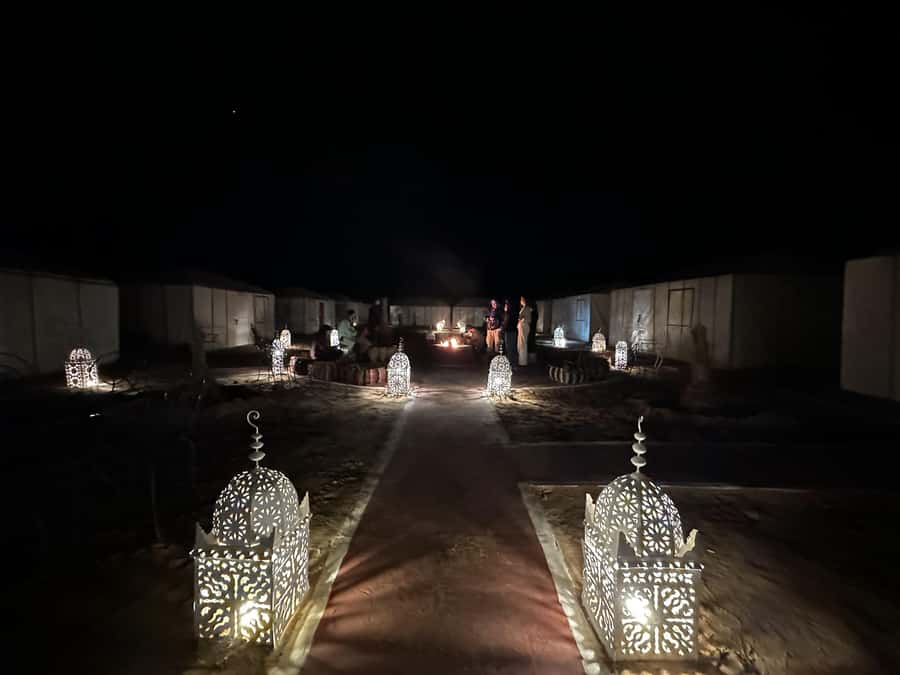
The overnight in the luxury Berber camp is where the tour earns its name. This isn’t just a bed for the night. You’ll have a traditional dinner and live Berber entertainment, plus music around the camp atmosphere.
One reason this part is so memorable is the contrast: you go from touring towns and gorges in daylight to sitting under the sky at night, with a dinner rhythm that feels local rather than rushed. It’s the kind of night that makes the earlier driving feel like pre-work.
A practical note if you’re expecting hotel-level everything: desert conditions can limit comfort details. Even in luxury tents, you might find limited Wi‑Fi (sometimes only a weak signal in certain areas), and bathroom setups can be more basic than you’d find back home. One more detail: the flush strength and privacy can vary. If you’re someone who really cares about bathroom design, plan your expectations accordingly.
Still, the overall camp experience—traditional food, entertainment, and star-filled skies—tends to be the standout. If you choose the luxury tent option, you’re usually getting a nicer setup than standard, but you’re still in the Sahara, not in a city.
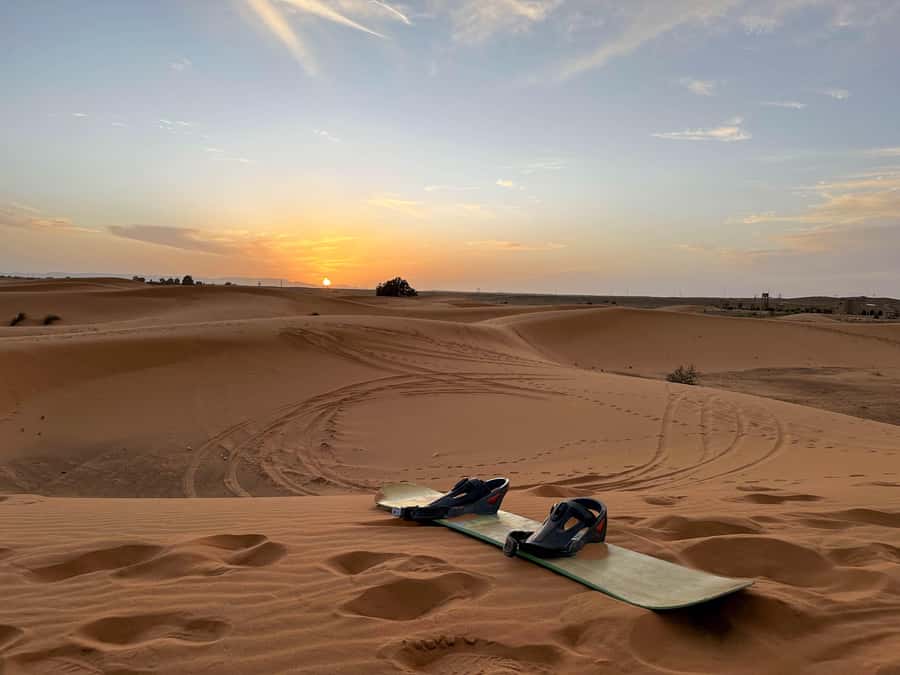
Optional extras: 4×4 dune tour and sandboarding
If you want more motion, there are optional add-ons:
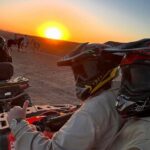
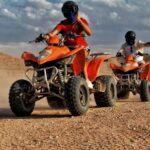
- Optional 4×4 dune tour
- Optional sandboarding
This is a good approach if you like variety but don’t want to overbook yourself. The camel trek already gives you the core desert experience; these options are for extra thrill.
Comfort and logistics: what to plan for in real life
This tour uses an air-conditioned minibus and a professional, experienced driver. The tradeoff is time. Expect long driving days, often around 6–8 hours, with stops to stretch and eat. Even when the route is well planned, you’ll be sitting for much of the day.
Some small comfort tips that can save you:
- Wear light layers. AC may not always feel powerful, and you’ll appreciate breathable clothing.
- Bring ice water if you can. It’s easier to handle heat and fatigue when you can cool down quickly.
- Comfortable shoes matter more than you’d think. You’ll do short walks at multiple stops.
About food: meals included are breakfast and dinner on both days referenced in the package. Lunches and drinks are not included. So budget extra for lunch, and keep some cash on hand because lunch options can be fixed to certain stops along the route. If you like choosing where you eat, this part is less flexible than you might want.
Who this tour is for (and who should skip it)
This is a strong fit if you want a classic Morocco desert experience in three days, without the hassle of planning every leg. You’ll enjoy it most if you:
- Want big scenery plus culture stops (kasbah + gorges + desert)
- Like guided pacing and frequent view breaks
- Are excited by camel trekking and a night in a desert camp
It’s not suitable for wheelchair users, and if you strongly dislike long car days, you may find the pace draining. Also, if you expect lunch to be included or you want unlimited choice for meals, you’ll want to set expectations early.
Should you book this Marrakech to Merzouga desert tour?
I’d book it if you want one trip to deliver the full Morocco desert story: Atlas Mountains over a famous pass, Aït Ben Haddou, gorges like Todra, then Erg Chebbi with camel time at both sunset and sunrise, plus a real camp night with dinner and music.
Skip it if you have low tolerance for long drives, want fully flexible meal control, or need accessibility support (since it’s not wheelchair-friendly). If you go in knowing those limits, the value is solid: you’re paying for transportation, two nights of lodging (hotel + desert camp), meals that matter (breakfast and dinner), camel trekking, and cultural entertainment—plus optional add-ons if you want more sand time.
FAQ
FAQ
How long is the desert tour from Marrakech?
It’s a 3-day tour, traveling from Marrakech (or sometimes Ouarzazate) to Merzouga in the Erg Chebbi area, with overnight stays including one desert camp night.
Where does the tour take you, and what’s the final drop-off option?
The tour is in the Drâa-Tafilalet region and is designed around Merzouga and Erg Chebbi. You can choose to return to Marrakech or be dropped off in Fez.
What’s included in the price?
The package includes pickup/drop-off, air-conditioned minibus transportation, a professional experienced driver, 2 nights’ accommodation (1 hotel and 1 desert camp), meals (breakfast and dinner on both days), camel trekking, and live Berber entertainment. It also includes optional 4×4 dune tour and optional sandboarding if you choose them.
Are lunch and drinks included?
No. Lunches and drinks are not included.
What activities do you do in the desert?
You’ll ride camels into the Erg Chebbi dunes, with sunset and sunrise moments. You can also add an optional 4×4 dune tour and optional sandboarding.
Is this tour suitable for wheelchair users?
No. It is not suitable for wheelchair users.