REVIEW · MARRAKECH
Cultural Heritage of Marrakesh
Book on Viator →Operated by Morocco Friendly Tours · Bookable on Viator
Jemaa el-Fnaa hits fast, and it makes sense faster. This private half-day tour gives you a guided path through Marrakech’s most meaningful sights, from the UNESCO main square to 12th-century and 16th-century landmarks. I especially liked the chance to see Koutoubia Mosque up close and then connect it to what’s around it, not just snap a few pictures.
Two things I really enjoyed were the way you get a practical sense of the Medina layout and the architecture stops, where ornate design details actually get explained. The one thing to consider is timing: with about 3 hours 30 minutes, you’ll cover a lot, but you won’t have hours to linger like you might on a longer palace or souk day.
In This Review
- Key Highlights You’ll Feel Immediately
- Getting Oriented in the Medina With a Real Plan
- Jemaa el-Fnaa Square: More Than a Photo Stop
- Koutoubia Mosque and the 70-Meter Minaret
- Medersa Ben Youssef: The Old Islamic University
- Bahia Palace: Si Moussa to El Bahia
- Medina of Marrakech Souks: Dyers, Leather, and Blacksmiths
- Price and Value for a Private Half-Day
- What Makes This Tour Different From a Basic City Walk
- Who Should Book This Marrakech Cultural Heritage Tour
- Should You Book This Tour?
- FAQ
- What is the duration of the Marrakech cultural heritage tour?
- How much does the tour cost?
- Is this a private tour?
- Where does the tour start and end?
- What are the main places you visit?
- Are admission tickets included?
- Is lunch included?
- What’s included in the tour besides the guide?
- Does it use a mobile ticket?
- Can I cancel and get a refund?
Key Highlights You’ll Feel Immediately
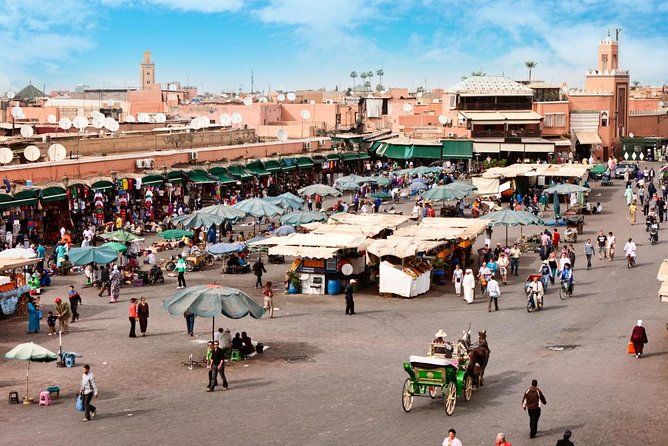
- UNESCO Jemaa el-Fnaa, with your guide helping you read what’s going on in the square
- Koutoubia Mosque’s 70-meter minaret, plus the Almohad-era context that makes it click
- Medersa Ben Youssef, a 16th-century Islamic school where you can see dormitory-style spaces
- Bahia Palace, a standout palace story tied to Si Moussa and El Bahia
- Old Medina craft souks, including dyers, leather, and blacksmith markets
Getting Oriented in the Medina With a Real Plan
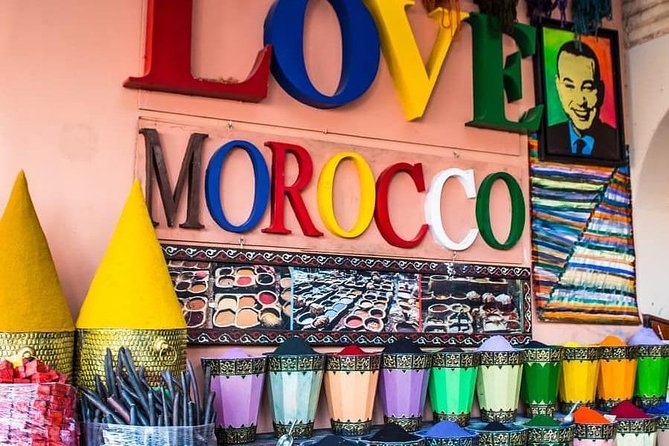
Marrakech’s Medina can feel like a maze from the first minute. That’s not a complaint—it’s the point. But if you go in without a plan, you can burn time circling and end up only seeing what’s loudest or easiest to reach.
This tour solves that. You’re not just dropped into famous spots. You get a guided route that connects the “wow” moments to the geography and culture behind them. That’s what makes the half-day format work: you’re learning the city while you’re walking it.
You also get a professional guide and a map, which is a bigger deal than it sounds. In the Medina, a map you actually understand (because someone taught you how to use it) is worth its weight in mint tea.
You can also read our reviews of more historical tours in Marrakech
Jemaa el-Fnaa Square: More Than a Photo Stop
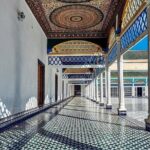
Jemaa el-Fnaa is the heart of the old city, and it’s listed as a UNESCO World Heritage site. It’s also, according to this route, the biggest square in North Africa. So yes, it’s busy. And yes, the energy can feel chaotic.
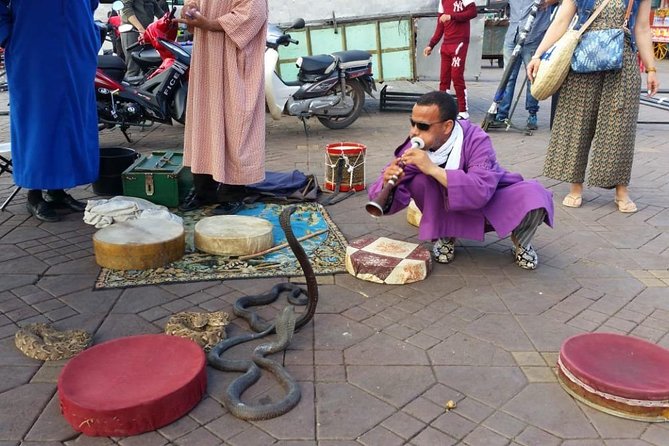
Here’s what you’ll do with it: you’ll spend a short, focused time in the square and learn how to interpret what you’re seeing. It’s not only performers and street life. The square also functions like a meeting point and a stage for everyday Marrakech. You’ll notice how the crowd organizes itself, how vendors keep moving, and how music and storytelling create their own rhythm.
Expect the classic sights: snake charmers, fortune tellers, musicians, and orange juice sellers. The real value is that your guide helps you read the scene instead of treating it as one big photo safari. And because your time is scheduled, you’re less likely to get stuck getting pulled in every direction.
One practical note: the square can be intense for some people, especially if you’re sensitive to noise or crowds. Going with a guide helps you decide when to linger and when to step back.
Koutoubia Mosque and the 70-Meter Minaret
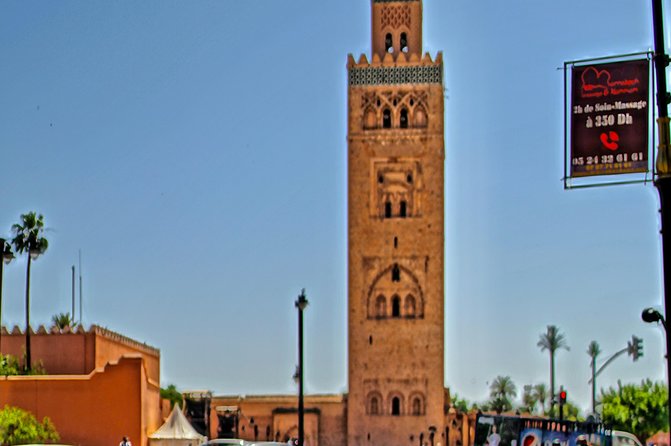
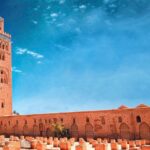
Next comes Koutoubia Mosque, a 12th-century landmark associated with the Almohad dynasty. This is one of those places where the exterior alone can steal the show, especially if you pay attention to the architecture style described on this route: Andalusian influence.
The headline feature is the minaret—70 meters tall, and described here as the tallest one in Marrakech. Even if you know it’s famous, seeing it in the real setting makes it feel more specific. This is where “big” turns into “measured,” because you can judge scale against the Medina streets around it.
Your guide keeps it grounded: it’s not just a landmark, it’s a clue to Marrakech’s historical layers. You’ll learn why this mosque matters in the city’s story and how to spot the design language from different angles.
A small timing perk: your stop is short, so you get the impact without spending your whole morning queuing or wandering.
Medersa Ben Youssef: The Old Islamic University
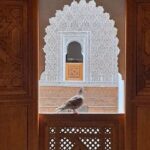
Medersa Ben Youssef is a 16th-century madrasa, and on this tour it’s treated as more than another pretty building. It’s presented as a place of learning—an old Islamic university—so you’ll look at the space differently than you would on a quick exterior photo stop.
You’ll have about 30 minutes here, with a focus on what you can actually observe: dormitory rooms and Moroccan architectural details. That combination matters. It turns “wow architecture” into “wow architecture with a purpose.”
Dormitory-style spaces can be the most surprising part for many visitors because it’s easy to forget that historic schools were built for daily life, not just classes. Even if you can’t understand every inscription or detail, you can feel the layout and the order of the spaces.
One drawback to plan for: admission here is noted as not included on this experience. So it’s smart to budget a little extra for this stop, and check on the day what the entry situation looks like.
Bahia Palace: Si Moussa to El Bahia
Bahia Palace is a major highlight for anyone who likes interiors and design. This stop is described as a masterpiece of Moroccan architecture, and you’re given the palace’s human story along with the visuals.
You’ll hear how the palace was built during the reign of Si Moussa, a former chamberlain, and enlarged by his son, Ba Ahmad. The reason for the expansion is tied directly to a tribute: it was built as a tribute for his favorite wife, El Bahia.
That context changes how you look around. Instead of walking past rooms and arches as random beauty, you start paying attention to what you’re seeing—how spaces flow, where focus is placed, and how the palace reflects status and relationships.
Time is about 40 minutes here, which is enough to enjoy the main interior impression without feeling rushed out the door. Also, this route notes the admission for Bahia Palace as free. That’s excellent value for a stop that can otherwise cost time and money on a self-guided day.




Medina of Marrakech Souks: Dyers, Leather, and Blacksmiths
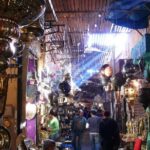
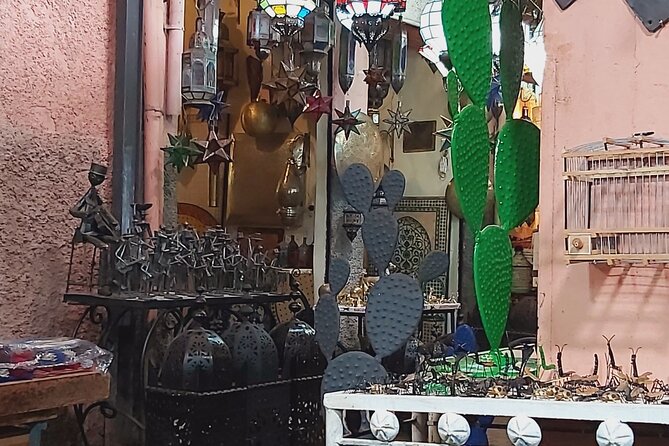
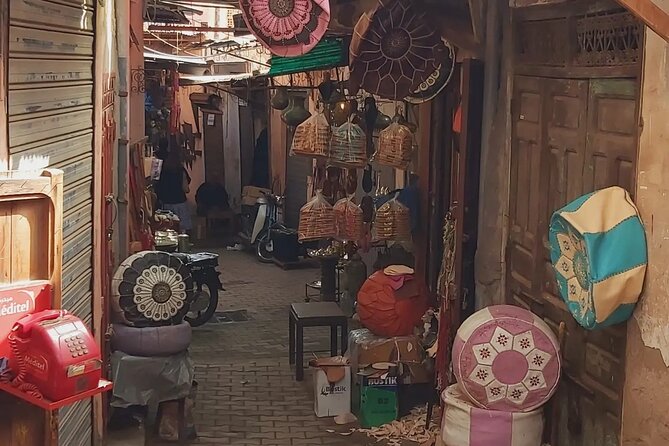
After the palace, the tour shifts back into street-level Marrakech: the Medina of Marrakech and its souks. This is where you’ll spend about an hour, and it’s the best part of the day for people who want to see how crafts still shape the city’s identity.
Your route calls out specific markets you’ll pass through or have time in, including:
- Dyers Market
- Market of Leather
- Market of Blacksmiths
That’s practical because it helps you connect what you see to a category instead of just wandering through stalls. If you’ve ever left a souk feeling like you saw “a bunch of stuff,” this approach makes the experience clearer. You understand what kind of work is happening and why that cluster of shops exists in that part of the Medina.
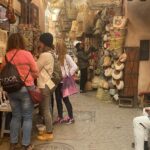
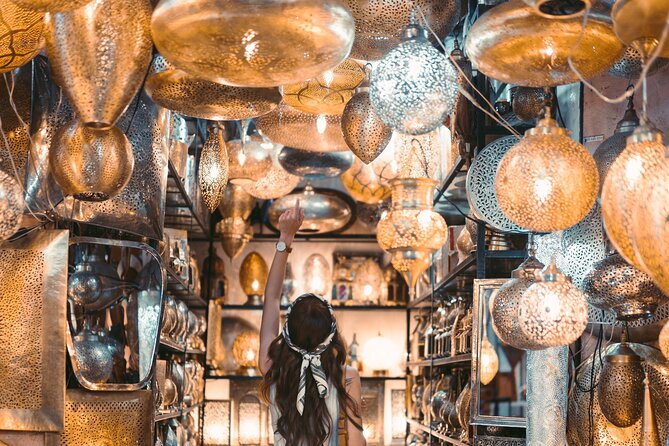
You’ll also get a sense of the Medina as a living system. Crafts, trade, and daily movement overlap. And because you’re not doing this alone, you’re less likely to spend half the time trying to figure out where the path goes next.
The only thing to keep in mind here is sensory overload. Souks are busy, and some areas can feel crowded. A guide helps you move with purpose, and it makes shopping optional instead of necessary.
Price and Value for a Private Half-Day
At $92.92 per group (up to 7 people), this is a pricing model that can be very reasonable—especially if you’re traveling with friends or family. Think of it as spreading the cost of a professional guide across your group, not paying for a separate ticket count for each person.
For first-time visitors, the value is in learning how to navigate. Marrakech is one of those places where “going wrong” costs more than time; it costs the chance to understand what you’re seeing. When you have a guided route through major cultural sites, you reduce that risk.
The duration—about 3 hours 30 minutes—also helps. It’s long enough to cover key landmarks and one souk circuit, but short enough that you can still do another activity the same day. And since the tour ends back at the meeting point, you’re not stuck figuring out transportation or re-navigation.
One more note: this experience is rated 4.9 with a strong recommendation rate, so you’re not gambling on a random guide. That’s not a guarantee, but it’s a good signal.
What Makes This Tour Different From a Basic City Walk
A basic city walk can turn into “see the sites, take pictures, move on.” This experience feels more like learning a city through its cultural anchors.
That shows up in how each stop is framed:
- Jemaa el-Fnaa is treated as a UNESCO square with a real social role.
- Koutoubia Mosque is tied to its Almohad-era origin and standout minaret scale.
- Medersa Ben Youssef is approached as an old school, so you look for daily-life spaces like dormitories.
- Bahia Palace is explained through the people behind it—Si Moussa and El Bahia—so the palace feels human.
- The souks are organized by craft markets, so the Medina becomes easier to understand.
If you want Marrakech to feel like more than a list of places, this is the better way to do it.
Who Should Book This Marrakech Cultural Heritage Tour
This is a great fit if you:
- are in Marrakech for the first time and want a guided lay of the land
- care about architecture, especially Moroccan interiors and design
- want a half-day experience that still feels substantial
- travel as a small group and want private pacing
It might be less ideal if you want lots of free time to wander without structure. The Medina has room for that style of travel, but this tour is built around guided time at each landmark.
Should You Book This Tour?
If you want to get your bearings fast and see the core cultural sites with clear context, I’d book it. The route is tight, the highlights are meaningful, and the guide-driven framing makes the experience feel more like understanding Marrakech than just passing through it.
Book this especially if you’re the type who likes details—why a mosque looks the way it does, what a madrasa was built to do, and how Bahia Palace became tied to specific people and stories.
FAQ
What is the duration of the Marrakech cultural heritage tour?
It runs for about 3 hours 30 minutes.
How much does the tour cost?
The price is $92.92 per group, up to 7 people.
Is this a private tour?
Yes. It’s private, and only your group participates.
Where does the tour start and end?
It starts at Argana J2H6+CPV, Number 18, Znikat Rahba, Marrakech 40000, Morocco. It ends back at the meeting point.
What are the main places you visit?
You’ll visit Jemaa el-Fnaa, Koutoubia Mosque, Medersa Ben Youssef, Bahia Palace, and the Medina of Marrakech souks.
Are admission tickets included?
Admission is included for Jemaa el-Fnaa and Koutoubia Mosque, and it’s included for the Medina souks time. Medersa Ben Youssef admission is not included, while Bahia Palace admission is free.
Is lunch included?
No. Lunch isn’t included.
What’s included in the tour besides the guide?
A map of Marrakech is included.
Does it use a mobile ticket?
Yes, the tour includes a mobile ticket.
Can I cancel and get a refund?
Free cancellation is available up to 24 hours in advance for a full refund. If you cancel less than 24 hours before the start time, the amount paid isn’t refunded.