REVIEW · MARRAKECH
Casablanca luxury day tour
Book on Viator →Operated by Atlas Activities Morocco · Bookable on Viator
Casablanca hits hard in just one day. This private day trip from Marrakech sends you into Hassan II Mosque and the city’s most famous corners, with guided stories tied to architecture and Casablanca’s film legacy. You’ll ride in an air-conditioned vehicle, stop for ocean views, and end back where you started, all on a schedule that starts at 7:00 am.
Two things I like a lot: you set the pace at each stop, and the visit time is generous enough to actually look, not just pose for photos. I also appreciate the human touch from guides such as Noor (and sometimes Moor), who bring the city’s layers to life in clear English and with real local context.
One possible drawback: it’s a long day. The drive from Marrakech takes serious time, and while the tour includes an air-conditioned vehicle, a small number of past guests reported vehicle comfort issues, so it’s worth keeping expectations honest.
In This Review
- Key Highlights You’ll Care About
- Casablanca in One Long Day: What the 7:00 AM Start Means
- Hassan II Mosque: The Architectural Anchor of the Trip
- Movie-City Casablanca Downtown and Madam Rick’s Piano Courtyard
- Ain Diab Corniche: A Coastal Reset From Marrakech Road Time
- Anfa Origins and the Anfa Hotel: Where World War II History Echoes
- Place des Nations Unies: French-Era Administration and the Night Fountain Idea
- L’Eglise du Sacre-Coeur: Stained Glass by Gabriel Loire
- Quartier Habous: The New Medina-Style Souks and a Royal Palace View
- What’s Included vs. What You Handle Yourself (Lunch and Tips)
- Guide Quality Matters: Noor and Moor’s Storytelling Style
- Price and Value: Is $200 Worth It?
- Should You Book This Casablanca Day Tour from Marrakech?
- FAQ
- What time does the Casablanca luxury day tour start from Marrakech?
- How long is the Casablanca day tour?
- Is pickup included?
- Is lunch included?
- Is the Hassan II Mosque entrance fee included?
- Is this a private tour?
- Do I get refreshments during the day?
- Can I cancel for a full refund?
Key Highlights You’ll Care About
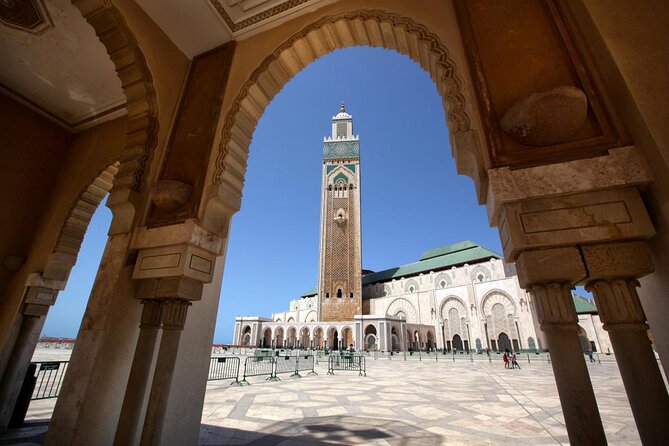
- Hassan II Mosque visit with a guide: A focused stop around the world’s standout Moroccan craftsmanship.
- Movie-era Casablanca atmosphere: Downtown stops linked to the spirit of Casablanca, including a Pleyel piano courtyard connection.
- Ain Diab Corniche break: Sea-air scenery in a Casablanca seaside suburb.
- Real city contrasts, fast: French-era administration buildings, Anfa history, and a New Medina style market area.
- Time to linger: You can spend extra moments where you care most, rather than being rushed every minute.
- Comfort basics included: Bottled water and wet wipes help you stay comfortable during a long travel day.
Casablanca in One Long Day: What the 7:00 AM Start Means
This trip is built for people who want Casablanca without giving up their whole vacation. The day runs about 10 to 12 hours, and it starts early at 7:00 am, so you’ll feel the day-trip math fast. Yes, you’re out the door early; no, you’re not sleeping through it.
The value of that early start is that you get a full spread of the city while daylight is still working in your favor—especially around the sea and the sightseeing areas where you’ll want time to look closely. The schedule also makes it easier to fit multiple districts into one day, from the mosque area to the Habous quarter.
This is a private tour, so it’s only your group. That matters when you want flexible timing—like slowing down for photos at the coastline, or spending longer in markets—without negotiating around a big bus crowd. You’ll also get pickup offered, and the tour ends back at the same meeting point, which saves you from extra planning at the end of a long day.
A few more Marrakech tours and experiences worth a look

Hassan II Mosque: The Architectural Anchor of the Trip
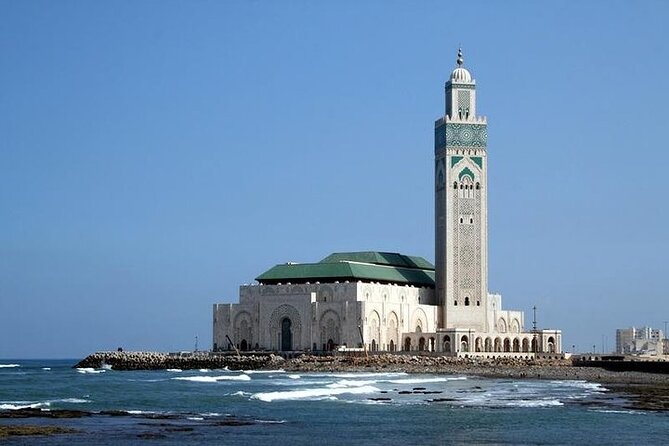
If you’re only going to Casablanca once, the Hassan II Mosque stop is the reason to go. It sits on the sea, and that setting isn’t a marketing line—it’s part of the concept. The guided explanation connects it to a Quran verse about God’s throne being built upon water, which gives you a framework for seeing the building as more than a landmark.
The scale is one of the main wow factors. The mosque can accommodate 25,000 worshipers inside and 80,000 outside. You’ll also spend about 50 minutes here, which is long enough to understand what you’re looking at without turning the experience into a fast hallway walk.
What I especially like is the attention to Moroccan craft details. The descriptions you’ll get focus on things like zellij (tilework), including exceptionally tall design examples. This is the kind of stop where you’ll probably notice new details as you go: patterns, materials, and how the building’s geometry fits together in a way that feels deliberate rather than decorative.
Potential snag to be aware of: the information provided includes the mosque entrance fee as part of the tour inclusions, but the stop detail also lists admission ticket as not included. So, I’d treat this as a “confirm in your booking details” moment. Either way, you’ll have a guided visit and dedicated time.
Movie-City Casablanca Downtown and Madam Rick’s Piano Courtyard
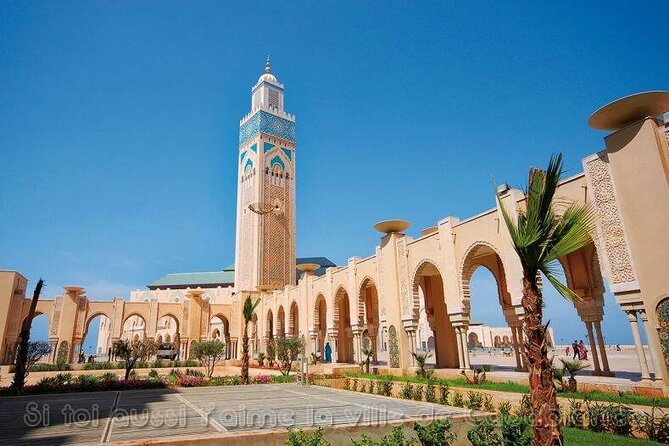
Casablanca’s film legacy can be a tourist trap if it turns into fake sets. Here, the approach feels more like storytelling through places. You’ll make a short downtown stop tied to the era inspired by the movie, including a residence restored by an American woman known as Madam Rick.
The detail I’d watch for is the central courtyard and the authentic 1930s Pleyel piano reference. That matters because it shifts the experience from generic movie photos to a sense of how the city looked and sounded in that period. Even if you’re not a hardcore film person, you’ll probably enjoy how the guide connects architecture and daily life to the story.
Your time here is brief—about 10 minutes—so keep your expectations tuned. This isn’t where you go for a long museum-style deep look. It’s more like a quick detour that gives you the Casablanca vibe before you move on to the bigger landmarks.
Ain Diab Corniche: A Coastal Reset From Marrakech Road Time
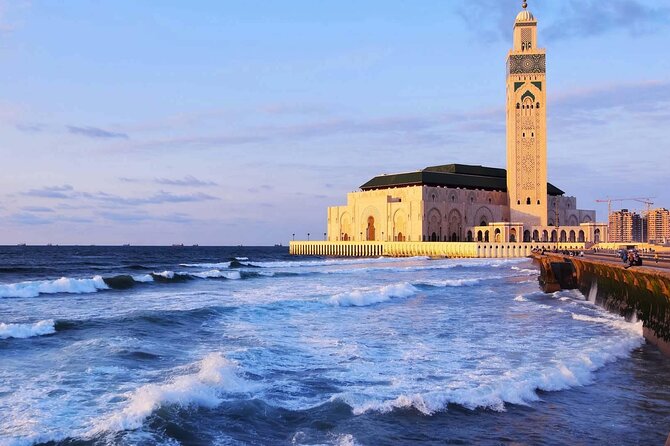
After the drive, you’ll get a needed break at Ain Diab, Casablanca’s seaside suburb along the Atlantic coastline. The main point is scenery: a long beach-side promenade called the corniche, where the city shows a different face than the inland districts.
You’ll have about 30 minutes here. That’s a realistic window to walk a bit, take photos, and reset your eyes before the next wave of history and architecture. I like this stop because it interrupts the “all buildings all day” feeling. You’re reminded you’re in a coastal city, and the light can be way more forgiving for photos than the urban streets.
This is also a smart place for short breaks if you want to stretch after the long pickup-to-dropoff drive.
Anfa Origins and the Anfa Hotel: Where World War II History Echoes
Casablanca’s story doesn’t start in the movie era. You’ll be taken back to Anfa, the medieval town that shaped the city’s origins. Then the story jumps to the French protectorate period, when the seaside location became the choice for villas built for army high officers and wealthy merchants.
This stop has a built-in contrast: the coast linked to prestige, then later linked to major historical moments. You’ll see references to the Anfa Hotel, where a secret conference took place in 1943. The connection is tied to planning for the Normandy landing in June 1944—specifically, the idea that two men fixed the date and modalities.
You’ll only have about 30 minutes, but the history angle gives this district meaning beyond the architecture. If you like understanding why a city looks the way it does, this stop is a good payoff: it explains how Casablanca grew into its later identity through power, politics, and coastal ambition.
One practical note: because your time here is limited, listen closely to the guide’s pacing cues. If you’re the type who likes to read every sign, you may need to choose between deep reading and capturing photos.




Place des Nations Unies: French-Era Administration and the Night Fountain Idea
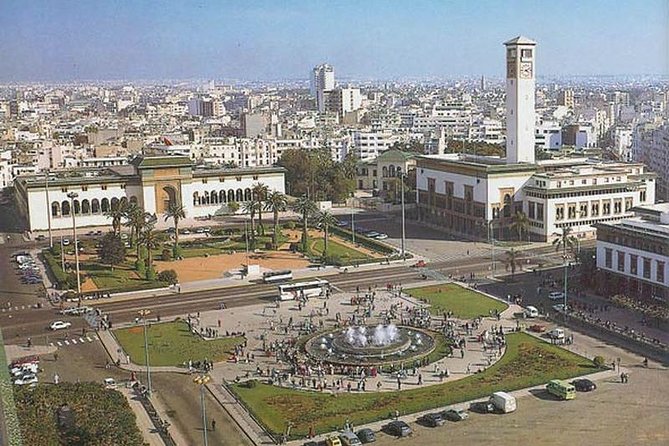
The Place des Nations Unies (also called United Nations Square in some references) is one of those Casablanca stops that feels more “city planning” than “old-world medina.” It’s the administrative center, edged by buildings designed in the 1920s by a French architect.
What I like here is the mix of details. You’ll pass key civic structures such as the Wilaya (main government office) and a courthouse, plus a clock tower. And there’s a vivid scene element: a musical and luminous fountain (especially mentioned for nights), with pigeons that gather to eat grains visitors offer.
Timing matters. If you’re on the clock for daylight, you’ll still get the feel of the square and architecture, but the fountain-at-night effect won’t be what you’ll experience. The fact that it’s noted for nighttime is useful, though, because it tells you this square has a different mood later on.
Your stop is about 30 minutes, so it’s ideal for a photo pause and a reset before the city’s spiritual and market side takes over.
L’Eglise du Sacre-Coeur: Stained Glass by Gabriel Loire
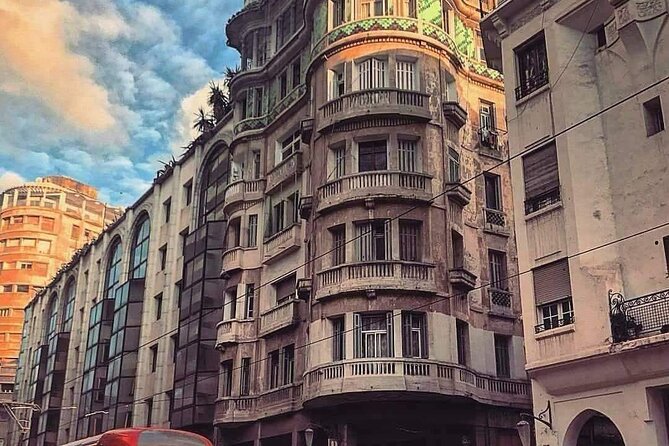
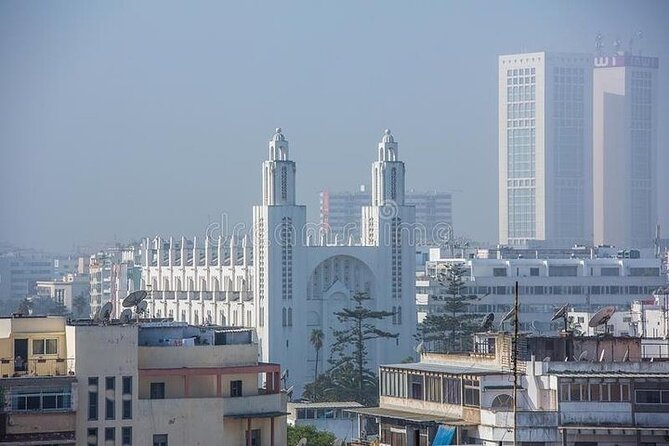
Casablanca isn’t just mosques and souks. You’ll make a stop at L’Eglise du Sacre-Coeur, a Catholic parish church built in 1954. The context here matters: it’s described as especially frequented by faithful from Sub-Sahara Africa, which adds a human layer to what could otherwise feel like a quick sightseeing checkbox.
The standout feature is the stained glass, made by the artist Gabriel Loire. If you like art that you can’t fully “decode” from a quick glance, this is a good match. Stained glass often works best when you slow down slightly, because you see how the colors and patterns change with your angle.
You’ll have about 30 minutes, and that’s enough time to step inside, notice the glass, and let the guide explain what you’re looking at.
Quartier Habous: The New Medina-Style Souks and a Royal Palace View
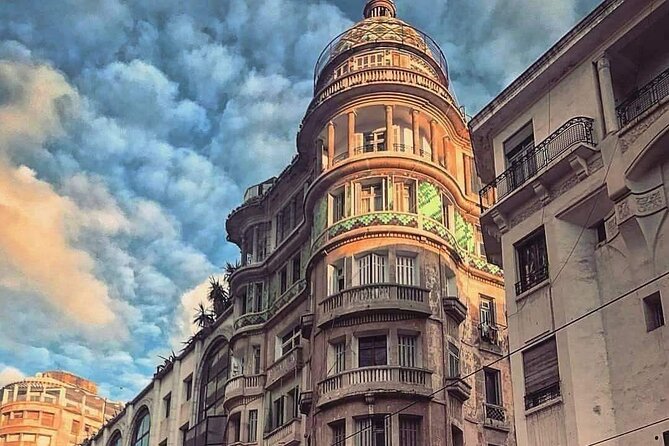
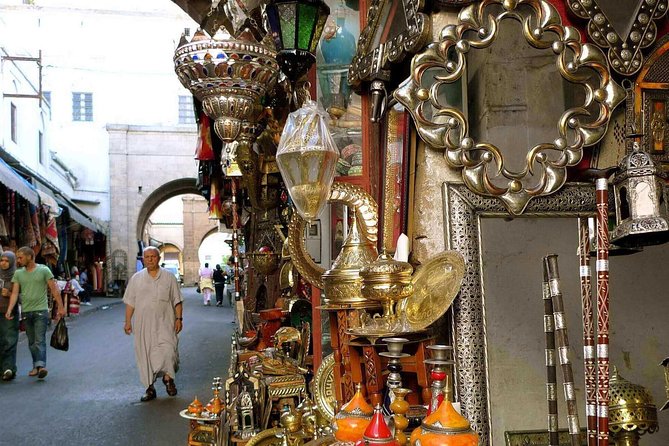
Now for the part where Casablanca feels like shopping meets street life. The Quartier Habous is described as a New Medina area with souks built by the French at the beginning of the century. What makes it interesting is that it still reads visually like a traditional medina: narrow alleys, small squares with trees, and stone arches.
It’s also specialized. The souks are said to focus on traditional Moroccan costumes, which means you’ll likely see fabrics, designs, and the kind of artisan work you don’t get in generic souvenir districts. Your time here is about 1 hour, and I think that’s the sweet spot—enough to browse without feeling like you’re trapped in the same street too long.
You’ll also see references to the Royal palace. The description highlights an Arab-Muslim style that’s described as modern, which is a helpful mental image: this isn’t old-world ruins; it’s a living state presence presented through a specific design language.
If you want one neighborhood where the guide can show you how Casablanca’s past and present collide, this is a good stop to care about.
What’s Included vs. What You Handle Yourself (Lunch and Tips)
This trip includes practical comfort items that matter on a long travel day: air-conditioned vehicle, bottled water, and wet wipes (lingettes humides). You’ll also have coffee and/or tea, plus an invitation for a special fruit juice. In real-world terms, that’s the kind of included refreshment that keeps energy from dropping.
Lunch is not included. That doesn’t mean you’ll be stuck hungry, but it does mean you should plan on paying for your own meal. Some guides are known to recommend local places, and it’s smart to follow those suggestions because they can help you avoid eating in an area that feels built for tourists rather than for everyday Moroccans.
Also plan for tips. Tipping isn’t listed as included, so you’ll want to set aside a little extra for your guide and driver if you feel they did a great job.
One small detail I appreciate in the inclusion list: water. On warm days, during a long day that starts early, that one comfort item makes a noticeable difference.
Guide Quality Matters: Noor and Moor’s Storytelling Style
This tour’s best ingredient isn’t a building. It’s the guide. The reviews attached to this experience put a spotlight on guides such as Noor and Moor, with repeated mentions of smooth pacing and clear English.
What I consider “good guiding” on a day trip has two parts:
1) You learn something real in the time you have.
2) The guide doesn’t flatten everything into a memorized script.
The best examples here are the pacing comments—like the way guides ensure you’re not rushed—and the focus on historical and cultural stories tied to specific locations. That’s exactly what you want on a day trip: you don’t just want to see Casablanca, you want to understand why each stop exists.
If you’re hoping for a calm, considerate guide who helps you stay comfortable through a long day, this is the kind of tour that tends to deliver that vibe.
Price and Value: Is $200 Worth It?
At $200 per person, this is not a casual add-on. So the key question is what you’re paying for.
You’re paying for:
- A private format (your group only).
- Transport by air-conditioned vehicle for a full day.
- Guided time across multiple major districts of Casablanca.
- Included extras that soften the day (bottled water, wet wipes, coffee/tea, and fruit juice).
You’re also paying for time. Casablanca from Marrakech isn’t “quick.” You’ll likely spend significant hours on the road, and the cost reflects the fact that someone is taking care of that transfer while you get guided stops.
So for best value, this is the kind of tour you book when:
- You want to see several districts in one go.
- You care about the “why” behind landmarks (especially the mosque and major city history points).
- You’d rather pay once for organization than manage multiple independent transport pieces.
If your priority is only one sight and then free wandering, you might decide it’s cheaper to go independently. But if you want the full Casablanca sampler with explanations, this price tends to make sense.
Should You Book This Casablanca Day Tour from Marrakech?
Yes, if you want a structured, guide-led day that covers the essentials of Casablanca without you building the plan yourself. I’d book it if Hassan II Mosque is a priority, if you like architecture and city context, and if you’d rather spend your time looking than figuring out logistics.
I’d think twice if you’re highly sensitive to vehicle comfort, since one past guest reported issues with smell and cooling despite the air-conditioning being part of the included setup. Also, be honest about the long day: you’re out for roughly 10 to 12 hours, and the early start can feel like a commitment.
If you’re the type who enjoys guided storytelling, especially when it ties film-era details, religious architecture, and real city history together, this is a strong choice.
FAQ
What time does the Casablanca luxury day tour start from Marrakech?
The start time is 7:00 am.
How long is the Casablanca day tour?
The duration is listed as 10 to 12 hours (approximately).
Is pickup included?
Pickup is offered, and the tour ends back at the meeting point.
Is lunch included?
No. Lunch is not included.
Is the Hassan II Mosque entrance fee included?
The tour inclusions list Droit d’Entrée à la Mosquée Hassan II. Check your booking confirmation to be sure, since the stop detail and the inclusions information both appear in the provided materials.
Is this a private tour?
Yes. It’s described as private, and only your group participates.
Do I get refreshments during the day?
Yes. You’ll have bottled water, and the inclusions also list coffee and/or tea plus an invitation for special fruit juice.
Can I cancel for a full refund?
Yes. There’s free cancellation, and you can cancel up to 24 hours in advance for a full refund.
If you tell me your travel month and what matters most to you (mosque focus, shopping in Habous, or film/architecture), I can help you judge whether this pacing fits your style.