REVIEW · MARRAKECH
Blue City Tour from Marrakech: Private 4-Day Luxury Tour to Chefchaouen
Book on Viator →Operated by Comfort Travel Morocco Private Tours · Bookable on Viator
A trip to Morocco’s Blue City is special even before you arrive. This private 4-day luxury tour strings together Rabat’s big monuments, Chefchaouen’s blue-washed lanes, and Casablanca’s grand, ocean-facing icons, all with door-to-door comfort from Marrakech.
I especially like how the days are paced around guided time where it counts: Rabat’s key sites on Day 1 and a focused Chefchaouen medina tour on Day 2. I also like the practical comfort details—an air-conditioned vehicle, an English-speaking driver, and bottled water—so the long drives don’t feel like a chore.
One thing to consider: this route is built for variety, not for ticking off Morocco’s other major cities, like Fez. If Fez is your top priority, you may feel the trade-off.
In This Review
- Key highlights you’ll feel on this route
- Why this 4-day plan works for most first-timers (and many returners)
- Marrakech pickup and the comfort factor on the road
- Day 1 in Rabat: Kasbah des Oudaias, Hassan Tower area, and Chellah
- Kasbah des Oudaias
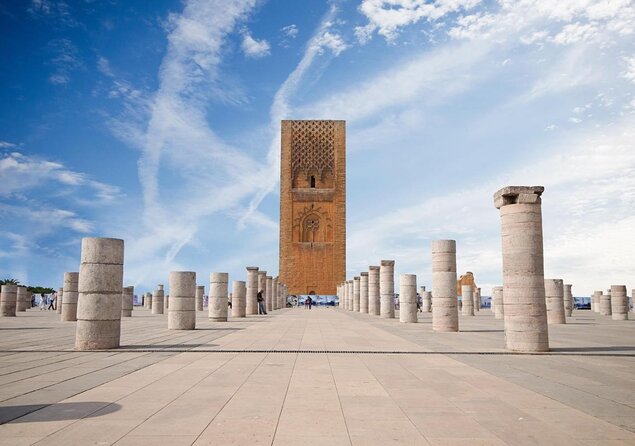
- Hassan Tower, the unfinished project
- Chellah: Roman remains with a Merinid necropolis feel
- Day 2: Ouezzane’s religious heritage and then Chefchaouen’s blue alleys
- Province of Ouezzane
- Chefchaouen guided medina tour
- Day 3 in Casablanca: downtown Art Deco architecture and a reset night
- Where to focus in Casablanca
- Day 4: Hassan II Mosque, Morocco Mall, Palmeraie camel ride, back to Marrakech
- Hassan II Mosque: a landmark you’ll remember
- Morocco Mall: aquarium and a built-in break
- Palmeraie camel ride before heading home
- Price and value: what $510.08 per person covers
- Who should book this Chefchaouen route
- Practical tips to make the days smoother
- Should you book this private Blue City Tour?
- FAQ
- Is this tour private?
- How long is the tour?
- Do I get hotel pickup and drop-off in Marrakech?
- Which cities are included?
- Is there a guided visit in Chefchaouen and Rabat?
- Are meals included?
- Are entrance fees included for everything?
- Is Morocco Mall admission included?
- What is the cancellation policy?
Key highlights you’ll feel on this route
- Chefchaouen guided medina wandering for real orientation in the alleys, plus time to stop and watch everyday life
- Rabat’s waterfront trio: Kasbah des Oudaias, Hassan Tower area, and Chellah’s Roman-and-Merineid layers
- Ouezzane as a quieter stop rooted in religious heritage near the Rif Mountains (and very different from the big-city rhythm)
- Casablanca center + Art Deco focus, then an overnight before you hit the final big-ticket sights
- Hassan II Mosque outside-prayer visits with guidance included in the ticketed experience
- Morocco Mall and Palmeraie timing that turns the last day into a mix of iconic sights and fun breaks
Why this 4-day plan works for most first-timers (and many returners)
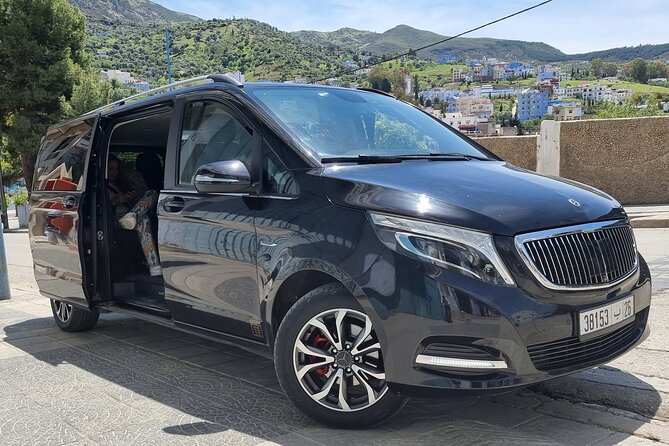
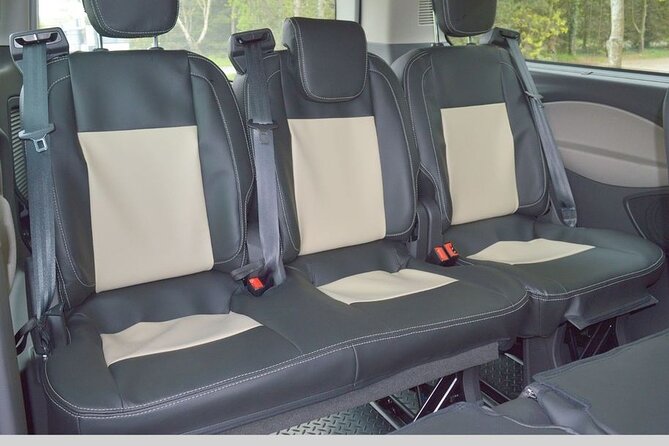
This is the kind of Morocco trip where you spend less time figuring things out and more time seeing. You get a private, air-conditioned vehicle, hotel pickup and drop-off, and an expert English-speaking driver. That combination matters on a route like this, because Morocco rewards patience—and private logistics help you keep that energy.
The itinerary also avoids a common mistake: doing only the headline city. Yes, Chefchaouen is the star. But Rabat and Casablanca give you a sharper sense of Morocco’s geography and style—coast, capital, empire-era ruins, French-influenced architecture, and then that cool blue color palette in the hills.
You can also read our reviews of more city tours in Marrakech
Marrakech pickup and the comfort factor on the road
Your tour starts in central Marrakech at 44 Rue des Banques. Pickup is offered, and you’ll have the convenience of being transferred through the route in a private luxury vehicle. Small things matter on multi-day trips. Having mini bottled water in the van, plus fuel and highway fees handled, means you can stay focused on the itinerary instead of spending mental energy on logistics.
One practical detail: the drop-off in Marrakech is near Jemaa el-Fnaa at 26 Rue Bani Marine. Vehicles can’t access the same place after midday, so you’ll be dropped close to the main square and then you can walk from there.
Day 1 in Rabat: Kasbah des Oudaias, Hassan Tower area, and Chellah
Day 1 is a strong start because it sets up a sense of place fast. Rabat is Morocco’s administrative capital, with embassies clustered nearby, and it sits at the Atlantic mouth of the Bou-Regreg river. That riverfront location gives your walking tours a “big view” feeling, even when you’re inside historic walls.
Kasbah des Oudaias
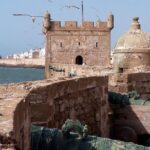
Your visit begins at Kasbah des Oudaias. This is one of Rabat’s most distinctive sites, originally built in the 12th century and renovated across time. The layers here matter: it’s not just a pretty fortress. It’s been shaped by Arab communities, Andalusian immigrants, and the influence of powerful sultans.
If you like places that feel lived-in rather than staged, this stop delivers. Expect a guided walk that helps you read the architecture instead of just taking photos and moving on.
Hassan Tower, the unfinished project
Next up is Hassan Tower, often described as the unfinished past. It sits opposite the Mausoleum of Mohammed V along the Bou-Regreg river. The story is part of the magic: you’ll walk among the scale of the planned monument, then shift to the contrasting grandeur of the mausoleum nearby.
Even if you’re not a history buff, the pairing works. One site shows an interrupted grand idea; the other shows what Morocco turned into a modern statement. The “two moods, same setting” effect is why Rabat is worth more than a quick transfer stop.
You can also read our reviews of more private tours in Marrakech


Chellah: Roman remains with a Merinid necropolis feel
The day ends with Chellah, a sloping historical area with Phoenician beginnings, Roman-era control around 40 CE, and later Merinid additions. From 1154 it lay abandoned, then a Merinid sultan later built a necropolis over the older structures.
What I like here is the mix: you’re not looking at one single era. You see the Roman footprint, then the Merinid necropolis vibe—plus a surviving minaret now topped by a stork’s nest. That detail is the kind that makes the ruins feel current, not dusty.
Chellah is also tied to the Jazz au Chellah festival held in September, which gives you a sense that this isn’t only a relic zone. After this, you have the option of lunch in Rabat, then you head toward Chefchaouen, Morocco’s blue-washed mountain city.
Day 2: Ouezzane’s religious heritage and then Chefchaouen’s blue alleys
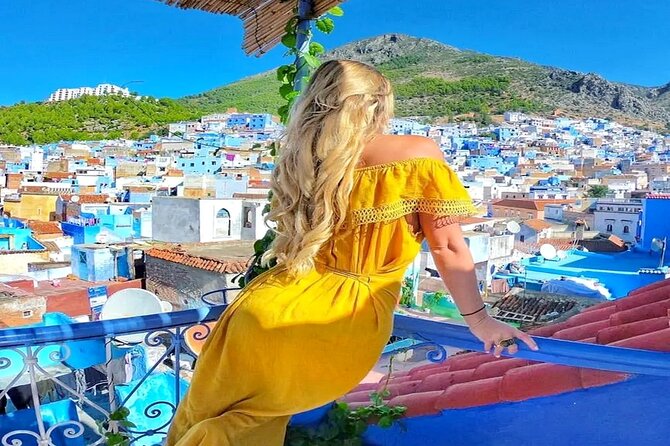
If Day 1 is about historic structure, Day 2 is about atmosphere. You start in the region of Ouezzane, a city on the southwestern edge of the Rif Mountains. From the itinerary details, this isn’t just a scenic detour—it’s tied to spiritual history.
Province of Ouezzane
You’ll spend about 3 hours in the Ouezzane area. The background here is specific: Ouezzane was founded in 1727 as a religious community by Sharif Mawlāy ʿAbd Allāh, a descendant of the Prophet Muhammad through the line of Idrīs II. His tomb became a pilgrimage site and a center for teaching Sufi doctrines, and his influence continued through the Sharifs of Ouezzane.
Even if you don’t want a deep lecture, I think this is a smart break from the big-city style of Rabat and Casablanca. It gives you a different Morocco angle—more local rhythm, less “major landmark rush.”
Chefchaouen guided medina tour
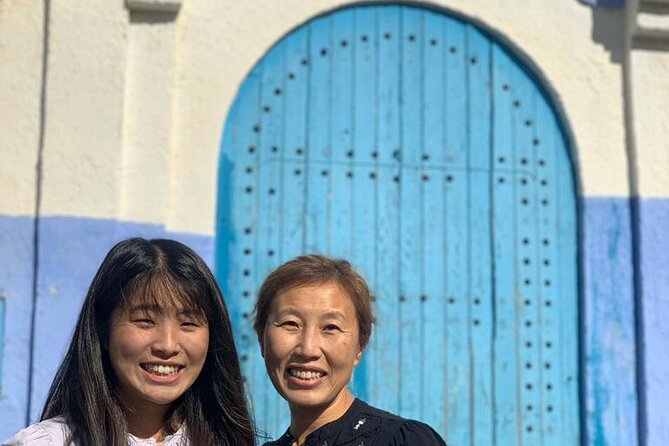
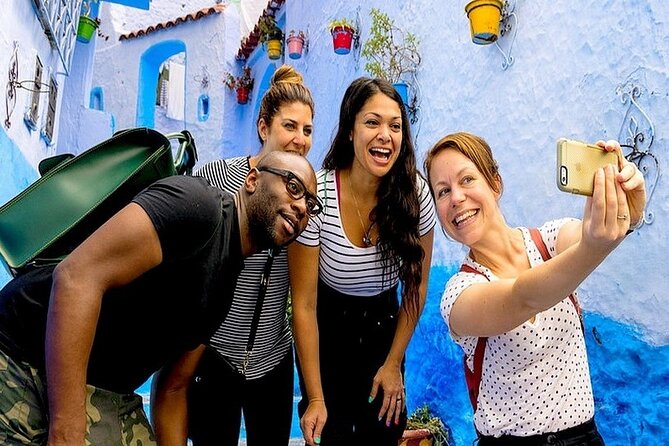
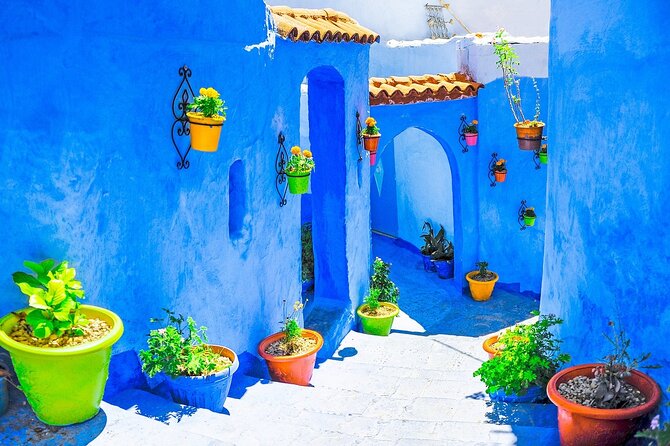
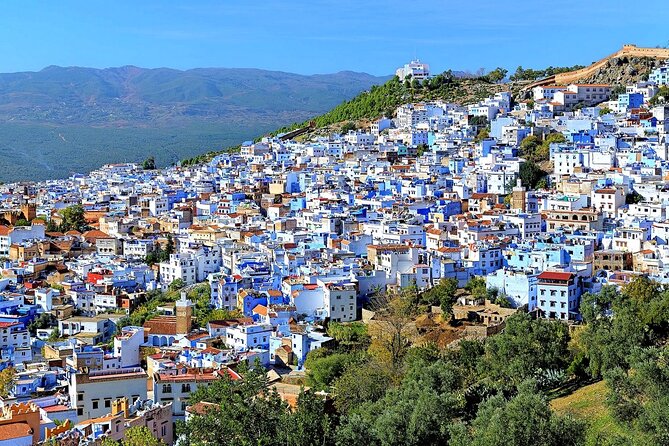
Then comes the main event: Chefchaouen. The town is set under Rif peaks, and its most famous look comes from whitewashed homes with red tile roofs and walls painted in shades of blue. A private Chefchaouen tour is where you’ll get the best value from the time.
The medina walking portion is designed for getting your bearings in narrow lanes, and it’s framed around street life rather than only viewpoints. You’ll be guided through alleys, and you’ll also have time to slow down. One highlight mentioned in the itinerary is Plaza Utta el-Hammam, a good stopping point for a drink at a shady sidewalk café.
A private guide also helps with bargaining. Chefchaouen has plenty of shops, but you’ll get better results when you understand what you’re actually looking at and what locals expect from the conversation.
Tip for your own comfort: plan on some walking and stair-y moments in the medina. It’s a town of tight turns and uneven surfaces, and good shoes make the experience feel smoother.
Day 3 in Casablanca: downtown Art Deco architecture and a reset night
After the blue tones, Casablanca can feel like a mood shift—in a good way. This day begins with a drive from the Blue City to Casablanca. You’ll spend about 5 hours exploring the center and seeing Art Deco architecture mixed with Moorish and French-colonial influences.
Where to focus in Casablanca
The itinerary guidance points you toward downtown areas, especially Quartier Habous and Ain Diab. Habous is where the French-colonial and traditional design blend becomes obvious. Ain Diab adds a beachside pulse, so you’re not stuck only in street-level monuments.
I like the way this day is framed: you’re not trying to conquer the entire city. You get a guided center walk and then you move to your chosen accommodation for overnight rest. That matters because Day 4 includes major ticket attractions and a second shopping-and-fun block.
Day 4: Hassan II Mosque, Morocco Mall, Palmeraie camel ride, back to Marrakech
This final day mixes “wow” with “easy fun.” You’ll start with one of the biggest religious-and-architecture draws in Morocco, then move into a modern complex, and end with something hands-on at Palmeraie.
Hassan II Mosque: a landmark you’ll remember
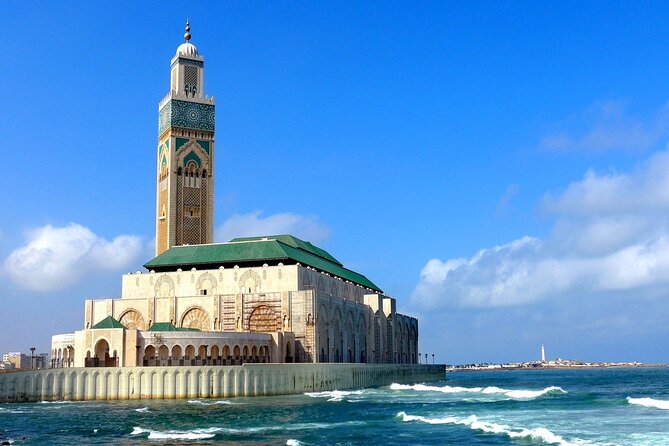
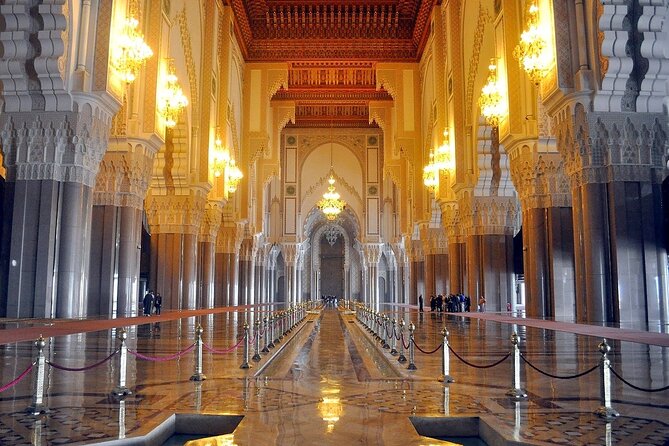
At Hassan II Mosque, the ticket includes guided orientation with multilingual tours conducted outside prayer times for modestly clad visitors. The mosque’s setting is part of the story—it’s on an outcrop jutting over the ocean, and the minaret reaches 210 meters, making it a city landmark.
The design is detailed: hand-carved stone and wood, intricate marble flooring, gilded cedar ceilings, and zellij geometric tilework. The mosque holds 105,000 worshippers across indoor and outdoor courtyards, so even from outside you can sense the scale.
Important budget note: the entrance fee for Hassan II Mosque is not included, even though the tour includes the guided part once you have your ticket.
Morocco Mall: aquarium and a built-in break
Next is Morocco Mall, described as Africa’s second-largest shopping center. This is not a required “shopping for hours” stop. It’s structured as a 3-hour visit with lots of things to do in one place, including leisure.
The stand-out feature is the enormous aquarium called Aquadream, with a capacity of about 1,000,000 liters and over 40 species of fish. The aquarium has a cylinder ride option with 360-degree views of the sea life, which can be a nice change of pace if you’ve had a lot of walking.
There are also around 200 brand shops and a Moroccan Souk concept that recreates parts of traditional souks in a more controlled setting. If you’re traveling with different interests—photos, shopping, family time—this stop helps everyone get something without leaving the complex.
Palmeraie camel ride before heading home
Finally, you’ll return to Marrakech and drive to Palmeraie, the palm oasis area. You’ll enjoy a 30-minute camel ride. After that, you’re transported to your final destination, your riad or hotel in Marrakech.
If you’re the type who likes variety at the end of a trip, this final block feels like a release valve. You’ve seen the major sights, now you get a fun, memorable activity that’s quick enough not to derail your last evening.
Price and value: what $510.08 per person covers
At $510.08 per person for a 4-day, private luxury tour, the value mainly comes from reducing friction. You’re paying for:
- a private air-conditioned vehicle
- hotel pickup and drop-off
- an expert English-speaking driver
- fuel and highway fees
- bottled water in the van
- Rabat and Chefchaouen guided city tours when selected as options
The tour also includes specific admissions in some places, like Kasbah des Oudaias and the Hassan Tower area, plus Morocco Mall admission being listed as included. But two major entrance fees are specifically listed as not included: Hassan II Mosque and Chellah.
So how should you budget? Plan to add entrance fees for those two sites, and also remember that meals and accommodations aren’t included. That means you’re still responsible for choosing where you sleep and what you eat each day.
One more “value” angle: the tour is private and the booking demand is fairly early, with an average booking window of 40 days in advance. If you’re traveling in higher season or want a specific departure style, locking it in early is smart.
Who should book this Chefchaouen route
This tour fits best if you want:
- Chefchaouen as the centerpiece, with guided time to make the medina feel understandable
- a balanced mix of coastal cities and inland heritage
- private comfort and an efficient route, without group logistics
It’s also a good option for families or groups who prefer not to coordinate their own transport between cities. Private driving means you can keep a consistent schedule and avoid the stress of changing vehicles multiple times.
The main mismatch is the one you should watch for: if you most want Fez (or want more time in other big cultural cities), this plan doesn’t follow that path. It prioritizes Rabat, Ouezzane, Casablanca, and Chefchaouen instead.
Practical tips to make the days smoother
A few things will help you get the most out of the route, based on what’s included and what’s likely to matter in real life.
- Wear comfortable walking shoes. You’ll be out on guided walks in multiple cities, including medina alleys.
- Bring modest clothing for Hassan II Mosque. The tour notes modest attire for visitors during outside-prayer guided visits.
- Plan for a ticket day on Day 4. Hassan II Mosque requires an entrance fee you’ll budget separately.
- Be flexible with weather. The tour notes it requires good weather, and if it’s canceled due to poor conditions you’ll be offered a different date or a full refund.
- Think about meals and timing. Lunch in Rabat is optional on Day 1, and meals aren’t included overall, so you’ll want a simple plan for where you’ll eat each day.
Should you book this private Blue City Tour?
Book it if: you want private comfort plus a clean, sensible route to Chefchaouen, with Rabat and Casablanca giving you context without turning the trip into a sprint.
Skip it or look for another option if: you’re chasing a specific itinerary that includes Fez as a key stop, or you don’t want a mix that includes big-city add-ons like Morocco Mall and the Palmeraie camel ride.
If your goal is a thoughtful first Morocco trip—blue streets, capital monuments, and a grand ocean mosque to finish—this one is a solid choice.
FAQ
Is this tour private?
Yes. This is an entirely private experience reserved only for your group.
How long is the tour?
It’s listed as approximately 4 days.
Do I get hotel pickup and drop-off in Marrakech?
Yes. Hotel pickup and drop-off are included.
Which cities are included?
The tour covers Rabat, Chefchaouen, Casablanca, and it also includes a stop in the Province of Ouezzane.
Is there a guided visit in Chefchaouen and Rabat?
A guided city tour is listed as available for Rabat and Chefchaouen as options. The itinerary also describes guided visits with your local guide during those stops.
Are meals included?
No. Meals are not included.
Are entrance fees included for everything?
Not all of them. The tour lists entrance fees not included for Hassan II Mosque and Chellah.
Is Morocco Mall admission included?
Yes. Morocco Mall admission is listed as included, and you’ll spend about 3 hours there.
What is the cancellation policy?
You can cancel for a full refund up to 24 hours in advance of the experience start time. The tour also notes it requires good weather, and if canceled due to poor weather you’ll be offered a different date or a full refund.