This ride starts with mountains, ends with Morocco magic. What makes it interesting is the mix of big-sky desert time and real-world villages in between, all in a private setup from Marrakech toward Fes. I like the way the itinerary strings together eye-candy stops like the High Atlas viewpoints and Ait Ben Haddou, without making everything feel rushed. I also like the practical comfort upgrades: private transport, included admissions, and a “luxury” desert camp night with camel transport. One thing to consider is the long drive days, so if you hate being in a vehicle for hours, this route will test your patience.
What helps most is the human side. Many bookings highlight the guide experience with names like Mohamed, and the trip tends to run smoothly with an English-speaking driver/guide who can explain what you’re seeing as you go. Still, because this is an active road trip, bring a good daypack for snacks, water, and layers, since temperatures swing from mountain cool to desert warmth fast.
In This Review
- Key highlights worth planning around
- Day-by-day route: Marrakech to Fez without whiplash
- Day 1: High Atlas passes, Ait Ben Haddou, and Ouarzazate film-town energy
- Kasbah Amridil and the Road of One Thousand Kasbahs
- Day 2: Dades Gorge, Todra Gorge, and the slow approach to Merzouga
- Erg Chebbi sunset: camel ride to camp and starry-night time
- Day 3: Merzouga culture, Gnawa in Khamlia, fossils at Erfoud, and Ziz palms on foot
- Day 4: Atlas crossing, Azrou cedar forest with macaques, and Ifrane’s European-styled calm
- Price and value: what $714.57 per person is really buying
- Transportation, guides, and what private really means here
- Who this tour is best for (and who should rethink it)
- Should you book this Marrakech to Fes luxury desert tour?
- FAQ
- How long is the tour from Marrakech to Fes?
- What route does the tour follow?
- Is pickup offered?
- Is the Sahara desert camp night included?
- What desert activities are included?
- Are meals included?
- Are entrance tickets and fees included?
- Do you get an English-speaking guide?
- Is drinks included?
- Can I cancel for a full refund?
Key highlights worth planning around
- Tizi n’Tichka Pass viewpoints early on, with flexible photo and tea stops
- Ait Ben Haddou kasbah visit at a UNESCO World Heritage Site with film-history context
- Atlas Studios time in Ouarzazate, including set replicas you can walk around
- Erg Chebbi sunset camel ride plus a camp night designed for comfort
- Gnawa music in Khamlia and a day that mixes culture with desert scenery
- Azrou cedar forest and Ifrane on the way to Fes for a strong finish
Day-by-day route: Marrakech to Fez without whiplash
This tour is built like a long scenic corridor. You leave Marrakech, climb through the High Atlas to kasbah country, drop into the gorges, reach Merzouga for the Sahara night, then work your way back north toward Fes through cedar forest and Ifrane.
The “4 days” shape matters. Day 1 and Day 2 are heavy on scenery and driving, while Day 3 adds culture and palm-oasis walking, and Day 4 shifts into cooler mountain landscapes. If you’re the type who likes one big highlight per day, this design fits nicely.
You can also read our reviews of more private tours in Marrakech

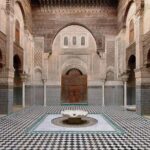

Day 1: High Atlas passes, Ait Ben Haddou, and Ouarzazate film-town energy
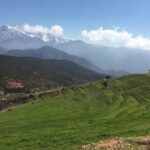
You start about an hour after leaving Marrakech with a climb through the High Atlas Mountains. The route goes over the Tizi n’Tichka pass, and your guide can stop whenever the view deserves it. This is the kind of early timing that sets the tone: you’re not just traveling, you’re collecting Moroccan scenery from the start.
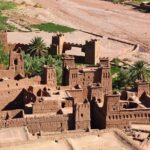
Then comes Ait Ben Haddou, a UNESCO World Heritage Site dating back to the 11th century. The kasbah is famous for a reason: those clay walls and winding passageways feel made for stories. You’ll have time to stroll inside the ancient fortified city, guided through Berber heritage and what life looks like in this kind of historic settlement.
Next you reach Ouarzazate, nicknamed the Hollywood of Morocco for a reason. The highlight here is an Atlas Studios visit where you can see large set pieces and replicas, including Egyptian-temple style scenery and medieval castle-like structures. It’s a fun change of pace from the road stops, and it helps you understand why filmmakers keep coming back to this region.
After that, you’ll keep moving toward the “kasbahs and palms” stretch. Your day includes a stop at Kasbah Amridil near Skoura, plus a possible pause in the Valley of Roses area for coffee or rose products. These are shorter stops, but they break up the drive with texture: clay architecture, palm shade, and local craft.
Kasbah Amridil and the Road of One Thousand Kasbahs
This is where the trip earns its “private luxury” label in a subtle way. The tour doesn’t just show one kasbah; it builds the sense of place that makes kasbah life legible. The route you travel is often called the Road of One Thousand Kasbahs, and Kasbah Amridil is one of the standout examples.
Kasbah Amridil is described as a living museum with roots in the 17th century. You visit with a local guide, which matters because kasbah walls alone can look like “just another building” unless someone explains how these places were designed for survival and community life. Even if you only spend 45 minutes here, it’s long enough to get the logic.
If you like small, quieter stops more than big tourist crowds, Skoura and the rose valley angle are smart additions. They’re the kind of pauses that make the day feel less like a checklist and more like a journey.
Day 2: Dades Gorge, Todra Gorge, and the slow approach to Merzouga
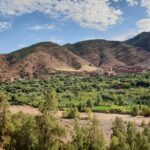
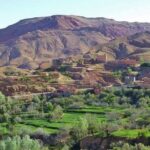
Day 2 is built around two gorges that look like different versions of the same idea. First is Dades Gorges, where rock layers show up in rust-red and mauve tones. You’ll see crumbling kasbahs and ksour along the valley, and the irrigation channels give the area a surprisingly green pulse.
Then you head to Todra Gorge, a trench of huge rock walls in the High Atlas Mountains. The key here is the approach. Your guide plans the drive slowly, with stops for views and the contrast between greener valley sections and the surrounding mountains. Once you arrive, you’ll have time to explore the gorge area.
From Todra, the road gradually shifts toward the desert. You’ll pass Berber villages before reaching Merzouga, home to Erg Chebbi’s dunes. This is where the tour changes gears from stone-and-gorge Morocco to sand-and-sunset Morocco.
Erg Chebbi sunset: camel ride to camp and starry-night time
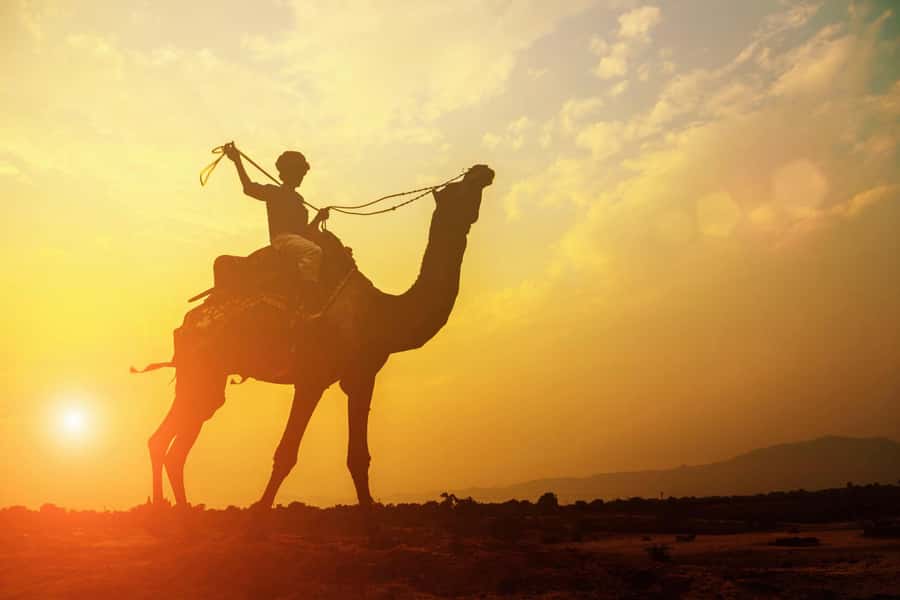
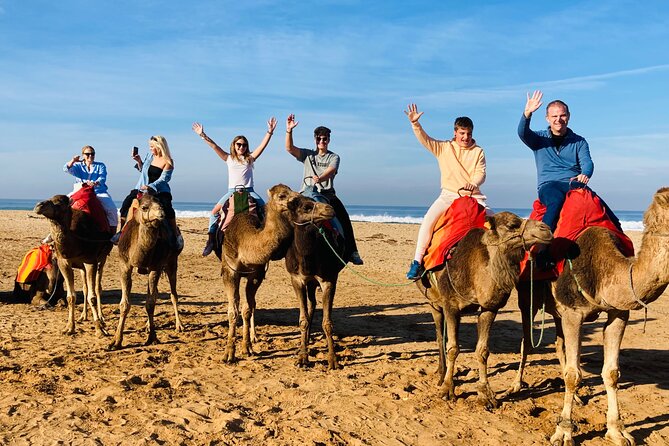
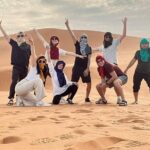
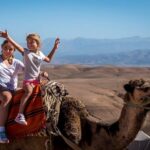
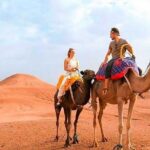
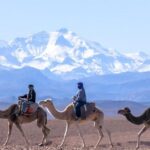
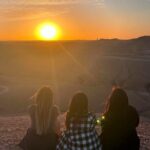
Your Sahara moment starts when you reach Merzouga and your camels are ready. You’ll ride across the sand dunes toward the desert camp, with sunset as the headline. Riding a camel through Erg Chebbi is slow in the best way: you can actually take in the dunes’ shape and how the light changes as the sun drops.
At camp, you’re welcomed with traditional Moroccan mint tea and shown to your private tent. Dinner timing is explained, and the schedule is structured enough that you’re not guessing what happens next. After dinner, the best part is simply the night sky. You can spend time looking at stars, and the evening can include Moroccan Berber music.
One practical note: desert nights can feel cold even when the day was warm. The camp style is described as luxury, but that doesn’t mean you’ll never want an extra layer. Pack for comfort first, style second.
A few more Marrakech tours and experiences worth a look
Day 3: Merzouga culture, Gnawa in Khamlia, fossils at Erfoud, and Ziz palms on foot
Day 3 begins with breakfast at camp, then you explore the Merzouga region. The focus isn’t only dunes. You’ll drive around to see the desert landscape and visit local nomads in their tents. That kind of stop helps you understand desert life as something lived, not just scenery.
A special cultural stop is a Gnawa house and a live music experience in a village called Khamlia. This is one of the more memorable “human” parts of the itinerary because music shows up as part of daily identity, not just a staged performance. If you’re curious about how Moroccan traditions travel through generations, this segment is worth paying attention to.
Next comes Rissani, the older town tied to Sijilmassa (a trading capital in southeastern Morocco). You’ll see the mausoleum of the third great-grandfather of King Mohamed VI, which gives the area a political and historical anchor beyond trade routes and sand.
Then you’ll reach Erfoud, known for fossils. The area is famous for fossilized stone work, and local artisans carve decorative pieces using fossils found in the region. It’s basically an open-air museum idea made touchable—if you like natural history, this stop won’t feel random.
Finally, you shift into the Ziz Valley. This is where the desert story gets a twist: the Ziz Valley is one of Morocco’s large palm oases. You’ll spend time around the Aoufous area, and you can do a hike with a 1-hour trekking in the Ziz valley palmerie included. Expect a calmer rhythm than the imperial-city pace—more sitting with people, tea conversations, and quiet moments.
Day 4: Atlas crossing, Azrou cedar forest with macaques, and Ifrane’s European-styled calm
Leaving the Ziz Valley toward Fes, you pass the Ziz Gorge and cross the Atlas Mountains through a winding pass called Tizi n Tlghmt. The stops depend on viewpoints your guide feels are worth it, and that flexible photo rhythm continues here too.
You’ll also pass Midelt, described as the capital of apples. Even if you don’t stop long, it’s a nice reminder that Morocco’s mountains support real agriculture, not just tourism stops.
The day’s first big nature stop is Azrou Cedar Forest, known for Moroccan cedars that can be more than 400 years old. The area is also home to Barbary macaques, so there’s a decent chance you’ll spot them while you walk around. Birdlife adds to the feel, and the forest setting is a clear change from desert colors.
Next you reach Ifrane, nicknamed Little Switzerland. It’s described as fresh and green, with lakes and rivers and a European-style town look. If you’ve spent the previous days in rocky gorges and sand dunes, Ifrane can feel like a “breather” town—an easy place to reset before arriving in Fes.
Price and value: what $714.57 per person is really buying
At $714.57 per person for about four days, you’re paying for more than the seats. The tour includes private transportation, all fees and taxes, admissions tickets for the stops, and a night in a luxury desert camp.
You also get activities that can otherwise add up quickly if you booked separately: a camel ride to and from the camp, an 1-hour ATV ride in the desert, and 1-hour trekking in the Ziz Valley palmerie. Meals are covered too: breakfast on days 2, 3, and 4, plus dinner (listed as three included dinners). There’s also Berber pizza for lunch in the desert and bottled water in the car.
So where’s the value? You avoid the common road-trip pain point: piecing together transport, tickets, and desert logistics across multiple vendors. Here, you’re paying for one plan that moves you between regions with guided context and included entry fees.
The main tradeoff is time on the road. This route is a long scenic drive. If you only want quick stops and lots of independent wandering, a faster city-to-city option might fit better.
Transportation, guides, and what private really means here
This is a private tour/activity, meaning it’s only your group. That’s a big deal for comfort on a road trip. It’s also why the guide can be flexible with photo stops in places like the High Atlas pass and along the route into the gorges.
The tour includes an English-speaking driver/guide, which helps a lot on the days when history is layered into the scenery (Ait Ben Haddou, Sijilmassa/Rissani, and kasbah life). And the camp experience is handled by the local team, so you’re not “figuring it out” at night.
A small practical point: drinks are not listed as included. You’ll have bottled water in the car, but you’ll likely want extra budget for soda, juice, or alcohol at stops.
Who this tour is best for (and who should rethink it)
This fits best if you want one trip to cover:
- Sahara dunes plus a real desert camp night
- Mountain passes and gorge scenery
- Historical sites like Ait Ben Haddou
- A mix of nature and cultural stops like Gnawa music
It also works well for couples and small groups who don’t want to share the van and timing with strangers. If you like the idea of a private schedule that can pause for views, this route has the right rhythm.
Consider rethinking if:
- You hate long driving days
- You want a lot of free time in each town (this plan is guided and packed)
- You prefer purely “walk around and explore” days over transport-heavy scenery days
Should you book this Marrakech to Fes luxury desert tour?
I’d book it if your top goal is a single guided Morocco arc: Atlas mountains, kasbah landmarks, Erg Chebbi at sunset, and a night under the stars with included meals and activities. The value is strongest when you want both convenience and context, not just photos.
Before you commit, think about what you can handle comfortably: the desert night is a highlight, but the road time is real. If you’re okay with that, you’ll likely enjoy the balance of big sights and the moments where the tour slows down—like the gorges approach and the palm-oasis walking in the Ziz Valley.
If you want to plan smarter, decide what matters most: film-city sets in Ouarzazate, the Sahara camp night, or the cultural music stop in Khamlia. This itinerary gives you all three, which is rare in a four-day format.
FAQ
How long is the tour from Marrakech to Fes?
It runs for about 4 days.
What route does the tour follow?
You travel from Marrakech through the High Atlas and kasbah areas, then to the Sahara Desert (Merzouga). After that, you head through the Ziz Valley area and over the Atlas Mountains toward Fes.
Is pickup offered?
Pickup is offered.
Is the Sahara desert camp night included?
Yes. You’ll spend one night in a luxury desert camp in the Merzouga area.
What desert activities are included?
The inclusions list a camel ride to and from the camp, plus a 1-hour ATV ride in the desert. The itinerary also includes time around the Merzouga dunes and sunset.
Are meals included?
Yes. Breakfast is included on days 2, 3, and 4. Dinner is included for three meals total, and there’s Berber pizza for lunch in the desert.
Are entrance tickets and fees included?
Yes. The tour includes admissions tickets for all attractions, and all fees and taxes are covered.
Do you get an English-speaking guide?
Yes. The tour includes an English-speaking driver/guide.
Is drinks included?
No. Drinks are not included, though bottled water is provided in the car.
Can I cancel for a full refund?
Yes, free cancellation is available up to 24 hours in advance for a full refund.