REVIEW · TANGIER
Walking Tangier Tour from ancient Kasba to Bustling Souks
Book on Viator →Operated by TANGIER EXPLORER · Bookable on Viator
Tangier’s medina is magic in motion. This private walking tour connects the Casbah heights to the old-city lanes, guided by locals like Anas, Bilal, and Rabab who know how to explain what you’re seeing without turning it into a lecture. I especially like that the route is practical (easy to follow on foot) and that admission tickets are included at every main stop, so you’re not constantly stopping to pay for entry.
You’ll get a real sense of how Tangier works day to day: squares, museums, religious history, and market streets all in one tidy 2 to 4 hour span. The tour is also described as flexible and tailored, which matters in the medina where one wrong turn can cost time.
One thing to plan for: you’ll be walking on old streets with steps and uneven ground, and at the Kasbah museum the key exhibits are in French and Arabic only. If you want every label in your own language, bring patience and a translation app.
In This Review
- Key points I’d plan around before you go
- Where Tangier begins: Grand Socco and the city’s meeting point
- Climbing into Tangier Casbah: fortress lanes and layered civilizations
- Musee de la Kasbah inside Dar El Makhzen: maps, mosaics, and a garden pause
- Medina of Tangier: where spices, call to prayer, and street life overlap
- American Legation Museum: the 1821 U.S. link in Tangier
- Moshe Nahon Synagogue: a restored museum on a quiet dead-end street
- Price and time: why $48.50 can be fair value for a short day
- What to expect on your feet: comfort beats style
- Guides matter here: Anas, Bilal, and Rabab set the tone
- Who should book this Tangier Kasbah-to-Medina walk
- Should you book this tour?
- FAQ
- How long is the Walking Tangier Tour from the Kasba to the Souks?
- What does the tour include for admission?
- Is pickup available for this experience?
- Is the tour private?
- What languages are the Musee de la Kasbah exhibits in?
- When does the tour operate?
- What is the cancellation policy?
Key points I’d plan around before you go
- Private guide, only your group: you won’t get stuck in a crowd shuffle while the guide repeats the same points for everyone.
- Grand Socco to the heights: the tour naturally moves from the city’s public square into the Casbah’s steep, maze-like streets.
- Musee de la Kasbah (Dar El Makhzen): you get a structured museum walk with courtyard orientation and standout map displays.
- Medina wayfinding support: you’re guided through the tight lanes so the experience feels like discovery, not stress.
- Stops that add different time periods: medieval fortress, sultan palace museum, U.S. diplomatic museum, and a restored synagogue museum.
- Tickets built in: key admissions are included, which helps the value feel more predictable.
Where Tangier begins: Grand Socco and the city’s meeting point
Most Tangier walks start with a view, but this one starts with a square. Place du Grand 9 Avril 1947, often called the Grand Socco, is right in the center—open space surrounded by a mix of traditional and colonial-era architecture. It’s a good warm-up because you see how the medina links to the rest of town.
Even the name is a hint. “Socco” comes from an Arabic word related to souks or markets, which explains why people treat this area like a daily crossroads. As you stand there, you’ll notice how Tangier feels like a city of routes—people moving between old streets and newer roads.
Your guide’s job here is smart: they help you get your bearings fast, so the next steeper streets won’t feel like wandering. It’s also a simple way to understand the flow of the city before you start climbing.
You can also read our reviews of more walking tours in Tangier
Climbing into Tangier Casbah: fortress lanes and layered civilizations
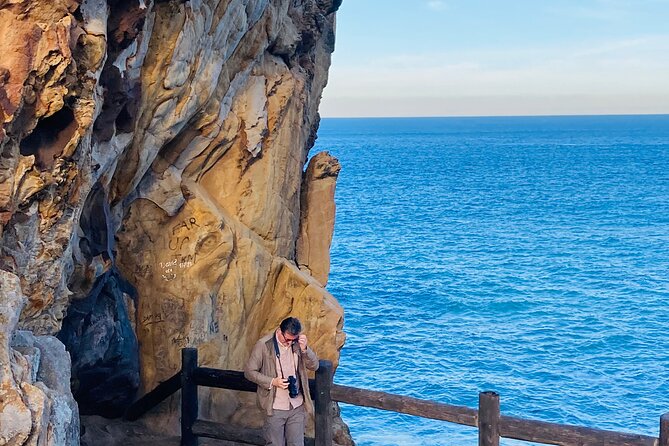
Next comes Tangier Casbah, perched at the top of the city. The Casbah isn’t just an area—it’s an old defensive stronghold with narrow winding streets that make sense only when you’re walking inside them. From street level, it’s easy to miss how strategic this location is, but the guide helps you read the city like a map.
Historically, the Casbah has absorbed different waves of influence, from Phoenician and Roman eras to Arab and Andalusian contributions. That mix shows up in the architecture and in the way the streets feel designed for defense: tight turns, limited sightlines, and layers of passageways.
A practical note: expect the walking to feel more demanding as you go higher. You’ll want shoes you can trust on uneven stone, and you’ll probably appreciate a slow pace. This is one of the tour’s best moments because it’s where Tangier stops looking like an itinerary and starts looking like a lived-in city.
Musee de la Kasbah inside Dar El Makhzen: maps, mosaics, and a garden pause
The museum stop is called Musee de la Kasbah, and it’s housed in Dar El Makhzen, a former sultan’s palace. That setting matters. When you tour a museum inside a palace, you’re not just reading history—you’re moving through rooms and courtyards that shaped how power and daily life fit together.
The museum covers the area from prehistoric times to the 19th century. The best part is the way it’s guided: you’re encouraged to work your way anticlockwise around the first courtyard before moving into the rest of the exhibits. That sounds like an admin instruction, but in a museum, direction choices are often what prevent you from feeling lost.
The standout items you can look forward to include a mosaic of Venus from Volubilis and statuary. And then there are the famous replica maps. One map traces trade routes from early Phoenician metal trading to modern electronic goods of the 21st century. The other is a world map made in Tangier in 1154, and it’s presented upside down—yes, that’s part of the experience and a great conversation piece with your guide.
One caution, based on the museum details: exhibits are in French and Arabic only. If you don’t read either language, you’ll still enjoy it, but your guide’s explanations become extra important. Bring a translation app if you like to read every label.
Medina of Tangier: where spices, call to prayer, and street life overlap
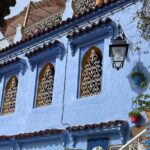
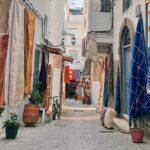
After the museum calm, you step back into the Medina of Tangier, a maze of narrow alleys. The medina is often described as a place of artistic energy, and you can feel why: colors, textures, shopfront rhythms, and the constant layering of people moving through tight spaces.
It’s also the kind of place where “getting lost” can quickly become “wasting time.” That’s why a guide helps so much. The Medina isn’t just an attraction—it’s the city’s daily system. You’ll notice spices in the air, shop sounds, and the call to prayer mixing with street life, creating an atmosphere that’s hard to reproduce from photos.
There’s even a literary nickname linked to W. Burroughs, who called the old city a switchboard zone. In practice, that means many connections and interruptions—people, smells, and sights all hitting you at once. With a guide, you don’t shut down from overload. You learn what you’re seeing and why it’s organized the way it is.
This is also where you’ll appreciate having a “human filter.” Instead of stopping at random doors, you move with purpose and let the guide point out what’s meaningful for Tangier’s culture and history.
American Legation Museum: the 1821 U.S. link in Tangier
The tour then shifts to something you might not expect in Morocco: the Tangier American Legation Museum. This site has a special claim—founded in 1821, it’s the first property acquired abroad by the U.S. government and recognized as the oldest American diplomatic property in the world.
There’s a key historical milestone tied to early relations: the Moroccan-American Treaty of Friendship, signed in 1786, which starts diplomatic ties and predates the U.S. Constitution. That kind of detail can feel like trivia until you’re standing in the place where diplomacy played out in real buildings.
The museum format helps the story land. You’ll walk through how the American presence fit into Tangier’s bigger relationship with foreign powers and changing governments over time. It’s a refreshing contrast after the medina’s tight streets—more open, more museum-like, and a chance to reset.
If you enjoy history that’s not locked inside one country, this stop is a highlight.





Moshe Nahon Synagogue: a restored museum on a quiet dead-end street
The final major religious history stop is Moshe Nahon Synagogue, located off rue des Synagogues in the Beni Idir quarter. The synagogue sits on a dead end street, which is part of the mood: the medina around it can be loud, but the building feels like a calm punctuation mark.
It was constructed in the 19th century by Moïse Nahon, described as a prominent educator and scholar from an influential Jewish family in Tangier. The synagogue stopped functioning in the second half of the 20th century, then fell into disrepair. It was restored in 1994 and now operates as a museum.
That timeline is one of the reasons this stop hits emotionally. You’re not only learning about architecture. You’re learning how communities change, how heritage can be lost, and how restoration brings a building back into public memory.
If you like seeing how different cultures fit into the same city, you’ll appreciate that the tour doesn’t stick to one narrative. You get Muslim spaces, a sultan palace museum, an American diplomatic building, and this synagogue museum—each adding a different layer to Tangier’s identity.
Price and time: why $48.50 can be fair value for a short day
The tour costs $48.50 per person and usually lasts 2 to 4 hours. That time window is realistic for Tangier if you want highlights without spending your entire day in motion.
What makes the price feel more reasonable is that admission tickets are included for the main stops on the route. Instead of treating each museum as a separate add-on, you get the structure of a multi-site walk where entry is already accounted for. You also get private guiding, which means you can ask questions as you go and adjust the pace.
One extra detail that affects how you plan: it’s booked on average 41 days in advance, which suggests it’s a popular way to see Tangier efficiently. If you travel in a busy season, you’ll likely want to reserve early.
What to expect on your feet: comfort beats style
This is a walking-focused experience through the Kasbah and Medina. The streets are old, narrow, and not designed for tourists hauling tricky footwear. I’d prioritize comfort: closed-toe shoes with grip, breathable clothing, and a light layer if the weather flips.
Bring water. The guide can help you manage the pace, but you still need to physically feel good for the climbs and museum transitions. If you’re sensitive to steps or uneven pavement, consider moving slower and asking your guide to tailor pace to your group.
On the plus side, the tour is private, so you’re not forced into someone else’s tempo.
Guides matter here: Anas, Bilal, and Rabab set the tone
One pattern in the feedback is consistent: the guides make the difference. I can’t overstate how important that is in Tangier, where the city’s meaning isn’t always obvious from a photo.
- Anas is described as informative and entertaining, with a knack for making sure everyone is happy with what they’re seeing.
- Bilal is praised for professionalism and deep Morocco knowledge, with plenty of warmth and strong communication.
- Rabab is noted for tailoring the tour to interests, including maps and architecture.
Even better, there’s a clear theme of low-pressure shopping. If you want to browse, you’ll browse. If you’d rather focus on sights, the tour won’t bully you into detours.
That’s the real value of a private, locally guided walk: Tangier’s complexity stays interesting instead of exhausting.
Who should book this Tangier Kasbah-to-Medina walk
This tour fits best if you want:
- A guided route through the Kasbah and Medina without losing time.
- Multiple history stops in a short window, including the American Legation and a restored synagogue museum.
- A guide who can explain what you’re looking at, including map stories and museum highlights.
It’s also a good match for families and groups, as the tour is described as most travelers can participate and it stays within a manageable 2 to 4 hour plan.
If your travel style is purely photo-chasing with no interest in context, you might feel the time is too structured. But if you enjoy meaning behind the walls and streets, this route is built for you.
Should you book this tour?
Yes, if you want the Kasbah-to-Medina experience with guidance that keeps things clear, not chaotic. The mix of stops hits several kinds of travelers: history fans get the Casbah and Dar El Makhzen museum, culture-focused walkers get the Medina, and curious minds get the American Legation and Moshe Nahon Synagogue in one smooth day.
Book it especially if you appreciate admission tickets included and a private setup where the guide can steer your pace and interests. The main reason to think twice is the walking terrain and the fact that the key museum exhibits are in French and Arabic only. If you can handle that, you’ll likely find this tour is one of the most efficient ways to understand Tangier in just a few hours.
FAQ
How long is the Walking Tangier Tour from the Kasba to the Souks?
The tour lasts about 2 to 4 hours.
What does the tour include for admission?
Admission tickets are included for the stops at Place du Grand 9 Avril 1947, Tangier Casbah, Musee de la Kasbah, Medina of Tangier, Tangier American Legation Museum, and Moshe Nahon Synagogue.
Is pickup available for this experience?
Yes, pickup is offered.
Is the tour private?
Yes. It is a private tour/activity, and only your group will participate.
What languages are the Musee de la Kasbah exhibits in?
The museum exhibits are presented in French and Arabic only.
When does the tour operate?
The opening hours are listed as Monday through Sunday from 10:00 AM to 1:00 PM, for the date range 01/12/2024 to 06/17/2026.
What is the cancellation policy?
Free cancellation is available up to 24 hours in advance of the experience for a full refund. If you cancel less than 24 hours before the start time, the amount paid is not refunded.