REVIEW · MARRAKECH
4 days Morocco Sahara Tour
Book on Viator →Operated by Escorted Morocco Tours · Bookable on Viator
This trip moves you from Marrakech to the Sahara in a way that feels lived-in, not rushed. I especially love the luxury desert camp setup (hot shower, dinner, and music by the fire) and the planned camel ride at sunset followed by a dune sunrise; it’s a classic moment, but with the right pacing and comfort. The main drawback to weigh is that the itinerary packs in long road stretches on Days 1, 2, and 4, so it’s best if you’re good with time in the car.
What makes this route work is that it balances big-name sights with people-and-places stops. You’ll roll through the High Atlas and kasbah country, then get into canyon walks, oases, and community visits (including a Gnawa music encounter), before you finish with a drop in Fes. Because it’s private, you’re not fighting for space in a crowded group van.
Value matters here, and the price reflects that. You’re paying for private transport, a luxury-style camp in the dunes, and breakfast and dinner included on the days they matter most; you just need to budget for lunch and drinks. Also, guides named Mustafa (also seen as Moustafa/Mustapha) and Anouar have come up positively in feedback for making the experience feel well taken care of.
In This Review
- Key highlights you’ll feel quickly
- Marrakech to the High Atlas: why the pickup day feels efficient
- Ait-Ben-Haddou and Ouarzazate: UNESCO kasbah walls and movie-set context
- Skoura, roses, and canyon towns: Dades Gorges and Todra Gorge on the same trip
- Merzouga at sunset: camp life, camel time, and a fire-side show
- Sahara sunrise and 4×4 off-roading: oases, Berber tents, Gnawa music, fossils
- Leaving the dunes for Fes: Ziz Oases, Azrou monkeys, and Ifrane breaks
- Price and what’s actually included for $811.66 per person
- The guides and the feel of the trip: why people keep praising the people part
- Who should book this 4-day Sahara tour (and who should tweak expectations)
- Should you book this 4-day Marrakech to Sahara tour?
- FAQ
- FAQ
- What’s the trip duration and route?
- Is this tour private?
- What’s included in the price?
- Is lunch included?
- Are drinks included?
- Do I get pickup in Marrakech?
- What desert activities are planned?
- Is there hot water at the camp?
- What’s the cancellation rule?
Key highlights you’ll feel quickly
- Two nights in the desert area: one inside the dunes at a luxury camp, plus a second night at a hotel in the dune lines.
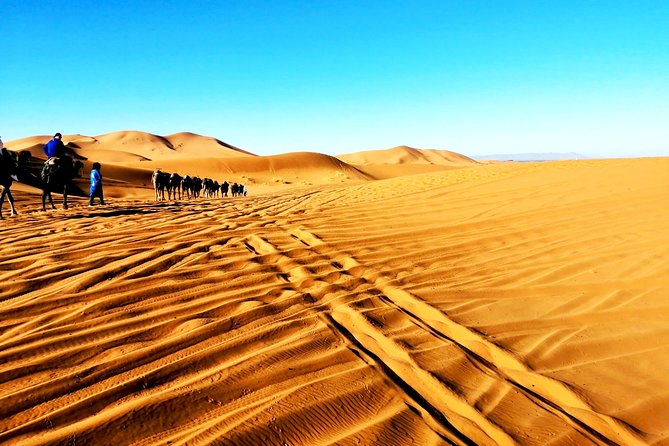
- Sunset camel ride with built-in photo stops: plan about 1h30 on the camels, after a quick staging stop near the dunes.
- Morning dunes views: you’ll start Day 3 with sunrise scenery before breakfast.
- Real culture stops, not just photo ops: you’ll visit a nomadic family in a Berber tent and hear spiritual Gnawa music in a village setting.
- Off-road time in 4×4: you get Merzouga oases exploration by car, not only slow-paced sand drifting.
- Guides praised for the human touch: Mustafa and Anouar are names that have shown up in standout feedback for professionalism and warmth.
Marrakech to the High Atlas: why the pickup day feels efficient
Your day begins with pickup from your accommodation in Marrakech, and that’s more important than it sounds. Morocco can be easy to love and hard to navigate when you’re trying to organize everything yourself. A door-to-door start cuts that stress and gets you into the countryside while the city traffic is still manageable.
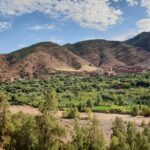
From there, you’ll head into the High Atlas Mountains, which means the scenery changes fast: urban energy gives way to layered hills and then to kasbah-filled valleys. This first travel day is doing double duty. It’s not just transport; it’s your first real taste of how Morocco’s interior connects food, farming, caravans, and old fortifications.
One practical thing to know: Day 1 is the first “sit back and enjoy” stretch. You’re visiting multiple places across the way, but the driving is constant. If you tend to get antsy during long transfers, bring something simple—water, a snack you enjoy, and a way to keep your phone charged—because lunch and drinks aren’t included, and you’ll want choices that match you.
A few more Marrakech tours and experiences worth a look
Ait-Ben-Haddou and Ouarzazate: UNESCO kasbah walls and movie-set context
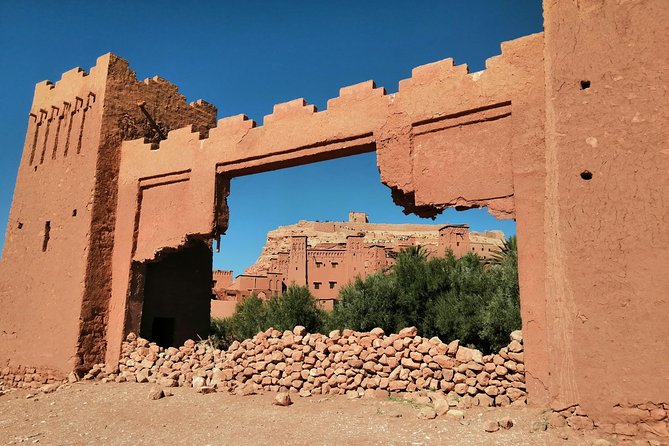
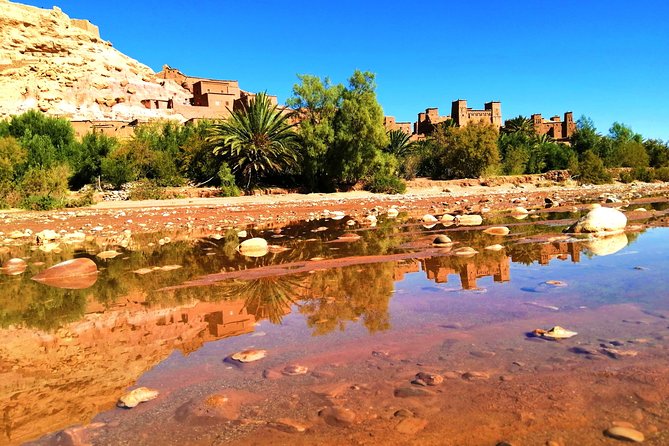
Ait-Ben-Haddou is one of those places where your brain does the math instantly: it looks like a fortress because it used to function like one. You’ll arrive at the kasbah of Ait-Benhaddou, a fortified village recognized as a UNESCO cultural treasure. It also has a movie footprint, and you’ll hear that echoed in the stories here, from classic desert epics to modern TV production vibes.
What I like about making this a scheduled stop is that it’s not treated like a quick roadside photo. You’re also getting the context of the old caravan routes—how towns like this served as strongholds on the path between sub-Saharan Africa and Marrakech. It’s history you can actually see in the architecture.
After that, you continue toward Ouarzazate and pass through kasbah scenery along the way (you may hear it called the road of a thousand kasbahs). If you want extra options, there’s time mentioned for Touarirt Kasbah and cinema studios in Ouarzazate, depending on your interests.
One note on timing and value: there’s a line item showing admission ticket free for this stop, which can help your budget. Just don’t expect every attraction on the route to be similarly priced—lunch and drinks are clearly listed as not included, and other stops may vary.
Skoura, roses, and canyon towns: Dades Gorges and Todra Gorge on the same trip
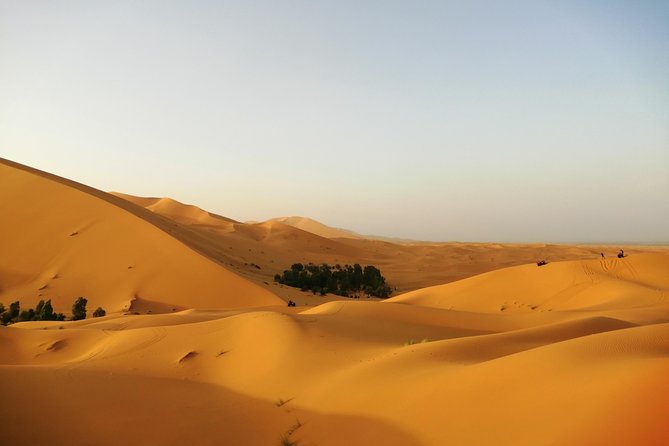
The route between Ouarzazate and the Dades Valley brings you through Skoura Oases and Berbere villages. You get the “how people live here” angle that matters, because it’s not only about monuments. Oases and farming villages are where daily life connects to the larger Sahara system of trade and water.
Then you’ll shift toward the Dades Gorges area for overnight, which helps you avoid a straight-line scramble. Spending the night in this region gives you a chance to rest before the desert day ramps up.
The next big highlight is Todra Gorge. You’ll drive to Tinghir first, a historical trading point tied to the old caravan era. Tinghir also connects to a Jewish quarter and cemetery that are still part of the area’s story. Even if you only spend short time here, it adds texture beyond the usual “canyon viewpoint” framing.
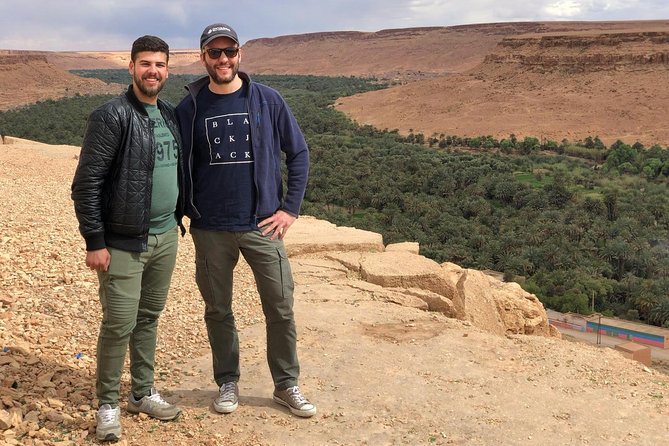
Todra Gorge itself is about scale: a canyon with towering rock walls where a short walk lets you feel the narrowness up close. If you’re into photography, this is where a smartphone photo starts looking good without a lot of effort.
The consideration here is simple: wear comfortable shoes. You’ll be doing a short walk inside the gorge, and the terrain can be uneven.
Merzouga at sunset: camp life, camel time, and a fire-side show
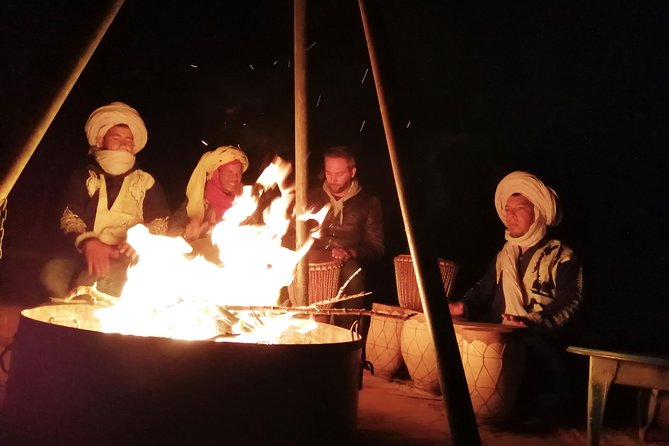
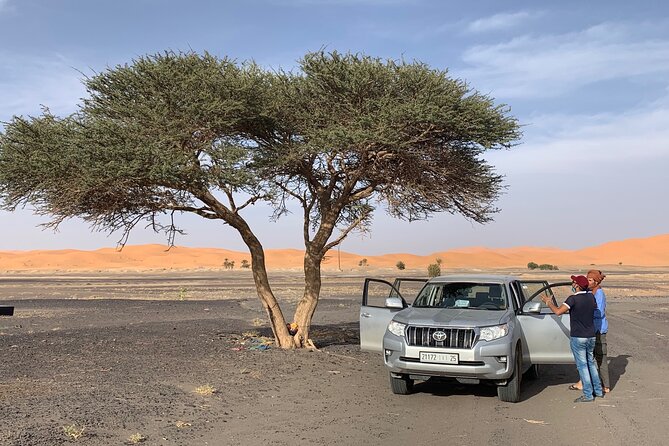
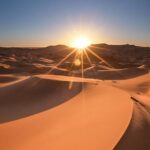
Merzouga is where the desert stops being a concept and starts being your surroundings. You’ll reach the desert area before sunset, then there’s a staging moment at a sand dunes hotel before switching from vehicle to camels. This is a classic setup, but it’s helpful because you’re not thrown straight onto animals with no context or acclimation time.
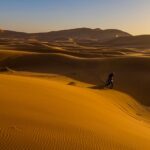
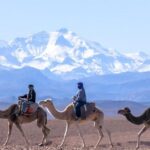
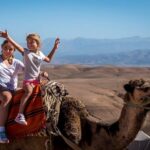
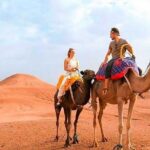
Your camel ride takes about 1h30, with stops for pictures along the way. That ride is the entry point into the dunes, and it sets expectations. You’ll be moving slowly compared with the road, so it’s a different kind of “pace”—less about covering distance and more about soaking in the shapes.
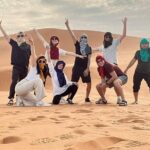
When you arrive at camp, you’ll have a hot shower and dinner, followed by a traditional music live show around the fire. This is one of the most praised parts of the experience because it tackles the desert comfort challenge. The Sahara can be stunning and rough; here, the plan makes sure you get basic creature comforts without losing the atmosphere.
You sleep inside the dunes at a luxury camp with half-board included. That half-board structure matters because it reduces decision-making when you’re tired. You don’t want to spend desert time hunting for food options after a day of traveling.
Sahara sunrise and 4×4 off-roading: oases, Berber tents, Gnawa music, fossils
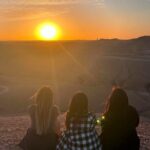
Day 3 starts with sunrise dune views, and that timing is everything. You’ll get breakfast after you’ve had that moment, so you’re not rushing to eat first and then watch the sky change.
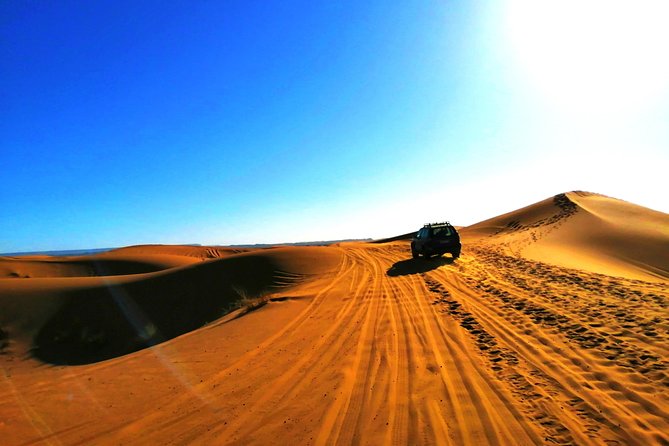
After breakfast, the desert day becomes more than scenery. You’ll go on a 4×4 off-roading tour visiting Merzouga oases and several cultural stops. This is where the “how people live” angle becomes real.
First up are encounters that go beyond a quick glance. You’ll visit a nomadic family in their Berber tent. Then you’ll head to a Gnawa Black people’s village to listen to spiritual music. This part is powerful because it frames the Sahara not only as a place of sand, but also as a cultural living space with traditions and sounds tied to spirituality.
You’ll also have lunch in a traditional restaurant during this day. Since lunch isn’t listed as included overall, treat this as the meal you’ll likely pay for (your guide can help you choose, but the data does not say lunch is covered).
Next comes the fossil stop. You’ll see animal water fossils on the surface of volcanic rocks. It’s the kind of detail that makes you look at the desert differently—proof that this area’s past wasn’t always what you see today.
The day ends with another change of scenery: you’ll be taken back to a hotel in the dune lines of Merzouga. There’s time to relax by the pool and rest, which is a welcome reset after both camel and off-road time.
Leaving the dunes for Fes: Ziz Oases, Azrou monkeys, and Ifrane breaks
Going back is part of the experience too. You’ll return to the hotel by camels or by 4×4 car if you prefer, then meet and drive toward Arfoud. From there, the route turns toward the Ziz Oases.
You’ll stop for panoramic views of the oases before continuing to Midelt for lunch. Again, lunch isn’t included, so plan on paying for it. Midelt is a good mid-route recovery pause, especially if you’ve felt the desert day in your legs.
Next you head to Azrou Forest for a visit with Macaque Barbary Monkeys. This is one of those animal moments that gives your brain a break from human history and desert routines. It’s also why this tour doesn’t end feeling like one long repeat of the same view.
Then it’s on to Ifrane, nicknamed as Switzerland of Morocco. You’ll have a pet stop there, which suggests a brief break to stretch and reset before the final leg to Fes.
Finally, you drive to Fes and drop you at your accommodation. That matters: many Sahara trips end in a general area. Here, you get the last-mile help so you can actually show up and sleep in your own bed.
Price and what’s actually included for $811.66 per person
At $811.66 per person for an approx. 4-day private tour, you’re not just paying for “a desert day.” You’re paying for private transportation, an air-conditioned vehicle, and scheduled accommodations—one in Dades Gorges, one inside the dunes, and one at a hotel in the dune lines of Merzouga. You’re also getting dinner and breakfast on the included days: 3 breakfasts and 3 dinners are listed.
That’s where the value shows. Camel rides and off-road 4×4 tours cost money, but you’re also paying for food coverage at the times you’re most likely to be too tired to hunt for options. With lunch and drinks excluded, you’re still responsible for at least a couple meals and beverages, but the heavy lifting is handled.
A practical tip: if you drink coffee or bottled water regularly, budget for it. Drinks aren’t included, and that’s a small line item that can quietly grow during long road days.
Also note the tour is private, and group discounts may apply depending on your group size. If you’re traveling with friends or family, private pricing can still feel fair because you’re sharing one set of transport and guide coverage.
The guides and the feel of the trip: why people keep praising the people part
This kind of trip lives or dies on the guide relationship, and the feedback you’ve got points clearly to that. Names like Mustafa and Anouar show up with strong notes about professionalism, punctuality, and friendliness. That’s not “extra.” In the Sahara, you want someone who can manage timing, explain what you’re seeing, and keep the day moving without steamrolling you.
You’ll also notice the itinerary gives the guide room to work with your energy. The camel return can be by camel or 4×4 if you prefer, which signals that there’s flexibility where it counts.
If you like off-the-beaten-track moments, this tour is also built for that. It doesn’t only focus on famous dunes shots. It plans for cultural encounters like the Gnawa music stop and a nomadic Berber tent visit—things that can be hard to arrange on your own in a short window.
The one caution I’ll give is attitude. This route asks you to be a little adaptable. Some days are long on the road, and desert experiences depend on conditions. If you’re the type who needs a perfectly calm schedule minute by minute, plan to treat this as a “travel days are part of it” adventure.
Who should book this 4-day Sahara tour (and who should tweak expectations)
This tour is a strong fit if:
- You want two desert nights with real desert activities, including sunrise and camel time.
- You prefer private comfort with air-conditioned transport.
- You want culture stops like the Berber tent visit and Gnawa spiritual music, not just viewpoints.
- You’re okay with long driving days in exchange for seeing more than one region.
You might want to tweak your expectations if:
- You get uncomfortable sitting for long stretches.
- You’re strict about meal planning, since lunch and drinks aren’t included.
- You want total customization of every stop—this itinerary is structured, even if your guide can sometimes adjust options.
Most travelers can participate, and pickup in Marrakech makes it easier if you don’t want to coordinate transfers.
Should you book this 4-day Marrakech to Sahara tour?
I’d book it if you want the classic Morocco-to-desert arc with enough structure to feel smooth, plus enough culture to feel meaningful. The standout combination is what you get in the desert: a real luxury-style camp night with shower and dinner, then a full desert day with 4×4 exploration, music, and fossils—followed by a relaxed reset at a dune-line hotel.
If you’re chasing maximum comfort, this itinerary does that. If you’re chasing maximum solitude, it’s private but still a group experience in the sense that the route follows set timing. For the price, the included breakfasts and dinners plus private transport make it feel less like you’re paying only for a camel ride and more like you’re paying for the whole machine that delivers the desert safely.
FAQ
FAQ
What’s the trip duration and route?
It’s an approx. 4 days tour starting in Marrakech and ending with a drop-off in Fes.
Is this tour private?
Yes. It’s private, and only your group participates.
What’s included in the price?
Included are air-conditioned vehicle and private transportation, a luxury camp in the Sahara Desert, and 3 breakfasts plus 3 dinners.
Is lunch included?
No. Lunch is listed as not included.
Are drinks included?
No. Drinks are listed as not included.
Do I get pickup in Marrakech?
Pickup from your accommodation in Marrakech is offered.
What desert activities are planned?
You get a camel ride (about 1h30 with picture stops) and a 4×4 off-roading tour, plus sunrise dune views and cultural visits.
Is there hot water at the camp?
Yes, a hot shower is mentioned for the desert camp night.
What’s the cancellation rule?
You can cancel for a full refund up to 24 hours before the experience’s start time.
If you’d like, tell me your travel month and whether you’d rather return by camel or 4×4 on Day 4—I can help you judge what parts of the schedule will feel most comfortable.