REVIEW · FEZ
Tour guide visit of fez medina ( private)
Book on Viator →Operated by Omar Sqali · Bookable on Viator
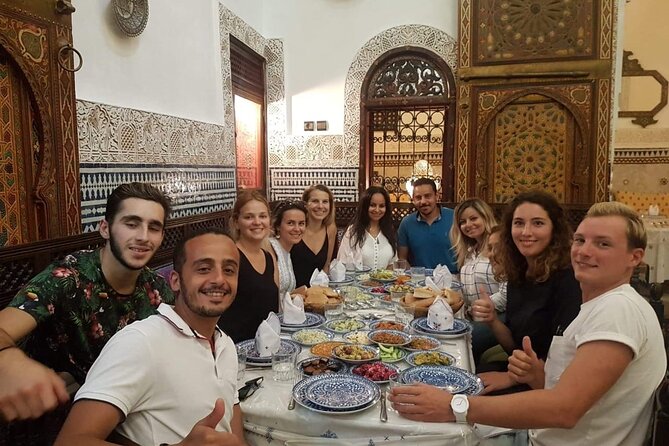
Fez medina can feel like a maze. This private Fes El Bali tour turns it into a story you can follow, with a guide who explains what you’re seeing in plain terms. I especially like having a private guide (not a rope-line herd) and getting hotel pickup so you spend less time figuring things out. One possible drawback: the tour includes stops in working craft areas and shopfronts, so if you dislike shopping pressure, you’ll want to be firm about what you will and won’t buy.
I also like the pace promise. You cover several key spots over about half a day (3 to 4 hours), and then you’re free to wander the rest of Fez your way. The guide is flexible enough to handle real-life moments too; I’ve seen feedback praising Omar Sqali for being kind, organized, and helpful when a child needed extra attention, even taking people up to a home rooftop for views.
In This Review
- Key things that make this private Fez tour worth it
- Why Fez El Bali is easier with a private guide
- Pickup and timing: the smart half-day format
- Main street stop: the hydraulic clock and why it matters
- Boujloud Square and the blue gate: an entrance built by history
- Museo Nejjarine: woodcraft that reads like architecture
- Zaouia of Moulay Idriss II: paying tribute and learning mausoleum culture
- Kairaouine Mosque and University: Fez as a center of learning
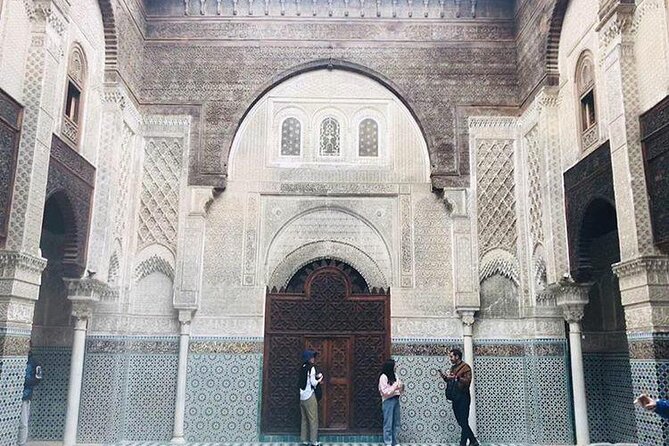
- Al-Attarine Madrasa: Marinid architecture at full ambition
- Chouara Tannery: leather craft plus a panoramic payoff
- Place Seffarine: copperwork and metal craft lessons
- Price and value: what $46.53 gets you in Fez
- What to expect on the ground (and how to make it smoother)
- Who this Fez medina tour is best for
- Should you book Omar Sqali’s private Fez medina visit?
- FAQ
- How long is the private Fez medina tour?
- What does the tour include?
- Are entrance fees included?
- Does the tour offer hotel pickup?
- Is this tour private or group-based?
- Which sites are part of the itinerary?
- Are any stops free to enter?
- What time does the tour operate?
- Is good weather required?
- What’s the cancellation policy?
Key things that make this private Fez tour worth it
- Hotel pickup in Fez saves time and stress before you even step into the medina lanes
- Your own pace for a 3 to 4 hour half-day makes it feel less rushed than group tours
- Hydraulic clock lesson gives you a rare look at how Fez worked, not just how it looks
- Landmarks plus trades: mosques and schools alongside wood, leather, and metal craft spots
- Clear admissions mix: some places are free, and a couple ticketed stops are on you
- Local expertise: the guide’s explanations go beyond what you’d get from wandering alone
Why Fez El Bali is easier with a private guide
Fez El Bali is UNESCO-protected, but it’s not a museum you can stroll like one. It’s a living medina with narrow streets, courtyards, and a layout that can leave you turned around—fast. What makes this tour practical is that the guide gives you context as you walk, so each turn feels less random.
The best part is that you’re not competing with a big group. In a private setup, you can pause, ask, and adjust your pace without feeling like you’re holding everyone up. I also like that the tour is designed around heritage and historical importance, not just photo stops. When the guide talks about why a building exists or what a craft area signals about the city, you start to notice patterns.
You can also read our reviews of more guided tours in Fez

Pickup and timing: the smart half-day format
This experience runs roughly 3 to 4 hours, and you get time back for the rest of your day. That matters in Fez because your evening is when you might want to roam at your own speed—hunt for a café, circle back to a favorite street, or just decompress after walking.
Tours can operate in a broad window (the activity is offered daily from 10:00 AM to 7:30 PM). In other words, you should be able to choose a time that matches your energy level and your plans—morning for a cooler walk, later in the day if you prefer a slower rhythm.
Also, it’s described as good-weather dependent. If Fez is foggy, rainy, or uncomfortable, you may be offered another date or a refund. I’d take that seriously—medina wandering is simply harder when it’s wet or unpleasant underfoot.
Main street stop: the hydraulic clock and why it matters
Your tour starts with the main street of the old medina. That’s key because you get your bearings early, and the guide can explain the “why” behind the city’s layout before you go deeper.
One standout moment here is the hydraulic clock, built on the order of the Merinid ruler Abu Inan. Your guide also points out that it’s located in the house of a famous philosopher, and they explain how the hydraulic clock works. Even if you’re not a gadget person, I found this kind of stop useful because it reframes Fez as a place that engineered daily life—not just a place that preserved old stones.
Boujloud Square and the blue gate: an entrance built by history
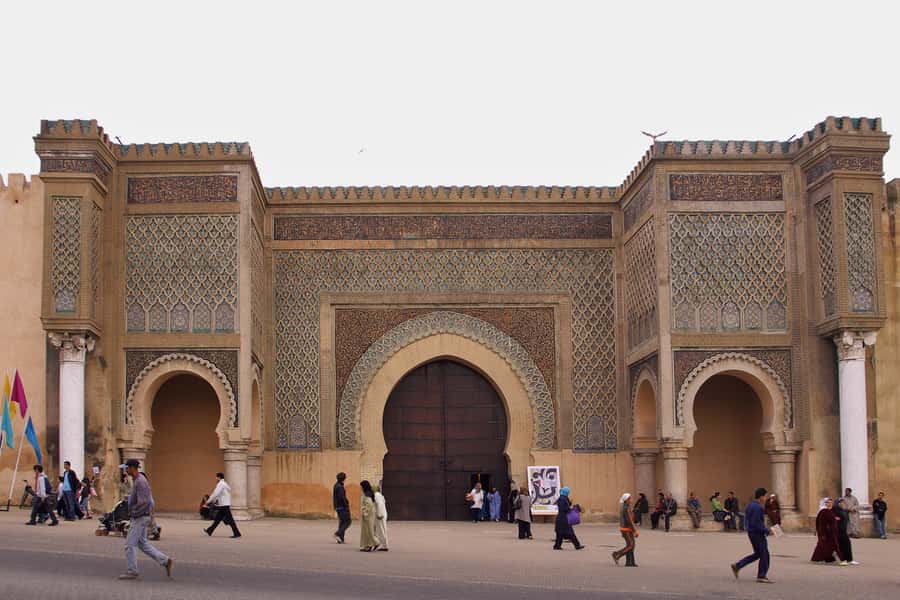
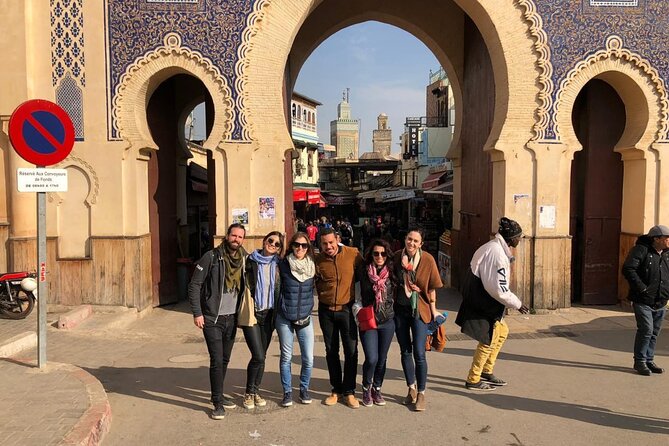
Next comes Boujloud Square, often called the blue gate, described as the main entrance to the old medina. This stop is short, but it’s doing important work: it’s your first major “threshold” moment.
You’ll hear about how it was built during the colonial period by the French, and why it was considered a grand entrance. That’s a reminder that Fez didn’t just evolve slowly in the medieval era—later powers and periods left their marks too. If you like understanding layers of history rather than only focusing on the oldest parts, this framing is a win.
Tip for your visit: take a minute to look up and around before you move on. Gate areas are often where you can quickly understand street directions and flow—helpful later when you’re free to roam.
Museo Nejjarine: woodcraft that reads like architecture
The tour then heads to Museo Nejjarine (also called the Wood Museum). This stop is about wood objects from the past and what Moroccan architecture looks like when you think in materials, not just buildings.
You should plan for this to be a ticketed stop (entrance not included). The time here is relatively brief, but it can be memorable because it connects everyday craft to the city’s design language. Woodwork in Fez isn’t random decoration—it fits the way spaces were built and how people used them.
What can be a drawback: if you’re not interested in artifacts or materials, you might feel the time is tighter here than at larger museum stops elsewhere. If you are the kind of person who loves how objects are made, you’ll likely enjoy it more than a standard “here’s the museum” stop.
You can also read our reviews of more private tours in Fez


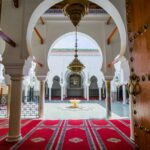
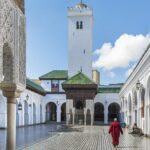

Zaouia of Moulay Idriss II: paying tribute and learning mausoleum culture
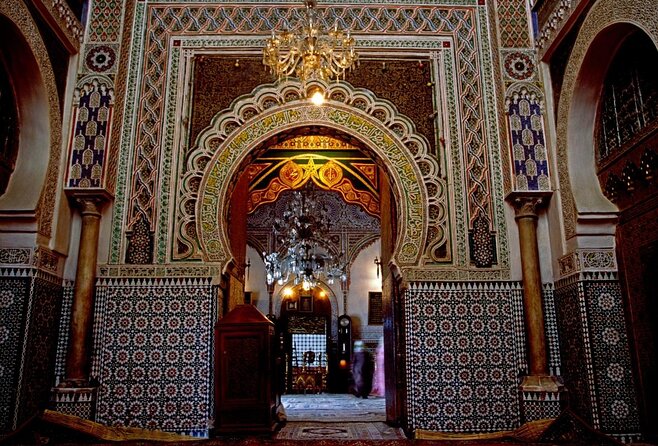
At Zaouia of Moulay Idriss II, the tour turns to spiritual and political roots. Idriss II is described as the founder of the city, and this is a stop to pay tribute.
This part also gives you insight into mausoleum culture in Morocco—how reverence, space, and history combine. It’s a good contrast to the more craft-and-market areas you’ll see later, and it helps you understand that many medina spaces have meaning beyond commerce or tourism.
Admission here is free, which is always a pleasant surprise when you’re budgeting your day.
Kairaouine Mosque and University: Fez as a center of learning
Then you reach Kairaouine Mosque, also tied to Quaraouine University, described as the oldest and still active university in the world. The tour notes it was founded in 856 and became one of the leading educational and spiritual centers in the Islamic world.
This is one of the biggest “heritage weight” stops on the route. Even if you’ve seen other major mosques, Kairaouine has a specific historical position that can change how you read the medina. You’re no longer just looking at old buildings; you’re seeing why Fez became a learning hub.
This stop is free on the tour route. Time is limited (around 20 minutes), so treat it as a focused orientation: see what you can, listen to the guide’s explanation, and then decide what you want to linger on later if you’d like.
Al-Attarine Madrasa: Marinid architecture at full ambition
After that, the tour includes Al-Attarine Madrasa (Medersa of Attarin), described as an old theology school built by the Marinid sultan Uthman Abou Said. The guide frames it as a high achievement of Marinid Dynasty architecture.
This is another ticketed stop (entrance not included). Madrassas can be visually intense—pattern, geometry, and details that you may not notice without someone pointing out what to look for. If your guide is doing their job well, you’ll leave with a clearer sense of what makes this school special beyond its age.
Possible consideration: if you’re short on time that day and also plan to revisit other sites on your own, ticketed stops can add cost. But they also tend to give the best “Fez craftsmanship in stone” moments.
Chouara Tannery: leather craft plus a panoramic payoff
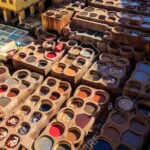
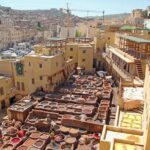
Next is Chouara Tannery, described as one of the oldest in the city and dating back to the 11th century. This is the stop where many people decide what kind of traveler they are.
You’ll get an explanation of the steps of making high-quality leather, and you’re also set up for a beautiful panoramic view of the old medina. That view angle is often why people put up with the crowds and the intensity of working-tannery areas.
Entrance is listed as free for this stop. Still, you should keep your expectations realistic: tanneries are working spaces. If strong smells or close-up views of processes aren’t your thing, you can still enjoy the educational part from a comfortable viewing distance—your guide can help you manage where you stand.
Place Seffarine: copperwork and metal craft lessons
The tour closes with Place Seffarine, named after the coppersmiths. This dates back to the middle ages, and it’s a strong final stop because it ties everything together: the city’s heritage isn’t only in monuments, but in hands-on trades.
Here, you’re building a mental map for Fez. After wood, leather, and religious learning, metalwork helps you see the medina as an ecosystem of crafts. The tour keeps it short, so it’s best treated as a quick orientation to what the area is known for.
Entrance is listed as free, and it’s a nice place to pause and decide whether you want to keep exploring on your own afterward.
Price and value: what $46.53 gets you in Fez
At $46.53 per person, this tour can be good value—mainly because it’s private, includes pickup, and lasts long enough to make several heritage stops feel connected.
Here’s how I’d think about value:
- You’re paying for time with a local guide who can explain the hydraulic clock, the Marinid architecture, and the learning and spiritual background behind Kairaouine.
- The half-day length means you get useful structure for the morning or afternoon, then you still have the rest of the day to explore freely.
- Some major sights on the route are free (like Boujloud Square, Zaouia of Moulay Idriss II, and Kairaouine), so you’re not paying for every single entry.
The part to watch: entrance fees aren’t included. The tour notes ticketed stops at Museo Nejjarine and Al-Attarine Madrasa. If those two are must-sees for you, the price still feels reasonable because you’re concentrating your paid time where it matters.
If you’re comfortable navigating the medina alone, you could technically do a self-guided walk. But Fez isn’t just about seeing things—it’s about understanding why those things are where they are. Paying for that “translation layer” is often what makes the difference between a confusing walk and a satisfying one.
What to expect on the ground (and how to make it smoother)
Even with a private guide, you’re walking in the medina. That means you should expect tight lanes, uneven surfaces, and frequent visual stimulation. A few practical moves can help:
- Wear comfortable shoes you can trust on stone and stairs.
- Bring a small amount of cash for the ticketed stops (Museo Nejjarine, Al-Attarine Madrasa) since entrance fees aren’t included.
- If you’re not shopping, be polite but clear. Craft areas often come with displays, and your guide can help you focus on learning rather than buying.
- If you’re traveling with kids or you’re easily tired, private is a good choice—feedback included praise for Omar Sqali stepping in calmly when a toddler needed extra help.
Most travelers can participate, and service animals are allowed, which is helpful for flexibility.
Who this Fez medina tour is best for
This tour fits you if:
- You want Fes El Bali heritage context without spending hours researching each stop.
- You prefer a private pacing option over matching your step count to a group.
- You like the mix of landmark sites plus craft history (wood, leather, metal).
It’s less ideal if:
- You want only the biggest monuments with zero shop-culture involvement.
- You don’t want to handle working areas like a tannery, even if the visit is educational and time-limited.
Should you book Omar Sqali’s private Fez medina visit?
If your goal is to understand Fez—not just photograph it—this is a strong pick. The route is built around major heritage touchpoints (Kairaouine, Idriss II, Marinid architecture) and the city’s trades (wood, leather, coppersmithing). Add in hotel pickup and a guide who can adapt to real needs, and it becomes a high-comfort way to get oriented fast.
I’d book it if you’re visiting for the first time, or if you want a structured half-day that leaves your afternoon open for your own discoveries. Skip it only if you strongly dislike shopfront stops or you’re looking for a tour that stays entirely within ticketed museum environments.
FAQ
How long is the private Fez medina tour?
It lasts about 3 to 4 hours.
What does the tour include?
The discovery with a private tour guide is included, along with pickup offered, and a mobile ticket.
Are entrance fees included?
No. Entrance fees and tickets are not included, including places like Museo Nejjarine and Al-Attarine Madrasa.
Does the tour offer hotel pickup?
Yes, pickup is offered from your hotel in Fez for ease.
Is this tour private or group-based?
It’s a private tour/activity, so only your group participates.
Which sites are part of the itinerary?
The route includes the main street of the old medina, Boujloud Square (blue gate), Museo Nejjarine, Zaouia of Moulay Idriss II, Kairaouine Mosque/University, Al-Attarine Madrasa, Chouara Tannery, and Place Seffarine.
Are any stops free to enter?
Many stops on the route are listed as free, including Boujloud Square, Zaouia of Moulay Idriss II, Kairaouine Mosque, Chouara Tannery, and Place Seffarine. Museo Nejjarine and Al-Attarine Madrasa are listed as not included.
What time does the tour operate?
It’s offered daily, Monday through Sunday, in the window of 10:00 AM to 7:30 PM.
Is good weather required?
Yes. The experience requires good weather, and if canceled due to poor weather you’ll be offered a different date or a full refund.
What’s the cancellation policy?
You can cancel for a full refund if you do so up to 24 hours in advance. If you cancel less than 24 hours before the start time, the amount paid is not refunded.