REVIEW · MARRAKECH
Half-Day Highlights of Marrakesh Bike Tour
Book on Viator →Operated by Biking in Marrakech · Bookable on Viator
Marrakesh clicks into place on two wheels. I love how the route drops you into Jemaa el-Fnaa and the historic core fast, and I also like the payoff at Menara Gardens, where you can frame classic views with the Atlas Mountains in the background. One possible drawback: this ride asks for road awareness and some cyclist confidence around city streets.
For around $36.06, you get a guided, roughly 3-hour loop with a bicycle, an English-speaking guide, and included admission at the big stops. With a small group (up to 30) and a start time of 9:30 am, it’s a smart way to get your bearings without turning your day into a full marathon of transit and waiting.
In This Review
- Key highlights to know before you pedal
- Entering Marrakech the practical way: Why bikes beat buses
- Start point reality check: Rue Oum Errabia at 9:30 am
- Jemaa el-Fnaa: Your fast track to Marrakesh’s pulse
- Koutoubia Mosque: Almohad architecture you can actually see
- Saadian Tombs: where the luxury is inside the walls
- Menara Gardens and the pavilion view: classic Marrakech, measured pace
- The ride itself: who should do this, and how to prepare
- Stops as a system: how the route helps you see more than landmarks
- Price and value: $36.06 for a lot of included time
- A quick note on weather and comfort
- Should you book this Marrakesh bike tour?
- FAQ
- How long is the Marrakesh Bike Tour?
- What time does the tour start?
- Where is the meeting point?
- What is included in the price?
- Are there tickets included for each main site?
- How large is the group?
- Is there a mobile ticket?
- What kind of weather does the tour require?
- Is free cancellation available?
- Is the tour suitable for most people?
Key highlights to know before you pedal
- A quick, guided overview of old Marrakech plus the Kasbah side
- Entry tickets included at each major stop, so you’re not hunting for documents or lines
- Photo-ready stops built into the ride, including the Menara Gardens pavilion view
- A genuinely local rhythm led by guides such as Khawla or Chama, who focus on how daily life works
- A bike route that favors confidence over beginner comfort, especially on shared roads
Entering Marrakech the practical way: Why bikes beat buses
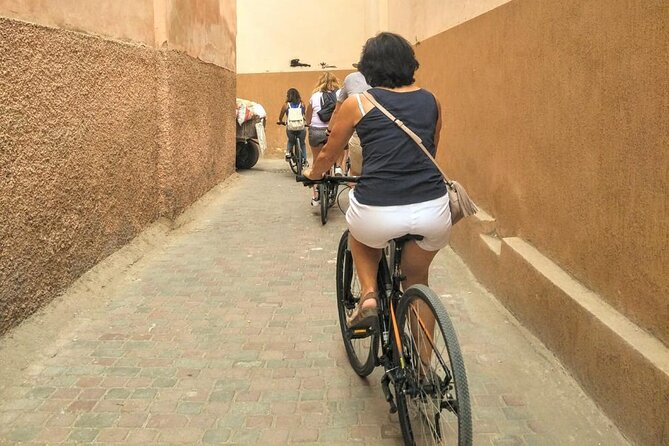
Marrakesh is famous for its medina chaos, and the funny thing is that chaos can be exhausting. You can end up spending your energy dodging crowds, zigzagging through narrow lanes, and waiting for taxis that can’t quite reach where you want to be. A bike tour solves a simple problem: it helps you see more while keeping your own momentum.
This ride is built as a half-day style experience, about 3 hours, with enough structure to hit the landmarks you came for—plus enough freedom to still feel like Marrakech is Marrakech, not a checklist you power through. You roll out with a guide who helps translate what you’re looking at, from the role of Jemaa el-Fnaa to why the Menara reservoir is such an iconic framing spot.
I also like the timing. Starting at 9:30 am usually means you’re getting into the day before heat and crowds fully take over. And with a small max group size of 30, it’s easier to keep things moving without turning into a slow parade.
You can also read our reviews of more cycling tours in Marrakech



Start point reality check: Rue Oum Errabia at 9:30 am
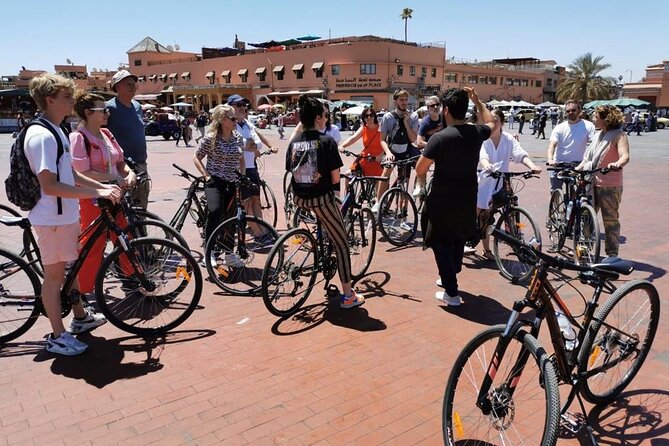
The tour starts at Rue Oum Errabia, Marrakesh 40000, and it ends back at the same meeting point. You’ll want to arrive a little early. The most common frustration with bike tours in old cities is not the riding—it’s the first 10 minutes when you’re trying to find the pick-up process.
In one case, communication about the meeting point felt unclear, and the solution was basically a short taxi hop to where the bikes could be collected. That doesn’t mean it will happen to you, but it’s a good reminder: if you’re arriving by taxi, go with a little extra buffer time and double-check you’re at the right place before you’re tempted to wander off.
You’ll get a mobile ticket, and confirmation is sent at booking time. That’s helpful for keeping things simple when you’re juggling medina navigation.
Jemaa el-Fnaa: Your fast track to Marrakesh’s pulse
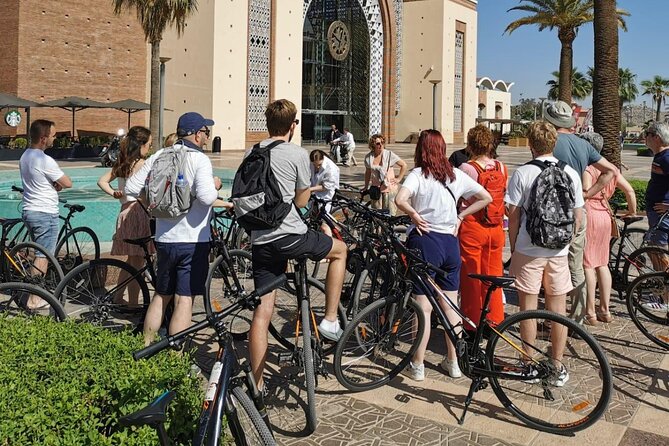
Jemaa el-Fnaa is the main square of the medina, and it’s the kind of place where you instantly understand the city’s energy. As a bike stop, it works especially well because you don’t just look from the edges—you can absorb the whole atmosphere: street life, market activity, and the way people actually use the space.
You get around 20 minutes here, which is a tight window but enough to do two important things:
- Get your bearings. After this, you’ll recognize the “shape” of the medina better when you wander later.
- Take photos without rushing yourself into a sprint. This stop is built for cameras, and you’ll likely want to capture wide views before you move on.
One small piece of advice: Jemaa el-Fnaa can be overwhelming if you approach it expecting calm. Treat it like a living intro scene. Walk your bike slowly, look around, and let your brain map what’s happening before you start chasing details.
Koutoubia Mosque: Almohad architecture you can actually see
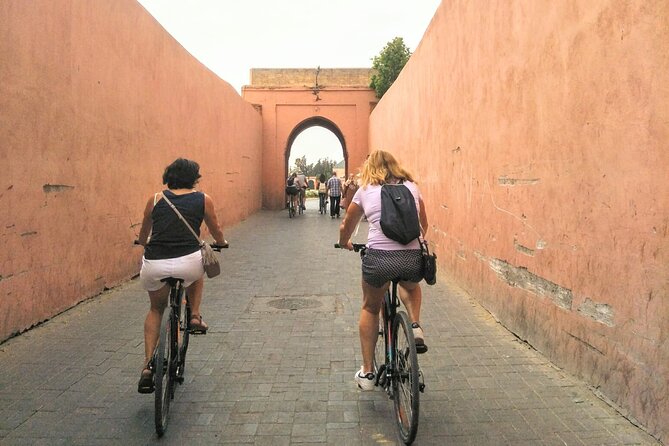
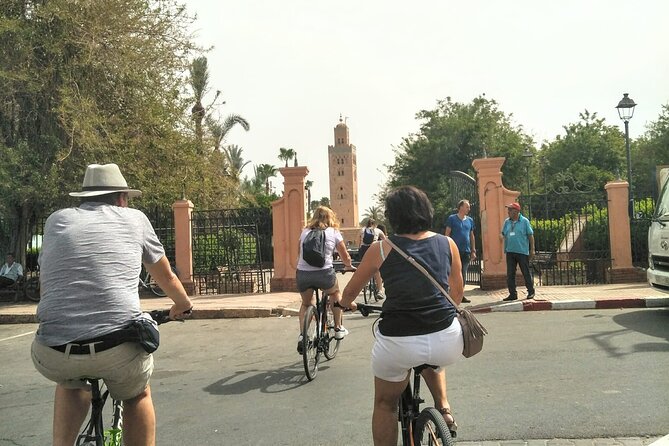
From the square life, the tour pivots to one of Marrakesh’s most important monuments: Koutoubia Mosque. You’ll get about 30 minutes here, enough time to appreciate the Almohad-era foundation story and also just stand back and observe the architecture.
The mosque traces back to the Almohad caliph Abd al-Mu’min, with an earlier foundation dating to the mid-12th century and a second version rebuilt around 1158. Construction work on the minaret is associated with a later ruler, Ya’qub al-Mansur, around 1195. The result is the mosque structure you recognize today—often described as a classic example of Almohad architecture and an important model for Moroccan mosque design.
Why this stop feels good on a bike tour: you can reach it efficiently, but the time on-site is still long enough to slow down. You’re not forced into a photo-only drive-by.
If you care about Islamic architecture, this is also a moment to notice proportions and materials rather than just decorations. The “why” is in the stonework and the overall geometry—details you won’t get from a speeding taxi view.
Saadian Tombs: where the luxury is inside the walls
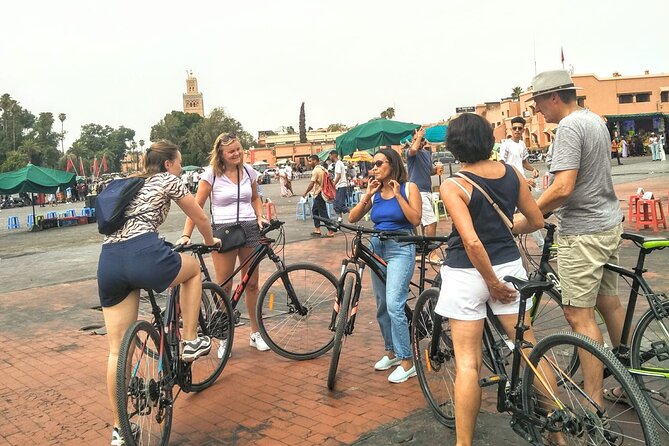
Next up: the Saadian Tombs, a royal necropolis located on the south side of the Kasbah Mosque, within the royal kasbah district. You’ll spend about 30 minutes there, and that time matters because you can’t really understand the place if you treat it like a quick exterior stop.
These tombs date to the Saadian dynasty, especially the reign of Ahmad al-Mansur (1578–1603). Morocco’s monarchy later continued to bury family members here for a time afterward, so the site isn’t just frozen in one moment—it represents a continuing royal practice.
What makes the Saadian Tombs a standout stop in Marrakech is the interior design and decoration. Many people think of tombs as solemn, plain, and closed-off. Here, the care in the design is the point. It’s often described as a high point of Saadian-period Moroccan architecture, and on the ground it feels like the city’s wealth and artistic ambition have been intentionally preserved behind those walls.
Practical tip: treat your time like a gentle circuit. Look at the overall design first, then let yourself linger on the finer interior elements. When you move on, you’ll feel like you understood more than what you captured with your phone.
A few more Marrakech tours and experiences worth a look
Menara Gardens and the pavilion view: classic Marrakech, measured pace
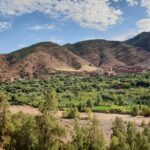
After historic power comes landscape beauty. The Menara Gardens and Pavilion sit around a central water basin and reservoir, with a pleasure pavilion nearby. The gardens were established in the 12th century, about 1157, and they’ve been recognized as part of a UNESCO World Heritage listing since 1985.
This stop is about 30 minutes, and it’s one of the most satisfying finishes for a bike tour because the scenery gives your eyes a break after dense architecture and square life. The reservoir and pavilion, often framed by views of the High Atlas Mountains, are one of the iconic Marrakech images.
A small but important detail: the pavilion in its current form dates from the 19th century. So while the garden layout is older, the visual centerpiece you’re seeing today has its own later story. That helps explain why it feels both historic and slightly “storybook” at the same time.
How to enjoy it: walk slowly around the water-view areas, pause for photos, and try to spot the way the Atlas Mountains sit behind the composition. If you come expecting a chaotic market scene, this stop will surprise you—in a good way.
The ride itself: who should do this, and how to prepare
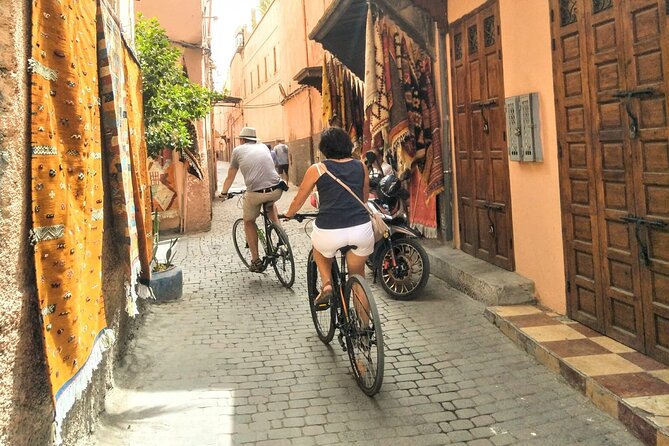
This tour is not described as an extreme sport, but it is not a gentle Sunday cruise either. One clear theme from the experience: you need to be reasonably confident and aware of road conditions. You share space with city traffic, and in Morocco’s cities, “rules” can feel more fluid than at home.
If you’re a careful cyclist, you’ll probably find the pace manageable. If you’re brand-new or easily startled by buses, mopeds, or pedestrians stepping into your path, you’ll want to think twice.
You’ll also see that bike comfort can vary. One rider specifically noted an uncomfortable saddle and sore feelings in the seat area. That’s not guaranteed, but it’s a real reminder: bring a little resilience and consider bicycle shorts if you have them.
What about guide quality? This is one of the strongest sides of the experience. Guides like Khawla and Chama have been praised for their personality and willingness to share knowledge—not just facts, but what life in Marrakech feels like. That kind of guiding changes the tour from sightseeing to understanding.
Stops as a system: how the route helps you see more than landmarks
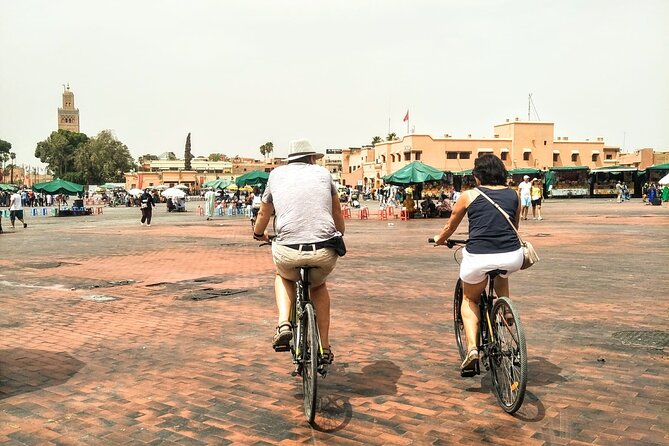
The tour makes sense when you view it as a system, not separate stops. You start with a social hub (Jemaa el-Fnaa), then move to religious monument power (Koutoubia Mosque), then shift to royal architecture (Saadian Tombs), and end with a garden landscape icon (Menara Gardens). Each step adds a different layer of how Marrakech works.
That matters because it sets you up to explore afterward. When you know what Jemaa el-Fnaa represents, the medina doesn’t feel like one giant maze. And when you’ve seen the kasbah side and the tomb design, you can spot style cues elsewhere.
Also, a short guided loop is great if you don’t want to overbook your day. You’ll get an overview, then you can choose what to linger on later.
Price and value: $36.06 for a lot of included time
At $36.06 per person, this tour sits in the “serious value” range—especially because you’re not just paying for someone to steer you. You’re also getting:
- Bicycle use
- An English-speaking guide
- Admission tickets included for the stops
That combination matters in Marrakech, where the time cost of ticket lines can add up fast. You also gain the benefit of not spending your best hours organizing transportation between sites.
Booking timing is also a practical point: this tour is often booked about 18 days in advance on average. That suggests demand is steady, and it’s smart to lock it in before you arrive if your schedule is tight.
A quick note on weather and comfort
This experience requires good weather. If conditions are poor, you’ll be offered a different date or a full refund. That’s important because Marrakech weather swings can change quickly, and a bike tour depends on rideable conditions.
For comfort, plan for city riding: a bit of sun, a bit of dust, and a seat that might not be perfect for every body type. The upside is that the route is short enough that you’re not stuck for hours if the bike setup isn’t ideal.
Should you book this Marrakesh bike tour?
Book it if you want a fast, structured way to see major Marrakech highlights without eating up an entire day. It’s especially worth considering if you:
- feel confident biking in a city environment
- want included entry tickets and an English-speaking guide
- like photo stops, but also want some real context for what you’re photographing
Skip it (or swap plans) if you’re a beginner cyclist or you hate the idea of sharing narrow streets with mixed traffic. This tour rewards calm, controlled riders.
If you do book, come prepared to arrive smoothly at Rue Oum Errabia around the start time and plan for the first-minute “where exactly do we meet” moment. Once you’re rolling, the payoff is a tour that helps you understand Marrakech in a few hours, then gives you the freedom to roam the parts you liked most.
FAQ
How long is the Marrakesh Bike Tour?
The tour lasts about 3 hours.
What time does the tour start?
The start time is 9:30 am.
Where is the meeting point?
The meeting point is Rue Oum Errabia, Marrakesh 40000, Morocco.
What is included in the price?
The tour includes bicycle use, an English-speaking guide, and admission tickets at the listed stops.
Are there tickets included for each main site?
Yes. Admission tickets are included for Jemaa el-Fnaa, Koutoubia Mosque, Saadian Tombs, and Menara Gardens and Pavilion.
How large is the group?
The tour has a maximum of 30 travelers.
Is there a mobile ticket?
Yes, this experience uses a mobile ticket.
What kind of weather does the tour require?
It requires good weather. If canceled due to poor weather, you’ll be offered a different date or a full refund.
Is free cancellation available?
Yes. You can cancel up to 24 hours in advance for a full refund.
Is the tour suitable for most people?
Most travelers can participate. It’s best if you’re reasonably comfortable cycling in a city setting.