REVIEW · FEZ
Shared Half Day Guided Fes Tour with Local Guide
Book on Viator →Operated by Fez Local Guide · Bookable on Viator
Fez can feel like a maze, fast. This guided half-day tour helps you sort the streets, stories, and key sights without wasting time.
I especially liked the way the guide ties each stop to real city life, not just dates on a sign. You’ll walk with a local who knows where people go, how things work, and what to look at.
Two things I really loved: the friendly guidance (the kind that answers your questions on the spot) and the clear flow through the Medina so you don’t get lost or trapped in the wrong lanes. Guides like Idriss/Idrees have a reputation for making Fez click quickly through plain explanations, plus practical food and restaurant suggestions.
One consideration: you’re walking inside the Medina for a few hours, so expect uneven ground and narrow paths. If you’re sensitive to crowds, noise, or having your senses worked over (especially around the tannery area), plan for a slower pace and wear comfortable shoes.
In This Review
- Key highlights you’ll feel right away
- Starting at Rue de la Poste: Your Fez “getting oriented” moment
- Bab Boujloud (Blue Gate): A gate that tells two eras
- Bou Inania Medersa: The 1350s school that still shapes the city
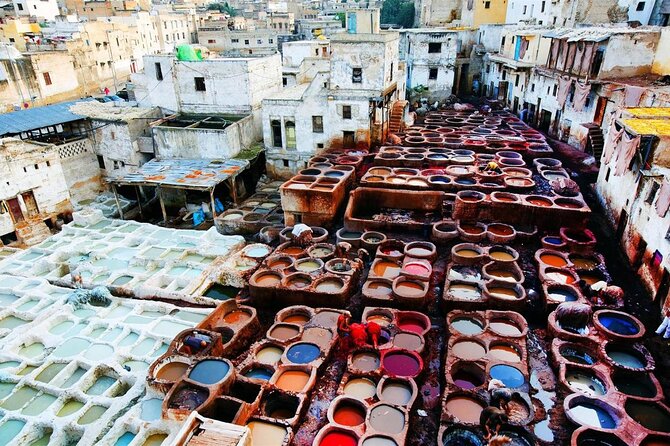
- Chouara Tannery in Fes el-Bali: Leather work in the oldest quarter
- Place R’cif and the leather-and-mirror streets: A street market lesson
- Fes el-Bali souk rhythm and the mausoleum of Moulay Idriss III
- Museo Nejjarine and the Henna Souk: Crafts inside a restored fondouk
- Place Seffarine: Mint tea while copper gets hammered
- Price and what you really get in 3 to 4 hours
- Who this walking tour suits (and who might want a different pace)
- Should you book this half-day guided Fez tour?
- FAQ
- FAQ
- How long is the shared half-day guided tour in Fez?
- Where does the tour meet and where does it end?
- Is the tour guided in more than one language?
- Is admission to Bou Inania Medersa included?
- Is admission to Museo Nejjarine included?
- Which parts include admission during the tour?
- What’s the group size limit?
- What is the cancellation window?
Key highlights you’ll feel right away
- Blue Gate start (Bab Boujloud): a 12th-century landmark with a French-era makeover you can actually see
- Bou Inania Medersa: a focused peek into a 1350s theological school with a mosque inside
- Chouara Tannery views: watch how leather work fits into the Oued Fes area of old Fez
- Souk-to-square rhythm: trade streets, craft lanes, then quick breaks at real public squares
- Museum stop in a restored fondouk: woods, arts, and crafts in a building that matches the neighborhood vibe
- Place Seffarine tea break: mint tea while metalworkers hammer copper pots and pans
Starting at Rue de la Poste: Your Fez “getting oriented” moment
This tour is built for a half day, so the first job is simple: get you oriented fast. You meet at Rue de la poste in Fez, and you end back at the same place. That matters because the Medina can chew up your time—turning back for every wrong turn costs more energy than you expect.
You’ll also go with a small group (up to 15 people), and the guide works in English and French. That size is a sweet spot. Big groups tend to stretch out across the street. Small groups mean the guide can point you toward the right alleys and keep the pace steady.
I like the way a local guide handles the opening “where are we” problem. Even if you’re a confident walker, having someone who can read the street patterns saves you stress and helps you notice details you’d probably miss on your own.
You can also read our reviews of more guided tours in Fez
Bab Boujloud (Blue Gate): A gate that tells two eras
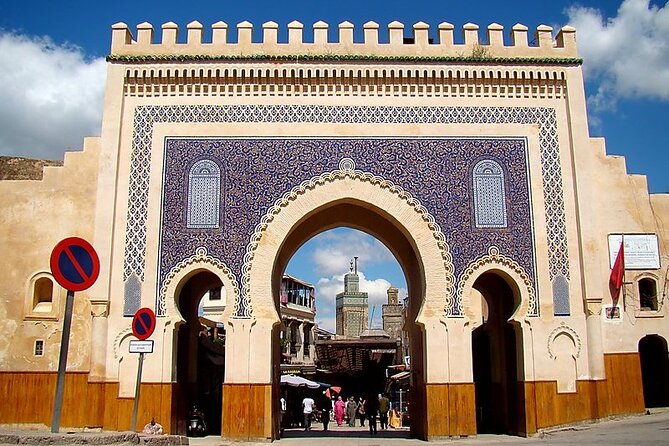
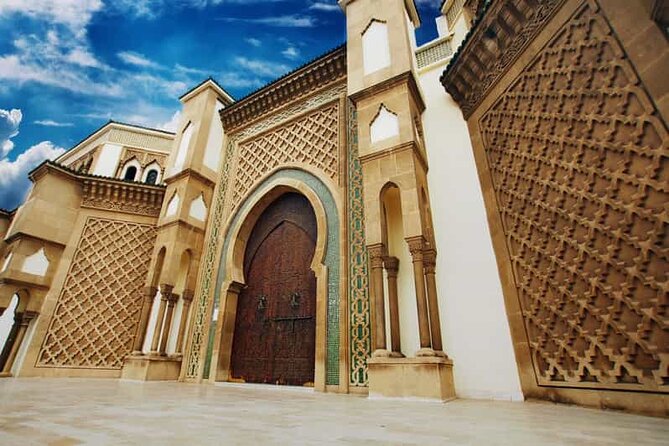
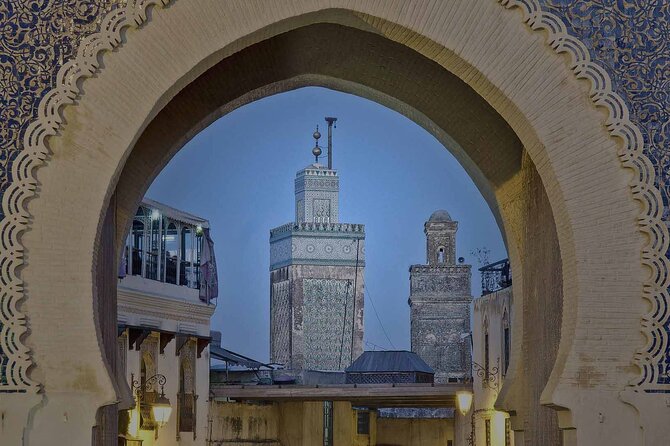
The walk begins at Bab Boujloud, the famous Blue Gate, on the west side of the Medina. This isn’t just a photo stop. The gate was originally built in the 12th century, then reconstructed into a more dramatic triple-arched entrance in 1913 by the French.
Why this is a good first stop: you’re seeing how Fez grew and how outside forces reshaped the city’s face to the world. The guide can point out what to look for visually, and you’ll start recognizing the kind of geometry and pattern-making that shows up again in doors, facades, and decorative details.
Bab Boujloud also gives you a clean mental anchor. Once you’ve got the gate in your head, the rest of the route becomes easier to follow. You’ll stop learning “where is this?” and start learning “how does this area function?”
Admission here is listed as free, so you don’t need to worry about tickets early on.
Bou Inania Medersa: The 1350s school that still shapes the city
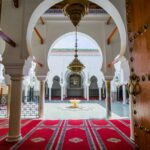
Next comes Bou Inania Medersa, a standout stop because it’s both architectural and practical in its purpose. Built in the 1350s, it’s described as the finest theological school in the city and includes an entire mosque.
You’ll have about 20 minutes inside. That’s short by museum standards, but perfect for this kind of stop on a walking tour. The guide can point you toward the most meaningful spaces so you don’t wander and end up staring at the wrong wall. If you want to understand Fez, medersas are a strong entry point—they show how education, religion, and craftsmanship were built into the city.
This stop does cost extra: the entrance is 2 euros per person (listed as 20 Drh). It’s not included, but if you’re deciding whether to pay, I’d treat it as part of the “value equation.” For only a small additional fee, you’re getting a concentrated look at a key institution from the period that still influences how people think about learning and worship.
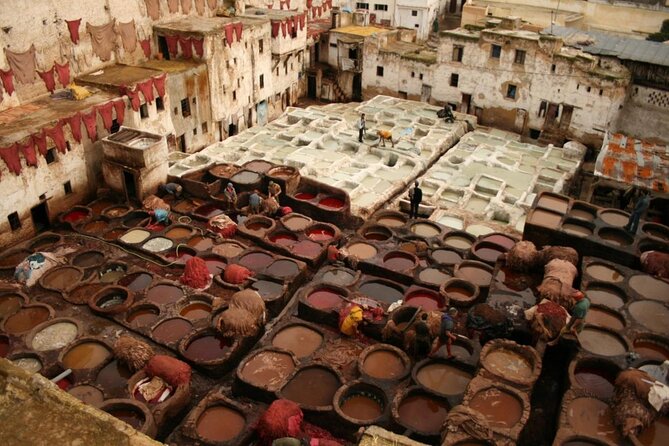
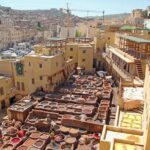
Chouara Tannery in Fes el-Bali: Leather work in the oldest quarter
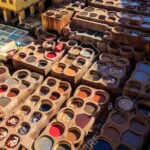
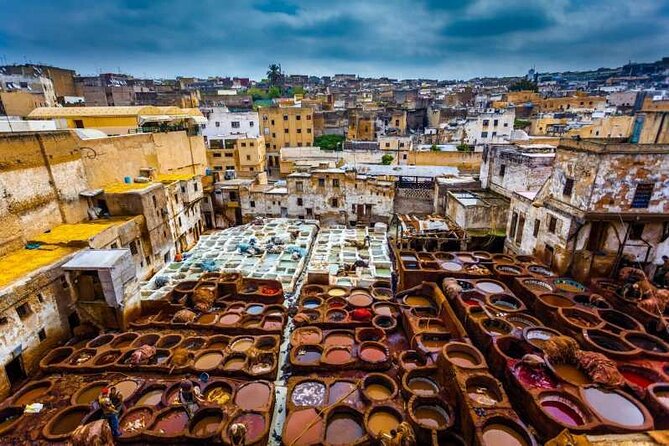
After the medersa stop, you’ll head toward Chouara Tannery, located in Fes el-Bali (the oldest Medina quarter), near the Saffarin Madrasa and the Oued Fes area.
This is the stop that changes how people feel about Fez. For some, it’s fascinating. For others, it’s a sensory challenge. Leatherwork is historically important and still tied to the city’s economy. The tannery area is also a great example of why a guide matters: you’re not just looking at something industrial—you’re seeing how a working trade sits inside a centuries-old street pattern.
You’ll have about 30 minutes here, and the good news is that admission is included for this part. You won’t need to do extra ticket math while you’re standing there trying to get a decent view.
Tip for your comfort: wear shoes you can stand in comfortably. The viewpoints and edges aren’t designed for long museum-style lingering, and you’ll want your body to be ready to shift position as the light and your angle change.
Place R’cif and the leather-and-mirror streets: A street market lesson
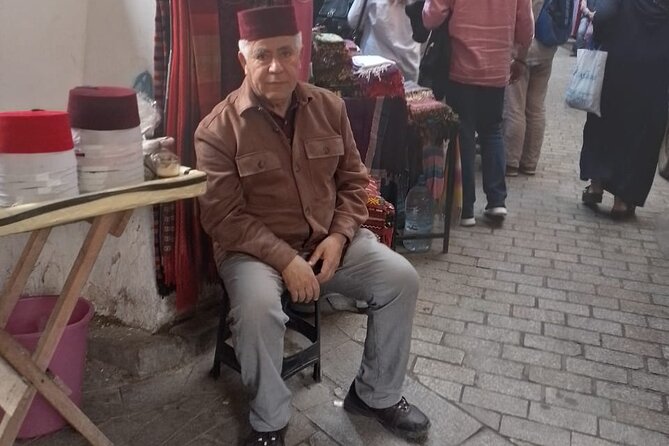
From there, the tour turns toward Place R’cif. Before you arrive, you pass areas tied to trades—dyers’ souk and mirror shops along what’s called Leather Street. Then you reach Place Seffarine (you’ll come back to it later for the tea and craft action).
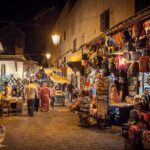
This stretch is valuable because it shows you the Medina’s logic: commerce isn’t random. Shops cluster by trade, and the streets become a map of skills. You’ll see what people are selling and what kinds of goods sit close together because they serve the same customers.
Admission isn’t listed for this stop area, and it’s marked as a free admission moment. Think of it as a “slow down and look” segment. Don’t just walk past. Pause at a doorway where the guide points out a detail, or look at how shopfront design makes goods easy to display. In Fez, that stuff is part of the story.



Fes el-Bali souk rhythm and the mausoleum of Moulay Idriss III
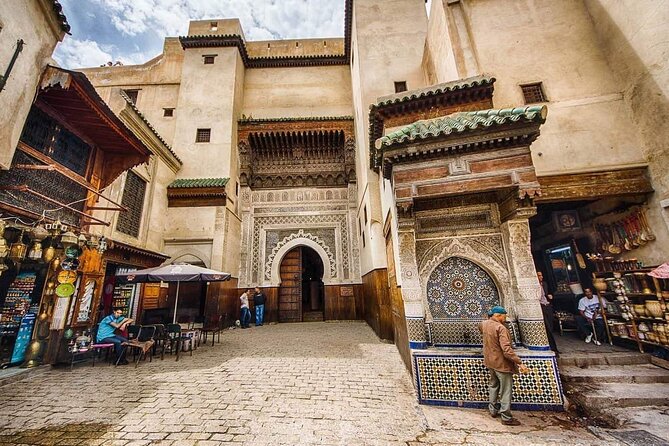
Now you’re back in the bigger shopping streets of Fes el-Bali—the heart of the Medina. One key highlight is the Souk el Attarine, where you’ll see goods like clothes and jewels. It’s also flanked by the ornate mausoleum of Moulay Idriss III, built in 1323 and often considered a central spiritual landmark for the old city.
This part is important for perspective. By now, you’ve seen gates, institutions, and workshops. The souks add the human scale: people buying, selling, trading information, and moving through the city’s daily workflow. Even if you aren’t shopping, you get a sense of how public life actually runs.
This is also a “free admission” stop, so you’re not paying just to stand in the right place. You’ll get about 20 minutes here, which is long enough to absorb what you see if you’re paying attention—but short enough to keep the tour feeling snappy.
If you want to shop later on your own, this is the segment that helps you remember where things are. It’s a navigation booster, not just a sightseeing segment.
Museo Nejjarine and the Henna Souk: Crafts inside a restored fondouk
Next you’ll visit Museo Nejjarine at Place an-Nejjarine. The experience here includes the Henna Souk plus the Museum of Woods, Arts & Crafts, located in a restored fondouk.
This stop is one of the best “mental reset” points on the route. You’ve just spent time moving through concentrated trade areas. Now you get a chance to slow down and see craftsmanship explained in a more structured way—even if you keep the visit short (listed around 20 minutes).
As with Bou Inania, there’s an extra fee: 2 euros per person (listed as 20 Drh). The museum isn’t included, so if you’re trying to keep costs down, you can treat this as the one optional-feeling payment. But if you care about how materials become objects—woods, crafts, tools—it’s worth adding.
After the museum segment, the tour turns back toward the Blue Gate area to find a place for a late lunch. Even if you don’t stay with the guide for lunch, you’ll leave with a clearer sense of where to eat without wandering in circles.
Place Seffarine: Mint tea while copper gets hammered
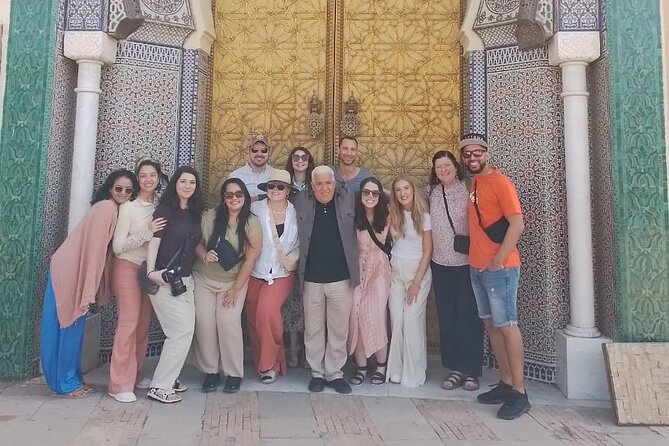
The last key stop is Place Seffarine, the square tied to metalwork. This is where you get the classic Fez break: sit down, order mint tea, and watch the rhythm of work.
You’ll have about 20 minutes here, and admission is included for this segment. The guide points out what’s happening as metalworkers beat copper pots and pans into shape. It’s craft at full volume, and it’s hard not to appreciate the skill once you’re watching it live.
I like that this isn’t just a pretty square. It’s part of the working-city loop. You’re ending the tour in a place that still does the thing it has historically been known for, so the whole walk feels grounded in real daily activity.
This is also a great moment to check your phone battery and charge your plans. If you’re heading out afterward, you’ll have enough mental map to choose where to go next.
Price and what you really get in 3 to 4 hours
At $17.45 per person, this is priced as a budget-friendly guided orientation. The tour lasts about 3 to 4 hours, which is ideal when you only have limited time in Fez but still want more than a random wander.
Where the value shows up:
- You get a guide who helps you connect the dots between architecture, trades, and where you are on the map.
- Group size is capped at 15, keeping things workable.
- Some key moments have free admission (Bab Boujloud, Place R’cif, the main shopping streets segment).
- The tannery viewing portion and the Place Seffarine craft break have admission included.
Where you should plan extra money: the tour lists two stops that are not included—Bou Inania Medersa and Museo Nejjarine—each at 2 euros per person.
So your real cost depends on whether you go in. If you plan to visit both, it’s still a solid deal for a short guided walk that hits major institutions and working areas. If you skip one, you can keep spending tight. Either way, you’re paying for guidance more than for entrances.
Who this walking tour suits (and who might want a different pace)
This tour is a good match if you want to:
- Get oriented quickly in Fez’s Medina without turning the day into a navigation project
- See both “looking” sights (like medersas and monuments) and “working” areas (tanneries, metalwork)
- Have someone explain how architecture and trade connect to everyday city life
It may be less ideal if you:
- Don’t like sensory-heavy stops (the tannery area can be intense)
- Need very quiet, slow pacing the whole time
- Want long sit-down museum time (most interior stops are around 20 minutes)
Most people can participate, but it’s still smart to treat it as a walking experience first.
Also, consider going with a guide like Idriss/Idrees if that name shows up for your departure. The consistent praise is for friendly, supportive guidance and clear storytelling about Medina history and architecture functions, plus food recommendations.
Should you book this half-day guided Fez tour?
If you have only a half day in Fez, I think it’s an easy yes. The route hits the essentials that usually take visitors longer to understand on their own: the Blue Gate as an anchor, a medersa for context, a working craft area at the tannery, then souks and craft squares to finish strong.
Book it if you want help making sense of the Medina without overspending. Skip it only if you’re the type who prefers to roam totally freely with no guidance at all, or if you know you’ll struggle with concentrated walking and the sensory aspects of the leather quarter.
FAQ
FAQ
How long is the shared half-day guided tour in Fez?
It runs about 3 to 4 hours.
Where does the tour meet and where does it end?
You meet at Rue de la poste in Fez, and the tour ends back at the same meeting point.
Is the tour guided in more than one language?
Yes. The guide speaks English and French.
Is admission to Bou Inania Medersa included?
No. Bou Inania Medersa entrance is not included and is listed as 2 euros per person (20 Drh).
Is admission to Museo Nejjarine included?
No. Museo Nejjarine entrance is not included and is listed as 2 euros per person (20 Drh).
Which parts include admission during the tour?
Admission is included for the Chouara Tannery segment and for the Place Seffarine segment.
What’s the group size limit?
The tour has a maximum of 15 travelers.
What is the cancellation window?
You can cancel for a full refund up to 24 hours before the experience’s start time.
If you want, tell me your travel dates and what you care about most (architecture, markets, crafts, or just getting oriented), and I’ll suggest how to time the rest of your day around this walk.