REVIEW · FEZ
Half Day Tour In Fez Medina With (Private) Tour Guide
Book on Viator →Operated by Adil Sahara Tours · Bookable on Viator
Fez can feel scary at first. This private Fez medina tour gets you oriented fast with a local guide (often Adil) and then shows you the big monuments without group hassles, lines, or getting stuck. I especially like how you get both the headline sites and the small “how-to-walk-here” details that keep you from feeling lost. One thing to watch: the route can include stops tied to local crafts, and if your only goal is tanneries or pottery studios, you should set that priority up front.
You’ll meet your guide in the morning at your hotel/riad/airport/port, then spend about 3 hours 30 minutes moving through the old city and end with the rest of your day free to wander your way. The plan hits classic Fez stops like Bab Bou Jeloud, Bou Inania Madrasa, the Qarawiyyin area, and a tannery, while your guide handles the maze so you can focus on looking, asking, and taking photos.
In This Review
- Key things I’d plan around
- Entering Fez through Bab Bou Jeloud: the “start line” that matters
- Bou Inania Madrasa: Marinid architecture you can actually notice
- Talaa Kebira market walk: senses, smells, and real local rhythm
- Funduq al-Najjarin and the Nejjarine Fountain: a calm pause inside the chaos
- Moulay Idriss mausoleum area: the emotional center of Fez
- Al-Qarawiyyin University: where Fez learned to think big
- Al-Attarine Madrasa and Place Seffarine: finishing the architecture circuit
- Tannery time: what you’ll see and how to handle it
- Private pacing, plus the craft-shop question (the biggest “choose-your-style” factor)
- Logistics that quietly make this tour easier
- Value check: $46.53 for a private guide you can steer
- Who this tour fits best
- Should you book this private Fez medina tour?
Key things I’d plan around
- Private pace in the medina: no waiting for the slowest walker in a group.
- Top monuments, not just streets: Bab Bou Jeloud, Bou Inania, and the Moulay Idriss complex.
- Practical orientation: you learn routes and landmarks that help you return later on your own.
- Craft stops may appear: you might see workshops and artisan shops along the way, so decide your comfort level early.
- 3.5 hours is a sweet spot: enough time for the highlights, short enough that you’re not done with Fez by noon.
- Budget for tickets: entrance fees and tickets are not included, so plan extra cash.
Entering Fez through Bab Bou Jeloud: the “start line” that matters
Your tour typically begins at the big gateway: Bab Bou Jeloud (also known historically as Bab Abi al-Jounoud). It’s one of those Fez landmarks that instantly tells you you’re in the old city, with enough drama to make your first photos feel worthwhile.
From here, the guide’s job is more than sightseeing. They help you grasp the medina’s logic: where the major streets sit, how the alleys branch off, and which points make great “meeting anchors” if you ever get separated. If you’ve tried to walk Fez solo, you know it can turn into a loop fast.
You can also read our reviews of more guided tours in Fez
Bou Inania Madrasa: Marinid architecture you can actually notice
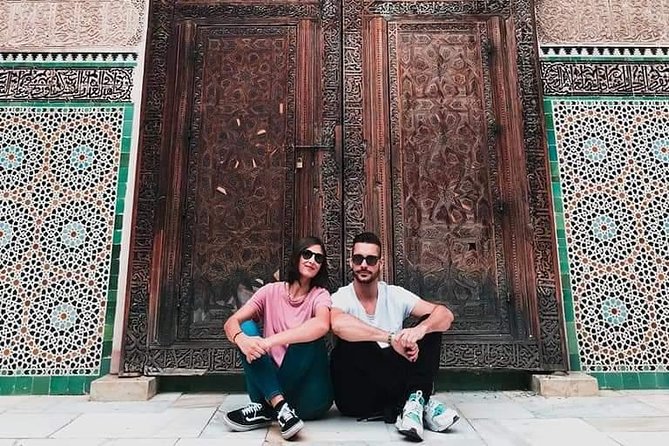
Next up is Madrasa Bou Inania, founded in the mid-1300s by Abu Inan Faris. This is one of the best stops on the list because it’s a place where details reward time: carved work, the sense of symmetry in plan, and the overall feeling of a building designed for students and scholars.
What I like about this kind of stop with a guide is that you stop treating it like a photo wall. You start recognizing the purpose behind the design. You’ll also get a better read on what makes the Marinid period so important in Fez architecture, without needing to turn it into a museum lecture marathon.
Talaa Kebira market walk: senses, smells, and real local rhythm
The market stop runs along Talaa Kebira, stretching from the west end near the medina wall toward the east. You’ll see produce on one side and meats and spices along the other, with street-food stalls and plenty of lively energy.
This is where a good guide helps you enjoy Fez instead of just enduring it. You can pause to watch what’s happening, ask about what you’re seeing, and keep moving when the crowd thickens. The “cats and chickens everywhere” vibe is real in spirit here, and it can be fun once you’re not trying to rush to the next monument.
Practical note: markets move fast. If you want time to inspect stalls, tell your guide before you enter and ask for a slower pace at this point.
Funduq al-Najjarin and the Nejjarine Fountain: a calm pause inside the chaos
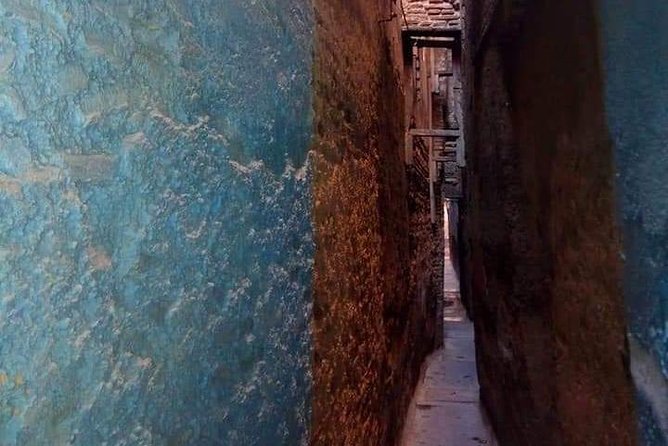
Funduq al-Najjarin is a historic funduq in the heart of Fes el Bali, located at Al-Najjarin Square. It’s tied to Al-Najjarin Square and the Nejjarine Fountain, a traditional public fountain (a saqayya).
This stop works well for two reasons. First, it breaks the walk rhythm with a moment of open space. Second, it helps you understand how the medina wasn’t only “streets and houses,” but also business hubs tied to storage, trade, and daily life.
Moulay Idriss mausoleum area: the emotional center of Fez
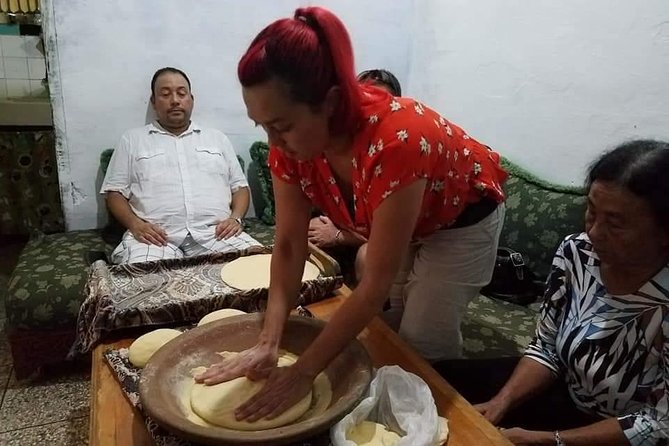
The tour then moves into the area that surrounds the Mausoleum of Moulay Idriss. Locally, Moulay Idriss is treated as Fez’s patron saint, and his shrine is among Morocco’s most important pilgrimage sites.
One key detail to know: access rules can be strict. It’s stated that the mausoleum is open only to Muslims and non-Muslims may not enter, though you can often view it from above on the hill area. That means you should treat this stop as a sight-and-feel moment rather than a “let’s go inside” moment if you’re not Muslim.
In practical terms, the guide’s presence helps here too. They can point out where you can look from safely and respectfully, and they can explain the local tradition about pilgrimages during the moussem (the festival period held in the second week of August).
You can also read our reviews of more private tours in Fez


Al-Qarawiyyin University: where Fez learned to think big
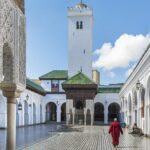
Next is the University of al-Qarawiyyin, also known as Al-Karaouine (founded as a mosque by Fatima al-Fihri in 859). Even if you don’t go deep on academic history, this stop gives Fez its intellectual backbone: a long-running educational and spiritual center in the historic Muslim world.
With a guide, you’ll likely understand why the location matters—how religious, teaching, and neighborhood life overlap in the medina. It also helps you avoid the common mistake of skipping this area because it looks like “another building.” It’s not.
Al-Attarine Madrasa and Place Seffarine: finishing the architecture circuit
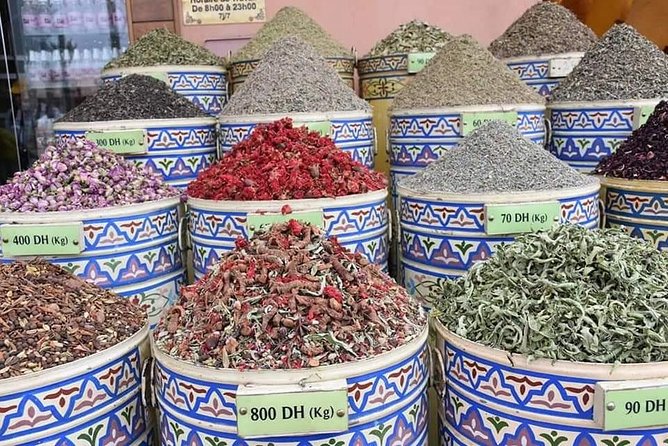
Al-Attarine Madrasa sits near the Al-Qarawiyyin Mosque and was built by the Marinid sultan Uthman II Abu Said in 1323–5. It takes its name from Souk al-Attarine, the spice and perfume market, so it’s connected to what Fez smells like and sells.
Place Seffarine is a small square near the Qarawiyyin Mosque, close to the Bou Khareb river that runs through the medina. The square dates back to the Middle Ages and has been renovated in modern times—so it’s a good place to notice how the city keeps old layers while adapting to today.
If you like to understand cities by transitions, these stops are a smart “wrap-up” phase. You start to see patterns in how Fez balances sacred spaces, craft districts, and everyday navigation points.
Tannery time: what you’ll see and how to handle it
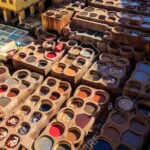
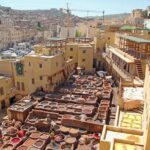
A tannery stop is included, and it’s one of the most “classic Fez” experiences on any guided route. Tanning hide into leather involves processes that permanently alter the protein structure of skin, making leather more durable and less prone to decomposition, and it can also involve coloring.
Here’s how to think about this stop before you go: tanneries are working areas, not a clean photo studio. You should expect a strong sensory environment, and you’ll get more out of it if your guide explains what you’re actually looking at. The goal isn’t just to say you saw a tannery; it’s to understand why this craft became essential to the city.
If the tannery is one of your top reasons for booking, make sure your guide knows that. The same goes if you care about pottery studios specifically. A couple of unhappy experiences in general around craft-shop timing are a reminder to communicate your priorities early.
Private pacing, plus the craft-shop question (the biggest “choose-your-style” factor)
This tour is private, so you’re not stuck with a fixed group agenda. That’s the big advantage: you can ask for more time at a monument you love and less time where you’re not as interested.
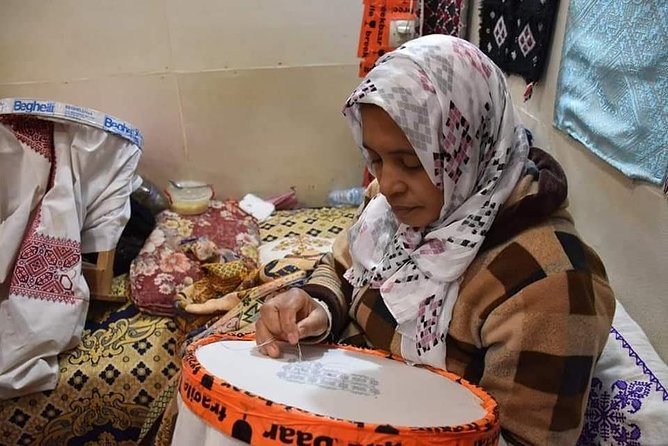
That said, your guide may bring you near artisan trades—leather items, argan oil discussions, spices/perfume markets, and other local products tied to Fez traditions. Some people appreciate seeing how products are made and learning the story behind them. Others find it uncomfortable if a stop turns into a sales-heavy moment.
So here’s my practical approach: decide your tolerance level before you meet your guide. If you want strictly monuments and minimal shopping, say so at the start. If you’re open to craft shopping but hate pressure, tell them you’re there for the craft explanations and you’ll only buy if you genuinely want something.
Logistics that quietly make this tour easier
Pickup and drop-off are included, and you can meet at your hotel, riad, airport, or port. In the medina, that matters because getting in and out (and finding the right entrance) can be the hardest part of the whole day.
Also, the tour is listed as using a mobile ticket, and mineral water is included. Entrance fees and tickets aren’t included, so you’ll want to carry a little extra cash or card for monument entry where required.
The whole tour runs about 3 hours 30 minutes. That timing is useful if you don’t want to burn half your vacation on walking and waiting. You finish with enough energy to return to the medina later by yourself with clearer mental landmarks.
Value check: $46.53 for a private guide you can steer
At about $46.53 per person for a 3.5-hour private tour, the value is mostly in two things: time saved and friction reduced. You’re paying to avoid the worst parts of the medina learning curve—getting turned around, wasting time on wrong turns, and losing momentum because you don’t know what matters first.
The not-included items are your main budget caveat. Entrance fees and tickets can add up depending on what’s open and what your guide plans to enter. Lunch isn’t included either, so if you’re doing this in the morning, plan a simple meal afterward.
If you’re traveling with family, friends, or anyone who has mobility needs, the private format can make the day more comfortable because you can slow down, pause, and choose routes. (You’ll still be walking in an old-city environment, but you won’t be forced into someone else’s pace.)
Who this tour fits best
This is a great choice if you:
- Want the major Fez medina sights in one focused morning.
- Prefer a guide to help with navigation so you can wander on your own after.
- Appreciate architecture and religious landmarks like Bou Inania and the Moulay Idriss area.
- Like the idea of a tannery stop as part of seeing how Fez makes things.
It may not be ideal if:
- Your priority is zero craft-shop stops and a strict monuments-only route.
- You want to spend long hours on shops like pottery studios and you don’t plan to communicate that before the tour begins.
Should you book this private Fez medina tour?
Yes, I think you should book it if you want a fast, guided orientation plus the best-known Fez monuments in one half day. The private format and pickup/drop-off remove the hardest parts of medina logistics, and the itinerary covers key anchors like Bab Bou Jeloud, Bou Inania, the Qarawiyyin area, and the Moulay Idriss mausoleum viewpoint.
My one booking tip: message your priorities clearly before you meet your guide. If you want the tannery first, ask for that. If you want less shopping time, say so. Done that way, this tour becomes a smart “set you up for the rest of the day” move instead of a rushed checklist.