REVIEW · RABAT
Rabat: Cooking Class in a Family Home
Book on GetYourGuide →Operated by MoroccanFoodTour · Bookable on GetYourGuide
Cooking in a family kitchen changes your trip fast. This Rabat cooking class combines a Moroccan market tour with hands-on cooking at a chef’s home, then ends with the meal you made. I especially love that you help choose the ingredients and you build a full 3-course menu, not just one dish. The only real drawback: transportation isn’t included, so you’ll need to get yourself to the meeting point at Tramway Hopital Moulay Youssef.
You start in the local neighborhood market, shop for fresh produce, then head to a family-owned Moroccan house where the chef leads a lively, interactive session. The group is small (up to 8), the host can guide you in English or French, and the pacing feels relaxed enough to ask questions about food and customs while you cook.
Expect 4 hours total, with tea or coffee plus bottled water included during the experience. If you want to bring company to the meal, there’s an option for friends to join after the class for a supplement of €15.
In This Review
- Key things I’d plan around
- Market Shopping in Rabat: Choosing the food that drives the menu
- The Family House Kitchen: Meet the chef and get into the rhythm
- Cooking a Real 3-Course Moroccan Menu: What you might make
- Starter: flavor building from vegetables and bread
- Main course: tajine style comfort food
- Dessert: millefeuille marocaine and the spice-scented finish
- Fruit course option and fresh juice style
- Meal Time That Feels Like Hospitality, Not a Performance
- Price and Value: Is $72 worth it in Rabat?
- Logistics That Make or Break the Experience
- Who This Cooking Class Suits Best (and who might want something else)
- Should You Book This Rabat Family-Home Cooking Class?
- FAQ
- Where is the meeting point for the cooking class?
- How long does the experience last?
- What is included in the class price?
- What isn’t included?
- How many people are in the group?
- What languages are available?
- Can friends join the meal, and what are the cancellation/payment options?
Key things I’d plan around
- You choose ingredients yourself during the market walk, so the menu feels personal.
- Hands-on cooking in a real family kitchen, not a demo-only setup.
- A full 3-course Moroccan meal you assemble from starter to dessert.
- Tea at the end is part of the ritual, not an afterthought.
- Small group format (8 max) keeps questions from getting lost.
- Imane’s kitchen approach includes clear guidance and lots of conversation.
Market Shopping in Rabat: Choosing the food that drives the menu
A big reason this cooking class feels grounded is the shopping step. You don’t show up with a pre-made set of ingredients and copy a recipe. You walk into a neighborhood market, see what looks best that day, and then pick your ingredients based on what you want to cook and eat. That matters because Moroccan cooking is practical: it changes with the season, the freshness, and what’s available nearby.
You’ll also learn how people think about produce and spices in daily life. Even if you only catch pieces of the conversation, you’ll pick up patterns quickly—what’s used for flavor versus what’s used for body, and how ingredients pair when the kitchen is working at home pace. In one menu example, the starter included eggplant and peppers prepared with care, then served with bread and spices. That kind of detail sticks because it’s connected to what you bought.
Timing-wise, the market visit is early in the experience. You’ll want to arrive without rushing, because once you hit the kitchen later, you’ll appreciate having already selected the ingredients. If you’re the type who likes to photograph food, this part is great for it too: the market walk gives you visual variety, colors, and textures before you even start cooking.
One practical note: wear comfortable shoes. Markets can be uneven, and you’ll likely be walking and standing more than you expect in a 4-hour total experience.
You can also read our reviews of more cooking classes in Rabat
The Family House Kitchen: Meet the chef and get into the rhythm
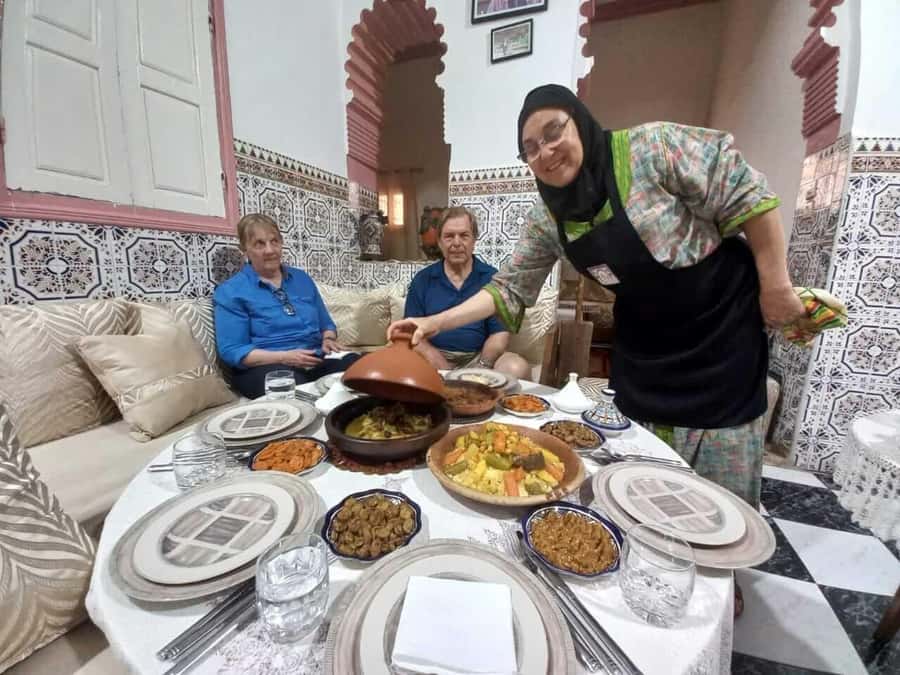
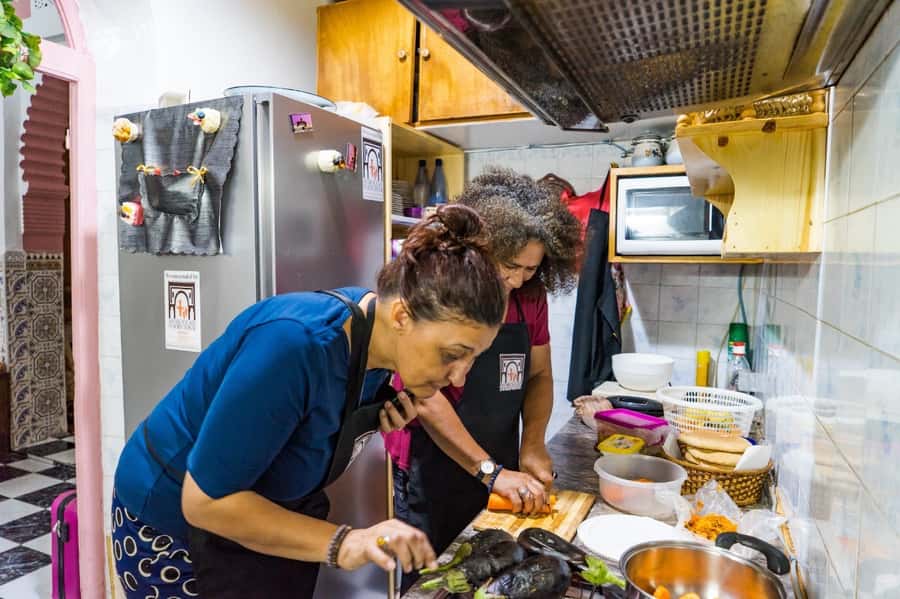
After shopping, you head to a historic family-owned Moroccan house. This is where the class stops being a “lesson” and turns into a shared kitchen moment. You’ll be welcomed into the home environment and brought into the cooking workflow, guided step-by-step by the chef.
In this kitchen, guidance is not just technical. It’s also social. One review described how the chef’s family setup included clear explanations and time for conversation about local customs. Another highlighted the warmth and organization—like you’re being pulled into someone’s routine, not handled like a school group.
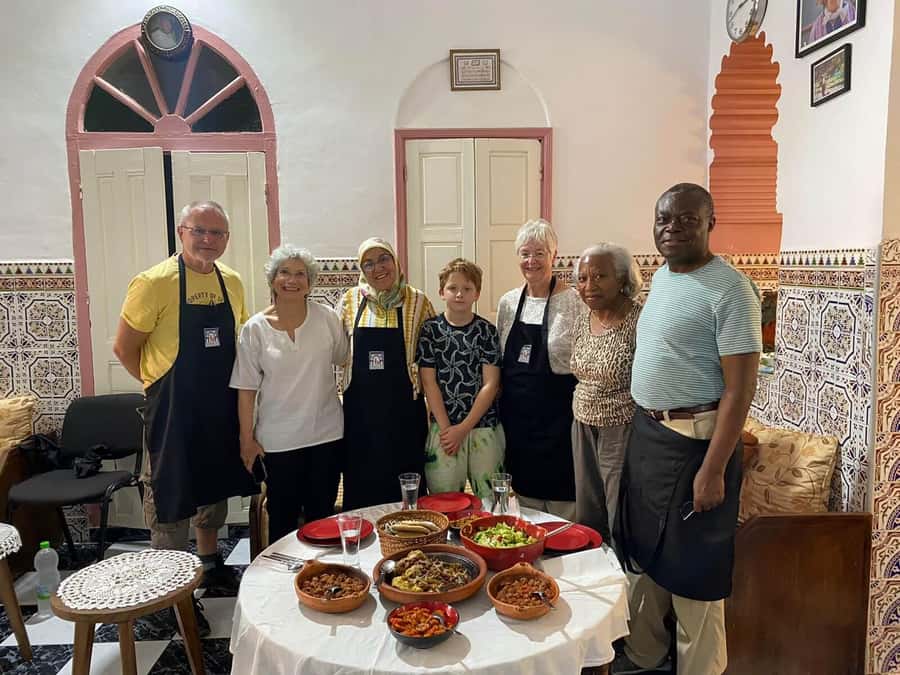
The chef leading the session is Imane, and she cooks with a real family style of teamwork. In one described experience, her mother-in-law was present and brought a level of experience that felt impressive and personal—someone who understands what guests should be offered and how the kitchen should move. That family knowledge shows up in the small choices: timing, seasoning balance, and how dishes get staged so everything lands together for the meal.
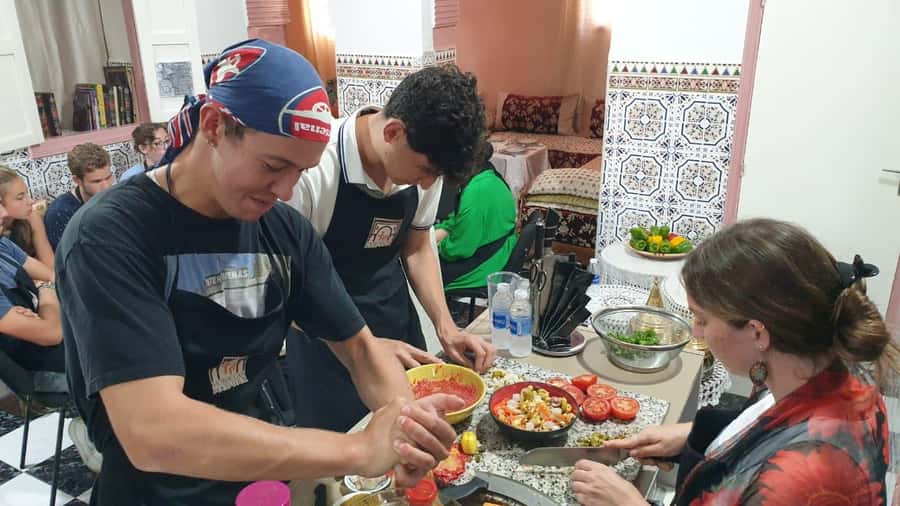
You’ll also see how Moroccan cooking uses practical technique rather than fancy equipment. The class is built around standard kitchen moves: chopping, spice mixing, simmering, and shaping/assembling dishes. You don’t need culinary training to keep up, but you do need attention. If you’re chatty (good), just make sure you still watch the handoffs—one missed step can slow you down when you’re trying to finish a course on time.
Cooking a Real 3-Course Moroccan Menu: What you might make
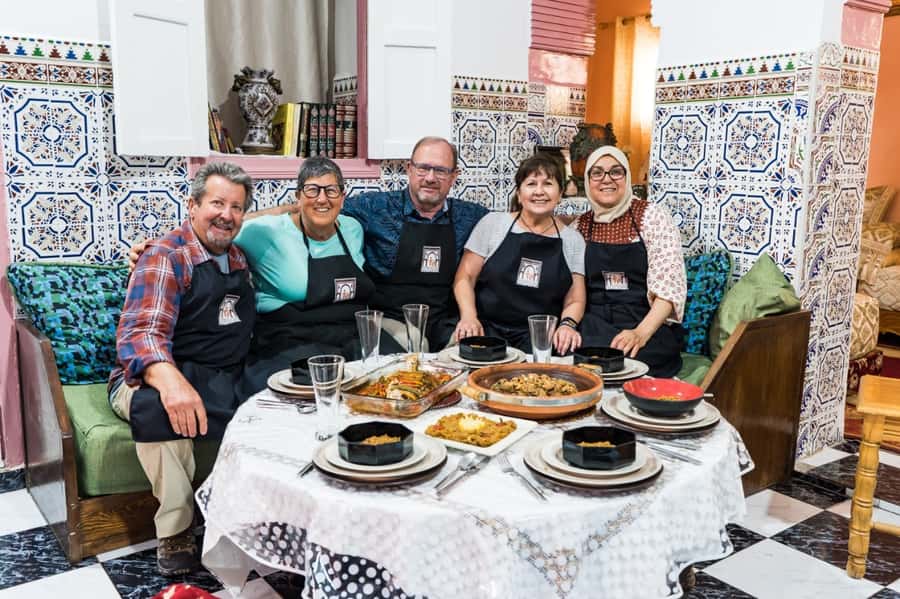
This is a 3-course experience, meaning you’ll likely leave with a full sense of how Moroccan meals flow. Instead of thinking in “starter versus main versus dessert” like separate projects, you’ll build a rhythm across the courses. That’s one of the best value parts of the class: you’re not just eating three things, you’re learning how they fit together.
Starter: flavor building from vegetables and bread
One example menu described a starter featuring eggplant and peppers, prepared in a way that balanced softness and spice. The key takeaway for you is how seasoning works early. Moroccan starters often set the flavor base that makes the main course feel complete, even when the main is something hearty like a tajine.
In the kitchen, you can expect ingredient preparation to be part of the learning. You might peel, slice, and season, then get a quick explanation of why that texture matters.
Main course: tajine style comfort food
For the main, tajine shows up in at least one described class experience—specifically chicken tajine. If you’ve only ever ordered tajine in restaurants, a home-kitchen version can change your understanding. Restaurant tajines sometimes feel like a finished performance. Here, you’re more likely to see how the cooking stage shapes taste: when to simmer, how spices smell at different moments, and how moisture and heat do the heavy lifting.
This is also where you’ll notice that the class doesn’t aim for speed. It aims for correct flavor. That’s why a 4-hour length makes sense: there’s time for technique and time for eating together.
A few more Rabat tours and experiences worth a look
Dessert: millefeuille marocaine and the spice-scented finish
Dessert is often where the wow-factor lands. One described menu included a Moroccan millefeuille made with pastry cream scented with orange blossom and saffron. The special part is that you see the pastry process tied back to market ingredients—like a specific thin pastry dough that’s made right in front of you, then shaped into rounds and assembled.
Even if your exact dessert differs from another person’s menu, the learning is similar: you’ll understand how Moroccan desserts balance floral aromas, spice warmth, and creamy texture without becoming overly sweet.
Fruit course option and fresh juice style
Another menu example included fruit salad with freshly squeezed orange juice. That kind of finish is classic Moroccan home hospitality—light, bright, and a good palate reset after a main.
So, how do you choose what you’ll cook? The host will ask about your preferences and recommend a menu, and then you decide. That’s a smart structure because it helps match the meal to your tastes rather than forcing everyone into the same plan.
Meal Time That Feels Like Hospitality, Not a Performance
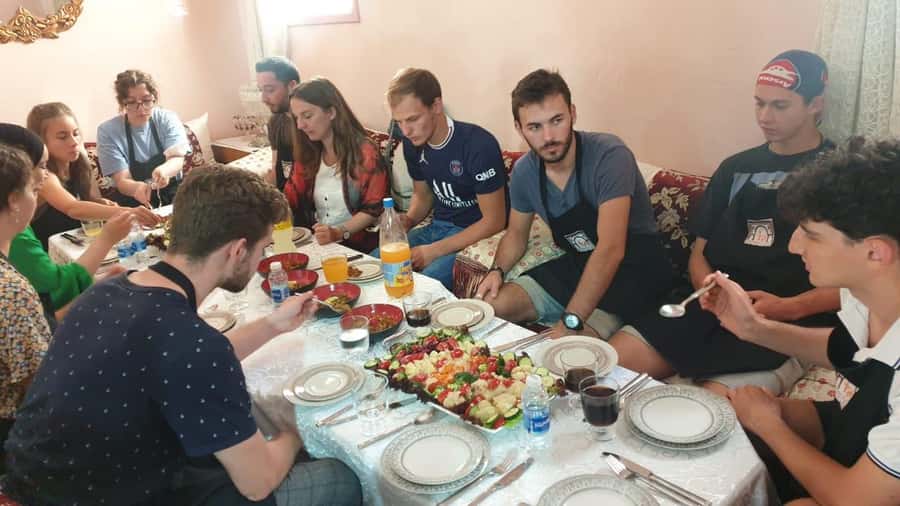
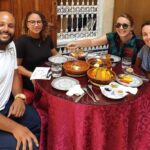
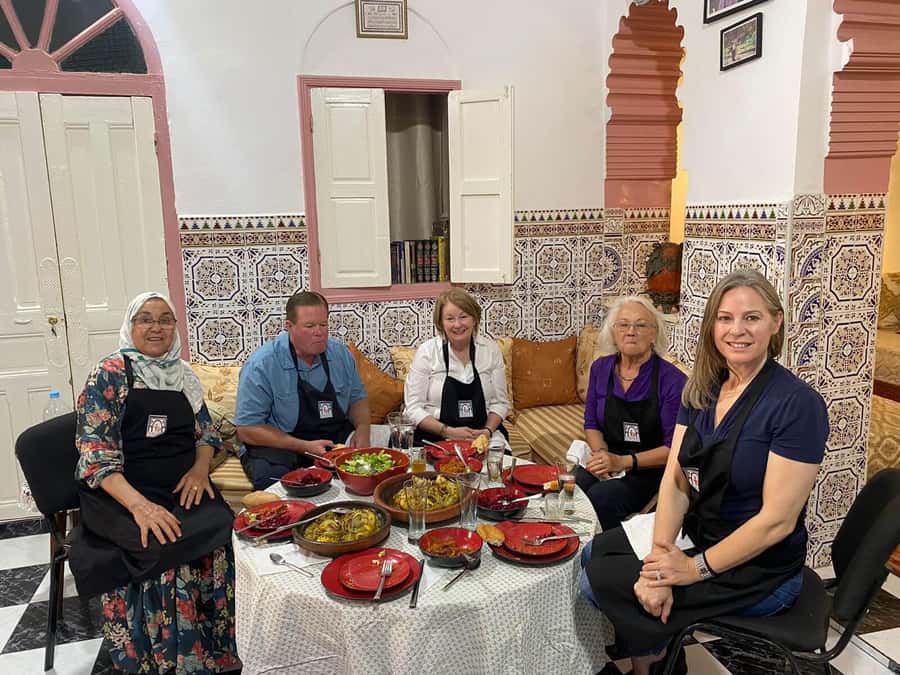
After the cooking workshop, you sit down and enjoy the full menu you made, served with Moroccan hospitality. This part matters more than many people expect. In most cooking classes, you spend the whole time cooking, then eat in a rushed, separate moment. Here, the experience aims for shared table time with the hosts.
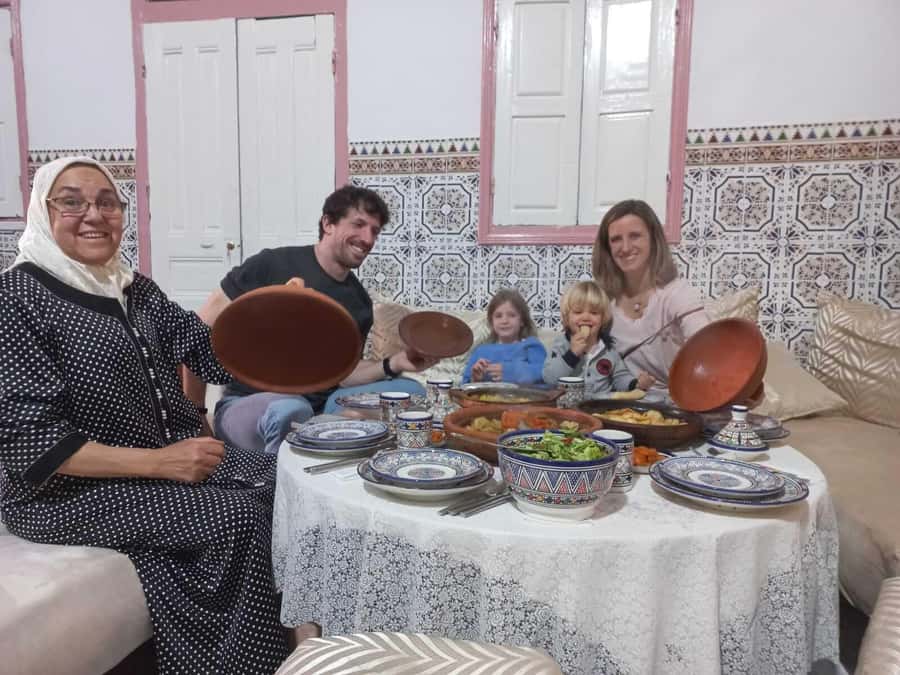
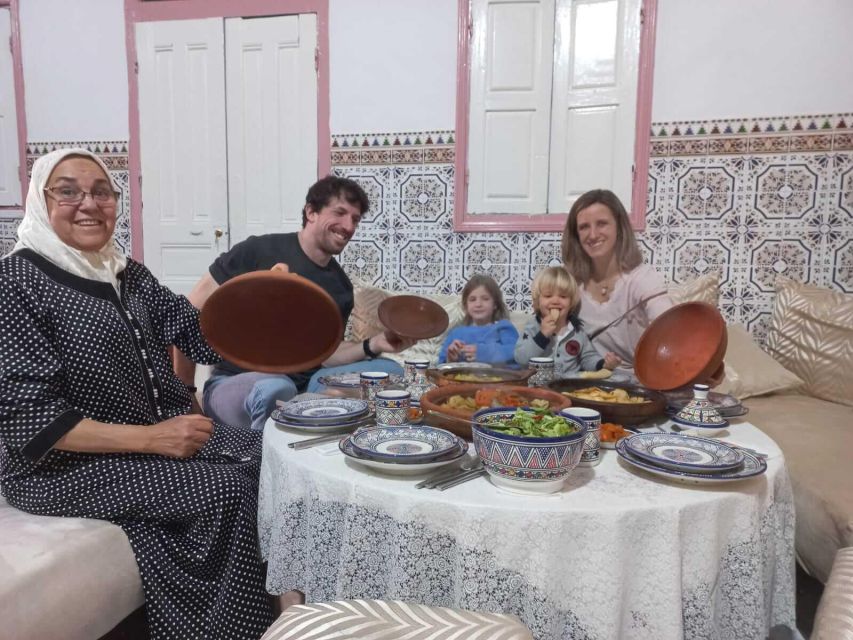
In one described session, the group even included time to eat together with family members present, creating a slightly more personal, less staged feeling. You’ll likely be able to ask questions while you eat, and you might notice how casually Moroccan hospitality incorporates food as conversation—small talk built around what’s on the plate.
You’ll also get drinks as part of the experience: tea or coffee, plus bottled water. And the experience ends with Moroccan tea, which is a ritual in many homes. If you’re wondering what to do with tea at the end, do what everyone else does: slow down. Let the flavors settle. That’s when the spicy-sweet notes of dessert and the savory notes of the main start to make sense together.
Price and Value: Is $72 worth it in Rabat?
At $72 per person for about 4 hours, this class isn’t the cheapest option in Rabat. But it’s also not just a meal. You’re paying for three value drivers:
First, you get the market selection part. Shopping with guidance means your menu is built from fresh ingredients and your choices, which can be hard to recreate on your own without local know-how.
Second, you cook a full 3-course menu. That’s a real amount of food and real skill transfer, not a single-dish novelty.
Third, you’re eating in a family home with a chef-led process. One review highlighted Imane’s setup and warm organization, including detailed introductions and room to photograph and take notes. That kind of learning experience is what makes the price feel reasonable—because you leave with knowledge, not just memories.
So who is it best for? If you’re the kind of traveler who wants to understand local food culture rather than just collect photos of tagines, the value is strong. If you only care about a quick dinner and nothing else, you might find this too “hands-on” for your taste. But if you enjoy cooking, markets, and conversation, you’ll likely feel you got your money’s worth.
Logistics That Make or Break the Experience
Transportation not being included is the main logistics point. You meet at the Tramway station Hopital Moulay Youssef, so plan your arrival with local transit or a quick taxi ride. If you like control, you can handle the route yourself, but don’t plan to roll in late—starting with a market stop means the first part has momentum.
The group is small, limited to 8 participants. That’s a big deal for learning. It means you’ll get attention, and it’s easier to ask for help with a specific step (like spice blending or prep technique) without waiting.
Language support is French or English. That’s helpful if you want clear explanations rather than “figure it out with gestures.” Even if your cooking skills are basic, language comfort makes the experience smoother.
Timing: the experience runs 4 hours. Wear comfortable clothes you don’t mind getting a little food smell on. Kitchens can be warm, and the time will fly once you’re chopping and stirring.
Who This Cooking Class Suits Best (and who might want something else)
This class fits best if you want an authentic Rabat food day that teaches you how Moroccans actually eat and cook at home.
You’ll especially enjoy it if:
- You like market time and picking ingredients yourself
- You want a structured 3-course experience (starter, main, dessert)
- You’re interested in Moroccan customs and conversation at the table
- You want to learn techniques you can repeat later, not just taste a dish
It might be less ideal if:
- You hate cooking steps and prefer only watching
- You struggle with getting to a meeting point without included transport
- You’re short on time and only want a quick meal
If you’re traveling as a couple, this is also a nice fit because small group size makes it feel social without feeling like a crowd.
Should You Book This Rabat Family-Home Cooking Class?
I think you should book it if your idea of a great trip includes local food culture you can touch—market shopping, hands-on prep, and a meal that feels like hospitality. The combination of ingredient choice, 3-course cooking, and Moroccan tea at the end is a strong package for $72.
I wouldn’t book it if you’re looking for a low-effort dinner or you don’t want to handle your own way to the meeting point at Tramway Hopital Moulay Youssef. Also, if cooking is a chore for you, you’ll notice it here—this is interactive.
But for most people who enjoy food and want a day that feels personal, not generic, this Rabat cooking class is a smart bet.
FAQ
Where is the meeting point for the cooking class?
You meet at the Tramway station Hopital Moulay Youssef.
How long does the experience last?
The cooking class lasts 4 hours.
What is included in the class price?
The experience includes a visit to the market, the cooking session, a 3-course menu, and drinks (tea or coffee, plus bottled water).
What isn’t included?
Transportation is not included.
How many people are in the group?
The group is limited to 8 participants.
What languages are available?
The host or greeter speaks French and English.
Can friends join the meal, and what are the cancellation/payment options?
Friends can join the meal after the cooking class for a supplement of €15. You can reserve now and pay later, and there is free cancellation up to 24 hours in advance for a full refund.