REVIEW · MARRAKECH
Moroccan Delights: Explore Chefchaouen and Rabat’s Culture
Book on Viator →Operated by The moroccan tour · Bookable on Viator
A trip like this is a fast course in Morocco’s contrasts. You’ll see the white-and-blue drama of Chefchaouen, then switch gears to Rabat’s grand monuments, with Casablanca’s oceanfront Hassan II Mosque acting as the big grand opening. Two things I especially like: the way the itinerary bundles must-see architecture with real meal moments, and the private, air-conditioned van that keeps the long drives from turning into a chore. One catch to note: the schedule is tight, so you’ll do plenty of walking and picture stops even on days that start early.
I’m also a fan of how the guides and drivers show up repeatedly throughout the trip. In the reviews, Zakaria is named as a stand-out for making the road trip smoother and more meaningful, and that matters when you’re bouncing between cities with different vibes. If you’re hoping for lots of free time to wander alone, you might feel a bit scheduled, but if you want structure and expert routing, this one tends to deliver.
In This Review
- Key Highlights Worth Planning Around
- Why This 3-Day Morocco Route Works
- Day 1 in Casablanca: Hassan II Mosque and Ain Diab Lunch
- The Road Trip Moment: Leaving Chefchaouen for Rabat
- Chefchaouen on Your Time: Blue Streets, Markets, and the Kasbah
- Chefchaouen Medina Photography Session: Early Light and Quiet Alleys
- Triana Lunch by the Rass Lma River: A Proper Morocco Meal Moment
- Day 3 in Rabat: Hassan Tower, Mohammed V Mausoleum, and Chellah Ruins
- Kasbah des Oudaias, Mellah, and Rabat Corniche Views
- Price and Value: Is $1,044.15 a Good Deal?
- Who This Tour Fits Best (And Who Might Adjust It)
- Should You Book Moroccan Delights: Explore Chefchaouen and Rabat’s Culture?
- FAQ
- Can I get picked up from Marrakech?
- What cities are included on this tour?
- Are any entrance tickets included?
- What meals are included?
- Do I get private transportation and WiFi?
- Is there a photographer involved in Chefchaouen?
- What’s the main highlight in Casablanca?
- Is tipping included in the tour price?
- Can I cancel and get a refund?
Key Highlights Worth Planning Around
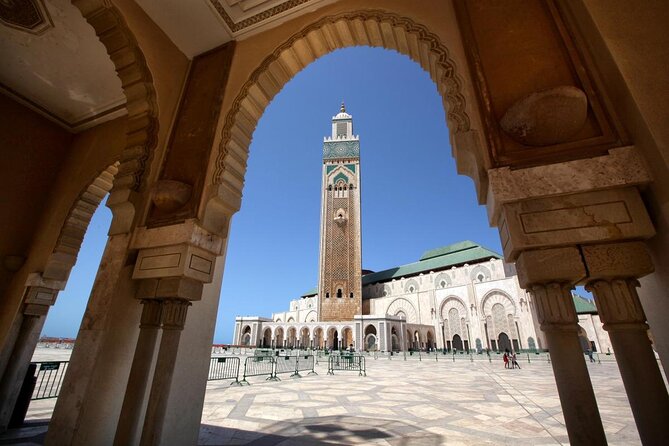
- Hassan II Mosque in Casablanca with included entry and ocean-view design
- Chefchaouen early-day photography session in the Medina for calmer streets
- Kasbah visits in both Chefchaouen and Rabat (included for you)
- Rabat monuments that fit together well: Hassan Tower, Mohammed V Mausoleum, and Chellah
- Kasbah des Oudaias tea + pastries as a guided break from the walking
- Most meals handled for you (breakfast daily, lunches, and select dinners)
Why This 3-Day Morocco Route Works
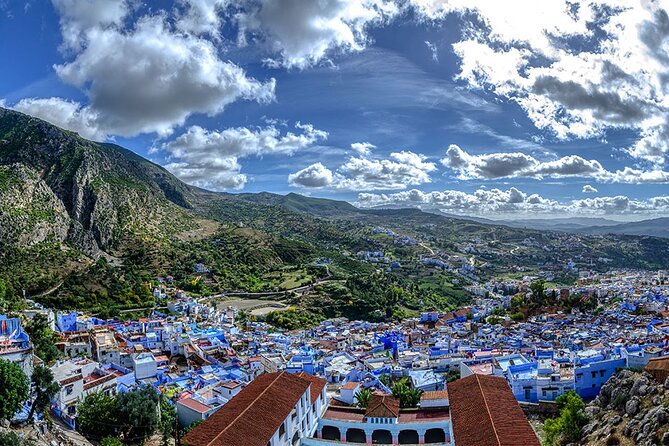
This route is built on contrast, and that’s the smart part. Casablanca gives you the modern face of Morocco and a jaw-dropping religious monument. Then you go to Rabat, where history shows up in layers: Almohad-era stone, royal-era symbolism, and older ruins you can walk through. After that comes Chefchaouen, where the whole town looks like it’s been painted, and your days feel more like exploring than rushing.
What you’ll likely appreciate most is the private transportation. The itinerary moves between distant city centers, so having an air-conditioned vehicle helps you stay fresh for the walking parts. You also get WiFi onboard, plus pickup from Jemaa el-Fna at 9:00 am, which is one less logistics headache.
Is it perfect for everyone? Not if you want to sleep in and drift all day. It’s more for travelers who like a plan, like guides who can connect the dots, and like the idea of stacking three destinations into one smooth circuit.
You can also read our reviews of more tours and experiences in Marrakech.


Day 1 in Casablanca: Hassan II Mosque and Ain Diab Lunch
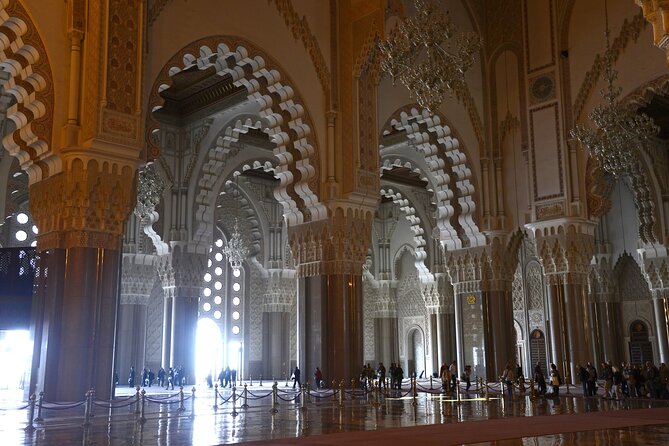
Casablanca’s first stop is the Hassan II Mosque, and the way the visit is described tells you why people remember it. The mosque rises with a huge minaret and intricate architecture. Inside, you step onto cool marble floors, and the space opens up with mosaics and big chandeliers. A major feature here is that the prayer hall is designed to connect with the outdoors—there are ocean views through large windows, so even when you’re indoors, you feel the Atlantic nearby.
You’ll spend about an hour here, and the admission ticket is included, which is one of those practical details that makes the trip feel less like extra errands and more like a day built around one clear highlight.
After that comes Ain Diab, a seaside area where lunch is part of the program. It’s a nice contrast stop: after the solemn monument, you get salty air, sun, and a laid-back meal setting. The lunch described includes a nicely set table with local ceramics and colorful touches, which is exactly what you want from a Morocco meal—good food, but also a sense of place.
Practical tip: bring something small for comfort in the heat and plan for walking around the mosque area. The main payoff is that this is not just a drive-by photo stop; it’s an intentional visit.
The Road Trip Moment: Leaving Chefchaouen for Rabat
Between Chefchaouen and Rabat, you’re looking at a real transfer day by car. The itinerary notes a well-maintained road, with a drive that includes descending from mountains and then moving into more urban areas. You’ll pass through small towns and villages, with traditional markets and cafes along the way.
This matters because it changes how the day feels. Instead of turning the transfer into dead time, you get little windows of everyday life—produce stalls, local food stops, and the rhythm of towns you might not reach otherwise. The description also suggests you’ll have a chance to interact with locals briefly, which is usually where a trip picks up personality.
As you enter Rabat, the plan sets you up for an iconic reveal: the Hassan Tower shows up as a landmark when you reach the heart of the city. That’s a clever way to keep the day from feeling like only transit.
Practical tip: Morocco drives can move faster than you expect on major roads, so if you tend to get travel-sick, plan for that before you start the day. And keep a light layer handy; vehicles can swing from cool to warm depending on the weather.
Chefchaouen on Your Time: Blue Streets, Markets, and the Kasbah
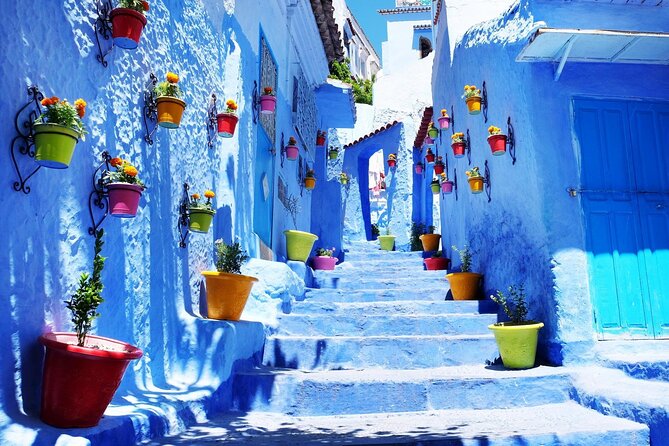
Chefchaouen is the headline city for many people, and this itinerary treats it like more than a photo stop. You’ll spend time walking through the blue streets while your guide points out architecture and details: tile patterns, geometric design work, and the colorful doors and windows. There are also stops for photos, so the day has built-in pacing for pictures rather than forcing you to choose between photos and listening.
You’ll also visit the markets, where you can see textiles and crafts with the local style front and center. If you like shopping that feels like cultural observation—threads, handmade objects, the kinds of things you can’t find as easily at home—this is usually where Chefchaouen shines.
Then there’s the Kasbah portion of the experience. Kasbah visits are a great value on trips like this because they tend to explain why the city is where it is and how it developed, and they also give you a break from just repeating the same alley loop.
A quick note on pacing: the itinerary calls for about 4 hours for this main Chefchaouen block. That’s long enough to feel the city’s mood, but short enough that you won’t be exhausted before dinner or the next day’s monuments.
Chefchaouen Medina Photography Session: Early Light and Quiet Alleys
Chefchaouen’s Medina is where you’ll feel the city’s character most. The itinerary sets up a guided photography session with a photographer meeting you in the heart of town. The timing is key: it’s described as happening in the early morning hours when locals are just starting their day and vendors are setting up stalls.
This is genuinely one of the best ways to see Chefchaouen if you care about photos and atmosphere. Early light helps the blues look their best, and quieter streets make it easier to stop, frame, and move without getting stuck behind constant crowds.
The plan starts in a main square area where sunlight catches the colorful tiles. Then you’ll move through winding alleys while the photographer guides you toward spots where the blue walls look more intense and where streets are calmer. If you’re not a photographer, you can still benefit: you learn the city’s visual logic, where to walk, and what details to notice.
Practical tip: wear shoes you can trust for uneven stone. Chefchaouen is pretty, but it’s also a workout. Also, bring a small water bottle if you run warm; the session is early, so you might not feel the heat until you’re moving for a while.


Triana Lunch by the Rass Lma River: A Proper Morocco Meal Moment
After all the walking and blue-street time, you get a lunch stop at Restaurant Triana, located on the banks of the Rass Lma river in Chefchaouen. The description gives you the reason this meal works: it has a scenic view with crystal-clear water and surrounding hills, so you eat while the city feels less like a maze and more like a valley.
The menu described includes traditional Moroccan dishes such as chicken tagine and grilled lamb, plus mint tea to finish the meal the right way. Service is described as impeccable, and you’re also told the sound of the rushing water and the fragrance of wildflowers add to the experience.
This is one of those stops that doesn’t just feed you—it resets you. When a day is heavy on small streets and photo stops, a restaurant by water is a useful break, and it tends to make the rest of the itinerary feel less rushed.
Practical tip: if you’re sensitive to spice, tagines can vary. You can usually ask for mild options when ordering, but the itinerary doesn’t specify spice levels, so it’s worth keeping expectations flexible.
Day 3 in Rabat: Hassan Tower, Mohammed V Mausoleum, and Chellah Ruins
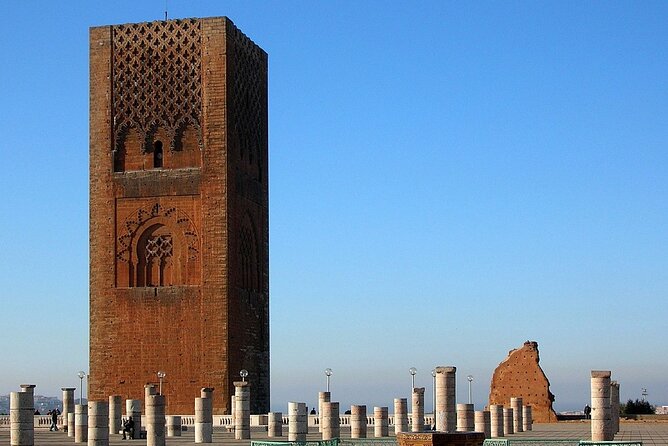
Rabat is where the tour shifts into monuments and long views. The first stop is the Hassan Tower, a 44-meter minaret built in the 12th century. It’s made of red sandstone with detailed carvings and is part of the remains of an unfinished mosque. The idea here is that you’re not just seeing a standalone structure; you’re seeing the story of what was planned and what never got completed.
You can climb to the top for views over Rabat and the Atlantic Ocean, plus there’s a small museum inside with historical artifacts and exhibits. The itinerary lists this as a free ticket stop, which is always a nice perk for the value of your day.
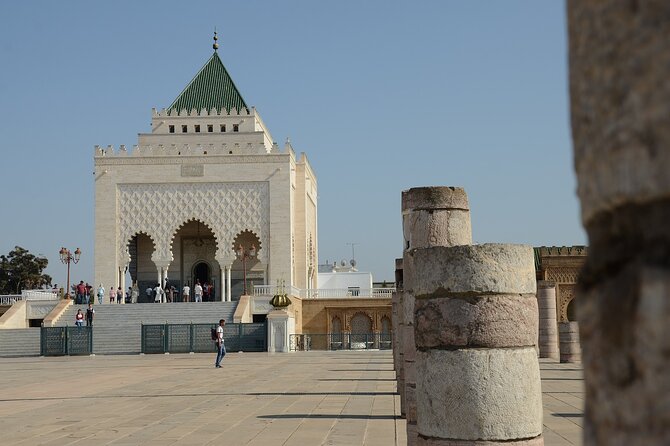
Next comes the Mohammed V Mausoleum, ticket included. The description focuses on the white exterior walls, a green-tiled roof, and the ornate interiors with tilework, carvings, and chandeliers. The central tomb is for King Mohammed V, surrounded by the tombs of his two sons: King Hassan II and Prince Abdallah. This stop is emotionally powerful in a way that most sightseeing isn’t—it feels like you’re standing inside national identity, not just looking at stone.
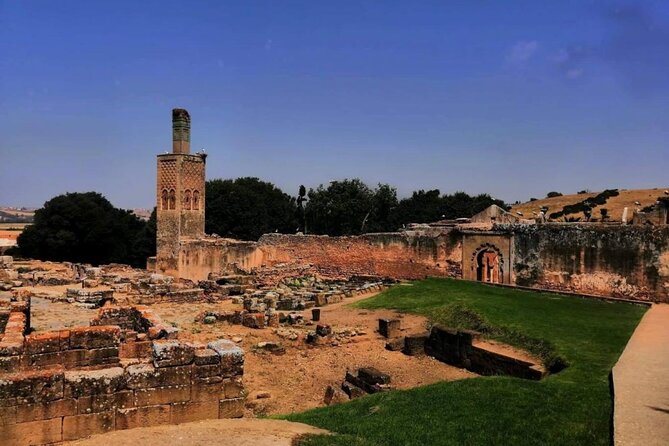
Then you move to Chellah, a set of ruins in a green, garden-like setting. The ruins are surrounded by lush greenery and pools, so it feels like an oasis. There’s mention of winding paths and crumbling walls, and the tomb of Sultan Abu al-Hasan with ornate tilework and carvings stands out.
Practical tip: Rabat mornings can feel cooler than later in the day, but you’ll be doing a lot of walking across sites. Take your time on Chellah’s paths—there’s a lot to look at, and it’s easy to rush it.
Kasbah des Oudaias, Mellah, and Rabat Corniche Views
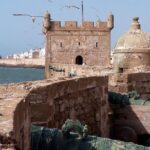
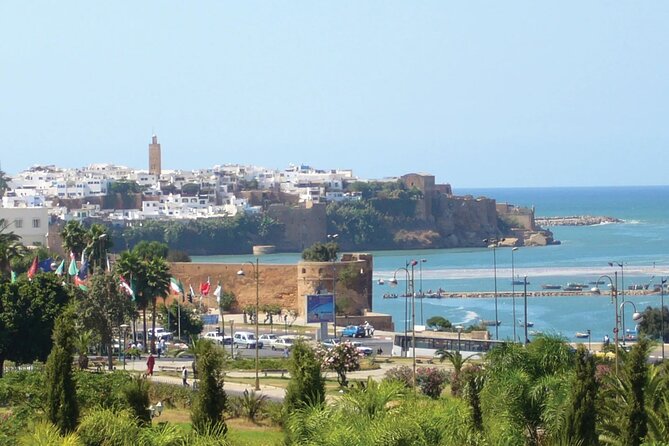
After Chellah, Rabat becomes a mix of neighborhoods and waterfront mood. The tour includes Kasbah des Oudaias, where you get a guided tour plus Moroccan tea and pastries. The Kasbah is described as a maze of narrow streets and alleyways with blue-and-white buildings, hidden courtyards, fountains, and views over the river and sea. The waves crashing against rocks and the fragrance of flowers and spices are part of the sensory payoff.
Then there’s a stop at the Royal Palace of Rabat. Important detail: it’s the official residence of King Mohammed VI, so it’s not open to the public. You’ll still get a look at the palace area from outside and admire the gates and courtyards.
Next comes Mellah de Rabat, the historic Jewish quarter. The itinerary describes it as a fortified neighborhood dating back to the 16th century, with narrow streets and traditional markets. You can also visit the Museum of Moroccan Judaism and see a synagogue called Synagogue Beth-El, which is still in use. It’s a worthwhile stop because it broadens Rabat beyond royal monuments and into community history.
Finally, the Rabat Corniche is included as a scenic coastal drive. You’ll wind through narrow streets and busy market areas with the Atlantic growing louder as you go. The Corniche is presented as a must-do for views and for connecting the city’s major landmarks, like the Kasbah of the Udayas and the Royal Palace.
Practical tip: if you’re photo-happy, the Corniche is where you’ll get your best “I’m here” images. Give yourself permission to slow down and stop when you see a clean viewpoint.
Price and Value: Is $1,044.15 a Good Deal?
At $1,044.15 per person for an approximately 3-day private tour, you’re paying for two things: logistics and guided access.
Here’s what’s clearly included: private transportation, an air-conditioned vehicle, WiFi onboard, and multiple meals—breakfast (3), lunch (3), and dinner (2). You also get entrance tickets for key sites like the Hassan II Mosque in Casablanca, the Kasbah in Chefchaouen, and Kasbah des Oudaias in Rabat. That’s not a small amount of ticketing and meal planning to manage on your own.
You’ll also appreciate that it’s set up as a private group experience, meaning you don’t have to coordinate with strangers at each stop. Reviews repeatedly call out smooth organization, and they also mention overnight stays in Rabat and Chefchaouen, which suggests you’re not just getting day tours—you’re getting a full circuit.
The only cost warning the data clearly flags is that tipping for guides and drivers is left to your discretion. That’s normal in Morocco, but it’s still an extra line item.
So is it good value? For first-timers who want architecture, guided context, and meals handled, yes. If you already have a driver lined up, you love independent travel, and you want long free afternoons with no schedule, you might find a cheaper DIY route. But if you’d rather spend your energy on the sights—not on planning—this has strong value.
Who This Tour Fits Best (And Who Might Adjust It)
This works especially well if you want:
- A structured Morocco taste of Casablanca, Rabat, and Chefchaouen
- Monument-style sightseeing mixed with real meals (seaside lunch in Casablanca, riverside lunch in Chefchaouen)
- A private van for comfort during city-to-city transfers
- Photo-friendly planning, including that early Medina photography session
It might not be the best choice if you want:
- A lot of downtime or long, self-guided wander blocks with no guide
- A very relaxed pace where you can skip stops without affecting timing
One more note from reviews: families have enjoyed the comfort of the spacious van and the way guides handle the rhythm of the day. If that’s you, this is a strong match.
Should You Book Moroccan Delights: Explore Chefchaouen and Rabat’s Culture?
If you’re aiming for a Morocco trip that feels organized, visual, and story-led, I’d say this tour is a solid booking. You get big-ticket architecture in Casablanca, the blue-street magic of Chefchaouen with guided photography timing, and Rabat’s major sites in a route that makes sense day by day.
If your top priority is total independence and maximal free time, you may find the schedule a bit tight. But for most people who want a confident introduction to these three cities—plus meals and tickets handled—this is the kind of trip that saves effort while delivering memorable stops.
FAQ
Can I get picked up from Marrakech?
Yes. The tour starts at Jemaa el-Fna in Marrakech at 9:00 am, and the experience ends back at the meeting point.
What cities are included on this tour?
You’ll visit Casablanca, Rabat, and Chefchaouen.
Are any entrance tickets included?
Yes. Hassan II Mosque tickets in Casablanca are included, along with tickets for places like the Kasbah in Chefchaouen and the Kasbah des Oudaias in Rabat. The Mohammed V Mausoleum is also listed as ticket included.
What meals are included?
The tour includes breakfast (3), lunch (3), and dinner (2).
Do I get private transportation and WiFi?
Yes. The itinerary includes private transportation in an air-conditioned vehicle with WiFi on board.
Is there a photographer involved in Chefchaouen?
Yes. You’ll meet your photographer in the Chefchaouen Medina for a guided early-morning photography session.
What’s the main highlight in Casablanca?
The centerpiece is the Hassan II Mosque, including admission and time to explore the interior and its ocean-view design.
Is tipping included in the tour price?
No. Tipping for guides and drivers is left at your discretion.
Can I cancel and get a refund?
Yes. Cancellation is free if you cancel up to 24 hours in advance for a full refund. If you cancel within 24 hours of the start time, the amount paid is not refunded.