REVIEW · MARRAKECH
Marrakesh Souks Half-Day Tour
Book on Viator →Operated by Marrakech Tours Guide · Bookable on Viator
Souks can swallow your plans fast. This 3-hour guided walk is a practical way to experience Marrakesh’s Old Medina without getting lost, covering Jemaa el-Fnaa and Ben Youssef Medersa plus time in the craft lanes and storytellers’ corners. I especially like the art historian guide angle, because it turns random sights into clear context you can actually use while you’re looking at tiles, copper work, and market routines.
I also like the stop built around taste and culture: mint tea at a Berber apothecary, with time to browse the shop’s potions and goods. One drawback to keep in mind is simple but real: with any Medina walking tour, timing and meeting details matter, and I’ve seen stories of missed meet-ups tied to confusion about the booked time. It’s worth double-checking your confirmation and being ready at the stated meeting point.
In This Review
- Key Points You’ll Care About
- Why a Guided Marrakesh Souks Walk Works (Even If You Like to Wander)
- Meeting Point and Timing: Start at Hôtel Ali and Plan for 3 Hours
- Rahba Kedima Square and Souk Semmarine: Where the Market Makes Sense
- Copper and Bronze Ateliers: Learning to Spot Quality Without Guessing
- Jemaa el-Fnaa: Performers, Storytellers, and the UNESCO Level of Energy
- Ben Youssef Medersa: A Calm Reset With 14th-Century Focus
- Berber Apothecary and Mint Tea: The Break You’ll Actually Remember
- Price and Value: What $35 Gets You in a 3-Hour Medina Plan
- How to Choose This Tour (and When to Skip It)
- Practical Expectations: Walking, Crowds, and Buying Without Stress
- Should You Book the Marrakesh Souks Half-Day Tour?
- FAQ
- How long is the Marrakesh Souks Half-Day Tour?
- What time does the tour start?
- Where does the tour meet and end?
- How much does the tour cost?
- Is a guide included?
- How big is the group?
- What’s included in the tour?
- What is not included?
- Is there a mobile ticket?
- What is the cancellation policy?
- Is the tour language-only for one group?
Key Points You’ll Care About
- Get craft clues, not just photos while walking between artisan ateliers for copper and bronze work
- Rahba Kedima Square and Souk Semmarine help you understand how the market is organized
- UNESCO-listed Jemaa el-Fnaa with live street performers like snake charmers and storytellers
- Ben Youssef Medersa gives you a calm, historic reset from the crowds
- Mint tea at a Berber apothecary adds a sensory break and a peek into local traditions
Why a Guided Marrakesh Souks Walk Works (Even If You Like to Wander)
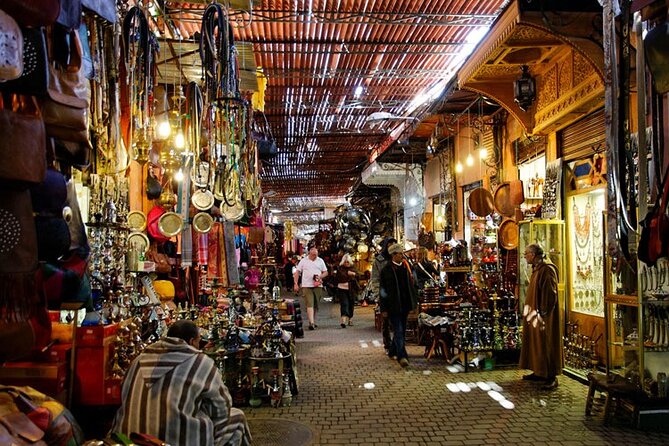
The Medina in Marrakesh is gorgeous, but it can be hard to manage. Narrow lanes twist, shop signs repeat, and it’s easy to burn energy before you even reach the big sights. A guided tour is the shortcut that helps you enjoy the maze instead of fighting it.
What I like about this setup is that it’s built for orientation and pacing. You’re not just moving from one postcard to the next; you’re learning how the market functions and why certain stalls are where they are. That also means your shopping time feels more informed. If you’re eyeing Berber carpets and slippers, you’ll have better questions to ask and a better sense of what you’re looking at.
The other smart part is coverage. You get the energy of the souks, the atmosphere of Jemaa el-Fnaa, and then a structured pause at Ben Youssef Medersa. That combination keeps your day from feeling one-note and it helps you see Marrakesh as more than a single crowd scene.
A few more Marrakech tours and experiences worth a look
Meeting Point and Timing: Start at Hôtel Ali and Plan for 3 Hours
This tour starts at Hôtel Ali, Rue Moulay Ismail, Marrakech 40000. The start time is 10:00 am, and the experience ends back at the meeting point. It runs about 3 hours, which is perfect if you want Medina highlights without committing your whole morning or turning the experience into a half-day marathon.
Because you’ll be walking through packed streets, your arrival time matters more than you think. Aim to be at the meeting point a few minutes early so you’re not stressed looking for the group while others are already moving. If you want to be extra safe, confirm your exact start time right after booking and keep an eye on any updates you receive.
Group size is capped at 15 travelers and there’s a minimum of 2. That’s a good range for navigating lanes where large crowds can slow everything down. You’ll still feel the buzz of the Medina, but your guide can keep everyone moving at a human pace.
Rahba Kedima Square and Souk Semmarine: Where the Market Makes Sense
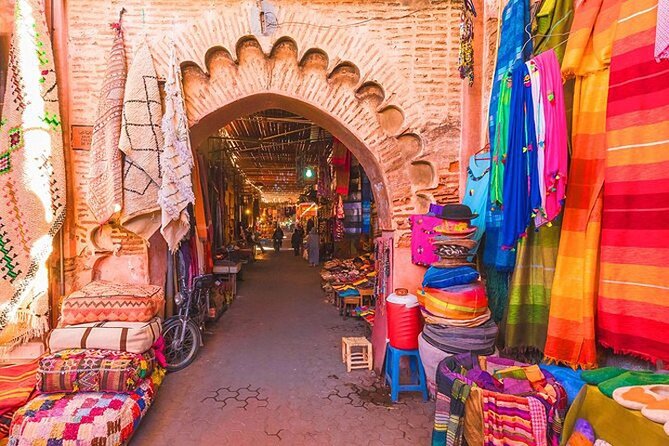
The walk begins at Rahba Kedima Square, then moves through market lanes including Souk Semmarine. This is one of those smart early decisions: starting at a recognizable square helps you orient your bearings quickly, and it gives the tour a clear “from here we go” rhythm.
Rahba Kedima Square is the kind of place where you’ll notice how the Medina organizes itself around activity. It’s not just scenery; it’s the circulation point where people gather, trade, and move on. Once you’re oriented here, the lanes feel less like random turns.
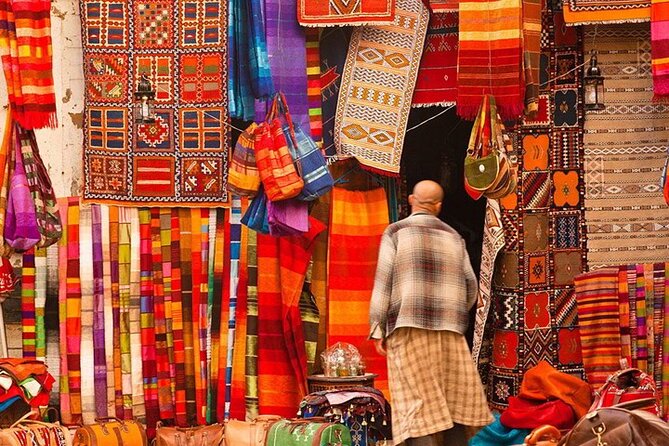
Souk Semmarine adds the craft-and-commerce feel that makes the souks worth your time. You get a short, focused stop that’s designed to let you see the market at work rather than simply pass by storefronts. If you’ve ever felt overwhelmed by the sheer number of shops, you’ll appreciate the guided filter—your guide helps you notice patterns instead of getting lost in noise.
Copper and Bronze Ateliers: Learning to Spot Quality Without Guessing
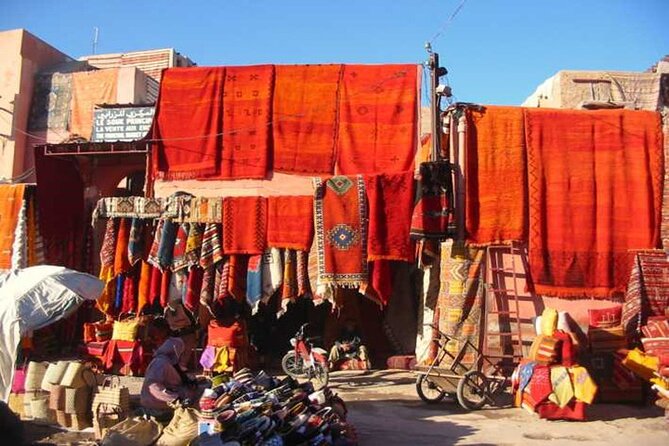
A big part of the value here is the artisan circuit. You’ll see the ateliers of copper and bronze artists, which is where Marrakesh’s craft culture becomes tangible. These aren’t just displays; they’re working spaces, where you can often recognize why certain pieces cost more.
Even if you’re not buying, this portion is useful. You’ll start understanding differences in finishing, the way items are made, and what kind of craftsmanship you should pay attention to. The guide’s context matters because metalwork can look similar at first glance, but it’s the details—workmanship, wear, and finish—that separate the everyday from the standout.
This is also where a good guide turns shopping from a hassle into a lesson. If you’re shopping for metal items, the guide can help you ask better questions and avoid common traps like paying for presentation when you should be paying for construction.
And yes, even when you don’t plan to buy, this part of the tour is one of the most memorable. Seeing artisans working makes the souks feel real. You’re not only consuming images; you’re watching people practice their trade.
Jemaa el-Fnaa: Performers, Storytellers, and the UNESCO Level of Energy
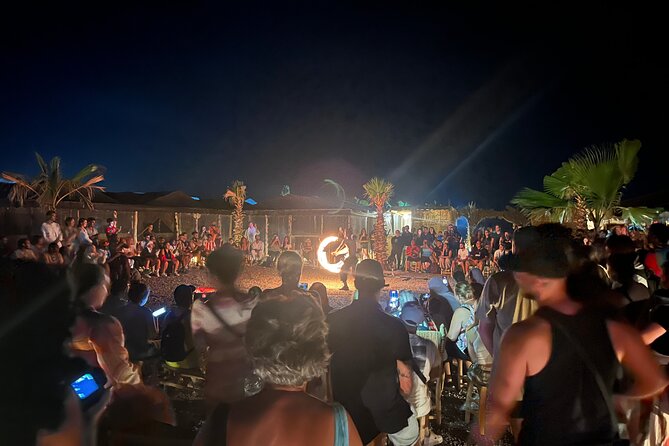
Next up is Jemaa el-Fnaa, a UNESCO-listed square that anchors the Medina’s public life. This is where the atmosphere can hit hard, so guidance matters. Your guide helps you navigate the crowd and, more importantly, helps you understand what you’re seeing.
Expect to encounter snake charmers and storytellers at work. This doesn’t have to feel like a chaotic show you’re trapped in. With a guide, you can watch with intention, then move on without losing your bearings.
One tip I’d give you here: treat this stop like an observation pause. If you try to shop, bargain, photograph, and socialize all at once, you’ll get tired fast. The performer scene is best enjoyed in short segments—watch, listen, look closely, then let your guide steer you to the next point.
Jemaa el-Fnaa also helps your overall Marrakesh picture. After metal ateliers and market lanes, it adds a human layer: street culture, oral storytelling, and the public rhythm of daily life.




Ben Youssef Medersa: A Calm Reset With 14th-Century Focus
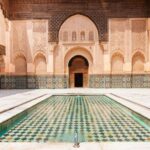
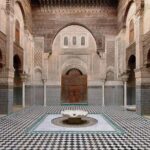
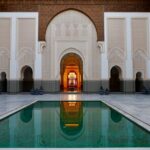
After the square energy, you’ll visit Ben Youssef Medersa, a 14th-century site. This is the kind of stop that makes your morning feel balanced instead of only loud and crowded.
Medersas are more than “old buildings.” They’re places that reflect the way education and religion shaped architecture and daily movement. Even if you don’t know the terminology, a guide can help you connect what you’re seeing—arches, courtyards, and design choices—to the purpose of the space.
Practically speaking, this stop gives your feet a chance to slow down. It’s also a smart emotional reset. After being in lanes filled with sales pitches and constant motion, stepping into a more structured space makes the experience feel complete.
If you like history but don’t want museum mode, this is a good compromise: you get context without being trapped behind glass for hours.
Berber Apothecary and Mint Tea: The Break You’ll Actually Remember
One of the most enjoyable parts of this tour is the cultural pause: mint tea at a Berber apothecary. This is where you slow down, sit briefly, and transition from street-level walking to shop-level conversation.
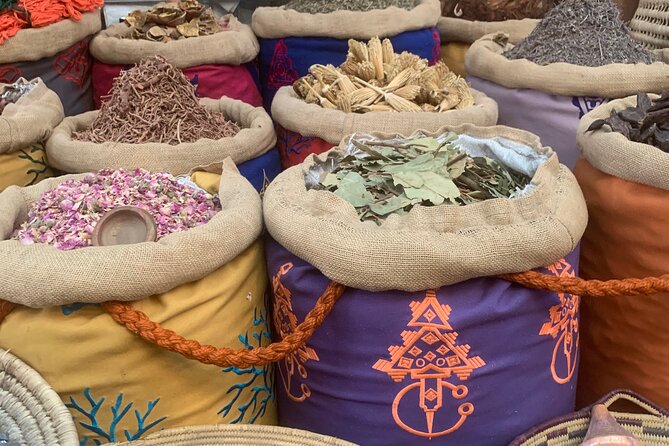
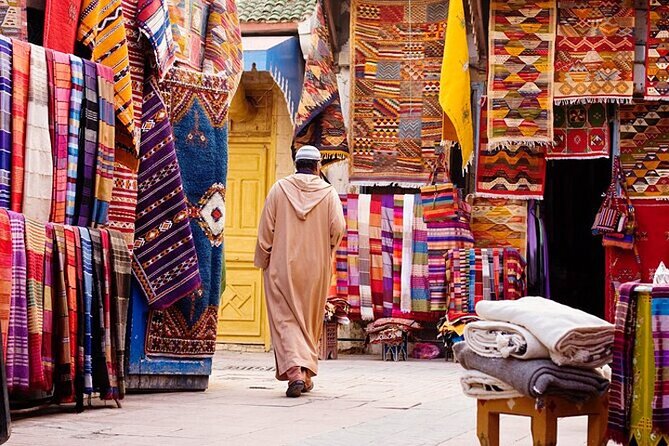
The tour includes time to browse the apothecary’s goods, with the chance to look at magic potions and related items. Even if you’re skeptical, it’s still a useful stop because it shows how locals share stories through products, rituals, and language. You also get a different kind of bargaining context than in the souks—less about souvenirs, more about explanation and tradition.
Tea here isn’t just a beverage stop. It’s also a pacing tool. If you’re walking for 3 hours, you’ll want a moment where you don’t have to decide where to go next. This stop does that for you.
Price and Value: What $35 Gets You in a 3-Hour Medina Plan
At $35 per person, this tour can be a strong value when you consider what’s included. You’re not just paying for a guide who points around. The tour includes a local guide and also an art historian guide, plus additional guiding support. That mix matters because the Medina isn’t only about visuals—it’s about interpretation.
You’re also getting structured coverage of several different “Marrakesh modes” in just about 3 hours:
- market lanes where crafts and buying happen
- a major public square with performers
- a historic medersa for architectural focus
- a tea and apothecary stop for cultural texture
If you were to try to DIY this, you might cover similar places, but you’d likely spend extra time figuring out routes and you’d miss some of the context that helps you enjoy what you’re seeing. For a short trip, guided value often comes down to time saved and clarity gained.
One thing to note: souvenir photos aren’t included. If you want pictures taken for purchase, plan for that additional cost.
How to Choose This Tour (and When to Skip It)
This tour is a good match if:
- you want a guided orientation in the Medina
- you like craft scenes and want context for what you’re looking at
- you prefer a short outing over an all-day souk grind
- you’d enjoy a cultural stop where tea and apothecary goods are part of the story
You might skip it if:
- you hate markets and would rather do a quieter sightseeing day
- you’re traveling with a tight schedule and fear delays from crowd density
- you’re extremely sensitive to meeting-time confusion and need total certainty every step of the way
About that last point: I can’t ignore the negative stories tied to guide arrival and time mix-ups. To protect yourself, do two simple things: confirm the start time you booked and be at the meeting point a little early. If anything feels off, communicate quickly so you’re not waiting while your morning slides away.
Practical Expectations: Walking, Crowds, and Buying Without Stress
This is a walking tour in the Medina, which means you should expect pavement that can be uneven and streets that can feel packed. Your guide helps you move efficiently through lanes, but you’re still in the real Medina, not a controlled venue.
On the buying front, the tour is a good way to shop with fewer regrets. Since you’ll pass by craft areas and you’ll have time for vendor conversations, you’re in a better position to ask about quality and meaning rather than only chasing prices.
Also, keep your expectations balanced. A souk walk includes sales energy. That doesn’t automatically mean you’re being pressured, but it does mean you’ll see plenty of invitations. Decide in advance what you want to buy (if anything), and let the guide’s context help you separate curiosity from impulse.
Should You Book the Marrakesh Souks Half-Day Tour?
If you’re aiming for a smart first Medina experience—market lanes, crafts, Jemaa el-Fnaa, and Ben Youssef Medersa—this tour is a solid choice. I’d book it if you want a guide who can explain what’s in front of you and keep the pace moving without turning it into a rushed checklist.
My advice is to book with eyes open. For the best outcome, verify your exact start time and arrive early at Hôtel Ali, Rue Moulay Ismail. If you do that, you’re likely to get the version of this tour people love most: thoughtful guidance, craft stops that feel real, and a mint tea break that turns the chaos into something you can remember clearly.
FAQ
How long is the Marrakesh Souks Half-Day Tour?
It runs for approximately 3 hours.
What time does the tour start?
The start time is 10:00 am.
Where does the tour meet and end?
It starts at Hôtel Ali Rue Moulay Ismail, Marrakech 40000, Morocco, and ends back at the same meeting point.
How much does the tour cost?
The price is $35.00 per person.
Is a guide included?
Yes. The tour includes a local guide and also a professional art historian guide, plus professional guiding.
How big is the group?
The maximum group size is 15 travelers, with a minimum of 2 travelers.
What’s included in the tour?
The tour includes the local guide and the professional art historian guide (and additional professional guiding), plus stops such as Rahba Kedima Square and Souk Semmarine with a ticket included for the Souk Semmarine segment.
What is not included?
Souvenir photos are available to purchase, but they are not included.
Is there a mobile ticket?
Yes, the tour uses a mobile ticket.
What is the cancellation policy?
You can cancel for a full refund up to 24 hours in advance. If you cancel less than 24 hours before the experience starts, the amount paid is not refunded.
Is the tour language-only for one group?
It may be operated by a multi-lingual guide.