REVIEW · MARRAKECH
Journey Through Sights Sounds and Secrets in Marrakech Old City
Book on Viator →Operated by Redouan Adib · Bookable on Viator
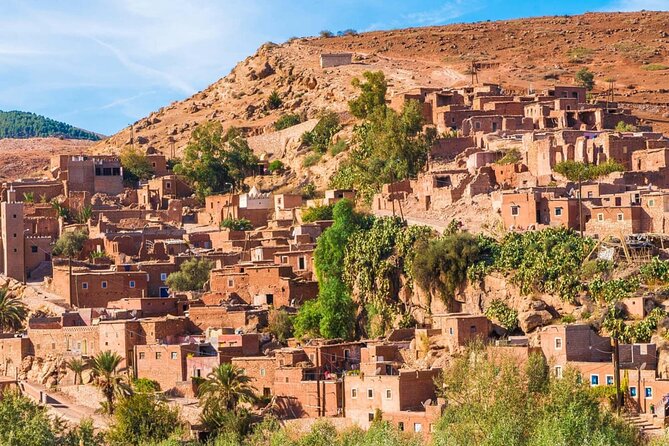
First, Marrakech starts making sense when you follow a smart route. This 3-hour Old City walk threads together major landmarks and everyday crafts, with clear context on what you’re seeing and why it matters. I especially like how guide Redouan Adib connects monuments to real local tradition, and I also like that the tour includes Le Jardin Secret—an oasis with history you can feel in your feet and eyes.
There are two practical things to watch for. The first is that Le Jardin Secret and Medersa Ben Youssef have admission tickets that are not included in the price. The second is physical pace: this is a medina walk, so you’ll want moderate fitness and comfortable shoes, especially if you’re sensitive to uneven ground.
In This Review
- Key points before you go
- Marrakech Old City at walking speed: a smart 3-hour route
- Koutoubia Mosque: Almohad symmetry and the meaning of librarians
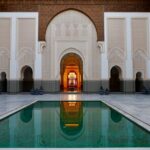
- Le Jardin Secret: a peaceful palace garden with old water systems
- Souk Semmarine and the artisans: crafts you can talk to, not just browse
- Medersa Ben Youssef: a university, not just a pretty courtyard
- Jemaa el-Fna at the finish: UNESCO performances and an easy meetup point
- Price and value: what $30 buys in a 3-hour Old City circuit
- Who should book this tour, and who should reconsider
- Practical tips so you get the most from every stop
- Should you book Journey Through Sights Sounds and Secrets in Marrakech Old City?
- FAQ
- How long is the Marrakech Old City tour?
- Where does the tour start and end?
- Is this a private tour?
- What is the price per person?
- What’s included in the experience?
- Are admission tickets included for all stops?
- Do I receive a mobile ticket?
- What should I know about physical requirements?
- Who is the guide for this experience?
- What is the cancellation policy?
- Is the meeting point near public transportation?
Key points before you go
- Private tour feel: only your group, with time for questions and small pivots to your interests
- Redouan Adib’s style: history, culture, religion, and crafts explained in plain terms
- Two-ticket stops: Le Jardin Secret and Medersa Ben Youssef usually require separate entry tickets
- Great Old City orientation: you end back at Jemaa el-Fna, where it’s easier to plan your next move
- Crafts beyond shopping: you’ll meet artisans in working quarters and hear stories about herbal knowledge
Marrakech Old City at walking speed: a smart 3-hour route
This tour is built for the medina, not for a bus window. You start and finish at Jemaa el-Fna, the square that acts like Marrakech’s giant crossroads for food, performances, and street life. With a duration of about 3 hours, you’ll cover five classic stops without turning it into a marathon.
Because it’s a private tour/activity, you don’t have to stress about matching someone else’s pace or priorities. You also get a mobile ticket, which is handy if you like keeping things simple. One more note: the itinerary is right in the Old City area, and the format expects a moderate physical fitness level, so think “walk and linger,” not “park and photo.”
You can also read our reviews of more city tours in Marrakech

Koutoubia Mosque: Almohad symmetry and the meaning of librarians
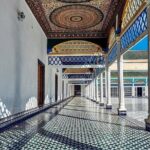
You begin at Koutoubia Mosque, one of Marrakech’s most recognizable silhouettes. The mosque dates to the 12th century, built during the Almohad empire, and it still functions as an active worship site. The name is often explained as meaning Librarians, because the surrounding area used to be a hub for book sellers and scholars.
What I’d focus on here is how the building communicates order. The tower and exterior show classic Almohad architecture: simplicity and symmetry rather than busy decoration. It’s also historically connected—this mosque is said to have served as a model for the Almohad twin mosques in Rabat and for la Giralda in Seville, also built in the 12th century.
Plan for a calm first stop. You’ll spend about 30 minutes, and the best part is appreciating the exterior and the setting rather than trying to force an all-in-one experience.
Practical note: admission at this stop is listed as free, and the time window is short—so it’s ideal for snapping a few photos, listening to the background, and moving on before the next area gets too hectic.
Le Jardin Secret: a peaceful palace garden with old water systems
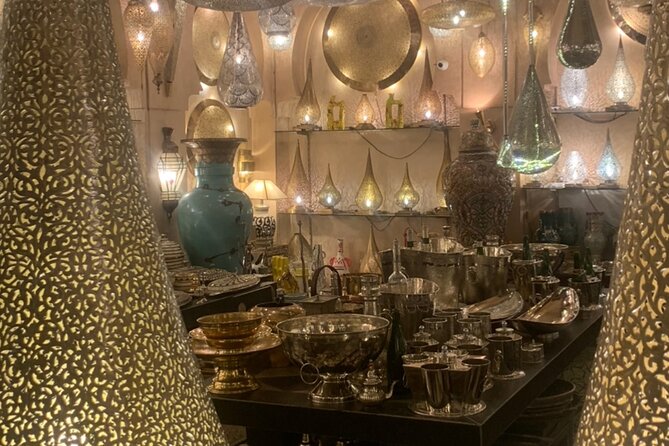
Next comes Le Jardin Secret, tucked in the heart of the medina. This is the kind of place you want to see after you’ve already been around Marrakech’s streets—so you can feel the contrast the moment you step inside.
The garden has layered history. It began as part of an old palace dating to the 16th century under the Saadian dynasty. Then it was reconstructed in the 19th century, and it underwent a restoration in 2016, which is part of why the gardens feel cared for rather than faded.
What makes it more than pretty greenery is the design concept. The garden is divided into two sections:
- an exotic area with plants from different parts of the world
- an Islamic section inspired by ancient ideas of paradise gardens
And here’s a detail worth slowing down for: the garden still highlights old water management systems dating to the late 11th century. Even if you’re not a water-history nerd (I’m not always), it gives the space a sense of purpose. The plants aren’t just arranged; they’re sustained by a system designed for survival and comfort.
You’ll spend about 45 minutes, and admission is not included. So budget for that second ticket if you’re set on visiting. If you like gardens but hate feeling rushed, this stop is one of the best “reset moments” in the route.
Souk Semmarine and the artisans: crafts you can talk to, not just browse

From the quiet of the garden, the tour shifts into the working heart of the Old City at Souk Semmarine. You’ll be guided into artisans’ quarters and get a look at traditional trades that don’t rely on showmanship.
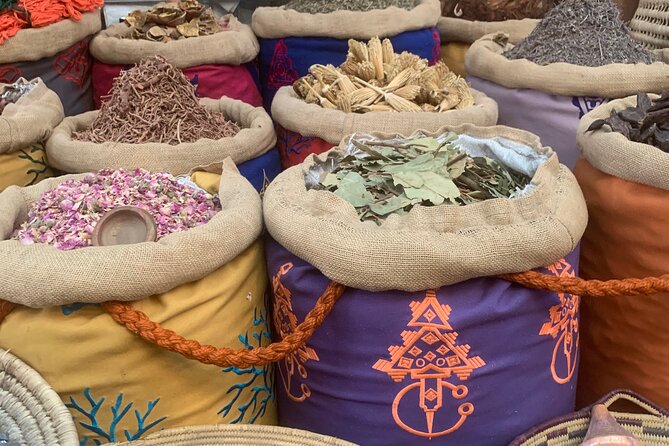
This segment focuses on craft types like blacksmiths, coppersmiths, leather designers, and clothing work such as kaftan and jellaba tunic tailoring. The value here is the human layer. Instead of treating the souk like a theme park, you’re learning what these trades actually make and how they connect to daily life.
Then you’ll meet a herbalist family—described as having five generations in the practice. That matters because it reframes “herbs” from a vague souvenir category into real-world uses. You’ll get insight into the art of cooking, healing, and cosmetics through their perspective.
This stop runs about 45 minutes and is listed as free for admission. Still, keep in mind that souk time can be touchy if you’re uncomfortable negotiating or if you hate being approached. The tour structure helps, but your comfort level matters.
Medersa Ben Youssef: a university, not just a pretty courtyard
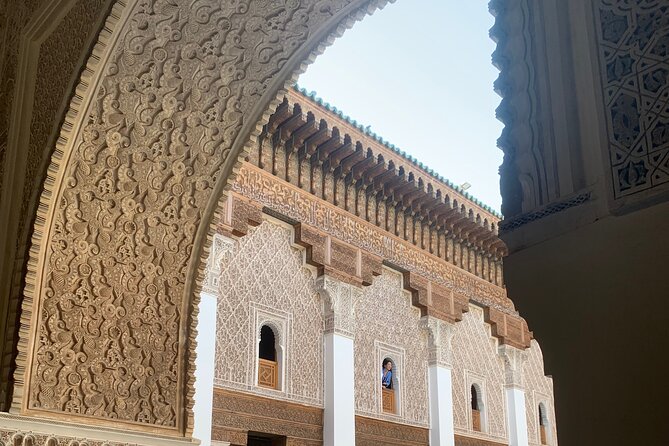
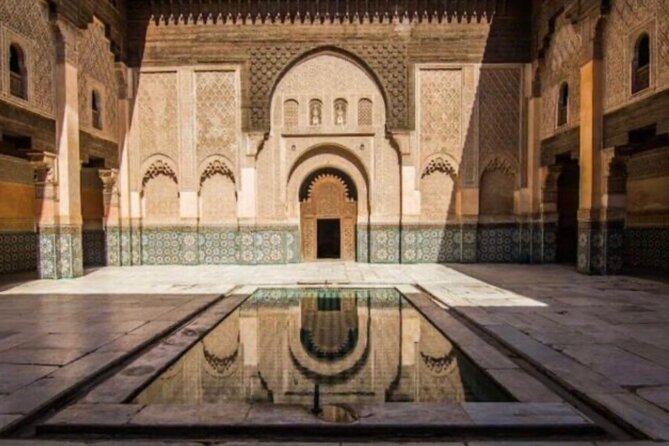
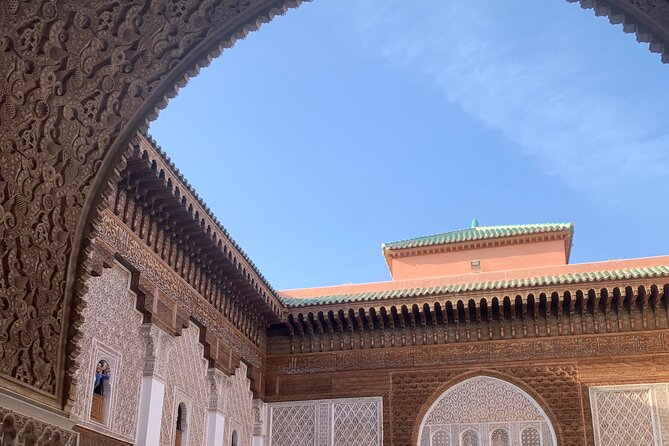
Medersa Ben Youssef is the tour’s architecture-and-art centerpiece. It’s described as more than an Islamic school—a lodging university, meaning students lived and studied here. The main highlight is how the building feels designed around learning and daily routine, not just ceremonial beauty.
The medersa features traditional Moroccan architecture and intricate geometric tilework, with details from the 16th century. One standout is the central courtyard: it includes a beautiful fountain and ornate surrounding decorations. This is the part where you can pause, look up, and realize how much craftsmanship went into the spaces scholars would pass through every day.
Inside, you can explore small student cells and see carved, stuccoed, and calligraphy-decorated surfaces. The prayer hall is another key feature, including its elegant mihrab (the prayer niche). Even if you don’t read Arabic, the design language communicates. It’s a building where decoration isn’t random; it’s part of the function.
You’ll spend about 45 minutes here, and admission is not included. If you want more time for photos and close viewing, this is the stop where you’ll feel the benefit of being on a private route—your guide can often adjust pacing so you don’t feel yanked forward.





Jemaa el-Fna at the finish: UNESCO performances and an easy meetup point
The tour ends at Jemaa el-Fna, a square famous for late-afternoon and evening shows and spectacles. In the time window when performances kick up, the atmosphere shifts again—this is when it becomes an area filled with open-air food stalls and restaurant setups.
Jemaa el-Fna is also recognized by UNESCO as a world intangible heritage of humanity. That’s the official label, but the lived experience is simpler: this is where Marrakech gathers. The sights and sounds you hear here are part history, part living culture, and part something you can’t fully replicate elsewhere.
Your time here is about 15 minutes. That’s enough to reorient yourself, soak in the vibe, and figure out where you want to wander next on your own (or why you might want to schedule another guided walk).
Price and value: what $30 buys in a 3-hour Old City circuit
At $30 per person for around 3 hours, this tour sits in the “good value for what you get” category—mainly because of how it handles time. You’re paying for:
- guided context across several key sites
- a route that moves efficiently through the medina
- a local drink included in the experience
- the guide’s long experience (listed as 27 years)
Two stops require separate admission tickets: Le Jardin Secret and Medersa Ben Youssef. That doesn’t make the price bad—it just means you should treat the $30 as paying for the guide and the overall routing, then add budget for those two entries if you want both.
Where this really earns its keep is the way it turns “checklist sightseeing” into “I understand what I’m looking at.” Many people start their Old City days feeling overwhelmed. This route helps you build an internal map fast—so your later wandering feels less like random walking and more like informed exploration.
Who should book this tour, and who should reconsider
This tour is a strong fit if you want:
- a guided walkthrough of major medina sites in a short time
- explanation of religious and cultural context without heavy jargon
- craft-focused stops, including an herbalist family perspective
- a private format that can shift based on your interests
It may be less ideal if you’re looking for a slow-paced, indoor-only day. You’ll be walking through historic areas, and the itinerary includes both outdoor architecture viewing and ticketed indoor/covered spaces.
Also think about your timing. Jemaa el-Fna’s performance energy is tied to late afternoon and evening—so if you can, plan your tour for a window where the square’s atmosphere will feel like a payoff instead of a stop you just pass through.
Practical tips so you get the most from every stop
Since the tour lists moderate physical fitness, I’d plan like this: wear shoes that can handle medina walking and small changes in ground level. Bring a light layer if the weather shifts, because you’re out moving between mosque exteriors, a garden, workshop quarters, and indoor courtyard spaces.
Also, keep your expectations balanced. Koutoubia is mainly an exterior admiration stop during a short visit. If you want full-depth museum-style viewing, plan to spend extra time elsewhere after the tour. The itinerary is tight on purpose, and that’s part of its value.
Finally, if you’re shopping in souks, use the tour as your starting point for knowing what’s real. With artisan-focused time and explanations, you’ll shop with more confidence instead of guessing.
Should you book Journey Through Sights Sounds and Secrets in Marrakech Old City?
Yes—if you want an Old City route that helps you understand what you’re seeing while still giving you time to feel the place. The price feels fair for a private, 3-hour guided circuit that ends at the exact hub where you’ll want to plan your next steps.
Book it especially if you like culture and crafts and you want someone who can adapt as you go. The only real reason to hesitate is budgeting for the two separate admissions (Le Jardin Secret and Medersa Ben Youssef) and your comfort with medina walking.
FAQ
How long is the Marrakech Old City tour?
It’s approximately 3 hours.
Where does the tour start and end?
Both the start and end point are Jemaa el-Fna, Marrakech 40000, Morocco.
Is this a private tour?
Yes. It’s a private tour/activity, and only your group participates.
What is the price per person?
The price is $30.00 per person.
What’s included in the experience?
The experience includes the expertise of the guide (listed as 27 years) and a local drink. Some stops also have free admission, while others require tickets you purchase separately.
Are admission tickets included for all stops?
No. Koutoubia Mosque, Souk Semmarine, and Jemaa el-Fna are listed as free admission. Le Jardin Secret and Medersa Ben Youssef are listed as admission tickets not included.
Do I receive a mobile ticket?
Yes, the tour provides a mobile ticket.
What should I know about physical requirements?
The tour notes a moderate physical fitness level is recommended.
Who is the guide for this experience?
The experience provider is Redouan Adib.
What is the cancellation policy?
You can cancel for a full refund up to 24 hours in advance. If you cancel within 24 hours of the start time, the amount paid is not refunded.
Is the meeting point near public transportation?
Yes. The meeting point is near public transportation.