REVIEW · MARRAKECH
Marrakech: Street Food Tour by Night
Book on Viator →Operated by Marrakech Guided Experience · Bookable on Viator
Street food at night beats wandering alone. In Marrakech, this small-group walk gives you ten tastings through the medina and ends with kofta at Djemaa el-Fnaa, so you leave properly full instead of just snack-curious. What I like most is that guided format, and the fact you’re eating as you go. One possible drawback: the first half leans hard on olives and sweet bites, so come for variety, not only sizzling street food.
For me, the value shows up in the flow. You’re on foot for about 3 hours, and the meeting point is easy to find if you know what to look for: the guide stands at Café de France and holds up a sign. Just be aware that there can be fake guides hovering around the same area—stay with your correct group.
This tour also fits real-life travel needs. It’s stroller and wheelchair accessible, capped at a maximum of 15 people, and dinner is included at the end. If you’re visiting for your first evening, it’s one of the fastest ways to get your bearings and start understanding what Moroccans actually snack on.
In This Review
- Key things to know before you go
- Café de France meeting spot: how not to get pulled into the wrong tour
- The medina at night: where alley food turns into real context
- Rahba Kedima Square: mountains of dates and fast, fun choices
- Food markets and the olive-oil factor: picking flavors, not just foods
- Jemaa el-Fnaa finale: kofta, homemade tomato sauce, and the main-square energy
- Price and time: does $55 for dinner and 3 hours make sense?
- Guides really change the experience: Mohammed, Ali, Imrane, and Benabadmohamed
- Eating tips for a full medina night (without getting too stuffed)
- Who should book this night street food tour
- Should you book it? My take
- FAQ
- How long is the Marrakech street food tour by night?
- What does the tour cost?
- Where do I meet the guide?
- Is dinner included?
- What will I eat during the tour?
- Is the tour wheelchair and stroller accessible?
- How big is the group?
- What if the weather is bad?
- What’s the cancellation policy?
Key things to know before you go
- Ten tastings along a night route that keeps you fed while you walk
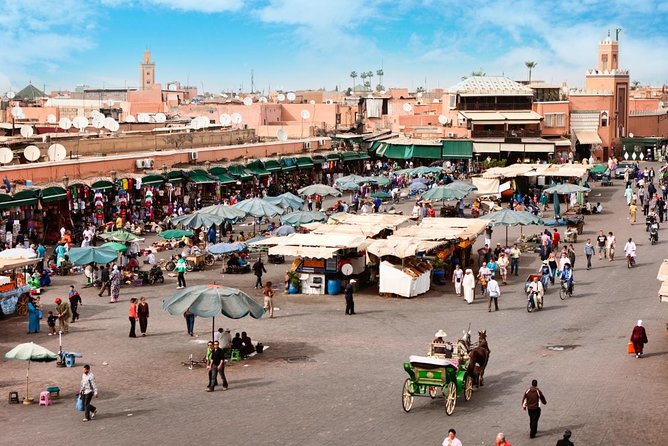
- Djemaa el-Fnaa kofta finale to ground the whole experience in the main square
- Small group size (max 15) for a smoother pace through the medina
- Guide sign at Café de France plus a warning to ignore random sellers calling tours
- Olives and dates show up early, so bring your appetite for salty and sweet together
- Bring water; you’ll likely eat more than you expect by hour two
Café de France meeting spot: how not to get pulled into the wrong tour
This starts at the Hôtel Restaurant Café de France, near the medina side of town (Rue des Banques area). The key detail is simple: wait at the entrance while your guide holds up a guide sign. That’s your “yes, this is the right group” moment.
Around the square, you may meet people offering tours that look similar. Ignore them and stick with your planned meeting. I also recommend you arrive a few minutes early, because night wandering is slower than you think when roads, crowds, and signage all shift at once.
This is also where the tour becomes relaxing rather than chaotic. You’re not hunting for which alley you need next. You’re just following a person who knows where to go and when to pause.
You can also read our reviews of more food & drink experiences in Marrakech

The medina at night: where alley food turns into real context
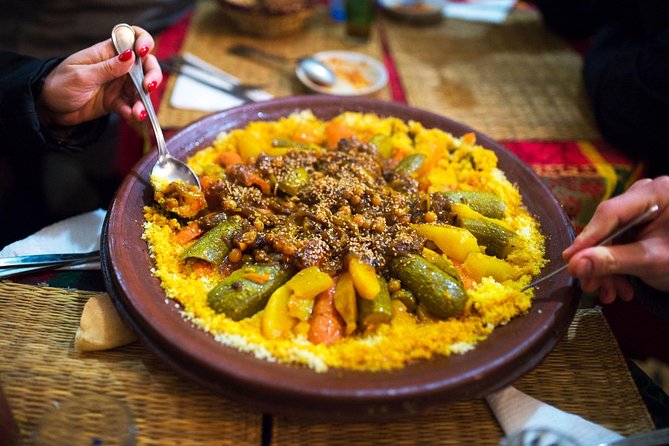
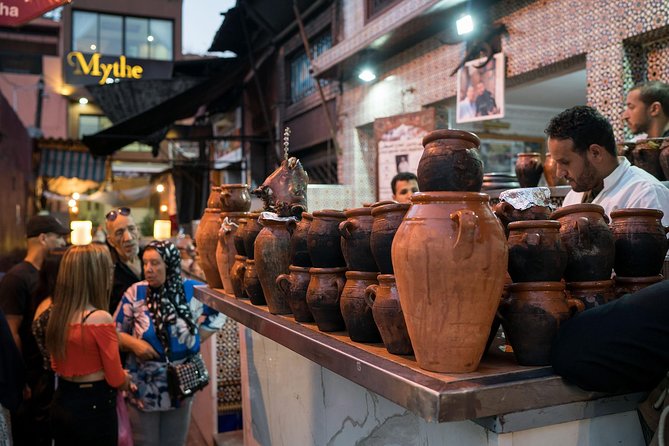
After you’re assembled, you head into the medina. The tour doesn’t just move you from stall to stall. You also get little pockets of context about daily life and how families eat. You’ll pass through areas that feel like separate worlds, even though they’re only a few minutes apart on foot.
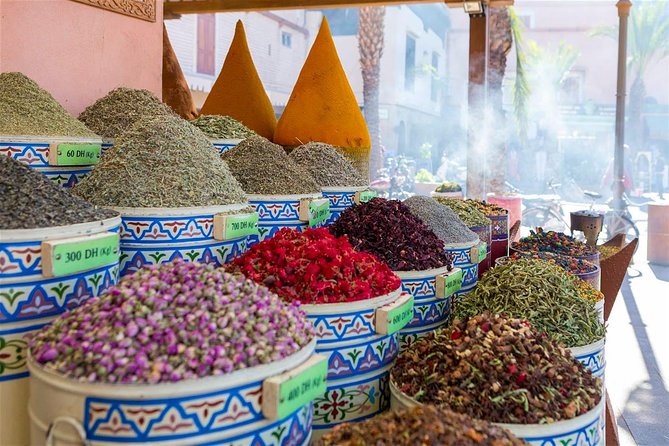
A big theme here is specialization. The medina has alleys devoted to different ingredients—spices and other essentials for cooking at home. That matters because it helps you connect what you’re tasting to where it comes from. Instead of thinking, This is just food, you start noticing patterns.
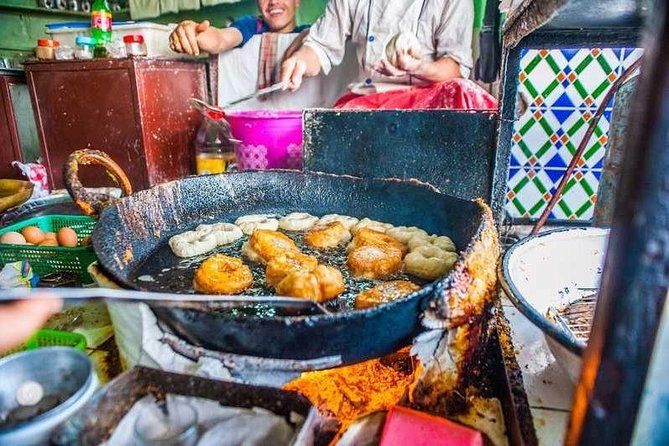
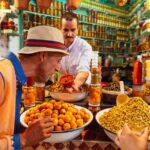
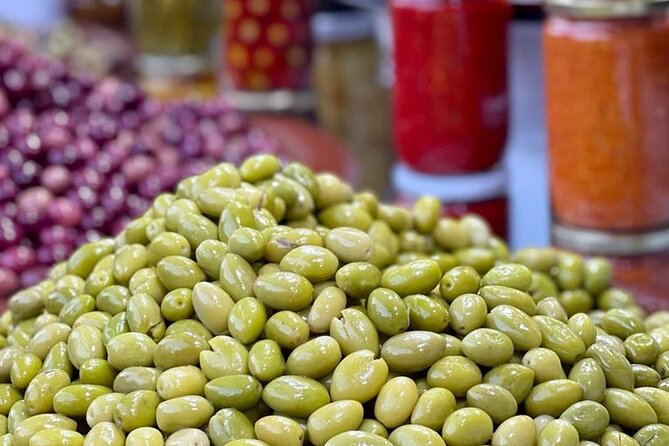
One stop centers on olives and the olive souk. You’ll see colorful piles and learn how olives are chosen, mixed, and flavored. If you like tasting, this part is usually a highlight because it’s interactive: you’re not just watching, you’re picking from options and comparing textures and tastes.
Rahba Kedima Square: mountains of dates and fast, fun choices
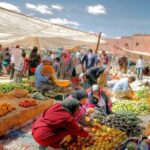
Rahba Kedima Square is where the tour shifts from salty to sweet. You’ll spend a short stretch moving among date displays that look like mountains—then choose your own mix.
This stop is brief, but it’s useful. Dates aren’t only dessert; they’re also a basic part of everyday snacking and hospitality. Tasting them in the actual market setting gives them more meaning than eating a pre-packaged snack later.
If you have a sweet tooth, this is the moment that wakes it up. If you’re not a big sweets person, you can still try a small portion of different kinds so you get a feel for what locals like.
Food markets and the olive-oil factor: picking flavors, not just foods
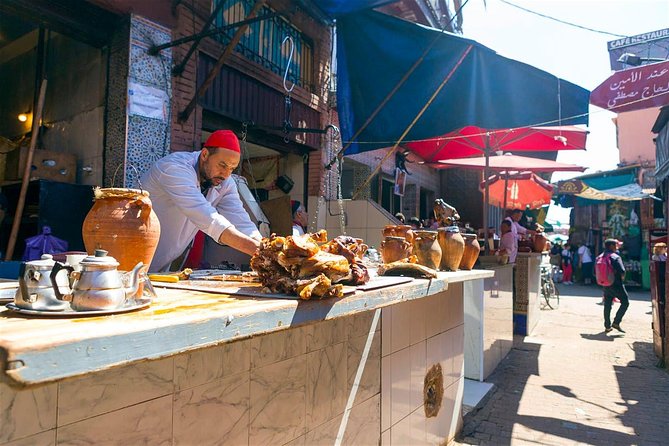
Next comes the food markets portion, where the goal is variety. Expect the smell of olive oil to lead you into the tasting rhythm. You’ll encounter what feels like an olives-focused zone, with options to choose flavors and try multiple varieties.
This part is where the tour earns the promise of a full experience. You’re not eating one dish and calling it a day. You’re sampling across categories—salty bites and small tastes that add up.
A helpful way to think about this stop: it’s training your palate. After you’ve tried several olive styles and tasted combinations, Moroccan flavors start to feel less mysterious. Even if you don’t remember every name, you’ll remember what you liked—and you’ll know what to look for if you want to buy ingredients later.
Jemaa el-Fnaa finale: kofta, homemade tomato sauce, and the main-square energy
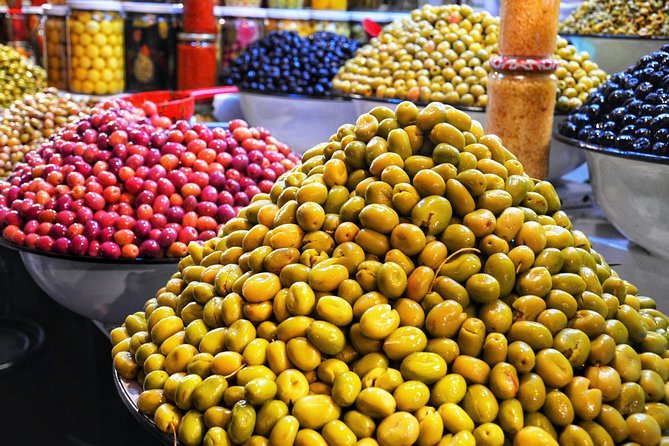
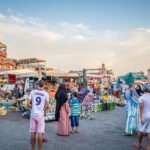
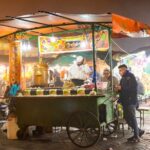
The tour ends at Jemaa el-Fnaa, Marrakech’s signature square. This is the moment many people feel unsure about on their own, because the energy can be intense. With a guide, it becomes manageable. You know where to stand, what to try, and how to finish the evening without getting swallowed by the crowd.
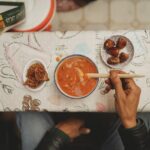
Here, you’ll try Moroccan meatballs called kofta, served with homemade tomatoes sauce (the description calls it tomato SOS). This is a satisfying switch from the earlier olives and snacks. Kofta gives you that warm, savory anchor that makes the entire night feel like a real meal, not just grazing.
You’ll also see how the square works at night: food, movement, and atmosphere all happening at once. The tastings feel more purposeful because you end on the dish that most people associate with Moroccan street food.
Dinner is included, too. Some versions of this tour are described as finishing with a sit-down meal after the square moment—sometimes on a rooftop terrace setting, with traditional dishes such as tagine mentioned in guide-style stories. If that sounds good to you, this tour is a good fit.
A few more Marrakech tours and experiences worth a look

Price and time: does $55 for dinner and 3 hours make sense?
At $55 per person for about 3 hours, this tour can feel fair—mainly because you’re paying for three things at once:
- Guiding through the medina at night, when navigation is harder and you want fewer wrong turns.
- Multiple tastings, which helps you sample a broader range than you’d likely buy yourself in one evening.
- Dinner included, so you’re not stuck searching for food afterward.
You can also judge it by your expectations. If you want a nonstop parade of hot street bites, you might feel the early emphasis on olives and sweet pastries is a bit too basic. Some people have described the tour as not especially memorable after a week of eating broadly around Morocco, and others wished for more market time or more spice in the overall flavor profile.
Still, for a first evening in Marrakech—especially if you’re new to the medina—the guided tastings and the kofta finish can be exactly what you need. You get to eat, you get orientation, and you’re less likely to spend your night just bargaining your way into dinner.
Guides really change the experience: Mohammed, Ali, Imrane, and Benabadmohamed
This is one of those tours where the guide makes the difference. Names that come up again and again include Mohammed (often shortened to Mo), Ali, Imrane, and Benabadmohamed. People describe guides as chatty, culturally aware, and good at steering you toward dishes you might skip on your own.
One practical example: there were stories of the guide waiting when someone got delayed finding the meeting spot. That matters because medina streets can mess with timing quickly.
Pacing also comes up often. The tour tends to move at a “slow enough to taste and ask questions” speed, which helps if you’re sensitive to rushing. Guides also appear to handle different appetites well. For example, one person noted that a wild card like snail was offered but not required—so you won’t be forced into anything that sounds like a bad idea for you.
If you can choose a guide when booking, it’s worth asking. If you can’t, you can still show up with the right attitude: you’re there to taste, not to speed-run street food.
Eating tips for a full medina night (without getting too stuffed)
Even with tastings, it can still add up. Several accounts mention being warned at the beginning not to overdo it early, because you’ll eat more as you go.
Here’s how to make it work smoothly for you:
- Bring water and sip between tastings. One tip that shows up clearly is to have water on hand.
- Take small bites first, then decide if you want seconds. The point is to sample a range, not demolish one item.
- Wear comfortable shoes. Night medina walking includes uneven ground and tight turns, even on a short route.
- Expect to be full by the end. The tour is designed to leave you satisfied, and most people do.
If you’re concerned about spice level, you can ask your guide what to expect from each dish. The tour includes multiple tastings, so you can steer your choices toward milder items if you want.
Who should book this night street food tour
This tour is best for:
- Your first night in Marrakech when you want immediate orientation plus food
- People who like eating in small tastings rather than committing to one big meal
- Families traveling with strollers or anyone using a wheelchair, since it’s described as accessible
- Food explorers who want olives, dates, and Moroccan street staples like kofta in one evening
It may be less ideal if:
- You already ate through Marrakech for days and want something much more unusual than olives, dates, pastries, and kofta
- You’re hoping for a longer, deeper focus on markets only, rather than a mix of walking and shorter stops
- You want a strong emphasis on spice specifically. You’ll taste flavors, but not every stop will be a heat bomb
Should you book it? My take
I’d book this tour if you want a simple plan for a first Marrakech evening: meet at Café de France, walk the medina with a small group, taste olives and dates in real market settings, then end with kofta at Jemaa el-Fnaa and dinner included.
I’d think twice if your goal is intense street-food variety with lots of heat and long market time. In that case, you might feel the early olives-and-sweet structure is a little basic, especially if you’re already well-fed from other Moroccan meals.
FAQ
How long is the Marrakech street food tour by night?
The tour is about 3 hours (approximately).
What does the tour cost?
It costs $55.00 per person.
Where do I meet the guide?
You meet at Hôtel Restaurant Café de France (J2G7+G2G jamaa el-fnna، Rue des Banques, مراكش 40000, Morocco).
Is dinner included?
Yes. Dinner is included.
What will I eat during the tour?
The tour includes multiple tastings such as olives and dates, and you’re treated to kofta at Jemaa el-Fnaa, served with homemade tomatoes sauce. (You’ll also be sampling items from several food stalls and markets.)
Is the tour wheelchair and stroller accessible?
Yes. It’s listed as wheelchair and stroller accessible.
How big is the group?
The maximum group size is 15 travelers.
What if the weather is bad?
This experience requires good weather. If it’s canceled due to poor weather, you’ll be offered a different date or a full refund.
What’s the cancellation policy?
You can cancel up to 24 hours in advance for a full refund. If you cancel less than 24 hours before the start time, the amount paid is not refunded.