REVIEW · MARRAKECH
Marrakech Jewish Heritage : Luxurious Private Tour & Vehicle
Book on Viator →Operated by Sara Morocco Private Tours · Bookable on Viator
Marrakech hides Jewish stories in plain sight. In just 3 hours, you get a focused walk through major Jewish landmarks, including Slat Al Azama Synagogue, plus classic medina sights that frame the whole story. I love the private, street-smart way this tour threads the medina, and I love how it keeps the history grounded in real places you can still see and touch; the main drawback is that some monument fees (like the synagogue and Bahia Palace) are not included.
You’ll also appreciate the practical side: pickup and an air-conditioned vehicle help you beat the hassle of hopping between neighborhoods. The tour includes bottled water and Moroccan mint tea, so you’re not hunting for refreshment after a few turns in the souks.
Guides can make or break a Marrakech day, and here the names that keep coming up are Hassan, Mustafa, and Abdullah. One review even called out driver Haitem for keeping things smooth—punctual and organized, which matters when you’re trying to fit a lot into a short window.
In This Review
- Key things I’d focus on before you book
- Why Marrakech Jewish Heritage feels personal in a private format
- Price and value: what your $186.12 per person really covers
- Smooth start: pickup, vehicle, and how to make the most of the short time
- Bab Agnaou: a photo-worthy 16th-century gate before the story turns
- Mellah market and square: where Jewish Marrakech lived day to day
- Slat Al Azama Synagogue: founded in 1492 and still active
- Bahia Palace: Moorish architecture that rewards close looking
- Jemaa el-Fna and Rahba Kedima: UNESCO atmosphere plus a real tea break
- Souk Semmarine and Souk Haddadine: watch crafts instead of just buying souvenirs
- Pacing that fits a half-day, plus questions worth asking
- Who should book this tour (and who might want a different one)
- Should you book Marrakech Jewish Heritage: Luxurious Private Tour & Vehicle?
- FAQ
- FAQ
- How long is the Marrakech Jewish Heritage private tour?
- Is pickup included?
- What’s the tour price per person?
- Do I need to pay monument fees during the tour?
- What’s included in the tour besides the guide?
- What type of tour is it?
- What do I need to know about tickets and confirmation?
- Is the tour affected by weather?
Key things I’d focus on before you book
- Active synagogue stop: You visit Slat Al Azama, founded in 1492 and still in use today.
- Private guide = better pacing: You control the tempo instead of being swept along with a big group.
- Moorish palace details: Bahia Palace’s fountains, curved ceilings, gardens, and plasterwork get real attention.
- Medina workrooms, not just sightseeing: Souk Semmarine and Souk Haddadine put you near artisans and iron/brass crafts.
- Tea break in an old spice square: Rahba Kedima Square is built for photos and a pause with mint tea or coffee.
- Skip-the-line/fast access included: It saves time at key monuments, which is gold in the medina.
Why Marrakech Jewish Heritage feels personal in a private format
Marrakech is a place where details matter. In the medina, streets can look similar, and without local context you can miss what’s important. That’s where the private format earns its keep: your guide can slow down when a story connects to a door, a wall, a courtyard, or a market square.
This is also a smart choice if you want both “history” and “how people lived.” The route doesn’t treat the Jewish heritage as a museum subject stuck behind glass. It ties community life to the physical geography of Marrakech—especially the Mellah area and the synagogue—and then you see how that history sits alongside the city’s better-known Muslim landmarks.
And yes, you still get the bigger Marrakech hits in the same half-day: Bab Agnaou, Jemaa el-Fna, and palace architecture. For first-timers, it’s a tight way to get your bearings fast, without spending your whole day in transit.
You can also read our reviews of more private tours in Marrakech


Price and value: what your $186.12 per person really covers
At $186.12 per person for about 3 hours, you’re paying for three things that add up quickly in Marrakech:
First, you’re getting a private registered English guide, not just a general walking route. Second, you get an air-conditioned vehicle plus a professional driver, which helps you move between neighborhoods without overheating in traffic or losing time.
Third, the tour includes skip-the-line & fast access at monuments. That sounds like a small promise, but in Marrakech, time is the currency. With only a few hours, shaving off delays can mean one extra meaningful stop or more time at the places that require a longer look.
What’s not included matters too:
- Monument fees for Slat Al Azama Synagogue and Bahia Palace are not included.
- Snacks are not included.
My practical advice: budget a bit extra for those site fees, but know that many of the other stops are free and structured to keep the day efficient.
Also, this tour is often booked around 24 days in advance, so if you’re traveling during a busy period, plan ahead instead of crossing your fingers last-minute.
Smooth start: pickup, vehicle, and how to make the most of the short time
Pickup is offered, and the tour is designed for a tight schedule. You’ll ride in an air-conditioned vehicle with a professional driver, then transition into walking for the medina sections.
Why that matters: Marrakech’s walking areas can move at different speeds. The Jewish heritage sites and souks are worth attention, but they’re also where it’s easy to get pulled off track. In a private setup, your guide can keep you on the most logical path, so you’re not wasting your energy negotiating the maze.
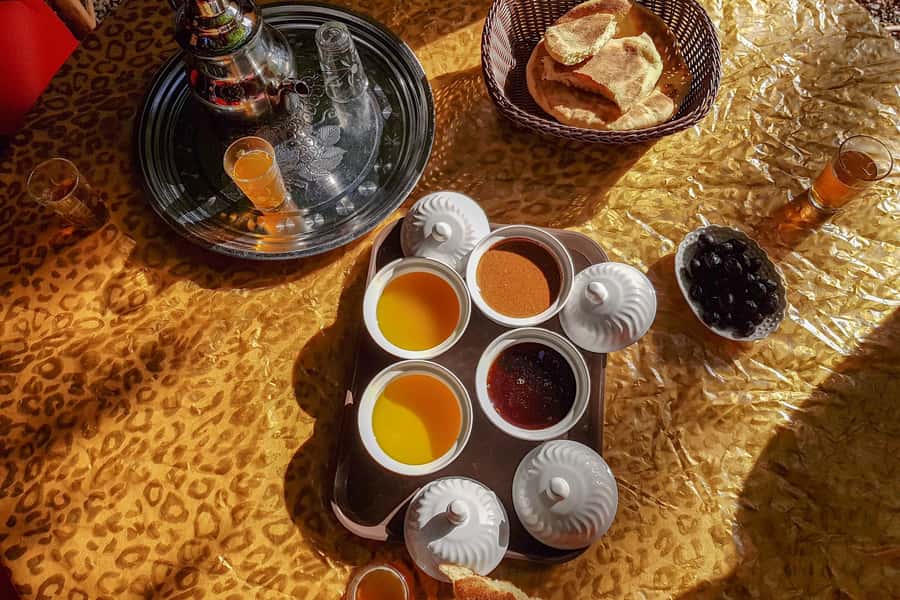
You’ll also have bottled water and Moroccan mint tea included. That’s not just comfort—it’s helpful for energy. A 3-hour medina outing can feel longer if you’re dehydrated or overheated.
One more small note: you’ll receive confirmation at booking, and the tour uses a mobile ticket. That’s handy when you’re juggling phone screens, notifications, and changing plans.
Bab Agnaou: a photo-worthy 16th-century gate before the story turns
Bab Agnaou is your first visual cue that Marrakech’s past is built into its street corners. This gate serves as the entrance to the kasbah district, described as a 16th-century fortified residential area.
This stop is short—around 5 minutes—but it’s a good way to set the tone. You get a moment for photos and context before you move into neighborhoods where the Jewish heritage becomes central.
Practical tip: if you care about angles, ask your guide where the best sightlines are. Gates like this look different depending on where you stand, and a quick pointer saves time later.
Admission here is free, so you’re not losing budget on an early warm-up.
Mellah market and square: where Jewish Marrakech lived day to day
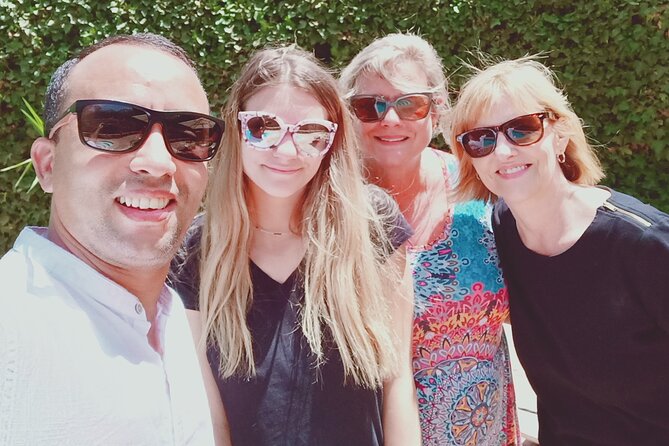
Next comes the Mellah, the historic Jewish quarter area. You’ll spend about 30 minutes visiting the old market and square, and your guide will explain the history of the Jewish community in Marrakech.
This is one of the stops where a guide’s narration matters more than a checklist. A market square isn’t just a pretty setting. It’s where commerce, daily routine, and community life overlapped. The tour’s value is that it treats the Mellah as a living part of the city’s story, not a disconnected background scene.
What to expect:
- Short walking inside the neighborhood feel
- A mix of old-market atmosphere and historical framing
- Plenty of chances to look around without feeling rushed
One consideration: Mellah streets can be busy. If you’re sensitive to crowds, keep your focus on the guide’s route and take photos quickly before the flow changes.
Admission for this stop is free, which is a nice bonus early in the day.
You can also read our reviews of more historical tours in Marrakech
Slat Al Azama Synagogue: founded in 1492 and still active
Slat Al Azama is the anchor stop for Jewish heritage in Marrakech. You’ll spend about 30 minutes at the synagogue, which is described as the oldest synagogue in Marrakech. It was founded in 1492 and is still in use today by Jewish community members from around the globe.
This is one of those moments where you’ll want a little extra mental quiet. Even if you’re not religious, you’re visiting a place that still functions. That means you should follow whatever guidance is posted on site and keep voices and movement respectful.
Important practical detail: admission tickets for Slat Al Azama are not included, so expect to pay monument fees separately.
If you love architecture and historical continuity, this stop will likely be the highlight. It’s not just a structure; it’s a living institution with deep roots in Marrakech.
Bahia Palace: Moorish architecture that rewards close looking
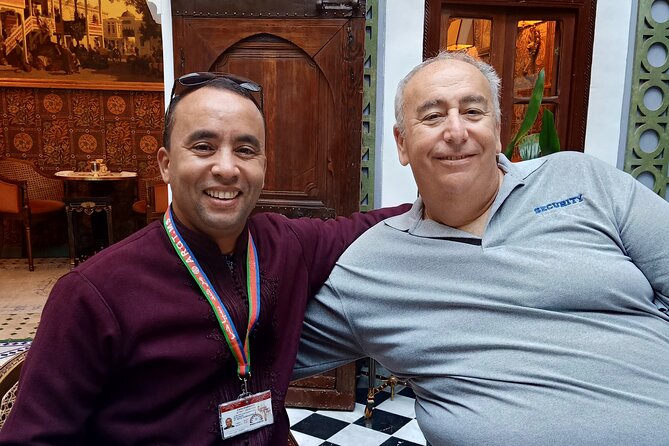
After the synagogue, the tour shifts gears into aesthetics at Bahia Palace, a historical palace dating back to the 19th century.
You get about 30 minutes here, and it’s time well spent because Bahia is the kind of place where details carry the mood:
- Fountains of water
- Moroccan/Moorish-inspired architecture
- Curved ceilings
- Gardens
- Plasterwork and natural color tones
Admission for Bahia Palace is not included, but the stop is structured for an efficient look rather than a slow museum marathon. With a short tour like this, you want high-return time, and Bahia Palace tends to deliver that.
Consideration: if you’re prone to rushing, slow down here. Curved ceilings and painted plasterwork are easiest to appreciate when you’re not moving every 10 seconds.
Jemaa el-Fna and Rahba Kedima: UNESCO atmosphere plus a real tea break
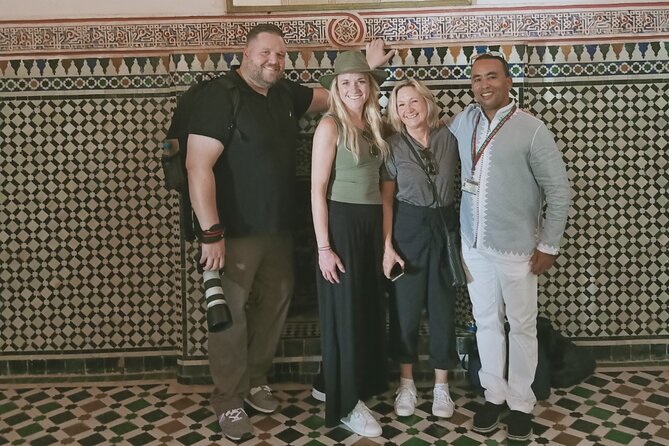
You’ll then head to Jemaa el-Fnaa, described as the authentic Jamaa El Fna square with UNESCO World Heritage status. Your time here is brief—about 15 minutes—but it’s designed to give you sensory context: smells, colorful souks around the square, and the big-city Marrakech energy.
Then comes Rahba Kedima Square, the oldest spice square, where you can photograph and pause. You’ll spend about 20 minutes, and admission for this stop is listed as included. The tour also positions this square as a natural break point where you can have Moroccan mint tea or coffee.
Why this pairing works:
- Jemaa el-Fna gives you the famous central stage
- Rahba Kedima gives you a more grounded old-market feel and a place to stop
Practical advice: if you’re taking photos, keep your camera ready at Rahba Kedima. It’s the kind of spot where people move in and out and the light shifts quickly. For Jemaa el-Fna, focus more on the overall feel than trying to capture everything.
Souk Semmarine and Souk Haddadine: watch crafts instead of just buying souvenirs
The last stretch is where the tour turns from landmarks into crafts. You’ll visit Souk Semmarine (about 30 minutes) and Souk Haddadine (about 20 minutes).
At Souk Semmarine, the emphasis is on workshop areas and learning how artisanal items are made. You can talk with artisans and get a better sense of the process behind the products you see.
Souk Haddadine focuses on blacksmith workshops, including the kind of ironwork and brass items associated with the Moroccan Jewish community. Even if you’re not shopping, it’s a strong way to understand how trade and craftsmanship shaped local life.
Admission here is listed as free, which keeps costs controlled while still delivering real value.
One consideration: souks can be physically tight. Wear comfortable shoes and expect some slow maneuvering. In a private tour, your guide can usually manage the route so you aren’t stuck waiting while someone backs up to let traffic through.
Pacing that fits a half-day, plus questions worth asking
This tour is about 3 hours total, and the stop durations are intentionally short—so you get variety without losing the thread of the story. The pacing is also private, meaning your guide can adjust if you want a longer look at Bahia Palace or if you have extra curiosity about how Mellah neighborhoods worked.
To get the most out of it, ask your guide questions like:
- How did the Mellah function in daily life, not just historically?
- What makes Slat Al Azama’s founding in 1492 especially significant for Marrakech?
- Which details in Bahia Palace are the quickest to notice if I only have a short time?
If your guide is Hassan, Mustafa, or Abdullah (names that show up consistently), you’re likely to get thoughtful explanations and a route that doesn’t feel chaotic. Reviews also mention punctual arrivals and careful attention to goals, which you’ll feel as smoother transitions between stops.
Who should book this tour (and who might want a different one)
This is a good fit for:
- First-time visitors who want Jewish heritage in a short, well-planned format
- Travelers who enjoy architecture and want Bahia Palace tied into the broader story of the city
- People who like markets and crafts, not just monuments
- Anyone who prefers a private guide so the day doesn’t become a group shuffle
You might consider another option if:
- You want a deeper, multi-hour museum-style explanation with more free time at each location
- You’re hoping for only included admissions (since Slat Al Azama and Bahia Palace fees are not included)
- You dislike crowded squares, even with a guide guiding your movement through them
Should you book Marrakech Jewish Heritage: Luxurious Private Tour & Vehicle?
I’d book this if you want high value from a limited schedule. The combination of private guiding, pickup with vehicle support, and the mix of major heritage stops (Mellah, Slat Al Azama) with Marrakech icons (Bab Agnaou, Jemaa el-Fna, Bahia Palace) is exactly what you want when time is short.
Also, the guide experience seems to be the heart of the tour. Names like Hassan, Mustafa, and Abdullah have been highlighted for being organized, flexible, and able to connect Jewish heritage with broader Moroccan culture. That connection is what helps the day feel coherent instead of like a random checklist.
Just plan for separate monument fees at Slat Al Azama and Bahia Palace, wear comfortable shoes for souks, and be ready for the medina’s energy. Do that, and you’ll come away with a Marrakech that feels more complete than the postcard version.
FAQ
FAQ
How long is the Marrakech Jewish Heritage private tour?
It’s about 3 hours (approx.).
Is pickup included?
Pickup is offered, and the tour is near public transportation.
What’s the tour price per person?
The price is $186.12 per person.
Do I need to pay monument fees during the tour?
Yes. Admission tickets are not included for Slat Al Azama Synagogue and Bahia Palace. Rahba Kedima Square is listed as admission included, and other stops listed are free.
What’s included in the tour besides the guide?
You get a flexible registered English guide, bottled water, Moroccan mint tea, and an air-conditioned vehicle with a professional driver. Skip-the-line and fast access are included for monuments.
What type of tour is it?
It’s a private tour/activity, so only your group participates.
What do I need to know about tickets and confirmation?
You’ll receive confirmation at the time of booking, and the tour uses a mobile ticket.
Is the tour affected by weather?
Yes. The experience requires good weather. If it’s canceled due to poor weather, you’ll be offered a different date or a full refund.