REVIEW · MARRAKECH
Marrakech Highlights: Full-Day Walking City Tour
Book on Viator →Operated by Lovely Morocco Tours · Bookable on Viator
Marrakech is best on foot. This Marrakech Highlights tour strings together major medina landmarks and everyday market life with a licensed local guide, Saleh, plus stops like Bahia Palace, Bab Agnaou, the Ben Youssef Madrasa, and Jemaa el-Fna. It’s also a good way to learn how the city works, not just what to see.
I like two things most. First, the guide-led flow keeps you moving through the medina’s maze with clear context at each stop, from Almohad architecture at Bab Agnaou to the schooling legacy of Ben Youssef. Second, you get a practical taste of Marrakech at the spice squares—plus a Moroccan mint tea break during the Berber pharmacy visit.
One thing to consider: entrance fees for Bahia Palace and Ben Youssef Madrasa aren’t included, and not everything is inside (Koutoubia is an outside visit). If you’re allergic to walking, this route may feel like a lot for one day.
In This Review
- Quick hits
- Walking The Old Medina With Saleh: pace, safety, and do-this-not-that
- Bahia Palace And Bab Agnaou: show-stopping interiors, then a ceremonial stone frame
- Koutoubia Mosque from the outside: the skyline landmark you’ll recognize again later
- Spice squares and a Berber pharmacy tea break: what to buy, and how to buy it
- Ben Youssef Madrasa: the calm courtyard you’ll wish you had more time for
- Souk Semmarine to Jemaa el-Fna: where shopping meets street performance
- The Secret Garden add-on feel: a quick reset in a restored riad
- Shopping with a guide: how to avoid wasting money in the medina
- Price and logistics: is $51.38 good value for a 6-hour medina walk?
- Who this tour suits best (and who should adjust expectations)
- Should you book this Marrakech Highlights Walking Tour?
- FAQ
- How long is the Marrakech highlights walking tour?
- What is the price per person?
- Is pickup available?
- Where does the tour start?
- Do I need to buy entrance tickets for Bahia Palace?
- Do I need to buy entrance tickets for Ben Youssef Madrasa?
- Is Koutoubia Mosque visited inside?
- Does the tour include refreshments?
- Is food included?
- What’s the group size limit?
Quick hits
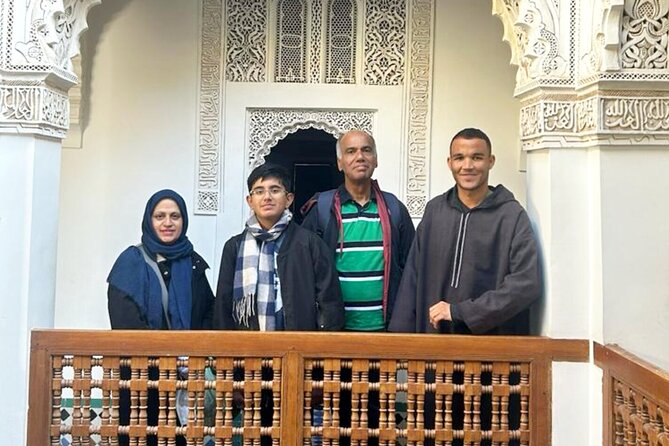
- Licensed guide Saleh guides you through the medina with historical context and practical advice
- Bahia Palace and Ben Youssef Madrasa deliver big “wow” architecture, with paid entry
- Spice squares (Place des Épices and Rahba Kedima) plus a Berber pharmacy tea pause
- Souk Semmarine connects shopping with real craft and daily commerce
- Jemaa el-Fna ends the day in the city’s main public square for street-life energy
- Group size stays under control, with a maximum of 20 travelers
Walking The Old Medina With Saleh: pace, safety, and do-this-not-that
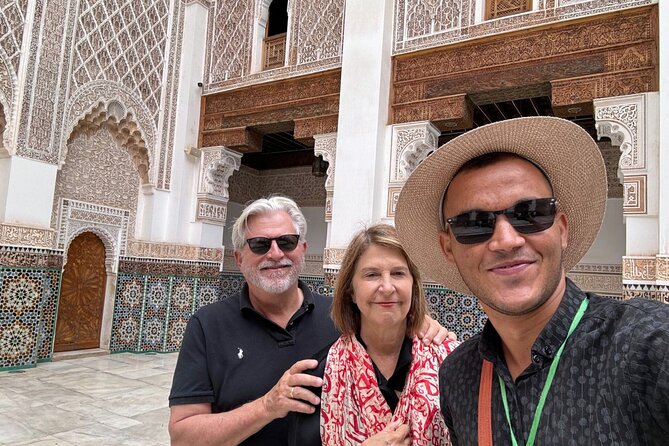
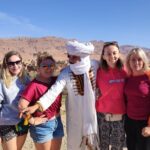
Marrakech’s medina doesn’t move like a theme park. Streets twist, crowds swell, and one wrong turn can cost you a lot of time. That’s why the guide part matters here. Saleh is a licensed local guide, speaking English and using the walking pace to explain what you’re actually looking at—gate, palace, mosque silhouette, madrasa courtyard—so you don’t just “pass by,” you get your bearings fast.
This is a group tour (max 20), so you get companionship without feeling trapped in a line of 50. You also have the option of pickup and drop-off at your riad if it’s inside the medina. Otherwise, the plan starts at Café de France (72 Rue des Banques) and returns you there at the end.
The best practical touch: you’re not left to guess how to handle the medina’s social side. A good guide helps you spot what’s normal, what’s a sales tactic, and how to move confidently—especially if you’re a first-timer, solo, or traveling with kids. One more comfort item: you’ll have coffee and/or tea served during the Berber pharmacy stop, so you’re not stuck trying to find a drink mid-walk.
You can also read our reviews of more walking tours in Marrakech
Bahia Palace And Bab Agnaou: show-stopping interiors, then a ceremonial stone frame
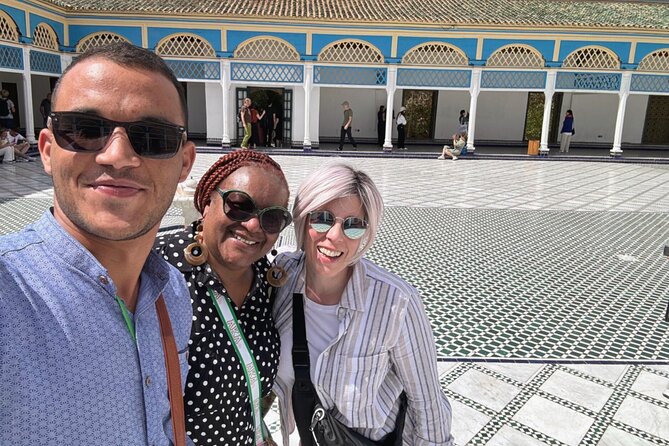
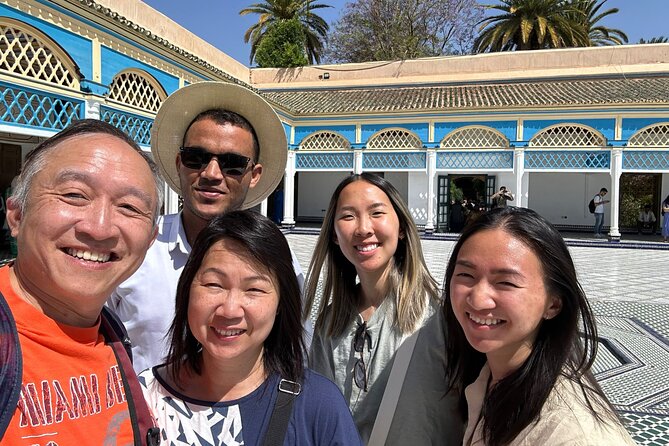
Bahia Palace is where the tour turns up the volume. Expect a 19th-century palace built and expanded by powerful figures tied to the sultan’s court, designed to project wealth through design and garden space. The highlights are visual and tactile: intricate stucco work, painted wood ceilings, zellij tile mosaics, decorative arches, and lush gardens that make the palace feel more breathable than many monument stops.
Plan on about 1 hour here. It’s enough time to see the main interior details and pause in the garden areas without feeling like you’re rushing. The main catch is cost: Bahia Palace entrance is not included, listed at 10€. So if you’re budgeting, add that to your day from the start.
Right after palace splendor, you shift to something more compact but equally iconic: Bab Agnaou. This gate is one of the notable entrances of the ancient medina and is tied to the Almohad era. It’s a quick stop (about 20 minutes), which makes it easy to absorb without turning the day into museum marathon mode.
Bab Agnaou’s story is in its architecture and materials. It’s known for Almohad simplicity and elegance, and it’s built from Gueliz stone—a warm reddish-brown sandstone look. The meaning behind the name is debated, but you’ll hear the cultural context around the term “Agnaou,” including its connection to Berber language ideas. For me, that kind of explanation is the whole point of a guide-led stop.
Koutoubia Mosque from the outside: the skyline landmark you’ll recognize again later
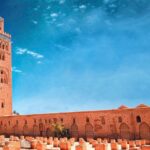
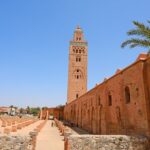
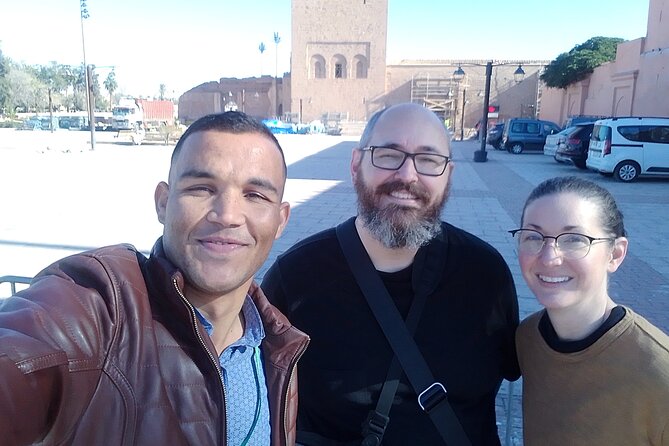
The Koutoubia Mosque stop is an outside look, not an inside visit. That still works because Koutoubia is all about the silhouette: the minaret is the thing you’ll remember—77 meters (253 feet)—and it’s a model that influenced minarets across the Maghreb and Andalusia.
You’ll spend around 30 minutes here. Timing matters: it gives you space to notice the proportions and spot how the mosque fits into the surrounding medina cityscape. It’s also a useful breathing point in the walk cycle—less time in a doorway, more time looking up and regrouping your eyes.
If you’re expecting to enter the mosque area, calibrate your expectations: this stop is described as an outside visit. Still, as a “medina skyline anchor,” it’s valuable, especially when your goal is to connect places with visual cues across the day.
Spice squares and a Berber pharmacy tea break: what to buy, and how to buy it
Marrakech’s medina smells like a map. The tour uses that fact to guide you through two key shopping-and-senses zones: Place des Épices (Rahba Kedima) and Rahba Kedima Square (spice square area), plus a Berber pharmacy visit with Moroccan mint tea.
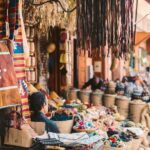
At Place des Épices, expect a sensory overload in the best way: sacks of spices like cumin and saffron, cinnamon, ras el hanout, and piles of dried herbs. You’ll also see perfumes and medicinal plants, plus everyday Moroccan products—argan oil, baskets, leather goods, and woven hats. This stop lasts about 40 minutes. It’s long enough to ask questions and learn what different spices actually get used for, not just how they look in a photo.
Then the tour returns you to the theme at Rahba Kedima, with about 30 minutes there. The setting is described as a market area with colorful stalls and cafés around the edges, so it can feel like a “pause” rather than nonstop pushing through crowds.
The Berber pharmacy stop is more than a break. You’ll get a free visit to a spices cooperative (often called a Berber pharmacy in listings) and the included Moroccan mint tea. This is where the tour can help you avoid waste. Instead of grabbing the first jar you see, you can compare what’s sold, ask how to use it, and get a reality check on what’s reasonable to pack home.
A quick note for value: you’re here to learn and shop with guidance. But you’re still shopping in a place where many items are negotiable and many sales pitches are fast. The tour’s advantage is a guided approach—your time is structured, so you don’t get trapped in a storefront that steals your whole afternoon.
Ben Youssef Madrasa: the calm courtyard you’ll wish you had more time for
The day’s “stop and exhale” moment is Medersa Ben Youssef. This historic Islamic college (once a major educational center) is now a museum, and it’s famous for architectural artistry you feel even if you don’t know the technical terms.
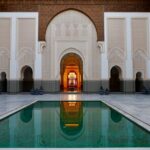
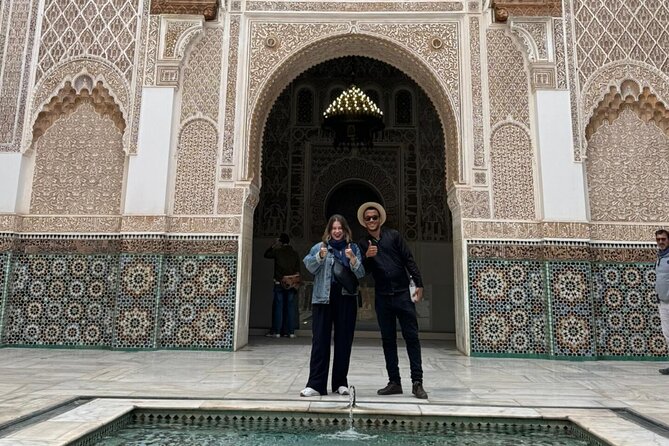
You’ll get about 1 hour here. The key images are a peaceful courtyard with a central pool, surrounded by zellij-tiled walls, carved cedar wood detailing, and stucco work. Even when the student dormitories are simple, they reinforce the idea that this place was built for study and discipline—architecture that communicates purpose.
Because it’s an interior site, it’s also more controlled than the outdoor markets. That’s a win if the rest of your day is spent in the medina’s shifting crowds.
The cost piece matters: Ben Youssef entrance is not included, listed at 5€. If you’re trying to keep the day predictable, plan for it upfront. It’s one of the best investments in time, because you’re trading a guided walk hour for a space where you can slow down and actually absorb detail.
You can also read our reviews of more city tours in Marrakech
Souk Semmarine to Jemaa el-Fna: where shopping meets street performance
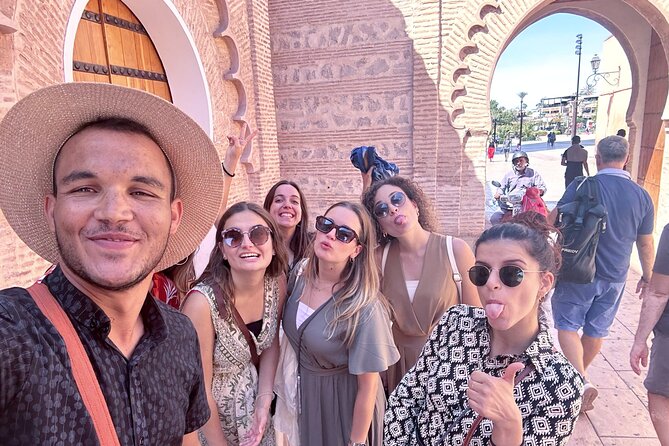
If you want the medina’s street energy, Souk Semmarine is the bridge between the calm of monuments and the spectacle of the main square. You’ll spend around 1 hour here, and the souk is described as one of the larger and more important markets—an artery of interconnected shops that starts near the Jemaa el-Fna end and twists inward.
What you’ll notice quickly is the craft focus. Souk Semmarine is known for handcrafted goods: leather bags, ceramics, textiles, lanterns, and traditional items like djellabas and babouches. There’s also jewelry, spices, and souvenirs. In other words, it’s a good place to compare prices and quality across multiple stalls without needing to know every shop name.
The tour also explicitly mentions meeting local craftsmen and artisans and doing some shopping guided. That’s where you can get more out of browsing. A guide can help you ask better questions—how something is made, what materials are used, and what’s worth buying versus what’s mostly for tourist display.
Then you land at Jemaa el-Fna, spending about 30 minutes. This is the city’s signature public square, described as a triangular space that acts like a daily crossroads for commerce and cultural performance. You can expect a mix of musical, religious, and artistic expressions, plus ongoing activity during the day and into the night.
Jemaa el-Fna is one of those places where context makes the chaos feel organized. The tour framing helps: by the time you reach the square, you’ve already learned what the city looks like in stone (gates and palaces) and in art (tiles and carvings), so the square’s street-life performance clicks into place as the living “last layer” of the medina.
The Secret Garden add-on feel: a quick reset in a restored riad
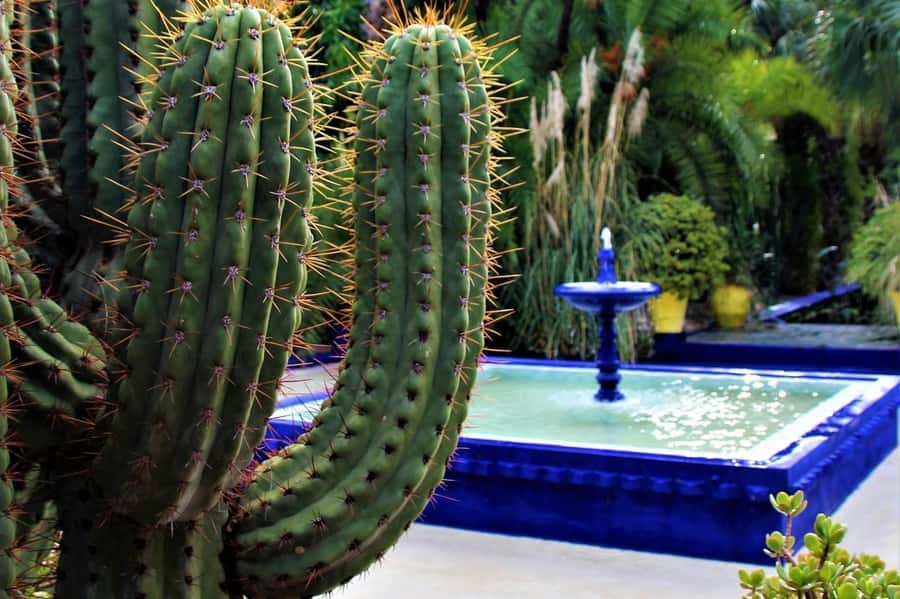
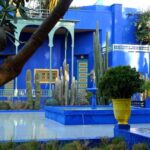
You’ll also visit Le Jardin Secret (The Secret Garden) for about 30 minutes. This is a restored traditional riad with garden paths, fountains, and shady areas—an escape from the louder streets. The garden includes historical exhibits and explanations related to ancient irrigation systems, plus panoramic views from a tower.
It’s a great counterbalance to market time because it gives you a visual reset. The walking slows. Your eyes get a break from constant signage and storefront clutter. If you’re someone who gets sensory overload, this is where the tour does you a favor.
However, the garden’s entrance is not included in the listing details (admission not included). So just like Bahia and Ben Youssef, you’ll want to factor at least a modest additional budget if you want every main stop.
Shopping with a guide: how to avoid wasting money in the medina
Most people don’t come to Marrakech just to look at buildings. They want to shop. The risk is shopping in the wrong order: buying early, buying without comparison, and spending time where you don’t need to.
This tour’s structure helps you shop in a more logical way. You start with monumental context (Bahia, then Ben Youssef), then move into the medina’s practical economy—spice squares and souks—where you’re surrounded by the products you actually care about. You also get a guided shopping tour component, which is ideal when you’re trying to avoid tourist trap vibes.
Here’s how I’d use the guided time:
- Ask what different spices are for before buying a lot. Even a quick explanation can prevent you from packing home jars you don’t know how to use.
- Compare at least a couple of stalls in the souks before deciding. A good guide helps you do this without feeling rude or lost.
- Consider the “memory factor.” A smaller, well-chosen item from a craft-focused stall often beats a big impulse purchase.
Still, remember: guided doesn’t mean guaranteed cheap. You’ll be in a market, so you’re buying value based on your taste, your packing reality, and what feels fair to you.
Price and logistics: is $51.38 good value for a 6-hour medina walk?
The listed price is $51.38 per person for a tour that runs about 6 hours. For that money, you’re getting an English official local guide, plus pickup/drop-off at your riad if it’s in the medina, and coffee and/or tea during the Berber pharmacy stop. You also get a mobile ticket, which reduces the hassle of paper confirmations.
The value question is really about entrances. Not included are:
- Ben Youssef Madrasa entrance (5€)
- Bahia Palace entrance (10€)
- Le Jardin Secret entrance (not included)
- Tips
- Food & beverages beyond included tea/coffee
So the math depends on whether you plan to pay for all the included-entry sites. If you do, the day’s true cost rises a bit—but you’re still paying for a guide-led walking route that hits multiple major attractions and multiple market experiences, not just one standalone ticketed site.
Also, the group size cap matters. A maximum of 20 travelers means the guide can keep you together without turning it into a rushed stampede. Duration also matters: six hours is long enough to cover a meaningful circuit, short enough that you can still enjoy dinner afterward instead of collapsing from exhaustion.
Who this tour suits best (and who should adjust expectations)
This tour fits best if you want an overview of Marrakech’s medina with strong structure. It’s ideal for first-timers who need help building a mental map: where the palace-to-gate transition happens, where the spice squares sit, how the souks connect, and why Jemaa el-Fna matters.
It’s also a good choice if you care about practical guidance—things like how to navigate politely, where to slow down for details, and how to handle market shopping without feeling overwhelmed.
You might consider a different format if:
- You’re not comfortable walking for an extended period on uneven medina streets.
- You expect every major stop to be an interior entry. Some parts are outside visits or require separate entrance fees.
- You’re traveling on a tight, all-in budget, because three key sites may require add-on payments.
Should you book this Marrakech Highlights Walking Tour?
Yes, if you want a guided medina circuit that mixes iconic architecture with the everyday places that make Marrakech feel like a real city, not a checklist. The combination of Saleh’s guide-led context, spice-market time with tea, and the steady pacing through Bahia, Bab Agnaou, Ben Youssef, Souk Semmarine, and Jemaa el-Fna is exactly the kind of structure that helps you enjoy Marrakech without losing hours.
Book it with the right expectations: budget separately for Bahia Palace (10€) and Ben Youssef (5€), and treat Le Jardin Secret as a paid optional-feeling reset since its admission is not included. If you do that, you’ll likely come away with both photos and understanding.
FAQ
How long is the Marrakech highlights walking tour?
The tour runs for about 6 hours.
What is the price per person?
The price is listed as $51.38 per person.
Is pickup available?
Pickup and drop-off are offered if your riad is located in the Medina.
Where does the tour start?
The meeting point is Café de France, 72 Rue des Banques, Marrakech 40000, Morocco.
Do I need to buy entrance tickets for Bahia Palace?
Yes. Bahia Palace entrance fees are not included (listed as 10€).
Do I need to buy entrance tickets for Ben Youssef Madrasa?
Yes. Ben Youssef Madrasa entrance fees are not included (listed as 5€).
Is Koutoubia Mosque visited inside?
No. Koutoubia Mosque is described as an outside visit.
Does the tour include refreshments?
Yes. Coffee and/or Moroccan mint tea are included at the Berber pharmacy stop.
Is food included?
No. Food and beverages are not included.
What’s the group size limit?
The maximum group size is 20 travelers.