REVIEW · MARRAKECH
Marrakech City Tour with Private Business Car- Private Experience
Book on Viator →Operated by Marrakech unique activities · Bookable on Viator
One loud square can teach you more than a guidebook. This private Marrakech tour strings together the city’s top UNESCO sites and palaces with a business car that keeps you moving instead of wrestling for taxis. I especially like the pace with a professional guide and the onboard Wi‑Fi that makes the day feel easy. The main drawback is simple: if the pickup is late, you lose time fast in a city that runs on tight energy.
You’ll see Marrakech’s big “I get it now” moments: Jemaa el-Fna in the middle of everything, then the quieter weight of mosques, tombs, and palace architecture. You also get a route that feels built for real viewing, with enough time at each place to actually look up, not just pass through. Still, remember entrances can add up since entrance fees are not included, so budget for tickets and keep cash handy.
If you want history plus street life without spending the day planning, this is a strong match. It’s private, so the route can be adjusted to your interests and energy level, and that can make a big difference on a long day. Just keep your expectations tied to what’s included: car, guide, and Wi‑Fi are covered, but meals and entry fees are on you.
In This Review
- Key highlights worth planning for
- How a private business car changes Marrakech pace
- Jemaa el-Fna: the heart of Marrakech before the monuments
- Koutoubia Mosque: knowing the details behind the silhouette
- Museum of Marrakesh: Berber (Imazighen) creativity you can actually see
- Bahia Palace: why this palace still feels alive
- El Badi Palace ruins: symmetry, arches, and festival energy
- Kasbah Mosque area: steam-bath history and what to watch for
- Saadian Tombs: domes, mosaics, and a garden that smells like roses
- Price value for a private tour up to 4 people
- What to expect from the guide and pacing
- When this tour is the best fit (and when it isn’t)
- Should you book this private Marrakech highlights tour?
- FAQ
- How long is the Marrakech private city tour?
- What is the meeting point and where does the tour end?
- Is pickup included?
- How much does the tour cost?
- What’s included in the price?
- What is not included?
- Are entrance tickets required at the stops?
- Is there a mobile ticket?
- Is this tour private?
Key highlights worth planning for
- Private business car with air-conditioning means less hassle and more time at the sights
- Wi‑Fi onboard helps you stay oriented and keep your plans synced
- Jemaa el-Fna first puts you in the mood of Marrakech before you hit the monuments
- Palace-and-tombs focus gives you the contrast between glamour and ruins
- Pro guide helps you understand what you’re seeing, not just where to stand
- Smaller group (up to 4) keeps the day feeling personal rather than rushed
How a private business car changes Marrakech pace
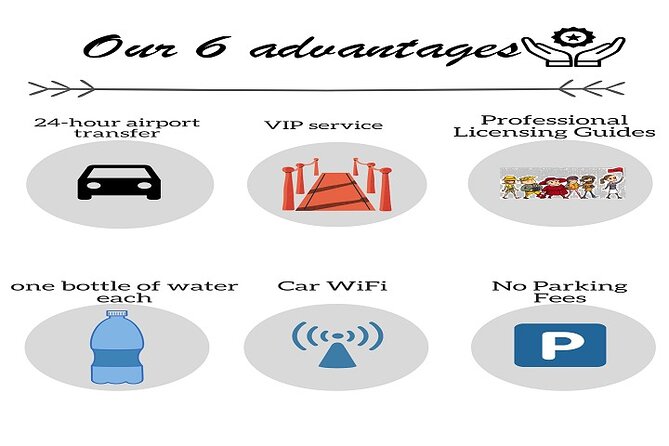
Marrakech can feel like a puzzle: medina streets, crowds, and drivers weaving through gaps you didn’t know existed. The biggest value here is the business car with air-conditioning. You spend less time negotiating logistics and more time doing the thing you paid for: looking at Marrakech.
This tour also starts at 10:00 am and ends back at the meeting point, so you don’t have to worry about finding your way across town at nightfall. Since the tour lasts about 6–7 hours, comfort matters. A car that gets you from stop to stop without long detours can save you from turning your “highlights day” into a long transit day.
Onboard Wi‑Fi is another practical perk. You can check maps, translate signs, or confirm ticket needs as you go. It’s the kind of small convenience that makes a guide-led day feel smoother.
One caution from real-world experience: if pickup timing goes sideways, the whole day shifts. The tour information says pickup is offered, so I’d treat the first message confirmation and pickup window as important. If you’re traveling with tight plans after this, build in a little buffer.
You can also read our reviews of more city tours in Marrakech

Jemaa el-Fna: the heart of Marrakech before the monuments
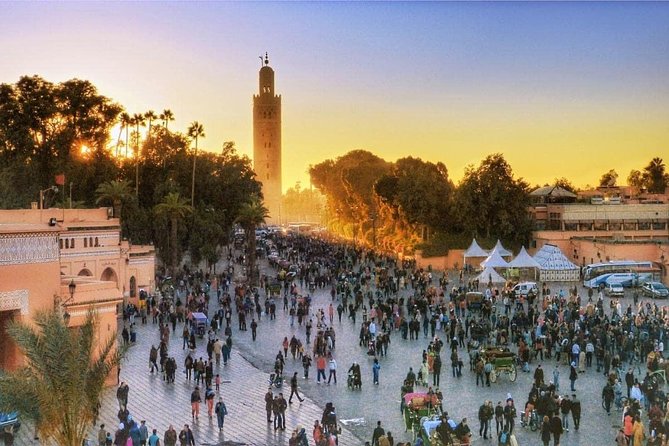
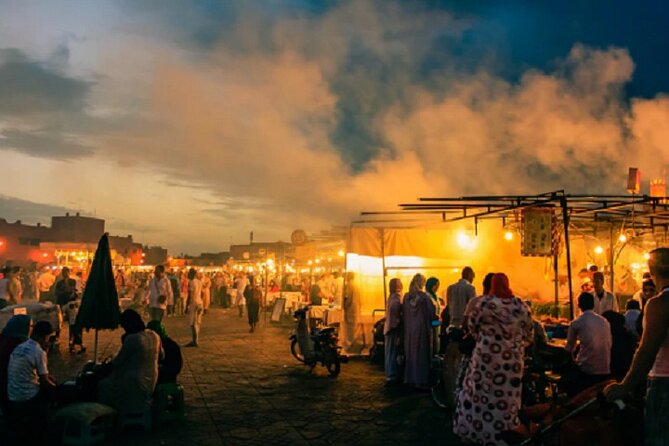
Starting at Jemaa el-Fna is smart. This square is the city’s stage, where storytellers, dancers, musicians, acrobats, water sellers, and snake charmers overlap in a constant swirl. You get a living introduction to Morocco, not a quiet museum version of it.
The tour plan keeps this stop fairly focused, around 20 minutes. That’s enough time to absorb the energy, grab a snack if you want, and understand why this is one of the most famous public squares in the region. If you want more food-time or photos-time, a private format helps because your guide can usually adjust within reason.
Tip: come prepared for sensory overload. This place moves fast. If you want the best viewing without getting trapped in crowds, watch from the edges first. Then step closer when you see a performance you actually like.
Also note: the admission ticket for this stop is listed as free. That’s good news because you’ll likely spend your cash on entrances later at palaces and other monuments.
Koutoubia Mosque: knowing the details behind the silhouette
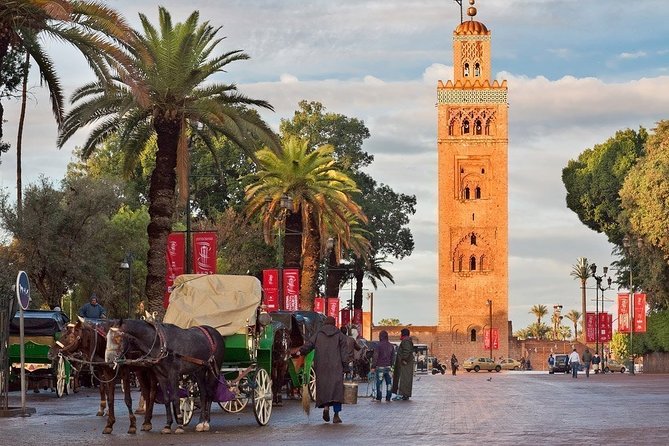
Next is Koutoubia Mosque, the large landmark most people recognize in Marrakech’s skyline. It was completed during the reign of Berber Caliph Yaqub al-Mansour (1184–1199), and the design includes curved windows and decorative arches. Even if you’re not a mosque expert, the building tells you a lot about the era.
This stop is listed at about 30 minutes. That works well because you can look at the architecture from different angles without turning it into a long pause. The tour notes also list several names for the mosque, including Jami’ al-Kutubiyah and Mosque of the Booksellers.
One practical detail: entrance is not included here. So you may want to confirm what you can access during your visit. Some areas are easier to view from outside than inside, depending on the rules and the moment.
If you like buildings that influenced other famous structures, this is a satisfying stop. The tour info mentions inspiration for places like the Giralda in Seville and the Hassan Tower in Rabat, which gives you a useful connection for your travel notes.
Museum of Marrakesh: Berber (Imazighen) creativity you can actually see
The Museum of Marrakesh brings you a different kind of story. Instead of focusing only on rulers and palaces, it’s centered on Berber culture, also known as Imazighen. The museum’s collection includes more than 600 objects, gathered from the Rif Mountains to the Sahara.
What I like about this stop is the “see it, then understand it” structure. The museum organizes exhibits across four distinct spaces, and before you enter the main rooms you get an overview plus a map showing major Berber tribes around Morocco. That setup helps you connect objects to places instead of treating them like random artifacts.
Time here is about 30 minutes, and that’s fair. It’s not a half-day museum. It’s a focused shot that helps you notice details during the rest of your Marrakech sightseeing, especially in the way homes, crafts, and regional identity show up in everyday life.
As with other stops, entrance fees are not included. Still, if you care about culture beyond monuments, this is often the part that gives your day more meaning.
Bahia Palace: why this palace still feels alive
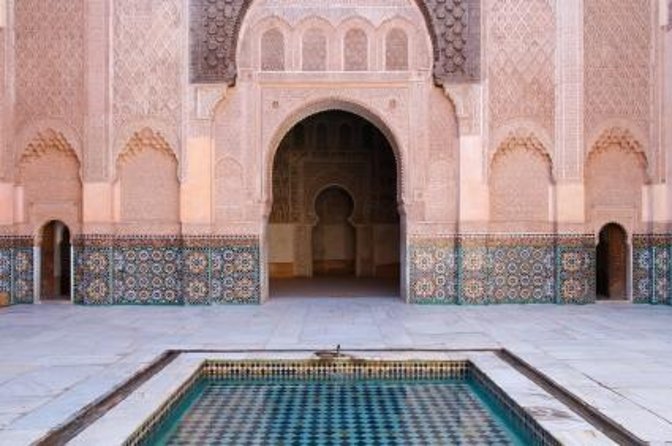
Then you move into Marrakech’s showpiece-palace style at Bahia Palace. The tour describes it as one of the best-preserved historic sites in the city, built between 1866 and 1867. It sits in the medina on about two acres, and it was planned to be the greatest palace of its time.
The visit gets about 1 hour, which is just enough time to wander and catch the architecture without feeling like you’re sprinting. What makes Bahia compelling is that it’s not only about grand rooms. The palace layout and gardens create a sense of movement, so you don’t just stare at walls—you walk through spaces that were meant to impress.
If you’re the type who likes to stop and look at ceilings, doorways, and small layout details, Bahia tends to reward that. It may not be the oldest palace in Marrakech, but it’s described as one of the most eye-catching and interesting.
Entrance is not included, so plan for tickets. Also, medina heat can creep up on you—this is one reason having air-conditioned transport between stops is such a relief.
You can also read our reviews of more private tours in Marrakech





El Badi Palace ruins: symmetry, arches, and festival energy
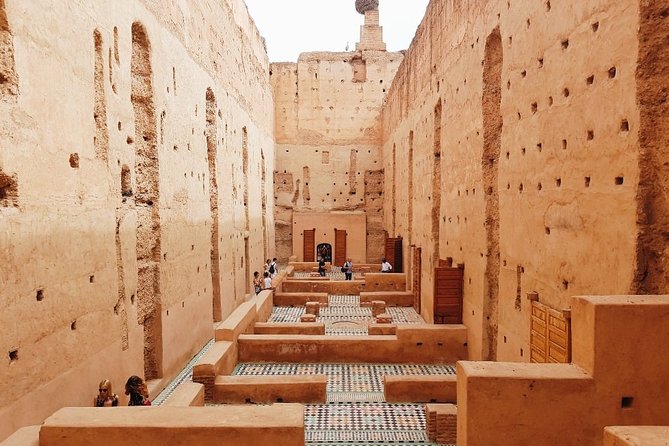
Next up is El Badi Palace, named for the idea of the incomparable. This ensemble was built at the end of the sixteenth century, and the layout relies heavily on symmetry, with structures built largely on arches and solid brickwork.
The experience here is about walking through ruins that still show their original intent. You can picture the scale of what used to happen there: lavish parties, royal gatherings, and major cultural events. Today, the place still functions as a venue, and the tour info notes that it hosts the National Festival of Popular Arts annually.
Your time here is about 1 hour. That length works because you’ll likely want photos and moments of comparison—what still stands versus what’s gone.
Practical note: the entrance fee is listed as 10 Dirham. Since entrances aren’t included overall, this is a helpful number to know. If you carry small bills, you’ll make ticket time smoother.
Kasbah Mosque area: steam-bath history and what to watch for

The tour then brings you to the Kasbah Mosque area, with a focus on a specific cultural thread: the process of heating water for traditional public steam baths, called hammams. The tour info connects this practice to Roman times, which adds a deep historical angle to something you might have only heard about in passing.
This stop is short, around 30 minutes. That means your best value is paying attention to what you’re shown, then moving on. If you’re hoping for a long hammam experience, this tour doesn’t position itself that way. Instead, it’s more like a context stop—understanding why hammams became part of public life.
Entrance is listed as not included. And like other stops, your ability to access certain areas can depend on local rules at the time you arrive.
Saadian Tombs: domes, mosaics, and a garden that smells like roses
Finally, you reach one of Marrakech’s most moving sites: the Saadian Tombs. These hold the remains of sixty members of the Saadi Dynasty, and they were used by royals from the reign of Ahmad al-Mansour (1578–1603).
What makes the tombs memorable is the setting. You don’t only walk through rooms—you move through a garden with rosemary and roses, plus palm trees providing shade. That fragrance detail matters more than it sounds. It changes the pace from frantic sightseeing to something calmer.
Inside, the decoration is described as intricate: domed ceilings, detailed wood and marble carvings, mosaics, and plasterwork. The tour info also points out the layout, including El Mansour’s domed chamber and how his son’s tombs flank it.
Time here is about 1 hour, which is ideal. You need time to look slowly, not just pass through. If you like architecture and craftsmanship, this is the stop where you’ll likely feel your attention shift into “linger mode.”
Entrance is not included, so budget for tickets. Still, the combination of garden calm plus detailed interiors tends to justify the cost for many people.
Price value for a private tour up to 4 people
The price is $388 per group, for up to 4 people. That means your effective per-person cost depends on filling the group. If you’re traveling as two, it’s $194 each; if you’re traveling as four, it’s about $97 each.
What you’re paying for is not just the route. It’s the private business car, the professional guide, and the time saved by having transport handled and stops sequenced for a full day. In Marrakech, that can be worth it because it reduces decision fatigue and cuts down on time spent negotiating your way between major sights.
Also, the tour is often booked about 25 days in advance on average. That suggests demand is real, especially during busy weeks. If your dates are fixed, booking sooner is a smart move.
What to expect from the guide and pacing
You’re not doing a self-guided checklist. This is a guided day, and the tour is designed around specific stops with dedicated time windows. That helps you avoid the common problem of wandering through a palace with no context, missing why a doorway or ceiling matters.
A guide name that shows up in this service is Jamal, described as patient and informative, and good at adjusting the itinerary to your needs and interests. Even when your schedule is fixed, that kind of flexibility is valuable because Marrakech can be unpredictable in the moment—crowds, timing, and how long you want to linger.
That said, one practical risk to remember: coordination matters. If a pickup is late or a guide doesn’t arrive right away, the schedule can wobble. Keep your confirmation messages handy and plan to be ready at the start time.
When this tour is the best fit (and when it isn’t)
This tour is a great match if you want:
- Marrakech highlights without hunting for transport between sights
- A mix of street life (Jemaa el-Fna) and big monuments (palaces, tombs)
- A private format that works for different interests, not one-size-fits-all pacing
It might not be the best fit if you’re the kind of traveler who wants to roam for hours on your own, skipping guided context. The tour is structured around major stops, and the time per stop is fairly set.
Should you book this private Marrakech highlights tour?
Book it if you value comfort and clarity. A private air-conditioned business car, onboard Wi‑Fi, and a professional guide make a big difference in Marrakech, where navigation and timing can steal your energy. The stop mix hits the essentials: the city’s living square, landmark mosque views, a Berber-culture museum, palace architecture, and tombs in a garden setting.
Don’t book it blindly if your schedule is extremely tight after 6–7 hours. While the experience can be smooth, pickup coordination is always the one variable you should watch. If you arrive early or can absorb a minor delay, this tour is a strong use of your time.
FAQ
How long is the Marrakech private city tour?
The tour duration is about 6 to 7 hours.
What is the meeting point and where does the tour end?
It starts at Jemaa el-Fna (Jamaâ El-Fna, Marrakech 40000) and ends back at the same meeting point.
Is pickup included?
Pickup is offered.
How much does the tour cost?
It costs $388.00 per group, up to 4 people.
What’s included in the price?
Included features are private transportation, an air-conditioned vehicle, onboard Wi‑Fi, and a professional guide.
What is not included?
Entrance fees and lunch are not included, along with personal expenses.
Are entrance tickets required at the stops?
Some stops list admission as free, while others list admission as not included. Entrance fees may apply at multiple sights.
Is there a mobile ticket?
Yes, you get a mobile ticket.
Is this tour private?
Yes. It’s a private experience, and only your group participates.