REVIEW · MARRAKECH
Marrakech City Tour a walking adventure
Book on Viator →Operated by Marrakech City Tours · Bookable on Viator
Your first steps in Marrakech should be guided.
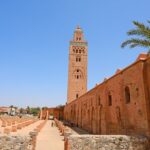
This walking adventure strings together major medina sights in a smart route, starting by the 12th-century Koutoubia Mosque and rolling into the Jewish quarter and the palace area. I especially like how it’s designed to be authentic and productive, with a licensed guide who adds stories as you walk.
The other big win is the pacing and variety. You’ll get a look at handcrafts and local food in the Souk Semmarine stretch, plus a slow, explained approach to landmarks like Bahia Palace, Ben Youssef, and the square at Jemaa el-Fna. It also runs in a small group (max 15), which keeps questions from turning into shouting matches.
One consideration: two of the stops have entrances that cost extra. Bahia Palace (100 MAD) and Ben Youssef Madrasa (50 MAD) aren’t included, so plan a bit of extra cash if you want to go inside those full sites.
In This Review
- Key things I’d flag before you go
- The smartest way to start Marrakech: a 4-hour medina walk
- Meeting Point and the route flow through the old city
- Stop 1: Koutoubia Mosque area, plus a quick orientation (30 minutes)
- Passing through the Kasbah Mosque neighborhood on the way to Bahia Palace
- Stop 2: Mellah, the Jewish neighborhood square (20 minutes)
- Stop 3: Bahia Palace for the interiors—what you’re really paying for (50 minutes)
- Stop 4: Souk Semmarine, artisans and local food market (45 minutes)
- Stop 5: Medersa Ben Youssef, a 14th-century school with over 100 rooms (30 minutes)
- Stop 6: Jemaa el-Fna, UNESCO square and street performers (25 minutes)
- What the guide experience really means (from real-world praise)
- Group size, timing, and comfort in the medina
- Price and value: $26 plus the two optional entrances
- Who this walking tour suits best
- Quick tips to get the most from the day
- Should you book this Marrakech walking tour?
- FAQ
- FAQ
- How long is the Marrakech City Tour?
- What is the price per person?
- Where does the tour start and end?
- Is the entrance fee included for Bahia Palace and Ben Youssef?
- Which parts of the tour are free in terms of admission?
- How large is the group?
- Can I cancel for a full refund?
Key things I’d flag before you go
- Small group size (max 15) helps the guide keep the pace friendly and questions answered
- Licensed guide in your language means you’re not just looking at sights, you’re learning them
- Big medina highlights in 4 hours without long detours
- Souk Semmarine plus local market feel gives you a hands-on taste of everyday Marrakech
- Jemaa el-Fna explained as a UNESCO site along with classic performers like snake charmers and monkeys
- Entrance fees for Bahia Palace and Ben Youssef mean you should budget extra if you want interiors
The smartest way to start Marrakech: a 4-hour medina walk
A lot of Marrakech tours try to do everything at once. This one feels more like a plan: walk a line through the old city, stop long enough to actually absorb what you’re seeing, and finish where the energy is the highest—Jemaa el-Fna.
At about 4 hours, you’re not stuck all day in the medina, but you still hit the major neighborhoods and monuments. That balance matters if you want to keep the rest of your itinerary flexible for later—like shopping at your own pace or grabbing dinner nearby.
Also, the format is practical. It uses a mobile ticket, and it’s capped at 15 travelers, so it’s less chaotic than the giant bus-to-bus style tours.
You can also read our reviews of more walking tours in Marrakech
Meeting Point and the route flow through the old city
The tour starts at Koutoubia, Marrakesh 40000 and ends in the main square Jemaa el-Fna. That end point is a gift: after a few hours of walking and learning, you land right where you can keep exploring on your own.
The route is built around proximity inside the medina zone. You’re not bouncing far away to distant neighborhoods, and the sequence is logical: mosque views first, then neighborhood history (Mellah), then palace and school interiors (with optional-paid entrances), and finally the square with street performances and constant motion.
This also affects your comfort level. Instead of long backtracks, you’re moving forward most of the time, with short, intentional stops.
Stop 1: Koutoubia Mosque area, plus a quick orientation (30 minutes)
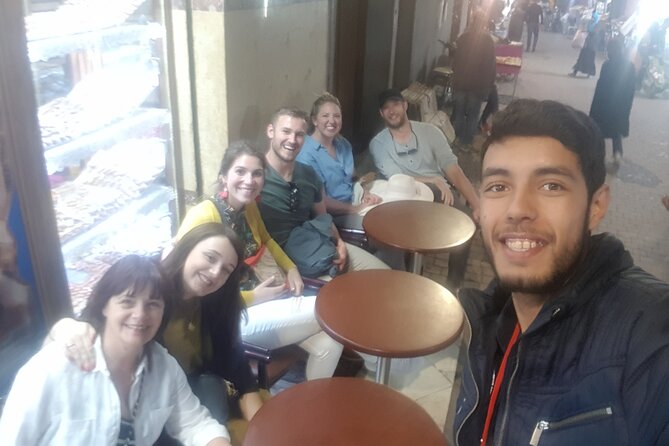
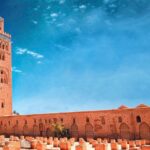
Your first major landmark is the Koutoubia Mosque area, with a stop next to the mosque that dates back to the 12th century. This is a strong start because it gives you immediate context: Marrakech’s medina isn’t just a maze of shops—it’s built around historic religious architecture and neighborhood life.
The stop is about 30 minutes, and the focus is storytelling. You’ll get information and stories about the landmark right there in the street-level setting, which helps you understand what you’re looking at before you move deeper into the medina.
Practical note: since this is an exterior-style introduction near a major landmark, it’s a good beginning even if you’re unsure you want to commit to long museum-style visits right away.
Passing through the Kasbah Mosque neighborhood on the way to Bahia Palace
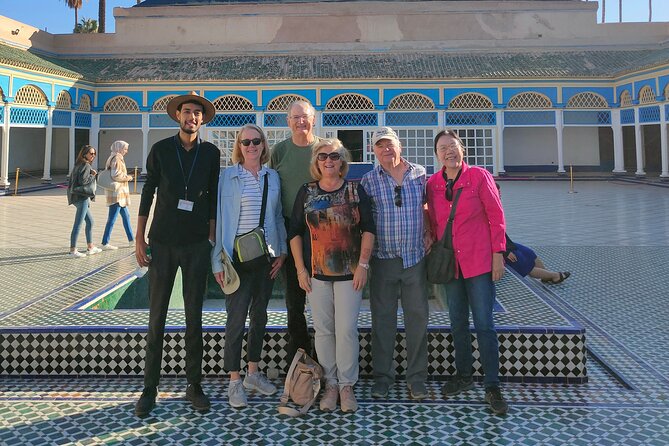
On the way to the next big highlight, you’ll walk by the Kasbah Mosque, described as a historical building dating back to the 12th century and located in the Kasbah neighborhood. It’s not listed as a big standalone stop, but this “on the way” viewing is useful.
Why it matters: Marrakech changes block by block. Seeing another historic mosque along your route keeps you grounded in the real geography of the city, not just a checklist of major attractions.
Stop 2: Mellah, the Jewish neighborhood square (20 minutes)
Next comes Mellah, the historic Jewish neighborhood. You’ll have a stop in the main square in Mellah, where the guide shares facts and stories about the Jewish community in Marrakech and Morocco.
This is one of the tour’s most meaningful sections because it adds social history, not just architecture. You’re also getting a sense of how different communities shaped the old city’s layout and identity.
The stop is about 20 minutes, so it doesn’t become heavy or drawn out. Instead, it gives you a pointed snapshot that you can build on later with independent reading or follow-up museum visits if you want.
You can also read our reviews of more city tours in Marrakech


Stop 3: Bahia Palace for the interiors—what you’re really paying for (50 minutes)
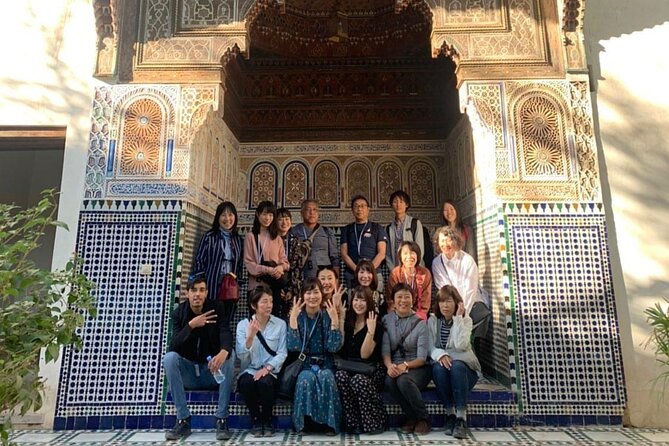
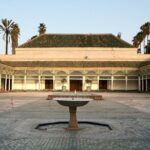
Bahia Palace is the first big paid entrance on your route. The tour includes about 50 minutes here, but the entrance fee is not included (listed at 100 MAD).
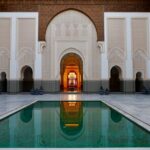
What makes this stop valuable is that it’s not treated like a quick photo stop. Bahia Palace is framed as one of Marrakech’s most beautiful historical monuments, and the guide’s role is to explain the palace’s story. When you understand who built it and why certain spaces were designed the way they were, the details start to click.
The trade-off is obvious: you need to budget extra if you want the full experience inside. If you prefer to keep costs down, you still get the general palace area from the tour flow, but the real payoff depends on entering.
Stop 4: Souk Semmarine, artisans and local food market (45 minutes)
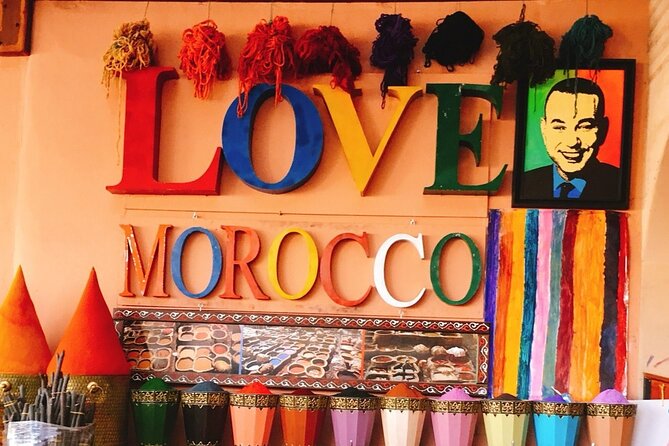
Then you move into the market zone at Souk Semmarine. This stop is about 45 minutes and is described as taking you through the souks in the old Medina, with a chance to see artisans and a local food market.
Here’s the thing I like about mixing this with the historic monuments: it prevents the tour from becoming only “architecture sightseeing.” Markets are where Marrakech feels like a living city.
A practical tip: in a souk area, your senses get hit fast—smells, sounds, bargaining energy, crowds. Having a guide helps you move through with less stress, and it keeps your focus on what to notice (materials, work styles, everyday goods) instead of getting stuck in decision overload.
Stop 5: Medersa Ben Youssef, a 14th-century school with over 100 rooms (30 minutes)
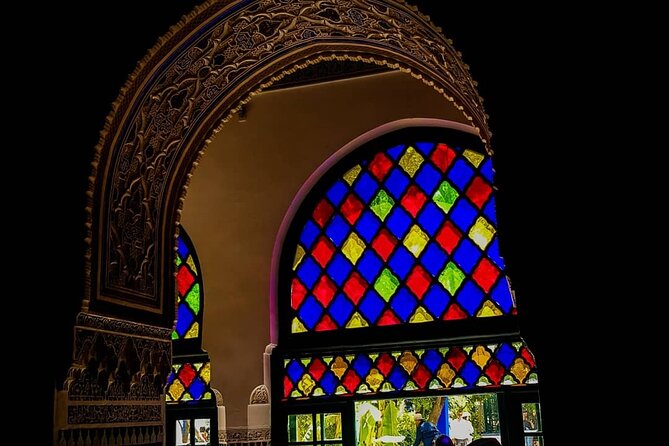
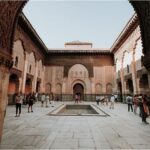
Next is Medersa Ben Youssef, a 14th-century school (medrasa). The key detail here is scale: it’s described as having more than 100 rooms, plus a mosque and a fountain in the middle.
The time for this stop is about 30 minutes, and the entrance fee is not included (50 MAD). This is one of those places where the interior design matters, because the fountain and central courtyard layout shape the space and the sound of the building.
The drawback: 30 minutes can feel short if you love architecture details. If you’re the type who wants to linger, keep in mind the tour time is fixed, so you may want to return later on your own if you want more wandering time.
Stop 6: Jemaa el-Fna, UNESCO square and street performers (25 minutes)
Finally, you reach Jemaa el-Fna, with about 25 minutes at the square. Before you’re fully in the crowd, the route includes a 10-minute walk through the market, with a note about discovering the community oven (if open).
Then you cross the busiest part of the square, where you can see classic sights like snake charmers and monkeys. The guide also shares context about Jemaa el-Fna as a UNESCO site.
Why this ending works: after quieter stops like Mellah, Bahia Palace, and Ben Youssef, Jemaa el-Fna is pure intensity. It’s the spot where Marrakech’s street life is most visible, and ending here lets you transition naturally into your evening plans.
Also, finishing at Jemaa el-Fna gives you immediate options: street food, photos, people-watching, and easy connection to other parts of your day.
What the guide experience really means (from real-world praise)
This tour leans hard on the guide. It’s run with a licensed guide who speaks your language, and the difference shows in the way stops are framed: stories, explanations, and answers rather than just directions.
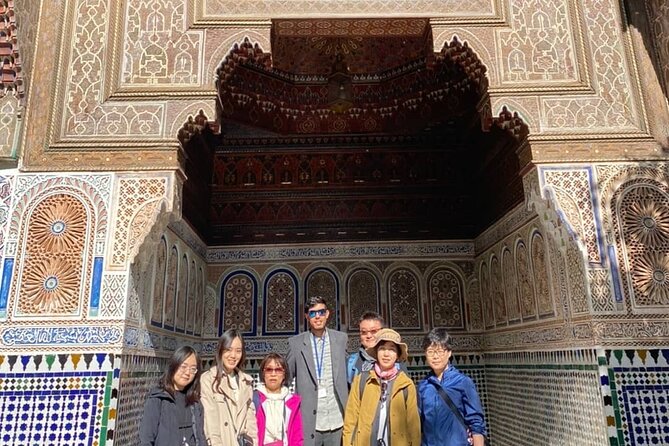
In the reviews, the guide Said gets repeated praise for being both punctual and easy to spot, with a tall, distinctive presence that helps you find the group quickly. He’s also described as passionate and answers all questions, which is a big deal on walking tours where curiosity pops up constantly—about religion, neighborhoods, markets, and what you’re actually looking at.
I like that approach because it keeps you from feeling like you’re paying for motion. You’re paying for meaning.
Group size, timing, and comfort in the medina
With a maximum of 15 travelers, you’re likely to get a more human pace than you would with huge tours. That affects comfort in real terms: fewer bottlenecks in narrow lanes, more time to re-group, and easier listening when the medina gets loud.
Timing is built in. Koutoubia is 30 minutes, Mellah 20, Bahia 50, Souk 45, Ben Youssef 30, and Jemaa el-Fna 25, plus the walking segments that connect them. Over 4 hours, that’s a steady flow without endless standstill.
Still, the medina is the medina. Expect uneven sidewalks and crowd pressure at popular sights. If you get tired, plan your own breaks after the tour ends at Jemaa el-Fna, where you can sit and reset.
Price and value: $26 plus the two optional entrances
At $26 per person, the value depends on what you do with the paid sites. Bahia Palace (100 MAD) and Ben Youssef Madrasa (50 MAD) aren’t included, so if you want both interiors, you should budget extra on top of the base price.
That said, the base tour still covers a lot: multiple major districts, a souk experience, and a guided finish at Jemaa el-Fna. If you’re the type who learns best with context, the guide time is a key part of what you’re buying, and the itinerary is built to keep that learning concentrated.
My practical advice: decide your “inside priorities” before you go. If Bahia and Ben Youssef are must-sees for you, plan to pay both entrances. If you’re trying to keep costs down, you can still enjoy many parts of the route, but the full monuments are where the paid time becomes worth it.
Who this walking tour suits best
This Marrakech City Tour is a good match if you want:
- A first-day or early-trip medina orientation
- A walking plan that connects multiple neighborhoods and monuments
- A guide-led approach to history and daily life in the old city
- An ending point at Jemaa el-Fna so you can continue your evening easily
It’s especially useful if you’re unsure how to structure your time. Instead of spending hours figuring out what’s close to what, you follow a route that’s already stitched together.
Quick tips to get the most from the day
Wear shoes you trust. You’ll be moving through the medina and around major sights for about four hours.
Bring cash for entrances you choose to pay: 100 MAD for Bahia Palace and 50 MAD for Ben Youssef are listed in the tour details.
Keep your camera ready, but don’t let photos replace listening. The tour’s value is in the stories the guide shares at each stop.
Should you book this Marrakech walking tour?
If you want an efficient, guide-led way to understand Marrakech beyond surface photos, I think this is a smart book. The route hits mosque landmarks, Mellah, Bahia Palace, Souk Semmarine, Ben Youssef, and Jemaa el-Fna in one coherent walk, and the guide-focused format is where it pays off.
I’d lean toward booking if you’re happy to pay the two extra entrances for Bahia and Ben Youssef and you’re comfortable with walking in the medina. If you’re trying to keep things very low-cost, then make sure you’re okay with prioritizing what you enter, because those fees are the main extra variable.
FAQ
FAQ
How long is the Marrakech City Tour?
The tour lasts about 4 hours.
What is the price per person?
It costs $26.00 per person.
Where does the tour start and end?
It starts at Koutoubia, Marrakesh 40000, Morocco, and ends in the main square, Jamaa el-Fna, Marrakech 40000, Morocco.
Is the entrance fee included for Bahia Palace and Ben Youssef?
No. Bahia Palace entrance is listed at 100 MAD and Ben Youssef Madrasa entrance is listed at 50 MAD, and both are not included.
Which parts of the tour are free in terms of admission?
The Koutoubia Mosque area stop, the Mellah stop, and the Souk Semmarine and Jemaa el-Fna portions are listed as free for admission.
How large is the group?
The tour has a maximum of 15 travelers.
Can I cancel for a full refund?
Yes. You can cancel up to 24 hours in advance for a full refund. If you cancel less than 24 hours before the start time, the amount you paid will not be refunded.