REVIEW · ERFOUD
Marrakech: 4-Days Luxury Desert Tour to Fes via Merzouga
Book on GetYourGuide →Operated by Desert Life Tours · Bookable on GetYourGuide
The Sahara changes the whole feel of Morocco. On this 4-day Marrakech to Fes route, I like how you get Ait Benhaddou Kasbah with local guidance and then shift into Erg Chebbi dunes for a proper camel-and-camp night; it is the kind of contrast that makes the trip memorable. One drawback to plan for: the final push to Fes can be a long drive.
This is a structured small-group tour (up to 17) with hotel pickup and drop-off, plus a live guide in English or French. You spend your time walking famous sites, rolling through valleys, and switching from road-travel mode to desert-mode with minimal stress. If you hate long days of sitting in the van, this may feel packed even though the stops break it up.
In This Review
- Key things that make this tour worth your time
- Marrakech to the Atlas: Ait Benhaddou first, then Dades Gorge
- Ait Benhaddou Kasbah: what you should actually look for
- Dades to Merzouga: Todra Gorges, Tinghir palms, then Erfoud fossils
- Todra Gorges and Tinghir palm grove
- Erfoud and the black marble fossils
- Camel ride to the sunset camp
- Overnight desert camp: comfort level and what to expect at night
- Merzouga at dawn: sunrise, Berber breakfast, and a longer desert day
- Nomads and desert life on the ground
- Optional quad biking and sandboarding
- Gnaoua village visit
- From Merzouga to Fes: Ziz Valley, Cedar Forest, and Ifran pacing
- Price and value: what $345 buys you (and what it does not)
- Who this tour suits best
- A few smart packing and planning notes
- Should you book this Marrakech to Fes luxury desert tour?
- FAQ
- Is this tour from Marrakech to Fes in 4 days?
- What’s included in the price?
- Are lunches included?
- Do you visit Ait Benhaddou Kasbah and the Todra Gorges?
- Is quad biking included?
- What languages are guides offered in?
- What is the cancellation policy?
Key things that make this tour worth your time
- UNESCO Ait Benhaddou Kasbah stop with about 1.5 hours for a guided visit
- Todra Gorges + Tinghir palm grove walk, including how the river water feeds the canals
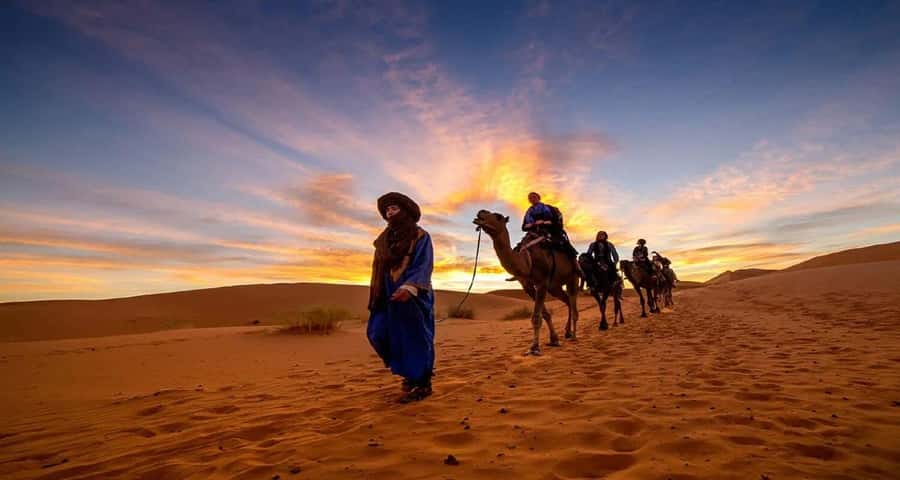
- Erg Chebbi camel sunset and an overnight desert camp in nomadic private tents (standard or luxury)
- A second desert-focused day at Merzouga with sunrise, desert exploration, and optional extras
- Ziz Valley, cedar forest, and Ifran on the way to Fes, so day 4 is more than driving
Marrakech to the Atlas: Ait Benhaddou first, then Dades Gorge
Day 1 is all about changing gears. You start with pickup from your hotel (or the nearest meeting point) in Marrakech, then head east toward the High Atlas Mountains. Along the way, you get small breaks for photos, stretching your legs, and coffee, which matters when you are in a long-distance van.
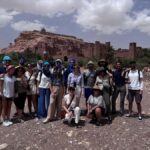
The big moment on this day is the Tizi Ntichka pass crossing, a famous high-altitude road that gives you that Morocco-from-above feeling. Then you arrive at Ait Benhaddou Kasbah, a UNESCO site that you do not just drive past. Plan on roughly 1.5 hours exploring with a local guide, and this is where you really see why movies and travel stories keep coming back to this place. You get a lunch break after the kasbah visit, then continue toward Tinghir and the Dades area.
Why this order works: it front-loads the most iconic fortified village before you get tired. By the time you reach Dades Gorge late in the afternoon, you can switch into “relax and reset” mode with dinner and an overnight stay.
A practical tip: keep a layer handy. Mountain air can feel cooler than you expect, especially after you leave the heat of the city.
A few more Erfoud tours and experiences worth a look
Ait Benhaddou Kasbah: what you should actually look for
A lot of people treat Ait Benhaddou like a photo stop. I think it is more rewarding when you slow down and notice the details the guide points out. You are walking a fortified kasbah complex, and the structure tells you how life was organized—where people lived, how communities defended themselves, and how the site fits the surrounding terrain.
The guide time is also your shortcut. Instead of trying to puzzle it all out alone, you get context while you are still in the place that makes the context matter.
If you are the kind of traveler who likes history but also wants atmosphere, Ait Benhaddou hits both. The location shows up in famous films, but what makes it special is the living-feel of the buildings: thick walls, tight lanes, and a sense of scale you only notice once you are inside.
Dades to Merzouga: Todra Gorges, Tinghir palms, then Erfoud fossils
Day 2 is a classic Morocco route day: cliffs, water, palms, fossils, then sand. After breakfast in your hotel, you travel east toward Merzouga.
Todra Gorges and Tinghir palm grove
You start with the Todra Gorges walking time. This is not about one single viewpoint; it is about how the canyon walls shape your sense of space as you move through. The gorges also help break up the driving day with real legs and real air.
Then comes Tinghir’s palm grove, about 30 km long. This is the lush counterpoint to the dry-sand feeling you will have later. You also get a helpful explanation of where the water goes: springs in the source area feed the river, and the water is distributed along the palm grove through canals. That detail gives the landscape meaning, so you are not just seeing palms—you are understanding how people make them work.
Erfoud and the black marble fossils
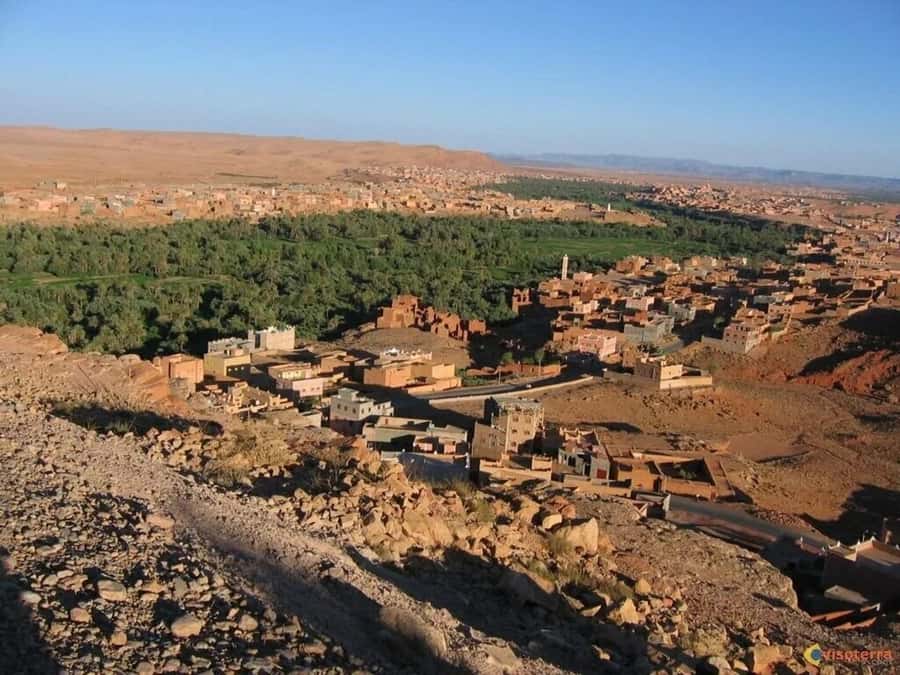
As you continue toward Tafilalet (a historical caravan meeting point), you stop in Erfoud, known for goniatite quarries—fossilized black marble. Even if fossils are not your main obsession, the contrast is striking. You go from mountain gorges and palm irrigation logic to something very physical and ancient: stone that tells a deep-time story.
After lunch at a local restaurant, you push onward to the dunes.
Camel ride to the sunset camp
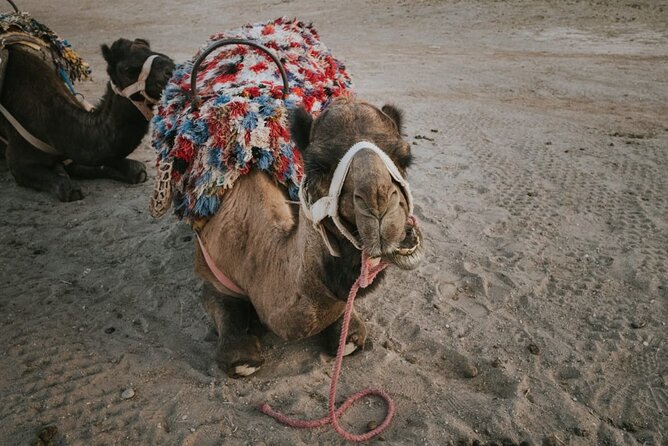
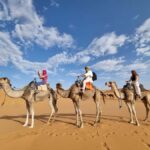
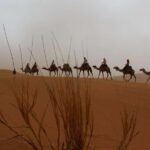
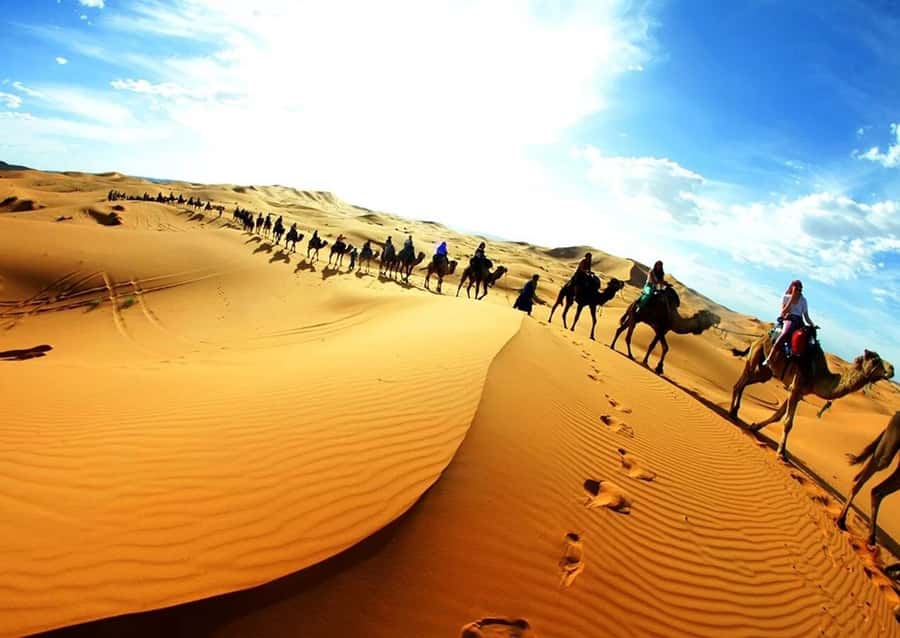
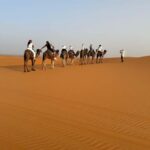
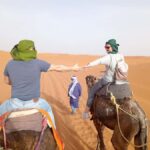
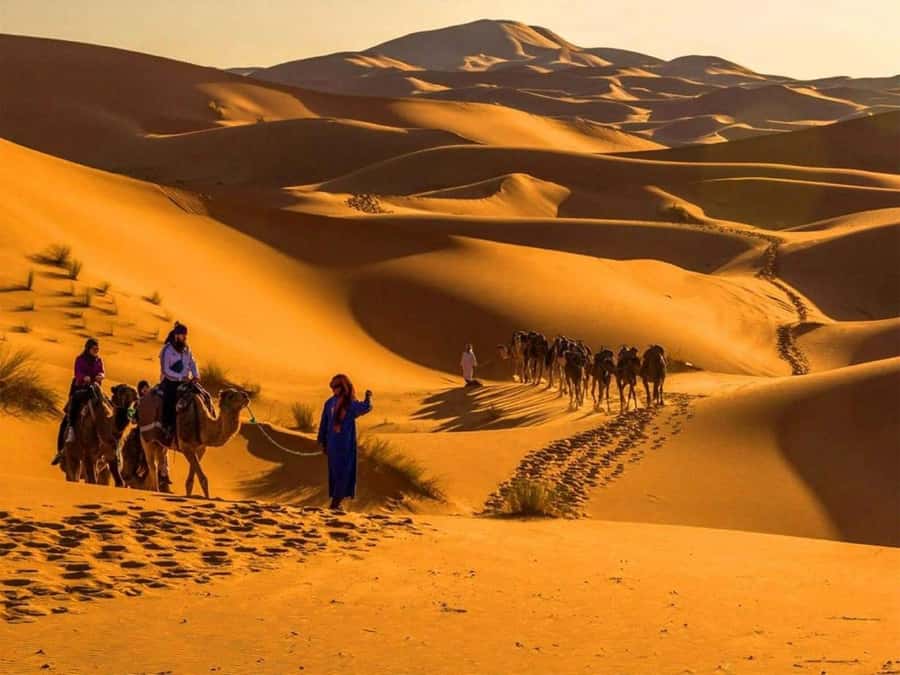
By the time you reach the desert area, the pace shifts. You ride camels for sunset over the dunes, then settle into your overnight desert camp with private tents. This is one of those moments where the tour structure actually helps: you are not figuring out timing, gear, or logistics. You are just arriving, watching light change on sand, and easing into a different rhythm.
Overnight desert camp: comfort level and what to expect at night
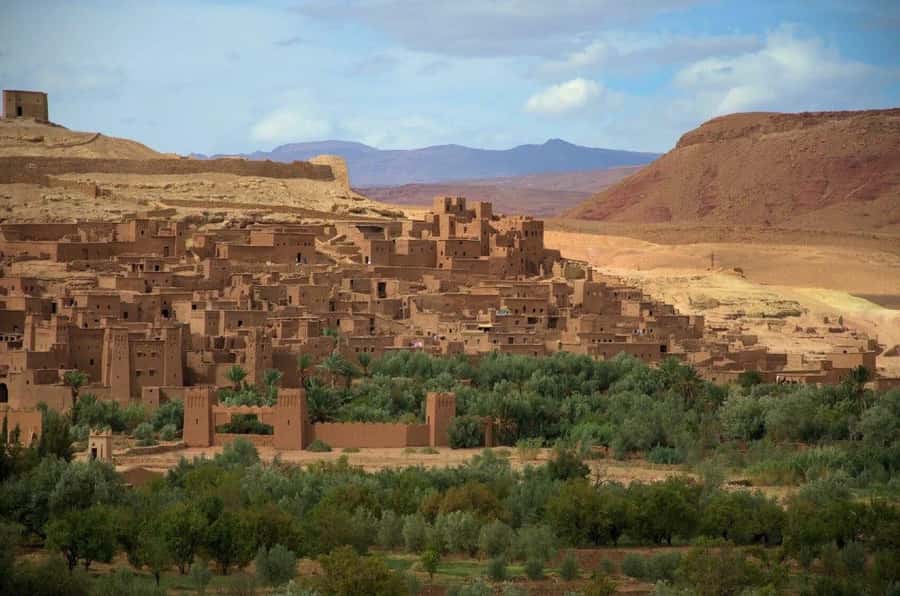
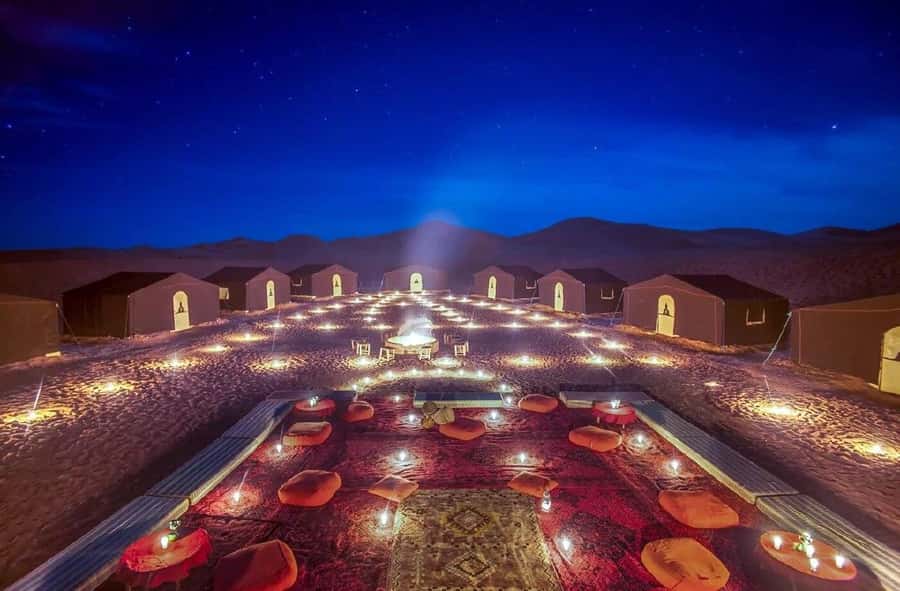
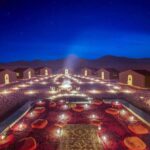
Your desert camp stay is included, with two options depending on what you select: standard or luxury tents. In practice, this means you are choosing how much comfort you want in your “middle of nowhere” night.
What I would plan for emotionally: the desert night is not like a city hotel night. It is quieter, colder after dark, and full of small sensory details—night sounds, stars, and that feeling of being away from everything. In recent experiences with this kind of camp setup, people often point to warm hospitality, tea on arrival, and a sense of celebration with dinner and music under the sky.
You should also know the camp is part of the experience, not just a bed stop. Dinner and the evening atmosphere are built into the schedule, so try not to treat the night as something to get through.
Pack suggestion: bring a scarf or light hat. Even if your day is warm, desert nights can surprise you.
Merzouga at dawn: sunrise, Berber breakfast, and a longer desert day
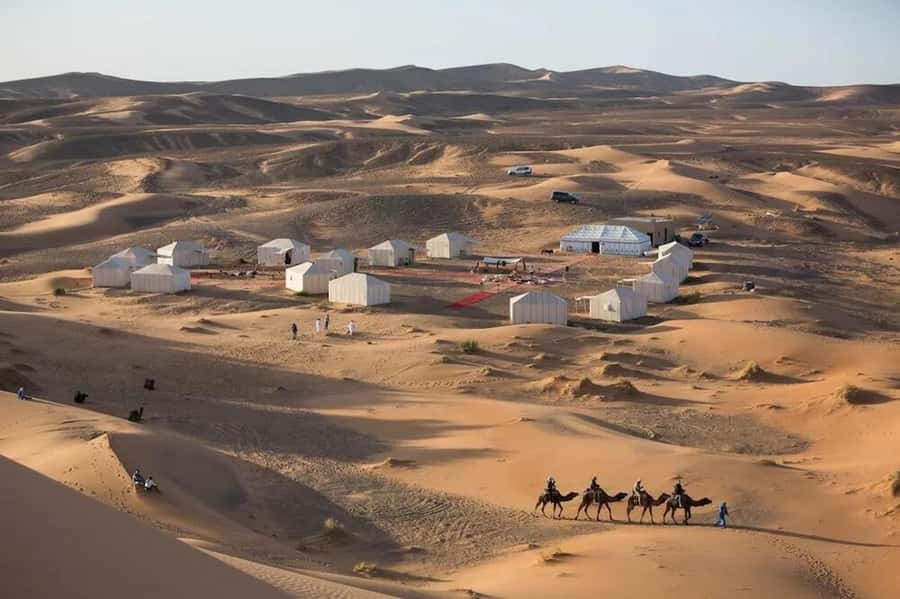
Day 3 is the reason this tour feels more substantial than the one-night desert options. You wake up early for sunrise over the dunes. The timing matters. Sunrise gives you a softer light and a quieter feel than late-day visits, and it is when the dunes show their shape best.
You also start with a typical breakfast in a Berber tent, then ride camels back to Merzouga village for the next round of desert exploration. There is something satisfying about shifting from dunes to village life mid-trip—it keeps the day from feeling like a single long photo chase.
Nomads and desert life on the ground
Then you get out into the desert with a focus on learning. The tour includes a visit to nomads and an introduction to their day-to-day life in the Sahara setting. If you choose the luxury option, the schedule includes a nomad tour by 4×4. Either way, the key value is that you are not just looking at sand; you are meeting people and seeing how tradition connects to the environment.
Optional quad biking and sandboarding
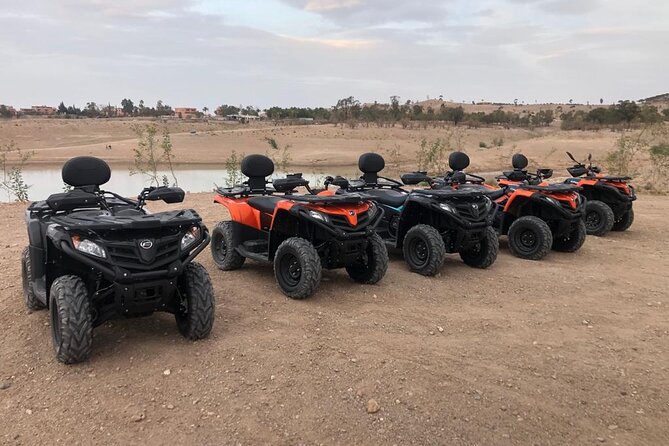
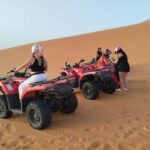
There are optional extras here, and they are worth considering if you want more “active desert” time. Quad biking to ride the dunes is offered as an add-on. Later in the day, you can do sandboarding, or you can keep it low-key at your hotel and use the swimming pool.
This balance is practical. You can be adventurous without forcing every minute to be intense.
Gnaoua village visit
The day also includes a visit to a Gnaoua village. The tour description frames it as a community originally from the sub-Saharan region. This is a cultural stop that works well after your desert time because it shifts you from nature to people—music, identity, and tradition.
From Merzouga to Fes: Ziz Valley, Cedar Forest, and Ifran pacing
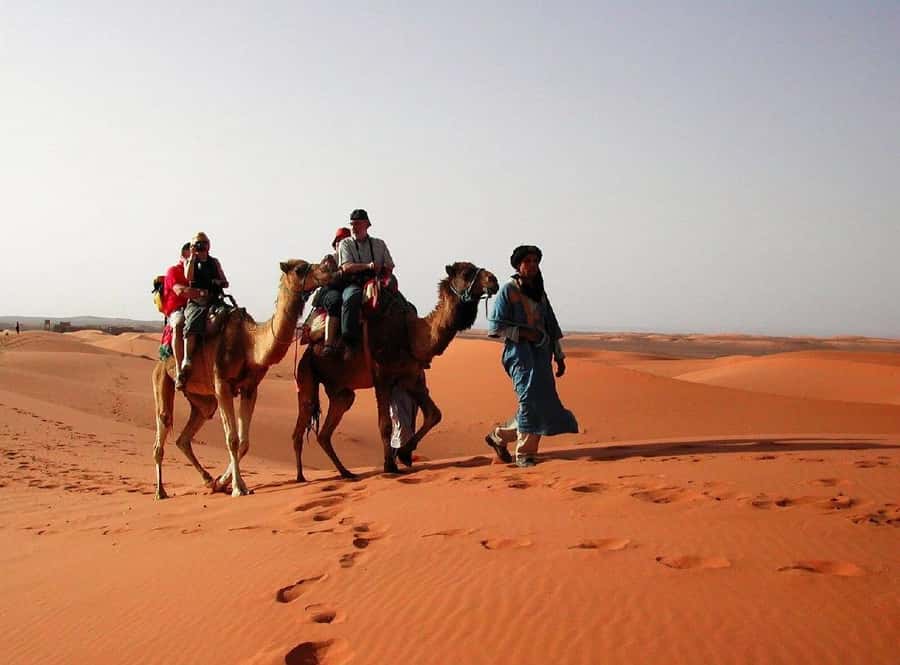
Day 4 is the long day—so this is where you want to manage expectations. After breakfast, you start driving toward Fes via Errachidia and Erfoud, then continue through Imouzar Kander.
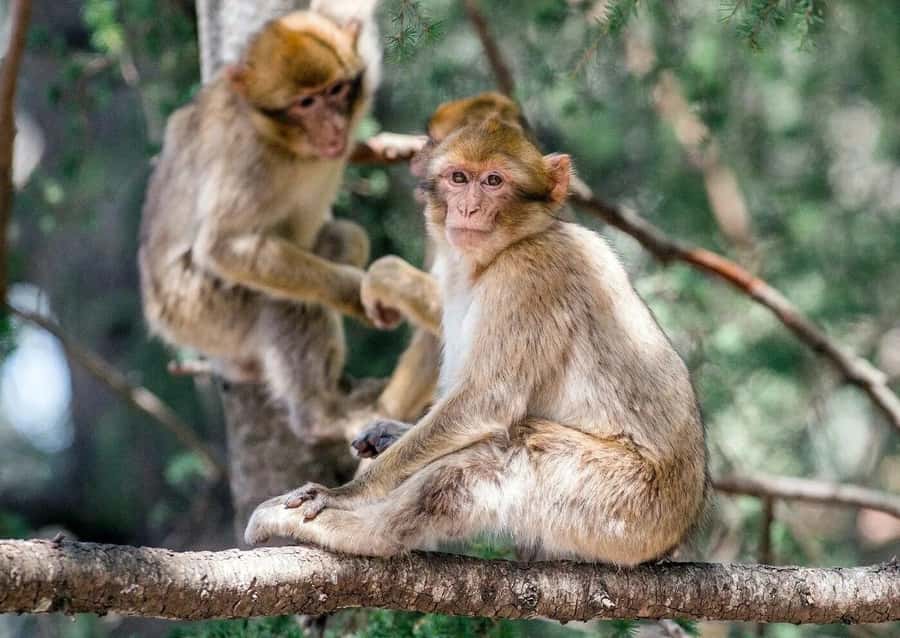
On this stretch, the tour highlights stops that make the drive feel like an actual route, not just transit: Ziz Valley, cedar forest, and the city of Ifran. Ifran is known for its distinct look compared with the rest of Morocco, and the cedar forest area is often associated with small wildlife you might spot around the trees. The point is simple: you get a change of scenery before you reach Fes.
Still, I would plan for fatigue. One recent experience noted the drive can feel around 8 hours more or less, even with breaks. The good news is that the route includes stops along the way and a guide who can explain what you are seeing, especially if your day’s driver and guide are strong in English.
You arrive in Fes in the afternoon and get dropped off at your riad or hotel, which is a nice end after a busy few days.
Price and value: what $345 buys you (and what it does not)
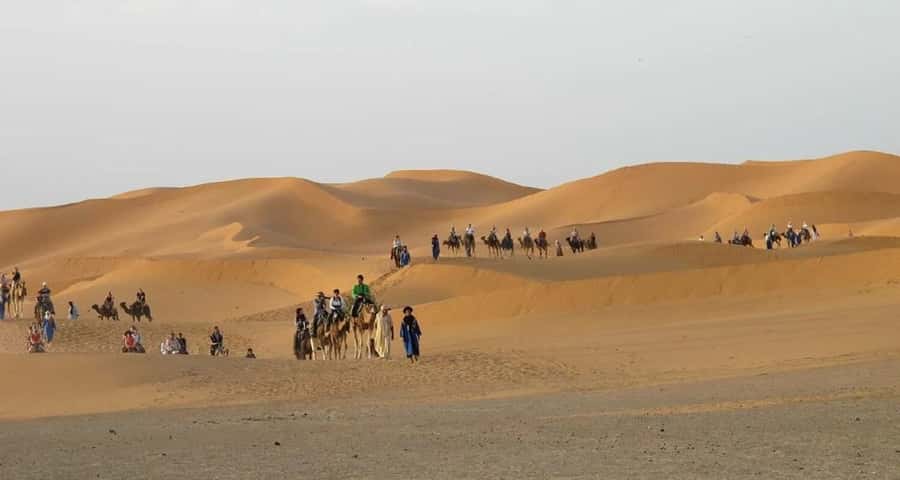
At around $345 per person for 4 days, this tour can be good value because it stacks several things that are usually sold separately: a guided UNESCO kasbah visit, gorge walks, palm grove time, a camel sunset ride, a full night in a desert camp, and another sunrise-centered desert day before driving into Fes.
Here is what makes it feel like a package instead of a bunch of separate bookings:
- Most of your major transfers are handled for you with pickup and drop-off
- Key experiences are scheduled: Ait Benhaddou, Todra, dunes sunset, camp overnight, sunrise, and the route stops toward Fes
- Food coverage includes 3 breakfasts and dinners (but not lunches)
The trade-off: lunches are not included, and personal expenses are on you. You should also remember that your comfort level depends on your camp option (standard vs luxury). If you want the most comfort possible in the desert night, choose the luxury tent option.
If you compare against DIY planning, this price starts to make sense. The big cost of planning is time and stress—especially when you are coordinating desert timing and getting from Marrakech to Merzouga and then back to Fes.
Who this tour suits best
I think this fits you best if you:
- Want a structured Marrakech to Fes desert route without juggling transport between stops
- Like guided context at major sites like Ait Benhaddou
- Want more than a quick dune photo: you get sunrise and a second desert day at Merzouga
- Prefer small-group travel (max 17) and live guide support
It may be less ideal if you:
- Hate long driving days (especially day 4)
- Expect every driver to speak very fluent English throughout. The tour runs with English or French live guidance, but real-world communication can vary depending on who is behind the wheel early in the trip.
A few smart packing and planning notes
These are the practical things that make the trip smoother with the route you are taking:
- Bring a warm layer for desert mornings and nights. Nights can get chilly.
- Wear shoes that handle walking in gorges.
- Plan for optional activities: quad biking can add cost, and sandboarding is available if you want it.
- If you care about lunch budgeting, set aside money for meals since lunches are not included.
Should you book this Marrakech to Fes luxury desert tour?
I would book it if you want a Morocco itinerary that feels like a journey, not a checklist. The combination of Ait Benhaddou, canyon-and-palm walking (Todra and Tinghir), and a properly timed Erg Chebbi experience (sunset camels plus sunrise camp day) is a solid blend of culture and desert life.
Book with extra care if you are sensitive to long road time or if you are counting on very consistent English from every driver segment. If you are flexible and willing to take breaks as part of the rhythm, this tour has the structure that helps you enjoy the good stuff more than you stress about logistics.
FAQ
Is this tour from Marrakech to Fes in 4 days?
Yes. It is a 4-day Marrakech to Fes desert tour via Merzouga, with pickup from your hotel or the nearest meeting point in Marrakech and drop-off in Fes at your riad or hotel.
What’s included in the price?
The tour includes hotel pickup and drop-off, camel ride, an overnight desert camp stay (standard or luxury tent depending on your option), overnight hotel stay, 3 breakfasts and dinners, a local guide, and a nomad tour by 4×4 if you select the luxury option.
Are lunches included?
No. The tour listing specifies that lunches are not included.
Do you visit Ait Benhaddou Kasbah and the Todra Gorges?
Yes. You visit Ait Benhaddou Kasbah (UNESCO) and explore the Todra Gorges as part of the itinerary, along with Tinghir’s palm grove.
Is quad biking included?
Quad biking is listed as an extra option during the desert day at Merzouga, not as a standard included activity.
What languages are guides offered in?
The live tour guide is offered in English and French.
What is the cancellation policy?
You can cancel up to 24 hours in advance for a full refund.