REVIEW · MARRAKECH
Marrakesh Untold Stories Shopping Tour Experience
Book on Viator →Operated by guide tour marrakesh · Bookable on Viator
You can get lost fast in Marrakech. This 3-hour Marrakech souk shopping tour is built for that reality, with Ali guiding you through the old market maze and pointing you toward real artisan work, from Berber ceramics to handmade stitched leather slippers. I also like the practical buying help, including tips that can help you compare prices and avoid wasting time. One thing to consider: this is a shopping-focused walk, so if you want a laid-back sightseeing-only vibe, you may find the pace a bit task-driven.
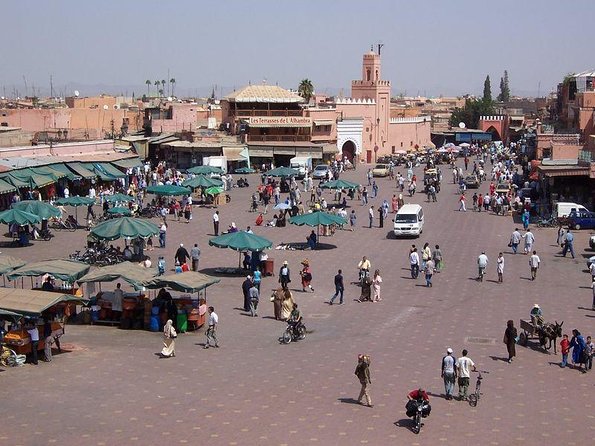
You’ll start near the action at Jemaa el-Fnaa, then move through workshops and seller streets with a small group (max 20). The tour includes a refreshing drink at one of the stops, and it makes time for the herbalist people swear you shouldn’t skip. Expect to walk. A lot. Wear shoes that can handle Morocco cobblestones.
In This Review
- Key highlights worth your attention
- Marrakech souks are better with a guide than with Google Maps
- Meeting near Jemaa el-Fnaa: where the tour actually starts
- Berber house ceramics and textile stops that feel practical
- What to watch for at textile and craft workshops
- Leather slippers, silver jewelry, and how the tour helps you shop smarter
- A quick reality check: silver and leather shopping takes time
- The herbalist stop and your included drink: why it fits the tour
- Price and logistics: is $27 worth it in Marrakech?
- How to shop safely in the old market maze
- Who this tour fits best
- Should you book the Marrakesh Untold Stories Shopping Tour?
- FAQ
- How long is the Marrakesh shopping tour?
- How much does the tour cost?
- Where is the meeting point in Marrakech?
- What is the maximum group size?
- Do I receive a mobile ticket?
- When will I get confirmation after booking?
- Is free cancellation available?
- Are service animals allowed?
- How far in advance do people usually book this tour?
Key highlights worth your attention
- Ali’s souk navigation and vendor match-making: He knows where things are sold and helps you shop with less guesswork.
- A tight 3-hour circuit: Designed to be useful even if it’s your first day in Marrakech.
- Berber house ceramics and colorful textiles: You’ll see items made for real everyday life, not just souvenirs.
- Stitched (not glued) leather slippers and Berber & Jewish silver jewelry: The tour emphasizes craft details you can actually check.
- Herbalist stop plus an included refreshing drink: Built into the experience, not tacked on at the end.
- Family cooperative purchases with insurance and shipping included: Useful if you don’t want to carry everything yourself.
Marrakech souks are better with a guide than with Google Maps
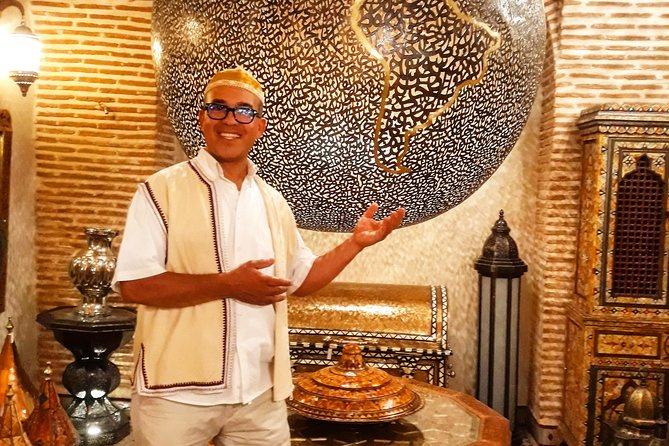
If you’ve never walked the Marrakech souks, here’s the honest part: they don’t work like a normal street grid. You turn a corner and suddenly you’re in a different world of smells, materials, and sales pitches. I like this tour because it gives you a plan and a person who can keep you moving in the right direction.
The biggest value is direction. A guide like Ali helps you avoid the classic first-day mistake: wandering, then doubling back, then losing track of what you already asked for. In the reviews, Ali is praised for knowing which vendors specialize in what and helping people find the best options faster. That matters in a market where “nearby” can still mean 20 minutes of wrong turns.
I also like that the tour isn’t just about buying. It’s about buying with some basics in your head. For example, the leather slippers are described as handmade and stitched (not glued), which gives you something concrete to look for. When you know what you’re checking, shopping stops being guesswork.
You can also read our reviews of more shopping tours in Marrakech
Meeting near Jemaa el-Fnaa: where the tour actually starts
You’ll meet at Hôtel Restaurant Café de France, in the Jemaa el-Fnaa area on Rue des Banques, and the tour ends back at the meeting point. That round-trip setup is underrated. You’re not spending your energy trying to re-find a starting spot after a few wrong turns (which, in Marrakech, can happen fast).
The tour lasts about 3 hours, and the group size is capped at 20. For me, that sweet spot matters. Big groups become line-jobs. Tiny groups can turn into rush jobs. Here, you should get enough attention without the whole thing turning into a one-on-one shopping mission.
You’ll also use a mobile ticket, and confirmation is sent at booking time. That’s convenient when you’re moving around a city with more distractions than Wi-Fi.
Berber house ceramics and textile stops that feel practical
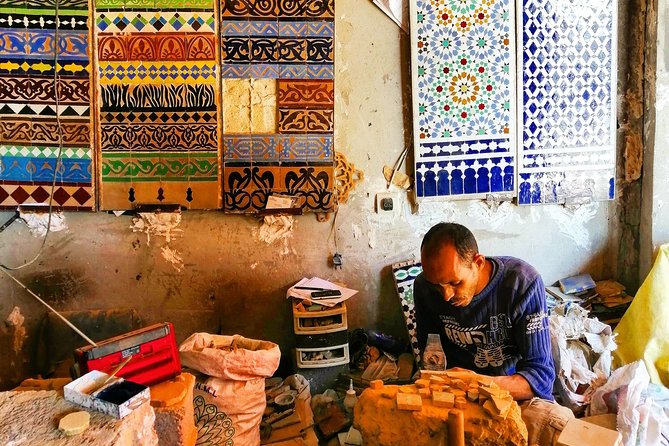
This experience is framed around artisan workshops tied to Berber crafts and other traditional Moroccan makers. That’s where the tour’s “shopping” word starts to mean something more useful than just souvenir hunting.
One focus is ceramic work connected with Berber house traditions. The tour highlights ceramic vessels, and that’s a smart category because you can evaluate quality with your eyes and hands: glaze finish, paint detail, and how pieces are built. If you’ve ever bought a decorative object that looked fine in photos but felt flimsy later, you’ll appreciate having a guide context for what to check.
Textiles are another key stop area. The tour specifically points you toward Berber colorful fabrics and textiles, which is great if you like materials more than mass-produced prints. In markets like this, seeing fabric in person helps you understand the difference between “looks good at 2 meters” and “looks good when you hold it up close.”
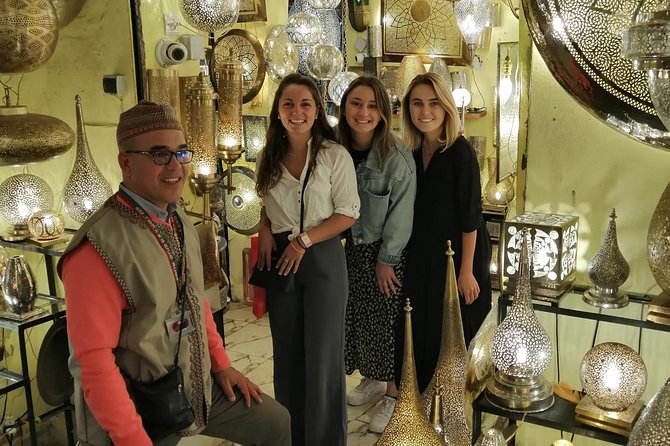
The tour also mentions lamps. That might sound random, but lamps are a useful target when you want to bring home something functional. And function tends to be harder to fake than a tiny trinket, which is a good thing for your budget.
What to watch for at textile and craft workshops
When you walk into a workshop, don’t be shy about asking basic questions. I’d focus on:
- What’s handmade versus mass-made (and what details prove it)
- Whether the materials match what you think you’re buying
- Whether shipping is available through the cooperative you’re purchasing from
The tour’s pitch includes a trusty family cooperative and mentions insurance and shipping included, which can be a big deal if you plan to buy more than one item. Just make sure you understand what the included shipping covers before you commit.
Leather slippers, silver jewelry, and how the tour helps you shop smarter
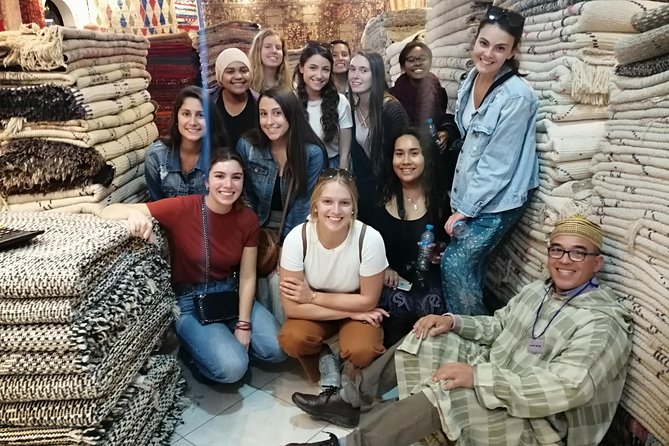
The tour’s shopping list is very specific, and that’s usually a good sign. You’re not only hearing general claims like “quality leather” or “real silver.” You’re being guided toward categories where you can verify details.
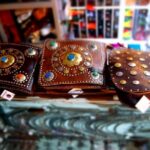
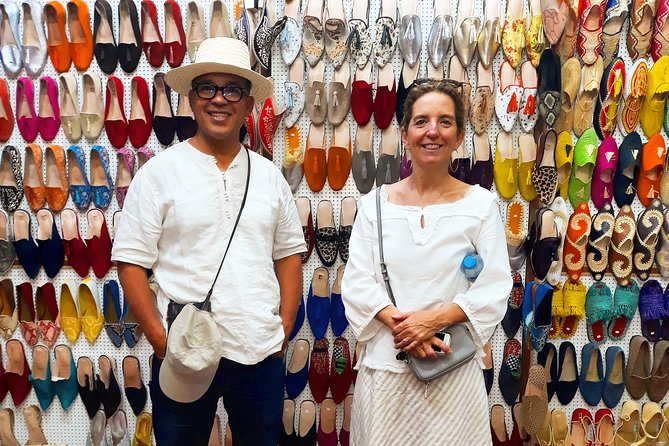
Leather slippers are described as handmade stitched (not glued). That’s exactly the kind of detail you should care about. If you can inspect stitching and construction, you can avoid the “it looked good until you wore it” problem. Bring your patience, because leather work often takes time and negotiation to explain properly.
Jewelry is another major emphasis. The tour mentions Berber and Jewish silver jewelry. Silver can vary a lot in how it’s presented in markets, from decorative styles to different levels of craft. With a guide, you’re more likely to spend time with vendors who actually specialize in the style you want, instead of bouncing between stalls that all claim the same thing.
One review also praises Ali for getting people a lower price several times. Even if you’re not trying to bargain hard, that’s still a sign the guide isn’t just a walking companion. He’s acting like a purchasing adviser, helping you price-check and choose where it makes sense to buy.




A quick reality check: silver and leather shopping takes time
Even with a guide, you’re not going to speed-run craftsmanship. If you’re prone to impatience, aim to keep your purchases to 2–3 categories max during the 3 hours. Think shoes plus one other item (maybe jewelry or textiles), then stop. It’s how you keep control of your budget and avoid buying because you’re tired.
The herbalist stop and your included drink: why it fits the tour
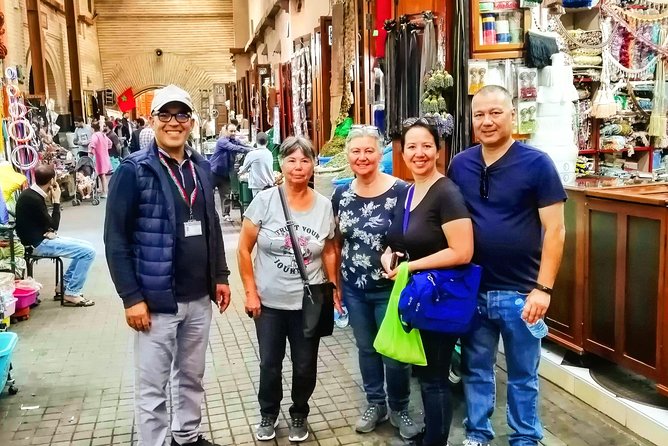
This is the part I’d call the tour’s culture anchor. The experience repeatedly frames the herbalist stop as a must in Marrakech. Even if you don’t plan to buy everything, it’s a chance to see how locals talk about traditional products and how merchants present them.
On top of the herbalist visit, the tour includes a refreshing drink in one of the workshops. That’s practical in a city where heat and walking can creep up on you. It also gives you a natural break point in the route, which helps you stay sharp enough to judge quality while shopping.
If you like travel experiences that go beyond “where to buy,” this stop is one reason to consider the tour. It’s built into the pace rather than tacked on as an optional add-on.
Price and logistics: is $27 worth it in Marrakech?
Let’s talk value, because $27 in Marrakech can mean very different things depending on the tour type. Here, you’re paying for:
- 3 hours of guided navigation through a complex market area
- Assistance finding the right vendors for items like ceramics, textiles, leather slippers, lamps, and silver jewelry
- A guided approach that can help you avoid wasting time and (based on reviews) potentially lower prices
- A refreshing drink included at a workshop
- A tour group capped at 20, which usually supports better attention
What you’re not paying for is an all-day production. You’re paying for concentrated help when you need it most: early in your trip or anytime you want shopping without losing your bearings.
The tour also uses a mobile ticket, which reduces friction. And because the meeting point and return are the same, you don’t need to figure out complicated meet-ups later.
If you’re the type who loves to plan every detail and shop solo, you might not need this. But if you hate the feeling of being turned around and pressured, paying for a guide can be one of the most budget-smart decisions you make.
How to shop safely in the old market maze
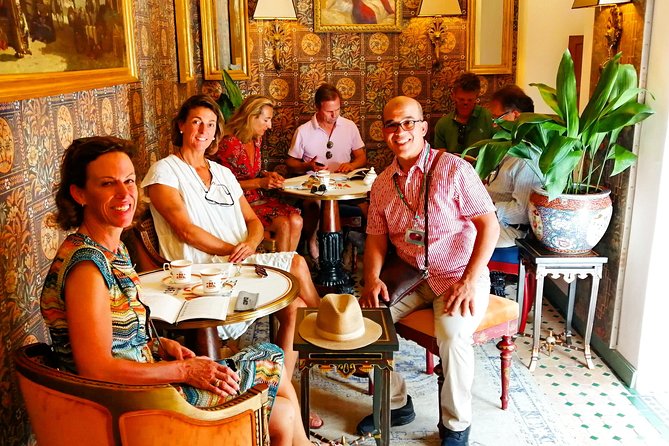
Even with a guide, you’re still in a marketplace where sales energy is real. I treat souk shopping like this: your goal is to buy deliberately, not emotionally.
Here are smart habits that match what this tour is designed to do:
- Ask your guide to point you to the vendor specializing in the category you want (leather, ceramics, textiles, jewelry).
- Use the tour’s craft details as your checklist. For slippers, look for evidence of stitched construction. For purchases where shipping is mentioned, confirm the cooperative and what’s included.
- Don’t commit to the first thing that catches your eye. In the souks, the best option is often the one you can compare after seeing the working process and construction details.
Also, go into the experience with a basic sense of what you want to bring home. If you’re shopping for everything, you’ll pay for it with time and stress. Keep your list short, and let the guide do the vendor matching.
Who this tour fits best
This Marrakesh shopping tour is a strong match if:
- You want a guided start in the souks, especially around Jemaa el-Fnaa
- You’re buying Moroccan crafts like Berber textiles, ceramics, lamps, leather slippers, or silver jewelry
- You like the idea of a herbalist stop with an included drink
- You prefer a small-group walk instead of wandering solo
It may not be ideal if:
- You’re only interested in photos and street scenes, with no intention to shop
- You’re extremely time-limited and want a shorter, less shopping-heavy route
- You get overwhelmed by active market foot traffic
Should you book the Marrakesh Untold Stories Shopping Tour?
Yes, if you want help buying the right things without getting lost in the process. The strongest reason to book is practical guidance: Ali’s ability to navigate and steer you toward the right sellers, plus the tour’s focus on specific craft categories you can assess in person.
If you’re a careful shopper who likes to compare and check details like stitching and materials, this is a smart use of $27 for a concentrated 3-hour experience. Just go in with a clear list, bring comfortable shoes, and keep expectations realistic: the souks are a living market, and the best results come from time, patience, and asking questions.
FAQ
How long is the Marrakesh shopping tour?
The tour lasts about 3 hours.
How much does the tour cost?
It costs $27.00 per person.
Where is the meeting point in Marrakech?
The meeting point is Hôtel Restaurant Café de France on Rue des Banques, in the Jemaa el-Fnaa area. The tour ends back at the meeting point.
What is the maximum group size?
The group size is capped at 20 travelers.
Do I receive a mobile ticket?
Yes. The tour includes a mobile ticket.
When will I get confirmation after booking?
Confirmation is received at the time of booking.
Is free cancellation available?
Yes. You can cancel for a full refund up to 24 hours in advance of the experience start time.
Are service animals allowed?
Yes. Service animals are allowed.
How far in advance do people usually book this tour?
On average, it is booked 72 days in advance.