REVIEW · MARRAKECH
Half Day Marrakech Old Medina & Souk Discovery with a local Guide
Book on Viator →Operated by Next Stop Morocco · Bookable on Viator
You learn Marrakech in four careful walks. This half-day guided Medina route stitches together Jemaa el-Fnaa, the souks, Medersa Ben Youssef, and Bahia Palace, with a local guide helping you read the city without getting lost in the lane maze. I love how the visit stays practical and story-driven, and I especially like the photo-and-orientation help guides like Mohamed and Yassine are known for. The main drawback is simple: you’ll be walking for about 4 hours in busy, uneven areas.
At $38.78, the value is that you’re paying for a plan, not just a map, and you get bottled water plus a certified local guide. The group stays small (max 10), which matters in the medina where it’s easy to feel rushed. Entrance fees are not included for the paid sights (only two monuments), so plan for that add-on before you go.
In This Review
- Key highlights worth your attention
- Meeting Café de France and getting oriented fast
- Jemaa el-Fnaa and the souks: what you should watch for
- Medersa Ben Youssef: the 14th-century masterclass in detail
- Bahia Palace: gardens, mosaics, and the feel of a house with stories
- Mellah (Jewish quarter): understanding the neighborhood, not just the buildings
- Koutoubia and Bab Agnaou: big landmarks, short stops done right
- The 4-hour plan: how it actually feels on the ground
- Price and what you should budget for
- Who this Medina walk is best for
- Should you book this Marrakech Old Medina and souk tour?
- FAQ
- What is the duration of the tour?
- How much does the tour cost?
- What’s included in the price?
- Are entrance fees included?
- Where does the tour start?
- Does the tour end at the same place?
- What is the group size limit?
- Can I cancel for a full refund?
Key highlights worth your attention
- A small group (max 10) so your guide can actually answer questions
- Jemaa el-Fnaa to the souks on foot, with help finding good angles and getting your bearings fast
- Medersa Ben Youssef’s carved stucco, zellij, and courtyard layout, in a tight 1-hour window
- Bahia Palace gardens plus interior details like mosaics and carved ceilings
- Mellah (Jewish quarter) and Jewish–Berber cultural connections, explained in plain terms
- Major landmarks in short blocks: Koutoubia’s minaret and Bab Agnaou’s Almohad gatework
Meeting Café de France and getting oriented fast
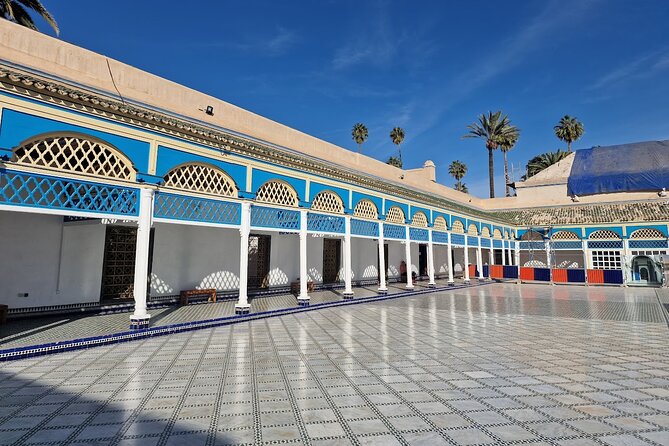
The tour meets at Hôtel Restaurant Café de France, right by Jemaa el-Fnaa on Rue des Banques. It’s a good anchor point: you start where most first-timers want to be anyway, and you don’t waste time crossing the city to begin.
From there, the flow is designed for momentum. You’ll walk the medina lanes rather than hopping all over town, so you start learning how the streets connect. And because the max group size is 10, you’re less likely to get swallowed by the crowd.
You also get bottled water included, which sounds basic until you’re doing repeated stop-and-start walking in Marrakech. Little things like that keep the tour enjoyable instead of exhausting.
You can also read our reviews of more guided tours in Marrakech
Jemaa el-Fnaa and the souks: what you should watch for
You begin at Jemaa el-Fnaa, then move into the souks through narrow lanes packed with shops and workshops. This is where the medina shows its real personality: brass and leather, textiles, spices, and the steady buzz of people bargaining and making deals.
What I like most here is the order of it. Starting at the square gives you a reference point for later. Once you step into the souks, your guide can point out how to move through the maze without wasting time backtracking.
Also, don’t treat this stop like a random shopping spree. Use it as a visual training session:
- Notice how shop fronts cluster by trade
- Watch for artisan signs and materials that tell you what’s being made
- Ask your guide where photos come out best, since guides like Mohamed often help with exactly that
Possible drawback: if you hate crowded spaces, this first stretch may feel intense. It’s not quiet tourism. It’s Marrakech as it really is.
Medersa Ben Youssef: the 14th-century masterclass in detail
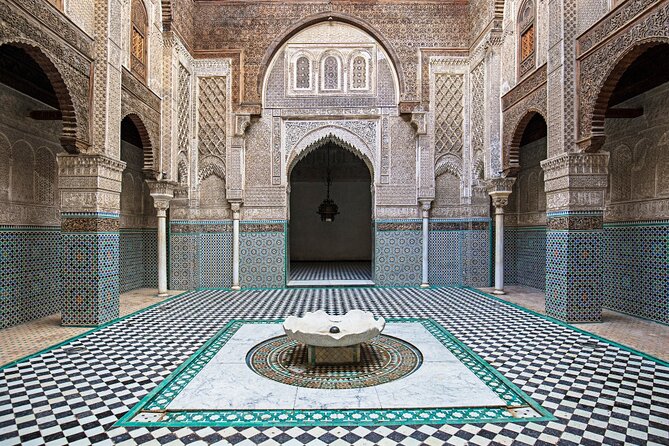
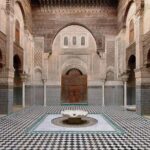
Medersa Ben Youssef is the stop that changes how you see the medina. This 14th-century Islamic college has architecture that looks crafted for the eye, not just built for function. Expect to spend about 1 hour here, and you’ll move from the entrance into a calmer interior world.
Here’s what makes the visit special:
- The grand entrance with intricate carvings that set the tone
- The central courtyard with a marble basin and zellij tilework
- The prayer hall with stucco decorations and a mihrab
- Upstairs student rooms arranged around internal courtyards, giving you a sense of daily life in the past
Your guide will connect the details you’re seeing to what the space was for. That’s why an organized stop matters. Without guidance, it’s easy to admire the tiles but miss why they’re placed where they are.
Entry note: this is one of the paid attractions on the route, so you’ll want to budget for the ticket cost (70 MAD, about $7). Everything else around it is usually free to view, but the medersa itself requires admission.
Consideration: this is architectural tourism. If you’re hoping for constant street-life and bargaining, you may find this stop slower than the souks. If you like craftsmanship, though, this is the standout.
Bahia Palace: gardens, mosaics, and the feel of a house with stories
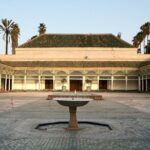
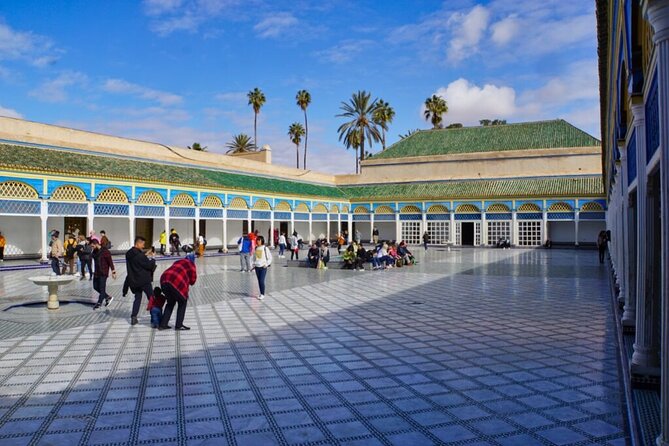
Next comes Bahia Palace, where Moroccan craftsmanship is on full display. You’ll have about 1 hour, including time for the gardens and the interior spaces.
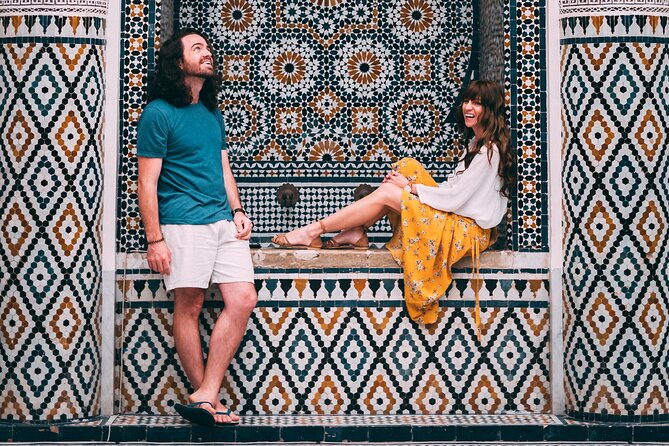
Outside, the gardens are a contrast to the medina’s lane density. You’ll see vibrant flowers and citrus trees that make the palace feel like a retreat. Inside, the details carry the mood: mosaics, carved ceilings, and ornate woodwork.
This stop is valuable for two reasons. First, it gives you the other side of Marrakech beyond the souks: elite residential architecture. Second, it’s a chance to compare styles. The medersa impressed you with religious design logic; Bahia Palace shows how decorative arts were used in everyday power and luxury.
Entry note: Bahia Palace is also one of the paid sites on this itinerary, part of that 70 MAD ticket cost. Plan to pay that on the day since it isn’t included.
Possible drawback: if you’re sensitive to heat and you arrive mid-day, the palace courtyards can feel warm. Since bottled water is included, you’re covered a bit, but the tour is still mostly walking and indoor circuits.
Mellah (Jewish quarter): understanding the neighborhood, not just the buildings
The tour then moves to Mellah, the Jewish quarter area. It’s brief, about 30 minutes, but the goal is not sightseeing for sightseeing’s sake. You’ll learn about the history of Marrakech’s Jewish community and how it fits into Morocco’s broader story.
The most useful part is the explanation of how Jewish culture and Berber traditions intersected over time. That’s the kind of context that turns a neighborhood walk into something you can remember and repeat later.
What you should do during this stop is simple: slow down and watch how everyday life continues around historic space. Even with a guide, Mellah can feel like you’re in a real district, not a museum set. That’s often what makes it worth the detour.
Consideration: because it’s a short stop, you won’t get unlimited time to wander on your own. If you want more, you can always return later, but for a half-day plan this works well.




Koutoubia and Bab Agnaou: big landmarks, short stops done right
After Mellah, you head to Koutoubia and then to Bab Agnaou, both with free-access viewing time built in.
Koutoubia Mosque is the biggest mosque in Marrakech, and the signature is the minaret. You’ll notice the geometric patterns and learn why the site matters in the city’s Islamic architecture. You’ll spend about 30 minutes here, which is just enough to take in the scale and understand the design choices without dragging the day out.
Then comes Bab Agnaou, a historic gate with Almohad architecture. This is a great final “anchor” stop. Gates like this are where you feel the city’s defensive past without needing a full museum ticket.
Why these last two stops work: they bookend your day with monuments that are visible and readable from outside. After walking through indoor and courtyards at Medersa Ben Youssef and Bahia Palace, these landmarks let you reset your eyes and come back to street-level orientation.
The 4-hour plan: how it actually feels on the ground
This tour is listed at about 4 hours with a route that mixes:
- A street-and-souk start (Jemaa el-Fnaa)
- One big architectural interior (Medersa Ben Youssef)
- One palace complex (Bahia Palace)
- A cultural neighborhood block (Mellah)
- Landmark viewing stops (Koutoubia and Bab Agnaou)
So the day doesn’t feel like one long line of museum rooms. You keep switching settings—square to lanes, palace gardens to tiled courtyards, then back to landmarks. That rhythm helps.
Because the group cap is 10, you can usually ask questions without feeling like you’re holding everyone up. The reviews on guides like Abdelilah and Brahim highlight patience and easygoing pacing, and that matters when you’re in places where crowds can make time feel slippery.
Possible drawback: you still need decent walking stamina. “Half day” in the medina doesn’t mean “light.” Plan for uneven surfaces, tight streets, and lots of stop-and-walk movement.
Price and what you should budget for
The price is $38.78 per person. For a small-group guided route across multiple major sights, that can be fair value because you’re paying for:
- A certified local guide (not just a self-guided map)
- Bottled water
- A structured path that reduces wasted wandering
What’s not included is entrance for the historical attractions that require admission. On this route, that’s the two key monuments: Medersa Ben Youssef and Bahia Palace. The ticket cost listed is 70 MAD, about $7.
So think of it as:
- Base tour price for guidance and the walk
- A small add-on for the two paid entries
If you plan to visit those monuments anyway, a guided route saves time and makes the architecture easier to understand. If you only want to shop or only want street scenes, you might feel the ticket time cut into free wandering.
Who this Medina walk is best for
This is a great choice if:
- It’s your first visit to Marrakech and you want a grounded orientation
- You like architecture and want the story behind what you’re seeing
- You want a guide to help you navigate the souks without feeling overwhelmed
It’s also a strong fit for families, including teens, since the pace is set by a guide and the route keeps moving through major highlights. The best results come when you’re comfortable asking questions and you don’t mind crowds.
If you prefer long, self-paced museum time, or you’re avoiding walking, you may find the half-day format a bit tight.
Should you book this Marrakech Old Medina and souk tour?
Book it if you want the shortest path to understanding Marrakech: souks plus two of the city’s most important architectural stops, then cultural context in Mellah, and final landmark hits at Koutoubia and Bab Agnaou. The small group size and the guide-led pacing make it feel organized rather than chaotic.
Skip it (or reconsider) if your ideal day in Marrakech is mostly shopping without structure, or if you don’t handle crowds and walking well. In the medina, “half day” still means you’ll be on your feet.
If you’re aiming for value and clarity in limited time, this is an easy yes.
FAQ
What is the duration of the tour?
The tour runs for about 4 hours.
How much does the tour cost?
The price is $38.78 per person.
What’s included in the price?
You get bottled water and a certified local guide.
Are entrance fees included?
No. Entrance fees for the historical attractions are not included. Two sites require a ticket, with a listed cost of 70 MAD (about $7).
Where does the tour start?
It starts in front of Café de France at Hôtel Restaurant Café de France, near Jemaa el-Fnaa (Rue des Banques).
Does the tour end at the same place?
Yes. The tour finishes in the same area as the meeting point, near Café de France.
What is the group size limit?
The tour has a maximum of 10 travelers.
Can I cancel for a full refund?
Yes. Free cancellation is available up to 24 hours in advance for a full refund.