REVIEW · TANGIER
Tangier: Full-Day Trip to Chefchaouen
Book on GetYourGuide →Operated by Argania Travel · Bookable on GetYourGuide
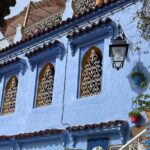
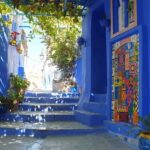
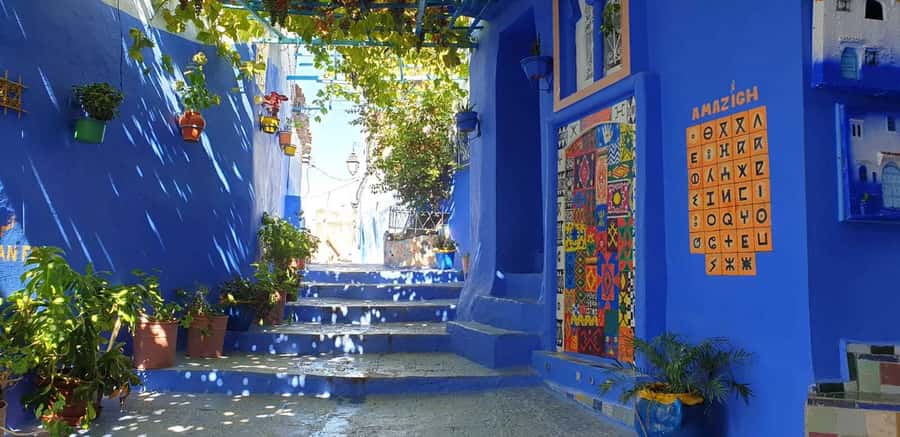
Blue streets start the day trip from Tangier. This full-day outing brings you from the coast up into the Rif Mountains for Chefchaouen’s famous blue-washed Medina, then strings together the best squares, neighborhoods, and craft stops in one smooth loop.
I like the two-part feel of this tour: an air-conditioned minivan and round-trip pickup from your Tangier address, followed by a local guide in Chefchaouen who puts the place into context instead of just pointing. I also like that the visit isn’t one long blur of photos; it’s organized by the Medina’s old layout, including the areas linked to the Kasbah, Jewish Mellah, and the craft-focused Es Sueca.
One thing to consider: the total time in Chefchaouen is tight for an 8-hour day, and the guided portion can be shorter than you might hope, with additional free time and local moving around by taxi.
In This Review
- Key things to know before you go
- Chefchaouen from Tangier: why this 8-hour plan makes sense
- Getting to Chefchaouen: transportation and what that means for your day
- First stop in the maze: Er Rif Al Andalus and Majzén Square
- Uta el-Hammam, the Kasbah, and the Andalusian Gardens
- Mellah and Es Sueca: craft streets where shopping feels grounded
- Es Sok and the 15th-century clues: Huata Square and the Suk Mosque
- Kenitra Square and En Onsar: contrasts and small moments you can’t plan
- Leaving the Medina: Bab Onsar Gate and Ras el Ma Fountain
- Back inside: El Rif Sebbadin and a 15th-century mosque
- Price and value: what you’re paying for at about $106
- What to wear and bring (and how to avoid a sore-day souvenir regret)
- Language and guide style: English, Spanish, French
- Who this tour fits best
- Should you book this Chefchaouen day trip?
- FAQ
- How long is the Chefchaouen day trip from Tangier?
- What is the price per person?
- Is transportation included from Tangier?
- What type of transportation do you use?
- Is lunch or food included?
- Do I get a guide?
- What can I expect to do in Chefchaouen?
- What should I bring?
- What hygiene rules apply during the tour?
- Is this tour suitable for people with mobility impairments?
Key things to know before you go
- Blue Medina, organized by neighborhoods so you don’t wander in circles
- Square-to-square walking starting around Uta el-Hammam and the Kasbah
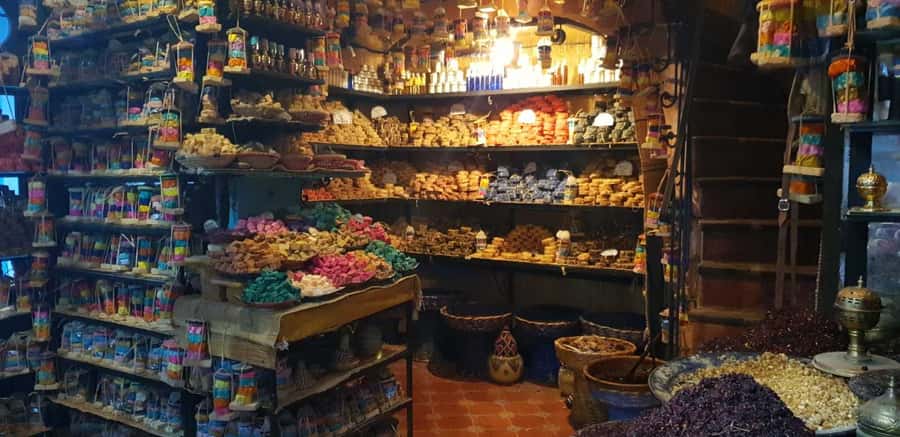
- Craft-and-souk time for woven fabrics, rugs, Berber jewelry, and leatherware
- Big photo moments near water at Ras el Ma Fountain and the washerwomen area
- Expect cobblestones and stairs once you step into the Medina
Chefchaouen from Tangier: why this 8-hour plan makes sense
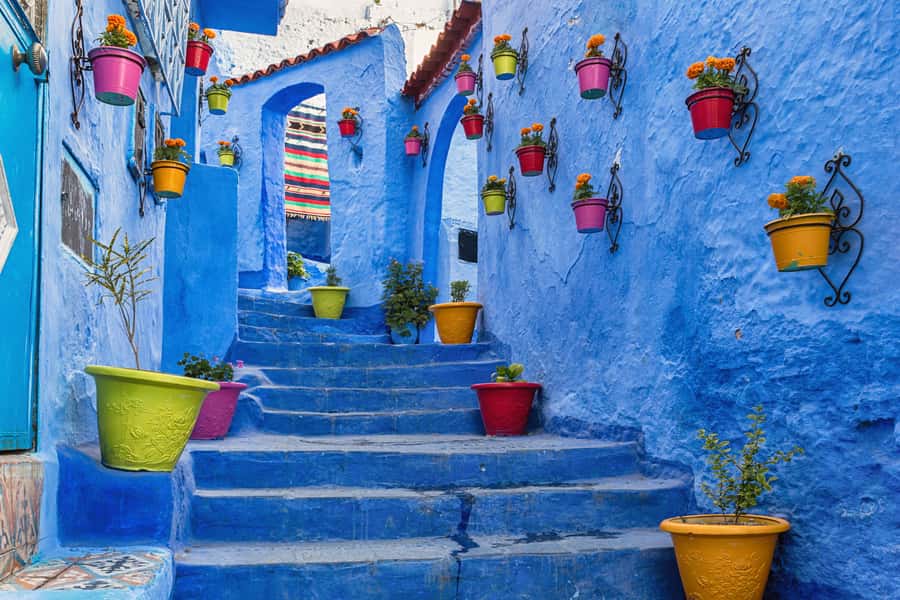
Chefchaouen is one of the standout reasons to spend time in northern Morocco. The town is set between the Rif Mountains, and the Medina layout still reflects an older walled-city design. That matters on a day trip, because it gives you a path that feels structured instead of random.
From Tangier, you trade beach time for mountain air and a Medina built for slow wandering. You’re not stuck doing one single viewpoint; you’re taken through multiple neighborhood zones where the streets change character. You’ll also have time to shop, not just window-shop.
The best part is how quickly you get oriented. The day starts with arrival in the Medina, then uses named squares and key reference points so you can find your way back to your bearings even if you later go off on your own for a bit.
A few more Tangier tours and experiences worth a look

Getting to Chefchaouen: transportation and what that means for your day
This tour runs for 8 hours and includes round-trip transportation from Tangier in an air-conditioned minivan, plus hotel pickup and drop-off. That’s a big deal because Chefchaouen isn’t right next door. You want comfort for the road time and a reliable return so you don’t have to bargain for your own ride at the end of a long day.
Once in Chefchaouen, you’ll do the walking segments through the Medina. The included “local guides to visit all the places mentioned” helps keep your time efficient—so you’re not guessing what’s worth stopping for or where the important areas are.
One practical note: the tour is not suitable for people with mobility impairments. Even if you’re comfortable on flat ground, the Medina’s stone streets, steps, and narrow lanes can get tough fast.
First stop in the maze: Er Rif Al Andalus and Majzén Square
Chefchaouen’s Medina is divided into seven neighborhoods, and one of the first zones you’ll encounter is Er Rif Al Andalus. This area gives you a strong starting point because it links directly to major landmarks.
From there, you’ll be able to view Majzén Square, and it also serves as a visual anchor as you start threading through the older parts of the city. A square like this works well on a day trip. It’s wide enough to regroup, understand direction, and reset your sense of where you are before slipping back into narrower streets.
You’ll also connect into the next key area: the Kasbah surroundings.
Uta el-Hammam, the Kasbah, and the Andalusian Gardens
A core part of this day is the stretch around Uta el-Hammam. This is described as one of the most important squares in the city, and the tour uses it as a hub that you return to as your route unfolds.
In the Kasbah area, you’ll find the Andalusian Gardens and the Ethnic Museum. Even if you don’t treat museums like a checklist, the point here is the city’s layered identity. Chefchaouen is often described as having Andalusian echoes, and the Kasbah area is where you can feel the narrative more clearly than you can from a quick street walk alone.
If you’re the type who likes to understand what you’re seeing, this is the stop that makes the rest of the blue streets click. If you’re more focused on photos and shopping, you can still use this moment to recharge, get oriented, and plan your route before you go deeper into the narrow lanes.
Mellah and Es Sueca: craft streets where shopping feels grounded
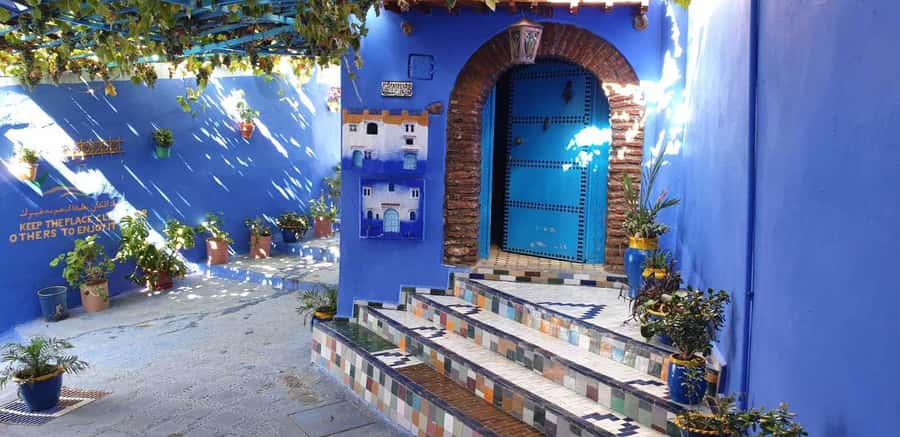
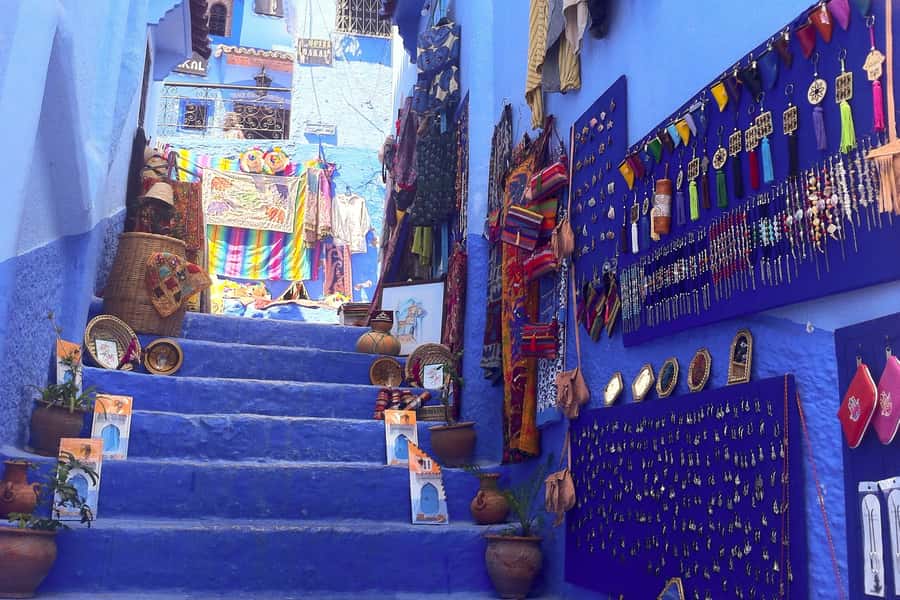
After the Kasbah area, the tour continues toward the Mellah (the Jewish neighborhood) and Es Sueca, a zone known for textile and craft shops.
This is where I think the tour does something smart for value: you’re guided into the areas where buying makes sense, not just where you can technically shop. Es Sueca is specifically tied to textiles and crafts, so if woven fabrics, rugs, or leatherware are on your wish list, you’re in the right zone.
Souvenir hunting here can be productive. You’ll likely see items like:
- woven fabrics and rugs
- Berber jewelry
- leatherware
My practical advice: don’t decide on purchases the moment you see something. Walk the area once with your guide, note what styles and prices feel typical, then go back when you’re calm and you’ve seen enough alternatives.
Also, expect the shopping streets to feel crowded in a way that’s typical for a Medina. Wear comfortable shoes and go slow.
A few more Tangier tours and experiences worth a look
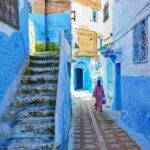
Es Sok and the 15th-century clues: Huata Square and the Suk Mosque
You circle back through Uta el-Hammam once more, then move into Es Sok, tied to where the Moors were settled in the 15th century. This is one of the stops that adds depth to the day because it shifts you from “blue town” into “what happened here.”
Two highlights in this area are Huata Square and the Suk Mosque. Huata Square is known for a standout fountain, and fountains in Morocco often become social hubs. It’s a great pause point. You can look around, drink some water, and reset before you continue down tighter lanes.
The Suk Mosque adds a historical anchor to the walk. Even from outside, it helps you read the city layout. When a tour points you toward these older reference points, you get more than just pretty streets—you get a way to understand where you are.
Kenitra Square and En Onsar: contrasts and small moments you can’t plan
From Uta el-Hammam and Es Sok, you’ll come across Kenitra Square, noted for its breadth, creating a striking contrast next to narrow streets. This kind of contrast is one reason Chefchaouen feels different at every turn. You go from claustrophobic lanes to open space in seconds, and your eyes need a moment to adjust.
Then the route heads to En Onsar, including Zaituna Square and a centenary olive tree. A centenary olive tree is the sort of detail that’s easy to miss if you’re rushing. With a guide, it becomes part of the story instead of background noise.
These stops are also good for photos, but they’re more useful for orientation than for posing. When you know which open squares connect to which lanes, you can later wander independently and still feel in control.
Leaving the Medina: Bab Onsar Gate and Ras el Ma Fountain
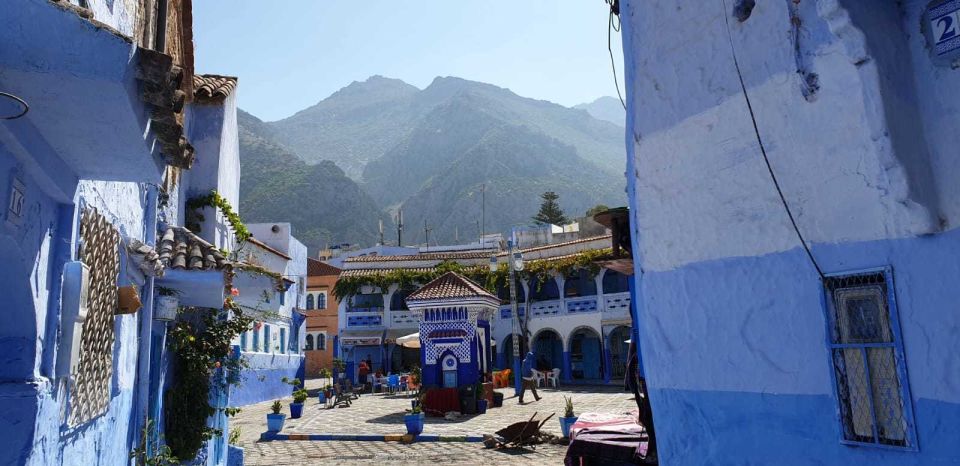
Once you step outside the Medina through Bab Onsar Gate, the tour aims at one of the most visually rewarding areas: Ras el Ma Fountain.
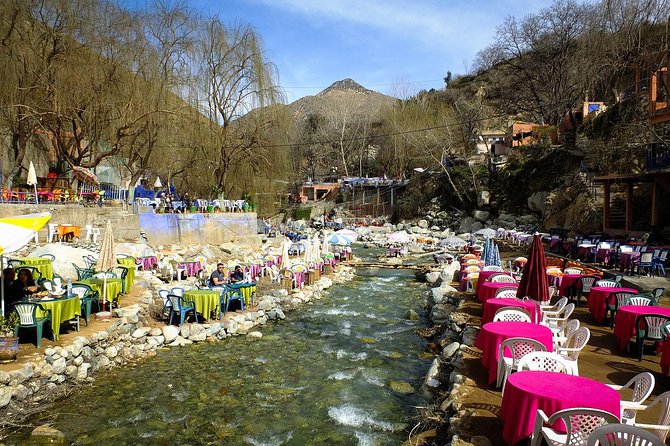
This part is described with extra vivid details—cascades, naturally formed pools, and mills, plus washerwomen. That’s a very “everyday Morocco” moment. It doesn’t feel like a staged scenic stop. It’s water-driven life, and it’s the kind of place where you can watch how the city interacts with its surroundings.
A fountain stop is also a timing advantage. It’s a natural break in the walking rhythm. If you’re shopping earlier, this can become your reward pause before you head back into other Medina neighborhoods.
Back inside: El Rif Sebbadin and a 15th-century mosque
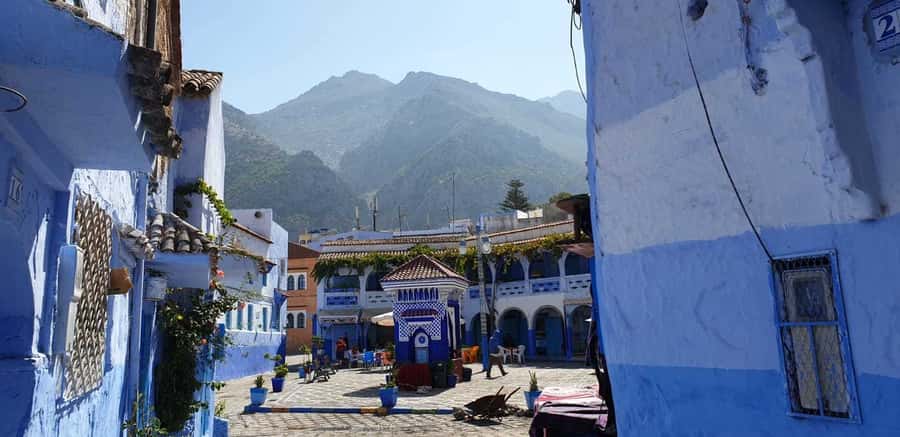
After the Ras el Ma area, you re-enter the Medina in El Rif Sebbadin neighborhood. The tour points out Sebbadin Square and a mosque dated to the 15th century.
This final neighborhood stop matters because it keeps your route cohesive. Instead of just sending you toward the end of the day, it gives you another historical reference point to hold onto.
For your feet, it’s also a way to end on a “findable” area—squares are easier than lane-by-lane navigation. If you’ve been doing a bit of shopping, you’ll appreciate that the end-of-route feels less chaotic.
Then the day wraps up with transport back to Tangier.
Price and value: what you’re paying for at about $106
At $106 per person for an 8-hour day, you’re paying for more than transportation. This price includes:
- round-trip transfer from Tangier in an air-conditioned minivan
- hotel pickup and drop-off
- local guides to cover the named sights
- the structure that connects squares, neighborhoods, and craft areas
Food and drinks are not included, so you’ll want a small budget buffer for lunch and water. That’s normal for Moroccan day tours, but it’s worth planning so you’re not forced to buy the first thing you see.
Now, the timing question. One reality you should expect is that Chefchaouen is a place where time disappears. Even with guiding, your day can feel split between guided sightseeing and independent wandering. If you get only a short window with the guide, don’t treat it like an encyclopedic lecture. Treat it like a setup: ask your key questions early, then use the rest of the day to follow what you liked most—blue streets, crafts, or the fountain area.
If you want the best value, show up ready to walk. Comfortable shoes aren’t a suggestion here; they’re what makes the itinerary actually work.
What to wear and bring (and how to avoid a sore-day souvenir regret)
Bring comfortable shoes. That’s the practical item called out, and it’s the one that will save you.
Also bring hand sanitizer awareness. The tour notes extra hygiene precautions, including disinfected vehicles and masks/gloves for the driver and/or guide. Hand sanitizer is provided in the vehicles and face masks are distributed, with mask use obligatory during the activity.
So yes: wear breathable layers you can move in. Your day is part road trip, part Medina walking, and part shop wandering.
Language and guide style: English, Spanish, French
The tour provides a live guide in English, Spanish, and French. That’s useful because you’re not just collecting photo stops—you’re hearing why areas like the Mellah and Es Sok matter, and what the Kasbah spaces represent within the city’s old structure.
I like guided routes most when they give you a sense of what to look for. In this itinerary, that means key squares, the Kasbah zone, and the craft streets around Es Sueca.
Who this tour fits best
This is a strong fit if:
- you want a day-trip plan that covers major Chefchaouen zones without guesswork
- you care about buying crafts like rugs, woven textiles, Berber jewelry, or leatherware and want to be routed to the right streets
- you’d like both story context (Kasbah, Ethnic Museum, historic neighborhoods) and personal time to wander
It’s a weaker fit if:
- you struggle with cobblestones or long walking and need easier mobility
- you expect every minute to be guided like a private lecture
- you’re the type who needs long, unbroken time in just one area (Chefchaouen is better when you can choose slowly)
Should you book this Chefchaouen day trip?
I’d book it if you’re doing northern Morocco and want the Chefchaouen experience without building your own transport and route. The value comes from round-trip comfort, hotel pickup, and a guided path that hits the main reference points: Majzén Square, Uta el-Hammam/Kasbah, Mellah and Es Sueca crafts, Es Sok historic cues, and the water moment at Ras el Ma Fountain.
I would hesitate only if you’re very sensitive to time limits inside Chefchaouen or you need a fully guided pace for the entire day. In that case, you might prefer a slower format so the blue streets can expand into a longer, calmer day.
If you book, do one thing that boosts your trip: decide in advance what you want most—photos, crafts, or history—and ask your guide to point you toward the best places for your priority early on.
FAQ
How long is the Chefchaouen day trip from Tangier?
The duration is 8 hours.
What is the price per person?
The price is $106 per person.
Is transportation included from Tangier?
Yes. Round-trip transportation from Tangier is included, and there is hotel pickup and drop-off.
What type of transportation do you use?
You travel by air-conditioned minivan.
Is lunch or food included?
No. Food and drinks are not included.
Do I get a guide?
Yes. Local guides are included to visit the places mentioned, and the live tour guide is available in English, Spanish, and French.
What can I expect to do in Chefchaouen?
You’ll explore the blue town and its Medina neighborhoods and squares, and you’ll have time to shop in the souks for items like woven fabrics and rugs, Berber jewelry, and leatherware.
What should I bring?
Wear comfortable shoes.
What hygiene rules apply during the tour?
Vehicles are disinfected after each use, masks and gloves are used by the driver and/or guide, hand sanitizer is provided, masks are distributed, and mask use is obligatory during the activity.
Is this tour suitable for people with mobility impairments?
No. It is not suitable for people with mobility impairments.